Now Reading: The world as a sensorium: Olafur Eliasson and the art of shared perception
- 01
The world as a sensorium: Olafur Eliasson and the art of shared perception


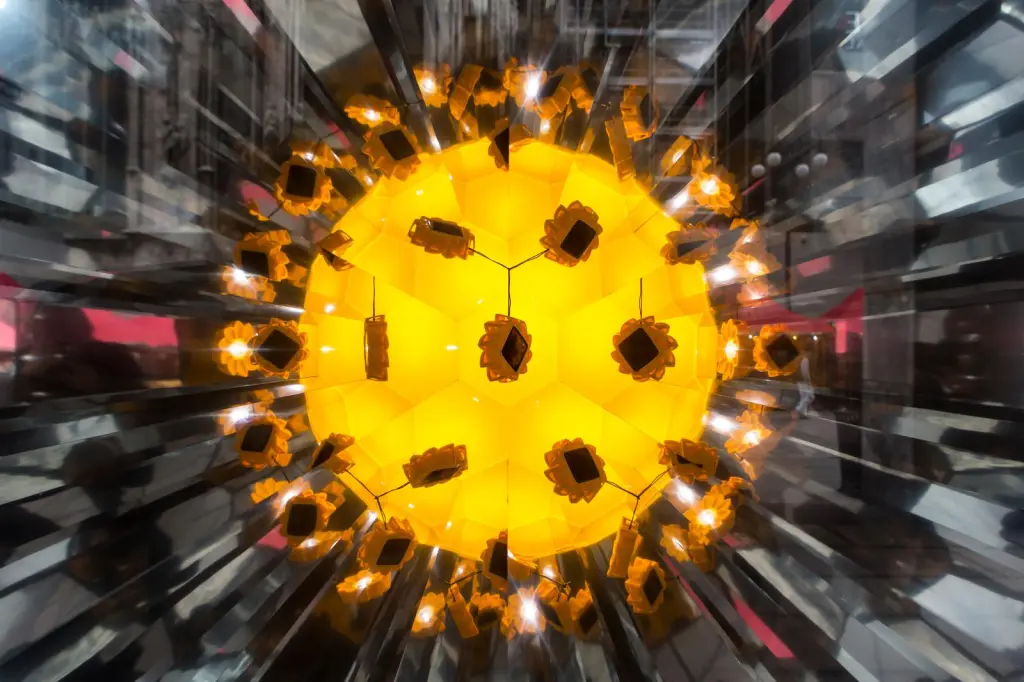
When the Turbine Hall at Tate Modern opened its doors in October 2003, more than two million visitors entered a space that was no longer merely an exhibition hall but an interior sky. A gigantic semi circular sun, composed of nearly 200 mono frequency lamps emitting a warm yellow orange glow, hovered at the far end of the hall. Reflected by a vast mirrored ceiling, it formed a complete, radiant orb. Artificial mist permeated the 155 metre long expanse, transforming the industrial void into an atmosphere of suspended twilight.

Visitors lay on the cold concrete floor, forming star shapes with their bodies, photographing their reflections alongside hundreds of others drifting across the illusory heavens above. This was The Weather Project, a landmark of twenty first century installation art.

In a 2015 interview, Olafur Eliasson acknowledged the immense risk involved. Unlike a painter, he explained, he had always had to work with uncertainty. When the Turbine Hall installation opened, he encountered it for the first time alongside the public. There had been no opportunity to test it in the studio. The work was not conceived as spectacle alone. It functioned as a collective experiment in perception, one in which the audience became a constitutive element. More than two decades later, The Weather Project remains the clearest entry point for understanding Eliasson’s trajectory, from questioning how we see the world to mobilising art as a platform for planetary dialogue.

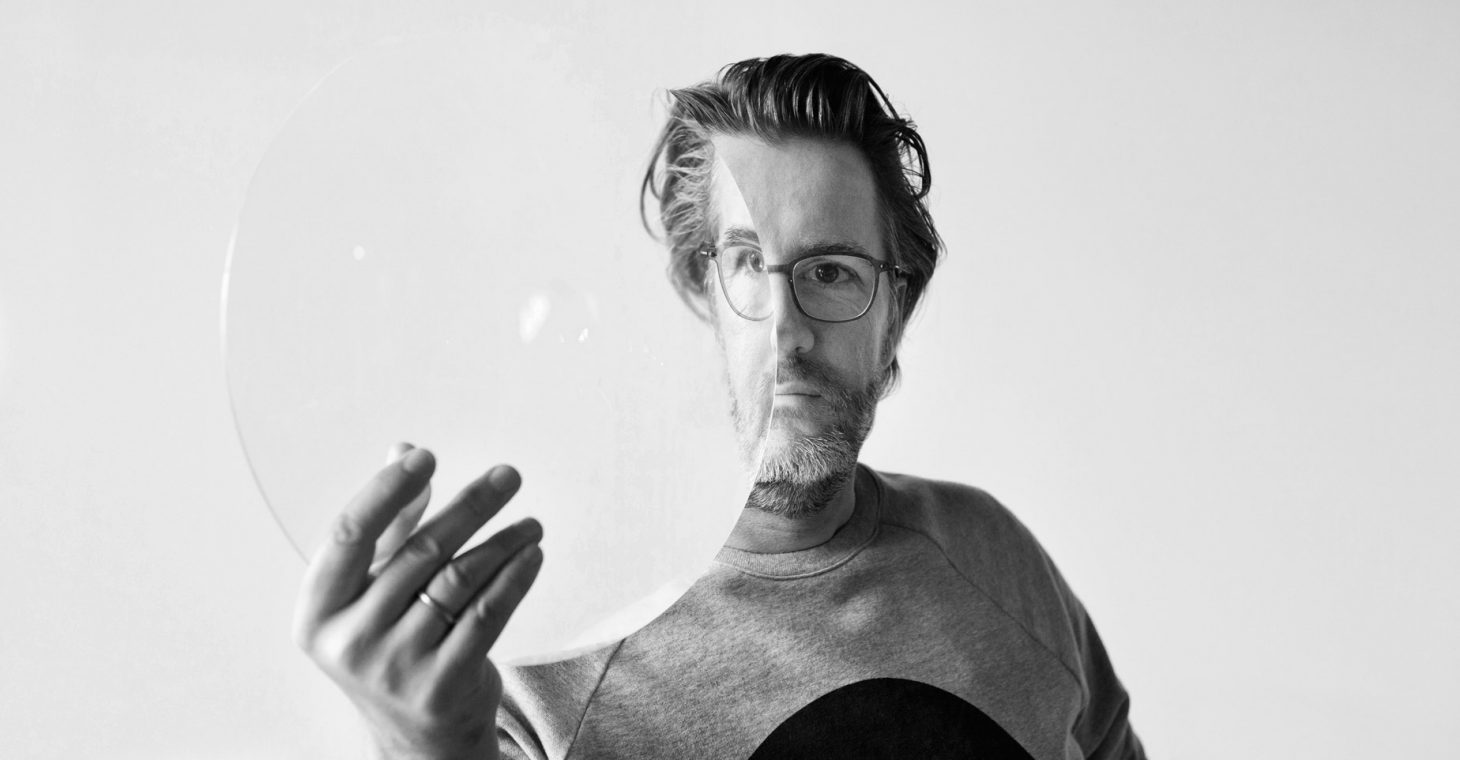
Born in 1967 in Copenhagen to Icelandic parents, Eliasson grew up between urban Denmark and the volcanic and glacial landscapes of Iceland. He studied at the Royal Danish Academy of Fine Arts from 1989 to 1995 before relocating to Berlin, where he founded Studio Olafur Eliasson. The studio has since evolved into a large scale laboratory, employing over one hundred specialists across disciplines including art, architecture, research and food culture. Eliasson lives and works between Copenhagen and Berlin.
He has consistently resisted the label of famous artist, preferring instead to describe himself as exposed. Exposure, he has noted, does not confer special status. Building from The Weather Project, this essay examines Eliasson’s core philosophy, artistic language, materials, methods of production and key projects. Seen through sustained engagement with installation art since the early 2000s, Eliasson emerges not simply as a maker of immersive environments but as a producer of reality, one in which human perception confronts both individual vulnerability and planetary fragility.
FROM INDIVIDUAL PERCEPTION TO COLLECTIVE WE-NESS
The Weather Project transformed viewers into agents of what Eliasson has described as seeing yourself sensing. Lying on the floor and gazing upward at their mirrored bodies beneath a shared artificial sky, visitors enacted a moment of somatic self awareness. This idea runs consistently throughout Eliasson’s practice, evolving from project to project while remaining anchored in reflexive, embodied perception.
Drawing from phenomenology, particularly the work of Maurice Merleau Ponty, Eliasson extends philosophical inquiry into lived experience. His Icelandic upbringing instilled an understanding of nature not as a stable backdrop but as a dynamic and fragile force. In numerous conversations, he has argued that art must generate empathy through the senses rather than through abstraction alone. Climate change, he suggests, remains distant when it is addressed only conceptually. It becomes actionable when it is felt physically, through altered light, shifting temperature, or the perception of time passing.
Many of Eliasson’s works include the word “your” in their titles, a deliberate gesture of trust toward the audience. Your Rainbow Panorama, Your Blind Passenger and Your Planetary Assembly all insist on participation rather than consumption. Viewers do not consume art in these situations. They produce it through experience. This emphasis on co production fosters what Eliasson has described as we-ness, a shared authorship that extends beyond individual subjectivity.
Within the context of the Anthropocene, this approach carries political weight without overt instruction. Eliasson has observed that culture actively produces the world rather than merely reflecting it. His work does not replace political action, but it creates emotional and sensory conditions in which relationships with the non human can be reconsidered, whether through melting glacial ice or the diminishing sounds of threatened ecosystems.
THE ENCHANTMENT OF LIGHT AND WATER
Eliasson’s artistic language is grounded in immersive phenomenology. Using materials that are both elemental and technologically refined, he renders perception simultaneously intimate and estranged. The Weather Project exemplifies this strategy. Mono frequency lamps eliminate most colour perception, reducing the visual field to tonal variations of yellow and black. Mist and mirrors generate illusions of scale and infinity, while remaining visibly constructed.
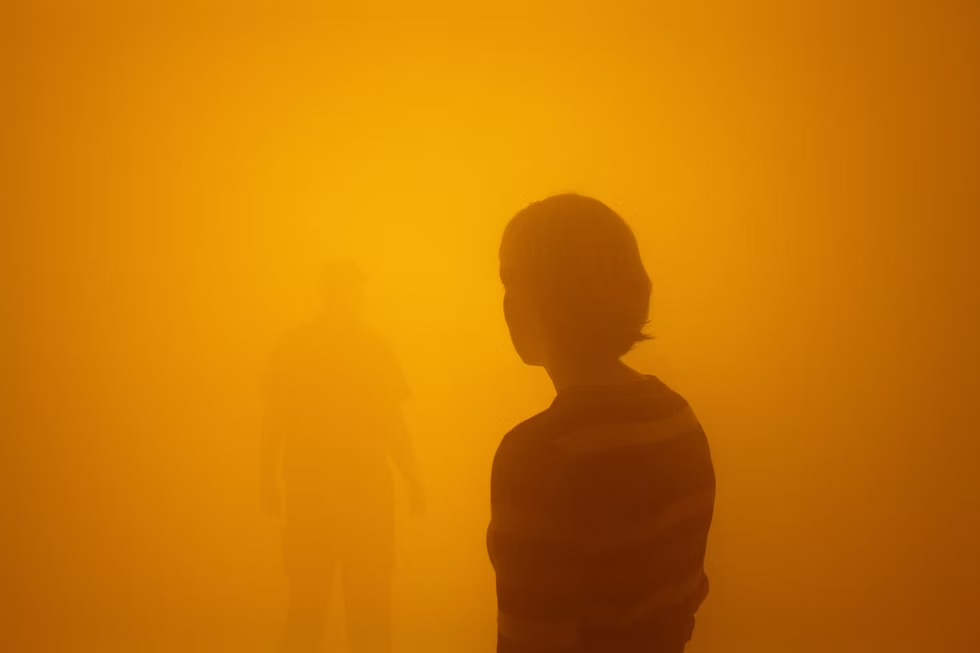
Light, water, fog, mirrors and dichroic glass recur throughout his practice. In Beauty from 1993, a spotlight and a narrow stream of water produce a rainbow that appears only from a precise angle. Your Blind Passenger from 2010 deprives visitors of sight within a dense fog filled tunnel, shifting attention toward bodily orientation, sound and proximity. Tunnel for Unfolding Time from 2022 employs dichroic glass panels that shift from pink to cyan, orange and yellow as viewers move, compressing and expanding spatial perception.

More recent works such as Your Planetary Assembly from 2025 consist of illuminated glass polyhedrons arranged in public space, evoking planetary models while functioning as sites for gathering and negotiation. While Eliasson is often compared to artists working with light alone, his work consistently embeds light within ecological and social contexts. The use of ephemeral materials underscores impermanence. Light fades, fog disperses, ice melts. These processes remind viewers of planetary vulnerability rather than offering transcendence.

FROM STUDIO TO PUBLIC SPHERE
The scale of The Weather Project required a new mode of working. Hundreds of lamps, mist systems and mirrored surfaces demanded extensive coordination. In response, Eliasson developed Studio Olafur Eliasson as an interdisciplinary and trust driven organisation. Hierarchies are deliberately softened through shared meals and collaborative workflows. Taking an idea into action, Eliasson has noted, involves navigating thousands of steps, many of which include failure. Mistakes are not concealed but treated as productive.
His methods extend beyond the gallery into civic and public space. Little Sun from 2012 distributed solar powered lamps to off grid communities, linking artistic authorship with social infrastructure. Lifeworld from 2024 disrupted advertising screens in global cities, introducing moments of visual uncertainty into regulated urban environments. Collaborations with architects, choreographers and musicians further dissolve disciplinary boundaries, positioning art as a meeting point between science, activism and everyday life.
LEGACY FROM THE WEATHER PROJECT
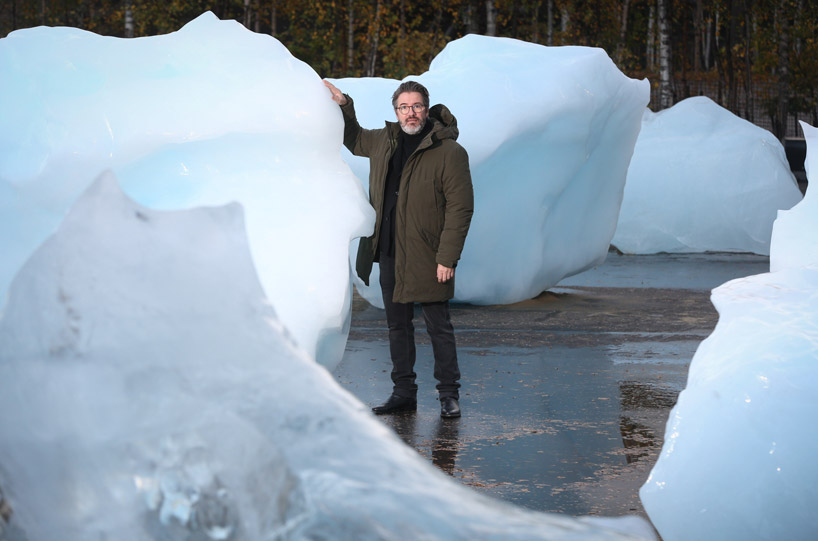
The Weather Project established a framework that continues to inform Eliasson’s later works. Ice Watch between 2014 and 2018 transported blocks of glacial ice from Greenland to urban centres, allowing them to melt publicly and making climate change tactile and temporal. Your Rainbow Panorama from 2011, a circular walkway atop ARoS Aarhus, filters the surrounding city through a continuous spectrum of colour.


Recent projects extend this trajectory. Your Planetary Assembly invites collective dialogue through planetary metaphors embedded in public space. Presence at QAGOMA in Brisbane offers a multi sensory survey of Eliasson’s practice through site specific installations. A Symphony of Disappearing Sounds for the Great Salt Lake from 2026 combines field recordings of local wildlife with evolving light projections, foregrounding ecological interdependence and conservation urgency. The project marks Eliasson’s first installation in the Intermountain West.

ELIASSON IN THE PLANETARY ERA
From an artificial sun in 2003 to the fading echoes of disappearing sounds in 2026, Olafur Eliasson has shaped art into a quiet but insistent call to attention. He does not position himself as a visionary offering solutions. Instead, he operates as a catalyst, countering abstraction and informational overload by making planetary crisis intimate, bodily and shared.
At a moment when collapse feels both imminent and strangely unreal, Eliasson insists on presence and agency. He has described himself as a prisoner of hope, not in denial of crisis but attentive to the possibility of response. For him, art is not an escape from reality but a confrontation with it. Perception becomes responsibility. Sensation becomes ethics.
Eliasson offers no promise of salvation or easy futures. What he offers instead are spaces in which reality is co produced, where light, ice and sound make visible our entanglement with one another and with the planet. In an age marked by division and ecological precarity, his invitation remains open: to see ourselves sensing, to feel urgency in our bodies, and to recognise that presence itself carries consequence. That is the enduring force ignited by The Weather Project, and the dialogue that continues to unfold in every work that follows.
Photo Cover
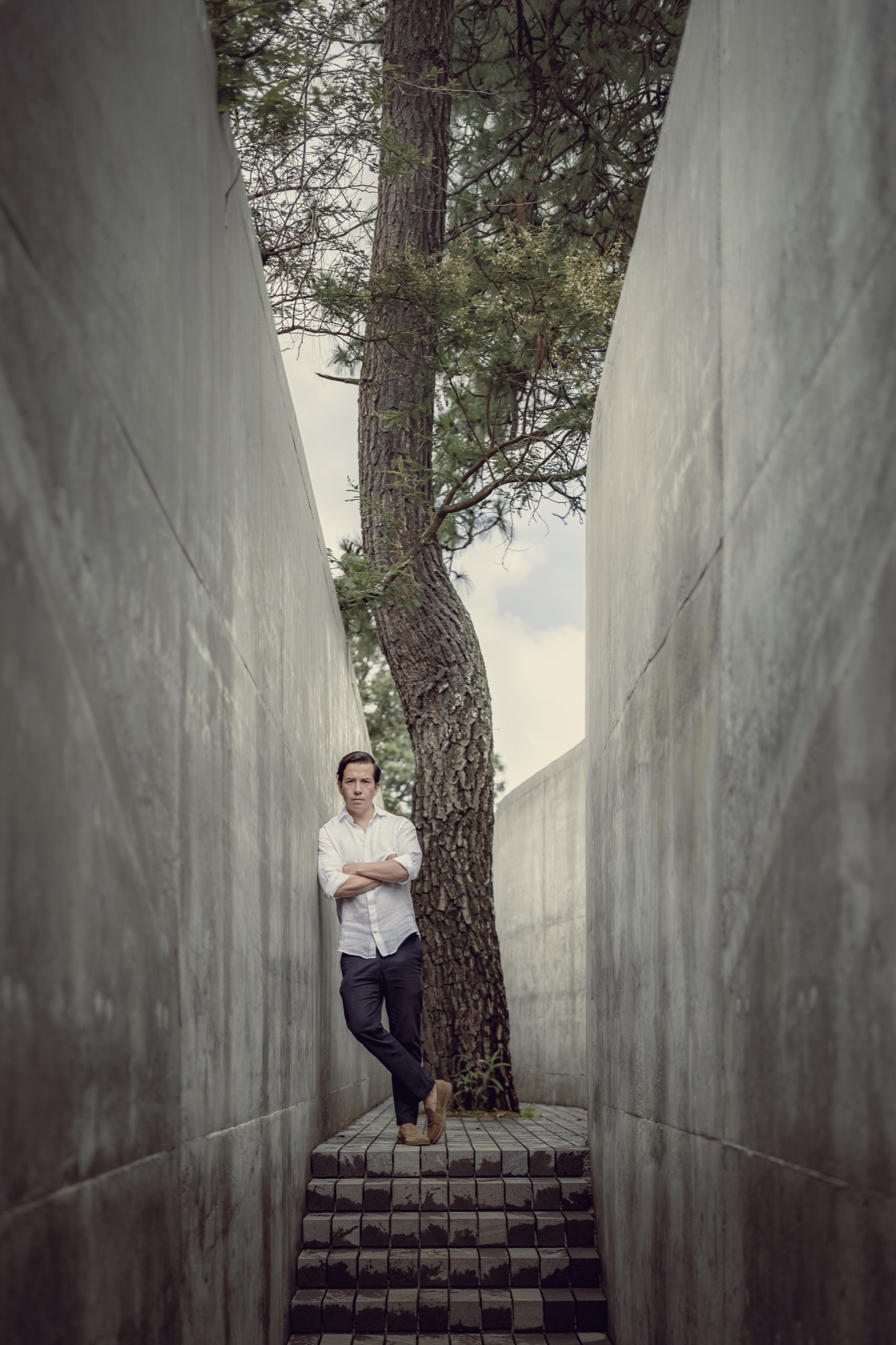
Credit: Alex de Brabant