Now Reading: Eshima Factory: Adaptive reuse revives Teshima island’s circular ecology and community culture
- 01
Eshima Factory: Adaptive reuse revives Teshima island’s circular ecology and community culture

Eshima Factory: Adaptive reuse revives Teshima island’s circular ecology and community culture
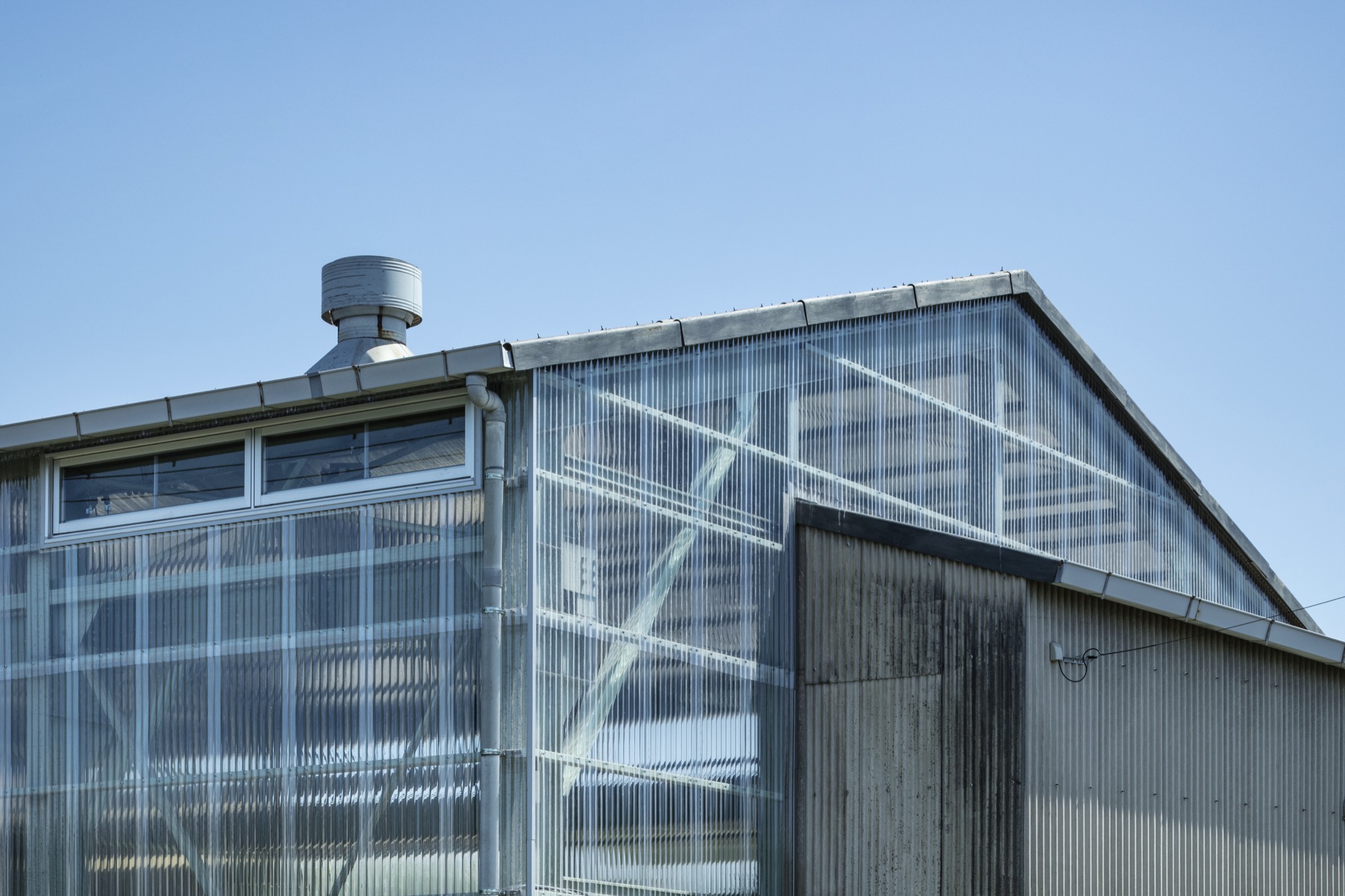
Eshima Factory marks the transformation of a former ironworks facing Ieura Port on Teshima Island into a combined cafeteria and food production facility. Once burdened by the notorious label “Garbage Island” due to decades of illegal industrial waste dumping, Teshima has undergone a remarkable shift. Its remote location has become a strength, enabling the island to reclaim its ecological and cultural identity. This renewed landscape is exemplified by the Teshima Art Museum, whose fluid architecture appears to dissolve into nature, helping erase the island’s stigma while redefining its cultural presence in the Setouchi archipelago.

Long before the rise of environmental consciousness, Teshima developed an agricultural and fishing culture shaped by necessity. With limited access to off-island materials, residents cultivated a self-sufficient lifestyle: terraced rice fields drawing from abundant freshwater sources, pesticide-free farming on steep terrain, and a coastal ecosystem where runoff nourishes seaweed beds that sustain the fishing industry. This interwoven cycle of land and sea has become a model of contemporary sustainability—an approach often described as “cutting-edge precisely because it is one or more laps behind.” Yet this knowledge is fading as the population ages.


ARCHITECTURE AS CATALYST FOR COMMUNITY AND ECOLOGY
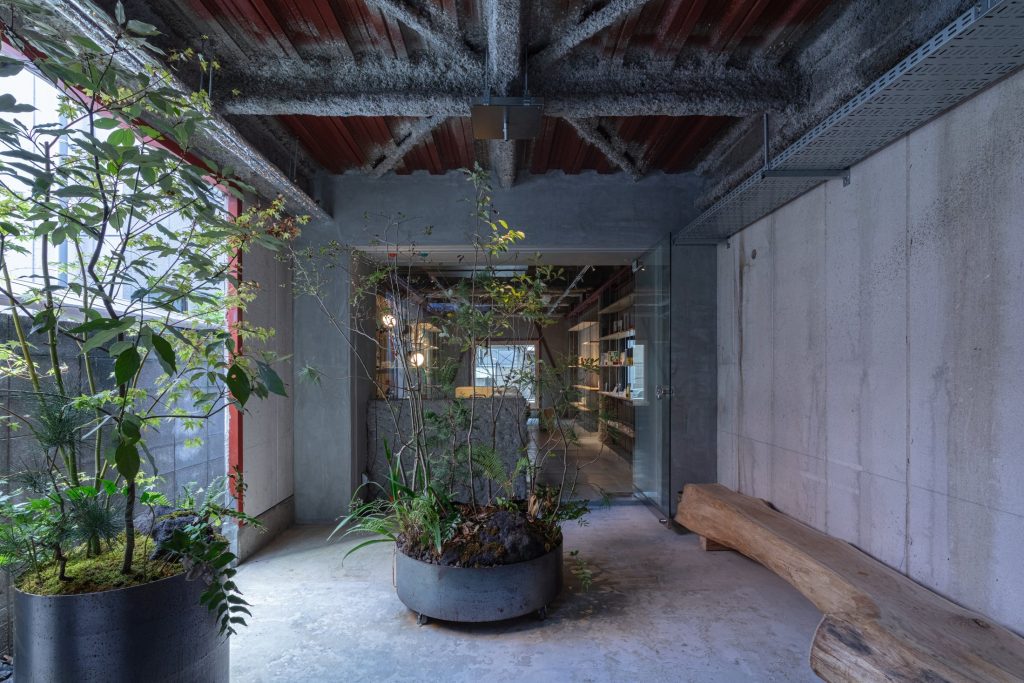
Recognising the urgency of this shift, project operator Amuse set out to revive local agriculture, strengthen island-made products, and develop a new framework for agricultural tourism. Eshima Factory serves as the first architectural intervention in this broader vision. The original 360-square-metre ironworks was divided into two equal volumes: one maintained as a production area now evolving into a brewery, and the other reimagined as a compact 200-square-metre cafeteria.


The existing building’s central symmetrical entrance became the organising axis. On the production side, the original slate roof was preserved to ensure deep shade, while the cafeteria side adopts corrugated polycarbonate panels that bring in soft daylight. Together, the two volumes form a pair of balanced, twin-like structures welcoming visitors arriving at the port.


Inside, the design draws from the industrial character of the steel frame, reinterpreting its tones through bespoke furniture and fixtures. Recycled marine plastic collected from the Seto Inland Sea is transformed into spherical pendant lights, creating a subtle narrative link to the island’s environmental past and future. Beneath these lights are chairs co-designed by Dutch artist Sander Wassink in collaboration with Teshima residents, merging global artistic practice with local craftsmanship.


A NEW SOCIAL HEART FOR TESHIMA
Today, the cafeteria functions not only as a place to taste island-grown ingredients but also as a communal living room where residents and visitors naturally converge. It embodies the project’s broader ambition: to create architecture that strengthens the island’s circular ecology, supports local production, and restores cultural continuity. Through the adaptive reuse of an industrial ruin, Eshima Factory demonstrates how thoughtful design can revive endangered knowledge, anchor community identity, and help an island once written off as waste ground chart a sustainable future.


Project Credit
Title: Teshima Factory
Design: Jo Nagasaka / Schemata Architects / @schemataarchitects
Project Team: Junnosuke Kamijima, Fuka Nakahara
Location: 889 Ieura, Teshima, Tonosho-cho, Shozu-gun, Kagawa, Japan
Site Area: 973.4 m2
Total Floor Area: 364.8 m2
Structure: Steel Frame Construction
Year: 2025
Photography: Kenta Hasegawa
More Photos


Related Posts
Previous Post
Next Post
- The timeless elegance of domestic appliances: From the Iconic Braun KF 20 aromaster to the German design ethos

- Emilio Ferro on the light, sound and memory of a place
- At Maniwa, an architect’s family home opens to the neighbourhood
- What bronze remembers of the hand

- Caught in light: Moradavaga’s suspended shoal

- The making of Alex Chinneck’s impossible Dior windows