
Now Reading: A heritage cottage reimagined through light
- 01
A heritage cottage reimagined through light


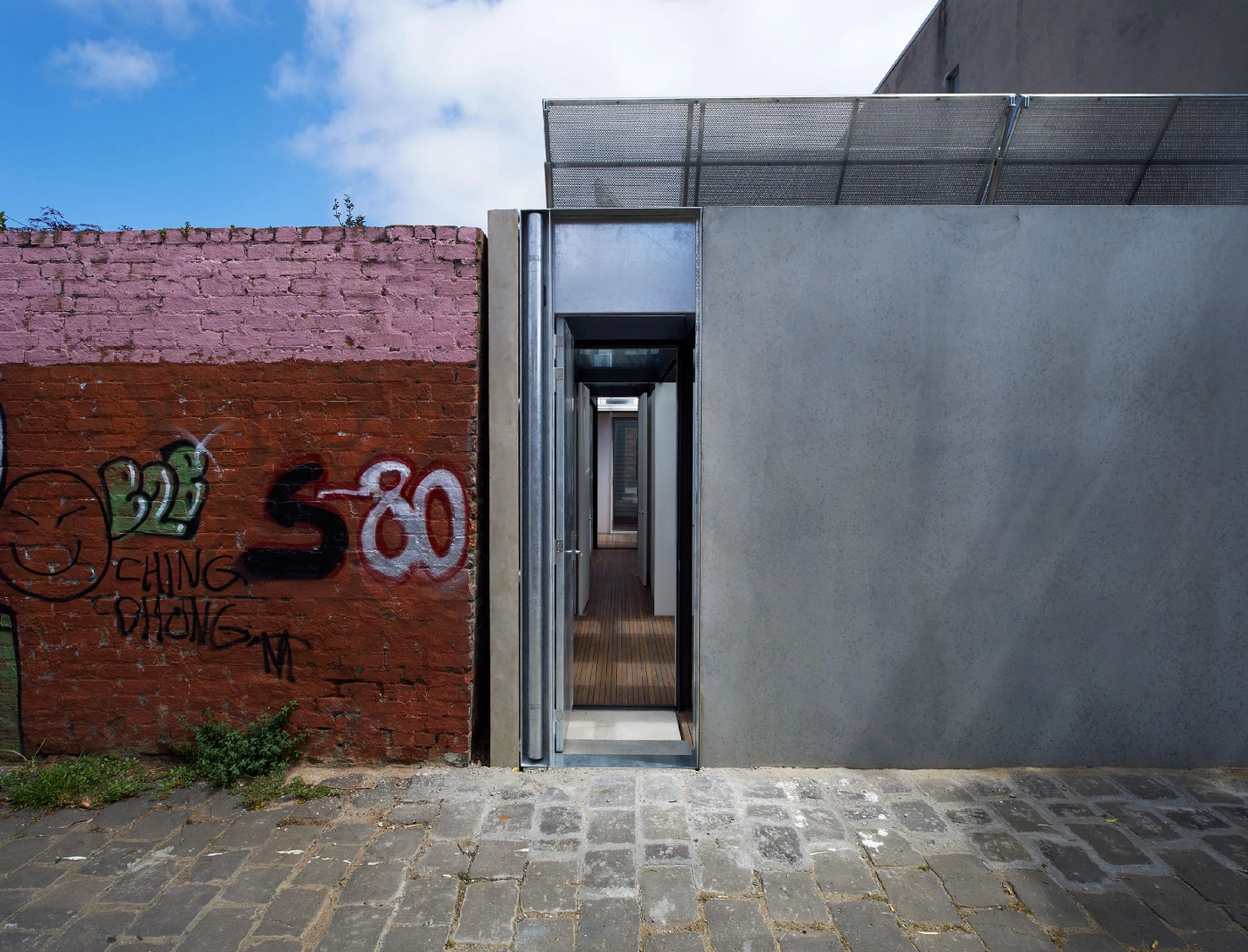
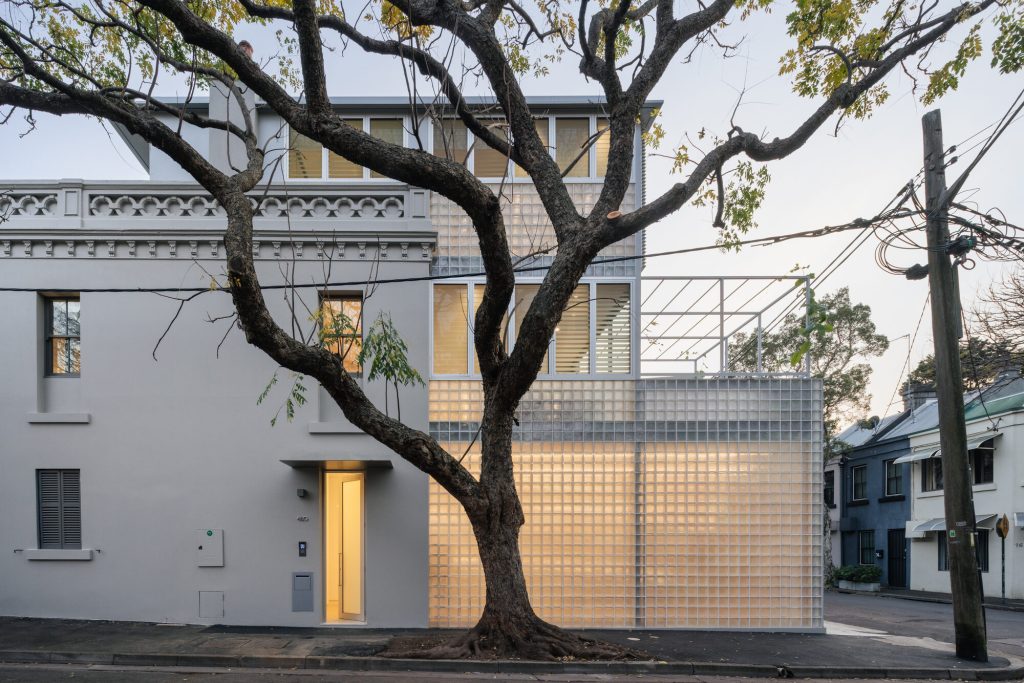
In the inner suburbs of Melbourne, Sean Godsell Architects transform a protected timber cottage into a compact courtyard house that treats regulation not as constraint but as conceptual catalyst. Local authorities required the original street-facing cottage to remain intact. Rather than accepting it as a static historic shell, the architects used it as a point of departure, placing a small concrete and glass addition discreetly behind the preserved frontage. The resulting composition forms an inward-looking urban compound, where a new walled courtyard mediates between old and new.

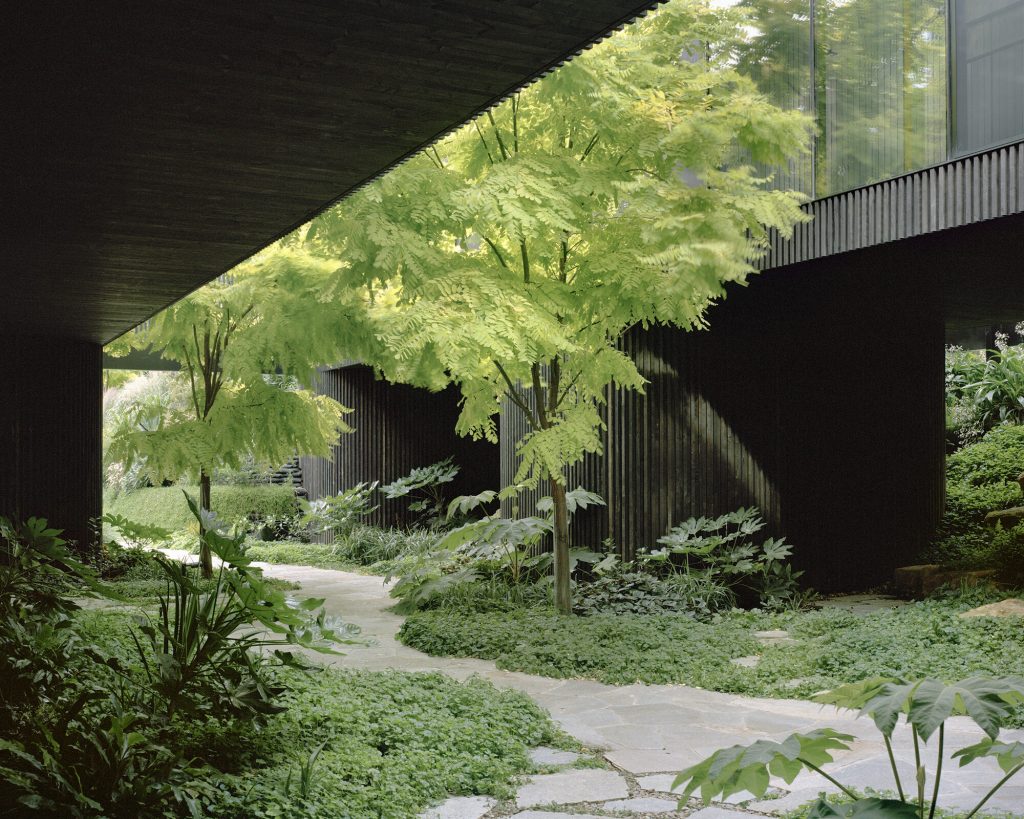
The courtyard becomes the true centre of the dwelling. Its tight proportions and exposed concrete surfaces recall the measured discipline of Kazuo Shinohara and the luminous restraint of Tadao Ando. Like Ando’s Sumiyoshi row house, a slice of unmediated sky organizes the plan, turning movement between rooms into a ritual of stepping outdoors. This open void allows the modest site to breathe, giving the house a generosity that its footprint alone could never suggest.

REWORKING THE TIMBER SHELL
Inside the cottage, the architects clear away internal partitions to create a single open volume beneath a new cathedral ceiling. Two timber posts hold the ridge, sharpening the spatial rhythm of the old framework. Cylindrical light cannons pierce the roof, drawing daylight deep into the centre of the room and casting shifting columns of illumination across the interior. The reworked shell retains the scale and texture of the original structure, yet its geometry becomes newly precise. The cottage is no longer a nostalgic relic but a calibrated instrument for collecting and modulating light.

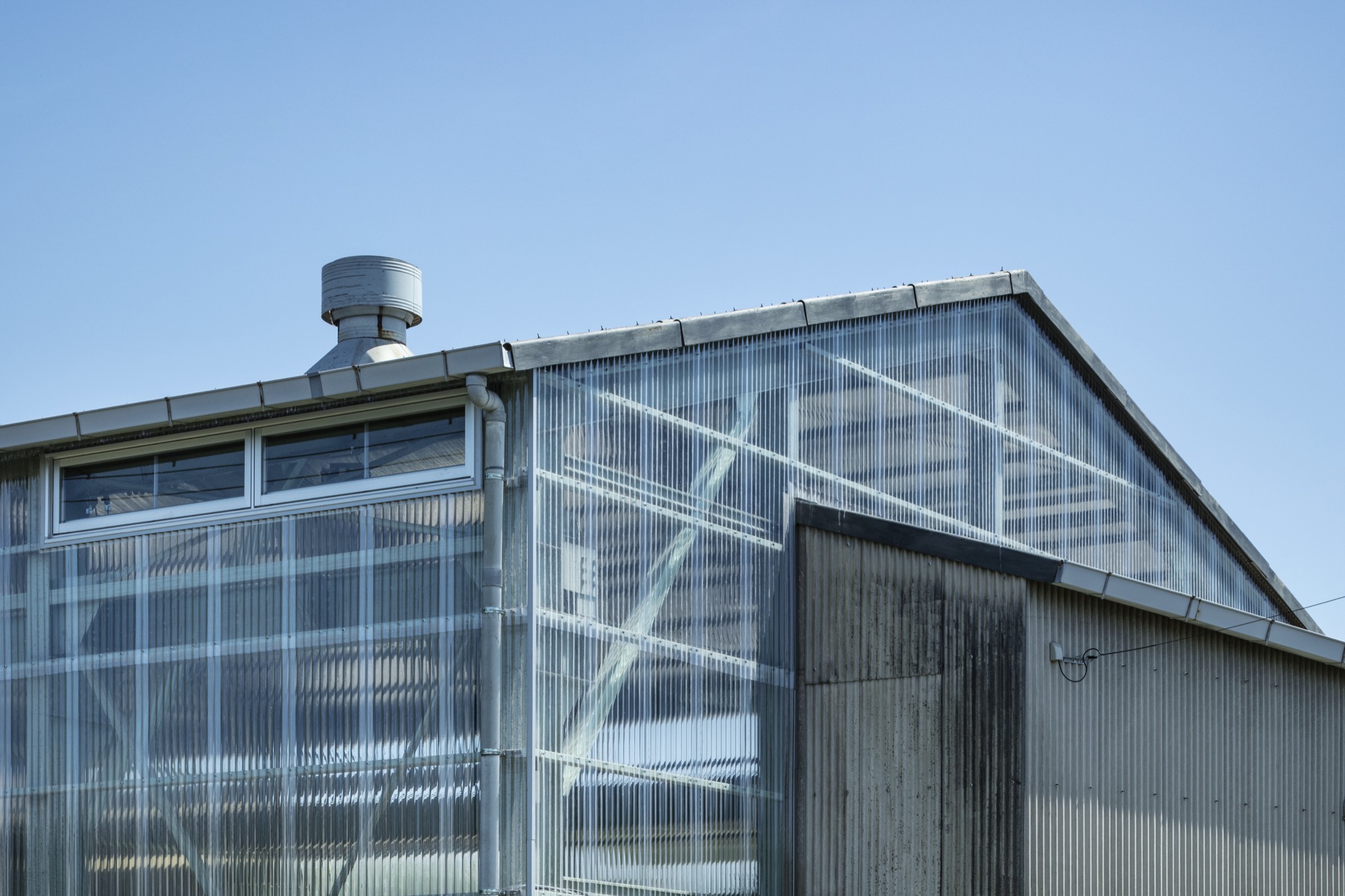
At the rear, the new volume is intentionally low, its overall height limited to three metres to avoid overshadowing neighbours and to remain below lines of overlooking. To counter the reduced height, the architects glaze the entire roof. Above this glass lid, an automated timber screen slides and pivots in multiple configurations. This dynamic layer tempers the intensity of summer sun, invites winter warmth, and constantly rewrites the interior lightscape. The interplay of glass and timber dissolves the boundary between interior and exterior, reinforcing the project’s focus on atmospheric control rather than mere square metres.


A DOMESTIC LANDSCAPE IN MINIATURE
When the screen opens fully, the flat roof becomes an occupiable terrace, extending domestic life upward into the air above the laneway. From this elevated platform, the city’s skyline appears beyond the patched roofs of the neighbourhood, reminding visitors of the project’s quiet modesty in scale and means. Despite its size, the Green House operates with the same architectural ambition that characterizes Godsell’s larger public commissions: a belief that architecture’s essential task is to choreograph light, weather, and movement so that the intimate rituals of daily life feel grounded, protected, and quietly expansive.


In its negotiation between preservation and invention, between the weight of heritage and the lightness of contemporary living, the project demonstrates how a small urban lot can be transformed into a resonant environment. Green House becomes not just a renovation but a meditation on how architecture can refine the presence of the ordinary, making a modest home luminous from within.


Project Credit
Project name: Green House
Architecture Firm: Sean Godsell Architects / @seangodsellarchitects
Year: 2014
Location: Melbourne, Australia
Photo: Earl Carter