Now Reading: Miguel Marcelino crowns Casa Capitão in Lisbon with exposed concrete and hidden terraces
- 01
Miguel Marcelino crowns Casa Capitão in Lisbon with exposed concrete and hidden terraces

Miguel Marcelino crowns Casa Capitão in Lisbon with exposed concrete and hidden terraces

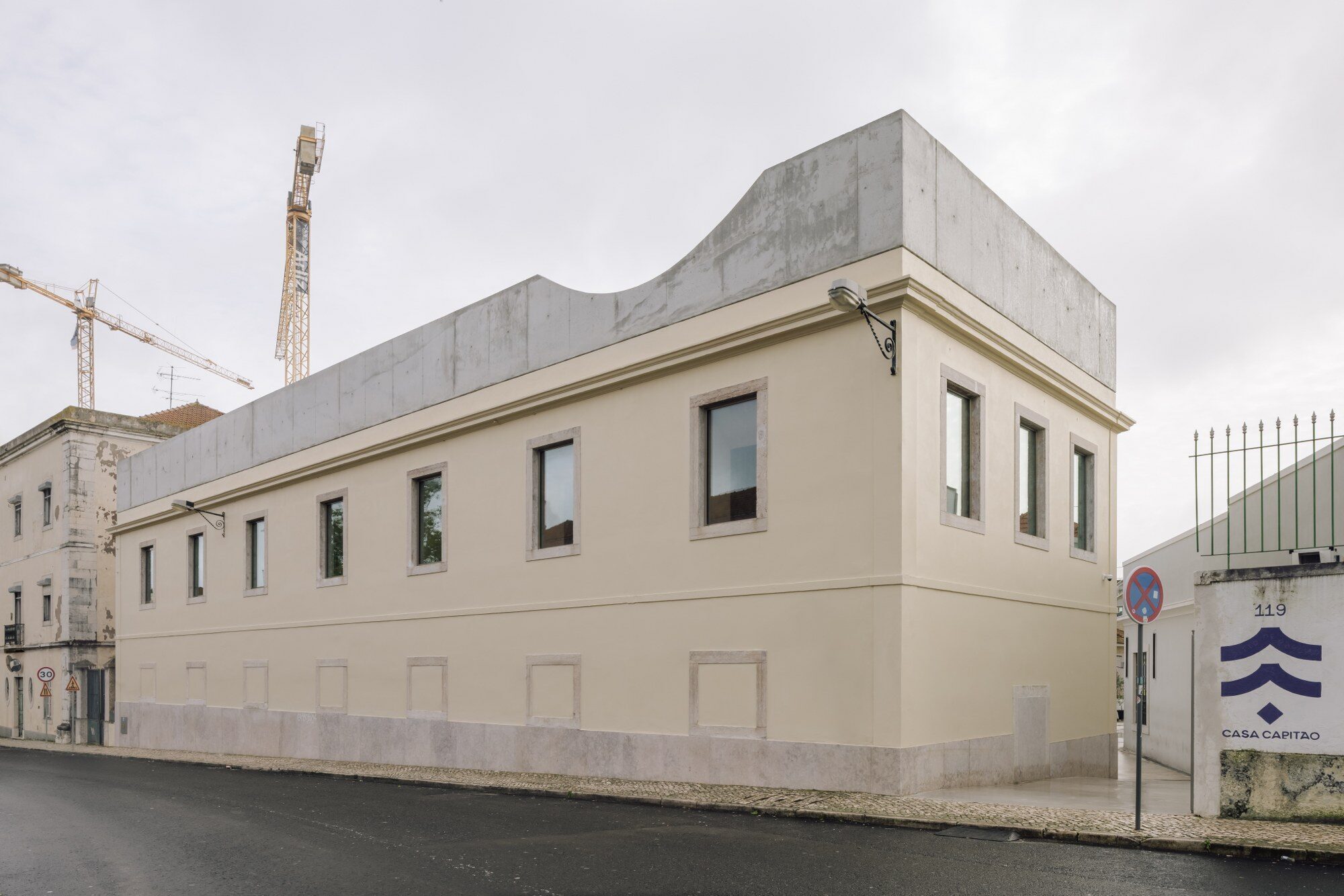
Tucked within the evolving district of Beato in Lisbon, Casa Capitão transforms a modest late 19th century building into a layered cultural venue dedicated to music, gastronomy, art, and critical discussion. Rather than announcing itself through a monumental street presence, the project embraces discretion. From the outside, the building appears almost closed to the city, its new identity only gradually revealed through movement and discovery.


The intervention preserves the restrained character of the original structure while introducing a striking exposed concrete crown above the historic volume. This addition signals the building’s contemporary program without erasing its existing architectural memory, creating a careful dialogue between permanence and transformation.

Arrival at Casa Capitão unfolds as a spatial narrative rather than a singular gesture. There is no conventional front entrance. Visitors move through a narrow side passage before emerging into a hidden courtyard terrace at the rear of the complex. This open space becomes the true center of the project, reconnecting the building to the surrounding urban fabric while establishing a new social heart for gatherings, performances, and informal encounters.

Circulation through the venue continues entirely in open air. Staircases, passages, and courtyards connect the different programs in a sequence that recalls the layered spatial experience of Mediterranean and Baroque architecture. The building reveals itself gradually, encouraging moments of pause and transition between one atmosphere and the next.


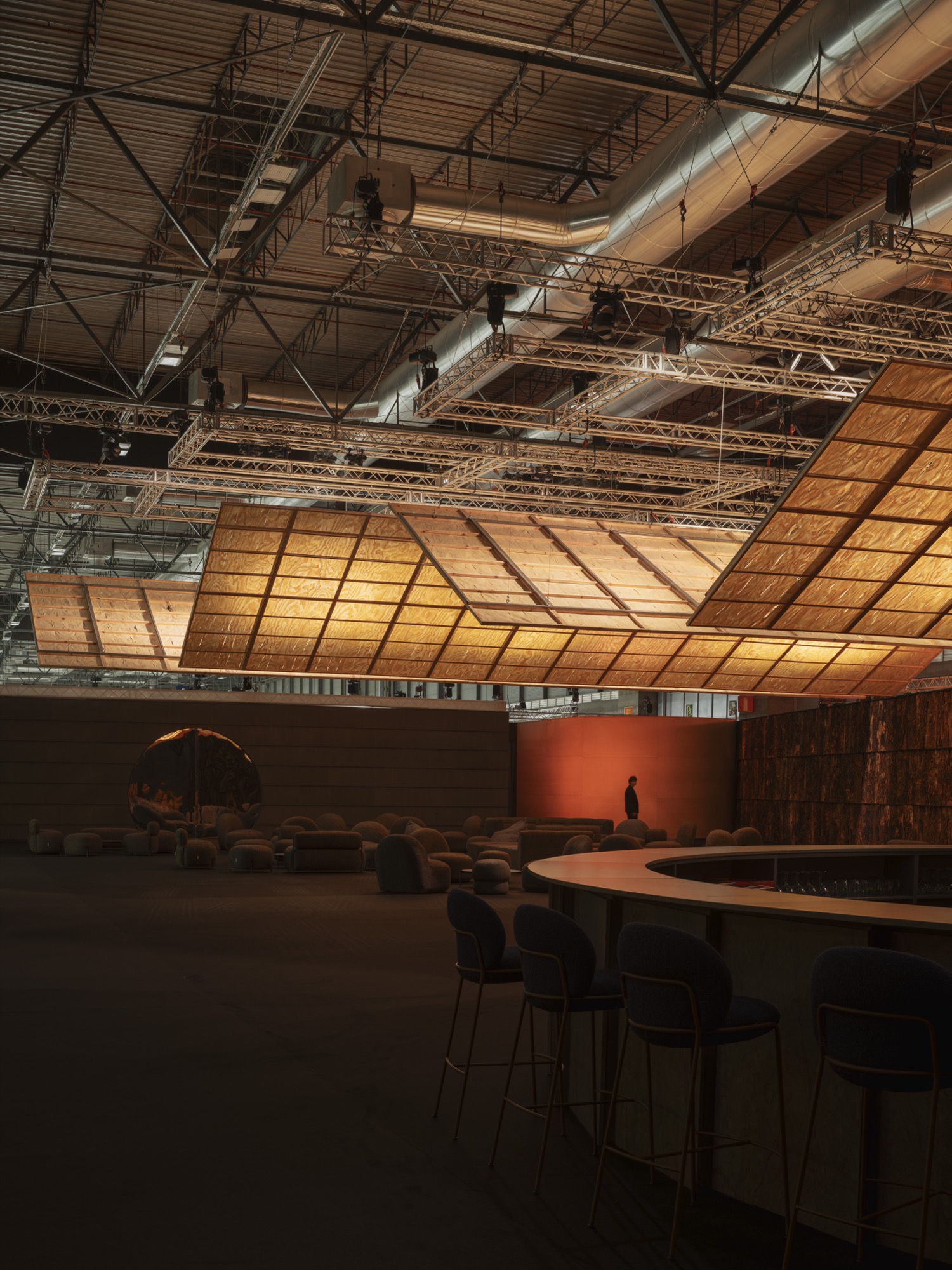
Each public space inside Casa Capitão carries its own chromatic identity. The concert hall on the ground floor adopts a raw and immersive character, while the bar and restaurant on the first floor open directly onto the courtyard, blurring the boundary between interior and exterior life. Above, the attic becomes a more intimate retreat, contrasting with the energy of the lower levels.


Even secondary spaces such as the restrooms are treated as part of the project’s atmospheric composition. Color is used not as decoration, but as a spatial device that gives each room a distinct emotional register. Together, these environments create a building experienced less as a fixed object than as a continuous sequence of moods, encounters, and events.


Casa Capitão ultimately positions architecture as cultural infrastructure: open, adaptable, and deeply tied to collective urban life. In a neighborhood undergoing rapid transformation, the project offers a quieter model of regeneration, where social interaction and spatial discovery shape the identity of the place.

Project Credit:
Project Name: Casa Capitão
Location: Beato Innovation District, Lisbon, Portugal
Architecture firm: Miguel Marcelino / @miguelmarcelino.arq
Photo: Lourenço T. Abreu / @lourencotabreu, Archive Miguel Marcelino