Now Reading: Casa T+A Azores house renovation preserves historic fabric in Ponta Delgada
- 01
Casa T+A Azores house renovation preserves historic fabric in Ponta Delgada

Casa T+A Azores house renovation preserves historic fabric in Ponta Delgada
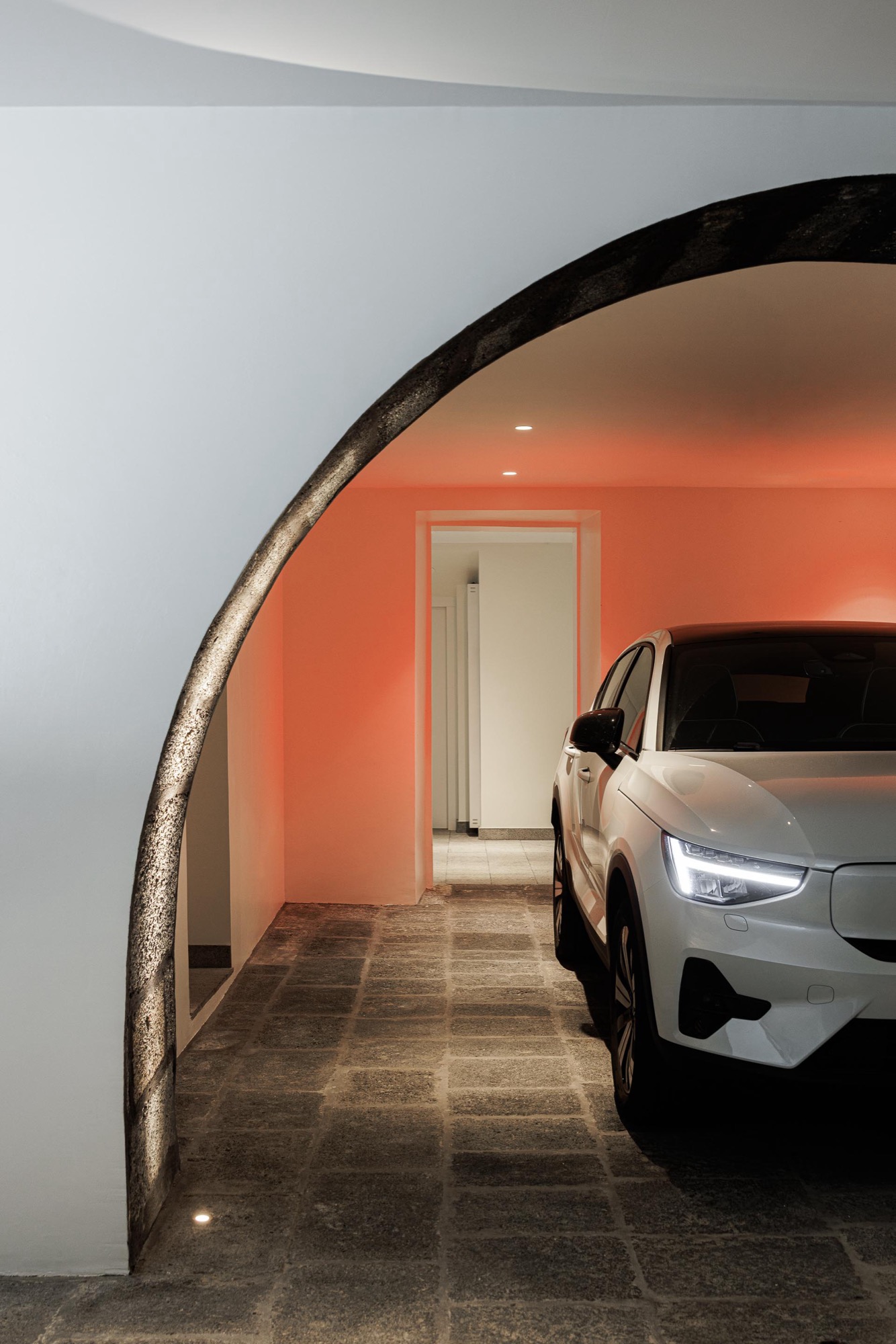
In the historic centre of Ponta Delgada, a pre 1951 house is reinterpreted through an approach grounded in restraint and continuity. Embedded within a consolidated urban fabric, the building carries a layered identity shaped by its scale, its relationship to the garden, and the accumulated traces of inhabitation. The project does not seek to transform this condition, but to sustain it, allowing the house to evolve without losing its temporal depth.

The intervention is guided by a precise principle: to preserve what is essential. No volumetric additions are introduced, and the original footprint remains intact. The project operates within the existing structure, maintaining its spatial logic while refining it for contemporary life. Interior adjustments are subtle yet deliberate, improving functionality and comfort while retaining the legibility of the original domestic organisation. Architecture here is understood as a process of continuity rather than replacement, where the house remains a living framework capable of absorbing new patterns of use.


The most visible transformation occurs at the rear façade, facing the interior of the plot. Here, the intervention becomes more expressive, though still controlled. Materials are selected to remain in dialogue with the existing palette, where stone, plaster and timber define the architectural character. Window frames are redesigned with improved performance, yet remain chromatically integrated into the whole.

The relationship with the garden is intensified, extending domestic life outward into a space shaped for leisure and contemplation. A swimming pool is introduced as a central element, positioned on an elevated timber platform that preserves permeability and allows the ground to breathe. The deck extends interior spaces outward, establishing a gradual transition between inside and outside. Timber is detailed with open joints, reinforcing lightness and proximity to nature, while existing volcanic stone patios are retained as material anchors of memory.
The house unfolds across three levels, organised through a clear vertical continuity. Natural light plays a central role, entering through existing openings and being amplified in spaces of longer occupation. The project prioritises the recovery of original elements wherever possible, including timber floors, window frames, trims and the stairwell, ensuring a continuous reading of the house across time. Private areas gain autonomy through the introduction of en suite bathrooms, while shared spaces become more fluid and interconnected. Movement is clarified and visual relationships between levels are strengthened, allowing daily life to unfold with greater ease.


This intervention does not impose a new identity. It recalibrates the conditions of inhabitation, allowing past and present to coexist in balance. The house remains recognisable yet renewed, defined by a quiet atmosphere shaped through continuity, material presence and an attentive approach to time.


Project Credits
Project name: Casa T+A Açores (T+A Azores House)
Architecture office: Atelier d’Arquitectura Lopes da Costa / @atelierlopesdacosta
Location: Ponta Delgada, Azores, Portugal
Year of completion: 2025
Total area: 1084 m²
Photo: Ivo Tavares Studio / @ivotavaresstudio
More Photos


Related Posts
Previous Post
Next Post
- The timeless elegance of domestic appliances: From the Iconic Braun KF 20 aromaster to the German design ethos

- Emilio Ferro on the light, sound and memory of a place
- At Maniwa, an architect’s family home opens to the neighbourhood
- What bronze remembers of the hand

- Caught in light: Moradavaga’s suspended shoal

- The making of Alex Chinneck’s impossible Dior windows