
Now Reading: Carlo Scarpa: Dialogues with History
- 01
Carlo Scarpa: Dialogues with History


THE WHISPER OF WATER AT QUERINI STAMPALIA
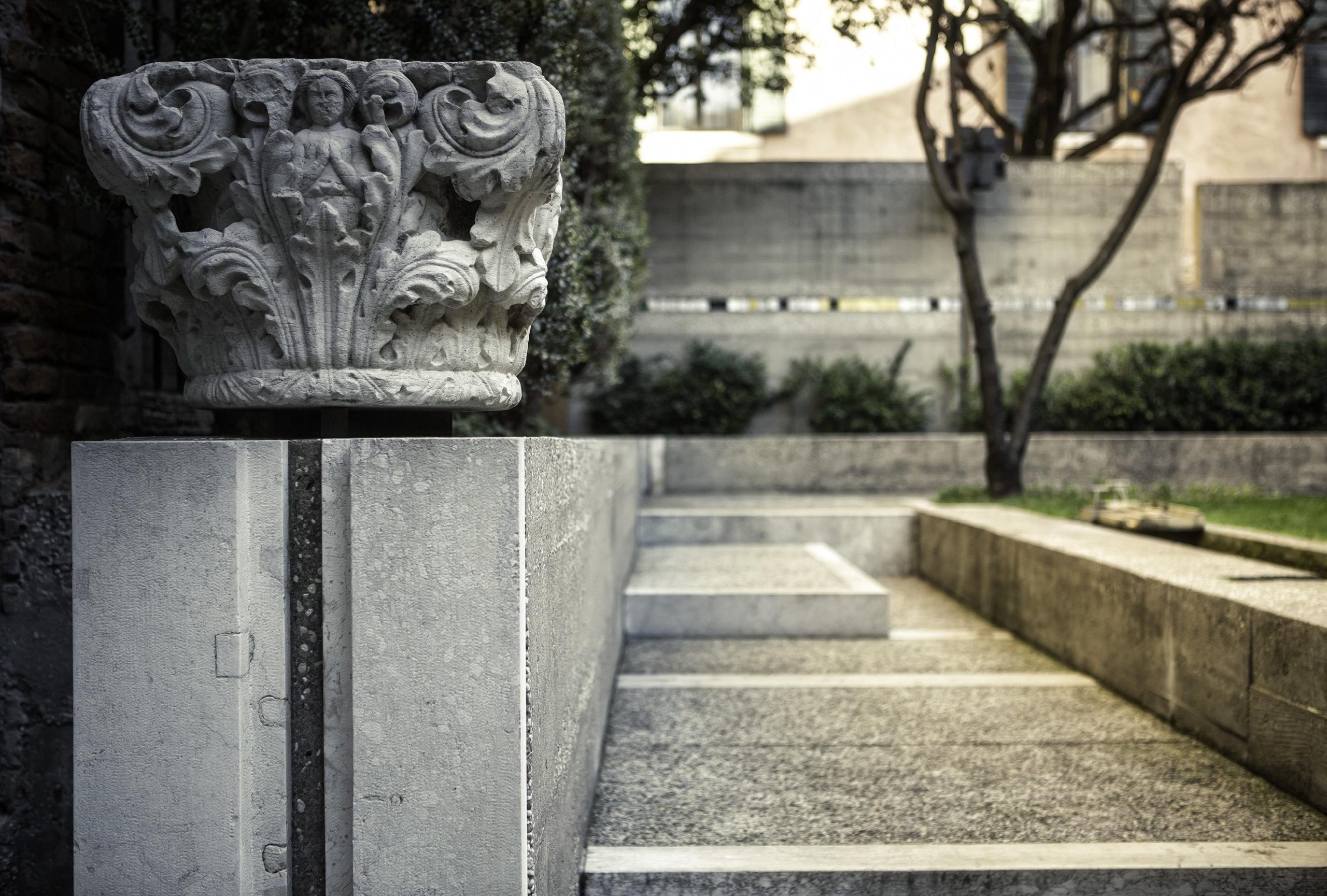
The Fondazione Querini Stampalia presents Venice in its most distilled condition. Not as image, but as process. Here, architecture exists in continuous negotiation with water, time, and erosion. Carlo Scarpa’s intervention between 1959 and 1963 does not seek to stabilize this condition. It clarifies it.
The sixteenth century palazzo, later transformed into a public institution, occupies a ground floor historically exposed to flooding. Scarpa does not defend the interior from acqua alta. He reorganizes the threshold so that water enters as a measured presence. Brass channels guide its movement. Stone surfaces register reflection and rhythm. Flooding becomes legible rather than destructive.

The project does not begin with the staircase for which it is often remembered. It begins at ground level, where entry is slowed and recalibrated. Materials meet without blending. Old and new remain distinct. History is neither concealed nor aestheticized. It is made readable through precision.


Querini is not restoration, nor is it autonomous modern insertion. It is an act of interpretation. Scarpa does not overwrite the palazzo. He edits it. Architecture, here, is defined not by form, but by attention.

AN ETHIC OF INTERVENTION
Scarpa’s work is frequently associated with detail. This is accurate, but incomplete. For Scarpa, detail is not refinement. It is responsibility.
Each joint establishes a position. Each cut declares intention. At Querini, new elements never mimic the historic fabric. They stand beside it with clarity. Transitions are articulated, not softened. Continuity emerges through distinction.

This approach frames intervention as an ethical act. The existing building is treated as a structure shaped by time, use, and alteration. Architecture begins with reading before it proceeds to making.
Scarpa’s position resists both nostalgic preservation and heroic modernism. He neither freezes the past nor negates it. Instead, he proposes architecture as a disciplined dialogue with what already exists.
A LANGUAGE OF THRESHOLDS AND LIGHT
Scarpa’s spatial language is constructed through interruption. Movement is never automatic. One turns, pauses, adjusts. Space is encountered gradually.
At Querini, circulation is indirect by design. Paths shift laterally. Levels change subtly. The staircase operates not as an object, but as a sequence. Each step alters proportion, enclosure, and light.

Light is treated as a material condition. It is filtered, delayed, reflected. Water amplifies its presence. Interior surfaces become responsive. Texture and age are revealed rather than neutralized.

This is not scenography. It is spatial discipline. Scarpa constructs awareness through controlled movement. Architecture teaches perception by shaping the act of moving.
MATERIAL INTELLIGENCE
Scarpa’s sensitivity to materials is grounded in craft culture and long familiarity with making. Materials are selected for behavior, not effect.

Stone carries weight and continuity. Brass records touch and oxidation. Concrete reveals time through surface. Wood and cork absorb sound and soften movement. Materials are allowed to age. Use is not concealed. At Querini, material choice reinforces conceptual intent. Flooding does not erase surfaces. It marks them. Architecture registers environmental conditions rather than denying them. Scarpa’s joints are not ornamental. They are declarative. They assert that construction is a form of knowledge. Precision becomes a measure of respect.
FROM QUERINI OUTWARD
Querini Stampalia condenses Scarpa’s position with unusual clarity, but its principles extend across his work.
At the Olivetti showroom in Venice, retail space becomes architectural sequence. Display, structure, and movement are inseparable. At the Castelvecchio Museum in Verona, medieval artifacts are repositioned through calibrated distances and frames, producing a critical reading of history rather than a romantic one. At the Brion Tomb, Scarpa’s language becomes a meditation on time and ritual, articulated through concrete, water, and landscape.


Across these projects, the same questions recur. How to intervene without erasure. How to remain contemporary without severing historical continuity. How to build without silencing what is already present.

Credit: Photo by Federico Puggioni

Credit: Photo by Federico Puggioni


THE ENDURING ECHO
Carlo Scarpa’s architecture resists immediacy. It requires time. It rewards attention.
Querini Stampalia remains one of its clearest expressions. It demonstrates that architecture does not need to resolve every condition in order to be meaningful. Its task can be to frame, clarify, and make visible. Scarpa’s legacy is not a style to replicate. It is a discipline of care. An understanding of architecture as an ethical practice shaped by material intelligence, historical awareness, and respect for human perception.
Photo Cover
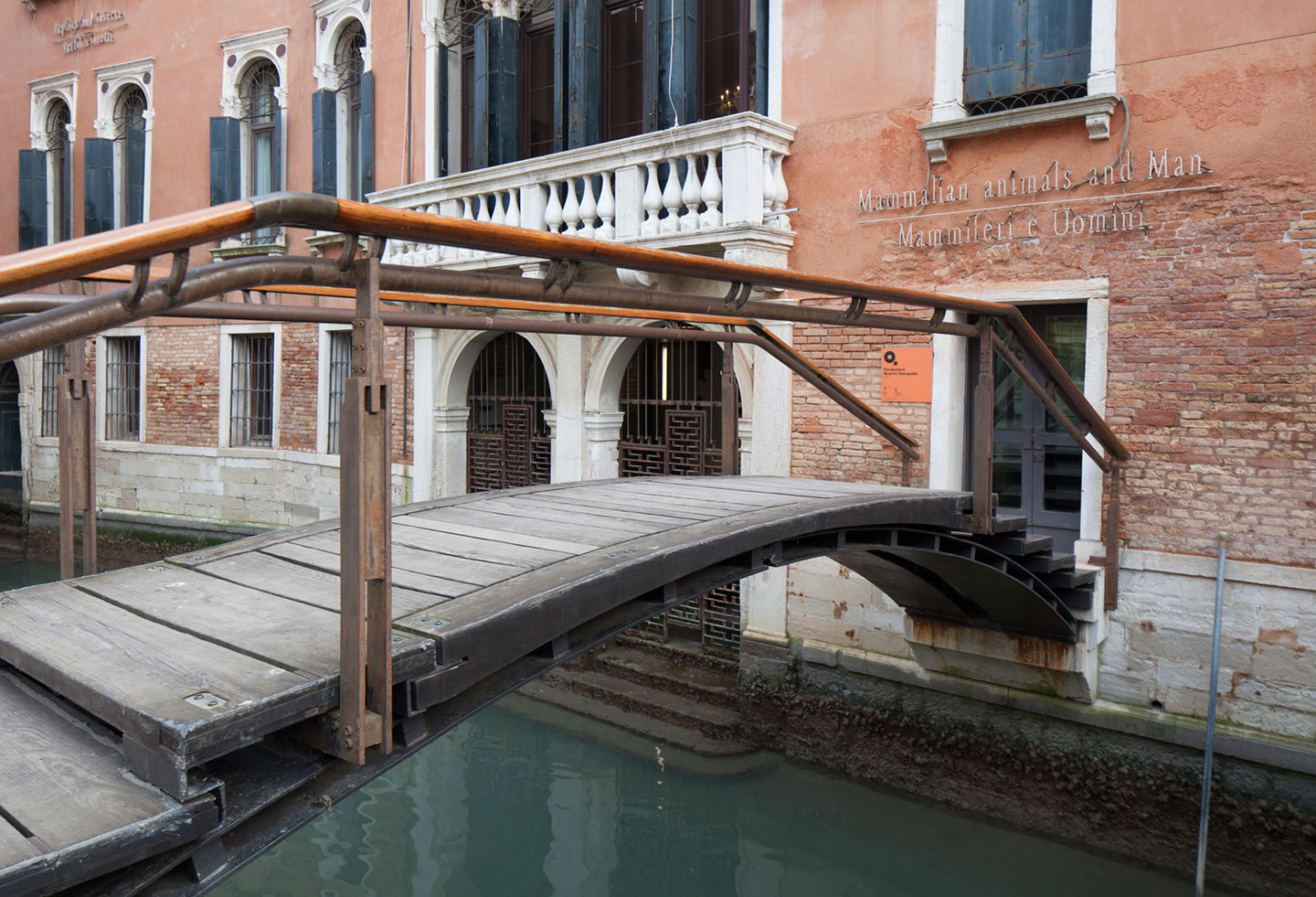
The bridge and entrance at Fondazione Querini Stampalia, Venice, by Carlo Scarpa, water and history in dialogue. Credit: Photo by Riccardo De Cal / Courtesy Fondazione Querini Stampalia (via Divisare).