
Now Reading: Willem Marinus Dudok: Civic modernism and the architecture of measured permanence
- 01
Willem Marinus Dudok: Civic modernism and the architecture of measured permanence

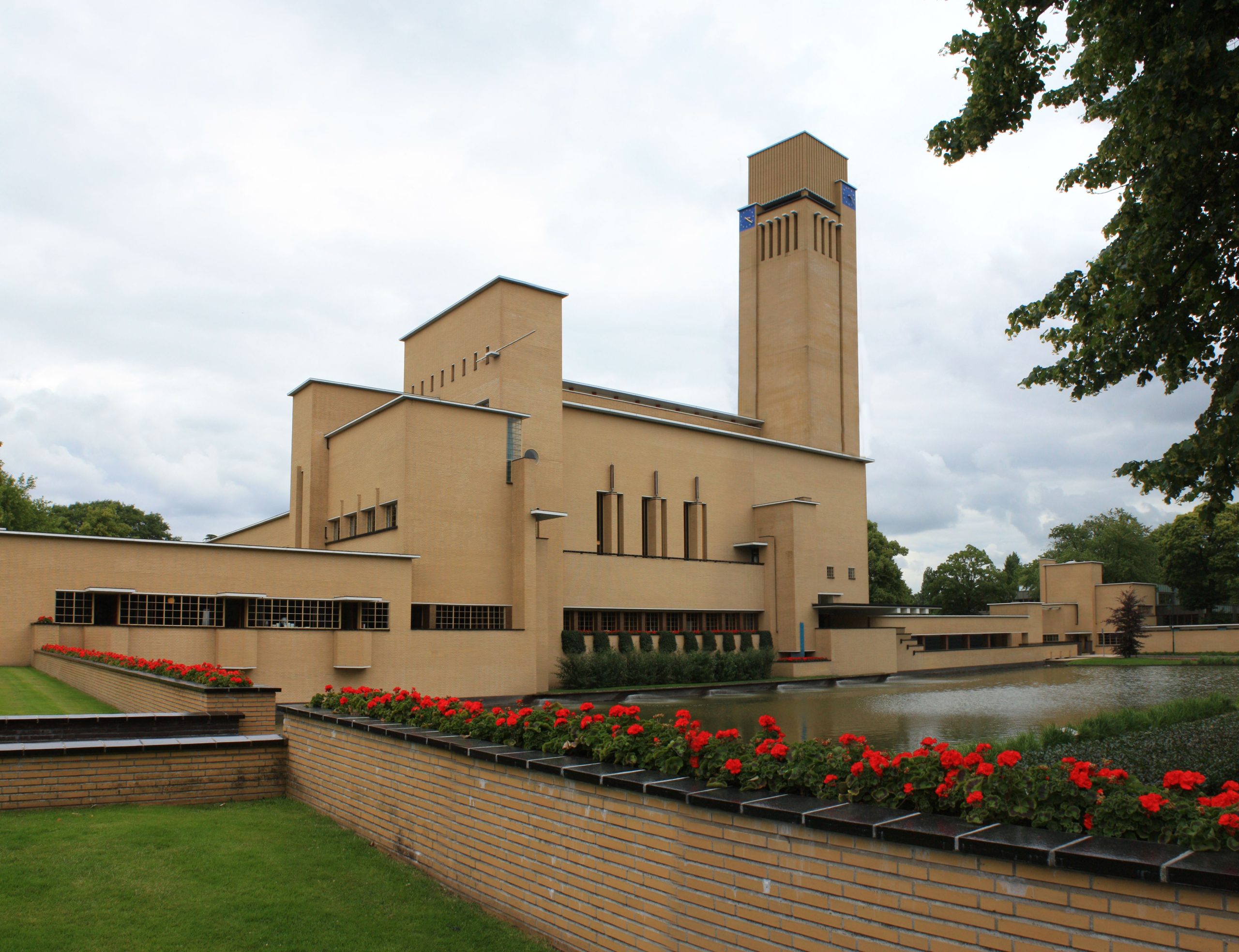
Willem Marinus Dudok: Civic modernism and the architecture of measured permanence

Beginning with Hilversum Town Hall, Dudok articulated a distinctive modernity: restrained, materially persuasive, and inseparable from civic life. It was not a modernism of proclamations, but one constructed through composition, joints, and the slow authority of use.

In the history of European modern architecture, few municipal buildings have secured the long afterlife of Hilversum Town Hall, completed in 1931. The project takes a deliberately lateral position within the debates of its time. It neither pursues the industrial assertiveness associated with avant-garde modernism nor retreats into historicist reassurance. Instead, it proposes architecture as a civic condition, where modernity is produced through spatial order, calibrated materiality, and a sense of permanence capable of absorbing time.

The approach is revealing. The clock tower operates as an unmistakable marker, yet the building asserts itself horizontally, stretched across water and planted ground. Monumentality here is not produced by scale or frontal display, but by sequencing. Dudok asks the visitor to read the institution gradually, through setbacks, courts, and extended planes, rather than through a single symbolic gesture.

Born in 1884, Willem Marinus Dudok was not shaped by academic orthodoxy. He matured within a Dutch culture where brick construction carried both technical intelligence and social memory. His sustained relationship with Hilversum sharpened a particular ethic: architecture as a long civic continuum rather than a series of isolated commissions. Schools, administrative buildings, and public facilities became testing grounds for proportion, repetition, and the everyday rituals of public life.

International recognition did not detach Dudok from this grounding. When he received the American Institute of Architects Gold Medal in 1955, it acknowledged not a spectacular oeuvre, but a consistent one: a modernism built patiently through civic responsibility.
Dudok’s architecture resists classification because it resists dogma. His work synthesizes influences ranging from Berlage and the Amsterdam School to De Stijl, while maintaining a sustained dialogue with Frank Lloyd Wright. From Wright, Dudok absorbed an understanding of horizontality and landscape, translating lessons from domestic scale into a civic register. The result is neither organic imitation nor abstract reduction, but a clear architectural grammar based on volumetric clarity and controlled repetition.

Hilversum Town Hall marks the point at which this grammar reaches full articulation. The building is organized through a legible hierarchy: the tower anchors orientation, while lower wings accommodate the daily machinery of municipal life. Authority emerges not through symmetry, but through composition, through the careful alignment of volumes and voids.
Material decisions are central to this effect. A concealed concrete-and-steel load-bearing structure allows edges to read as thin and planes to appear weighty yet buoyant. Dudok developed an oblong-format brick specifically for the project, reinforcing horizontality while enabling subtle shadow joints to register light across the façade. The calm of the building is not stylistic restraint alone, but the product of constructional precision.
The later restoration of the town hall between 1989 and 1995 revealed the specificity of those choices. Bricks fired too softly had deteriorated under frost, requiring careful replacement. Interiors, colours, and furnishings were reinstated not as nostalgic gestures, but as acknowledgements that Dudok’s architecture operated as a coherent spatial system rather than a visual shell.

Across Dudok’s work, similar principles recur. Horizontality functions as a civic stance, stable and legible. Thick walls and narrow window bands negotiate privacy and openness without theatrical contrast. Brick remains tactile, carrying the memory of making, yet disciplined by proportion. Where many modern architects sought to erase the hand, Dudok allowed construction to remain visible, subjected to order rather than concealed.

Hilversum Town Hall is not an anomaly. Dudok’s schools in Hilversum had already explored architecture as a framework for collective life. In Rotterdam, De Bijenkorf, completed in 1930 and demolished in 1960, demonstrated how this language could operate at an urban-commercial scale, its loss underscoring the fragility of modern heritage in the face of redevelopment. In Paris, the Collège Néerlandais at the Cité internationale universitaire de Paris translated Dudok’s vocabulary into an international context, adjusting scale without abandoning discipline.

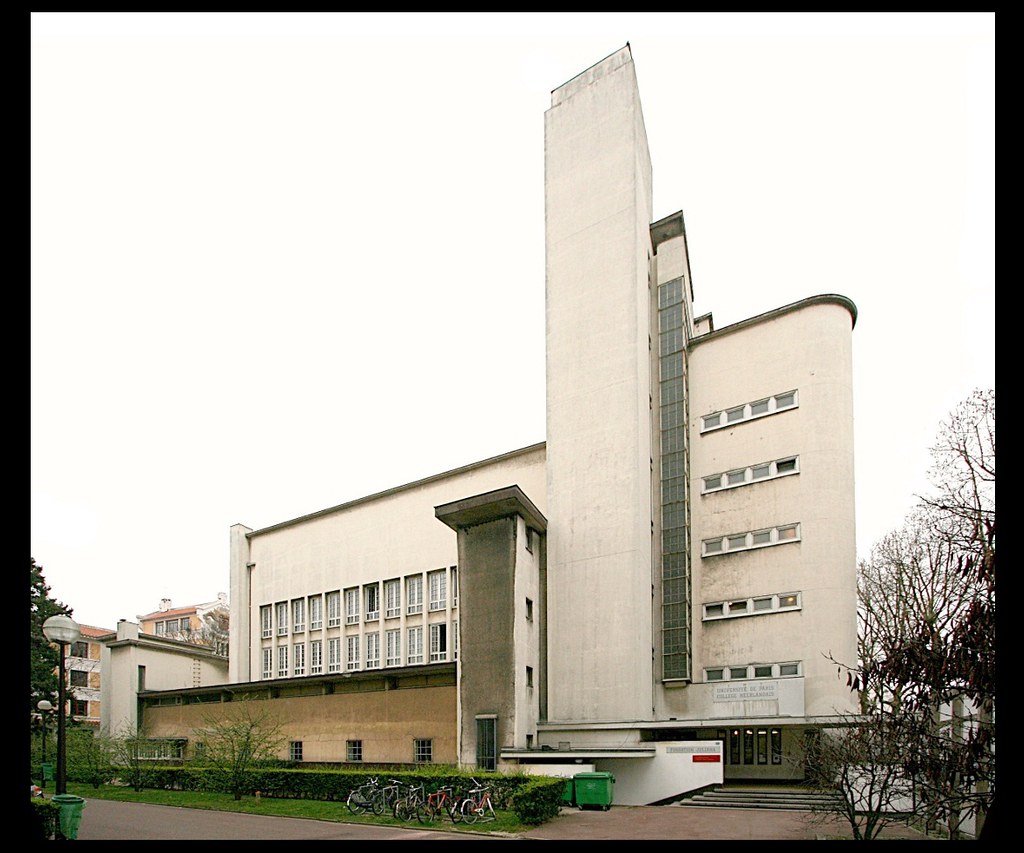
Dudok’s legacy lies in durability, not as material endurance alone, but as conceptual resilience. His modernism continues to read because it is grounded in relationships between structure and surface, plan and public ritual, institution and user. In contemporary architectural culture, often driven by speed and image, his work proposes a different measure: authority earned through repetition, use, and restraint.
Viewed through Hilversum Town Hall, Dudok occupies a singular position in modern architecture. He rejected spectacle and rhetorical rupture in favour of calm composition and material persuasion. Whether such measured civic authority remains viable in today’s accelerated administrative landscapes is an open question. What Hilversum demonstrates, however, is that architecture can still claim public trust without raising its voice.
Photo Cover
Hilversum Town Hall (1931) by Willem Marinus Dudok, a landmark of restrained civic modernism with its horizontal brick composition and iconic clock tower. Credit: Photo by Antonio Tortora.