
Now Reading: A middle sized house for North Dublin
- 01
A middle sized house for North Dublin


North Dublin’s suburban edge has long been defined by generous plots and low density streetscapes, a fabric shaped by back gardens as much as front facades. As the city grows, that loose grain is tightening. Development pressure is no longer limited to major corridors, but seeps into the hidden spaces behind the houses, where land has quietly waited for a second life.

This new build home begins with an unusual site assembled from two long, adjoining back gardens. A narrow lane becomes the only point of access, turning what was once private domestic terrain into a compact plot with unexpected width and depth. The project treats that condition not as a constraint but as its central premise, using the in between landscape of the suburb to propose a contemporary family house that feels both familiar and newly calibrated.

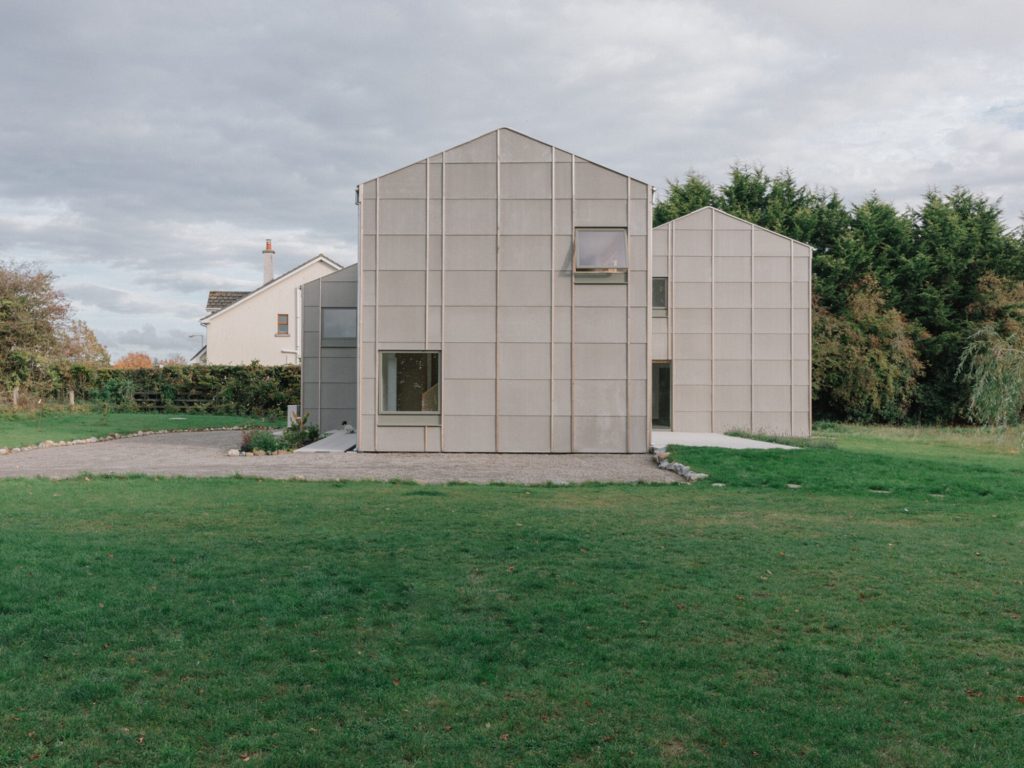
Rather than choosing between pastiche and rupture, the design positions itself as a conversation with its neighbours. Its street presence carries the crispness of early modernist ambition, echoing the clean lines and controlled geometry associated with Dublin’s 1930s suburban expansions. At the same time, the building’s proportions draw on the quiet discipline of nineteenth and twentieth century local houses, where formality comes from alignment, rhythm, and detail rather than ornament alone.


That dual reading is deliberate. The house presents a composed, formal facade to the street, while the rear elevation becomes more responsive, breaking down the mass to meet the mixed architectural language of the surrounding gardens. The project acknowledges that the suburb is rarely a single style. It is a layered environment, and the house is designed as a contemporary addition that accepts those layers rather than erasing them.

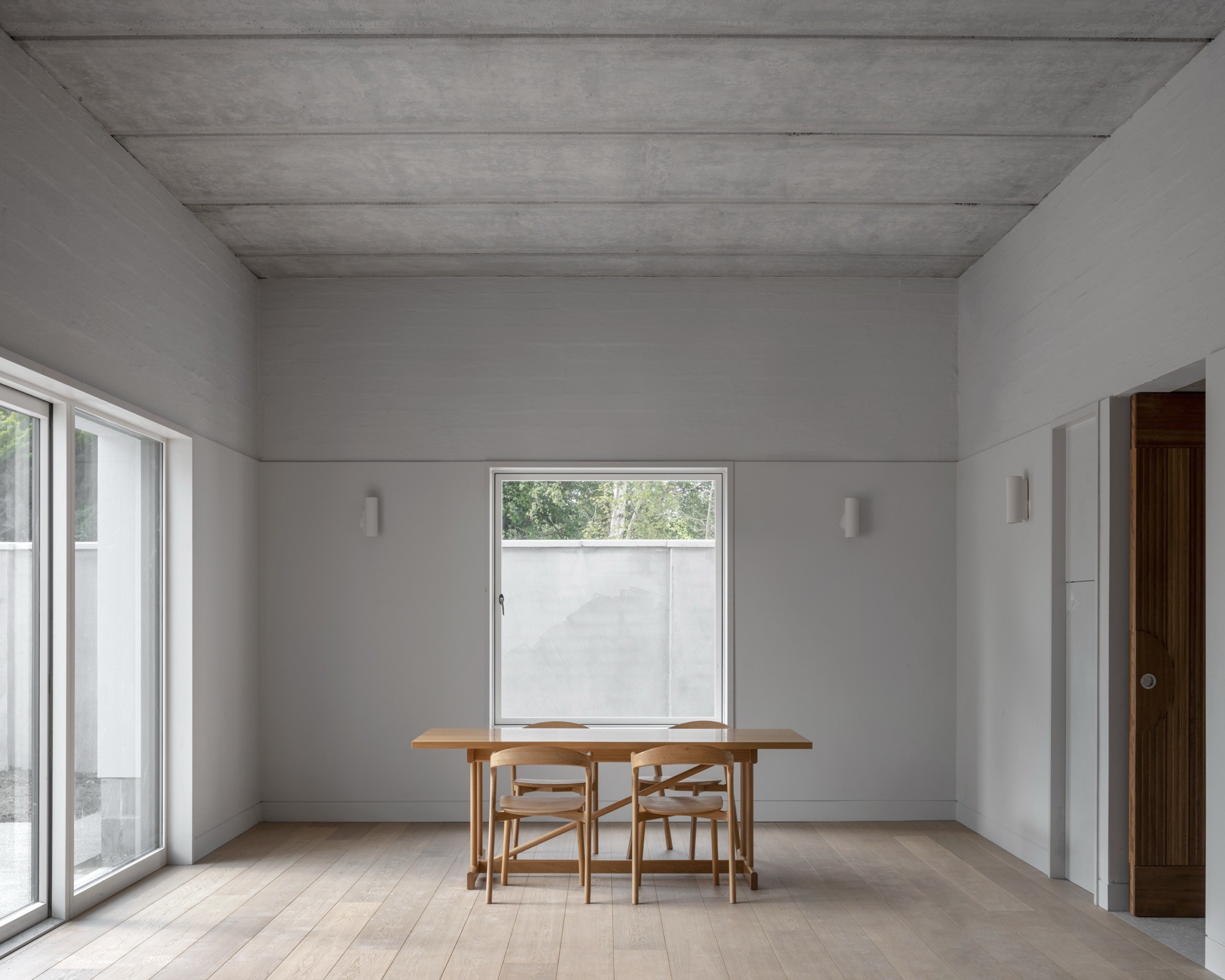
Inside, the plan develops a theme that feels almost civic in its clarity. Rooms are well proportioned and arranged in enfilade, producing a sequence that is generous without excess. The concept of the middle sized house is less about area than about balance: spaces that hold daily life comfortably, scaled for a family of seven, and organised so that circulation becomes an experience of depth, light, and continuity.

Material expression reinforces that calm structure. A sharp plaster band runs through the lower level, establishing a clean register at human height. Above, rougher construction elements are left present, allowing texture to catch the light and make the building’s assembly legible. The contrast creates a subtle hierarchy: refined where the body meets the house, more direct and tactile where the structure asserts itself.


With a large footprint required within a tight budget, the project leans into straightforward construction methods and lets their logic become part of the architecture. Rendered blockwork walls appear exposed in parts of the interior, not disguised but treated as a finish. Hollowcore slabs form the floor and roof, and their undersides remain visible at ceiling level, turning a standard structural choice into a spatial character.

The result is a house that avoids spectacle while still feeling carefully composed. It uses simple materials to produce a layered atmosphere, where the suburb’s hidden land becomes a new domestic address, and where modern clarity meets Dublin’s inherited sense of proportion.


Project Credit
Project name: Middle House
Design: Ryan W. Kennihan Architects
Location: Ireland, Dublin
Completed: 2023
Photo: Johan Dehlin