Now Reading: Mas Fuster rebuilds the Catalan farmhouse table and the rush chair in solid oak
- 01
Mas Fuster rebuilds the Catalan farmhouse table and the rush chair in solid oak

Mas Fuster rebuilds the Catalan farmhouse table and the rush chair in solid oak
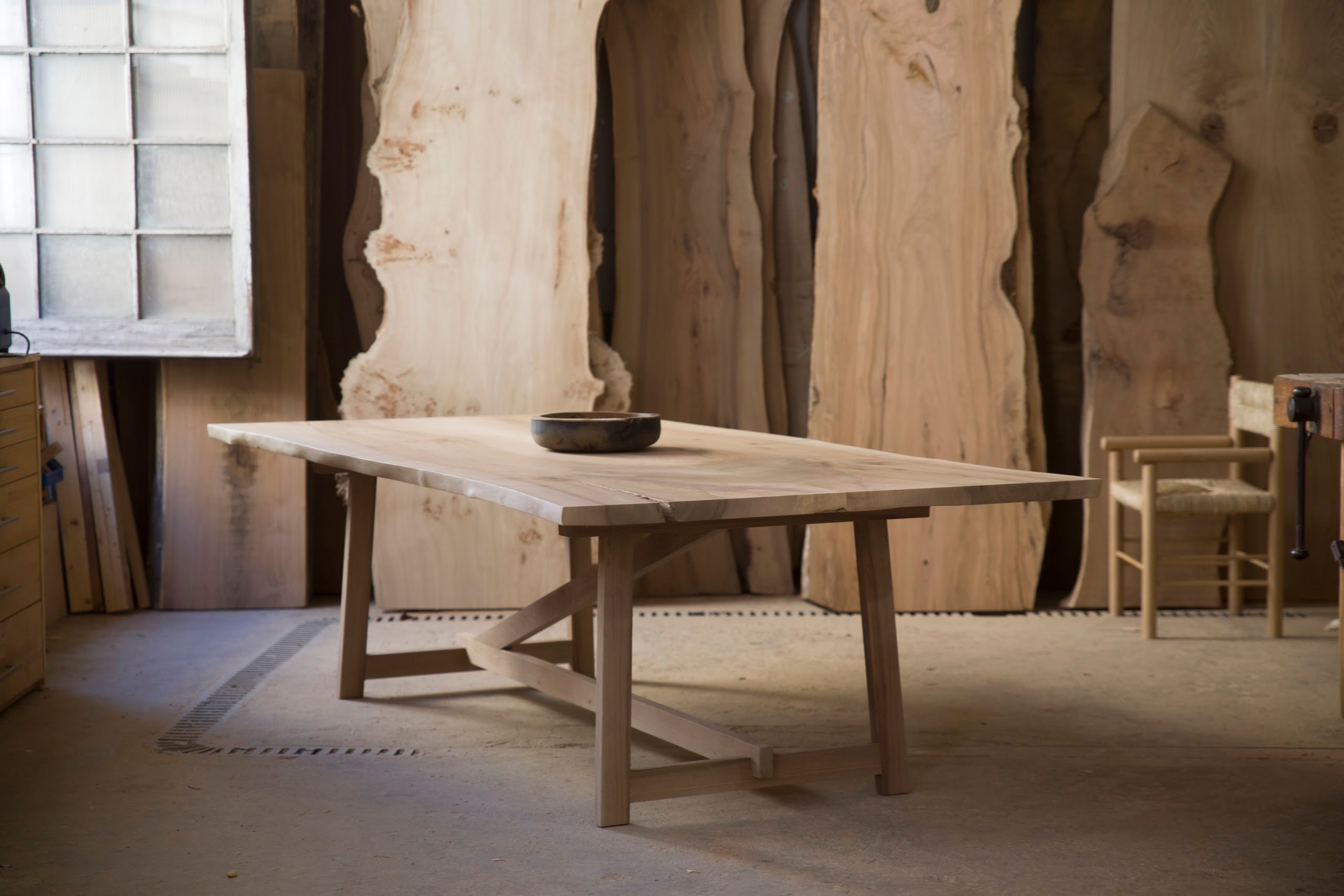
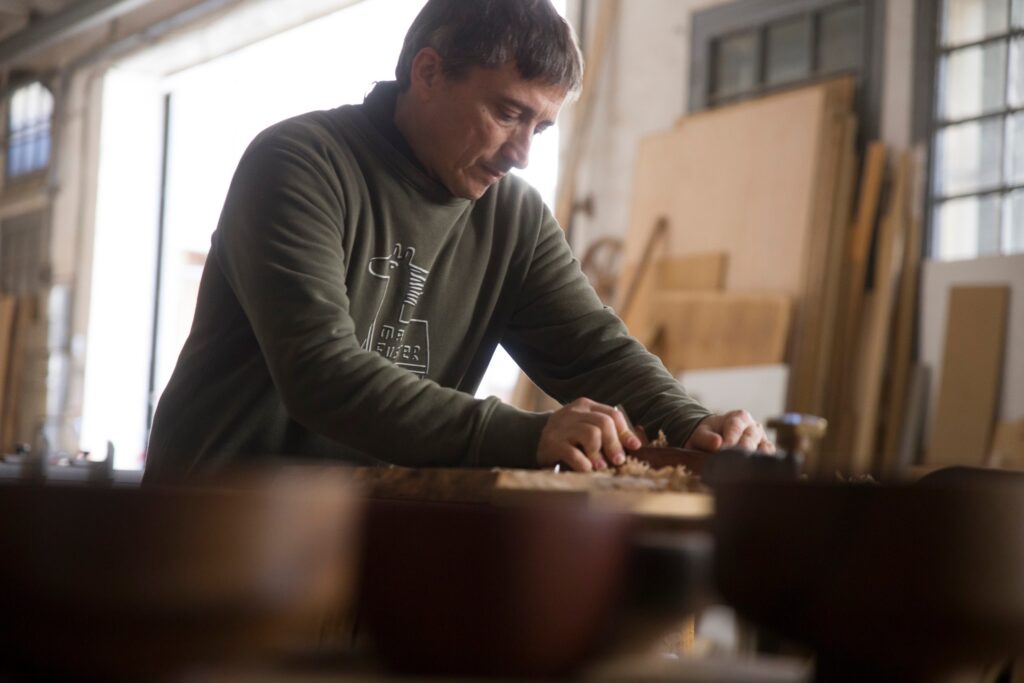
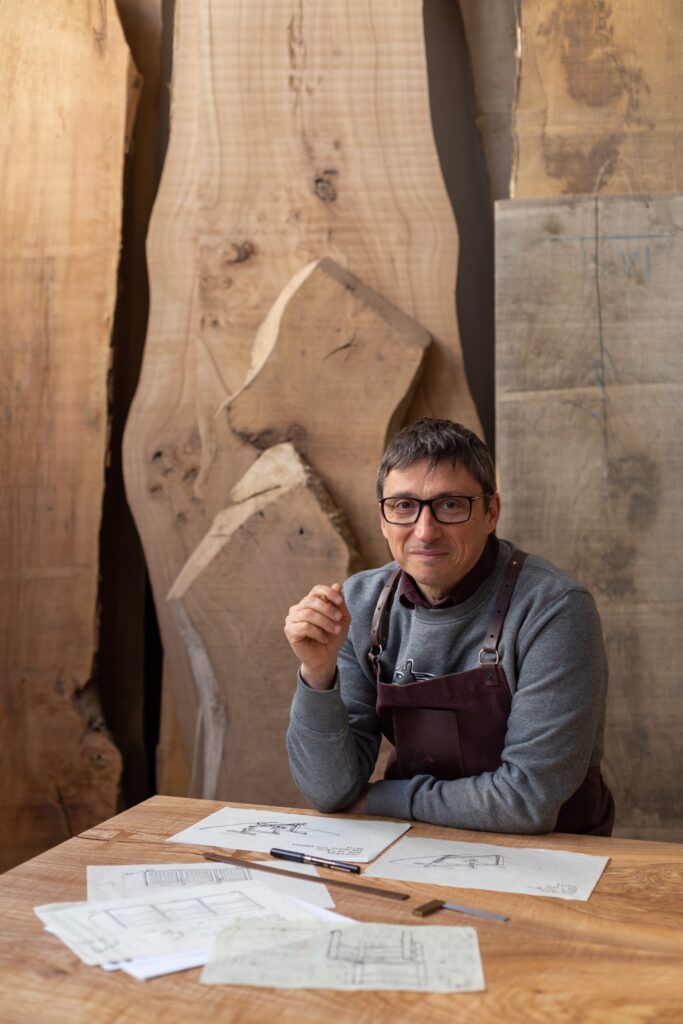
At Mas Fuster, the Barcelona workshop of cabinetmaker Xavier Mas, design starts with listening closely to the wood and respecting the tradition that came before it. For the first edition of OFICI, the Traditional Crafts Fair organised by the Consorci de Comerç, Artesania i Moda (CCAM) of the Generalitat de Catalunya, Mas presented a proposal built around vernacular furniture and turned pieces.
The fair took place at the Castle of Cardona from 6 to 8 November 2026. Its organisers conceived it as a showcase for the relevance of handwork, the mastery of trades and the sustainability of materials. In that setting, Mas Fuster offered a contemporary reading of historic pieces, rewritten with the rigour of author cabinetmaking.
Quercus, after the Catalan farmhouse table
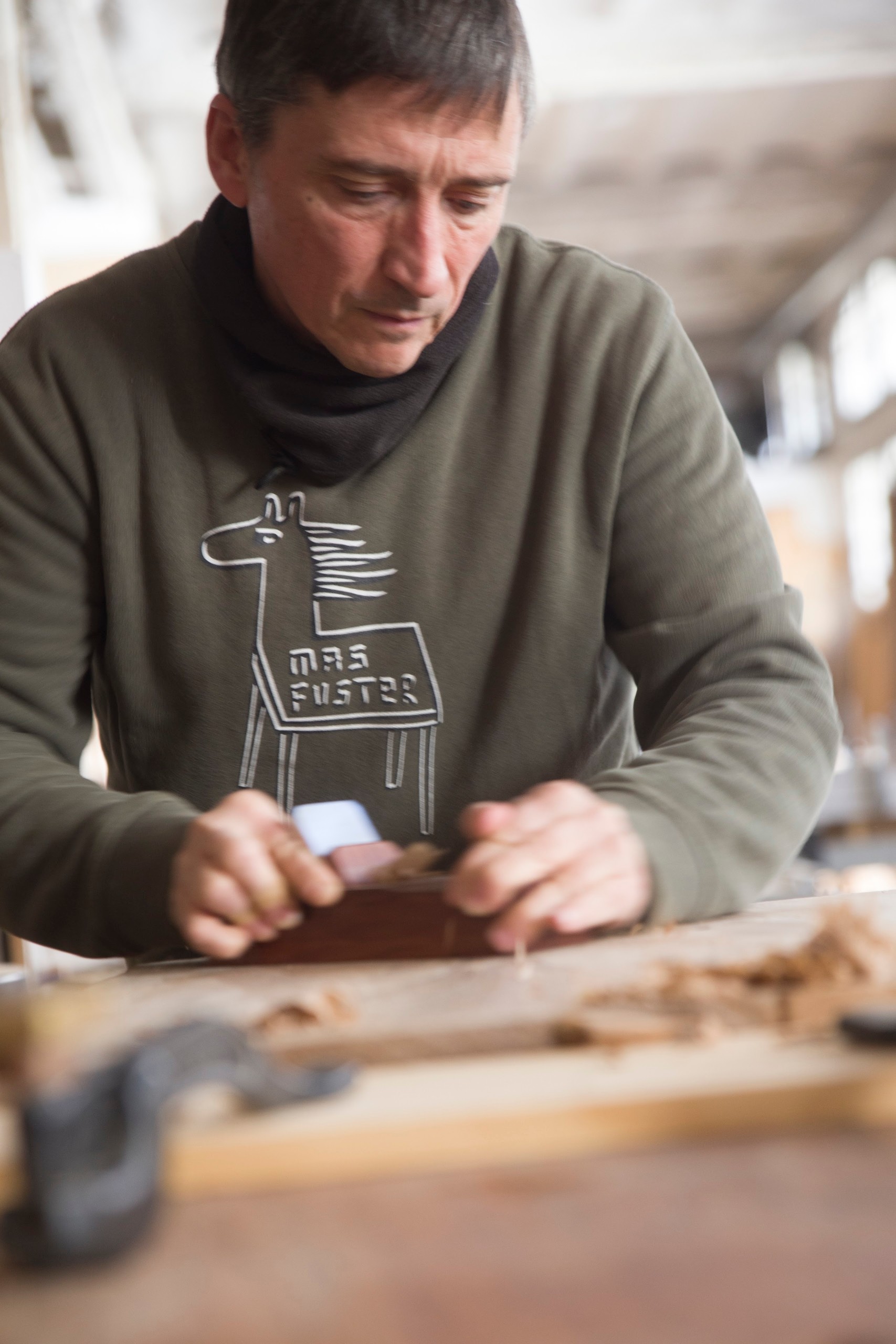
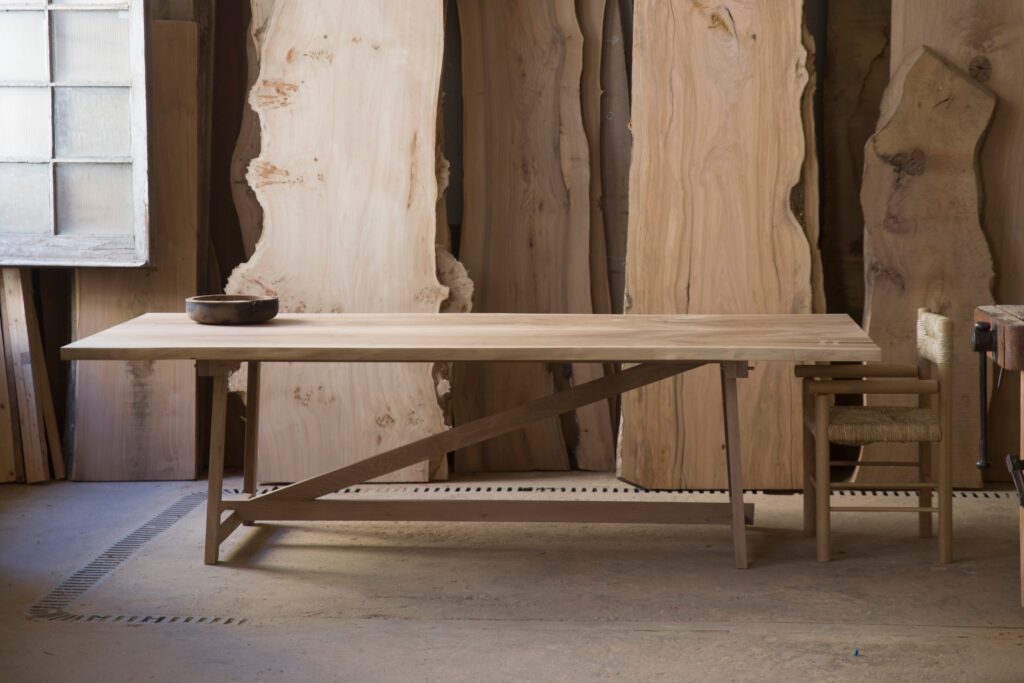
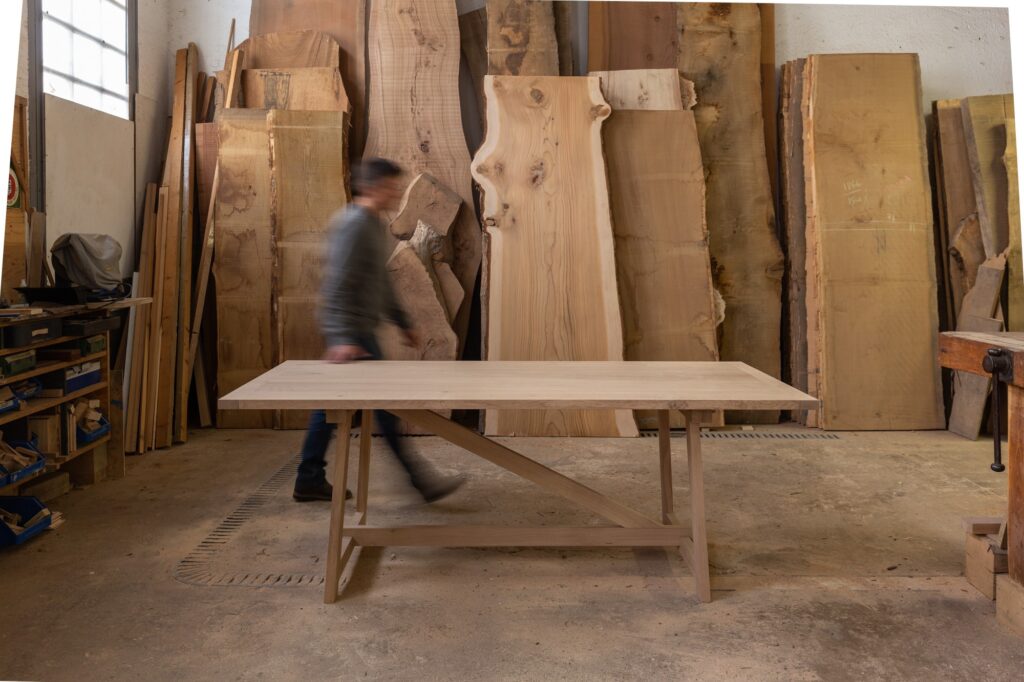
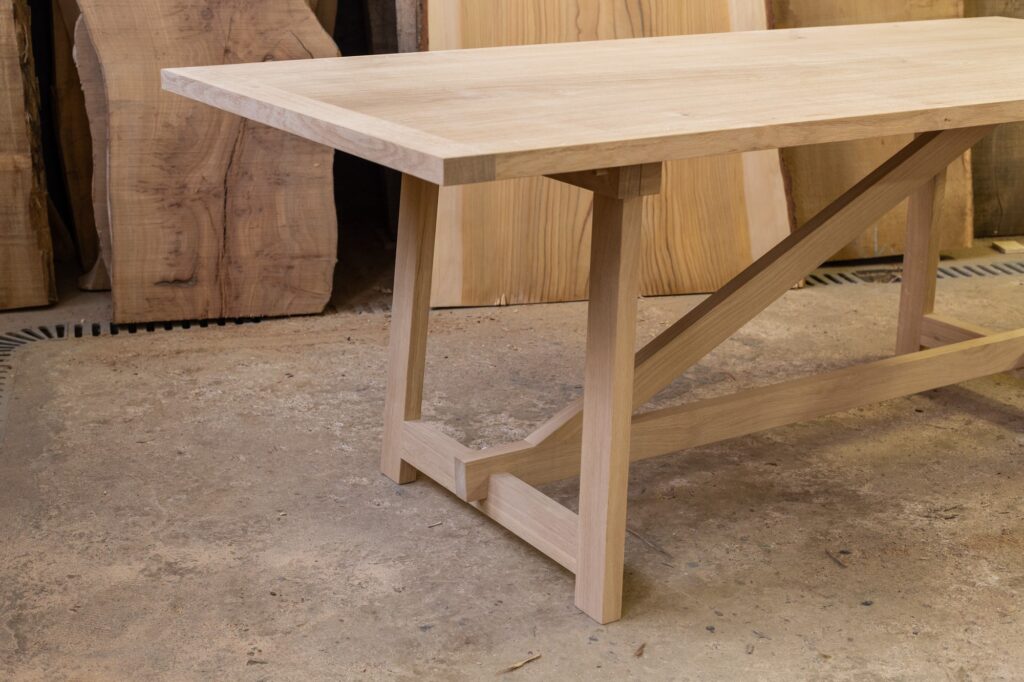
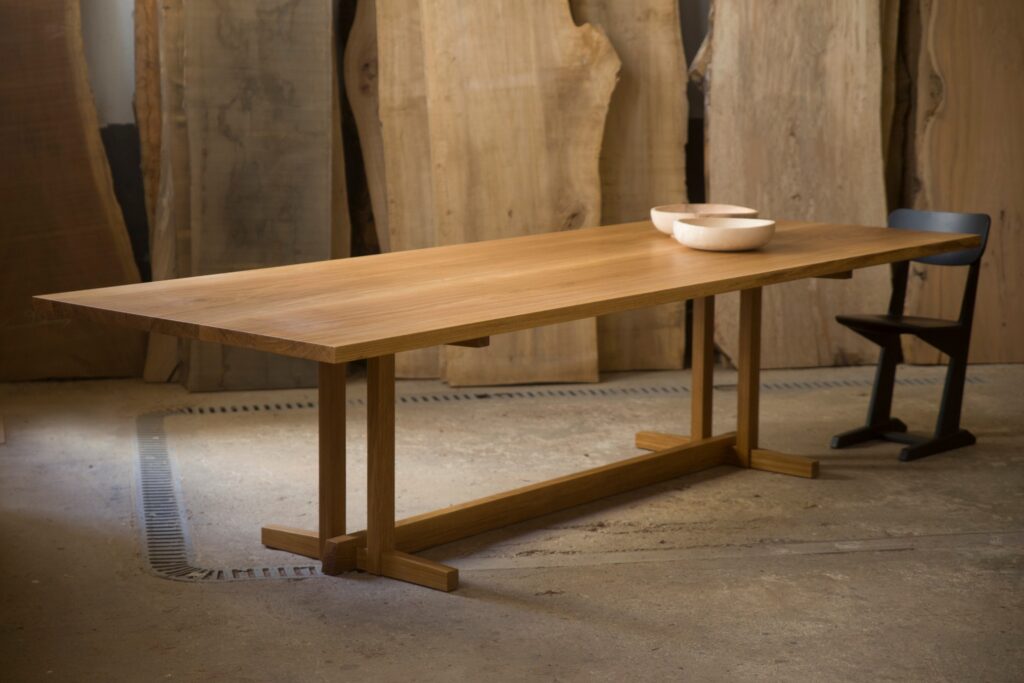
To begin with, the Quercus table draws on the traditional table of the Catalan masies, known for its solidity, its austere function and its strong presence in a room. Its top consists of oak boards that a lower crosspiece holds together with a sliding dovetail, called ala de mosca. At each end, faixes close the boards. Traditionally, these end caps keep the wood stable as humidity changes.
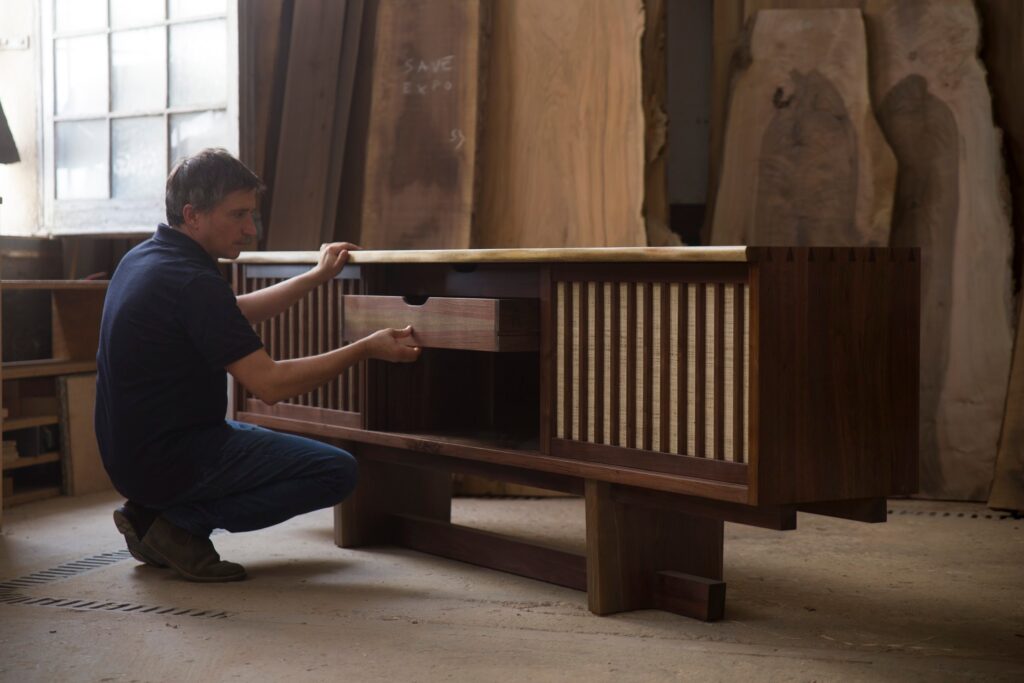
Following the philosophy of the workshop, Mas builds the whole table with traditional joinery. First, he assembles the base with glued half-lap and mortise-and-tenon joints. Then four tapered wooden pegs, fitted by hand, fix the top to the frame. In fact, the table has not a single metal screw, so the wood can breathe and move over time.
Carmen, a new rush chair
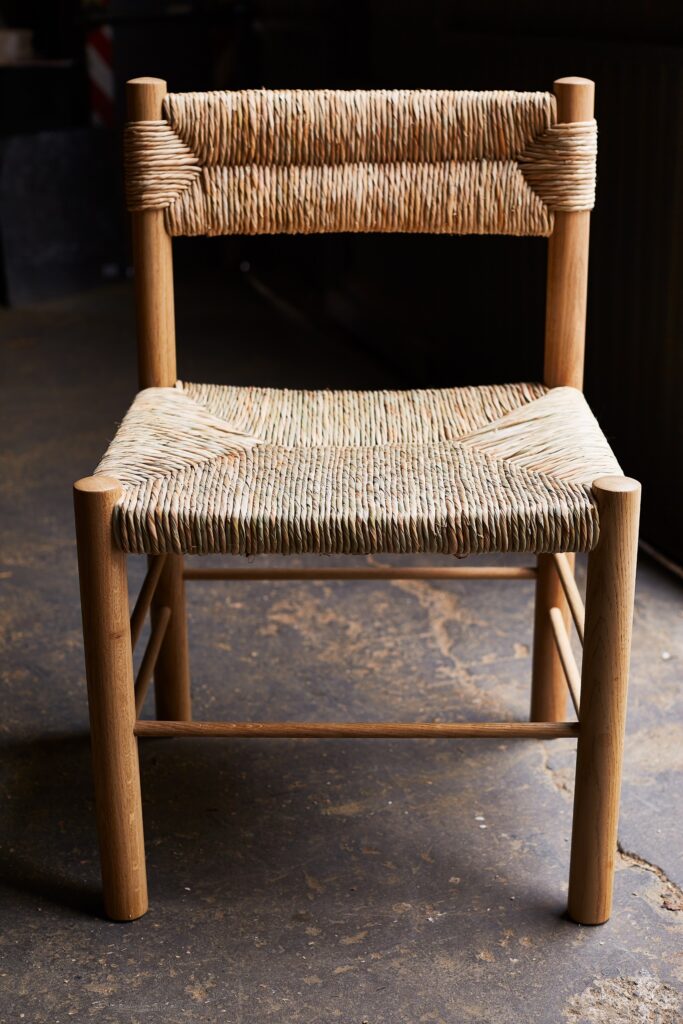
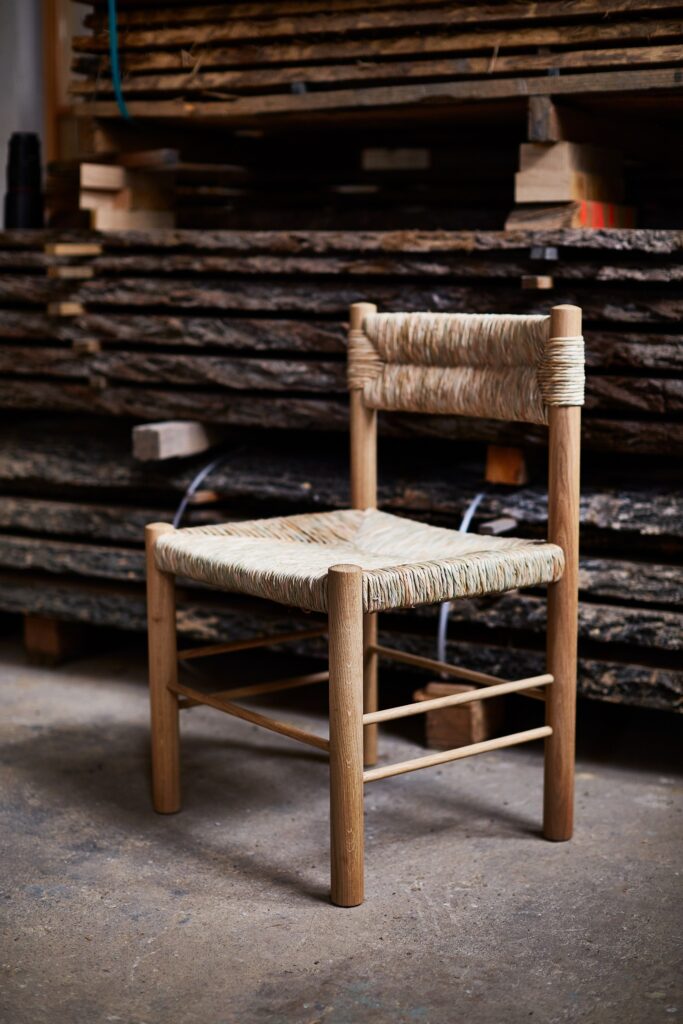
For centuries, the rush chair was the everyday seat of the Mediterranean. Traditionally, makers used soft, humble woods such as pine or poplar. Now the Carmen series, a chair, an armchair and a stool, lifts this vernacular reference into a piece of contemporary design.
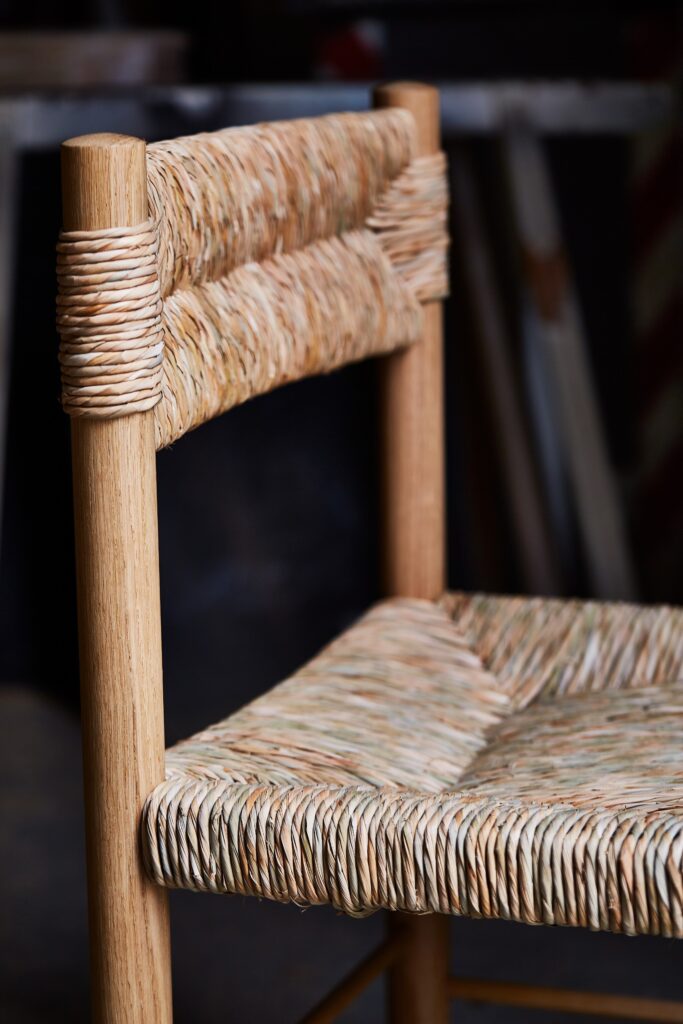
Instead of poplar, Mas Fuster uses solid oak (Quercus), which gives the seat more density, durability and texture. The legs and frames also leave behind the rough traditional turning for straight, clean lines, with especially slender rails. Moreover, the Carmen chair adds a curved backrest woven by hand on both sides with natural rush. Consequently, that detail makes it cleaner to look at and noticeably more comfortable. Finally, an extra-matt varnish protects the oak frame and keeps the warm feel of the wood.
Poplar, turned into sculpture
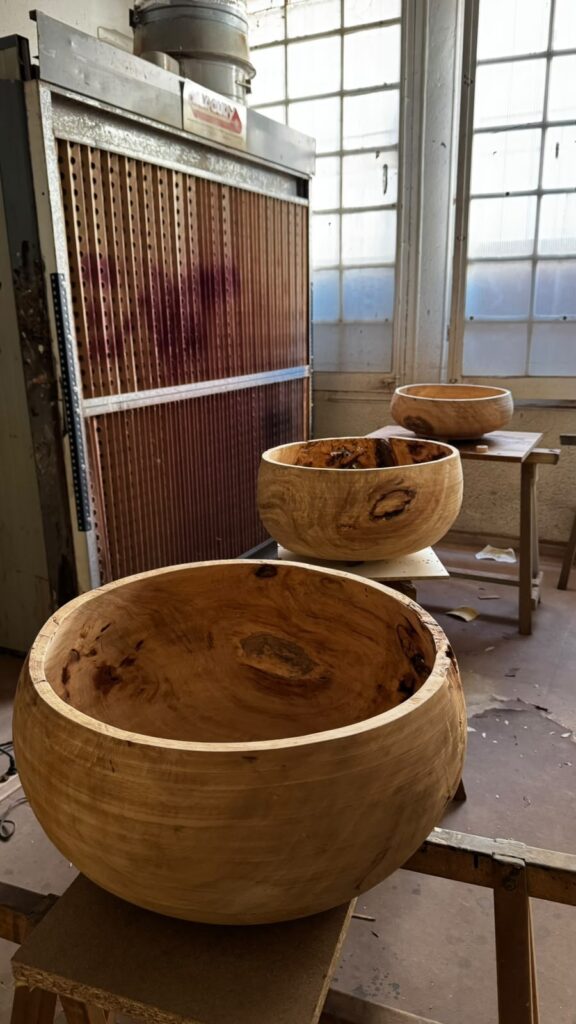
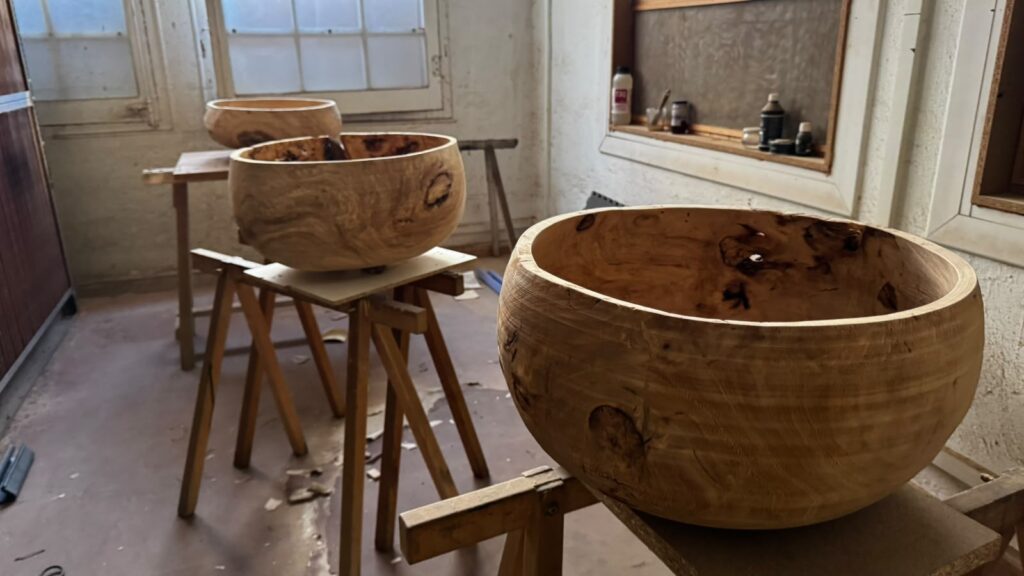
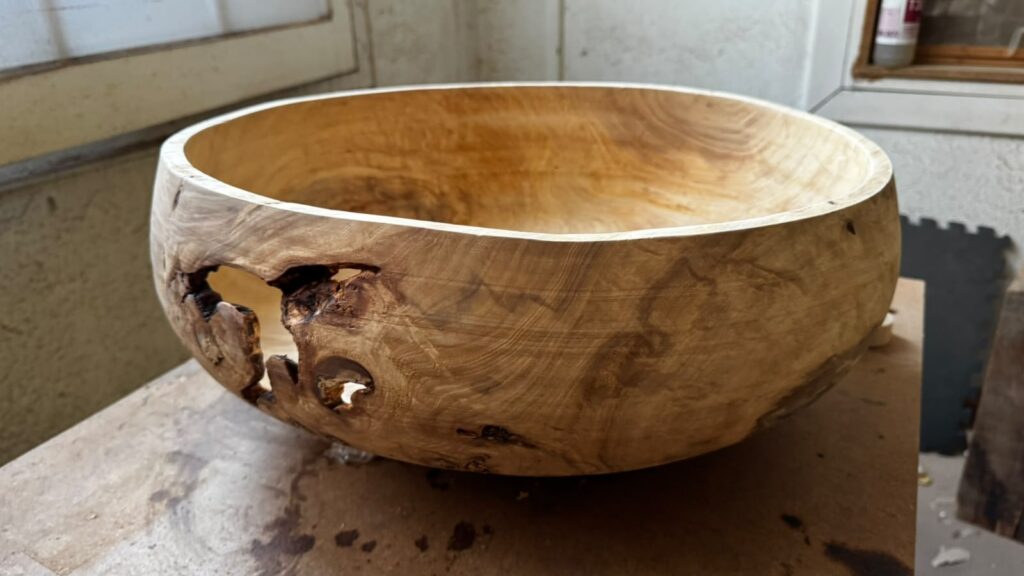
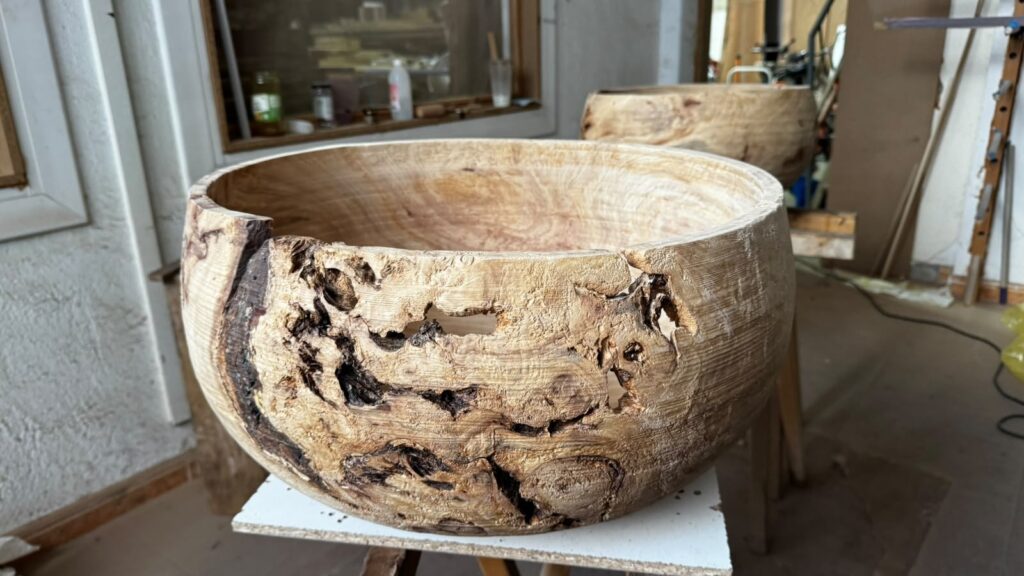
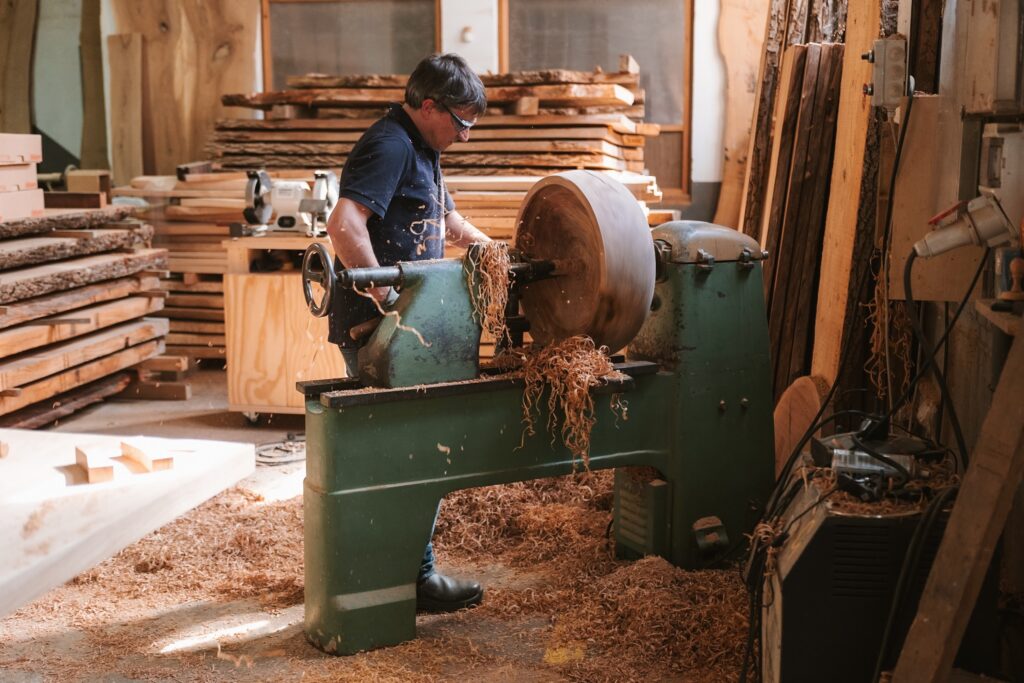
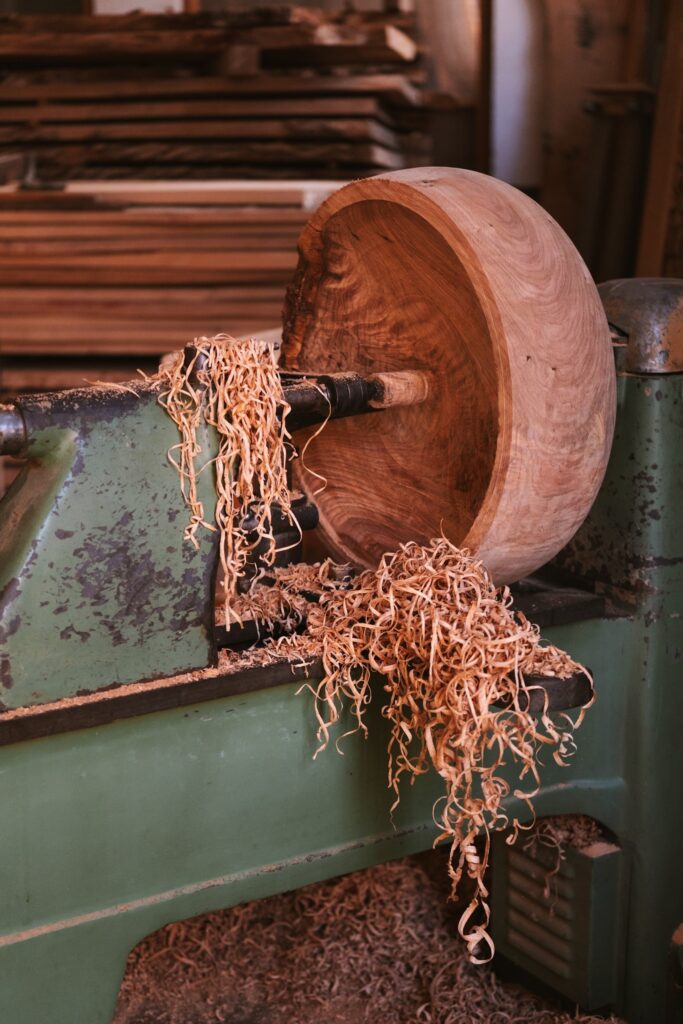
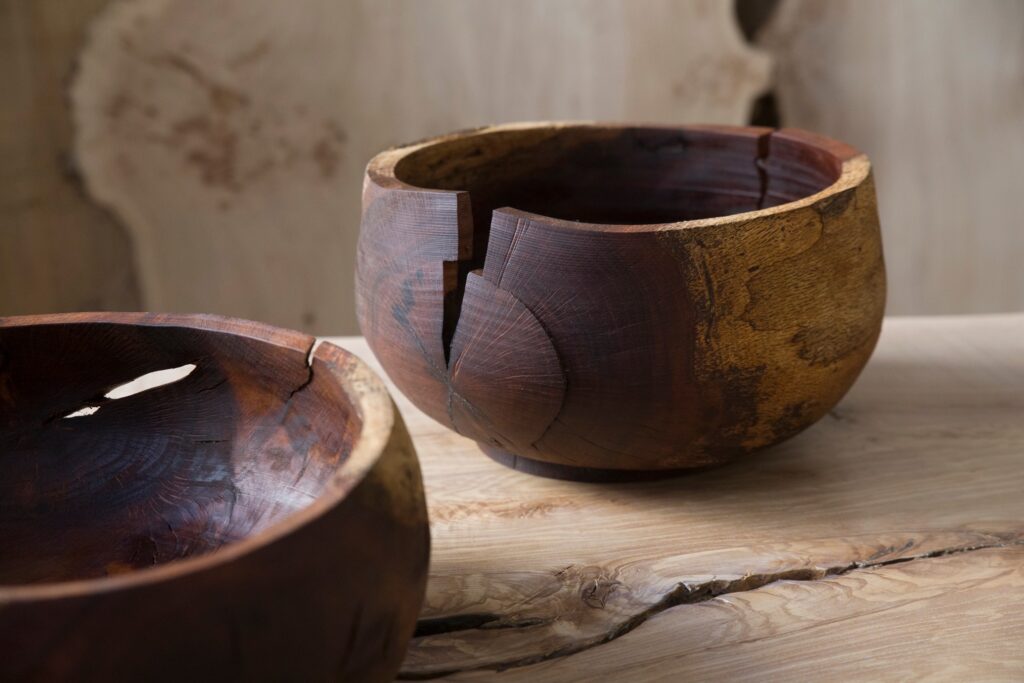
To complete the proposal for OFICI, Mas Fuster added a series of turned bowls that speak directly to the history of traditional furniture. Poplar, the humble wood that once formed the frames of rush chairs, goes on the lathe here to show its more expressive side.
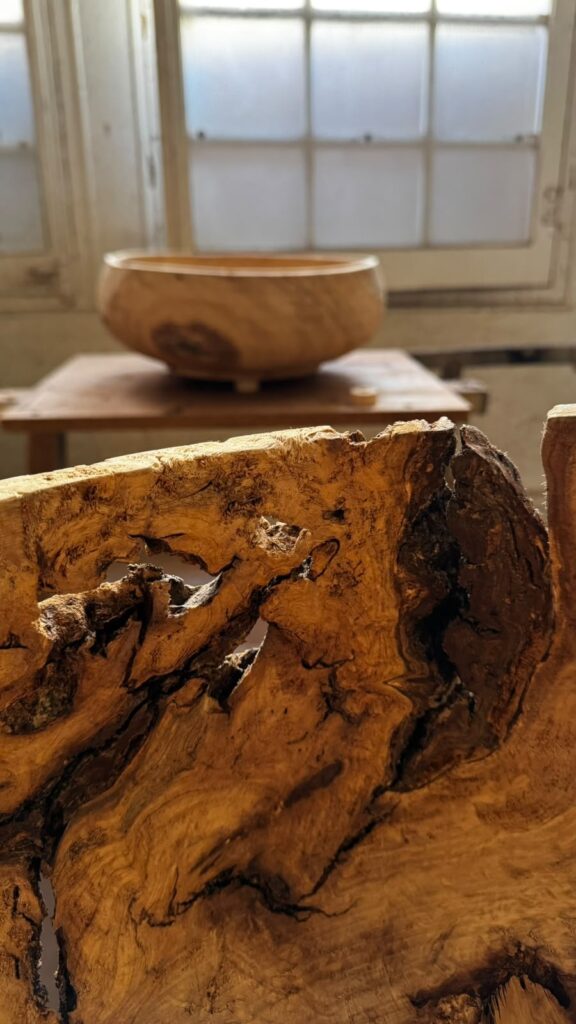
Compared with oak, poplar turns more gently and holds its shape better as it dries. Its real value, however, is its unusual texture, a softness close to clay. For this reason, in these pieces Mas keeps the natural bark, the voids and the hollows of the trunk, so each bowl is organic and cannot be repeated.
Listening to the tree
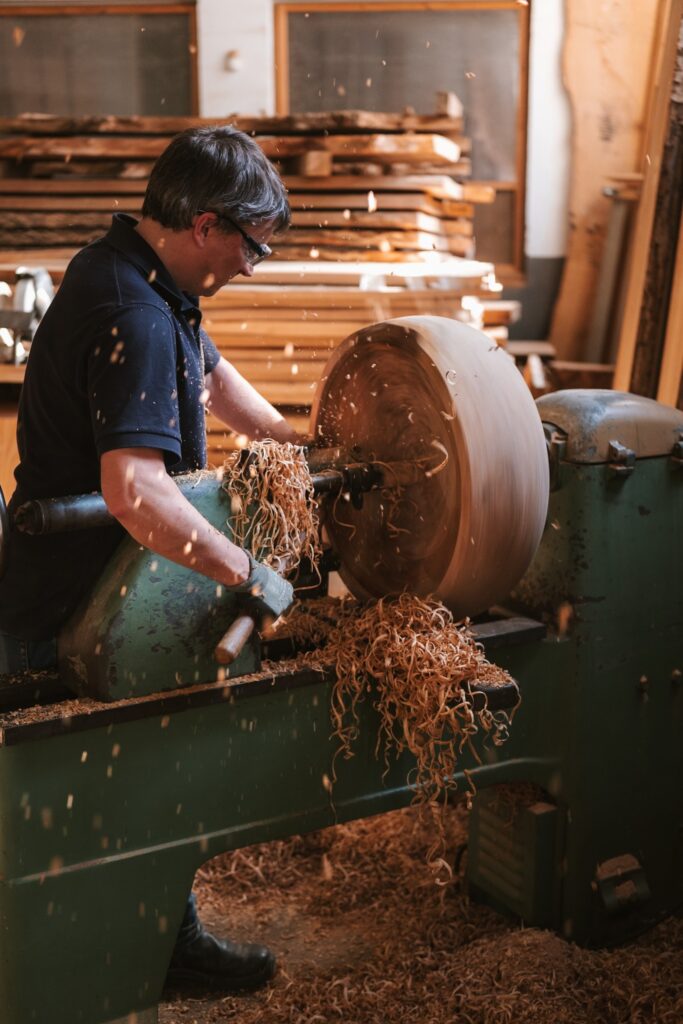
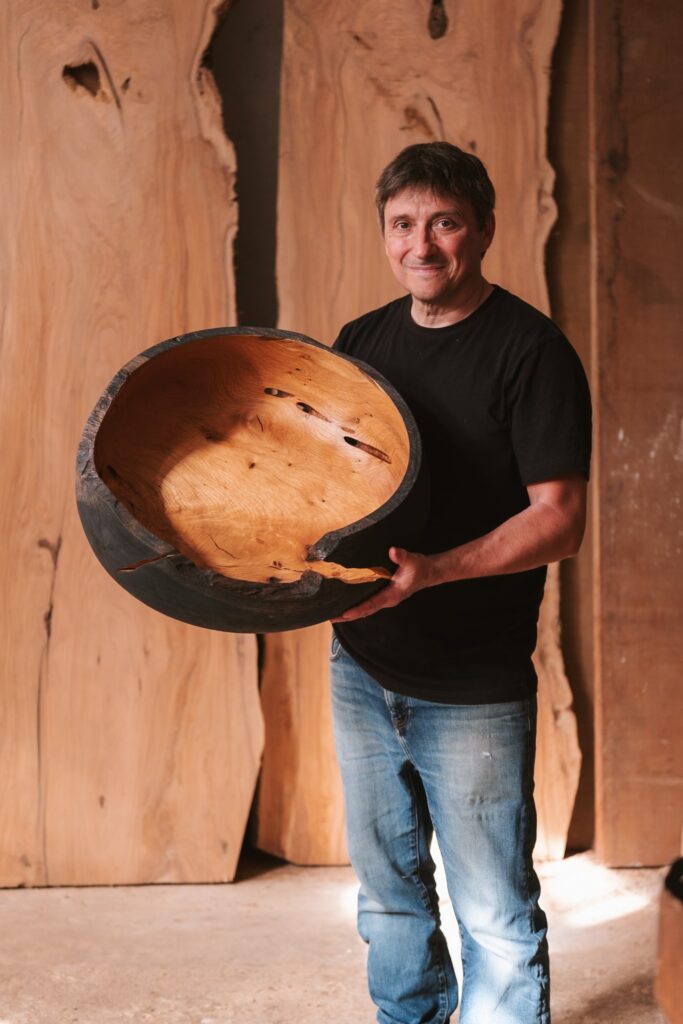
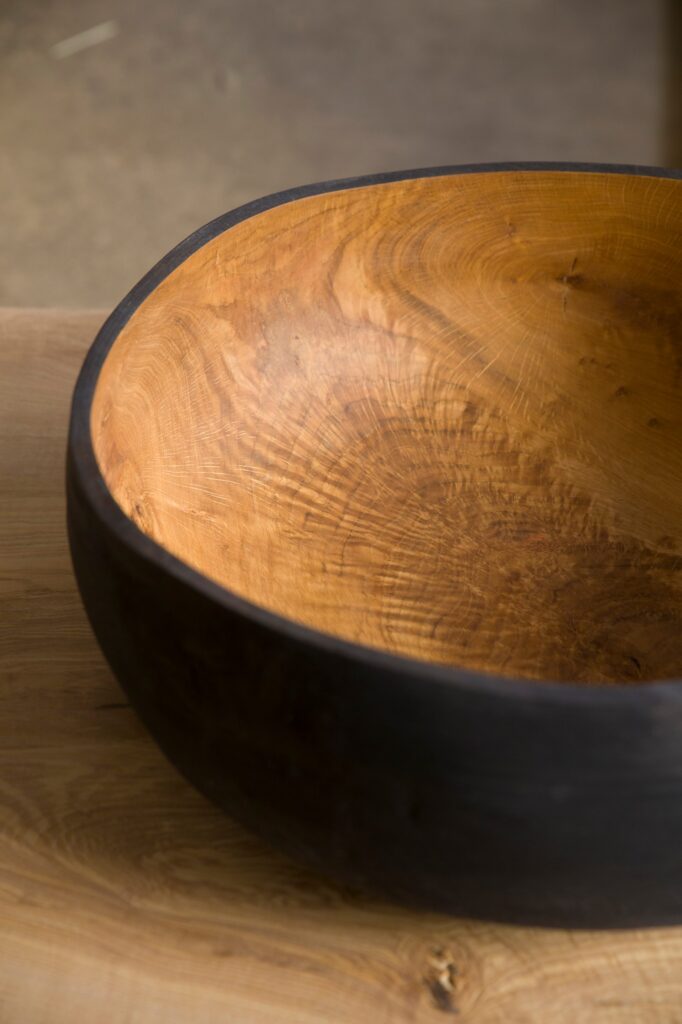
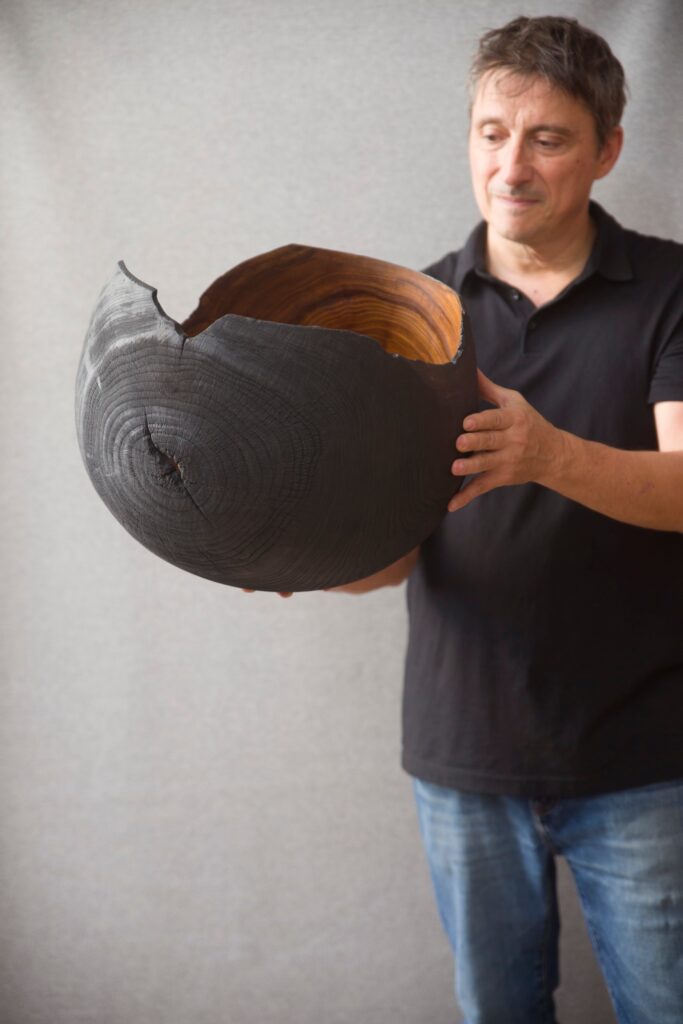
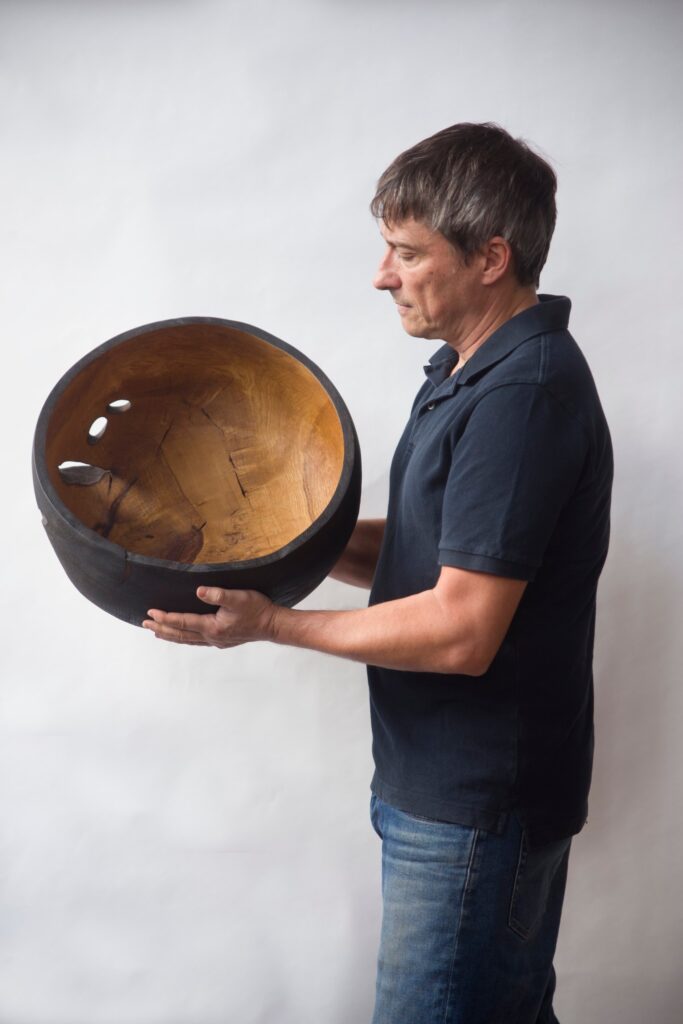
Earlier in 2026, Mas Fuster also turned a series of bowls from recovered trees of the genus Quercus: holm oak, oak and cork oak. Mas works the wood green, turning raw blocks of up to 60 kilograms in long sessions of eight to twelve hours. As a result, each piece keeps changing for months as it dries, and the air and the tensions in the wood decide its final shape.
He also keeps marks that many would call flaws, such as the galleries bored by the larva of the great capricorn beetle (Cerambyx cerdo). For finishes, he avoids synthetic products. Instead, he ebonises the pieces through the natural reaction between iron and the tannins in the wood, or with fire, and then seals them with natural oils.
Mas Fuster, from forest to object
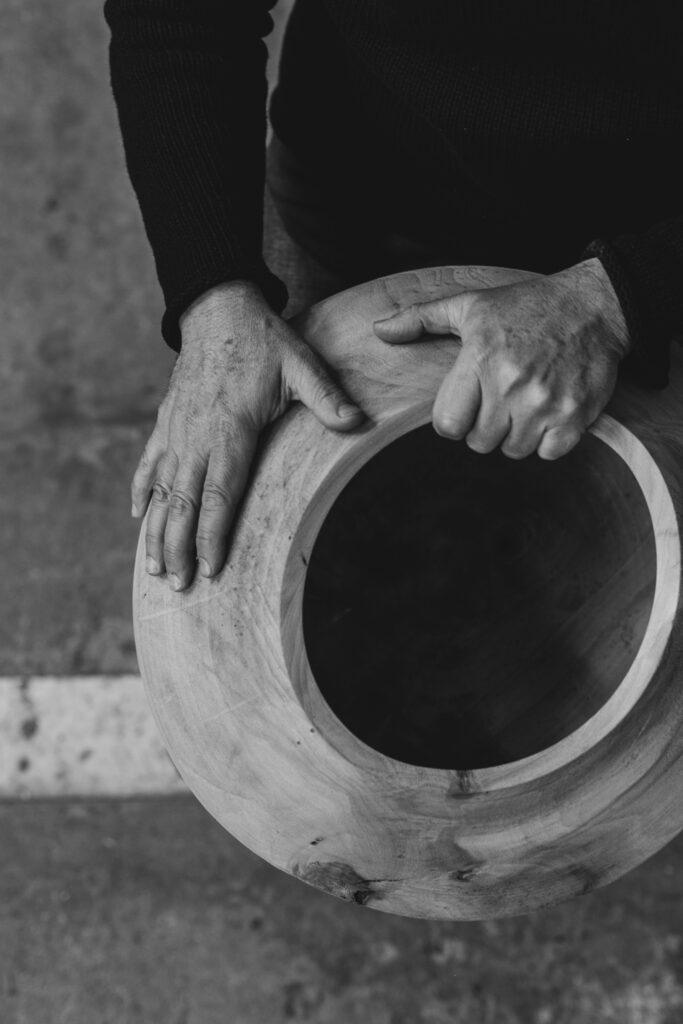
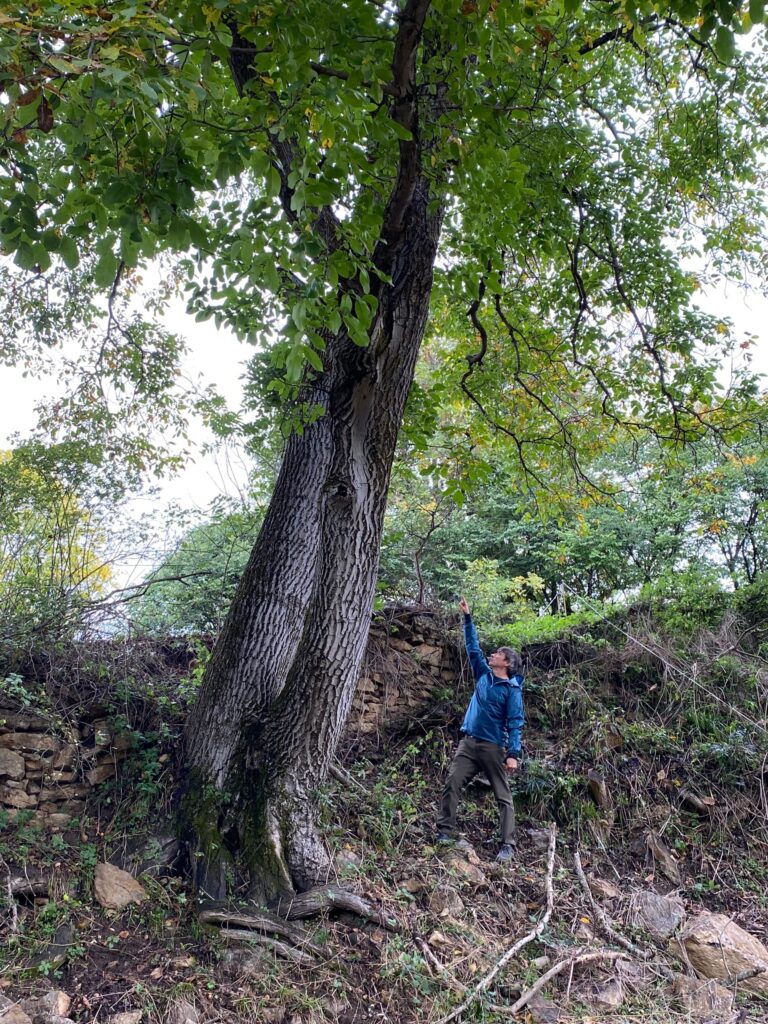
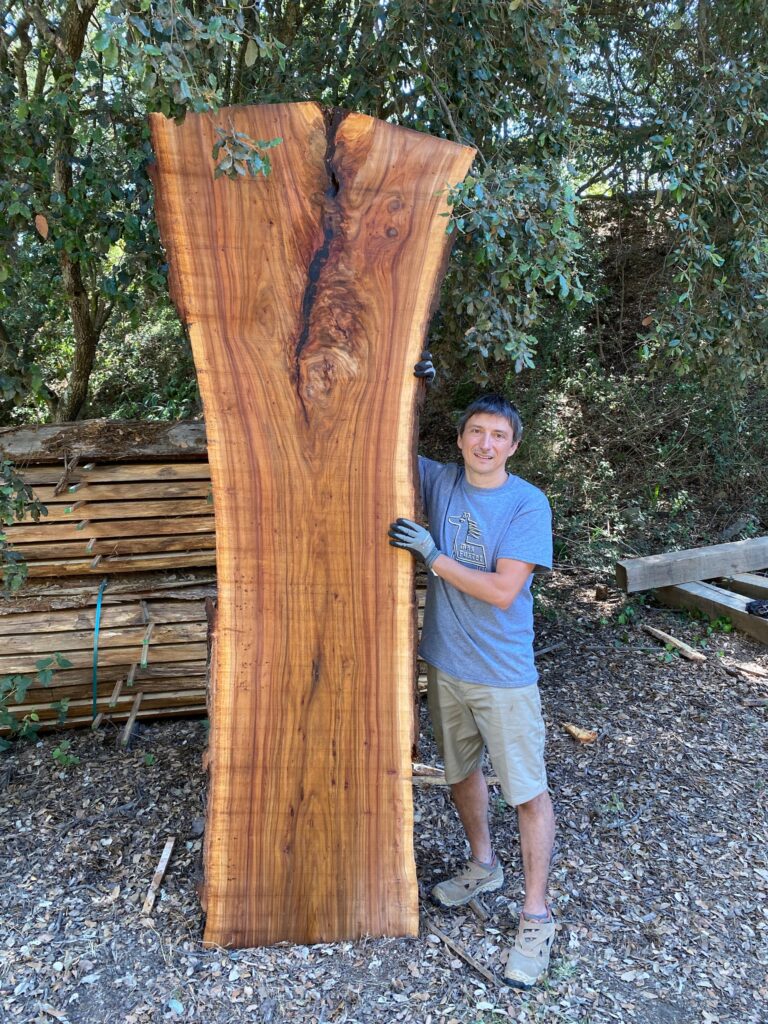
In short, both the furniture and the turned pieces come from one consistent craft practice. Xavier Mas takes part in every step: he chooses fallen or recovered trees in the mountains of Catalonia, saws them, leaves them to dry naturally for several years and finishes them at the bench or on the lathe.
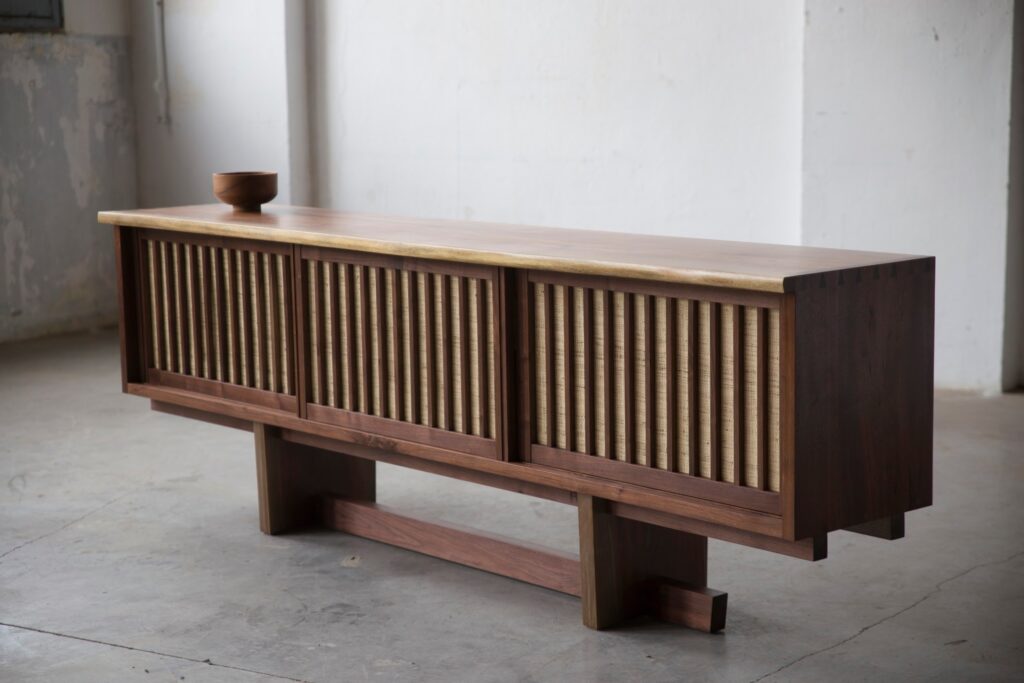
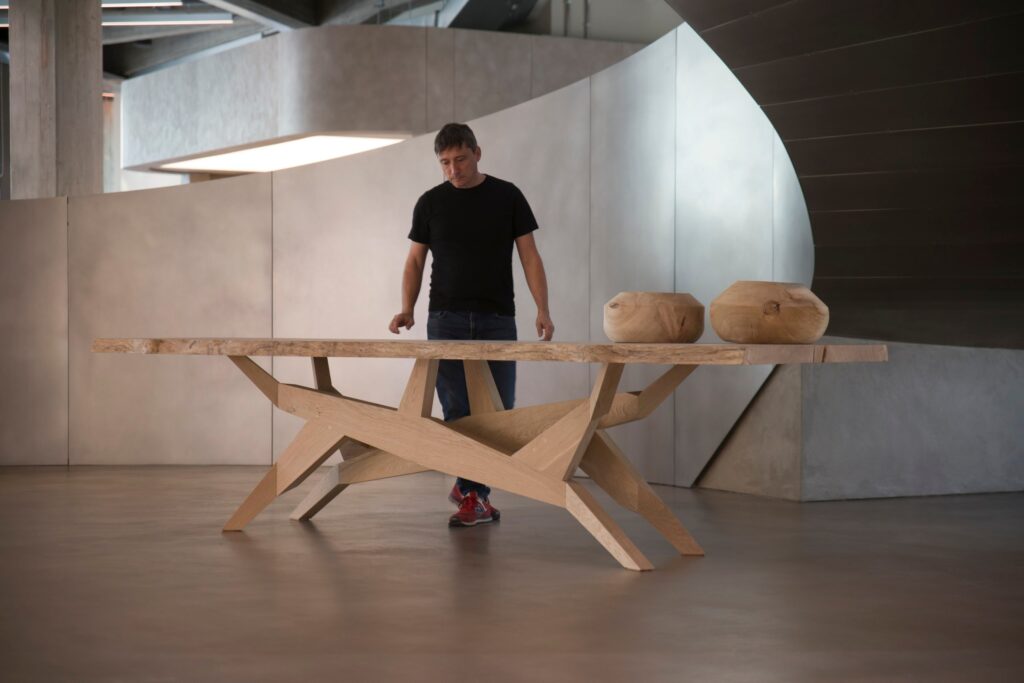
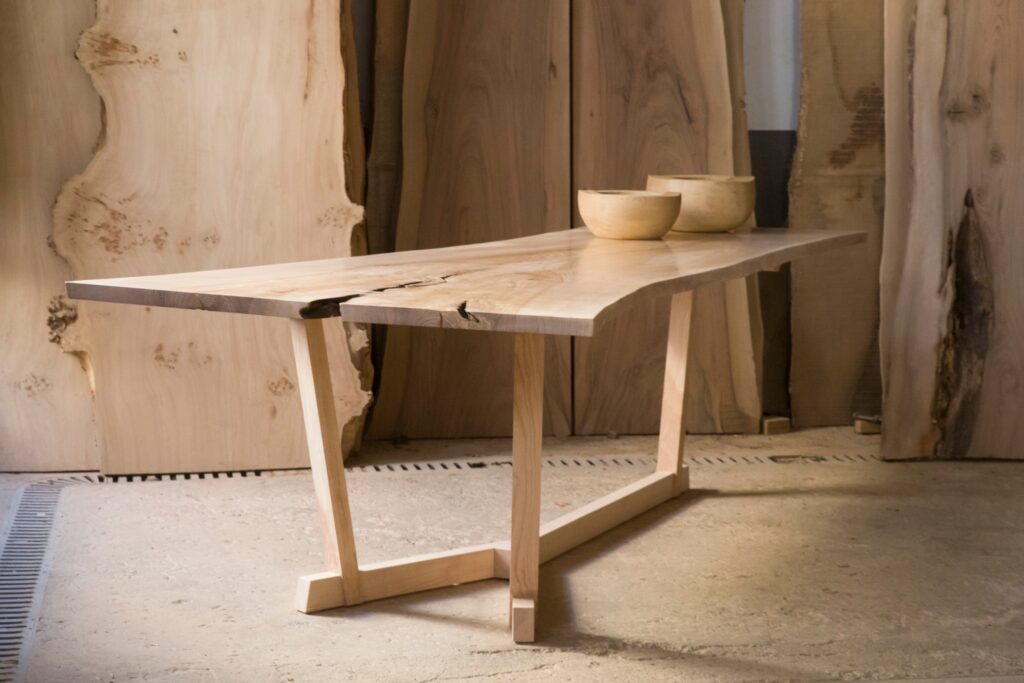
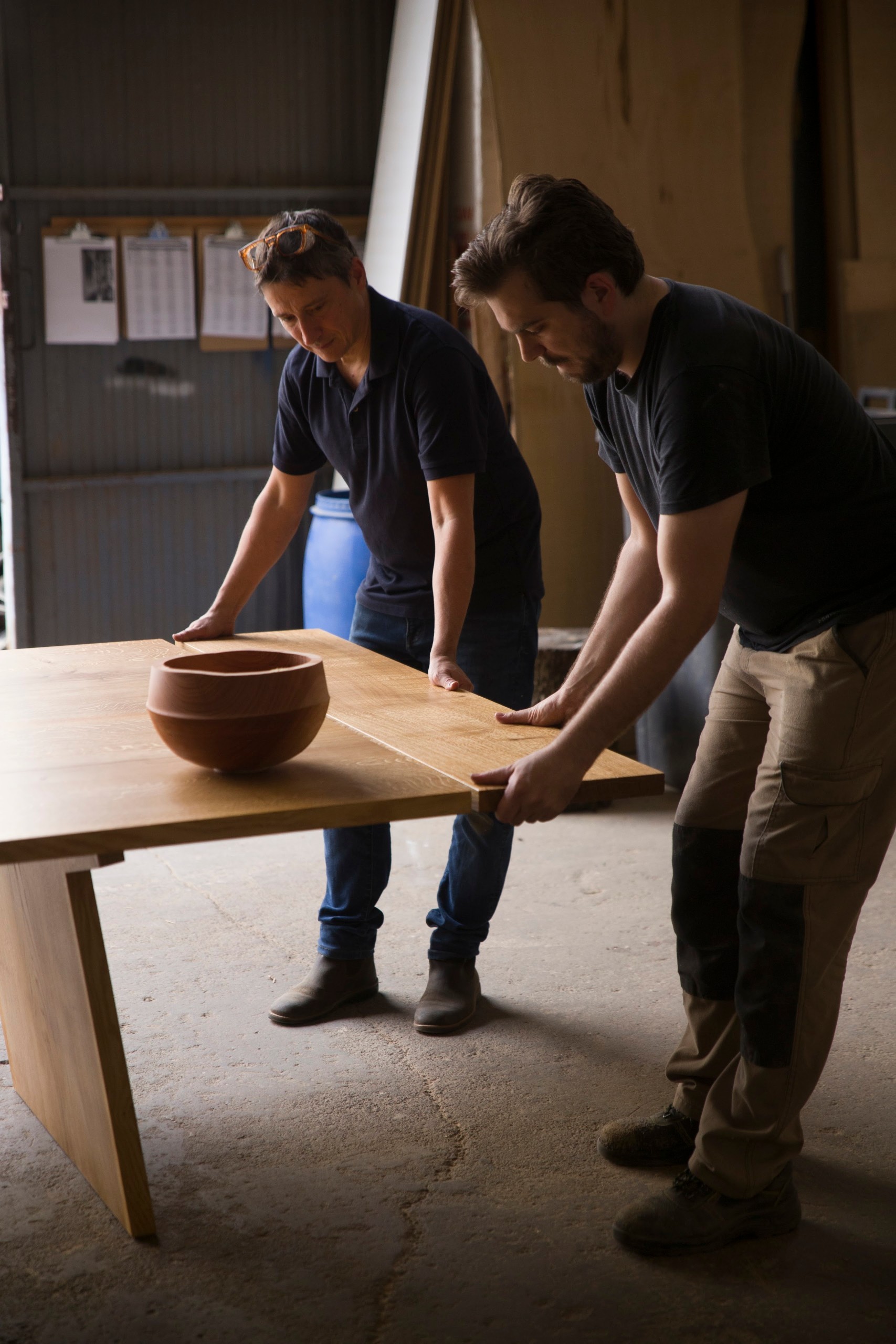
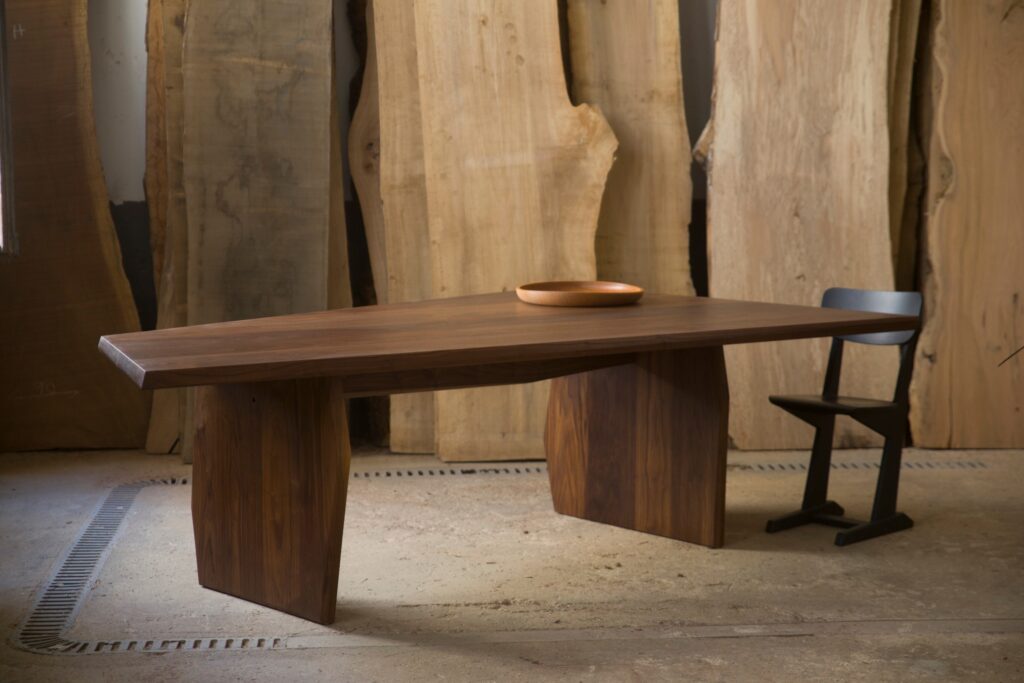
At OFICI, inside the Castle of Cardona, that work showed how the woods of the region and the everyday forms of memory can be updated for contemporary homes and grow old with them. For another take on furniture and Catalan making, see our Catalonia stories.
Project Credits
Designer and maker: Xavier Mas, Mas Fuster / @mas_fuster
Pieces: Quercus table, Carmen series (chair, armchair, stool), turned poplar bowls
Materials: Oak (Quercus), poplar, natural rush
Event: OFICI, Traditional Crafts Fair of Catalonia
Organiser: Consorci de Comerç, Artesania i Moda (CCAM), Generalitat de Catalunya
Venue: Castell de Cardona, Barcelona
Dates: 6 to 8 November 2026
Related Posts
Previous Post
Next Post
- OTLA terraces a forest slope into a village for retreat staff in Karnataka

- ARP studio sets a steel frame inside a 19th-century salt warehouse in Koper

- Pavillon wraps a family chalet in silver metal and old memories

- Stuart Ian Frost and Gunhild Lien raise a cylinder of spruce in an Alpine forest

- ecoLogicStudio threads a living garden through the vineyards of Canelli
- TAKK turns a bed into common ground for the Beaux Arts Ball