Now Reading: Ts Veil renovates a villa with a climate responsive double skin
- 01
Ts Veil renovates a villa with a climate responsive double skin

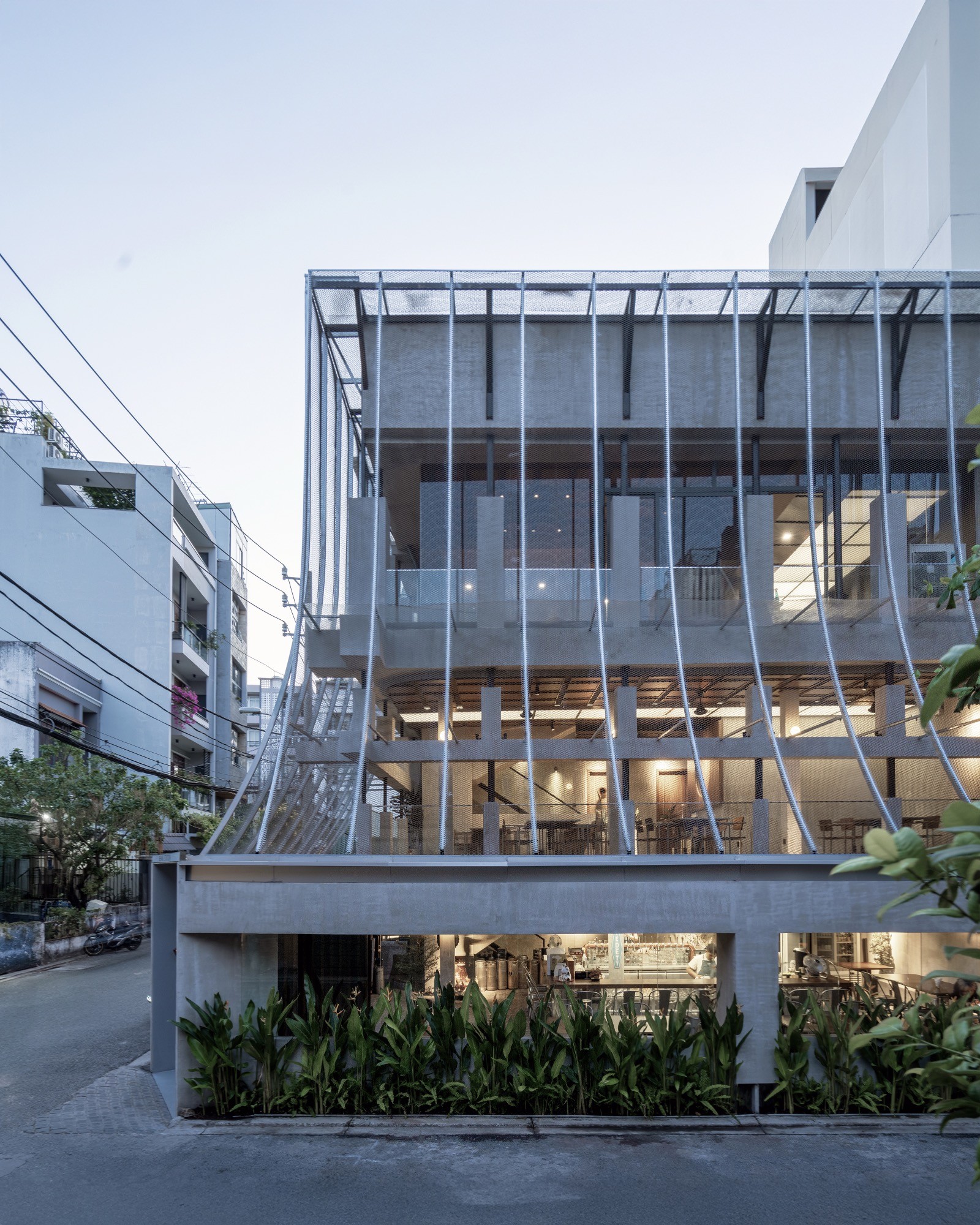

In Ho Chi Minh city, Vietnam, where new development constantly rewrites the street, Ts Veil takes a quieter position. The project transforms a three storey, 300 square metre villa through renovation rather than replacement, keeping the existing concrete frame, staircase, floor slabs, and roof intact. What changes is not the building’s mass, but its atmosphere and performance. A double skin strategy introduces a new architectural language while recalibrating how the house meets heat, humidity, and the city’s restless edge conditions.

A POROUS VEIL FOR LIGHT, AIR, AND STREET LIFE
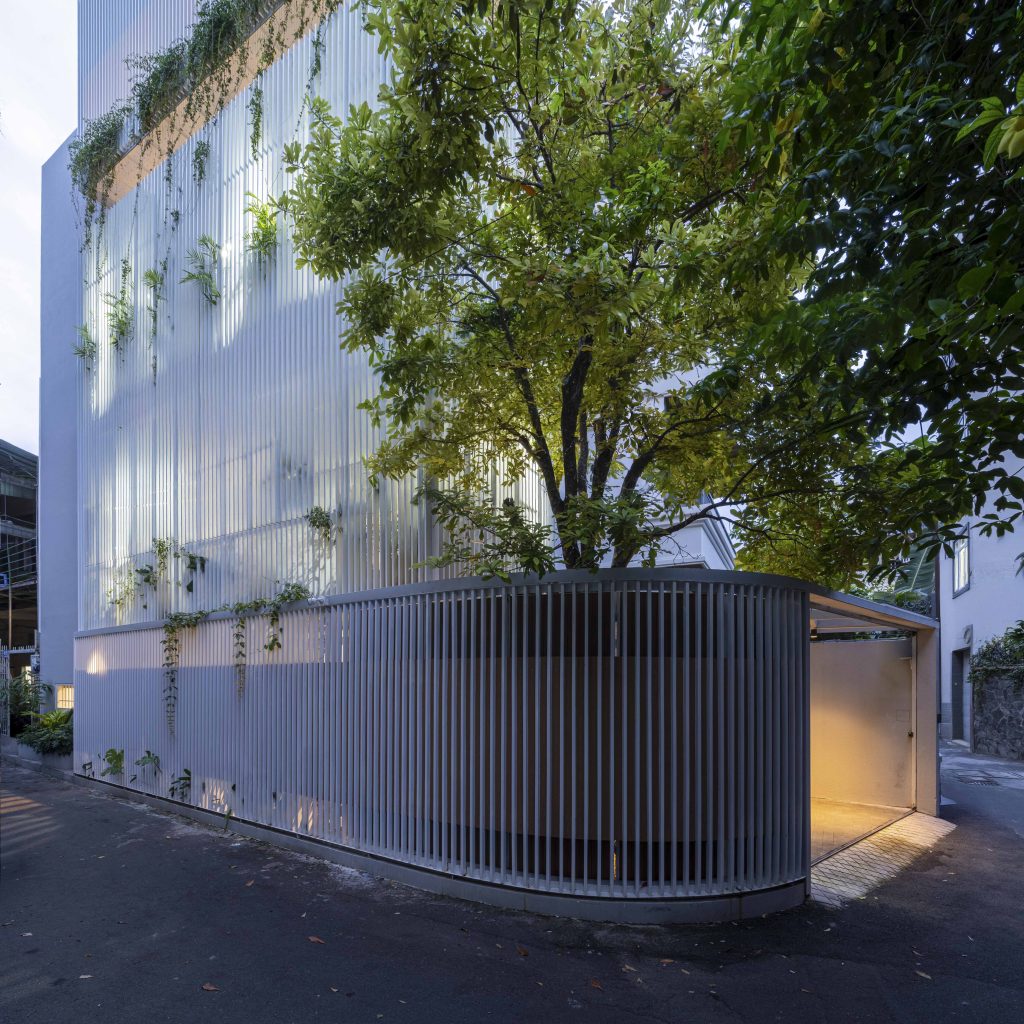
The renovation is organised around the idea of a veil, a membrane that mediates between an animated public realm and a more contemplative interior. A new outer layer of expanded metal mesh is suspended from a concrete and steel substructure, wrapping the villa in a permeable screen. By day, the mesh filters glare and softens the building’s profile, producing shifting gradients of opacity as viewpoints change. By night, it reads as a thin, breathable envelope that holds the house at a gentle distance from the street without sealing it off.


At the site’s narrow turning corner, the veil pulls outward to form a shaded threshold. This small displacement changes the building’s relationship to the neighbourhood, turning an ordinary frontage into an urban pause point. Instead of presenting a static façade, the villa becomes a responsive edge, one that registers movement, wind, and passing bodies through transparency and shadow.


MESH AND MIST, CONCRETE AND GLASS BLOCK
Beyond its visual register, the outer veil functions as an environmental device tuned to the tropics. Its perforated surface supports cross ventilation, while an integrated misting system embedded within the mesh introduces a cooling microclimate during the city’s most intense heat. The pairing of mesh and mist produces a passive active strategy that lowers dependence on mechanical cooling while improving comfort, using the façade as infrastructure rather than decoration.

Inside, the renovation introduces a complementary inner skin shaped by material restraint and minimal detailing. Glass block walls, exposed concrete, unfinished steel, and tactile finishes establish an interior that feels raw yet controlled. The glass blocks diffuse daylight into soft gradients, reinforcing privacy without sacrificing brightness, and amplifying the project’s central theme of permeability.


Taken together, the two layers create a nuanced relationship between solidity and softness, street and interior, climate and inhabitation. Ts Veil proposes renovation as a form of resilience, extending a building’s life through calibrated intervention and turning the façade into a mediator of atmosphere.


Project Credit
Project name: TS VEIL
Location: Ho Chi Minh city, Vietnam
Design Firm: Studio Khoa Vu / @archdekk
Complete: 2025
Photo: Chuong Nguyen
More Photos