
Now Reading: Pedagogy, Agroforestry, and a Quiet Architecture in Asturias
- 01
Pedagogy, Agroforestry, and a Quiet Architecture in Asturias

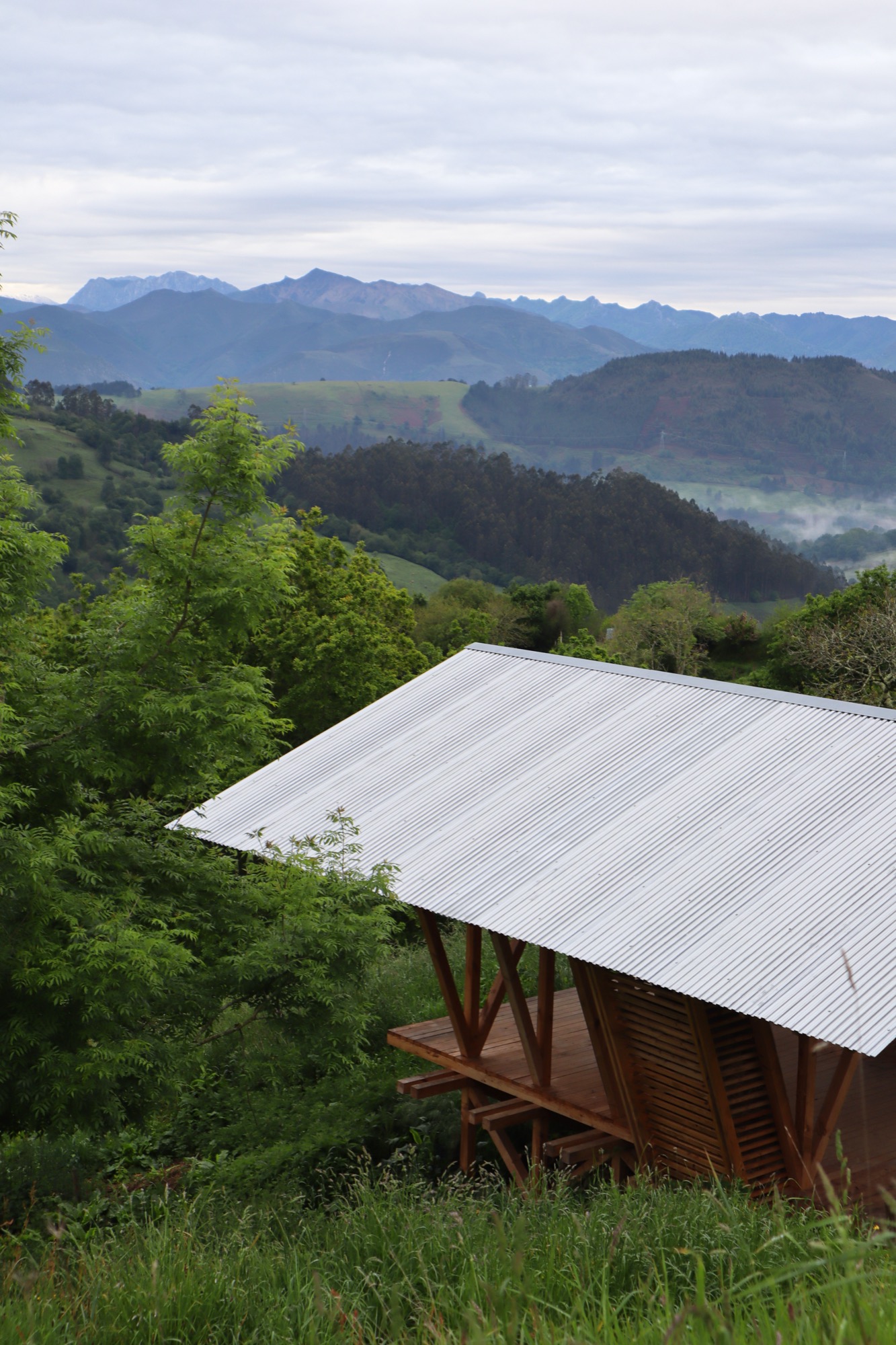

In Cabranes, Asturias, Atelier Poem has completed the Taller Agropoetico for Foresta Collective, a modest yet deeply resonant structure that weaves together agricultural practice, collective learning, and territorial care. Rather than asserting itself as an object, the project operates as an instrument. It supports processes that unfold over time, rooted in direct experience of landscape and shared acts of making.

Foresta Collective works between Germany and Spain, developing educational models grounded in lived engagement with nature. Through artistic residencies, workshops, and long term agroforestry initiatives, the collective brings together artists, educators, agronomists, and local communities. Learning here is inseparable from doing, and knowledge is produced collectively through contact with soil, climate, and seasonal rhythms.

The Taller Agropoetico emerges within an agroforestry program that includes the planting of more than one thousand trees across five hectares. Conceived as a landmark within the growing forest, the structure offers a place to gather, observe, and reflect on the gradual transformation of the territory. Pedagogy permeates every stage of the project. From the construction site, where apprentices worked alongside local master carpenters, to the planting of trees organized as collaborative workshops with botanists and agronomists, the building is both outcome and tool of an educational process.


The pavilion responds to a dual requirement. It provides a covered, flexible space for workshops and communal activities, while accommodating the storage of tools used for planting, maintenance, and harvest. This functional clarity is translated into an architecture that maintains a close and respectful dialogue with the rural landscape, acting as a bridge between educational practice and territorial transformation.
Built on the footprint of an old pajar, the project is grounded in careful study of Asturian vernacular architecture. Particular attention is given to the hórreo, the elevated rural structure traditionally used for agricultural storage. Rather than replicating historical forms, Atelier Poem abstracts their constructive intelligence, translating durability, efficiency, and climatic responsiveness into a restrained and contemporary language.

Material choices are deliberately simple. Timber and metal sheeting are assembled through rational construction systems that prioritize economy of means and longevity. Exploiting the natural slope of the site, the pavilion is raised above the ground. This elevation protects the timber structure from moisture while allowing vegetation, microfauna, and soil processes to continue beneath it without interruption. Individual pile caps form the foundation, minimizing ground disturbance and preserving permeability.


The main level functions as an open classroom, while the interstitial space between the first pairs of columns accommodates tool storage. The architecture remains fully permeable. The short sides open completely to the landscape, while the rhythm of columns along the long elevations fragments views into a sequence of framed perspectives. In this way, the pavilion becomes an observatory of the emerging forest, allowing users to perceive seasonal change, growth, and labor as part of a continuous cycle.
Above, a generous gable roof extends outward into the landscape. Its pronounced overhang shelters both levels of the structure and defines a transitional zone between built space and surrounding paths. The roof’s scale and profile engage directly with Asturian territorial morphologies, anchoring the pavilion within its cultural and geographic context.


The Taller Agropoetico is conceived as the generative nucleus of an agroforestry system destined to expand over years and decades. Its relevance will evolve alongside the forest it supports, adapting to changing needs driven by agricultural production, education, and collective use. Discreet and permeable, the structure allows itself to be crossed by wind, light, gazes, and people.
More than a building, it is an open shelter and a shared repository of tools and knowledge. Over time, it will become part of the ecosystem it helps to cultivate, a quiet witness to an educational model centered on direct experience of nature and the collective construction of understanding.
Project Credit
Architects : Atelier Poem / @atelierpoem
Area : 50 m2
Year : 2024
Photo: Courtesy of Atelier Poem
Location: Cabranes, Asturias, Spain
More Photos