Now Reading: Sculptural Public Architecture Rooted in Landscape and Cultural Memory
- 01
Sculptural Public Architecture Rooted in Landscape and Cultural Memory


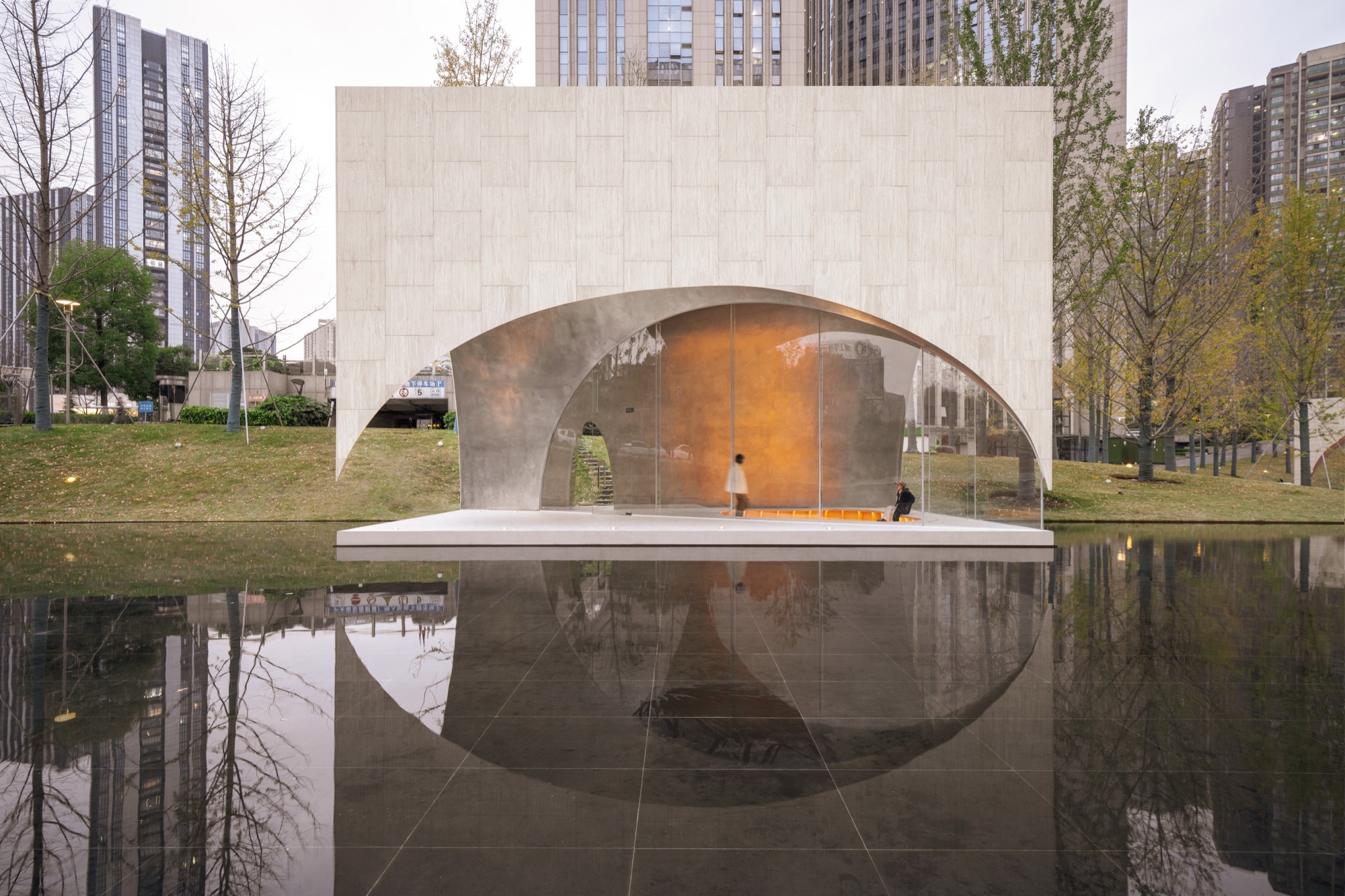
The AYDC Public Art Center in Guiyang emerges from the terrain as a constellation of sculptural pavilions shaped by the cultural, ecological, and topographic identity of Guizhou. Designed by Atelier XI and completed in 2024, the project reframes the idea of a singular cultural building into a dispersed system of architectural interventions woven across the landscape. AYDC, derived from the Yi language meaning “our land of dreams,” is envisioned as a creative district where community, nature, and artistic expression coexist.

DISSOLVING THE SINGULAR BUILDING INTO A LANDSCAPE OF PAVILIONS
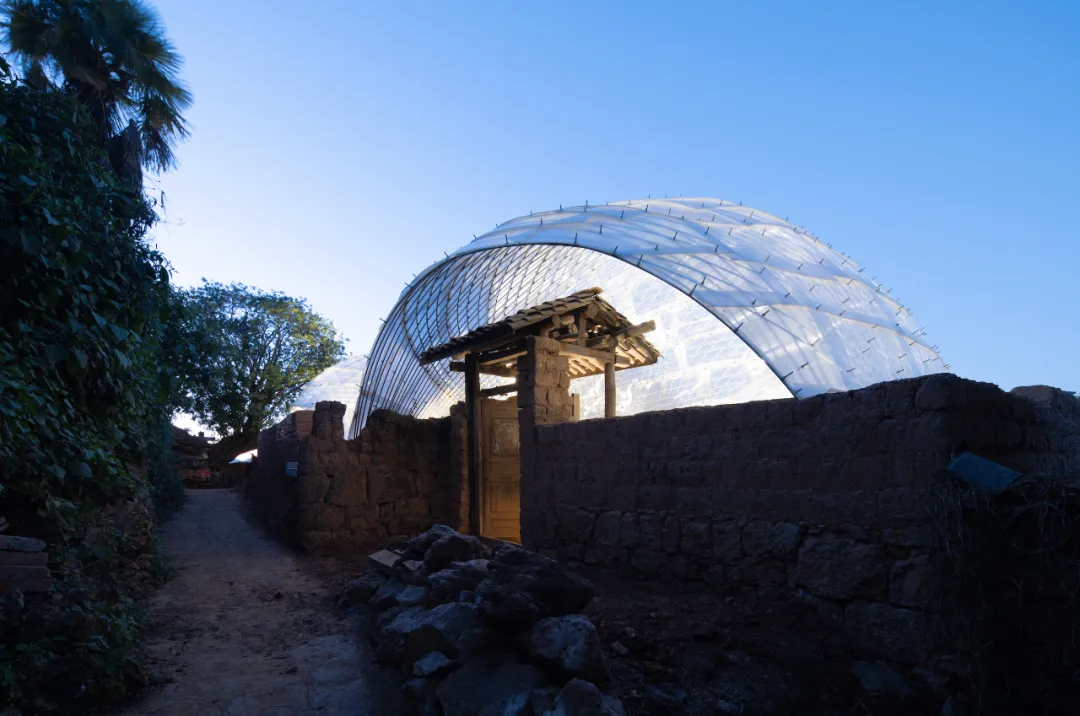
Rather than consolidating programs into one structure, the architect proposed a dispersed network of three public art spaces integrated into the site: the Xima Library, the Ginkgo Chapel, and the Dali Stage. These pavilions function as independent yet interconnected platforms, allowing for spontaneous gatherings, creative workshops, intimate readings, and public performances. Each structure derives its form from the karst caves and eroded mountain geometries characteristic of Guizhou, translating geological memory into contemporary spatial language.


FORM, LIGHT, AND THE POETICS OF SUSPENDED ARCHES
The three pavilions share a generative principle: sculptural forms carved inward to produce pointed, suspended arches that evoke a sense of balance and tension. Their material expression oscillates between solidity and porosity. Exterior envelopes are composed of modular white travertine panels with a naturally porous grain, while the interior shells are built from curved stainless-steel plates. These inner surfaces shift from soft, sandblasted textures in the library and chapel to highly polished mirror steel in the stage, amplifying the dynamic lights of performances and gatherings.


THREE SPATIAL CHARACTERS ROOTED IN WATER, SKY, AND STARLIGHT
The Xima Library stands quietly by the water, reflecting its metallic dome on the rippling surface. Its rectilinear frame contains a glowing interior volume that acts as a meditative chamber for reading, where the silhouette of the dome becomes a soft, shifting presence.

The Ginkgo Chapel rests lightly among trees on the hillside. Four monumental stone leaves form its structural base, guiding visitors into a central void where the sky becomes the dominant spatial element. Passing between the curved metallic spheres, visitors enter a sanctuary of filtered light and moving shadows.


The Dali Stage opens toward the public square. Shaped by the negative imprint of an absent arch, the stage becomes both threshold and focal point. Embedded fiber-optic lighting beneath the surface evokes a field of stars, merging performance with the atmospheric intensity of nightfall.

Seasonal change is central to the experience of AYDC. The surrounding ginkgo forest shifts from green to gold to amber, creating cyclical chromatic dialogues with the pavilions. As wind and light flow freely through the porous structures, architecture becomes part of a living ecological system rather than an imposed presence.
ARCHITECTURE AS VESSEL: COMMUNITY, IMAGINATION, AND PLACE
The AYDC Public Art Center reflects Atelier XI’s ongoing pursuit of minimal gestures with maximal experiential resonance. The project fuses art, landscape, and cultural narrative, positioning architecture as a vessel for imagination rather than a mere container for function. Through this constellation of sculptural forms, the design strengthens community identity while honoring the deep natural and cultural histories of Guizhou’s mountainous terrain.

Project Credit
Name: AYDC Public Art Center
Completion Year: 2024
Gross Floor Area: 236 m2
Project location: Guiyang, Guizhou Province, China
Architecture & Interior Design: ATELIER XI / @atelier_xi
Photo: Chao Zhang, AYDC
More photos:


Atelier XI is a forward-thinking architecture studio based in Shenzhen, China, co-founded by architect Chen Xi. The firm specializes in public, cultural, and landscape architecture, distinguished by its sensitive engagement with site context, from rural farmlands to mountainous terrain. Their work often dissolves conventional building typology, opting instead for sculptural pavilions and dispersed structures that harmonize with nature and community.