Now Reading: Process as practice: How Manuel Bañó shapes objects between art and industry
- 01
Process as practice: How Manuel Bañó shapes objects between art and industry


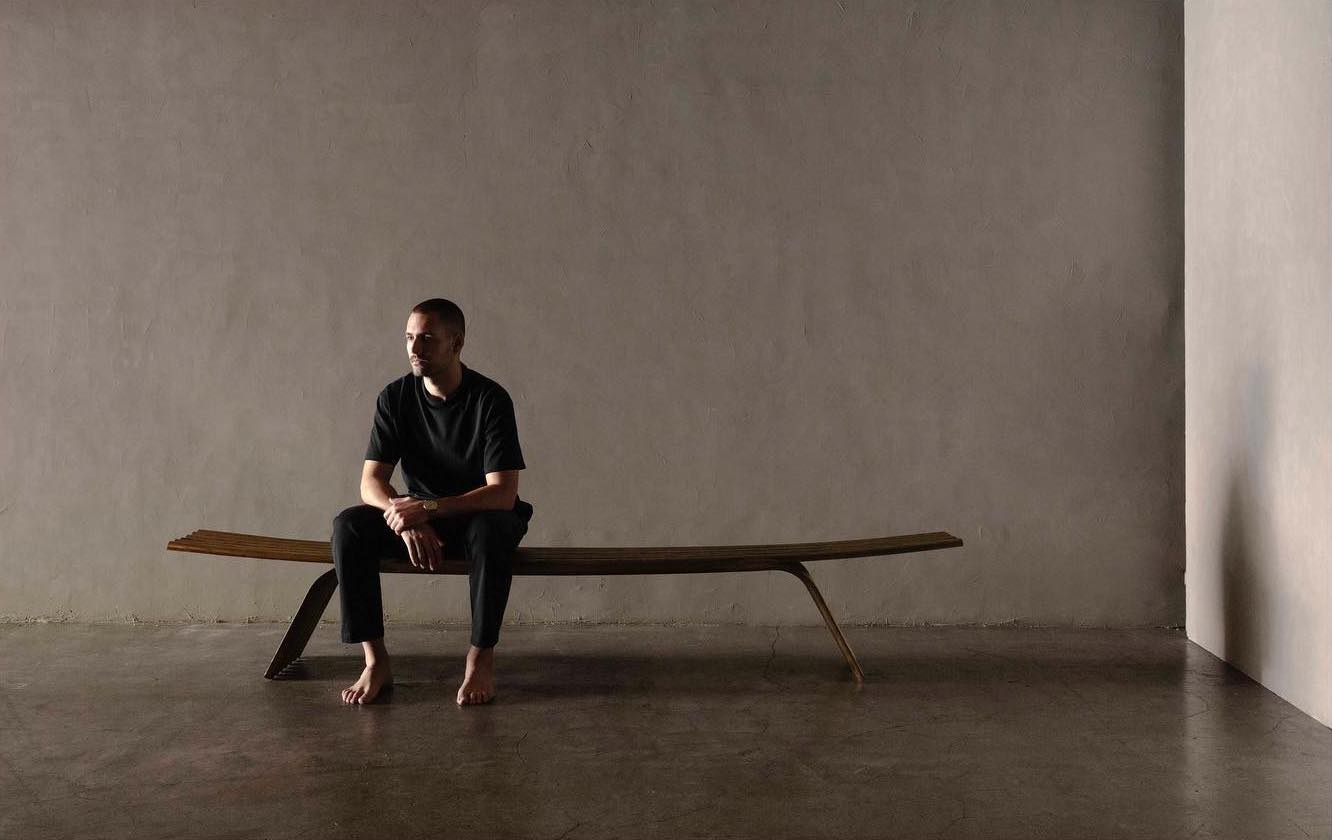
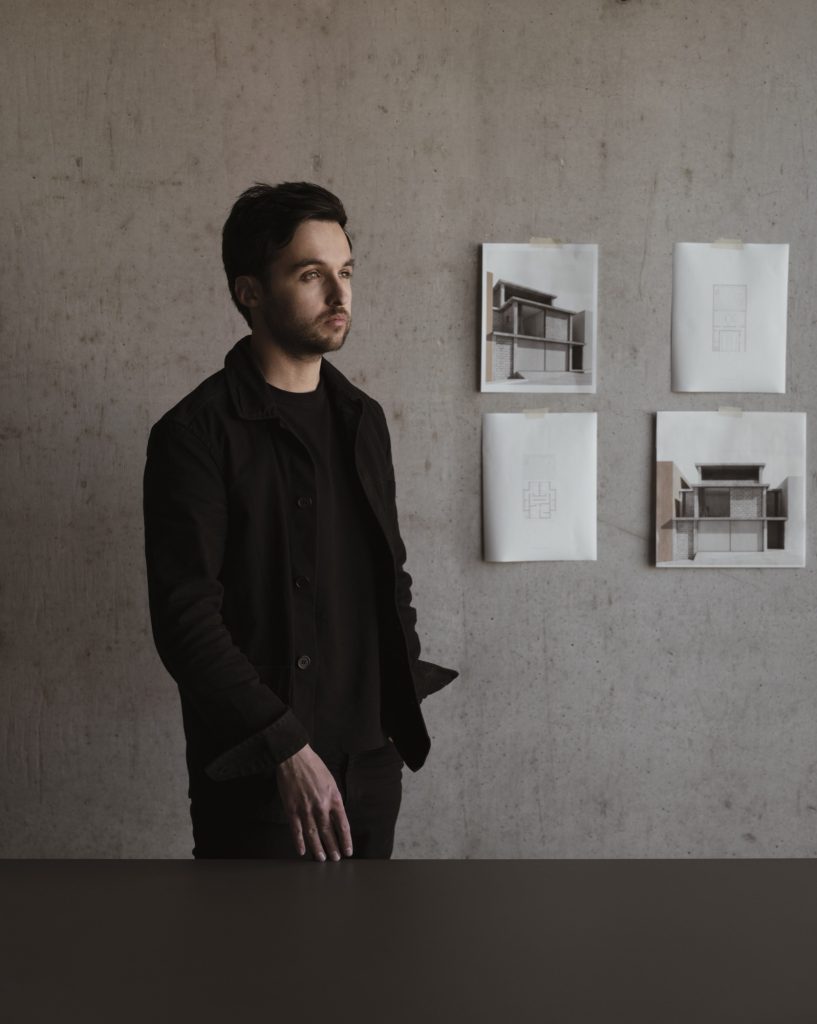
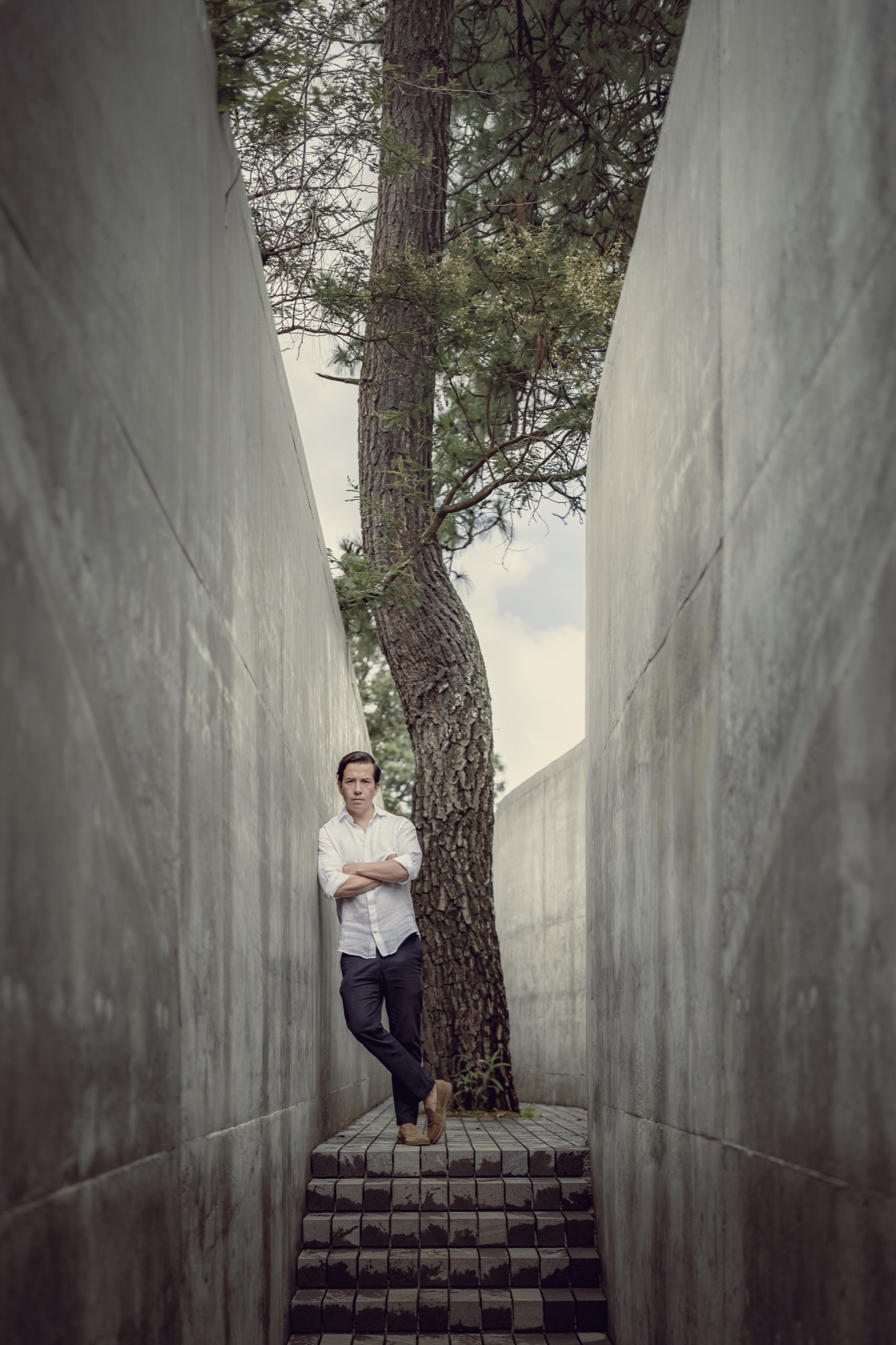
We paid a visit to Manuel Bañó that afternoon at his apartment. He has been living in Mexico City for a decade now. As he warmly welcomed us and guided us around his living space, which also doubles as his workspace, he delightedly shared stories about his shared workshop with other designers located nearby. To our intrigue, he mentioned that this workshop houses some of his big objects. This piece of information evoked our curiosity even more.

Born and raised in the city of Valencia, Manuel Baño Granell (1990) proudly shares his family background. His mother is an artist, while his father is an industrial designer. Manuel exudes joy and a sense of pride speaking about his Spanish family. He fondly recalls his childhood, where he grew accustomed to the sight of his mother painting in the basement of their family home. He also mentions the times he visited his father’s workshop, playing with the unique items his father personally designed. As he grew older and pursued industrial design studies in Valencia, Manuel even found himself in the role of a “son of the teachers” as both his parents were professors at the very same university he attended. Manuel deeply admires the skills and talents of his parents, and being trained by them was a phenomenal experience for him.


“Until now, I vividly remember my first visit to an art exhibition at the Contemporary Museum of Valencia when I was a child. The emotions and curiosity I felt at that moment were one of the main reasons why I made the firm decision to pursue my path in art and design later on.”
Manuel stated that his childhood and close relationship with his family have nurtured his passion for creativity. His father was the first to strongly influence his early drawings during his school days, as well as during Manuel’s initial time into commercial design. However, in recent years, he has gradually shifted his focus towards artistic craftsmanship. As a result, he now dedicates more time to connecting with his mother and engaging in conversations about their respective work.
“Now, I believe that I am at the intersection of art and design. The art pieces I have created always have a certain functionality, while my furniture designs always possess a sculptural atmosphere. At this point, in addition to receiving feedback from my parents, I frequently engage in discussions and even provide advice to both of them based on the experience and perspective gained from my own practical work. (Laughs)”

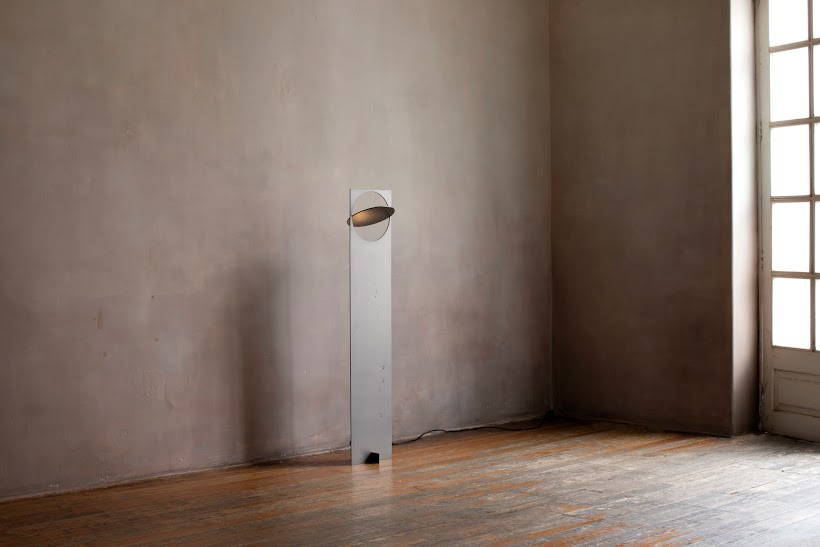
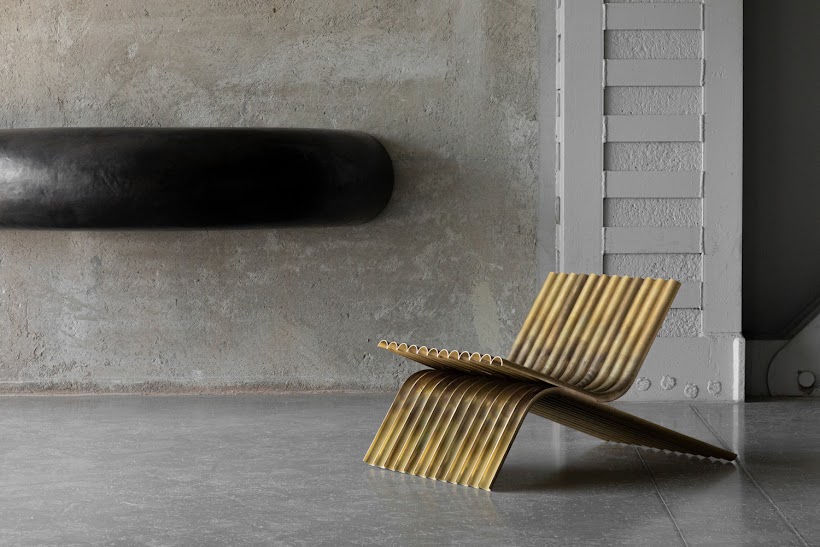
Stopping by the wooden table placed in the centre of the workspace, neatly arranged on top were a few small notebooks, drawing pens, and some copper tools. There was also a metal saw and two items of the OBJ-01 lamp. Surrounding the wooden table were three OBJ-02 chairs, each with a unique form – a chair with a backrest, a backless stool, and a long bench. In the corner of the room, the OBJ-03 lamp was positioned on a white wooden pedestal. On the wall, a shelf called OBJ-04 displayed a multitude of items, each featuring different styles and materials. Manuel had thoughtfully prepared tea for us to enjoy while engaging in conversation.
It is delightful to hear the story of your family and childhood. So, after studying design in Valencia, did you become a professional designer?
Manuel: After graduating from university, I worked for about 6 months in a design office named Odosdesign in Valencia before moving to London to seek further opportunities and experiences. In the UK, I spent time learning the language while working on interior design projects at the Erasmus+ organisation, and later at Magnus Long, which is another exchange program for students from universities, similar to Erasmus+. After a while, I transitioned to freelance work. During that time, I contemplated returning to Spain on several occasions, but ultimately decided against it. After living in various countries, I eventually came to Mexico and chose to settle here. It has been 10 years since then, and I consider it to be the journey that led me to pursue a career in design.
In Mexico, I worked alongside designer Héctor Esrawe, who has his own studio called Esrawe. He designs everything from architecture to interior design and furniture.
I wonder what your first product looked like?
To talk about that, let’s go back to the time in Spain. I once opened a design studio with a fellow classmate. Our first product was a very small, flat wall hook that bore some resemblance to the OBJ-01 lamp design. I believe it was a minimalist and clever design, with good user interaction.
Indeed, it is common to encounter both favourable and challenging experiences when first entering a profession. While you may have initial ease and good fortune, there can also be periods when things do not go as smoothly. It is important to remember that success often requires consistent effort and relentless work. Even though things may appear easy, it usually takes dedication and perseverance to achieve your goals.


Why didn’t you stay and build your own career in Spain?
I genuinely love Valencia and hope to have the opportunity to return someday. The decision to leave my hometown was partly influenced by the challenging domestic situation, as Spain was heavily affected by the global economic crisis that began with the collapse of Lehman Brothers. Design projects and exciting work opportunities became scarce in both quantity and diversity. Additionally, a larger reason was my personal desire to explore the world and have the chance to work in a completely new environment alongside various other designers.

After 10 years of living in Mexico, I have built many professional and personal relationships. I have noticed that this country is currently experiencing a vibrant period in creative industries, including design, architecture, cuisine, and film. There are abundant opportunities for growth and development here, which is why I feel that staying is the right choice for me.


If I were to return to Valencia now, I would essentially be starting from scratch. Although I have a deep affection for my birthplace, going back there would not be an easy decision.
Please tell me about Héctor Esrawe and Age Salajõe. How did you meet and collaborate with them, and how did you, together, establish the design studio EWE in Mexico in 2013?
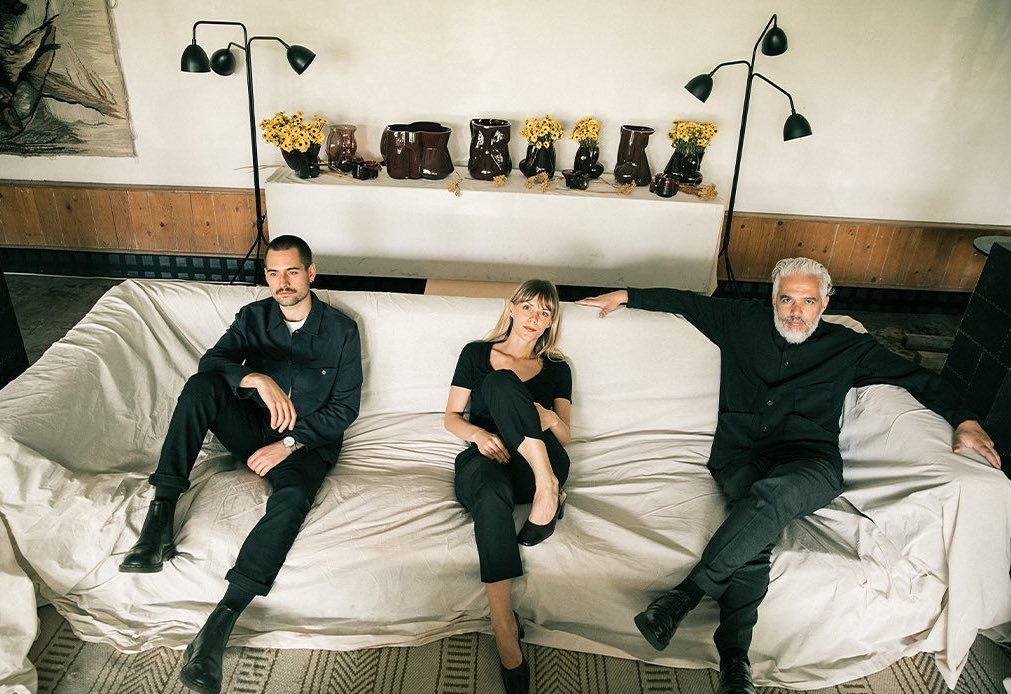
In the early days after moving to Mexico, I worked with Héctor for about 3 years at his studio. We had a great working relationship, with similar mindsets and approaches to design. Later on, Héctor proposed that we collaborate to establish our own brand, combining our visions and ambitions. As for Age, she is from Estonia and had previously worked in London, Los Angeles, and now in Mexico in the creative and art curatorial field. We met Age at a time when we were shaping the idea of a new studio, so the three of us decided to work together. We had extensive discussions and conversations about various topics. While Héctor and I had a more traditional mindset about a design studio, Age wanted the studio to function as an exhibition and art display space. Ultimately, we combined both perspectives and reached a consensus that the studio would design and produce limited-edition sculptural products with specific functionality.


The item Magma for instance, its light is enchantingly beautiful.
You are absolutely right; Magma has always been our bestseller!
It seems like you have your own studio, which is where we’re currently having this conversation, right, Manu? Do you juggle between collaborative projects and your personal studio?
Yes, you are correct. In the first 7 years, I primarily focused on working at EWE (our shared studio). In recent years, we actively sought additional team members, and now there are about 10 people working at our shared office, including designers, production managers, quality supervisors, sales staff, and media personnel. EWE has also established a product research department, which serves as a platform for designers to collaborate with each other. My role is the design lead, and with the expanded team at EWE, my workload has gradually decreased, allowing me to be less involved in day-to-day matters. I have been completely liberated and can focus solely on design. About two and a half years ago, with more personal time available, I decided to launch my own brand to express my ‘individuality’ in a unique way.

What is the whole process of making a product?
The process of creating a product at EWE, for example, follows a specific workflow. We exclusively work with materials from Mexico, Mexican artisans, and traditional folk techniques of Mexico. Everything is intimately connected to the land and history of this country, as they provide abundant inspiration for our designs. Sometimes, it relates to technical aspects, while other times it involves materials, rituals, or stories. The design team starts by “playing” with the data provided by the research team and contemplating how to translate that data into contemporary design language. Occasionally, artisans also contribute their insights to the evolving ideas during this stage.
We also actively collaborate with major partners, factories, and some manufacturing workshops in Mexico specialising in stone/rock, glass, casting, and woodworking. This is crucial for sharing ideas right from the initial design concept stage. This is the approach taken by EWE. Typically, we spend about 6 to 9 months to create a product, as the crafting process is entirely done by hand.


I must say, looking at the Magma you can clearly feel that. Each individual lamp is uniquely charming, and they can be connected according to the user’s preference to fit different spaces.

Magma is indeed a very special project, as mentioned before, it is still the best-selling product of EWE. Each lamp is made of thick glass, entirely hand-blown using moulds made from volcanic rock. This type of rock is the only material that can retain the heat required for blowing thick glass. It cannot be done with metal moulds, and even moulds made of agate stone would break due to the high heat during the blowing process. That’s why each lamp has a shape that closely resembles a rock.

Do you have a particular favourite material?
At EWE, we always use natural materials. However, for my own product line, I wanted to use materials different from EWE’s to pursue a completely different design language. I opted for minimalism, moving away from the natural world a bit and focusing on an industrial aesthetic in my designs.
Personally, I have a strong affinity for copper. It could even be described as somewhat of an obsession. I am currently developing a collection that utilises this material, which will be launched next year. I love the way copper interacts with fire – it heats up quickly and is easily malleable. Copper is also a material commonly used in Spain and Mediterranean coastal countries. It establishes a connection with me, allowing me to connect with my roots.


What are your thoughts on sustainable design?
Each product I design is very limited, usually producing only 10 pieces of each. When it comes to sustainable design, I have a friend who once mentioned, “The most sustainable thing to do is to do nothing at all.” It sounds quite contradictory to me because I am someone who always has reasons to create.
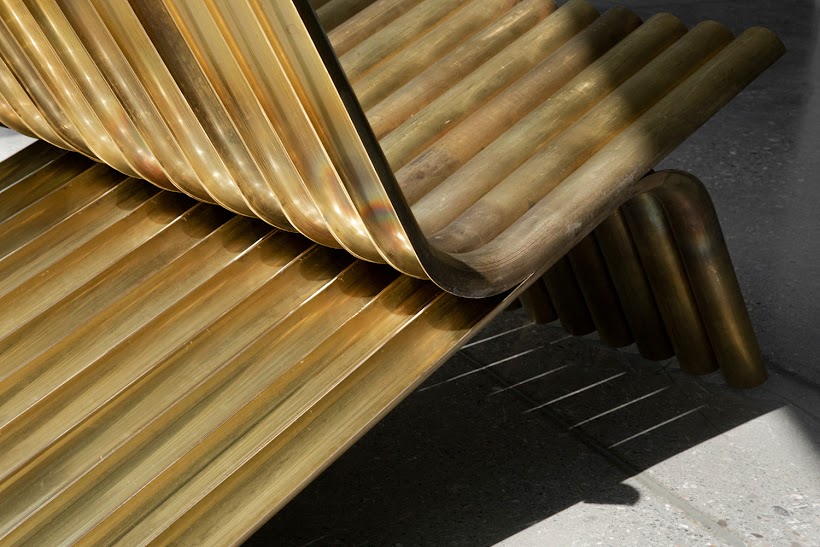
Copper, from a design perspective, is a sustainable material. It is a metal that can be melted, cut into pieces, and shaped into large or small dimensions as desired. A product is not limited by its current form. Furthermore, my designs only use pure copper. I do not intentionally steer my products towards sustainability trends, but I try not to do foolish things. Therefore, copper as a material has answered your question for me.
One of the reasons I stepped away from commercial design is that I did not feel like I was creating something completely new in this era. Many designers can create new products by using new technologies, but that is not my strong suit. I am not attracted to the commercial world out there. I lean more towards creativity and do not want to be controlled by the market, including factors like time, cost, processes, and machinery. I want complete freedom as an artist or sculptor to design a masterpiece. That is why I almost always refuse to collaborate with mainstream brands. I handle the design, production, sales, and even packaging and delivery to customers myself. Even though I do not enjoy the selling aspect, if I would not do it, how could I continue in this profession, right?


Do you think selling a creative product implies commercialising the philosophy behind each design?
I agree with this perspective. Sometimes, people buy a product because of the story or something beyond the physical form of the product.

Seeing that our teacups are empty, Manuel stands up and walks towards the kitchen to pour more. The afternoon sunlight streams through the large window, casting its glow into the corner of the house. It is the first time I have seen the OBJ-01 lamp, with its coppery golden hue, under the sunlight. Originally a source of light itself, the lamp is now illuminated by the sun. It feels like I am gazing at a sculpture with a mix of imagination and curiosity. Manuel returns to the table, carrying a new teapot and my white porcelain cup, not forgetting to bring some pastries for a light snack during our conversation.
Look! The sunlight is embracing the OBJ-01 lamp, how wonderful it is to see the two sources of light coming together. It truly is a work of art in terms of illumination.

That is quite a delightful discovery. I designed the OBJ-01 during the period of COVID-19 lockdown. It took about a year to conceptualise, produce, and bring the product into the world. I usually have a habit of visiting exhibitions to learn and gather ideas for my designs, but during the pandemic, I could not go anywhere. I thought I needed to start in a different way.


I used cardboard at home, played with different shapes, and drew things that I had not seen anyone else draw before, mainly focusing on simple and quick geometric drawings. When I felt satisfied with a design, I began to apply the production process to it. At that time, I started working with craftsmen, from selecting materials to finding suitable processing methods. The most important aspect was that I could assemble the products at home without needing many tools since I could not meet them in person due to the need for isolation at home. That was why the products needed to be small, lightweight, and easy to package for postal delivery.


I chose metal as the main material for the design prototype. Simply because if we worked with stone, they could have cracks within their structure, or with wood, it would be very difficult, even impossible, to bend that material. Metal compensates for both of these drawbacks. I asked my friend to help me cut a piece of metal using a laser machine. It was a solid circular ring that could rotate. This part serves as the reflection and light direction of the lamp. Once completed, I received the item and began assembling it at home with various types of LED lights. Finally, I successfully crafted my first lamp.
Wow, in my imagination, you are exactly like Tony Stark!
(Laughing in delight) You are welcome! It is great to hear that. Initially, I wanted to create something larger like a coffee table, but due to budget constraints and limited space, I could not pursue that. I decided to make a lamp because it was easier to execute, cost-effective, and could be packaged and transported anywhere I wanted.
After OBJ-01 gained recognition, many brands approached me with the intention of commercialising the product, but I have no intention of doing that. I want to sell my products on my own terms, and people can contact me directly to inquire about purchasing. Currently, OBJ-01 and many other products of mine are displayed in China, Dubai, Denmark, Italy, France, the United States, and Mexico. According to calculations, each product takes about 4 to 6 weeks to complete. That is how I approach everything I do, with a structured process and a focused mindset, because without a goal in mind, I wouldn’t be able to design anything.

Is it difficult to maintain an artistic vision while meeting customer demands?
Not at all. I respect and embrace what is true to myself. My products have modesty, sometimes boldness, and many facets. If people are not seeking what my products aim to deliver, they are free to explore other brands they prefer. I want my products to have expressive power, cultural relevance, and that is not contingent on the customer’s demands. The products I create reflect my own being, and I always work with that mindset.


Which is your most favourite chair in the selection?
Interesting! I genuinely like all the chairs in my collection, but if I had to pick the one that I like the most, it would be OBJ-02. I felt a lot of pressure after the unexpected “success” of OBJ-01, referring to the lamp that was well-received by people. So, I wanted the chair to be truly different from the lamp. OBJ-02 consists of several copper tubes joined together and cut in half vertically. Since OBJ-01 was made from thick copper sheets, I wanted to experiment with a thinner metal sheet that would allow me to bend it instead of using laser cutting. This is the part I mentioned earlier, copper is easy to bend and has endless possibilities. Unless it is thin, it can be bent; if it cracks, it can be welded; if you want to change its shape, heat it up and reshape it. They provide us with opportunities to explore and be creative.

I do have some concerns about the size of the chair. While OBJ-01, the lamp, is small and versatile, easy to place anywhere, OBJ-02 indeed requires space and a suitable environment. After completing the prototype, I was truly convinced when I looked at my design. Later on, I have made some adjustments to enhance comfort and make it more affordable for customers. OBJ-02 is a reflection of my own spirit, and I’m very proud of this design.
****
I pause for a moment, looking towards the setting sun, and the phrase ‘sense of appreciation’ that he just mentioned is so beautiful, as if I’m being touched deep inside the corners of Manuel’s thoughts. This small visit was just to have a conversation with a young designer, but looking into his eyes, I sense something greater awaiting both him and me in the future. I imagine many decades ahead, when we are both old, the things we will see in the future are truly worth looking forward to. Manuel invites me to go outside for a walk and admire the sunset, and I happily accept. As we walk, we talk about Mexico City and his visits to Valencia to see his family…
I understand and appreciate the thoughts about the sense of appreciation you just mentioned!
At this moment, I feel comfortable when looking at my artworks because they all possess a certain functionality within the sculptural form. Someday, I aspire to become a sculptor because sculpture is how I express my art.

Are there any artists, designers, or sources of inspiration that have influenced you?
Yes, there are indeed. I draw inspiration from people around me, from the depths of perception and within my own workspace. There are a few individuals whom I greatly admire, such as sculptor Constantin Brâncusi, interior designer Isamu Noguchi, and artist Harry Bertoia.
Besides furniture design, do you design anything else?
Besides furniture design, do you design anything else?Yes, I do. I have been involved in designing perfume bottle prototypes for a brand in Germany and sketching bottle designs for a Tequila company. As I mentioned before, I enjoy designing them because they combine sculptural elements with specific functionality.
What if I wanted to become a designer like what you are doing now, what would you advise me?
I would say that you should strive to work for the people you admire, perhaps in about 10 years. Save money by working hard and travelling as much as possible. In the design industry, I am the one inside the circle, but in other fields like art, architecture, cuisine… I am the customer or the one who appreciates. Therefore, observe and continuously learn, always stay updated with the latest trends and developments in other industries. This will give you the opportunity to see your position in this vast world. That is what I think!
Goodbye, Manuel. By then, I may not be the designer I once asked you about, but I believe Manuel will gradually become a contemporary designer, a sculptor as you aspire to be, with your own sense of appreciation.
Article Credit
Interview & Text: Tan Nhang, Ha Thu
Photo: Alejandro Ramirez Orozco
07.2023