Now Reading: Timber shell pavilion creates reading space beside Chinese library
- 01
Timber shell pavilion creates reading space beside Chinese library

Timber shell pavilion creates reading space beside Chinese library

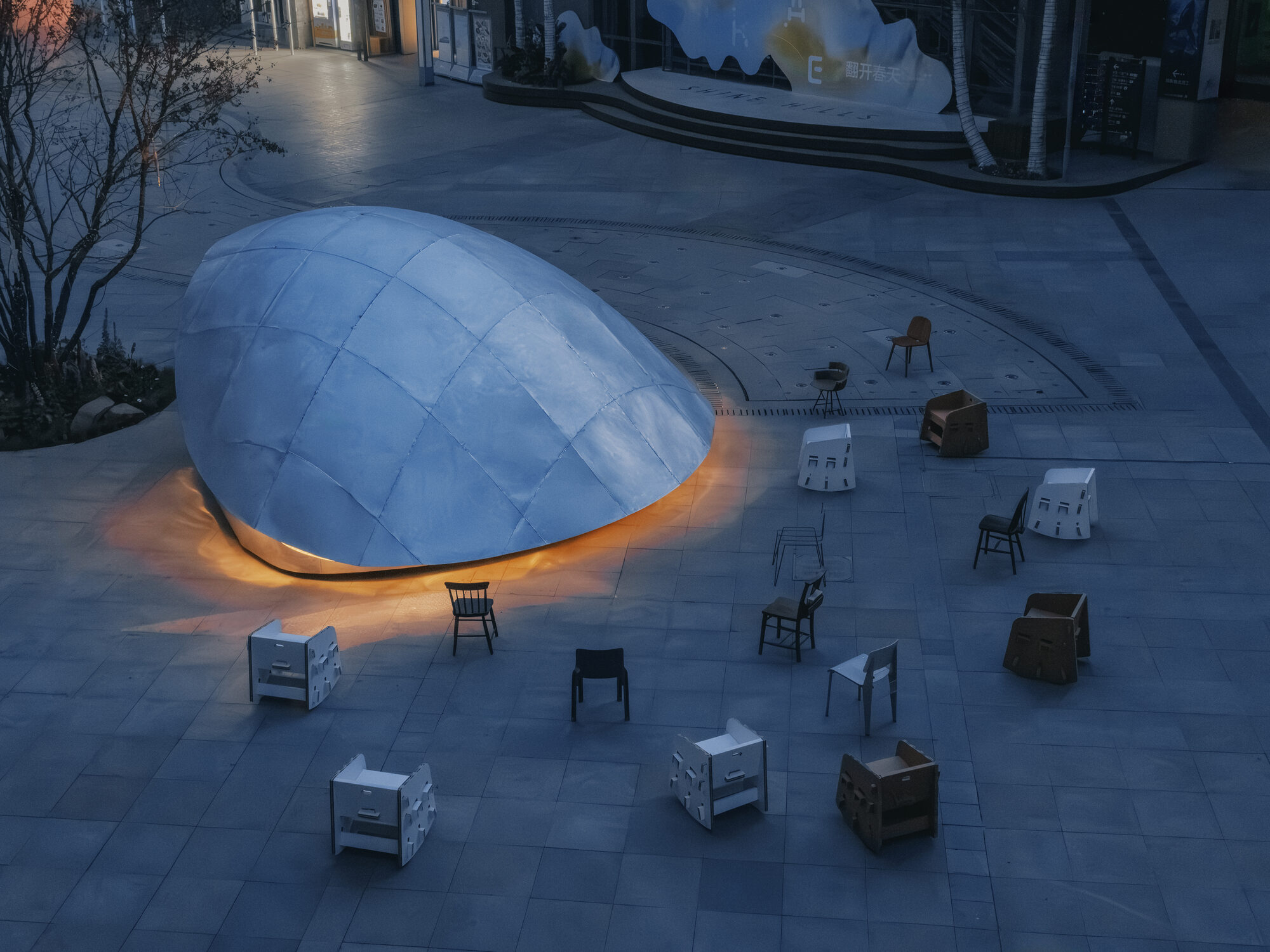

Designed by LUO studio, the Shell Book Pavilion transforms a public plaza at Shine Hills into a small scale architectural space dedicated to reading, gathering, and community interaction. Rather than functioning as a static object within the commercial complex, the pavilion was conceived as an extension of everyday public life — a place where children play, residents linger, and encounters unfold naturally.


For the architects, the project also carried a personal dimension. Familiar with the site through repeated visits, the design team approached the pavilion not as an isolated installation but as a response to an already active social environment shaped by openness and informal use.


Positioned at the center of the plaza, the structure responds equally to movement from all directions. Rejecting the idea of a conventional building with a front and back, the pavilion adopts a fully open 360 degree presence that remains visually accessible from every side.


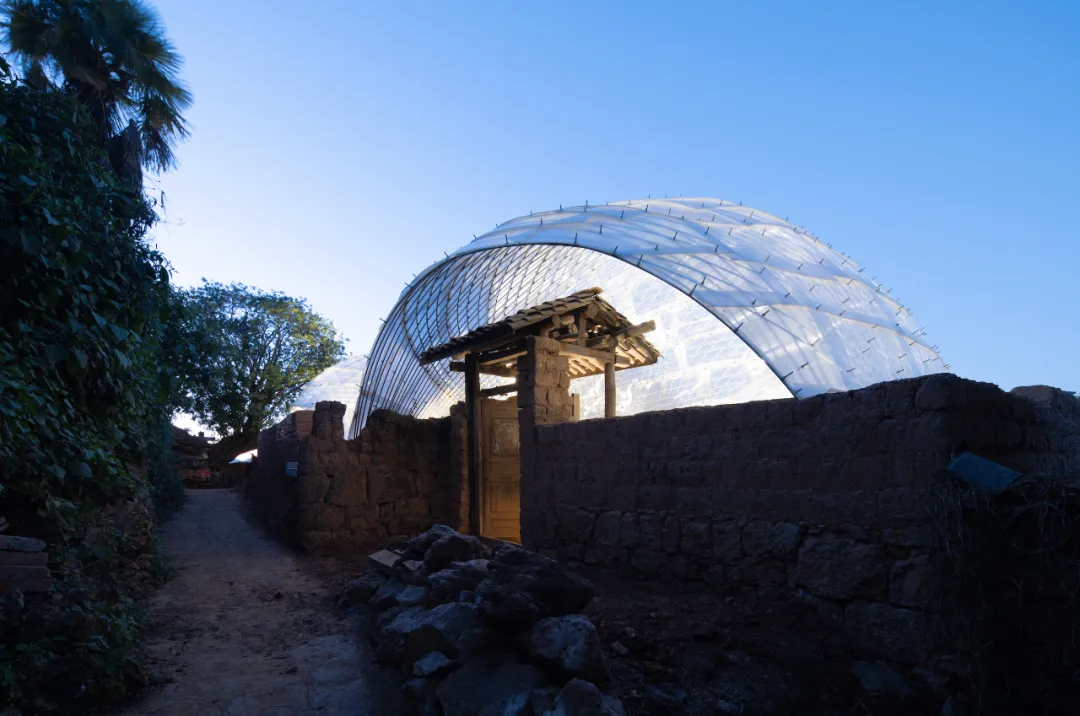
Its defining feature is a vertically operable shell structure that allows the pavilion to continuously shift between different spatial conditions. Fully open, the pavilion unfolds outward like a public stage. Half open, it provides shelter while maintaining visual connection to the plaza. Nearly closed, the structure becomes quieter and more intimate, transforming into a protected reading room beneath the curved shell.


Rather than treating movement as a purely technical gesture, the opening mechanism becomes part of the architectural experience itself. During public readings and events, the gradual unfolding of the shell introduces a subtle sense of ceremony, allowing the space to actively participate in the gathering rather than simply contain it.


Although visually lightweight, the pavilion operates at an architectural scale. When fully opened, the canopy spans more than 40 square meters, creating a shaded public room approximately eight meters wide and six meters deep. Interior heights ranging from 2.5 to 4.2 meters support reading sessions, informal gatherings, and temporary activities throughout the day.


The project combines spatial design with complex mechanical and structural systems. Aerospace grade aluminum forms the primary structural frame to withstand repeated opening cycles, while timber elements soften the interior atmosphere and introduce tactile warmth. Forging, CNC machining, welding, and custom bearing systems were integrated into the fabrication process to ensure long term stability and precision.


From design to construction, the entire project was completed in only 20 days. Installed within an active commercial plaza, all assembly and construction work had to take place overnight, including lifting, welding, testing, and structural calibration.


The site itself introduced further complications. Uneven ground conditions with elevation differences of nearly 18 centimeters required repeated on site adjustments to guarantee the operable structure could open accurately and remain stable.


Despite these constraints, the completed pavilion maintains an unusual sense of calm and lightness. Its slow opening movement, curved shell form, and changing spatial atmospheres allow it to function less as an object and more as a living public space that evolves through weather, time, and daily use.


More than a small library, the Shell Book Pavilion proposes a flexible model for contemporary public architecture – one where movement, participation, and collective experience become central to the life of the space.
Project Credit
Project Name: Shell Book Pavilion
Design & Construction: LUO studio / @luostudio
Location: Fountain Plaza, North Zone, Shine Hills, Shunyi District, Beijing, China
Roof Area (Fully Open): 43 m²
Photography: Zhu Yumeng / @yumeng_zhu_coppakstudio
Completion: April 2026
More Photos