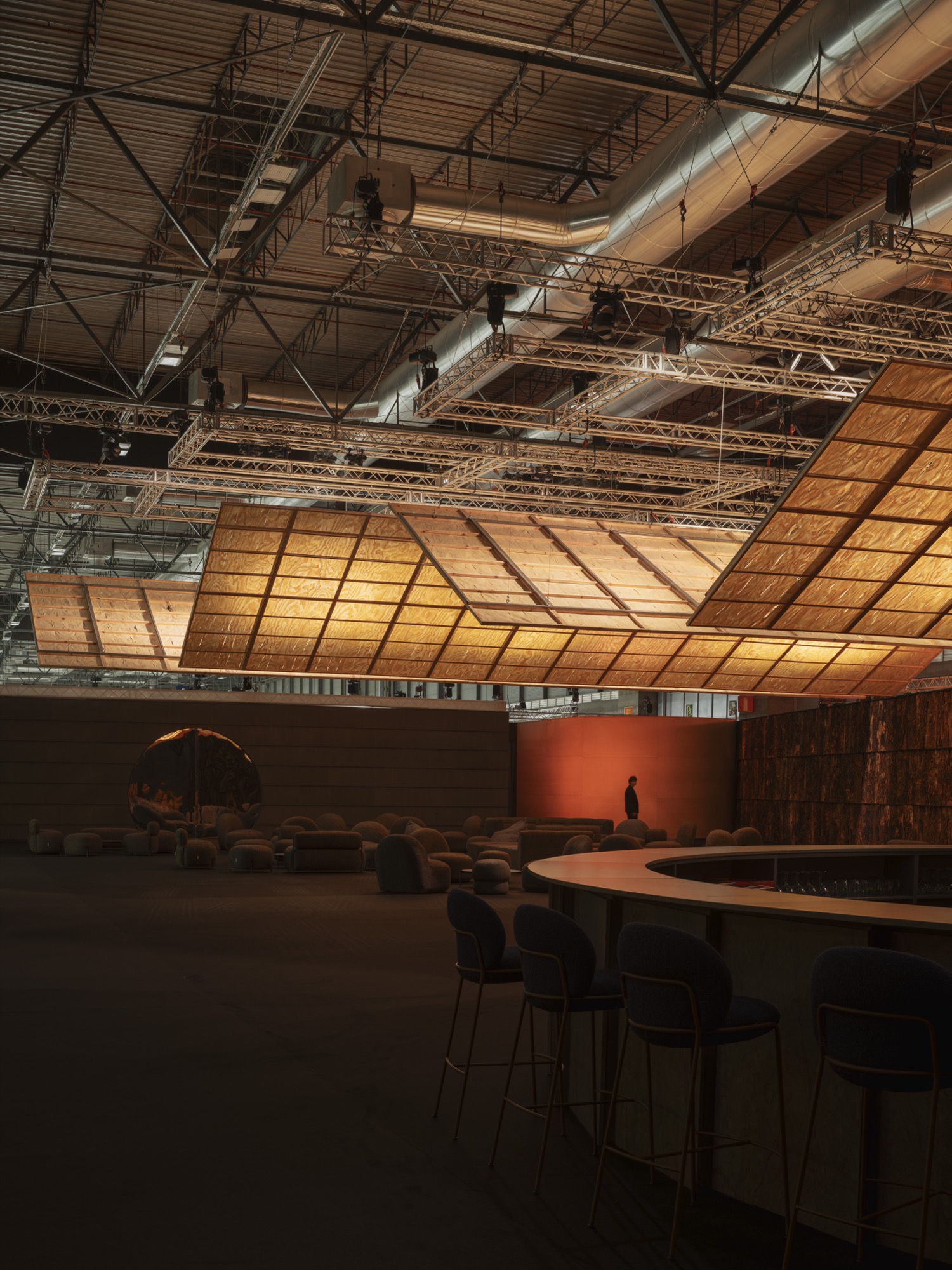

Now Reading: ELSE Design explores ephemeral architecture through ice, hay and light installations
- 01
ELSE Design explores ephemeral architecture through ice, hay and light installations

ELSE Design explores ephemeral architecture through ice, hay and light installations

In a contemporary architectural landscape often defined by permanence, performance, and completion, the work of ELSE Design operates in a different register. Their projects engage with temporality not as a limitation, but as a condition that sharpens perception. Whether working with ice, hay, timber, or fabric, their interventions emerge from a close reading of the site, allowing architecture to unfold as a precise response rather than an imposed form.
Across projects such as Ice Garden, Trace of Land, Periscope Hut, and Umbrales de Ensueño, ELSE approaches architecture as a way of revealing what already exists. Through minimal gestures, they reframe relationships between body and landscape, material and time, memory and experience.
In this conversation, the studio reflects on how ephemeral constructions can intensify the way we inhabit and understand a place.
What core philosophy unites the ephemeral, site-responsive designs in Ice Garden, Tracing the Slope, Periscope Hut, and Umbrales de Ensueño, and how does it reflect your studio’s view on architecture in transient spaces?
What links these projects is a shared method: we treat imagination as a way of entering reality. We begin by reading the site closely, including its climate, material presence, and the everyday patterns already shaping it. At a certain point, the work comes down to a single, restrained move that gathers these scattered conditions into a clear spatial experience.
This is also how we operates more broadly. The name points to a search for something outside professional inertia and standard building types. We are less interested in architecture as a finished product than in its capacity to open a new reading of a place, however temporary it may be. In transient spaces, architecture can act with particular directness, sharpening our sense of time, weather, material, and memory.
What unexpected inspirations from nature, history, or daily life shaped these four projects, and how did the concepts evolve from ideas to final forms?
For us, inspiration is always found within the site itself. It appears in fragments of a specific reality, whether a hay roll on an Alpine slope or a waterfall half hidden behind trees.
In Trace of Land, the starting point was the hay roll, an industrial object tied to labor. The concept evolved by unrolling this volume into a continuous pathway that rises to become a physical shelter. In Periscope Hut, it was the missed visual relationship between the trail and the waterfall that led to a cabin reshaped as an optical device. In Umbrales de Ensueño, it began as a material image, with layers of suspended fabric creating arches where bodies appear and disappear. In Ice Garden, the space literally grew out of the process of water freezing onto a substrate.
We remove the unnecessary until a single, clear material gesture remains.
How did ice’s ephemerality influence your approach to merging structures with the Great Wall’s landscape, and what design choices evoked a sense of timeless fragility?
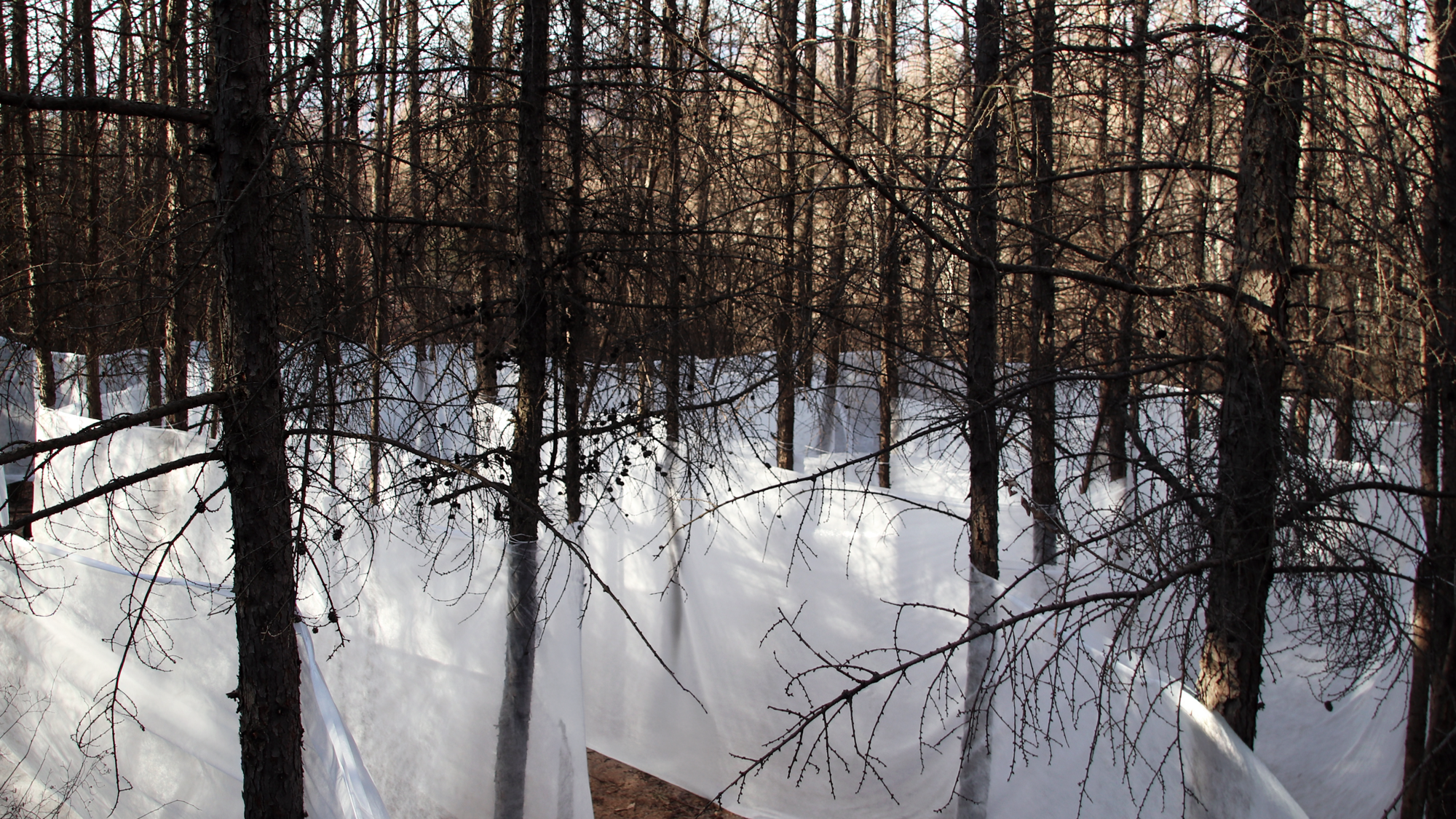
The project was created for Aranya’s winter season, so ice became the natural material. At Jinshanling, this ephemerality encountered the Great Wall in a very direct way. The Wall carries permanence and historical weight, while ice, by comparison, is seasonal and almost immaterial.
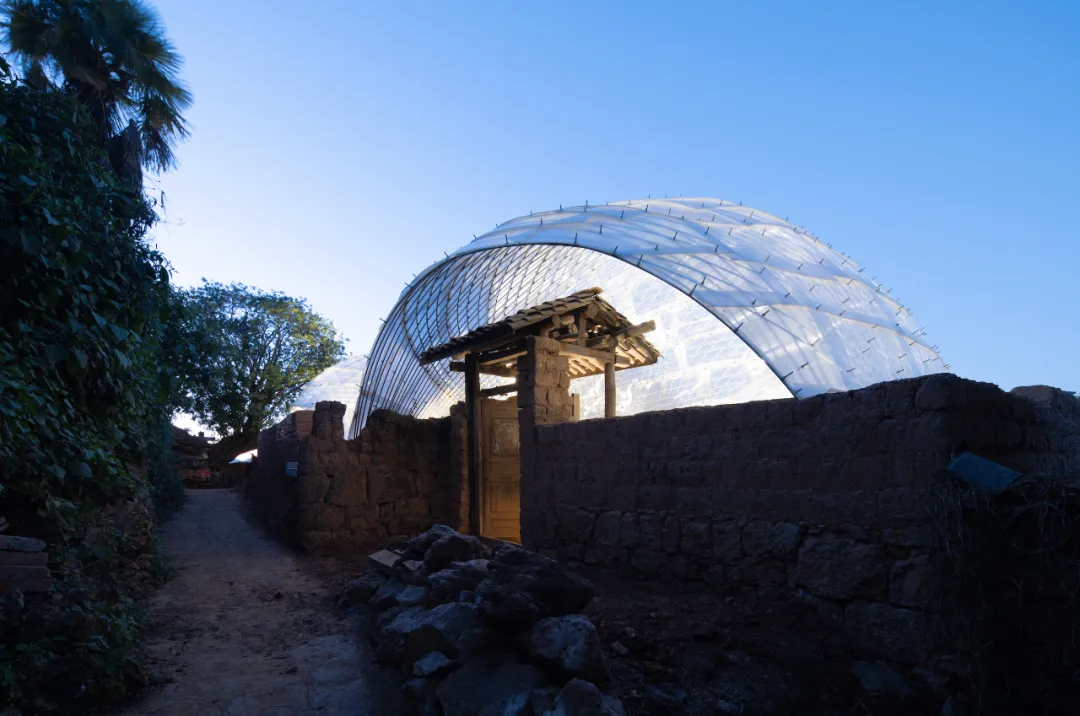
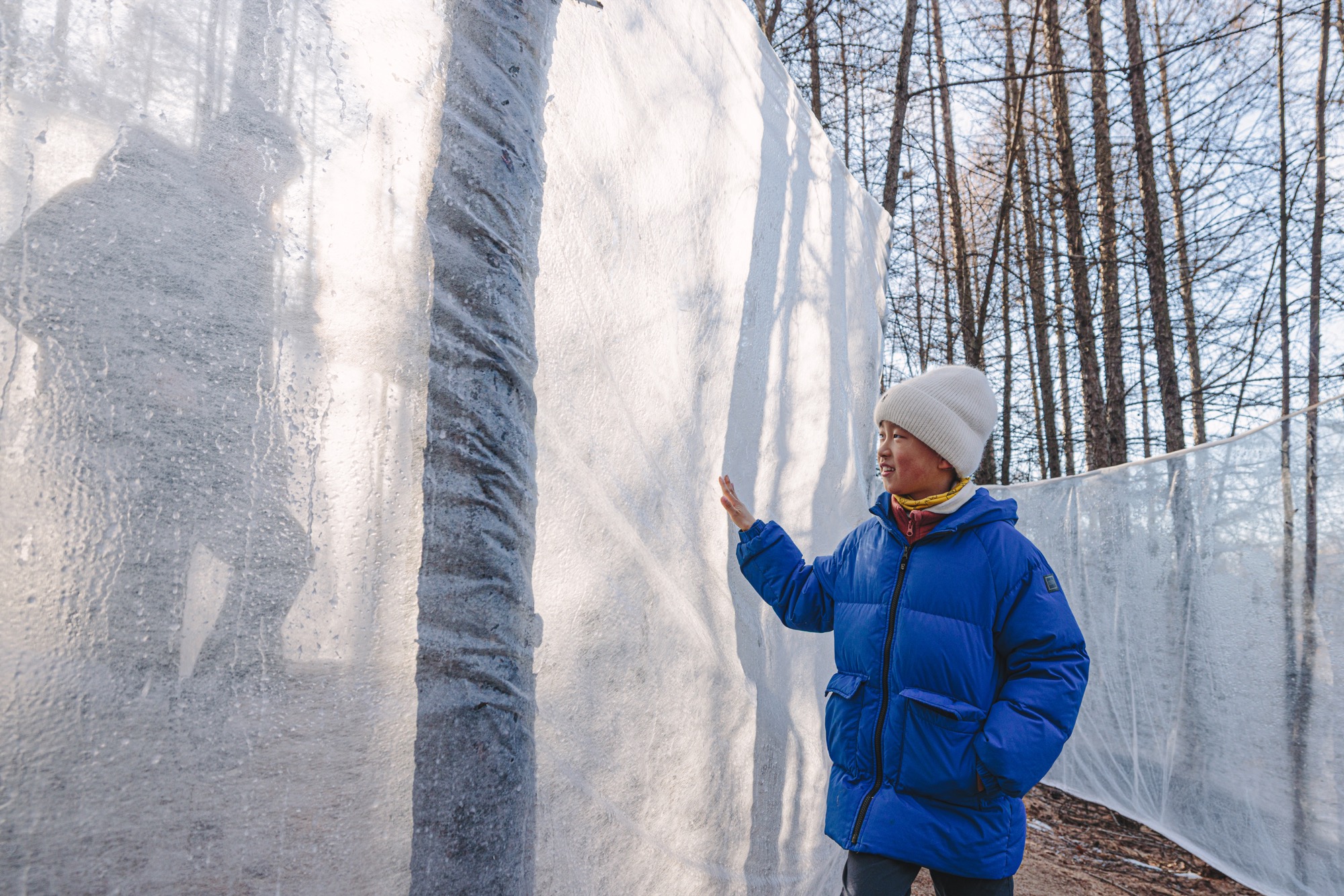
We imagined the installation as a ghostly counterpart to the Wall, another winding presence in the landscape, but one that invites people in rather than keeping them out. Its fragility comes from the fact that it is never fixed. Light, temperature, and time act as co-authors. It remains a seasonal presence, always close to disappearance.
What technical approaches and materials defined the ice formations, and what challenges shaped its temporary nature?
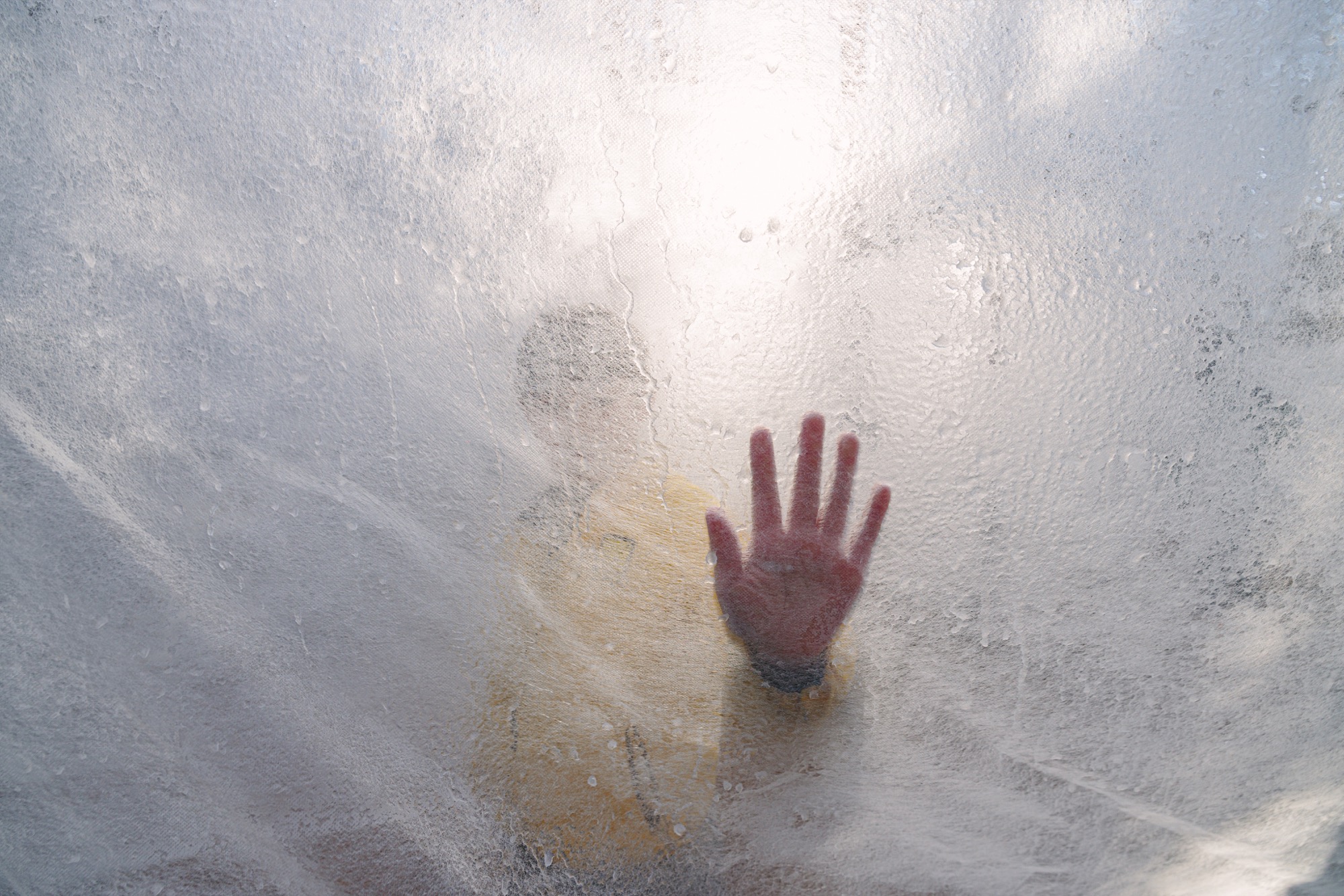
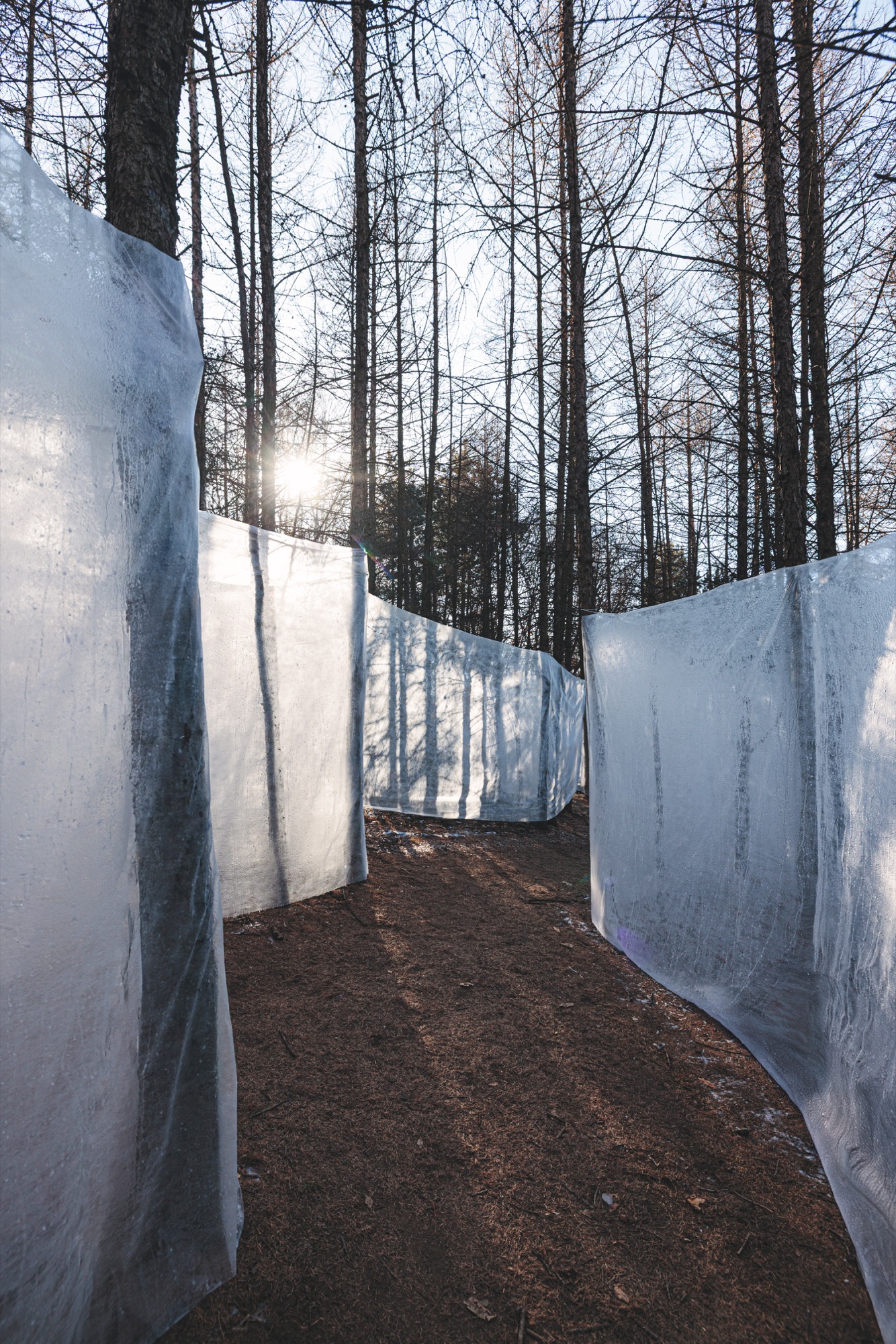
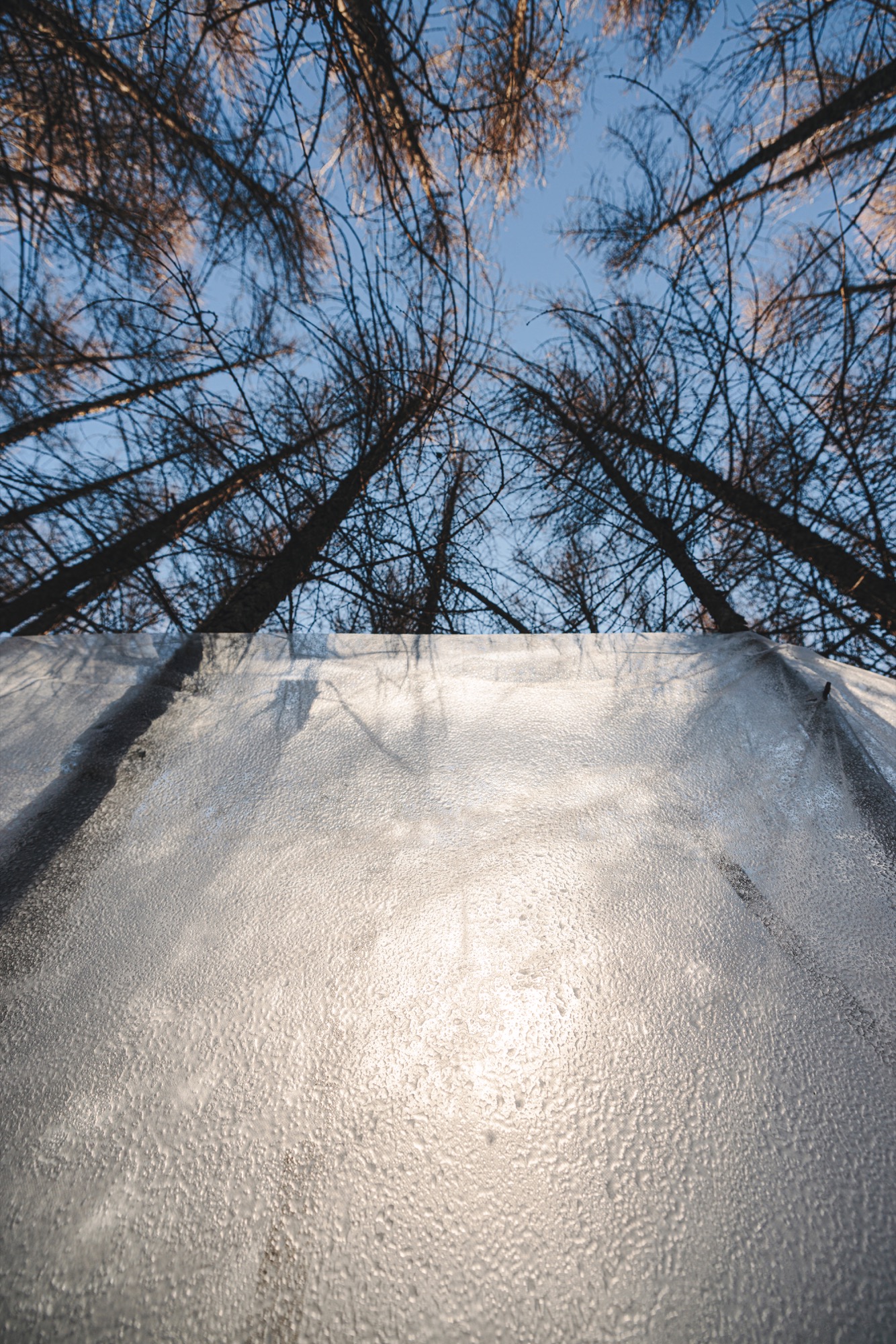
Technically, it was a very low-tech project. The core principle is simply that water freezes. Beyond water, the key material was a lightweight agricultural fleece. We chose it for its translucency; once frozen, it reads as ice rather than fabric. This allowed us to build a large-scale spatial field with very simple means.
The real challenge was the climatic window. We were caught between conditions that were cold enough for the water to freeze but not so cold that the equipment would fail. The weather was not just a background condition; it was an active participant in the construction.
What inspired the “moving” canopy formed from hay bundles, and how does it respond to Alpine architecture?
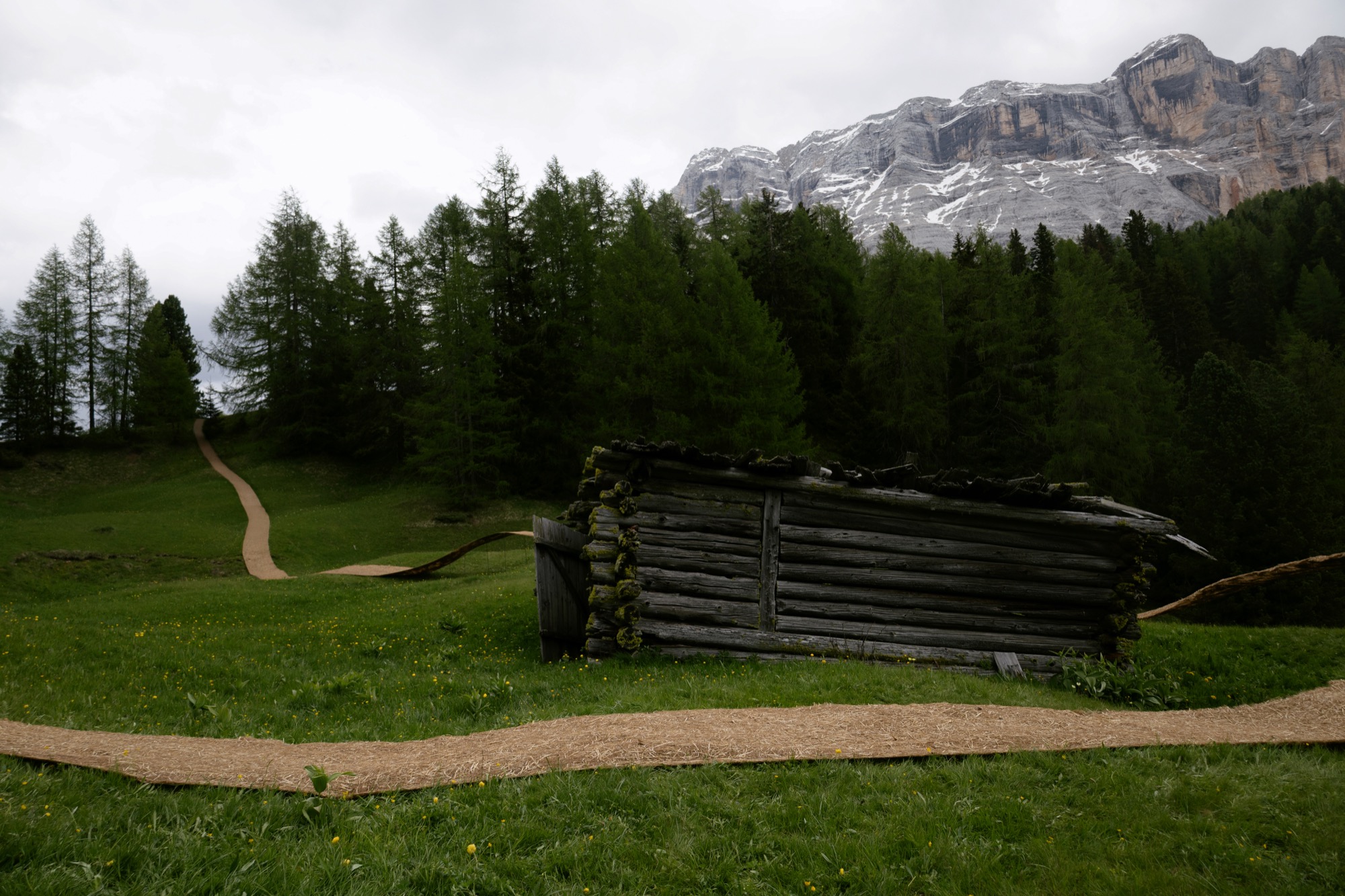
The first image came from train journeys across the Alps, where rolled hay is scattered across the slopes. Often seen as picturesque remnants of agrarian life, hay bales are in fact products of industrialised processes, bundled, transported, and stored with mechanical precision.
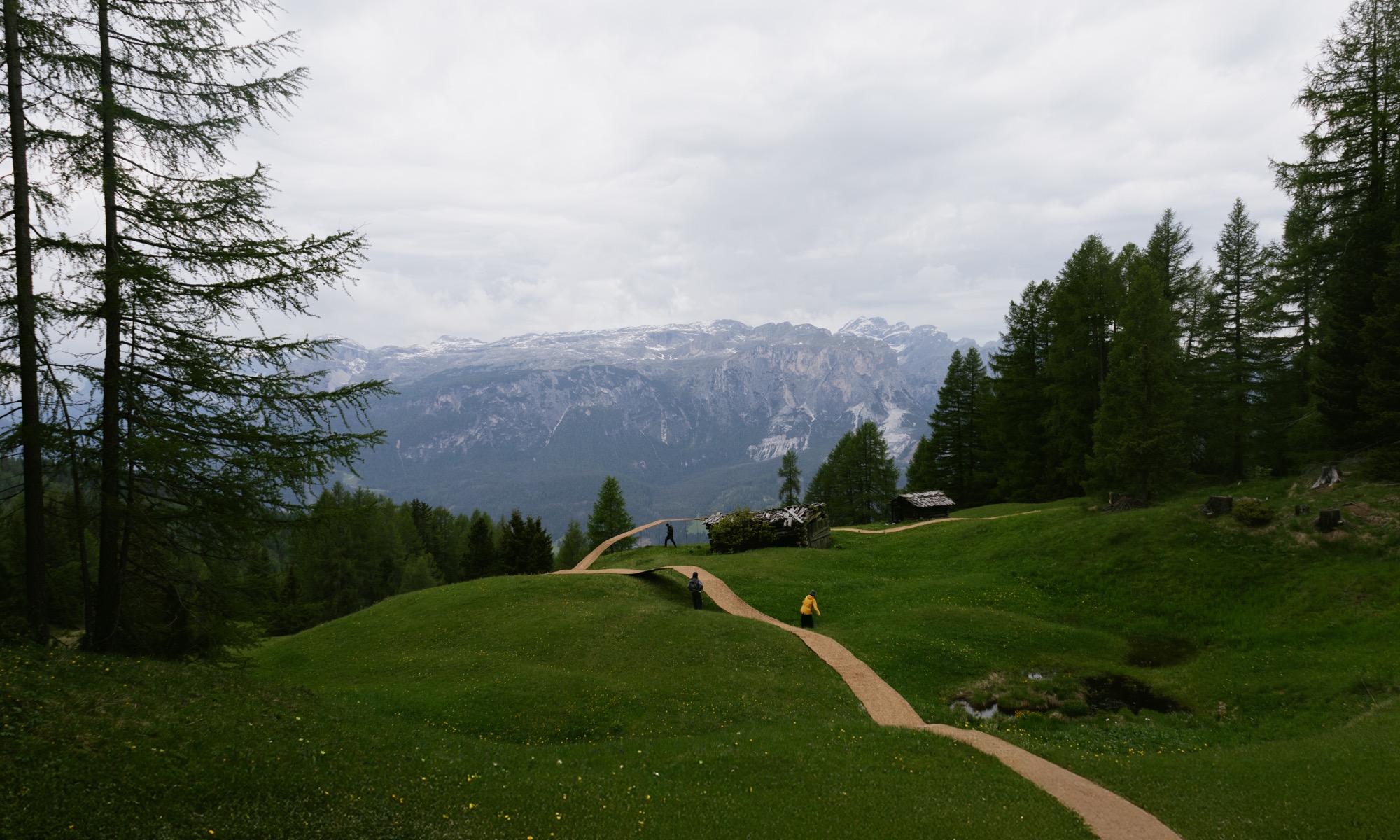
Like this year’s SMACH theme, la cu (the Ladin word for whetstone, a tool that sharpens harvesting blades), hay bales embody a reciprocal relationship between human effort and the land. Freed from their compressed form, they unfurl to trace the contours of the meadow. At times they lie directly on the ground, while at other moments they rise lightly to create shaded passages. Their undulating geometry echoes the Dolomite landscape, blurring the boundary between the artificial and the natural.
The project was never intended as a challenge to Alpine architecture. Existing tablà structures already feel embedded in the landscape. What mattered for us was maintaining a dialogue with them and keeping the intervention in harmony with its surroundings.
How does the project address sustainability, and what sensory experiences shaped its design?
Sustainability here operates as a metabolic return. The hay is borrowed from the pasture and eventually returns to the ground. The intervention exists as a temporary state within a continuous cycle.
The sensory dimension was essential but not isolated. The architecture simply gave the site’s existing qualities a place to converge: the scent of the hay, the texture underfoot, the filtered sunlight, and the movement of wind across the slope.
What sparked the anthropomorphic concept of the hut, and how does it redefine observation?
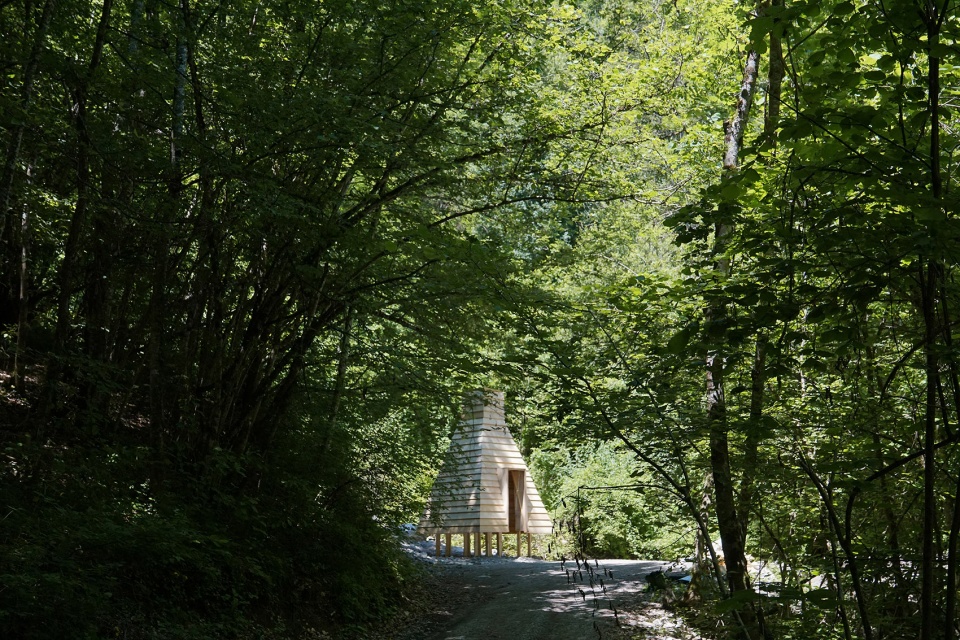
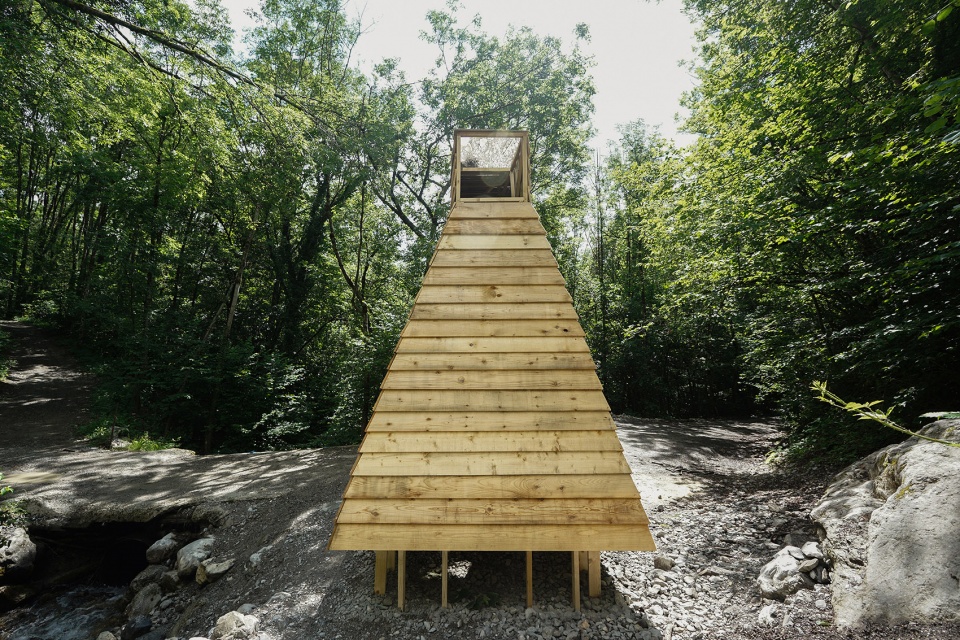
The Fontany waterfall is beautiful but easily missed from the hiking trail. The site seemed to call for a new relationship between the body and the landscape. A standard hut made little sense, so we altered the cabin archetype to create a viewing device.
The periscope on the roof draws the distant waterfall into the interior, transforming how the place is experienced. This creature-like quality, expressed through the hut’s posture and “eye”, references John Hejduk’s idea that architecture can remain abstract while still feeling alive. It shifts observation from a passive gaze to an active, mediated encounter.
How did material and form shape the experience?
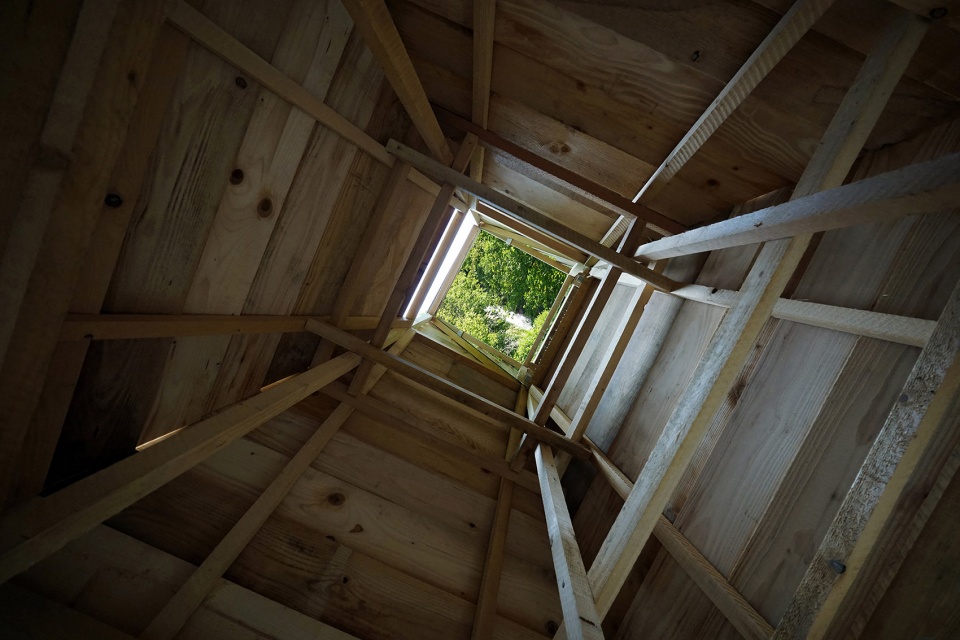
In this project, the relationship was shaped more through vision than acoustics. Our goal was a structural synthesis, integrating the periscope into the timber structure so that it would not feel like an added instrument, but as if the building itself were the viewing device.
As the project was conceived for the Festival des Cabanes, wood was the natural starting point. The geometry of the periscope was developed as an extension of the hut’s structural logic. In the final form, it does not read as an independent object inserted into a cabin; instead, it participates directly in the spatial and tectonic language of the structure.
With Umbrales de Ensueño, how did historical context shape the project?
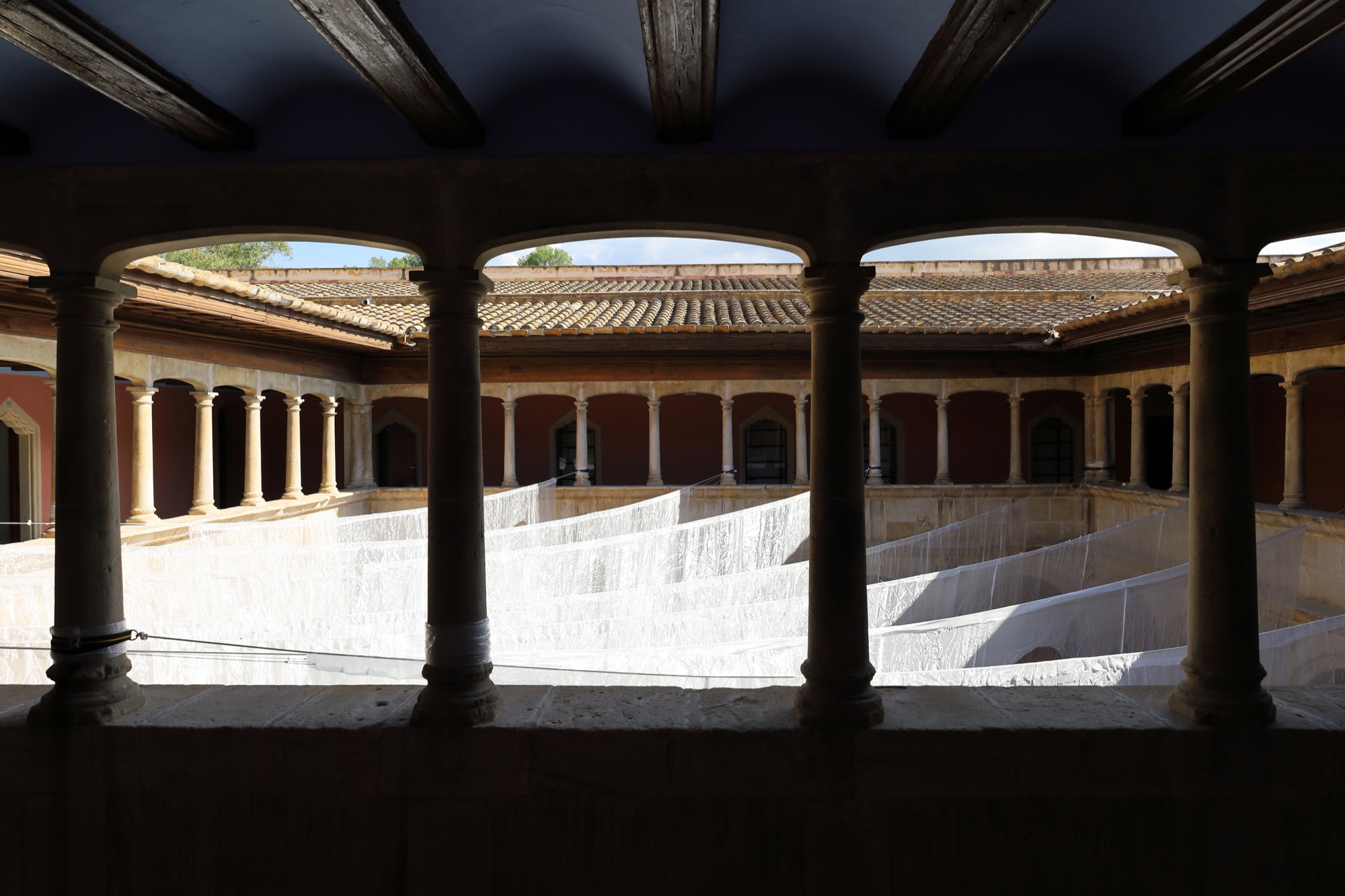
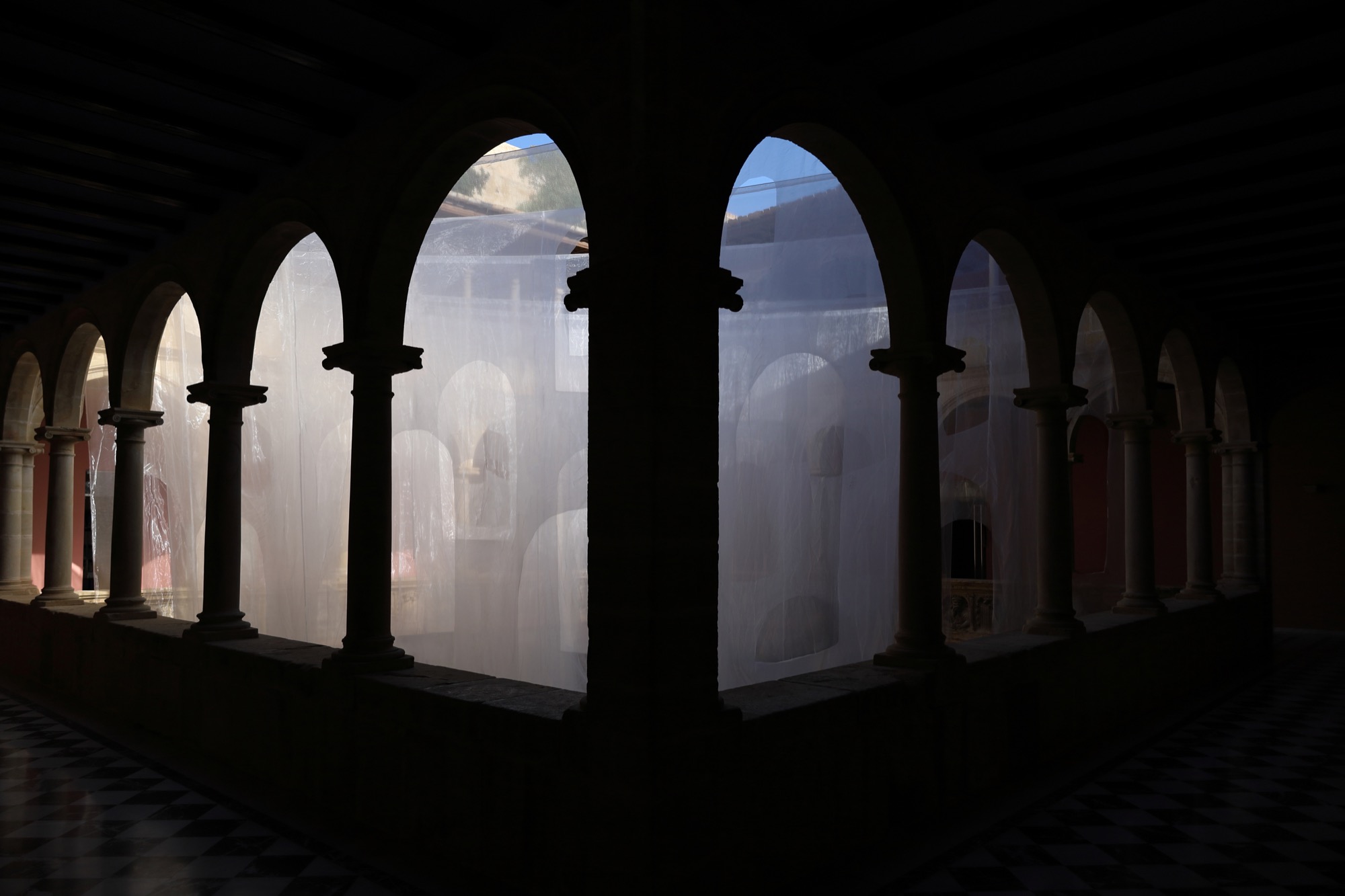
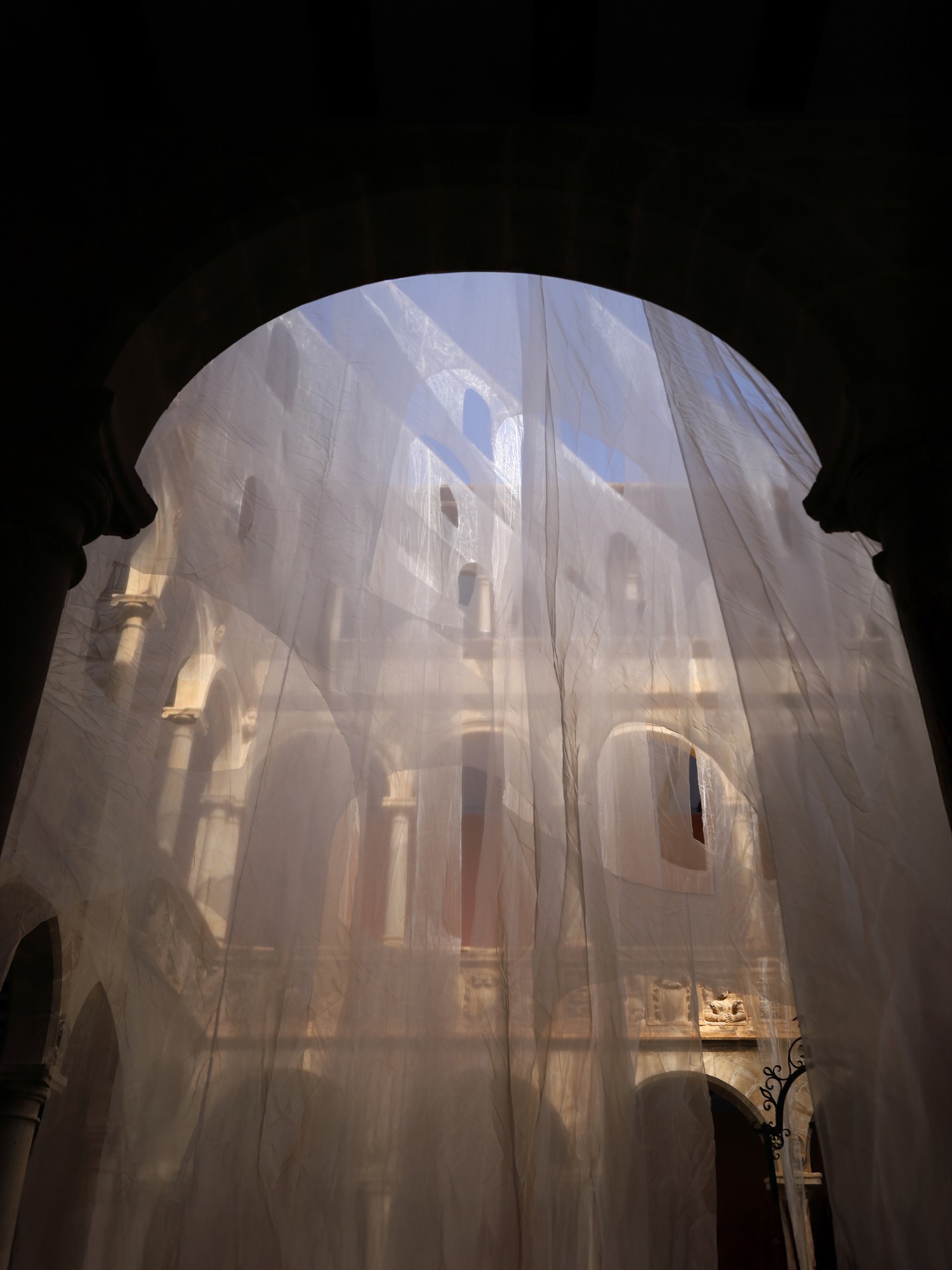
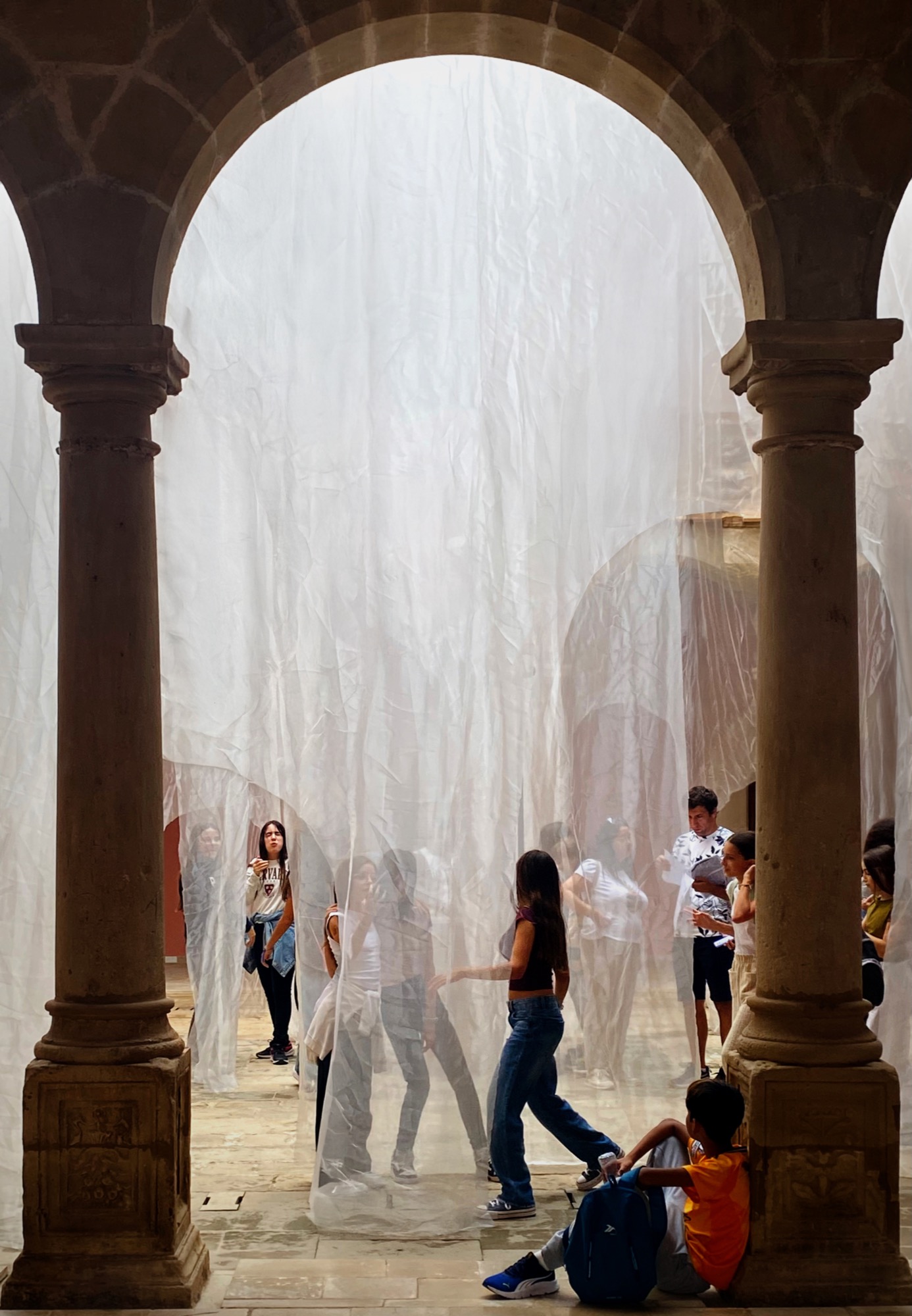
The installation is set within the Patio de Sant Jordi i Sant Domènec, a Renaissance ensemble where history is physically present in the air and stone. The courtyard is defined by three tiers of rhythmic arcades, creating a layered sense of material weight and temporal depth. That atmosphere of repeating stone arches remained with us from the beginning.
Conceived under the theme Dreams, the installation reimagines the arch, an element that already defines the courtyard, as something fleeting and immaterial. Detached from its structural role, it softens into a threshold of light, fabric, and air.
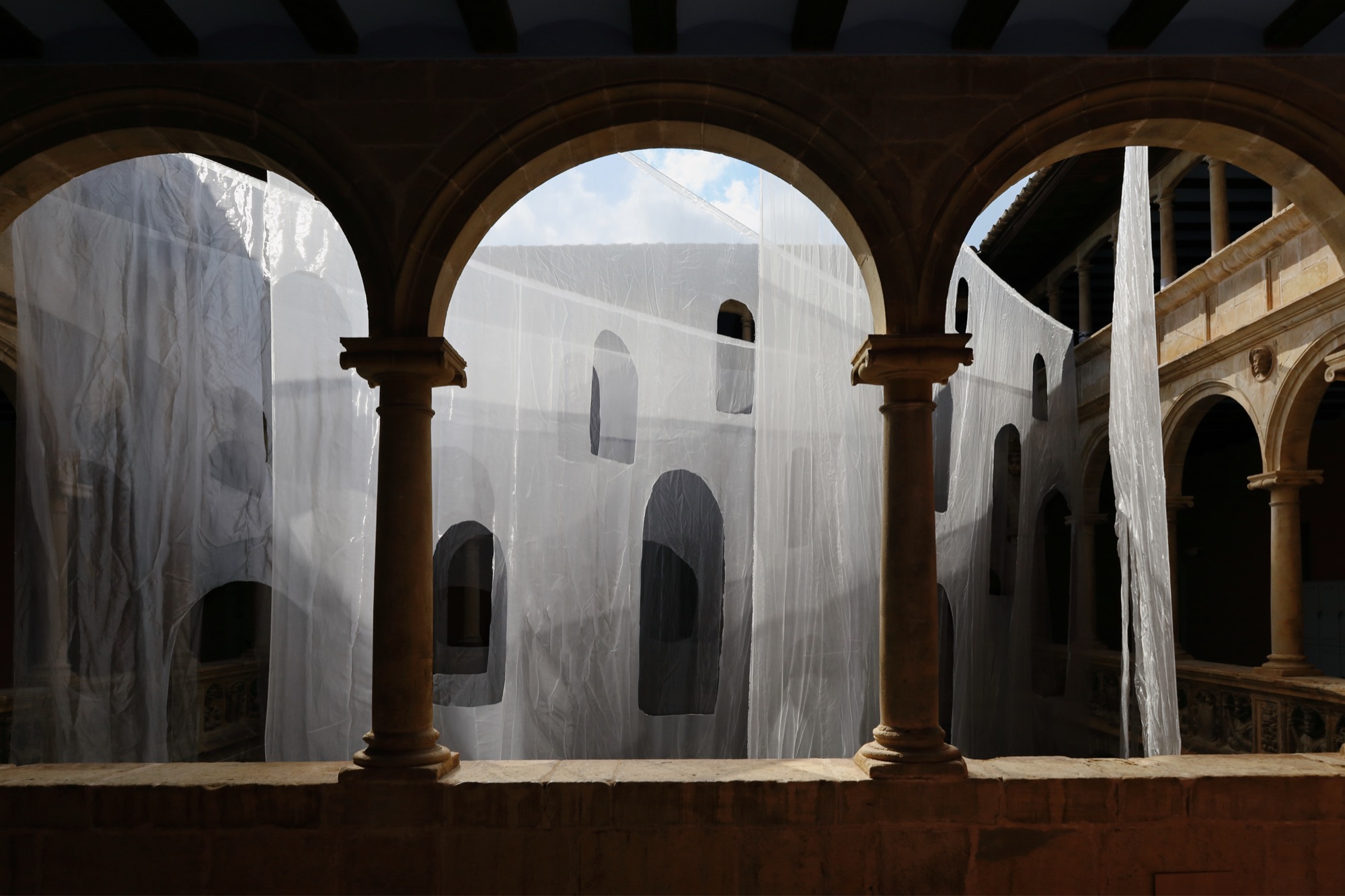
What mattered most was the possibility of transforming the space completely, even if only for a brief moment. During that time, the courtyard becomes something else, yet the transformation remains rooted in the place itself. It becomes a dreamlike field where the familiar reality of stone is filtered, blurred, and made slightly strange. Temporary elements do more than activate heritage; they open a brief metamorphosis of the site, revealing a latent version of it without breaking from its memory.
How have these projects shaped your approach moving forward?
We do not pursue the temporary as a value in itself; it is often simply the reality of a commission. But that reality is productive. Ephemeral projects allow us to test ideas quickly, even though they come with their own constraints of weather, speed, and reversibility.
These projects have clarified that architecture is a singular practice, whether permanent or temporary. The intuitions developed through short-lived installations often return in permanent buildings. They are not side experiments, but architecture in its most exposed and essential form.
Article Credit
Text: Rafael Cunha
Time: March 2026