Now Reading: Timber volumes and soft green tones define a music classroom extension beneath a plane tree
- 01
Timber volumes and soft green tones define a music classroom extension beneath a plane tree

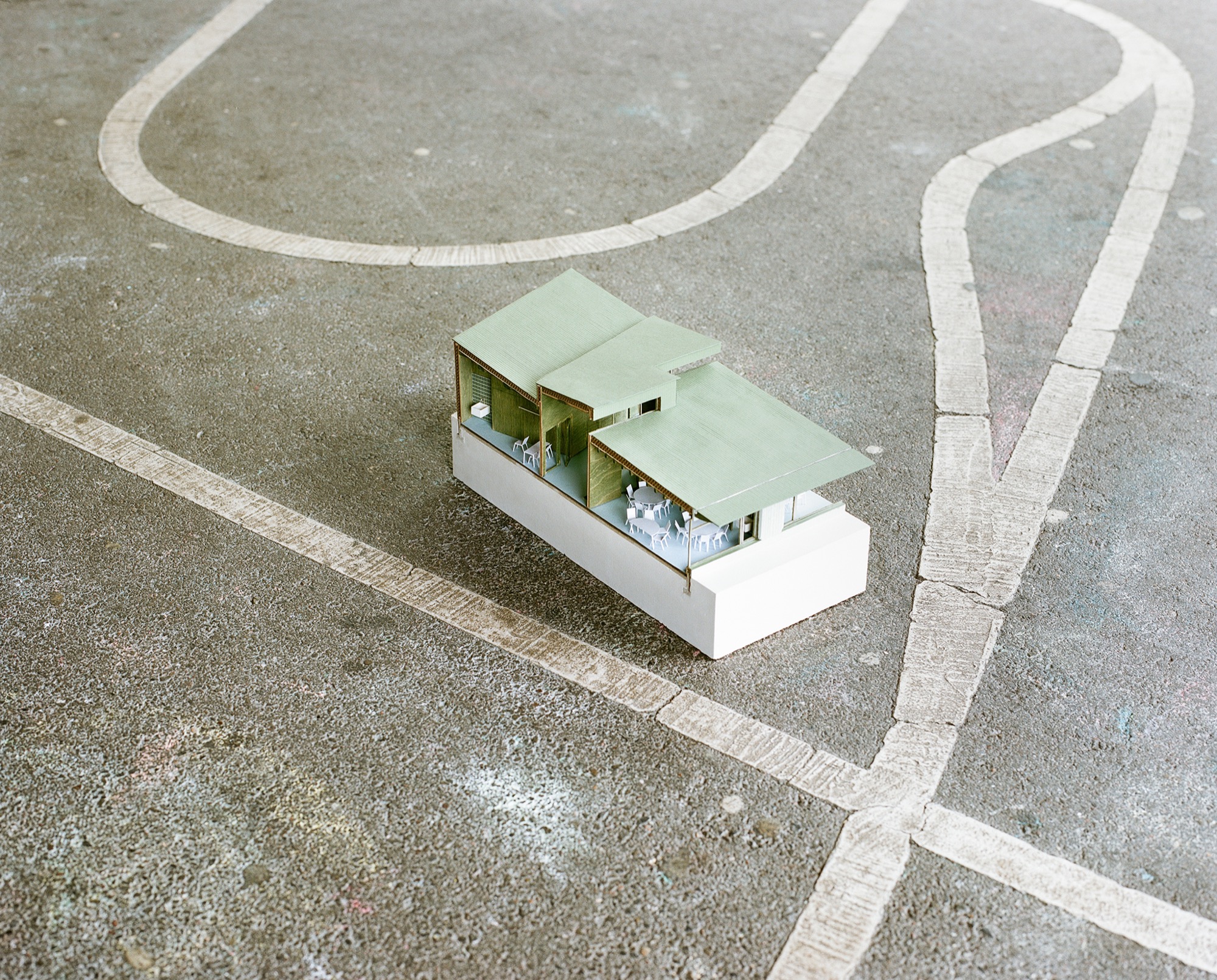
Timber volumes and soft green tones define a music classroom extension beneath a plane tree

Set beneath the expansive canopy of an existing plane tree, a new cluster of music classrooms takes shape as a compact trapezoidal volume, where timber structure and envelope converge into a singular architectural expression. Rather than asserting itself as an object, the building settles into its environment, drawing from the presence of the tree to articulate a language of restraint, continuity, and quiet spatial richness.

The project is defined by a deliberate alignment between structure, framework, and cladding, all conceived in timber. This consistency produces a legible construction logic, where load-bearing elements and enclosing surfaces are not separated but intertwined. Subtle tonal shifts across the wood surfaces introduce depth without disrupting the overall unity, allowing the precision of assembly to remain visible while maintaining a calm visual field.
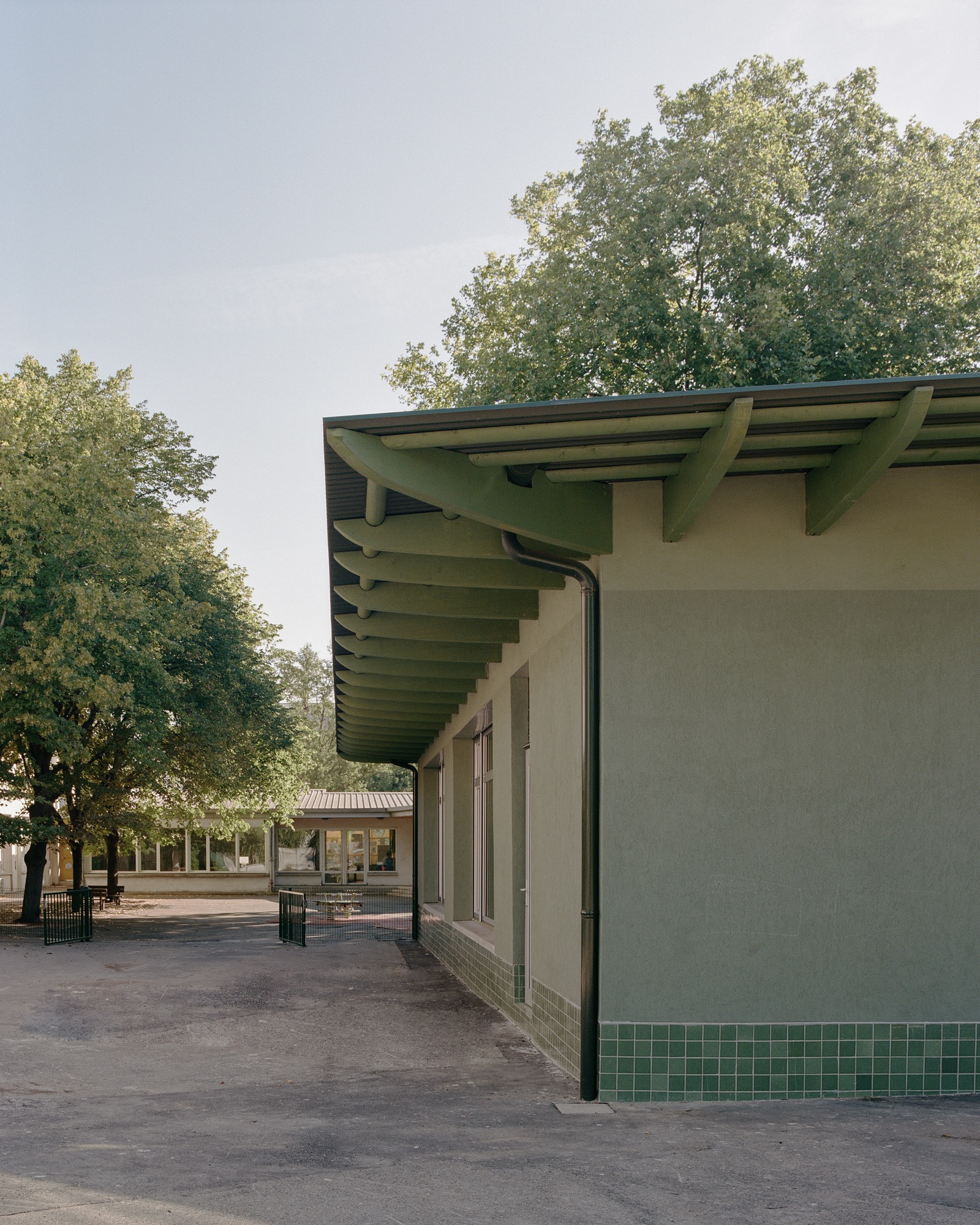
This clarity extends to the façade, where material transitions are carefully composed. At ground level, glazed ceramic tiles provide a durable base, while ribbed mineral plaster introduces texture between window openings. Above, a smoother plaster surface captures light more evenly. Together, these layers form a luminous envelope, where reflections and shadows animate the building throughout the day.


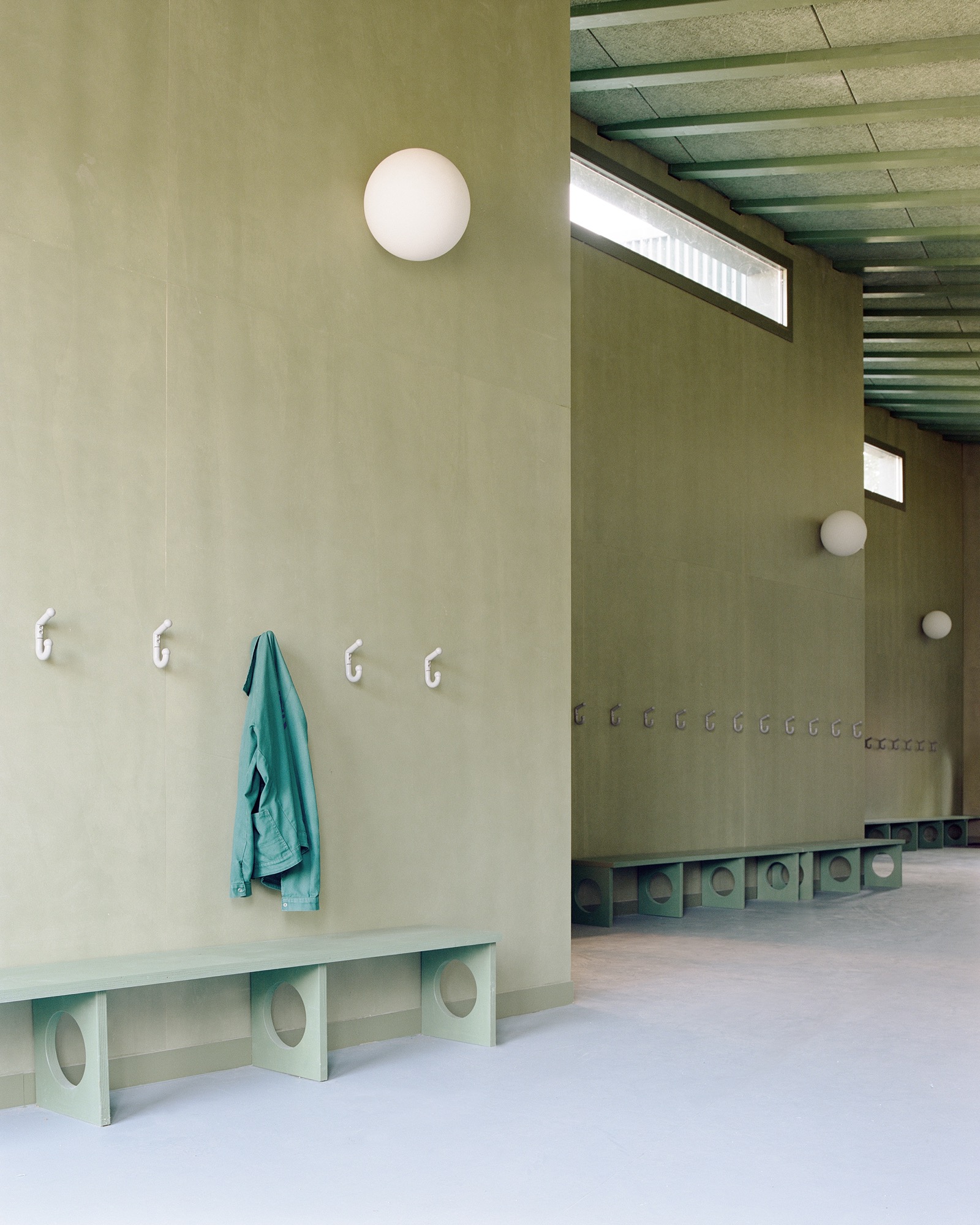
A continuous soft green hue binds the project into a single perceptual field. Applied across walls, beams, eaves, joinery, plaster, and tiles, the color moves fluidly between elements, dissolving boundaries between structure and surface.
Rather than functioning as a decorative gesture, this chromatic continuity operates as an atmospheric device. It recalls the surrounding foliage and filters the presence of the plane tree into the architecture itself. The building becomes less an insertion and more an extension of its landscape, where color mediates between the natural and the constructed.
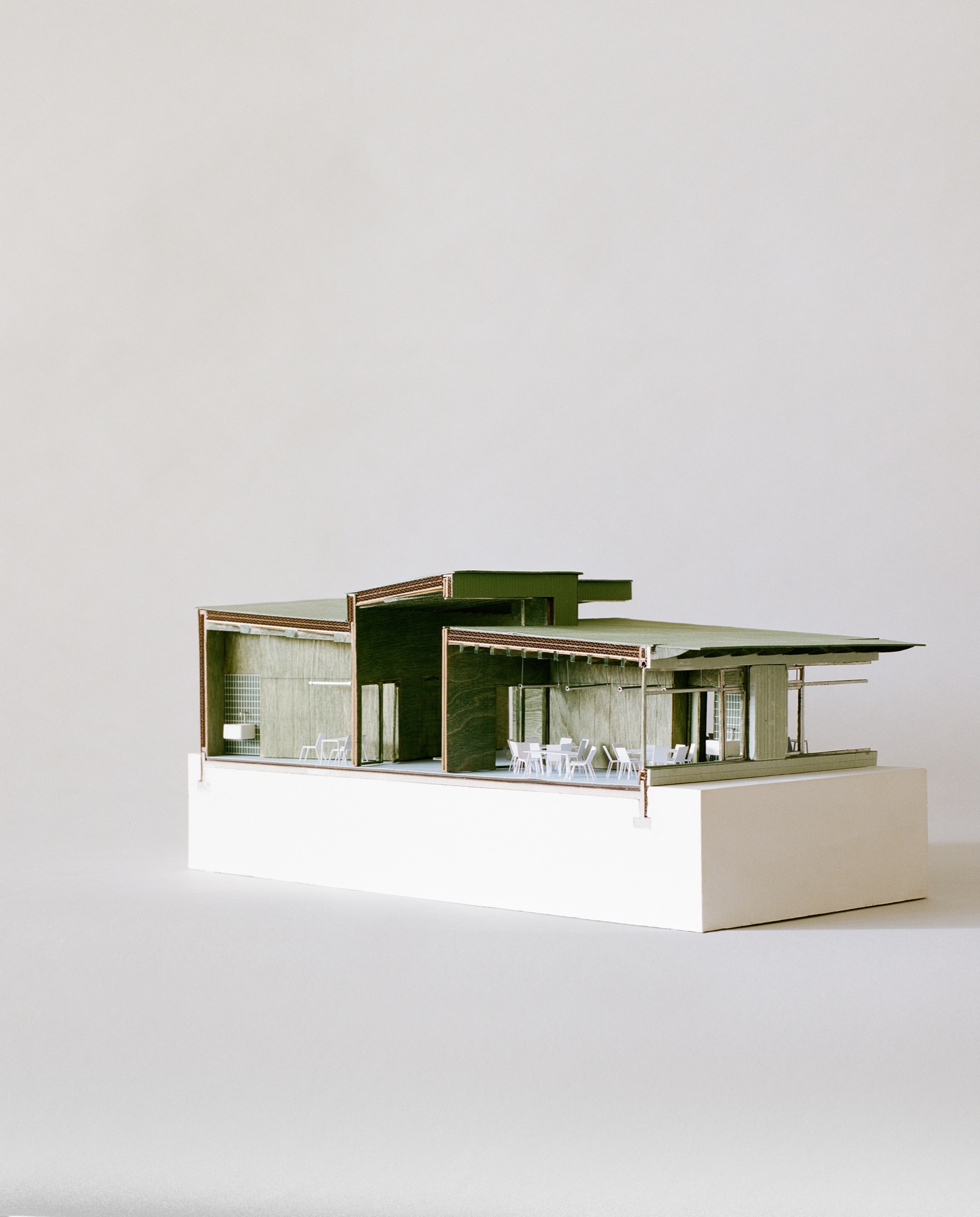
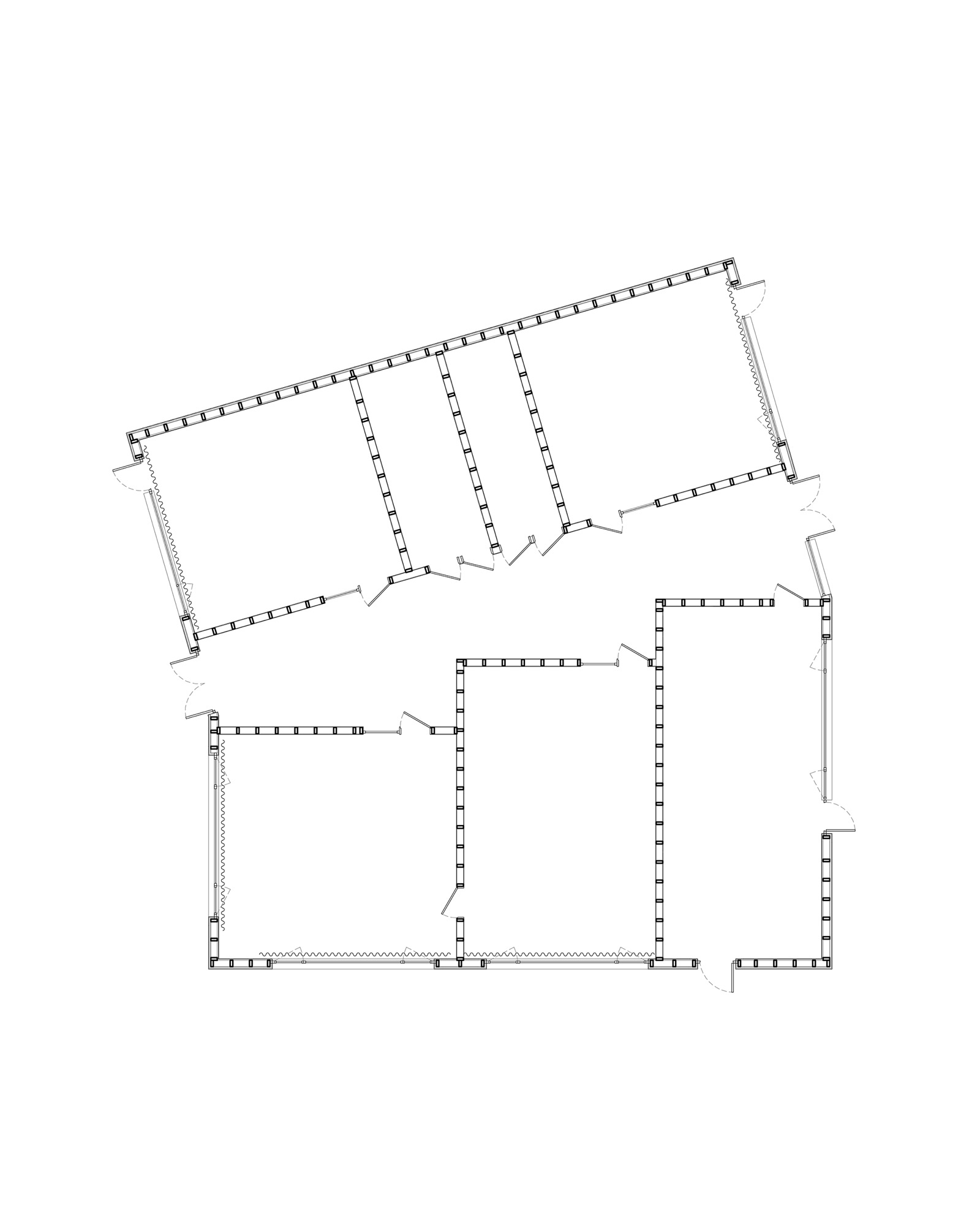
At the heart of the plan, a central corridor organizes circulation while acting as a climatic and spatial mediator. Naturally cross-ventilated, it links the classrooms through a sequence of openings that maintain visual continuity with the schoolyard.
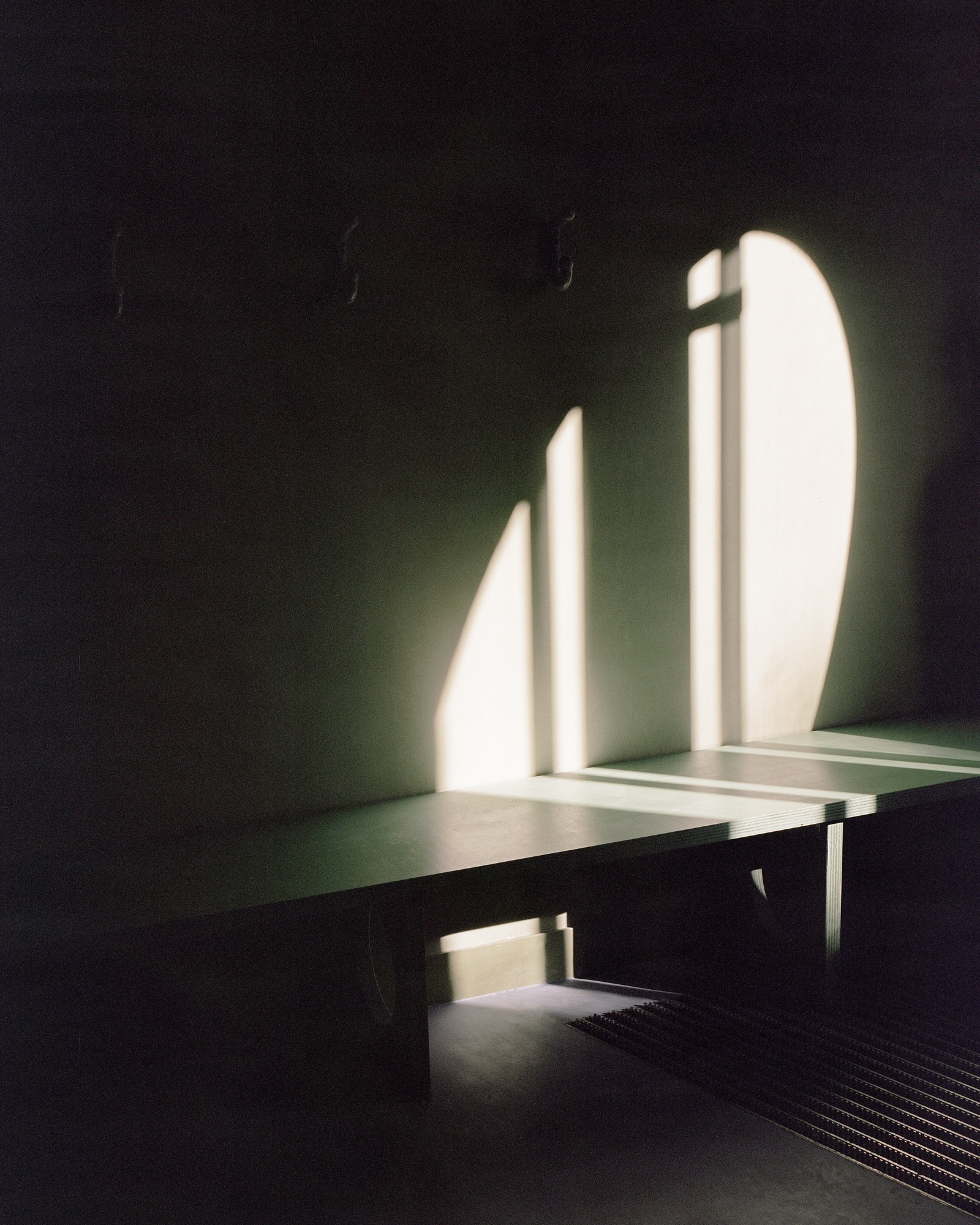
The corridor rises to a generous height, allowing daylight to enter through overhead skylights. As the sun shifts, light traces the interior surfaces, marking time through shadow and reflection. Built-in benches along the walls extend the spatial perspective, encouraging moments of pause and informal occupation.
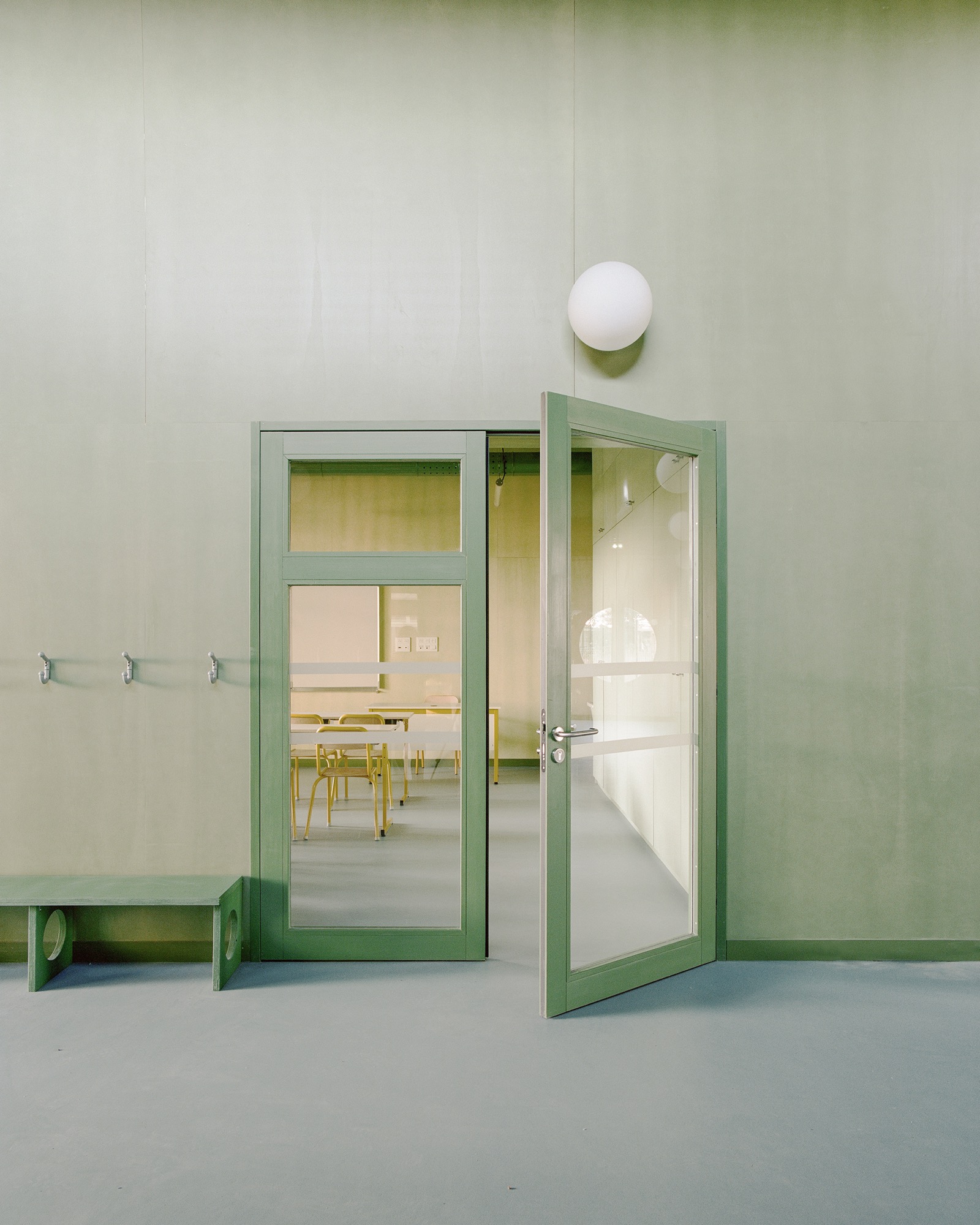
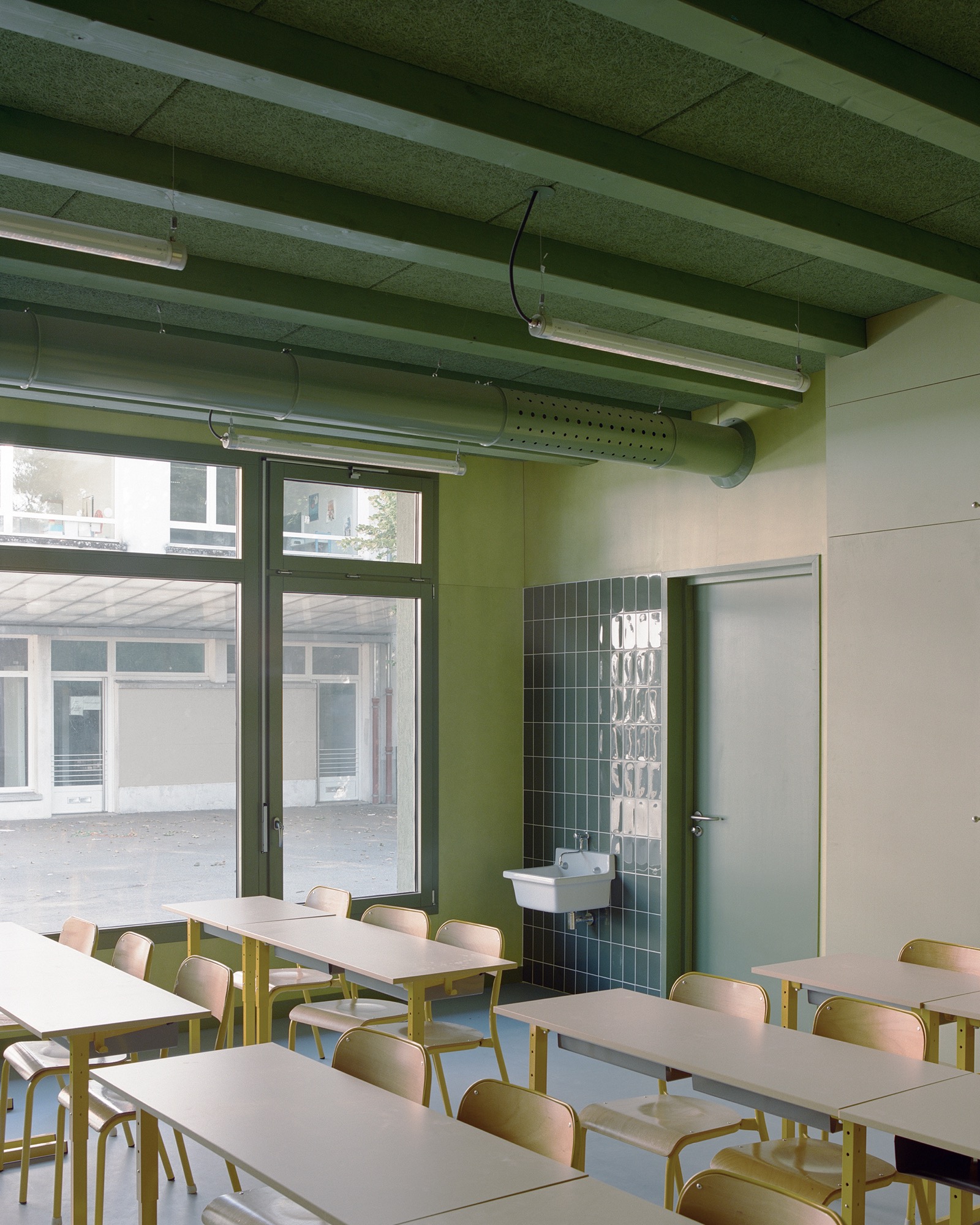
Inside the classrooms, the green palette continues in calibrated variations. Glazed tiles, stained timber cabinetry, exposed beams, and visible services participate in a cohesive interior language that balances utility with atmosphere. Around the perimeter, deep roof overhangs extend the volume outward, moderating solar gain while reinforcing the building’s horizontal presence.
Through its measured geometry, material consistency, and restrained palette, the building establishes a close relationship with the existing tree. Branches hover above the roofline, not as a backdrop but as an active counterpart.


The project does not seek contrast or spectacle. Instead, it constructs a continuity between architecture and nature, where structure, light, and color align to produce a space that is both grounded and responsive. In this convergence, the classrooms become more than functional enclosures, they form an environment attuned to rhythm, perception, and the subtle conditions of everyday use.
Project Credit
Project: Nanteuil Primary School – Music Classrooms
Location: 13 rue de Nanteuil, Montreuil (Seine-Saint-Denis, 93), France
Architecture: Boman Architectes / @boman.architectes
Gross Floor Area: 478 m²
Completion: 2024 (expected)
Model: Seongu Kim
Photography: Antoine Séguin / @antoine_seguin_