Now Reading: Almaty neighbourhood integrates nature and circular planning to shape human-centred urban living
- 01
Almaty neighbourhood integrates nature and circular planning to shape human-centred urban living

Almaty neighbourhood integrates nature and circular planning to shape human-centred urban living

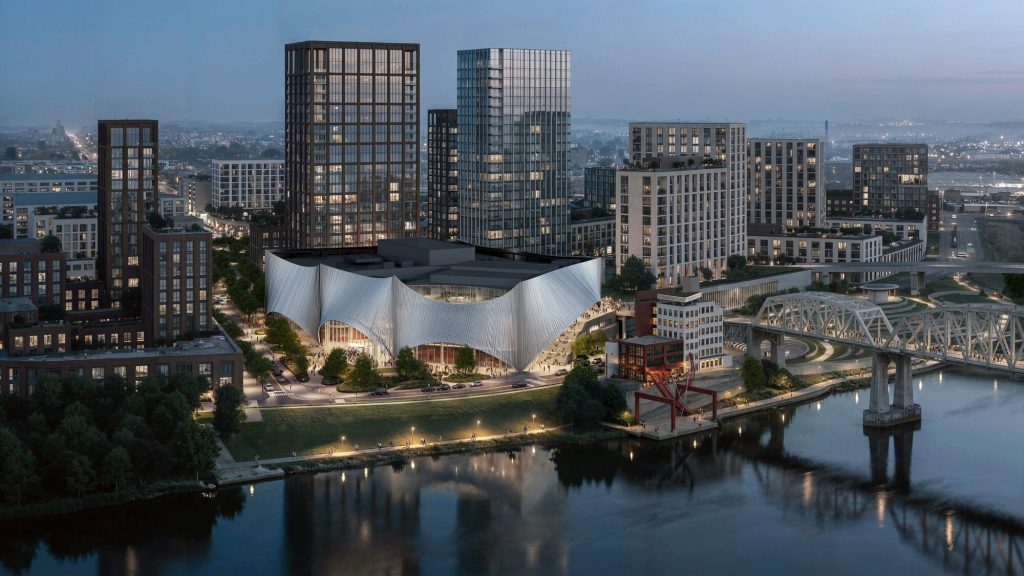
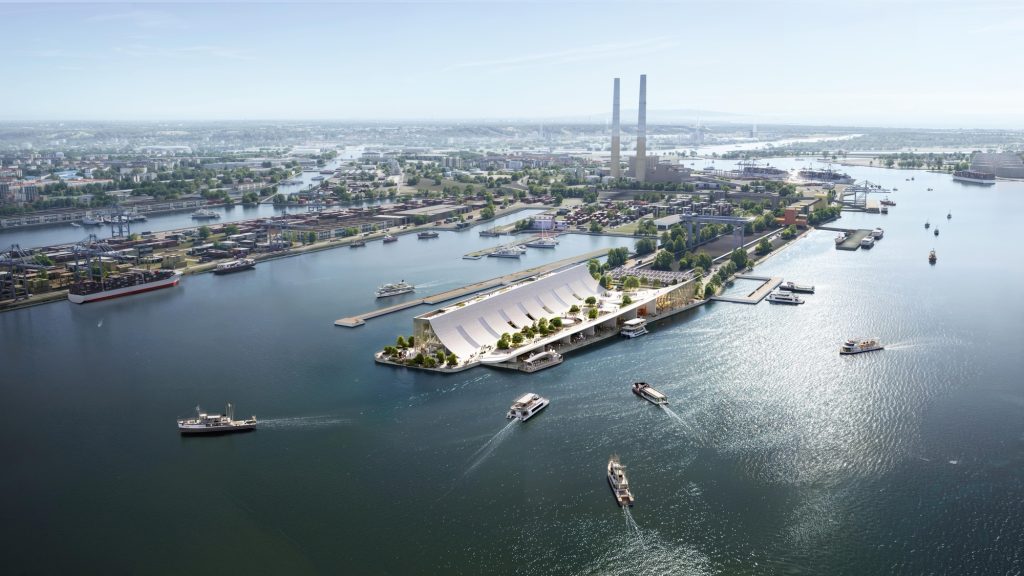
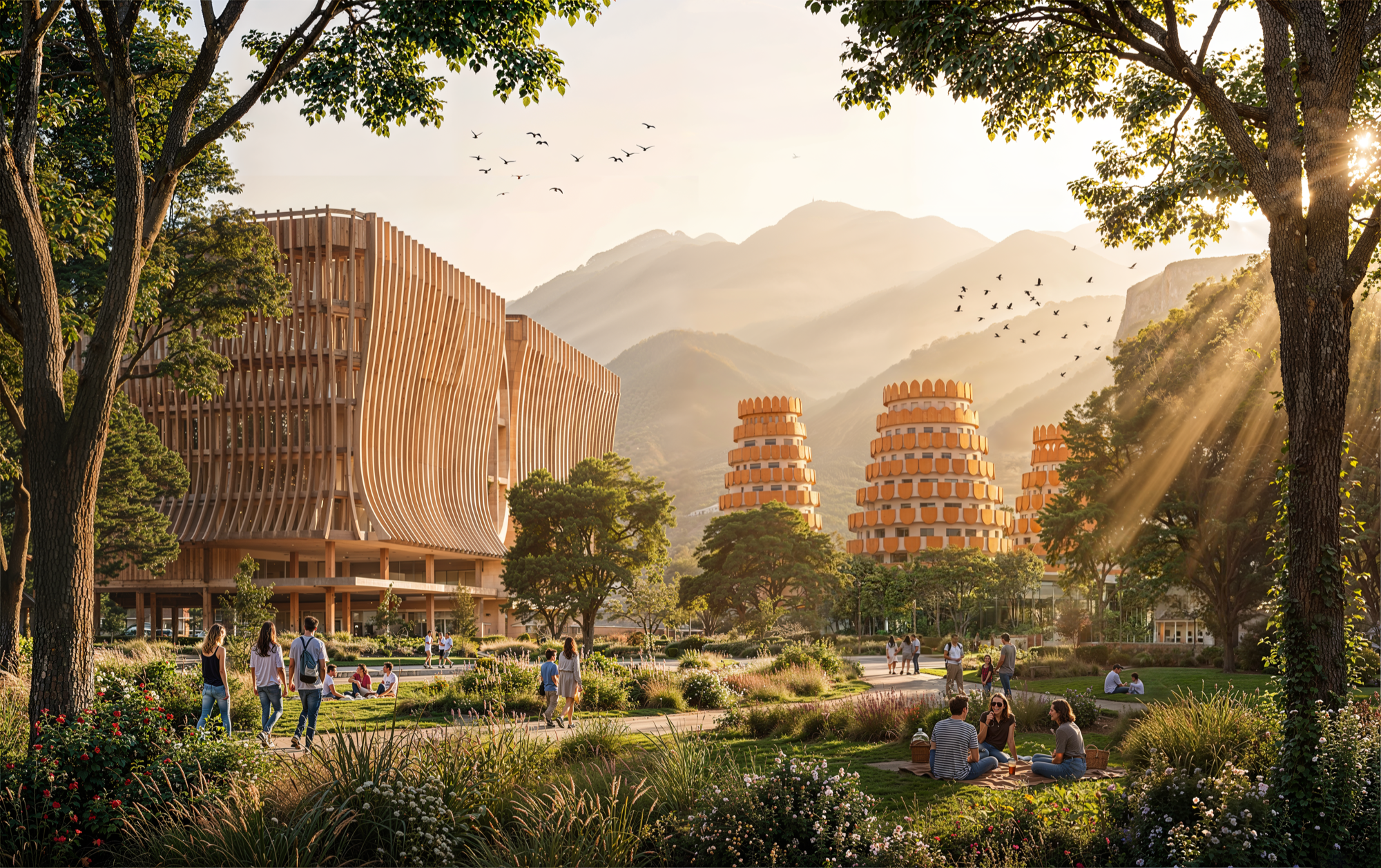
In Almaty, a new urban fragment unfolds through a constellation of small clusters, each forming a distinct neighbourhood with its own identity. These areas are not conceived as isolated enclaves, but as interrelated environments unified by a shared spatial language. Within this framework, architecture becomes a medium through which belonging is articulated, embedding cultural identity into the everyday experience of space.

The project moves deliberately away from rigid, mechanical planning, proposing instead a gradual and sensitive integration of nature as a primary design agent. Biodiversity is not treated as an aesthetic layer but as a generative force that informs the selection of vegetation and the spatial organisation of the site. Seasonal transformations introduce a living temporality, where shifts in colour, scent, texture, and light establish a natural rhythm. Time, here, is measured biologically rather than technologically, offering a more immediate and authentic connection to the environment.


Nature operates simultaneously on emotional and functional levels. It becomes a source of calm, mitigating stress and reinforcing the resilience of the community, while also performing essential ecological roles. Permeable ground conditions absorb rainwater and reduce flood risk, integrating environmental performance with spatial experience. Light enters the built fabric with precision, tracing shadows across varied heights and subtly defining gradients between public, private, and intimate realms. In this way, the architecture adapts to the evolving patterns of daily life without resorting to artificial demarcations.


A system of diagonal visual connections ensures complete permeability across the neighbourhoods, dissolving boundaries and fostering a sense of openness. Circulation is carefully structured, with pedestrian pathways clearly distinguished from vehicular routes, allowing for intuitive navigation and a heightened awareness of space. The circular logic of movement reinforces orientation while engaging the body’s proprioceptive perception, establishing a direct and instinctive relationship between inhabitant and environment.


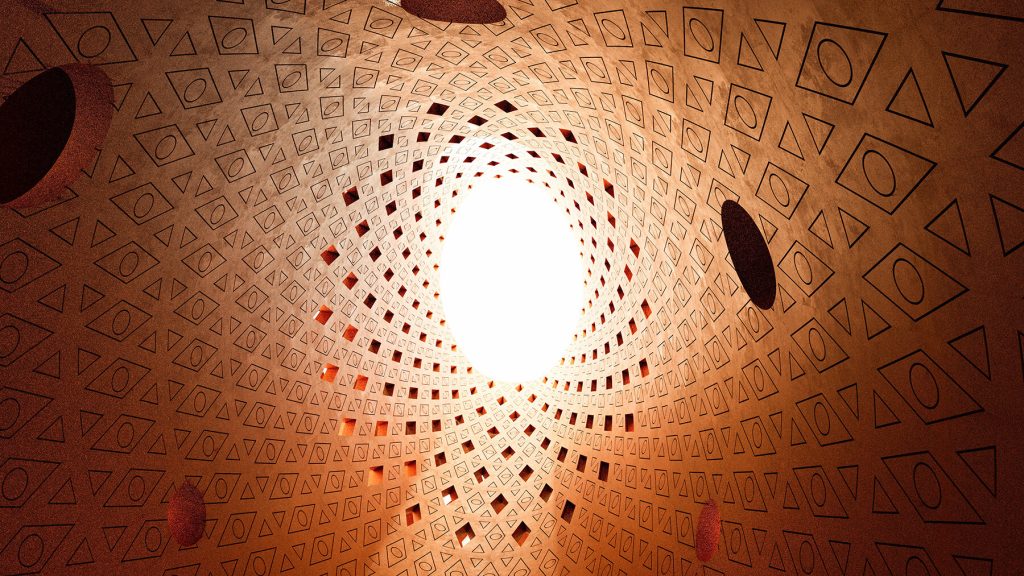
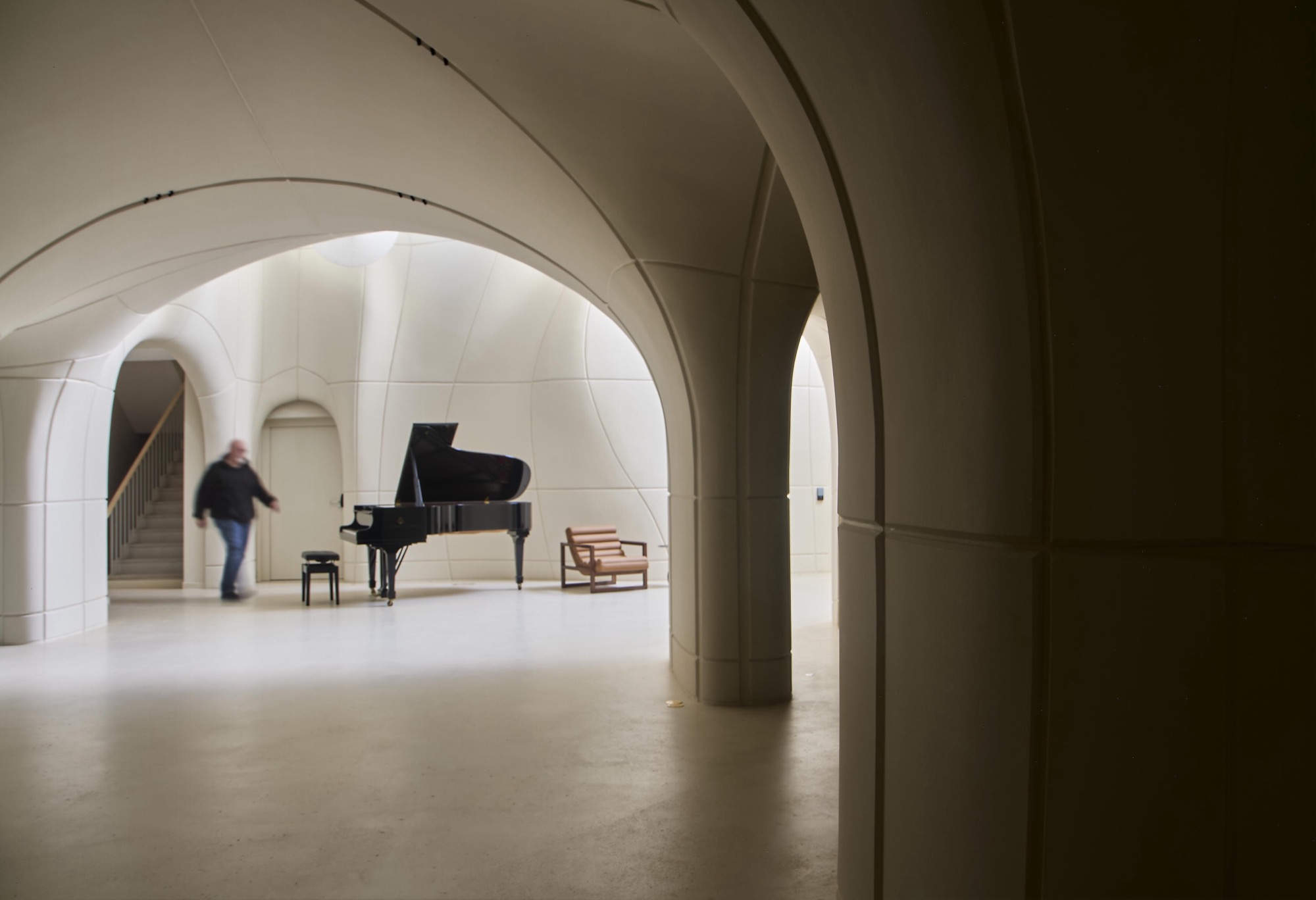
Safety is addressed not through overt control, but through clarity. The visibility of escape routes responds to deeply rooted, evolutionary instincts, translating neuroarchitectural principles into spatial form. Geometry plays a crucial role in this process. Circular and soft-edged configurations evoke familiarity and calm, while free forms grounded in precise geometries convey stability and coherence. These spatial qualities encourage spontaneous encounters and support a mode of social interaction that is both natural and unforced.


In contrast to the prevailing tendencies of individualism, the project reaffirms the inherently social nature of human life. It proposes an urban condition where relationships are not incidental, but essential to well-being. The streets become more than infrastructural elements; they are trajectories of experience, where movement is intertwined with reflection and discovery.


Here, innovation is redefined. It does not reside solely in technological advancement, but in the capacity of architecture to engage with fundamental human needs. To design is to create conditions for comfort, connection, and emotional resonance. In Almaty, innovation emerges as a return to what is most essential: a built environment that supports life in its fullest sense.

Project Credit
Project name: Almaty Neighbourhood
Location: Almaty, Kazakhstan
Design firm: Davide Macullo Architects / @davidemaculloarchitects
More Photos