
Now Reading: Oak joinery organises an irregular penthouse apartment in Madrid
- 01
Oak joinery organises an irregular penthouse apartment in Madrid

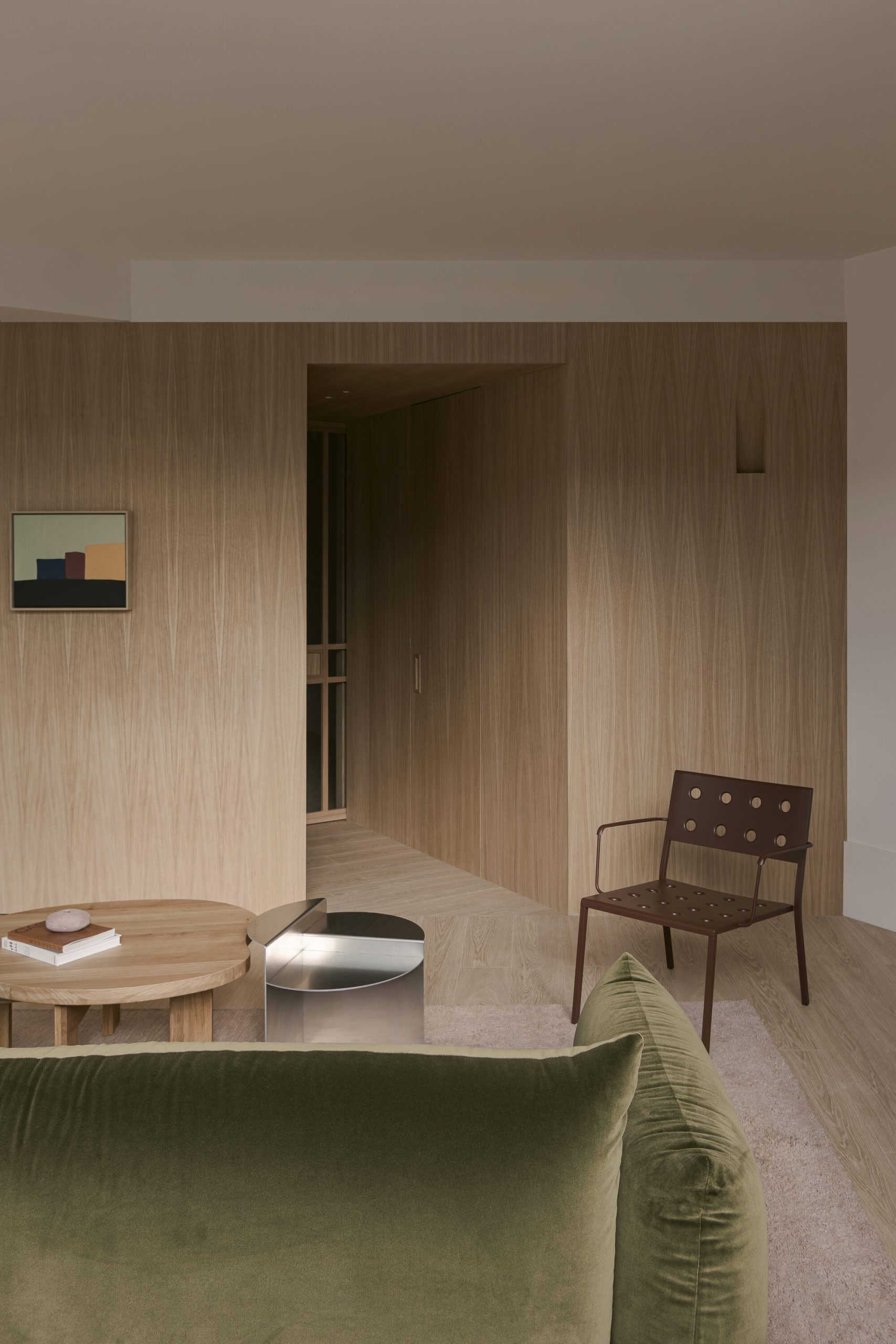
Oak joinery organises an irregular penthouse apartment in Madrid

In Madrid, Spanish practice De la Villa Studio has transformed an 88-square-metre penthouse into a calm and cohesive living environment, using a continuous oak joinery system to bring clarity to an otherwise irregular floor plan.
Located on the top floor of a residential building, the apartment originally suffered from fragmented geometry and a disjointed layout. Rather than relying on conventional partitions, the architects introduced a single architectural element that organizes the entire home: a warm oak volume that functions simultaneously as storage, circulation, threshold, and spatial framework.


The apartment is divided into two distinct zones. At the front, the living spaces open toward a generous terrace, creating a seamless relationship between interior and exterior. At the rear, a sequence of private rooms unfolds gradually, leading from the hallway through a dressing area and bathroom before arriving at the main bedroom.


Throughout the project, vertical-grain oak acts as the unifying material language. Integrated doors, concealed storage, and flush surfaces are absorbed into the timber envelope, allowing technical elements to disappear while reinforcing a sense of continuity. The result is an architecture experienced as a continuous journey rather than a collection of separate rooms.


The living room extends visually toward the terrace through a large opening that frames the outdoor space as an additional room. Pale mineral surfaces, natural oak flooring, and carefully curated furnishings establish a restrained palette, while selective accents introduce color without disrupting the architectural calm. Vegetation on the terrace becomes a soft backdrop to everyday life, strengthening the dialogue between the apartment and the city beyond.


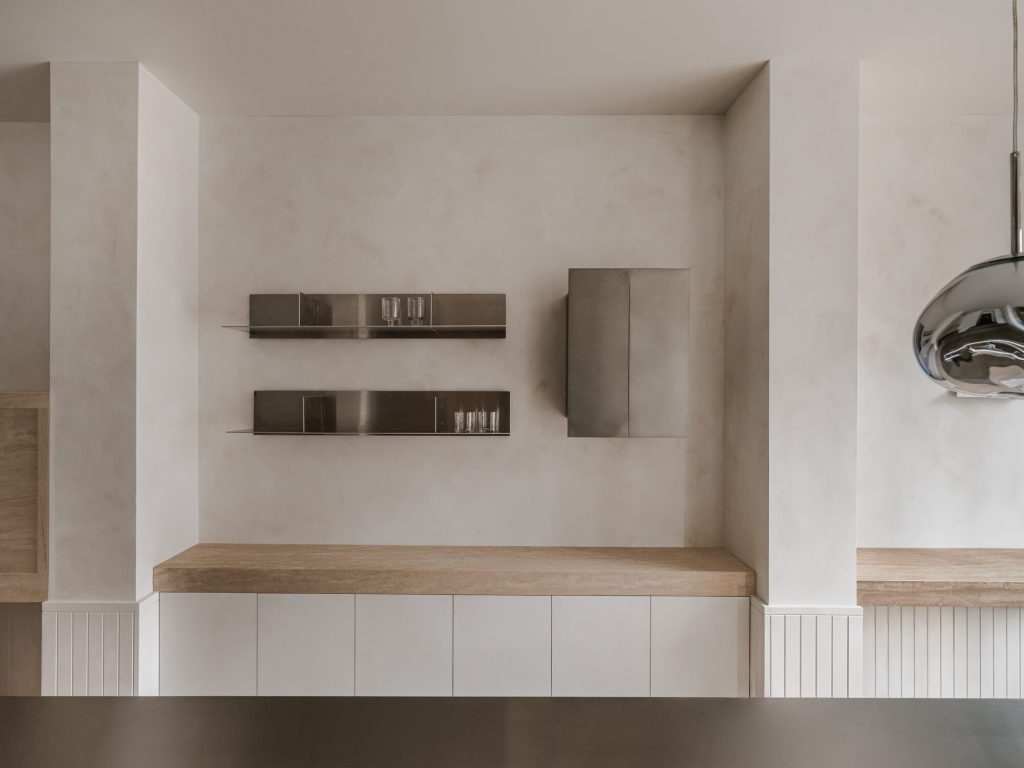
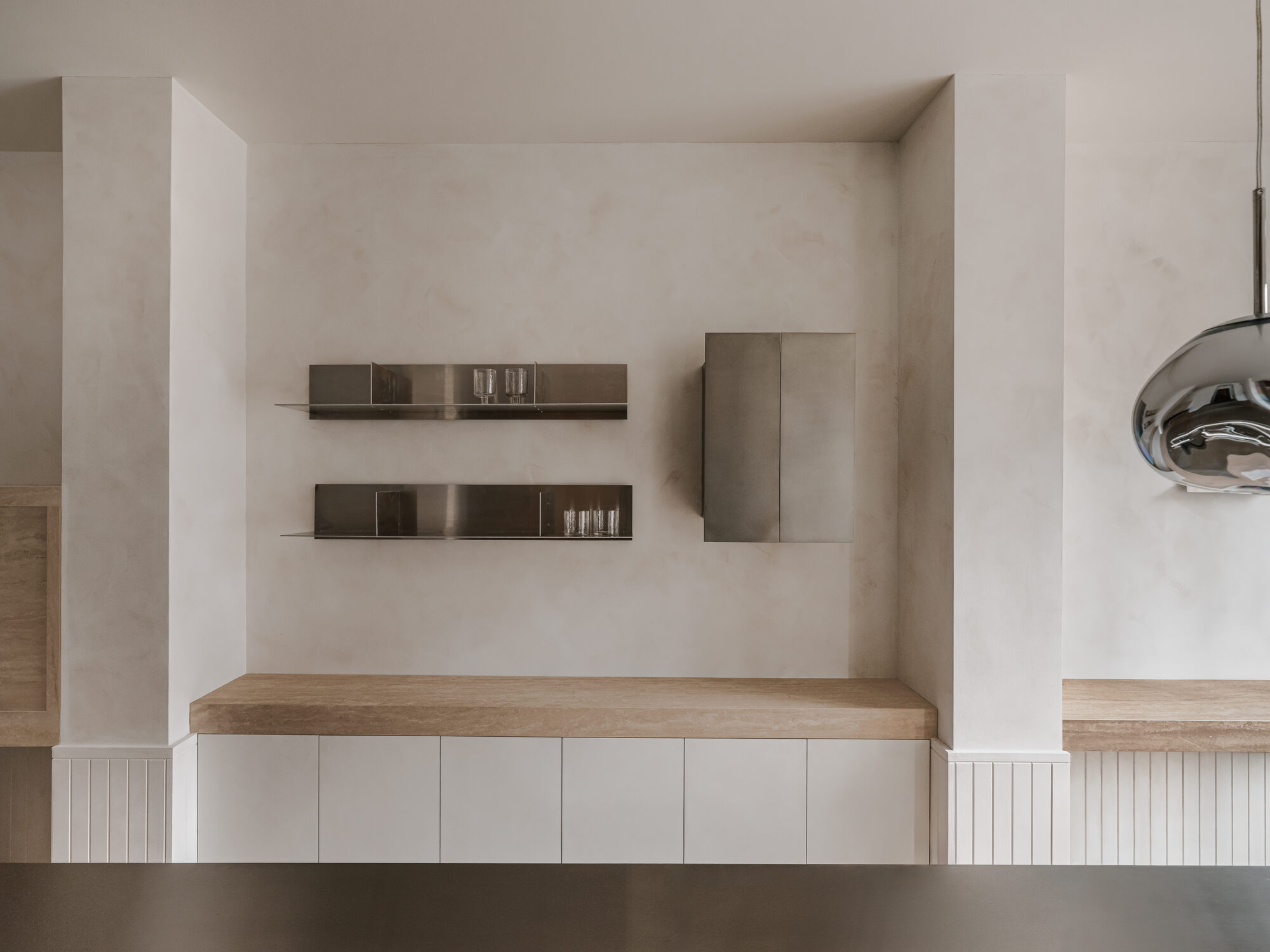
Further inside, the kitchen is conceived as a distinct architectural volume. Accessed through an angled passage that responds to the geometry of the plan, the space is defined by travertine worktops, integrated cabinetry, and carefully concealed appliances. Natural stone and timber work together to create an atmosphere that feels both contemporary and timeless.


The transition into the private zone is treated as a carefully choreographed sequence. Moving through timber-lined corridors and compressed thresholds, residents gradually enter increasingly intimate spaces. This layered arrangement eliminates direct sightlines while maintaining openness, allowing privacy to emerge through spatial progression rather than physical separation.
Bathrooms continue the project’s material dialogue. Travertine and stone elements are paired with bespoke oak joinery, balancing warm and mineral textures throughout the interiors. Every detail contributes to a sense of permanence and quiet refinement.


Rather than imposing a strong formal gesture, Rubio y Galí demonstrates how a single architectural strategy can transform an irregular apartment into a coherent spatial experience. Through oak, stone, light, and carefully calibrated transitions, De la Villa Studio creates a home where movement itself becomes part of the architecture, turning everyday domestic routines into a sequence of subtle discoveries.
Project Credit
Project name: Rubio y Galí
Location: Madrid, Spain
Floor area: 88 m2
Design Firm: De La Villa Studio | @delavillastudio
Photographer: Miriam Ruano