Now Reading: Generosity as Method: Arch. Mai Al Busairi on designing Lei Wa Lakom library in Zanzibar
- 01
Generosity as Method: Arch. Mai Al Busairi on designing Lei Wa Lakom library in Zanzibar

Generosity as Method: Arch. Mai Al Busairi on designing Lei Wa Lakom library in Zanzibar

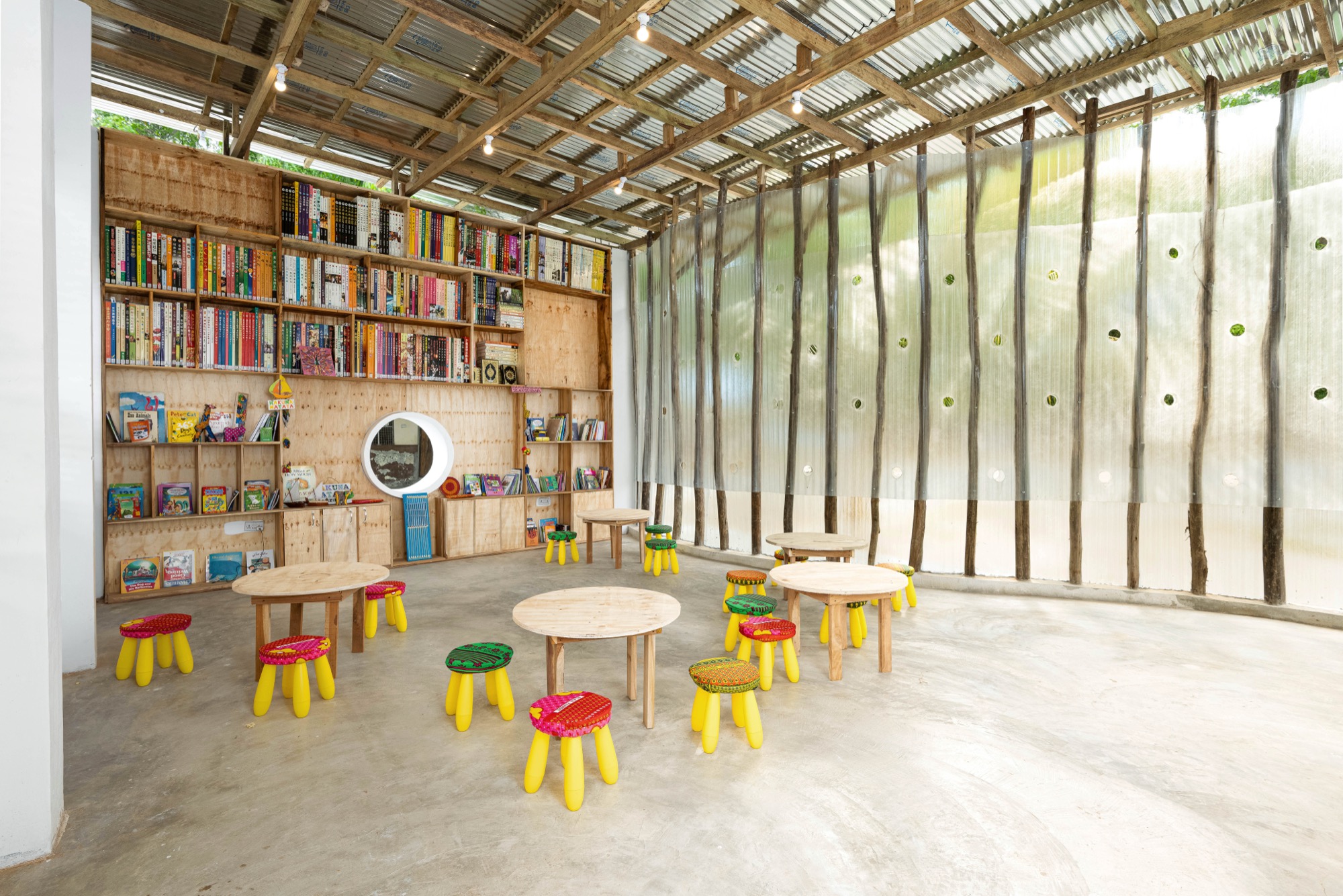
In Kazole Village, where the rhythms of life unfold between open ground, shaded verandas and the slow circulation of humid coastal air, Lei Wa Lakom Library does not announce itself as a civic monument. It settles into its surroundings with restraint. Timber frames, perforated metal, filtered light and planted edges compose an architecture that feels less constructed than calibrated.
For Arch. Mai Al Busairi, Founder and Principal Architect of PARALLEL STUDIO, this calibration is deliberate. Following Mariam’s Library, a project that repositioned small scale civic architecture as a vehicle for social responsibility, Lei Wa Lakom advances a broader architectural inquiry. What does it mean to design a civic space that prioritizes climate intelligence, cultural continuity and childhood curiosity over monumentality.
In this conversation, Al Busairi reflects on permeability as resilience, material memory as structure, and generosity as a design methodology rather than a metaphor.

What was the initial spark for the Lei Wa Lakom Library project, and how does it build upon Mariam’s Library within the Parallel Gives initiative?
Mariam’s Library marked a turning point in our practice. It challenged the assumption that architectural relevance must be tied to scale or commercial visibility. The project allowed us to test the idea that even a modest civic space can generate cultural depth and social impact. Its nomination for the Aga Khan Award for Architecture reinforced that belief.
Lei Wa Lakom Library emerged not as a repetition, but as an expansion of that conviction. The ambition is to establish a network of libraries across Zanzibar, creating distributed spaces of knowledge rather than singular statements. The project continues our effort to reposition architecture away from profit driven production and toward public generosity. It is part of a long term system rather than an isolated intervention.

Your design draws from Swahili architectural traditions. Which vernacular elements resonated most strongly with you?
Zanzibar’s vernacular architecture is fundamentally climatic. It understands shade as structure and airflow as spatial generator. Shaded thresholds, porous façades, deep overhangs and cross ventilation are not stylistic gestures but environmental intelligence embedded in daily life.
What interested me was not reproducing their form, but translating their logic. The library reinterprets these elements through layered edges, filtered openings and transitional zones. Interior and exterior are treated as a continuum. The building does not mimic tradition. It absorbs its principles and expresses them in a contemporary language.
The water feature carries Islamic symbolism. How did you embed this spiritual layer without creating monumentality?
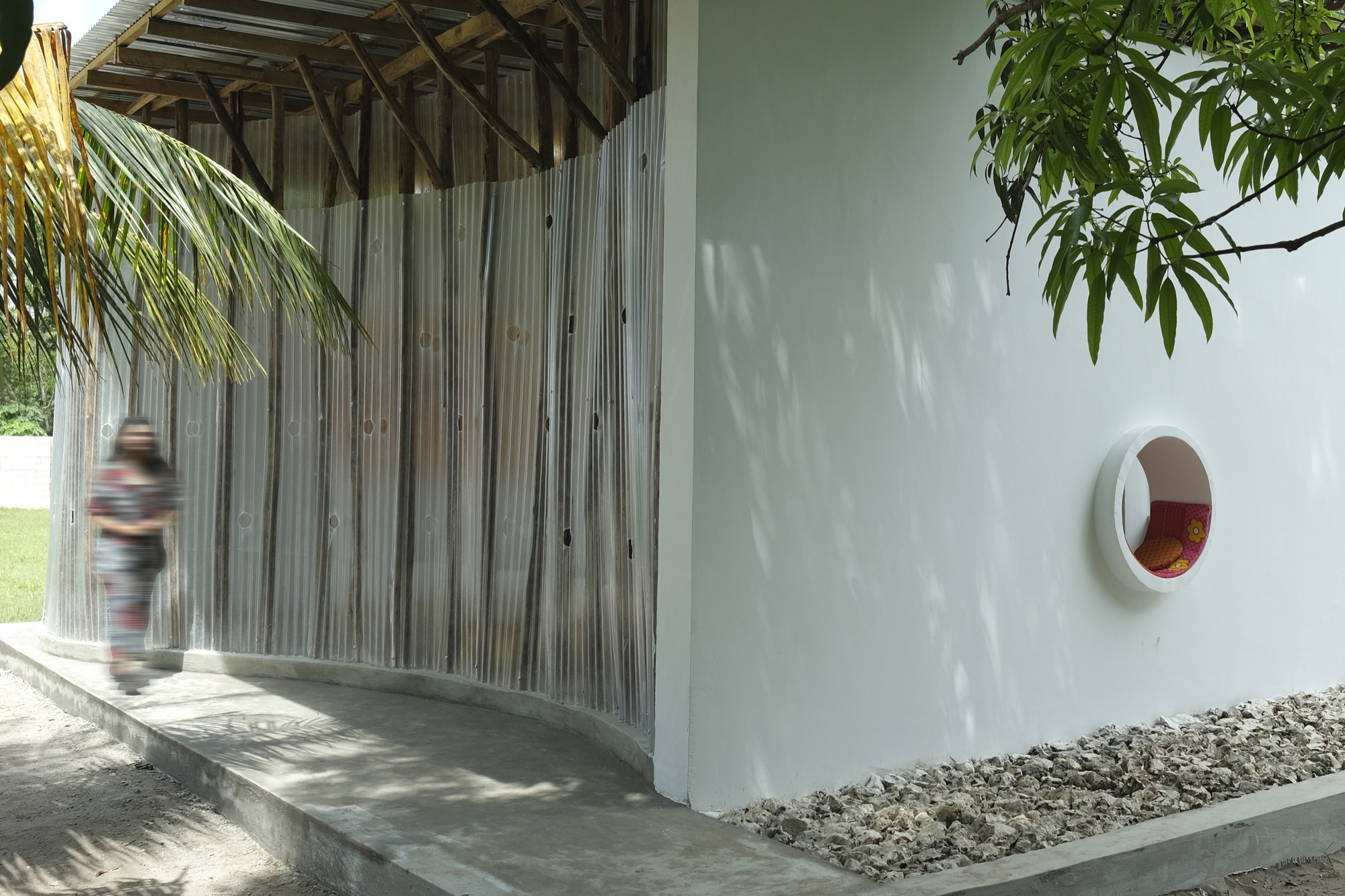
Water is introduced as atmosphere rather than ornament. In Islamic thought, water signifies life and knowledge. Placing it at the entry sequence establishes a subtle psychological shift. The transition from exterior to interior becomes reflective rather than abrupt.
The intention was to create a sense of quiet reverence without hierarchy. The space is not ceremonial. It is intimate. Children encounter water not as symbol imposed upon them, but as presence that softens sound, light and movement. Spirituality operates through spatial experience rather than overt representation.
Lightness, permeability and human scale define your practice. How did these principles operate here?
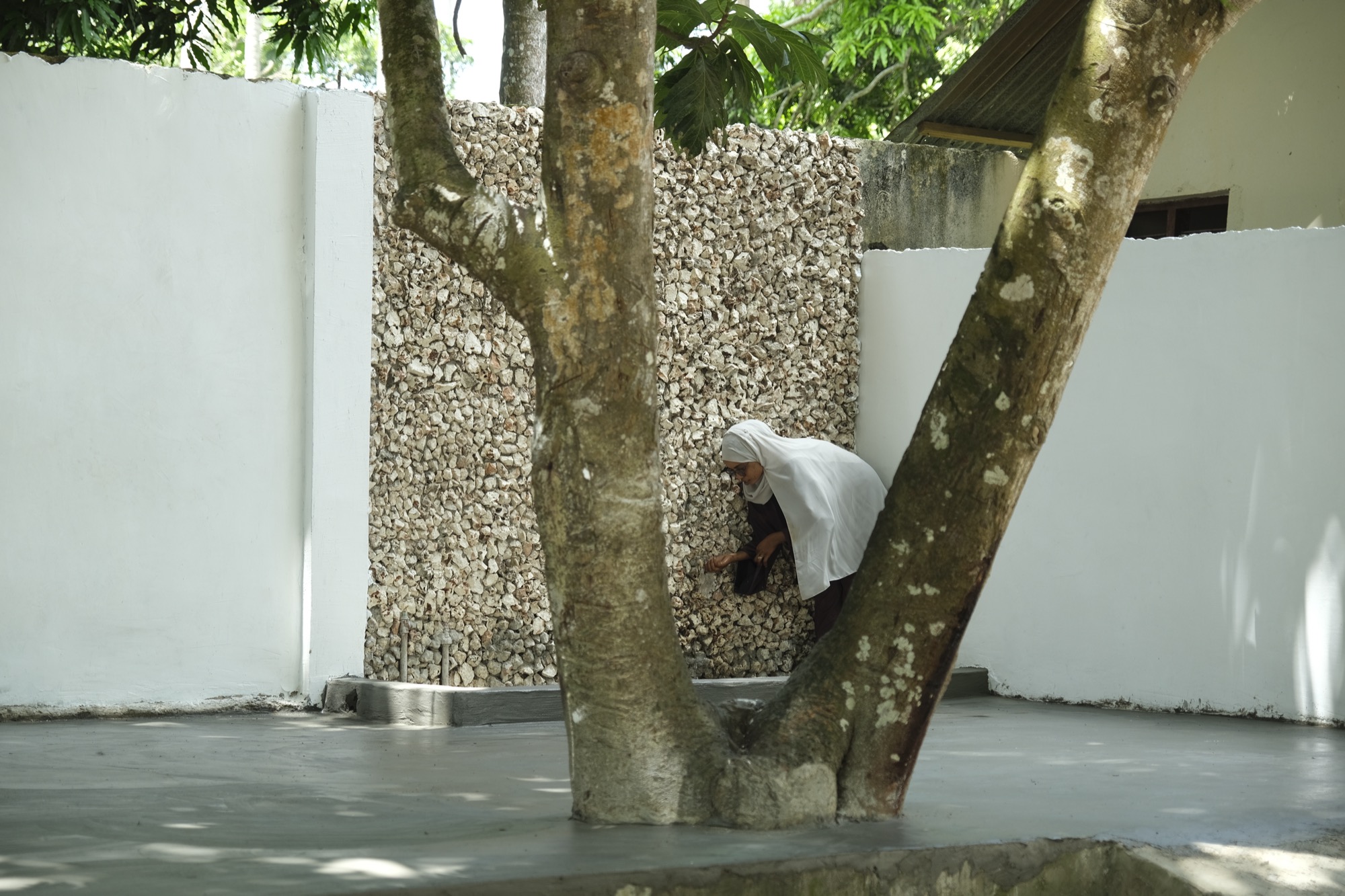
Permeability was treated as environmental strategy and spatial philosophy simultaneously. In a humid climate, sealing a building often increases dependency on mechanical systems. Instead, the library breathes.
Layered thresholds, shaded perimeters and porous surfaces allow air to circulate freely. Boundaries dissolve visually and thermally. This openness produces resilience. Heat accumulation is reduced through airflow rather than insulation alone. The scale remains intimate, particularly for children, ensuring that civic architecture does not overwhelm its users.
The perforated corrugated panels and timber frame shape the building’s identity. What guided these choices?
The perforated corrugated panels were chosen for their dual capacity. Technically, they promote ventilation and mitigate heat gain. Spatially, they filter light into shifting patterns that animate the interior. The building becomes responsive to the passage of time. Light is not uniform but dynamic.
Timber carries both environmental and historical resonance. Growing up in Kuwait, I was familiar with al jandal, timber historically imported through regional trade routes. Understanding its origins in East Africa revealed a network of exchange embedded in material history. Reintroducing it in Zanzibar allows the structure to perform climatically while acknowledging this shared past. The material becomes both construction and narrative.
Achieving thermal comfort without mechanical systems is demanding in a tropical setting. How did you approach passive cooling?
Comfort emerged through accumulation of strategies rather than a singular device. Roof overhangs extend deeply to protect façades from direct sun. Openings are positioned at varied heights to enable stack ventilation, allowing hot air to escape while cooler air is drawn inward.
Walls remain breathable, encouraging cross ventilation rather than containment. Outdoor shaded reading zones extend usable space beyond the enclosed footprint. Surrounding vegetation contributes to microclimatic cooling, reducing ambient temperature before air enters the building.
What became evident was that orientation and porosity, when carefully calibrated, are remarkably powerful. Once the envelope allowed the building to breathe fully, thermal balance followed.
How did the rural context of Kazole Village and community dialogue shape the layout?
Kazole Village operates through collective spatial patterns. Social life unfolds outdoors and within shared thresholds. Imposing a corridor based plan would have contradicted this logic.
The library therefore functions as a non hierarchical field. Reading, gathering and informal interaction coexist within a continuous space. Proximity to the local school informed adaptability, allowing structured learning in the morning and communal use in the afternoon.
Conversations with teachers, parents and builders shaped practical decisions. Shaded waiting areas, durable materials and openness were direct responses to daily routines. The design evolved through exchange rather than prescription, embedding the building within its social environment.
What challenges emerged in working across cultures, particularly in balancing tradition and durability?
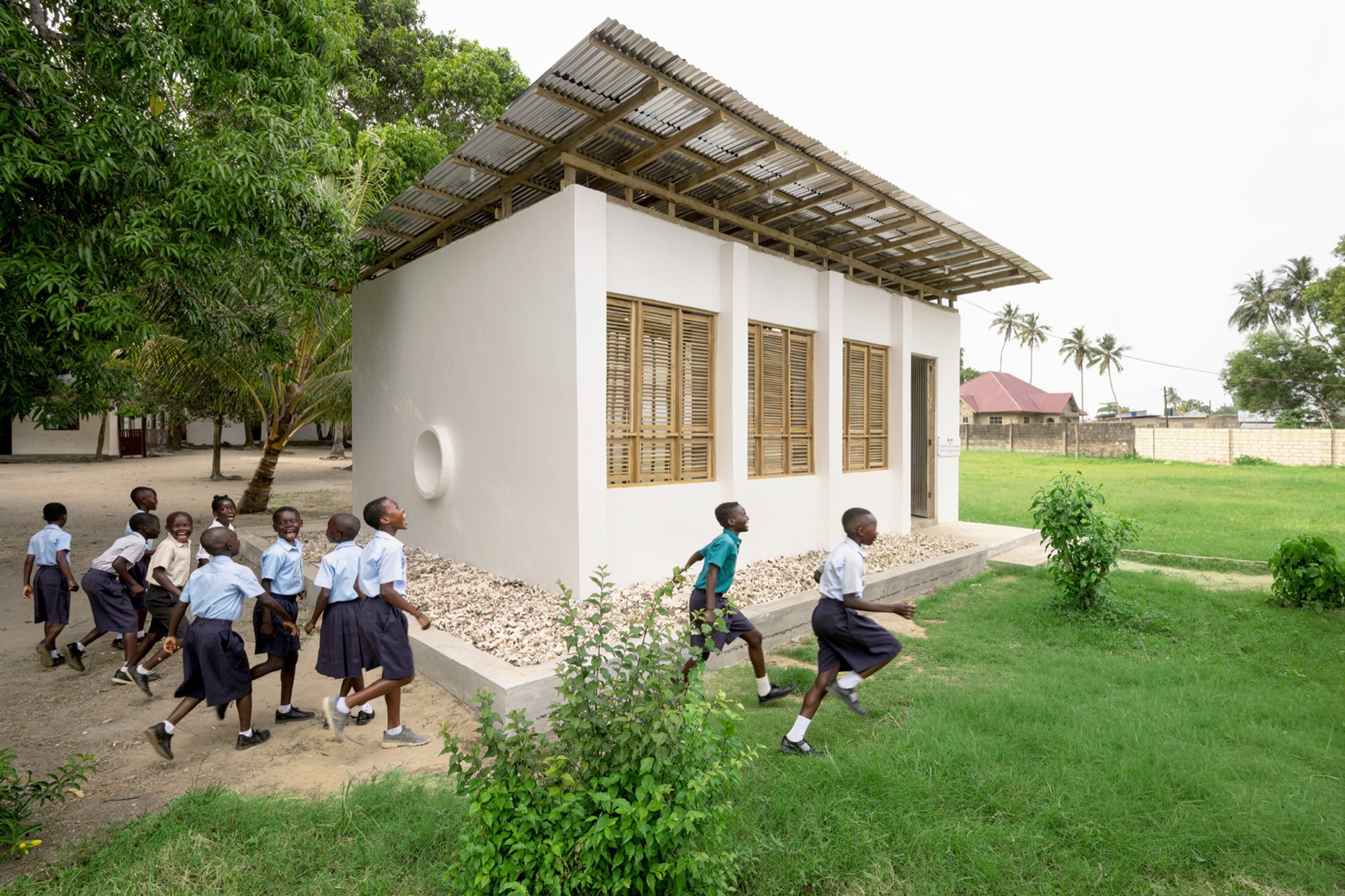
Translating local craftsmanship into long term resilience was central. Traditional methods are environmentally intelligent, yet they sometimes require adaptation to ensure longevity under contemporary use.
Collaboration was essential. Working alongside local builders allowed us to understand techniques intimately before refining them into a hybrid system. The goal was not replacement, but reinforcement. Timber again became a bridge between regions and histories, demonstrating how material can unify cross cultural practice.
How does Lei Wa Lakom challenge prevailing notions of civic architecture?
Civic architecture in developing contexts is often equated with monumentality. Visibility and scale become proxies for importance. Lei Wa Lakom proposes another approach.
Its civic presence lies in intimacy. The building is scaled to children, porous to community and responsive to climate. Meaning arises through belonging rather than grandeur. The project suggests that civic value can be measured by participation and curiosity instead of spectacle.
What lesson from this project will most influence your future work?
The enduring lesson is that generosity can function as methodology. When architecture is framed as an act of giving, design decisions become clearer. Efficiency, climate responsiveness and cultural sensitivity align naturally.
I see the library evolving gradually. Materials will weather. Children will adapt the space. The aspiration is to expand this model into a network of libraries across Zanzibar, forming an interconnected landscape of knowledge spaces. Architecture then becomes infrastructure for growth rather than isolated object.
Article Credit
Text by Sofia Hamlet
Photo: Michal Dzikwoski / @dzikowski_michal