Now Reading: Lina Ghotmeh: Unearthing the future in stone and memory
- 01
Lina Ghotmeh: Unearthing the future in stone and memory



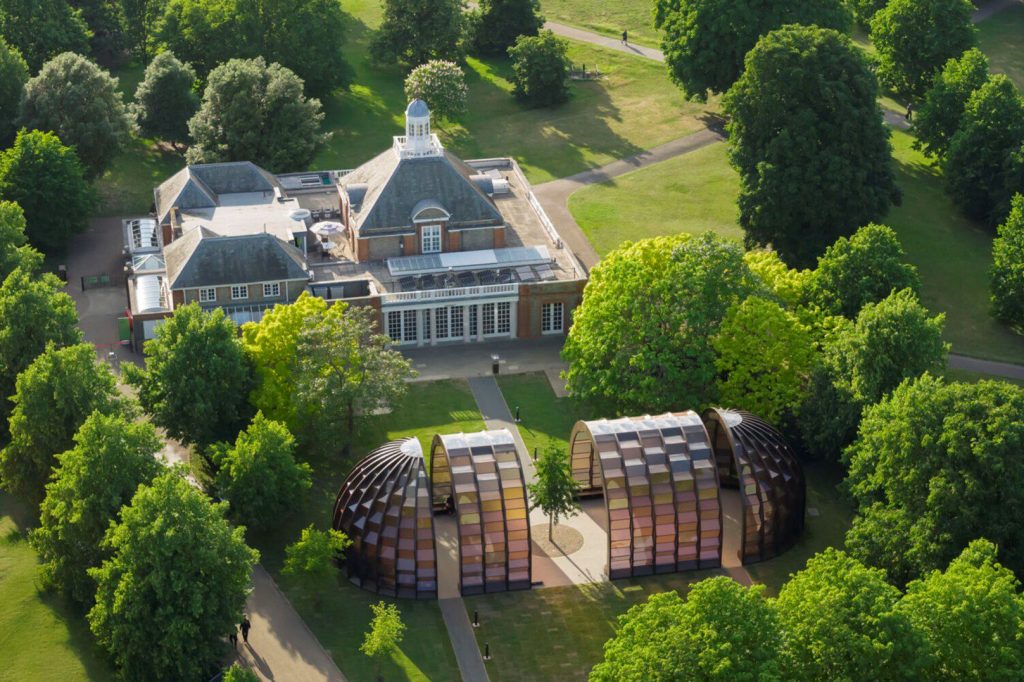
Each summer in Kensington Gardens, the Serpentine Pavilion offers a snapshot of architecture’s current preoccupations. When Lina Ghotmeh unveiled À Table in 2023, the proposal was notably restrained. A circular timber canopy rested lightly on the lawn, structured around a single communal table. Laminated wood defined the envelope, filtering daylight and framing the surrounding trees. The pavilion did not compete with the park. It created a room within it.
Gathering, rather than spectacle, has become a recurring theme in Ghotmeh’s work. Born in Beirut in 1980, she grew up within a city shaped by reconstruction and interruption. Ruins and scaffolding were part of the urban landscape. Ancient foundations coexisted with contemporary concrete frames. This coexistence fostered an understanding of architecture as sedimented time rather than linear progress.
She initially considered studying archaeology before choosing architecture at the American University of Beirut. Further studies at the École Spéciale d’Architecture in Paris broadened her outlook, while early experience in the studios of Jean Nouvel and Norman Foster exposed her to contrasting modes of practice. Her independent trajectory took form in 2006, when she co won the competition for the Estonian National Museum.

Completed in Tartu in 2016, the museum stands on the site of a former Soviet military airfield. Instead of erasing the runway, the building extends it. A long plane of concrete and glass rises gently from the ground, transforming infrastructure once associated with control into a cultural threshold. The incline guides visitors gradually upward, allowing the landscape to remain present. Monumentality here is measured, not imposed.
Ghotmeh describes her method as an archaeology of the future. The phrase signals attention to what already exists before projecting forward. Sites are read as layered territories. Materials are selected for continuity as well as performance. Buildings are expected to age and accumulate traces of inhabitation.

Stone Garden in Beirut, completed in 2020, embodies this thinking at an urban scale. The residential tower presents a concrete façade textured to evoke stratified rock. Deep window openings puncture the mass, creating shadow and depth while framing fragments of the city. The surface resists polish. It appears weathered from the outset, positioned between construction and erosion.
Material research continues at the Ateliers Hermès in Louviers, completed in 2023. There, locally sourced brick forms a sequence of structural arches that admit calibrated daylight. The building achieved energy positive performance, aligning environmental ambition with spatial clarity. Sustainability operates through structure, orientation and regional knowledge rather than decorative gesture.


À Table at the Serpentine distilled these concerns into temporary form. Designed for disassembly, the laminated timber structure minimized ground intervention and material waste. The circular plan directed attention inward. The central table became both anchor and invitation. The project proposed architecture as shared space rather than singular object.


Serpentine Pavilion 2023, À Table, designed by Lina Ghotmeh in Kensington Gardens, London. Credit: © Lina Ghotmeh — Architecture. Photo: Iwan Baan, Courtesy: Serpentine. Serpentine Pavilion 2023, À Table, designed by Lina Ghotmeh in Kensington Gardens, London. Credit: © Lina Ghotmeh — Architecture. Photo: Iwan Baan, Courtesy: Serpentine. 
Serpentine Pavilion 2023, À Table, designed by Lina Ghotmeh in Kensington Gardens, London. Credit: © Lina Ghotmeh — Architecture. Photo: Iwan Baan, Courtesy: Serpentine.


Current commissions extend this approach into institutional territory. In AlUla, Saudi Arabia, Ghotmeh is designing a contemporary art museum embedded within an archaeological desert context. The proposal emphasizes porosity, climatic responsiveness and dialogue with terrain. In London, her team won the competition to redesign the Western Range galleries of the British Museum. The commission addresses spatial reorganization and environmental performance within one of the world’s most scrutinized cultural institutions.


Craft remains integral. Collaboration with artisans informs tectonic decisions and detailing across projects. The Bahrain Pavilion at Expo 2025 Osaka employs timber components conceived for reuse, referencing maritime traditions while maintaining reversible construction logic.

Recognition has followed. Ghotmeh was named to TIME100 Next in 2023 and later became a Rolex Testimonee. In 2024, she was appointed Honorary Fellow of the American Institute of Architects. These distinctions acknowledge a growing international presence, yet they remain secondary to the work itself.
What defines Ghotmeh’s architecture is not formal signature but attentiveness. Her projects engage memory without nostalgia and sustainability without rhetoric. They frame architecture as a mediator between human presence and material continuity.
At a moment when the discipline oscillates between technological spectacle and ecological urgency, her work advances a quieter proposition. The future may not emerge from rupture. It may be constructed through careful excavation, where history, craft and collective experience converge within spaces designed to endure.
Photo Cover
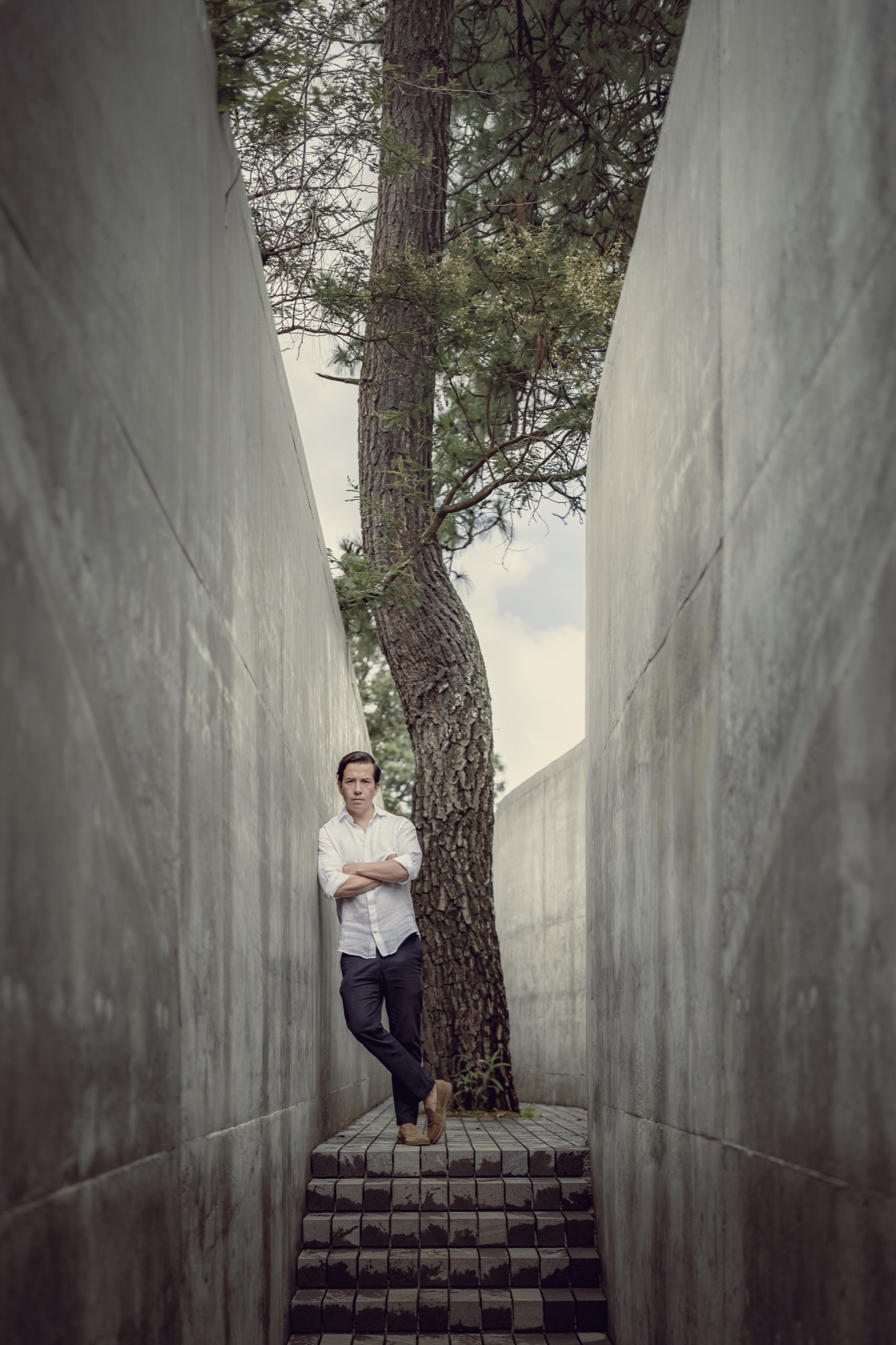
Lina Ghotmeh, French-Lebanese architect known for her “archaeology of the future” approach.
Credit: Wallpaper* Magazine.