Now Reading: Kinder Rain: Architecture as memory and landscape for early childhood
- 01
Kinder Rain: Architecture as memory and landscape for early childhood

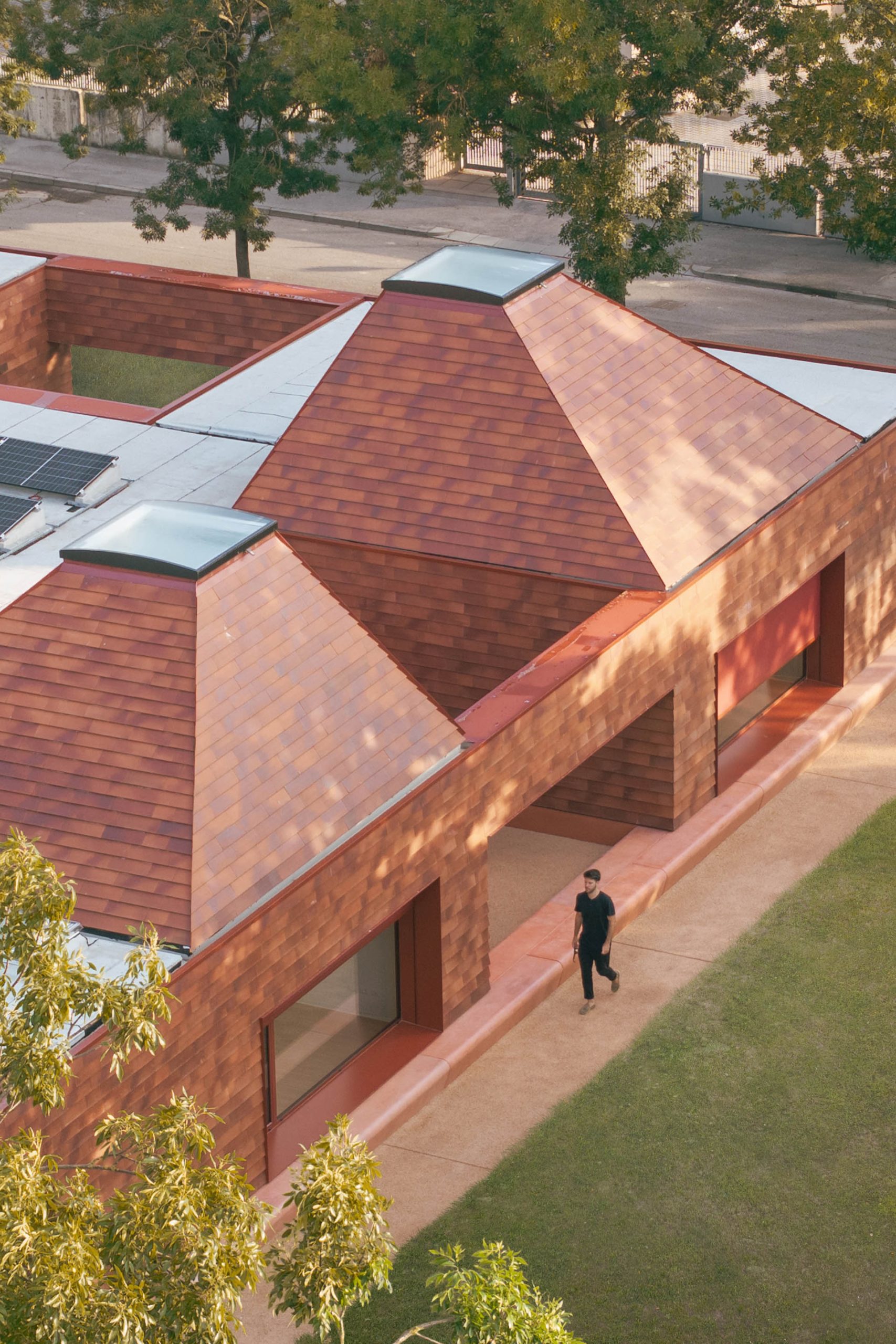

Kinder Rain is conceived as a primordial kindergarten shaped by the spirit of its place and by the emotional world of the child. It is a space that feels protected yet open to imagination, safe while remaining porous to wonder. Rather than a single building, the school unfolds as a small village, an abstract constellation of pyramidal volumes connected by open courtyards. Rising among trees and immersed in greenery, the vermilion architecture offers warmth and familiarity, immediately readable at a child’s scale.

“The project draws its strength from memory. Kinder Rain emerges from the landscape itself, reinterpreting the archetype of the Casone Veneto, the vernacular rural dwelling once inhabited by farmers and fishermen, recognized for its distinctive pitched and thatched roof. This ancestral reference is not reproduced literally but translated into a contemporary language through form, material, and spatial rhythm.” – explained by Ing. Rodolfo Morandi.

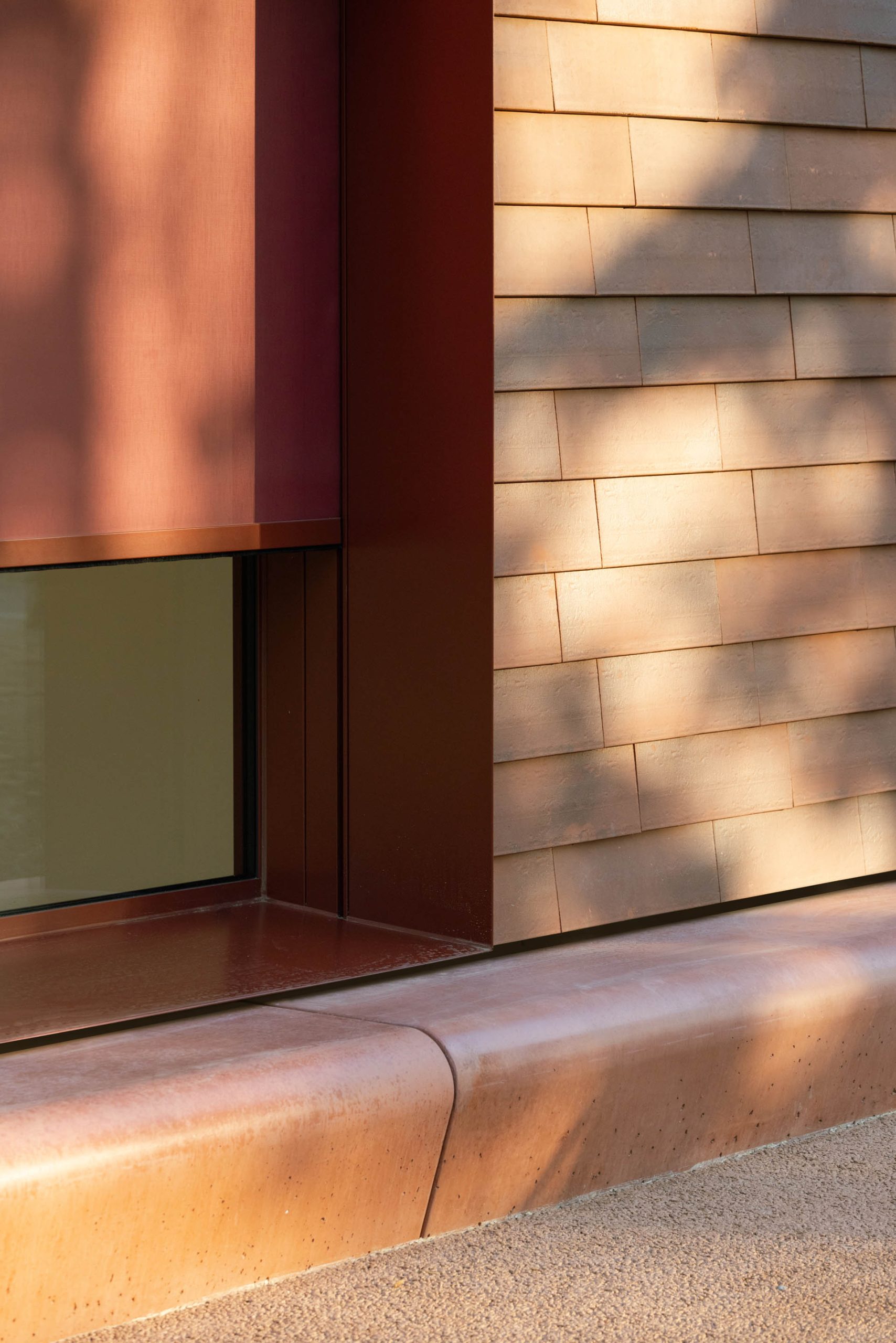
Three classrooms are expressed as volumetric exceptions within a continuous terracotta envelope. Their pyramidal profiles punctuate the overall composition, evoking the age old tradition of clay construction and sloped tile roofs typical of the Veneto countryside. The terracotta skin becomes both a unifying surface and a tactile narrative, anchoring the project to local building culture while giving it a strong, iconic identity.


At ground level, a soft pigmented concrete bench gently meets the soil. This element acts simultaneously as urban furniture, a playful edge, and a threshold between different worlds. It mediates between the didactic and the spontaneous, between interior and exterior, encouraging informal play and lingering moments that extend learning beyond the classroom.

Nicolò Chinello shared: “Behind its compact appearance, the building reveals a carefully articulated play of solids and voids. Each classroom opens outward into an outdoor learning patio, protected and framed by the surrounding courtyard. These spaces function as extensions of the classroom, allowing teaching, play, and exploration to flow naturally between inside and outside.”


At the same time, the classrooms face inward, engaging with a central agorà. This shared space acts as the social heart of the kindergarten, a place for collective play, informal learning, and daily encounters. Like houses gathered around a village square, the architecture fosters a sense of community and belonging from the earliest years.


Visual connections are continuous. The gaze moves freely from classrooms to patios and toward the garden, weaving a network of relationships across spaces. Architecture becomes a tool for orientation, curiosity, and discovery, supporting contemporary pedagogical approaches that value openness, autonomy, and interaction with nature.
The spatial sequence culminates vertically. Light is drawn upward toward a zenithal skylight, where the sun traces the passage of time across the textured wooden ceiling. This movement recalls a sundial, quietly marking the rhythm of the day. The material presence of wood resonates with the memory of the thatched roofs of the historic Casoni, translating rural imagery into a refined and abstract interior atmosphere. In this way, light becomes both an environmental and educational element, introducing children to natural cycles through daily experience rather than instruction.
PROJECT CREDIT
Architecture: AACM / @aacm_studio
Location: via Ragazzi del ‘99, Piove di Sacco (PD), Italia
Builti Area: 672 m2
Timing: 2022-2025
Photos: Alex Shoots Buildings / @alex.shoots.buildings
More Photos


AACM Atelier Architettura Chinello Morandi is an architecture practice based in Padua and Milan, founded in 2020 by architect Nicolò Chinello and architect engineer Rodolfo Morandi. The studio places the integration of context and user experience at the core of every project, translating the character and memory of each site into distinctive atmospheres and spatial identities. Working across residential, commercial, and public architecture, AACM develops a design language defined by compositional clarity and material sensitivity, where the balance between form, space, and durability gives rise to architecture conceived to endure over time.