Now Reading: FUTUREFORMS activates public space with digitally crafted installations
- 01
FUTUREFORMS activates public space with digitally crafted installations


Award-winning studio FUTUREFORMS, led by Jason Kelly Johnson and Nataly Gattegno, continues to redefine the relationship between public art, architecture and technology. Based in the San Francisco Bay Area, the studio has spent more than two decades exploring how computational design can activate public space and reshape urban experience.
As cities increasingly operate through digital systems, FUTUREFORMS frames its work within the emerging concept of “Digital Craft.” Rather than using computation simply for efficiency or repetition, the studio approaches the computer as a contemporary artisan’s tool. Algorithms become instruments for producing highly specific forms that respond to context, climate and human interaction. Architecture, in this sense, becomes less a static object and more a responsive participant within the urban landscape.
ORBITAL: A CONTEMPORARY GARDEN FOLLY
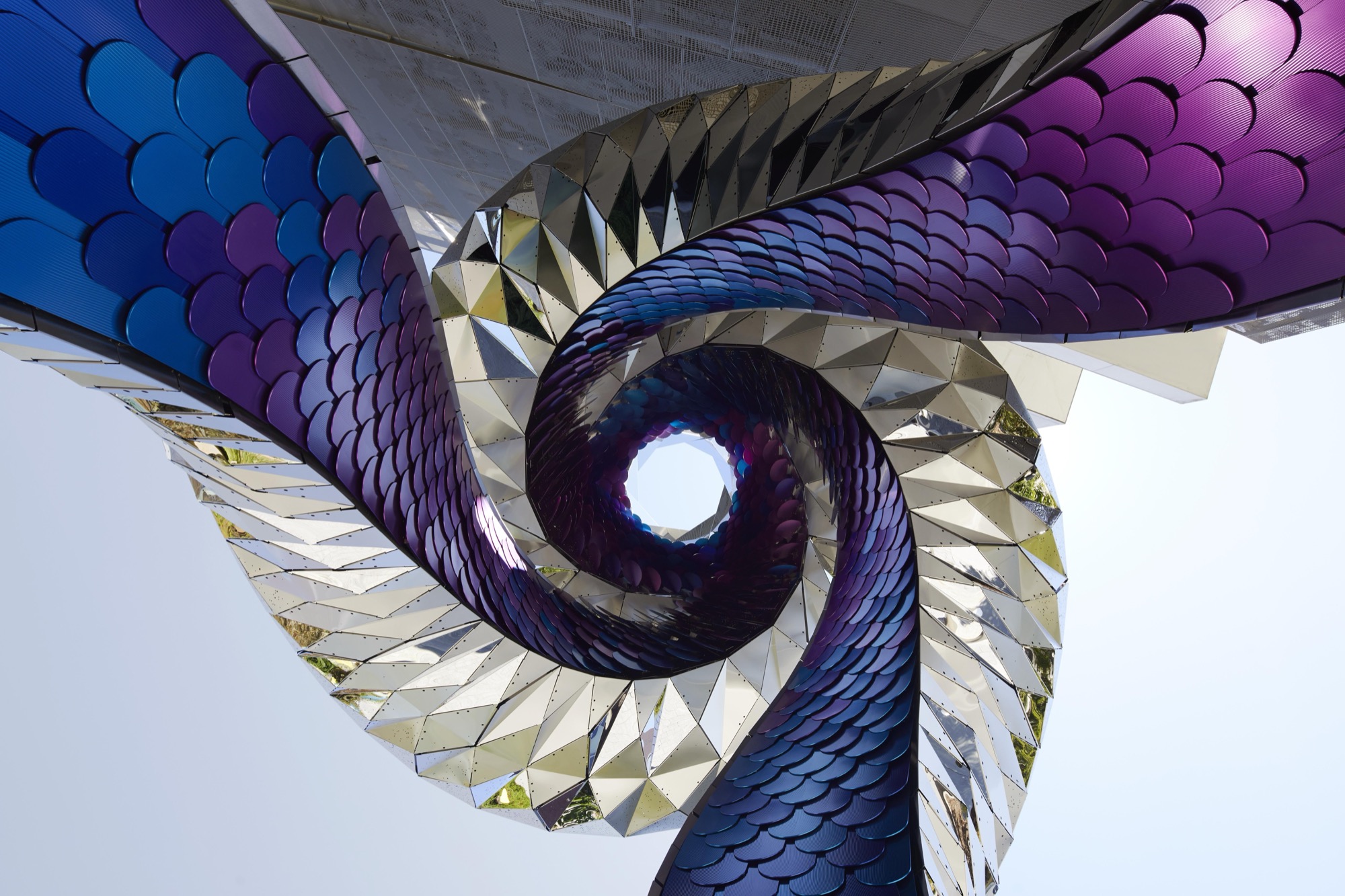
One of the studio’s recent works, Orbital, stands in the entrance plaza of the OpenAI headquarters (formerly Uber HQ) in Mission Bay, San Francisco. Conceived as a contemporary garden folly, the installation transforms complex computation into a striking sculptural landmark.


Constructed from thousands of digitally fabricated aluminium and steel elements, Orbital offers a dual spatial experience. Its perforated stainless steel exterior reflects the surrounding cityscape, while the interior reveals a softly illuminated chamber described by the designers as a “Creature of the Garden.” Visitors are invited to step inside, encountering an immersive environment that blurs sculpture, architecture and landscape.


WEATHERSCAPE: A LIVING LABORATORY OF WONDER
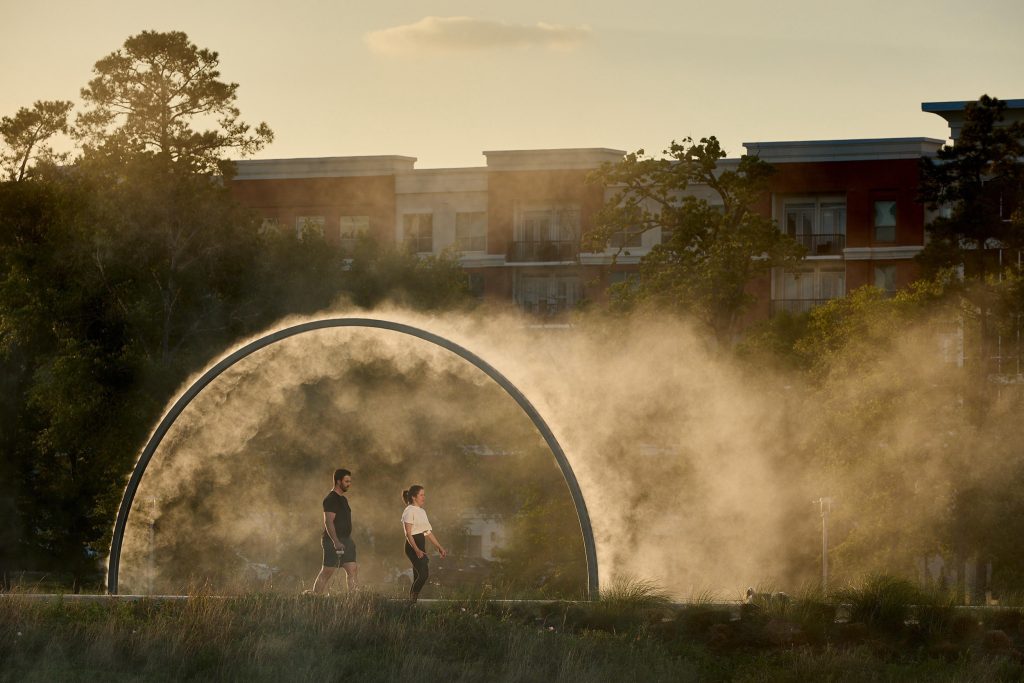
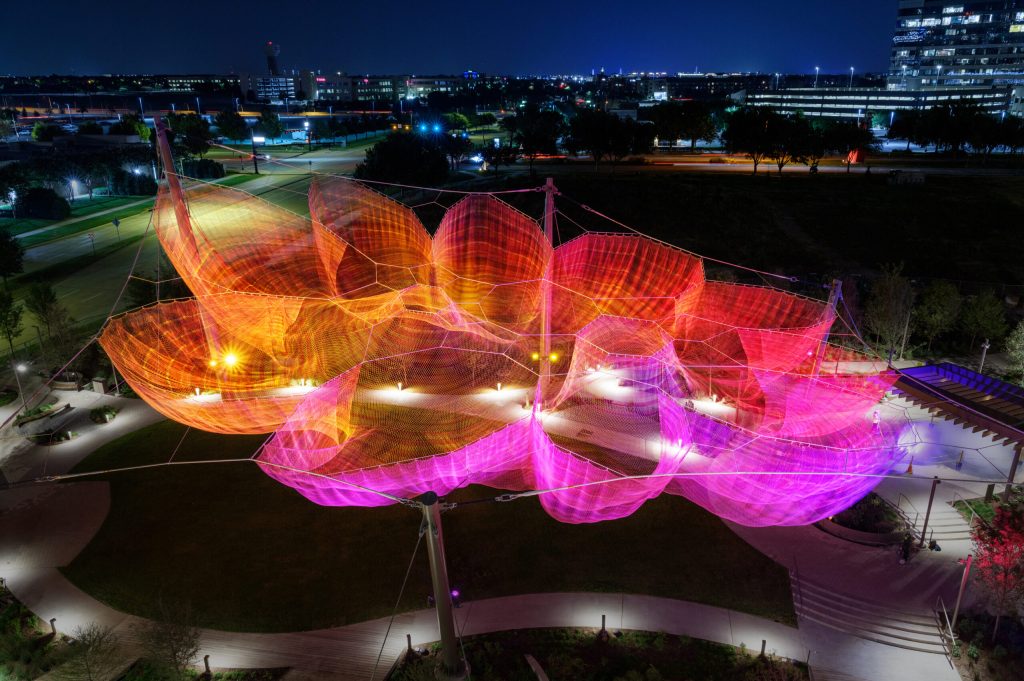
In El Paso, Texas, FUTUREFORMS recently completed Weatherscape, a sculptural canopy measuring approximately 70 by 40 feet for the new El Paso Children’s Museum, also known as La Nube.

More than a shade structure, Weatherscape acts as an interactive environmental system. The installation channels sunlight, wind and water to generate kinetic movement and cooling mist, transforming invisible desert forces into tangible experiences for visitors. The project demonstrates how architectural installations can translate environmental phenomena into playful educational encounters.


METAXIS: THE SPACE BETWEEN IDEAS
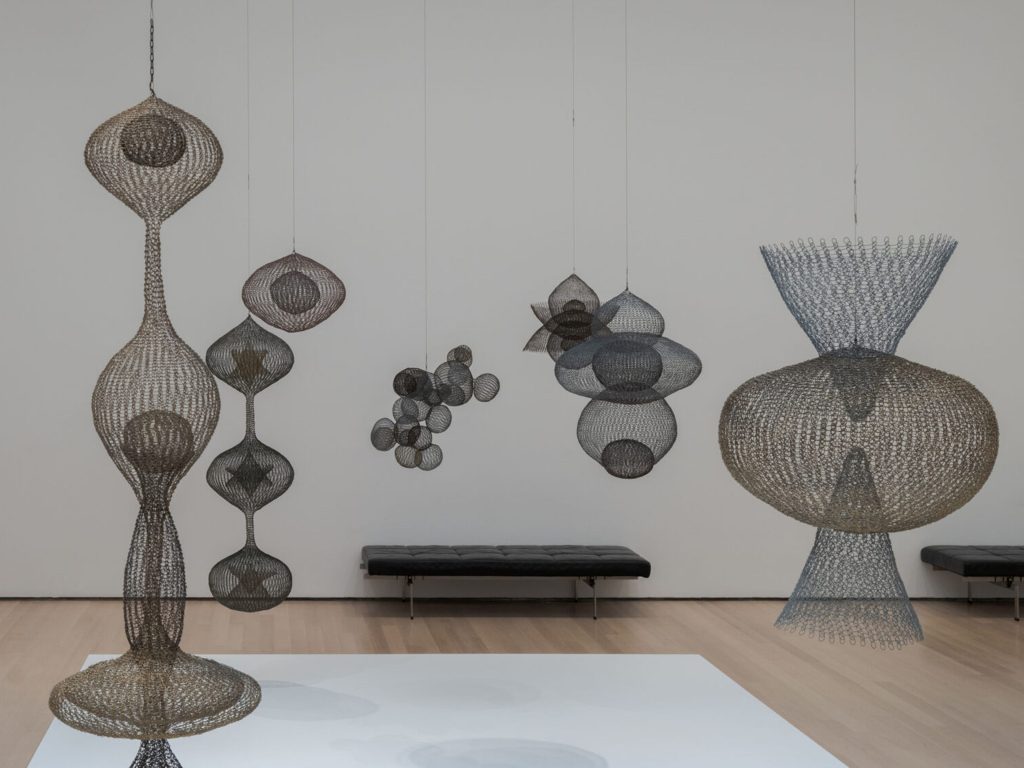
While installations such as Orbital and Weatherscape define the studio’s public presence, FUTUREFORMS’ internal design process is currently the focus of METAXIS: A Collection of Ideas and Objects, a solo exhibition at the California College of the Arts (CCA) Campus Gallery in San Francisco.

The title derives from the Greek term metaxi, meaning “in-between.” The exhibition examines the transitional space between concept and realization, imagination and physical form. Presented like an open studio environment, METAXIS includes more than twenty models, prototypes and speculative objects developed between 2015 and 2025.

According to Nataly Gattegno, the exhibition explores “what happens between ideas, objects, spaces and ways of seeing.” By placing process models alongside completed works, the exhibition reveals how FUTUREFORMS integrates art, architecture and computational design into a continuous experimental practice.

The exhibition runs through 20 March 2026 at the CCA Campus Gallery in San Francisco. A closing lecture by the studio will take place on 19 March at 5:00 PM in the Nave Pres Space at the CCA Main Building, followed by a gallery reception at 6:30 PM. Following its San Francisco presentation, METAXIS will travel to additional venues, including the Elmaleh Gallery at the University of Virginia in September 2026.


Photo: Genaro Limon, Brian Wancho, Genaro Limon, Jared Elizares, Matthew Millman