
Now Reading: CTA designs affordable floating prefab house to adapt to Vietnam’s recurring floods
- 01
CTA designs affordable floating prefab house to adapt to Vietnam’s recurring floods

CTA designs affordable floating prefab house to adapt to Vietnam’s recurring floods

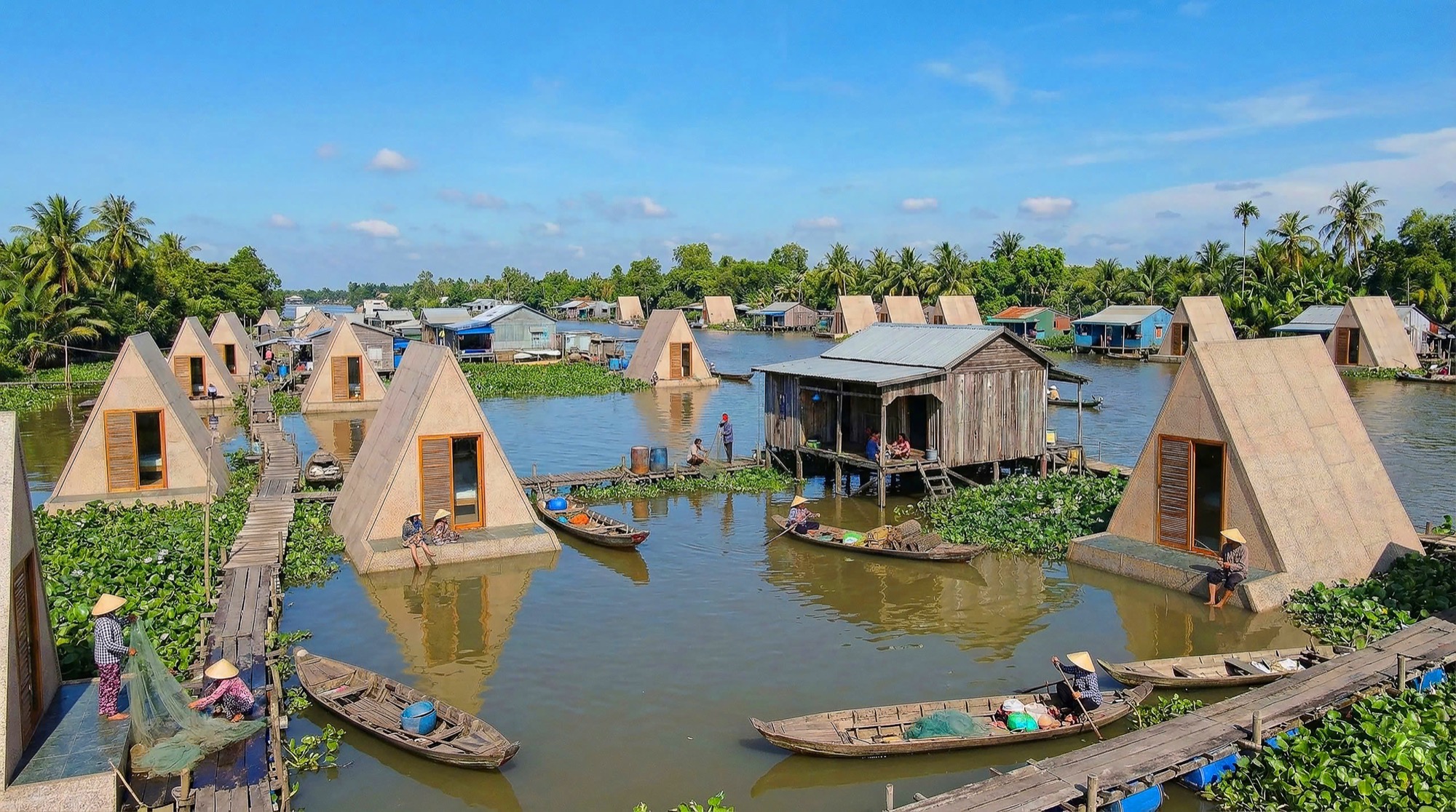
In a country where floods are no longer seasonal anomalies but recurring realities, architecture is being asked to respond not only with resilience, but with responsibility. Vietnam faces up to twenty storms each year, with rising waters affecting the majority of its provinces. Against this backdrop, Creative Architects (CTA) has developed a floating prefab housing model that reframes disaster not as an interruption, but as a condition to design with. Rather than resisting water, the project proposes an adaptive way of living that accepts cyclical flooding as an integral part of the environment.
Rooted in years of research into lightweight prefabrication and refined through what CTA calls its “5G Construction Solution”, the Floating Prefab House represents both a technical and philosophical shift. It draws from the lived experience of the Mekong Delta, where communities have long coexisted with seasonal floods, and translates that cultural knowledge into a scalable architectural system.
For CTA, this is neither a temporary shelter nor a symbolic gesture, but a viable and affordable home designed to float, return to its foundation, and endure over time.


What inspired the Floating Prefab House concept, especially drawing from Vietnam’s floods and cultural elements?
CTA: We began researching our own prefabricated construction solution eight years ago. By 2025, that research matured into what we now call the “5G Construction Solution,” and we started applying it in real projects.
During field testing, we discovered that 5G panels are extremely lightweight, only 7kg per square meter, making them particularly suitable for floating structures. About three years ago, we shifted our focus specifically toward floating housing and climate-resilient design for storm and flood conditions.
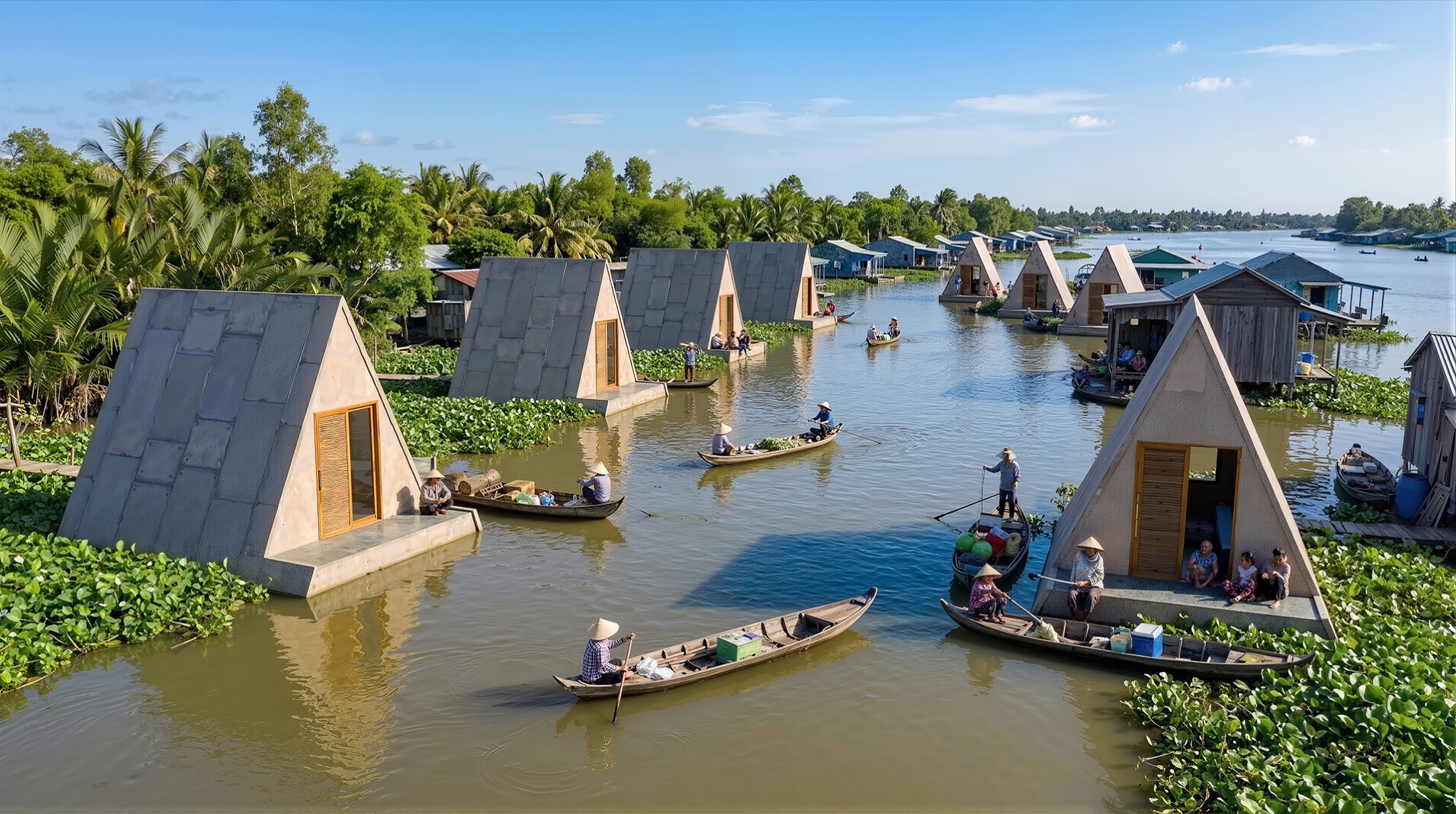
Vietnam faces 15 to 20 storms each year, and flooding affects 22 out of 34 provinces. Every year, we witness tragic losses of life and property. As architects and engineers, we felt a professional responsibility to contribute a solution within our capacity. That is how the research theme “Living with the Rising Waters” emerged – not as an abstract concept, but as a response to a very real and urgent condition.
What does the “living with water” philosophy mean in the context of sustainable architecture, and what shaped it?
Over many years of practice, we came to a simple realization: no matter how capable we are, we cannot fight nature. Instead of resisting floods, we asked ourselves: why not adapt to them? Why not live in harmony with water rather than constantly trying to eliminate it?
Nature is not our opponent, it is the environment that sustains us. When we accept this, our design approach changes fundamentally. “Living with water” is not just a technical strategy; it is a mindset shift. Sustainable architecture, in our view, begins with humility, understanding that adaptation is often wiser than confrontation.

Why choose an isosceles triangular geometry, and how does it balance aesthetics with flood stability?
For us, aesthetics is not decoration, it is the result of rational problem-solving. When structural and functional challenges are resolved properly, beauty follows naturally.
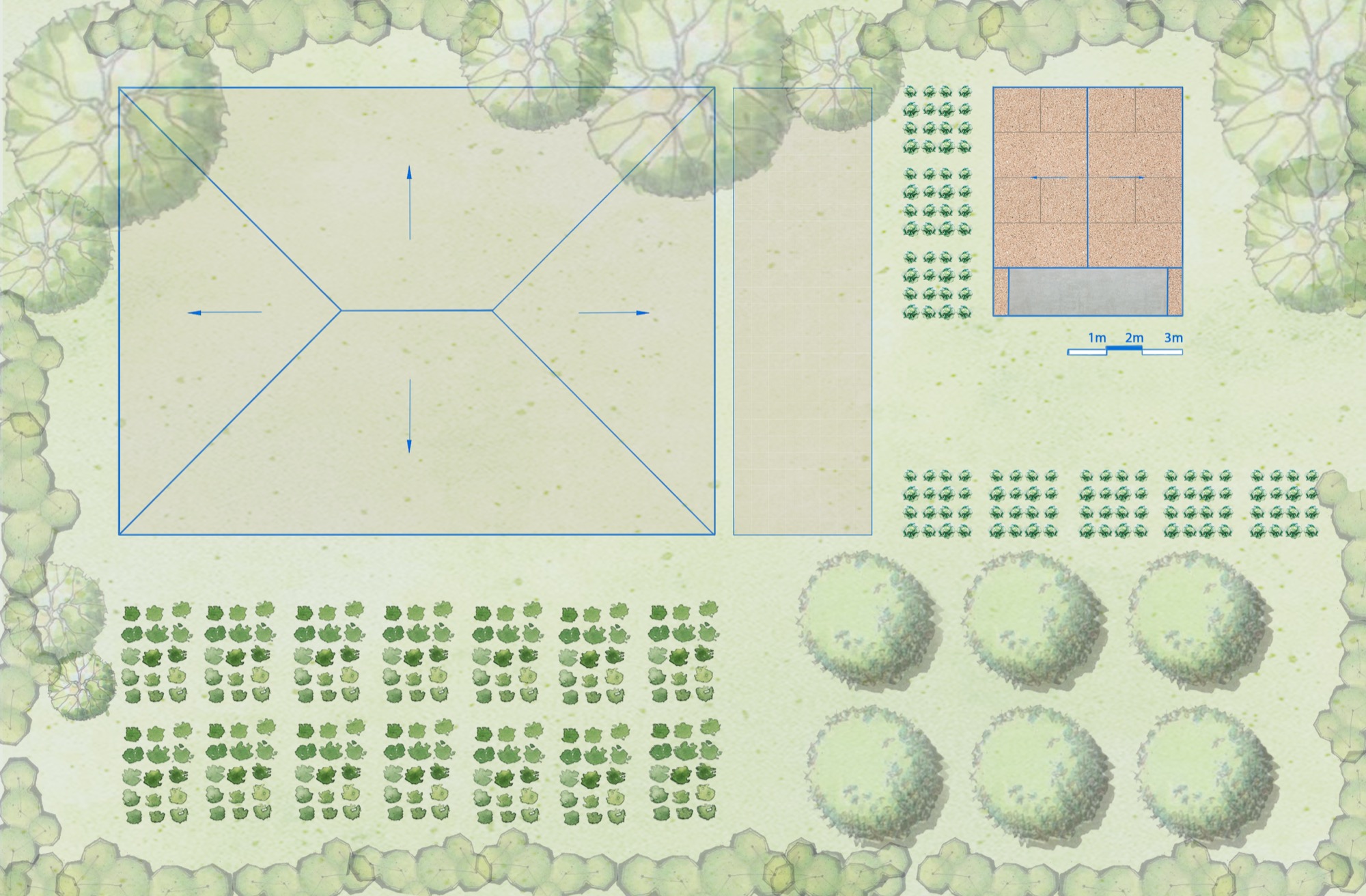
Vietnamese storms are extremely harsh. Without careful engineering, roofs can easily be uplifted. A triangular form, especially an isosceles triangle, provides optimal structural stability. It avoids sharp protrusions or wind pockets and distributes forces evenly. Quadrilateral or pentagonal forms cannot achieve the same equilibrium. Circular or arched shapes are also stable, but significantly more expensive to construct.
The triangular geometry also minimizes the building envelope surface area, which directly reduces construction cost. Affordability is critical. A house that survives floods but is financially unreachable has no practical value. The isosceles triangle offered us a balance between structural safety, economic efficiency, and a clear architectural identity.
What prompted the use of lightweight materials like HDPE drums for buoyancy, and what alternatives were considered?
Material selection was evaluated across multiple criteria: cost, durability, availability, ease of construction, transport logistics, and long-term maintenance.
We considered alternatives such as Styrofoam blocks, specialized floating pontoons, and metal oil drums. After comparison, HDPE plastic drums proved to be the most practical solution. They are durable, widely available in the local market, lightweight, and cost-effective. Most importantly, they provide reliable buoyancy while remaining easy to replace or maintain when needed.
How does the dual-state design embody adaptive architecture, and what challenges arose in the transition between ground and floating states?
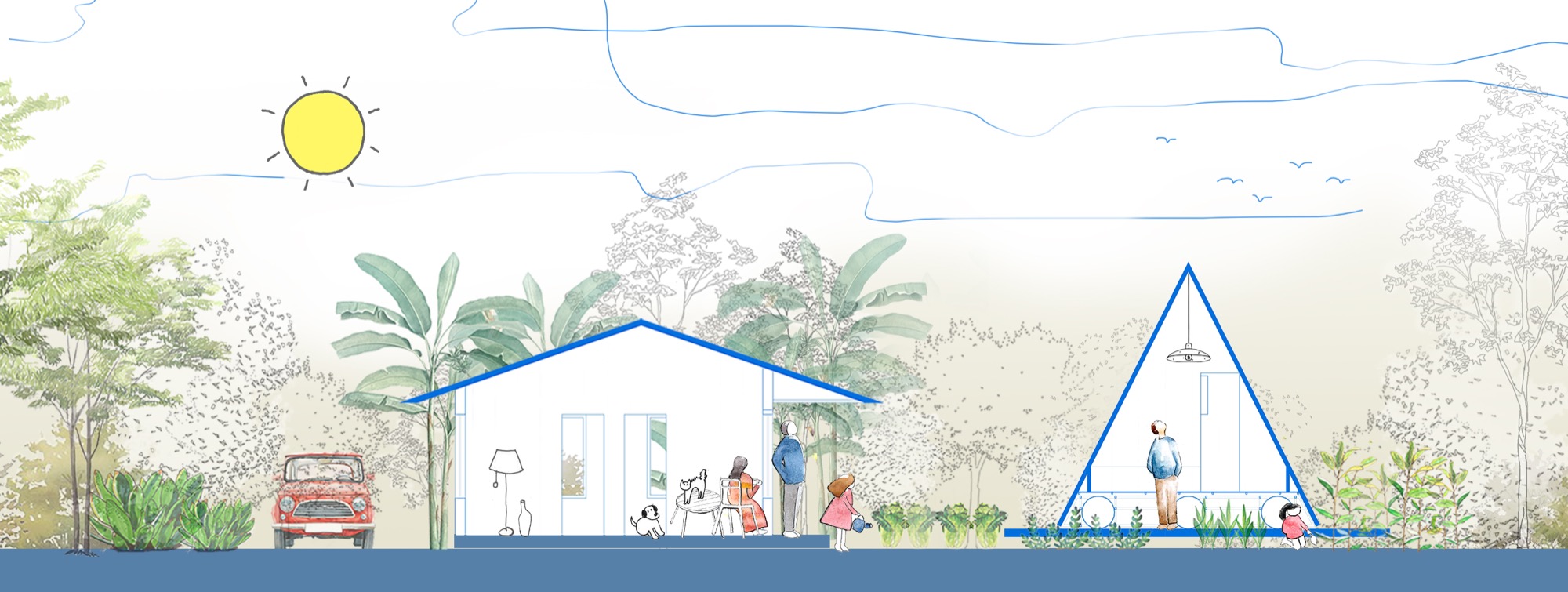
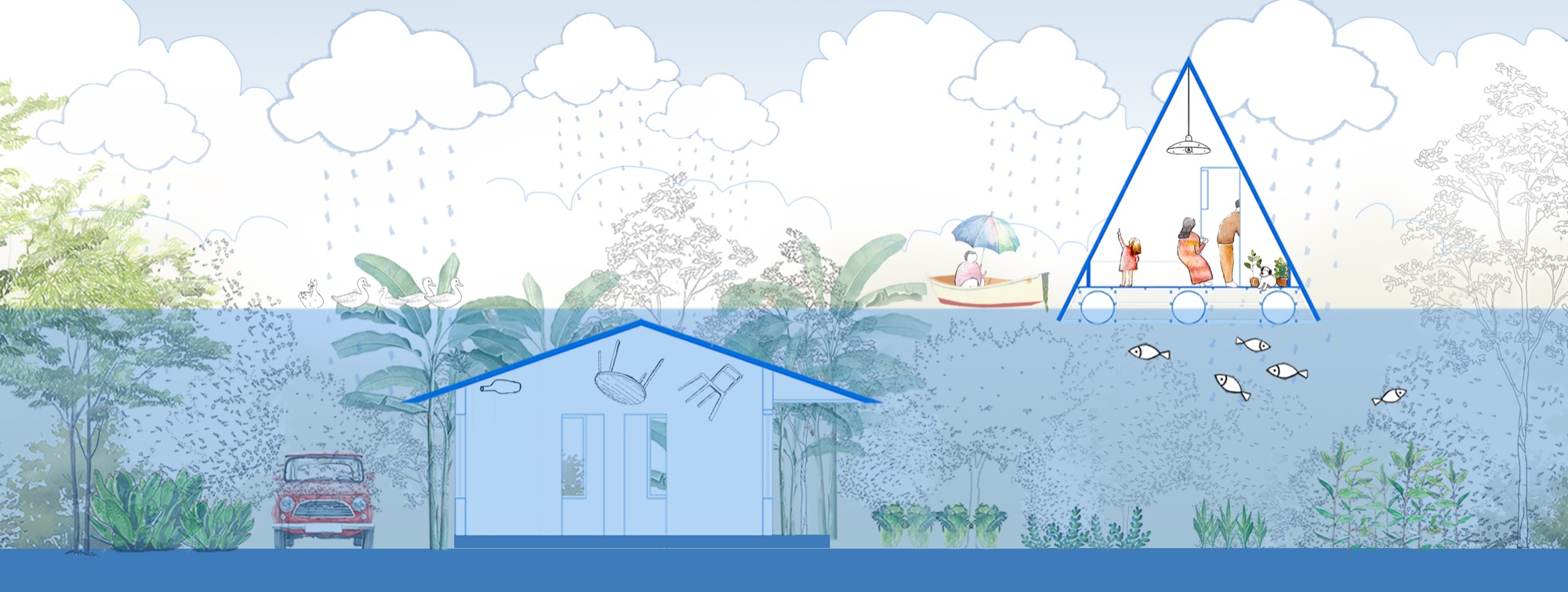
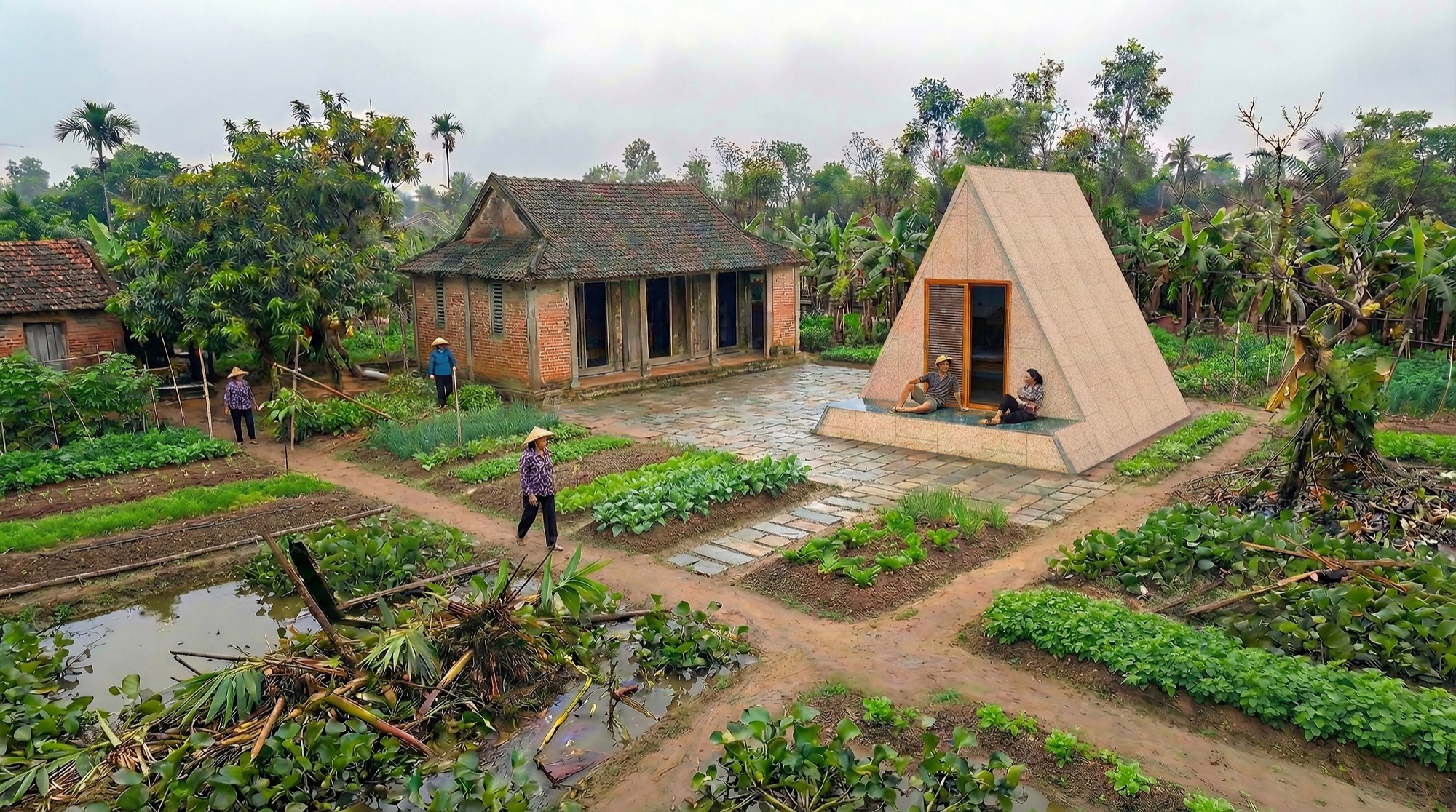
We designed the Floating Prefab House to operate in two distinct seasonal conditions. In the dry season, it functions like a small garden bungalow—a weekend retreat for family members returning home. In this state, it rests on a stable foundation and behaves like a conventional structure. In the rainy season, everything changes. Water levels can rise quickly and dramatically. We must calculate buoyancy precisely, implement anchoring systems to prevent drifting, and integrate what we call the “Five Essential Survival Factors.”
The most technically challenging moment is the transition: when the house lifts from the ground as water rises, and then, 7 to 10 days later, returns exactly to its original position as water recedes. This required careful engineering to ensure stability, alignment, and long-term reliability over repeated flood cycles.
How did collaboration with Nha Xanh and the 5G Construction system influence affordability and scalability?
The 5G Construction Solution is our proprietary system. Once it proved more optimized than conventional brick-and-mortar methods, we introduced it to the market through partnerships with reputable contractors, forming subsidiary companies specialized in both 5G and traditional construction. By managing these entities directly, we maintain control over costs, R&D, and product refinement. Establishing subsidiaries across different provinces allows us to scale the Floating Prefab House efficiently and respond quickly to local demand.
The model has been selected for a 2025 key program under the Department of Science and Technology of Ho Chi Minh City in Vietnam, which further supports its implementation and expansion.
How does the design support emotional and cultural continuity inspired by Vietnamese family life?
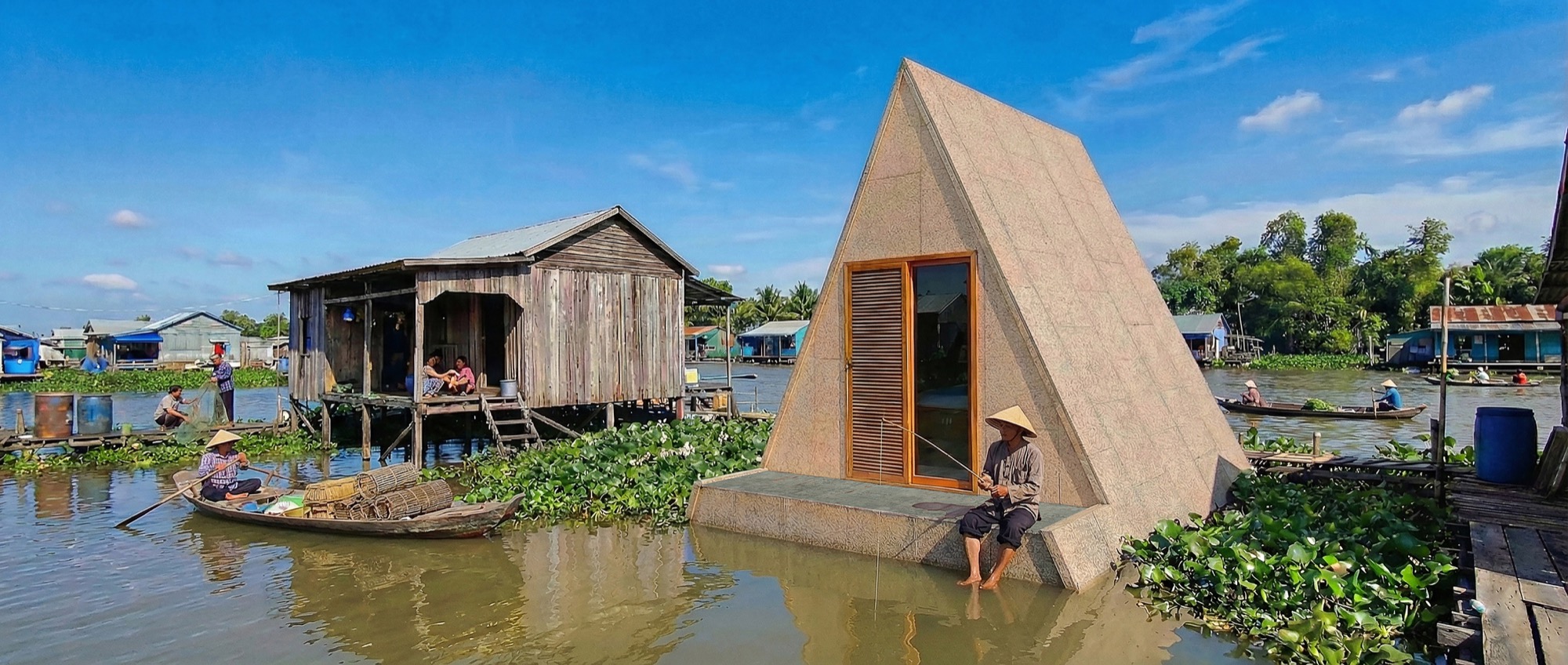
We studied the lifestyle of the Mekong Delta, where people live with seasonal floods for three to four months every year. Over generations, they have developed practical knowledge and cultural habits that allow them to coexist with water.
However, many Central and Northern regions do not share this experience. As climate change intensifies, these areas are now facing severe floods without the same level of preparedness.
The Floating Prefab House draws inspiration from the Delta’s adaptive culture and applies those lessons to other regions. It is not only a technical solution but also a cultural translation – bridging traditional flood wisdom with contemporary prefabrication technology.
How do autonomous systems like septic, solar, and water storage align with a vision of self-sufficiency?
Flooding in Vietnam typically isolates families for 7 to 10 days at a time. We designed the house to function autonomously during that period. We identified five essential survival factors: food, sleep, sanitation, electricity, and water.
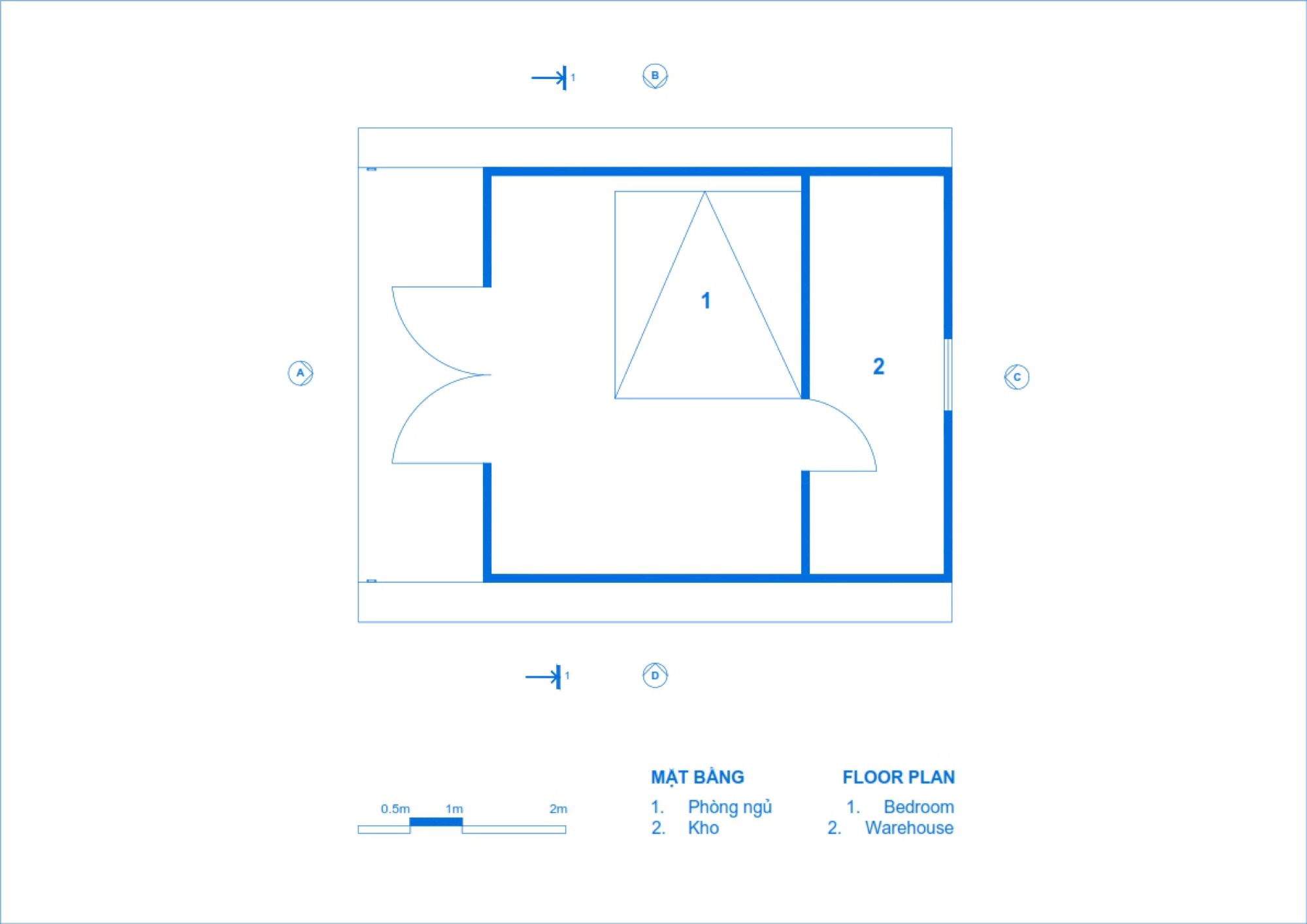
Food is secured through moisture-proof dry storage and an independent gas stove for cooking without electricity. Sleep is ensured with a comfortable bed for two, expandable to accommodate up to eight people in emergencies. The septic system floats with the house, maintaining hygiene and environmental safety. Electricity is generated through two solar panels paired with backup batteries to power essential devices. Water is stored in a 220-liter clean water reserve tank.
The goal is not luxury, but resilience – ensuring a family can maintain dignity and basic comfort during temporary isolation.
What key factors ensured durability and ease of maintenance, and how does this differ from traditional flood-resistant designs?
The house uses 5G panels coated with AZ100 aluminum-zinc alloy, with a lifespan of approximately 30 years under normal conditions. Within the 5G system, the panels are protected on both sides, reducing direct environmental exposure and extending durability close to that of traditional brick houses.
When maintenance is required, individual panels can be replaced without dismantling the entire structure. This modular repairability is a major advantage. Compared to other flood-resilient solutions, our approach occupies a middle ground. Reinforced concrete multi-story homes are durable but financially inaccessible for most residents. Temporary shelters are affordable but uncomfortable and often unused during dry seasons.
At approximately 250 million VND (around $10,000 USD) for 24 square meters, including a bedroom, bathroom, veranda, kitchenette, and thermal insulation, the Floating Prefab House offers year-round comfort at an attainable cost.
How might this project evolve for other regions, and what lessons guide future climate-responsive models?
The model is currently applicable across flood-prone provinces in Vietnam. After establishing a strong domestic presence, we plan to introduce it to other Southeast Asian countries with similar environmental conditions within the next two to three years. For regions with different climates, further adaptation and research will be necessary.
One important lesson we learned is to move away from the charity-based model. Donation-driven housing solutions often have limited scale and long-term impact.

Instead, by creating a viable business model at a reasonable price point, we empower residents to proactively invest in their own protection. At around $10,000 USD, the model is within reach for a large portion of the population.
If widely implemented, this approach could significantly reduce flood-related casualties and losses, easing the burden on government and humanitarian systems and allowing resources to focus on long-term recovery and rebuilding.

Article Credit
Text: Kanda Kobayashi
Photo: Creative Architects (CTA) / @cta_creativearchitects