
Now Reading: Cardboard screens and cork floors reframe modernism at London Golden Lane
- 01
Cardboard screens and cork floors reframe modernism at London Golden Lane


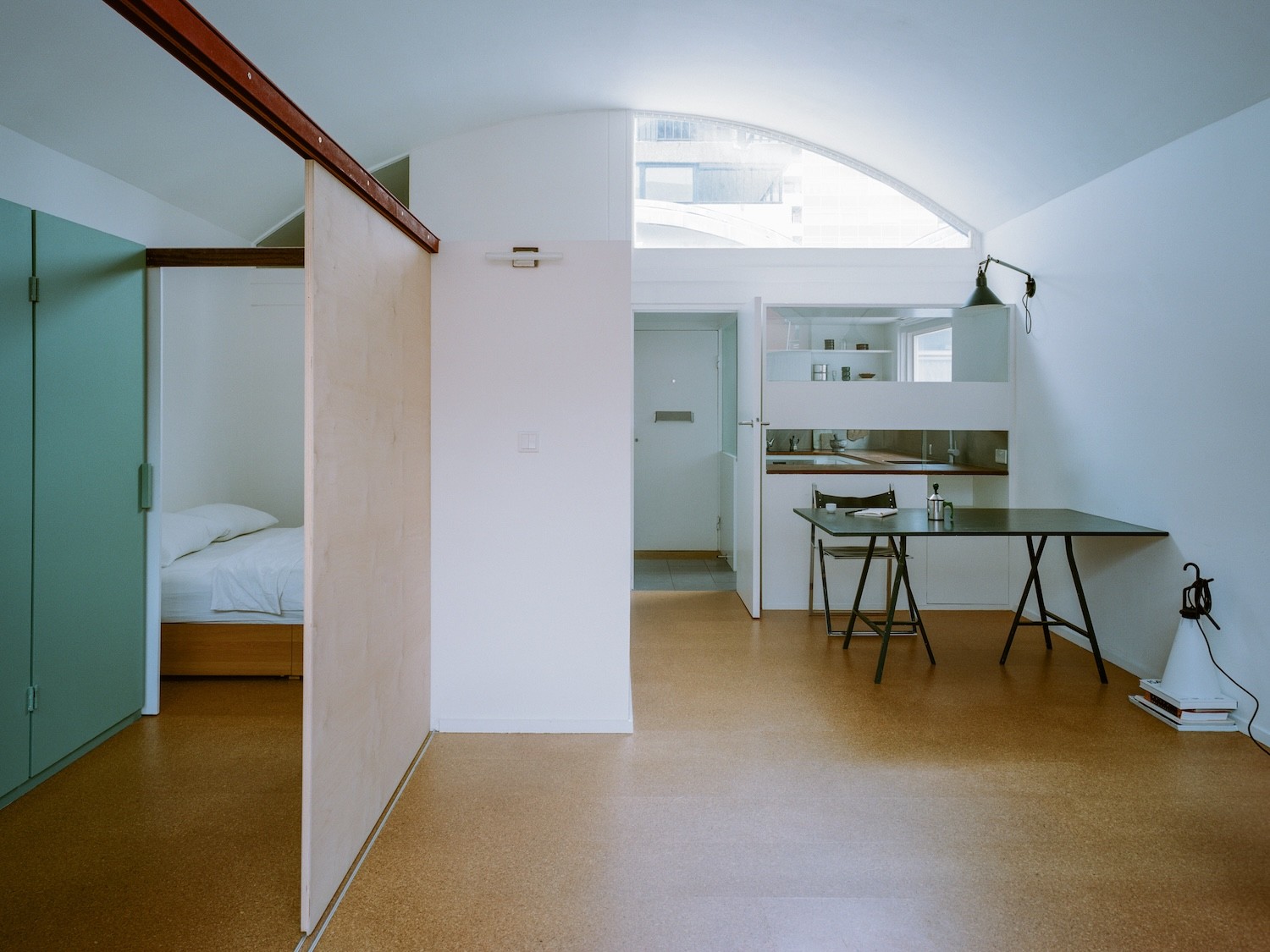
In Crescent House, a minimalist apartment within London’s Golden Lane Estate, sustainability is not treated as an add on. It becomes the project’s most legible aesthetic, expressed through materials that feel almost disarmingly ordinary: cork underfoot, cardboard in motion, and a thermal strategy designed to upgrade comfort while keeping the original modernist character intact.
The first impression is sensory. Cork flooring brings warmth without softening the architecture’s clarity, offering natural insulation, durability, and a quieter acoustic atmosphere. Against the apartment’s concrete vaults, the cork reads as a deliberate counterpoint: tactile and domestic, yet visually restrained enough to sit comfortably within a modernist language.

The apartment’s most memorable element is a set of honeycomb cardboard sliding partitions. Light in weight yet visually present, these screens transform a more fixed three zone arrangement into a space that can expand, contract, and recompose throughout the day. Their rhythm recalls Japanese shoji in spirit, not as imitation, but as a shared belief in soft boundaries and calibrated privacy. As light moves across the honeycomb structure, shadows become part of the interior’s daily choreography.


In the kitchen, the sustainability agenda becomes quietly technical. The designer specifies Ecoboard in place of conventional MDF for cabinetry, keeping joinery lines crisp and surfaces calm. The result maintains the estate’s modernist preference for clarity and function, while updating the space with a material choice that signals responsibility without turning the kitchen into a manifesto.

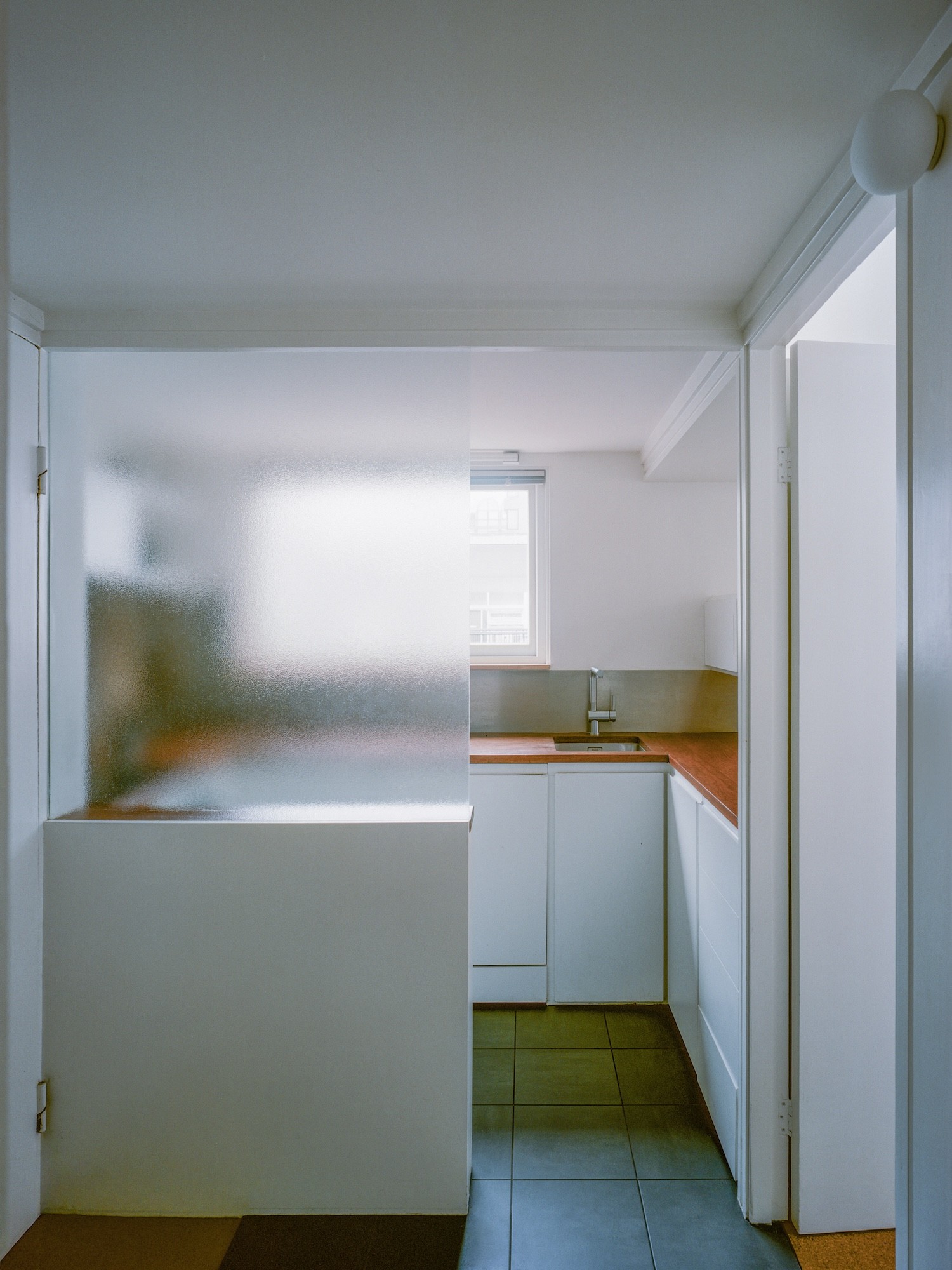
A key achievement of Crescent House lies in performance improvements that do not announce themselves. Internal insulation is applied with precision to address typical 1960s shortcomings while avoiding visual disruption to the apartment’s defining elements. The approach anticipates further refinement through vacuum glazing, suggesting a phased retrofit strategy where comfort, energy performance, and heritage constraints are treated as a single design problem.


Crescent House demonstrates how sustainable retrofitting can be more than compliance. By letting cork, cardboard, and responsible cabinetry do the talking, the project proposes a compelling model for modernist preservation in the climate era: quieter, smarter, and unexpectedly charismatic.


Project Credit
Project name: Crescent House
City: United Kingdom, London
Designer: TYPE / @type_architects
Completed: 2025
Photo: Lorenzo Zandri