Now Reading: Inside a nineteenth century barn, a new domestic landscape emerges
- 01
Inside a nineteenth century barn, a new domestic landscape emerges

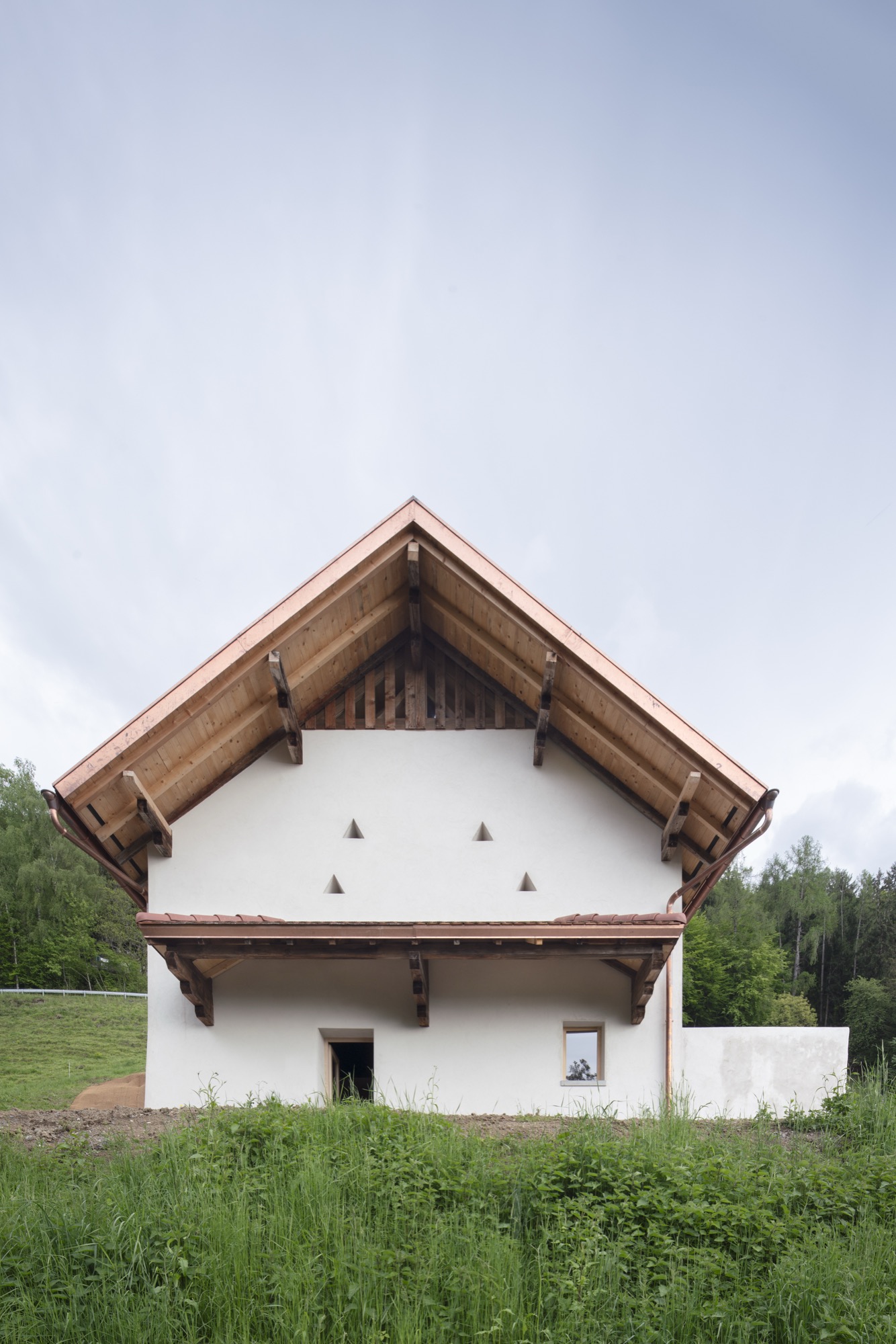

Set within an agricultural zone governed by strict cantonal regulations, this renovation transforms a nineteenth century barn into a contemporary dwelling while maintaining the integrity of its original character. The project begins with a careful reading of the existing structure, where every intervention is guided by the necessity to preserve both architectural identity and its relationship to the surrounding landscape.

Originally conceived as a working barn, the building stored hay on the upper level while the ground floor served as temporary shelter for the farmer. Its steeply pitched roof, designed to shed snow efficiently, and its deep eaves, which shielded the façade from harsh weather, remain defining elements of the structure. Triangular ventilation openings, once essential for preserving hay, have been retained and subtly reinterpreted through glazing, allowing light to enter while preserving their original purpose and rhythm.


The renovation proceeds through a process of conservation rather than transformation. The entire roof structure was dismantled, insulated, waterproofed, and carefully reassembled using its original tiles dating back to 1913. Existing openings were preserved in both scale and proportion, now fitted with glass to accommodate contemporary living conditions. On the upper floor, a single large aperture introduces natural light, while horizontal timber cladding ensures continuity with the building’s agricultural language.


At the core of the project lies a deliberate spatial strategy: to maintain the raw, volumetric presence of the barn. Instead of subdividing the interior, a self contained box of glass and timber is inserted within the existing envelope. This intervention houses the primary living functions while leaving the surrounding volume legible, allowing inhabitants to experience the spatial generosity and material memory of the original structure.


Material reuse and environmental performance play a central role in the design. Timber salvaged from the barn has been repurposed to form the kitchen and interior doors, reinforcing a continuity between past and present. Insulating lime render is applied to both interior and exterior surfaces, while the upper level benefits from blown mineral wool insulation concealed within the wall and ceiling assemblies. Heating and hot water are supplied by an air to water heat pump, complemented by a radiant steel fireplace that anchors the living space.


Rather than imposing a new identity, the project reveals the latent qualities of the existing barn. It offers a quiet yet precise response to the question of how rural heritage can be inhabited today, where preservation is not an act of nostalgia but a framework for contemporary life.


Project Credit
Location: alps / Switzerland
Design firm: Ralph Germann architectes SA / @ralphgermann
Year: 2025
Photo: Nicolas Sedlatchek / @nicolassed
Living space: 96 m2
Year of construction of original building: Around 1890