Now Reading: A Tea room for one: Yachō shrinks the Chashitsu to its purest form
- 01
A Tea room for one: Yachō shrinks the Chashitsu to its purest form

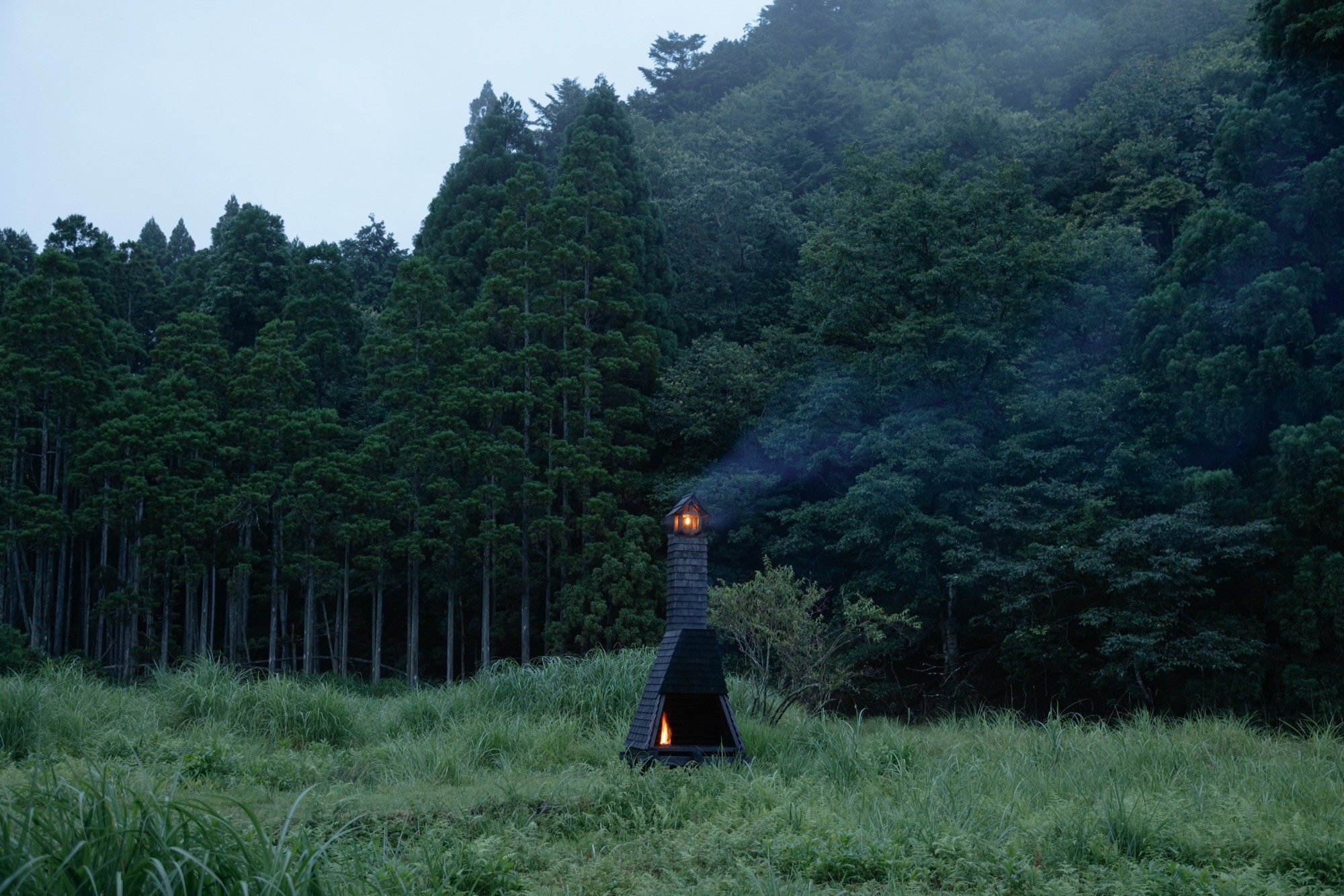

In the northern mountains of Kyoto, 2m26 and Onomiau distill the Japanese tea ritual into a compact pavilion commissioned by Villa Kujoyama, where shadow, candlelight, and a single chimney choreograph a radically minimal chashitsu.
Tucked into Kyoto’s northern mountains, Yachō is a contemporary tea room by the studios 2m26 and Onomiau. The project was commissioned by Villa Kujoyama, a cultural satellite of the French Institute in Japan, with a brief that asked for restraint rather than spectacle: a minimalist space that acknowledges the long tradition of tea practice and the enduring principles associated with Sen no Rikyū.

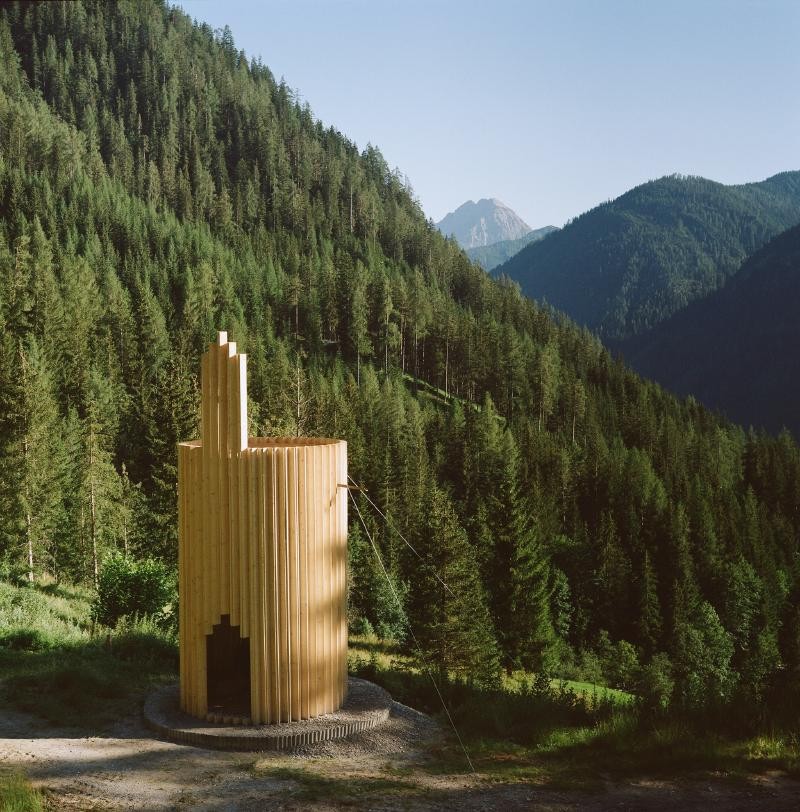
Yachō answers that lineage not through quotation, but through calibration. It compresses the familiar grammar of the chashitsu into a pavilion where every element carries weight, and where the smallest shifts in light or sound feel amplified. The first thing the architecture declares is a long, vertical chimney. Less a technical appendage than a compositional anchor, it becomes an instrument for shaping mood. It draws the eye upward while quietly pulling in what the tea room depends on: shadow, silence, and warmth. In a practice where attention is trained on the smallest actions, the chimney reads as a deliberate slowing device. It makes the presence of fire legible, but it also frames absence, turning the void around the flame into part of the experience.

The pavilion is designed for individual use and remains faithful to tatami proportion, yet it pushes the idea of minimum space to an almost implausible edge. At just 95.5 by 64 centimeters, the tea room becomes a concentrated chamber where posture, breath, and movement are inevitably precise. This is not smallness as novelty. It is compactness as discipline, a way to heighten the ritual’s core purpose: to focus the mind, refine perception, and make time feel tangible.

Yachō stages time through two stacked elements. An upper lantern, lit by candlelight, turns the flicker of a flame into a metronome. Light becomes unstable in the most human way, never fully repeatable, never fully controlled. Below, a fire pit is reserved for boiling water, returning the preparation of tea to the elemental relationship between heat and patience. Together, lantern and hearth create a vertical ritual axis that links seeing and making, contemplation and action.


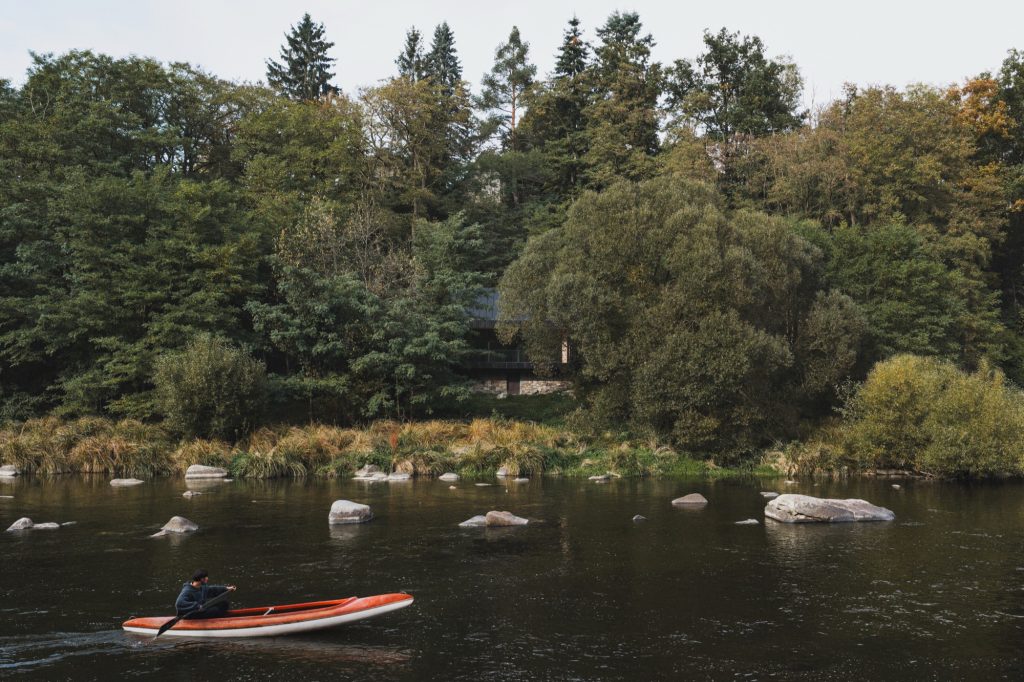
On the exterior, burnt cedar shingles clad the pavilion, extending the project’s central theme beyond the room itself. The material reads as protection and as trace, a surface that carries the memory of fire while resisting it, and a texture that sits naturally in a mountainous landscape. In this sense, Yachō holds a tight continuity between inside and outside. The ritual does not begin at the threshold, it begins in the approach, where material, scent, and darkness prepare the body for a slower pace.


Yachō ultimately functions as a tribute to the emotional depth that can be carried by unconventional architectural form, when that form is handled with restraint. It does not attempt to modernize the tea tradition through overt innovation. Instead, it edits the experience down to a few decisive conditions: a measured footprint, a vertical spine, a candle’s tremor, and the quiet labor of boiling water. In a time when minimalism is often performed as an aesthetic, this tea room treats reduction as a method. The result is a small pavilion that feels less like an object and more like a state of mind, an architecture of attention, built for reflection.
Project Credit
Project name: Le picabie
Location: Japan, Kyoto
Design: 2m26 / @deuxmetresvingtsix, Onomiau / @onomiau
Completed: 2024
Photo: Yuya Miki
More Photos