Now Reading: A super ordinary house, reimagined as three timber towers in Japan
- 01
A super ordinary house, reimagined as three timber towers in Japan

A super ordinary house, reimagined as three timber towers in Japan
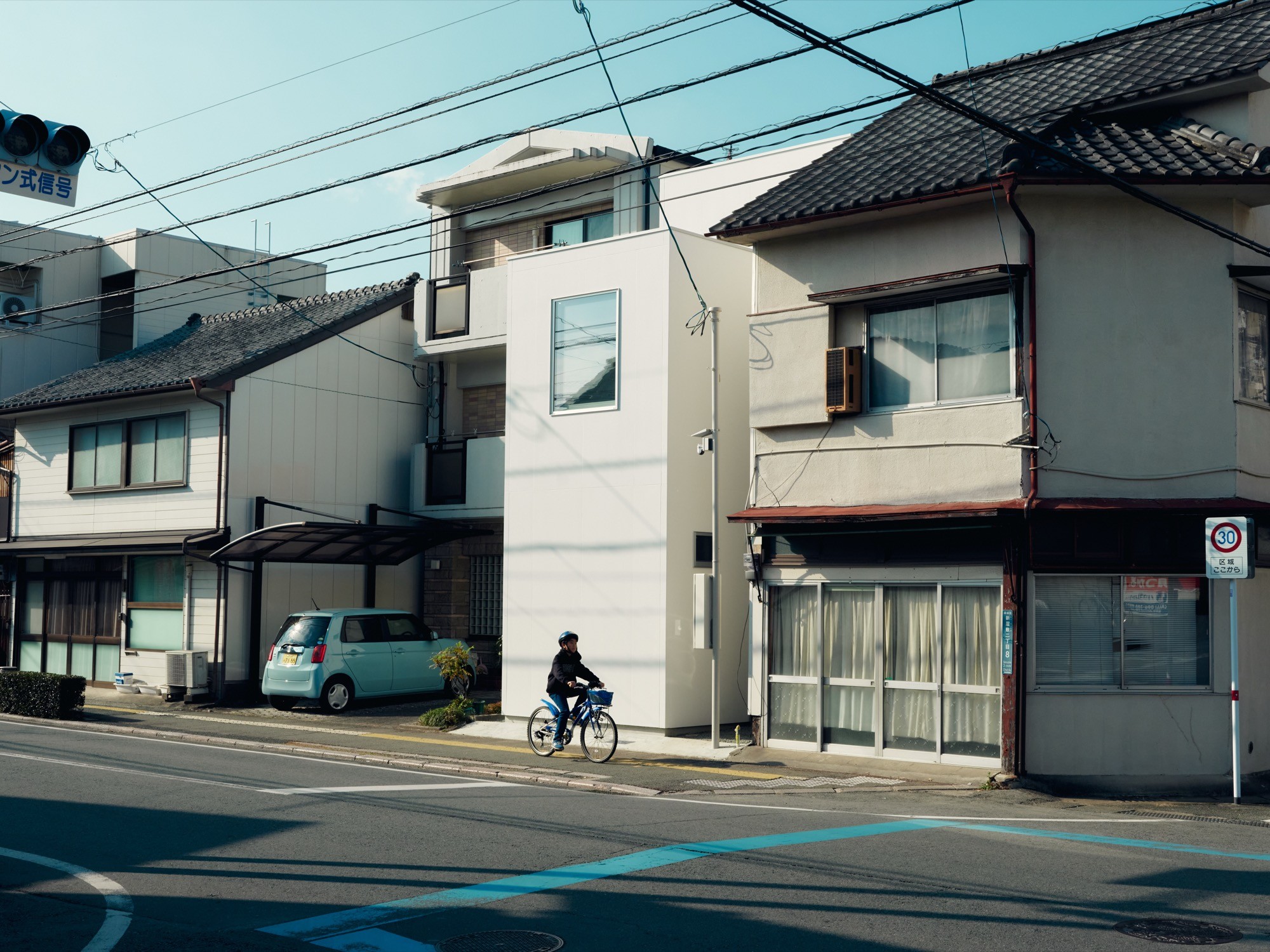
In a moment when architectural culture often gravitates toward novelty and visual complexity, this project chooses another kind of intensity: a quiet excitement rooted in everyday life. Set within a typical Japanese residential neighbourhood, the building responds to a streetscape of modest houses and familiar proportions. Rather than asserting itself as an object, it settles into the existing human scale, drawing strength from the understated domestic character already embedded in the community.


As the design process unfolded, the programme shifted and refined. The outcome is a compact two storey timber structure that supports two modes of living under one roof. Upstairs, a private office and studio create a focused workplace separated from the rhythms of the street. Downstairs, an accessible living unit allows family members to live independently, turning a small footprint into a flexible family infrastructure that can adapt over time.


The ambition was to make architecture that feels honest and super ordinary, not as a retreat from design, but as a deliberate stance. While many contemporary Japanese homes have become increasingly sealed, inward looking, and detached from climate and context, this project works against that tendency. It searches for warmth, permeability, and a new domestic typology that welcomes light, air, and garden views without sacrificing privacy.
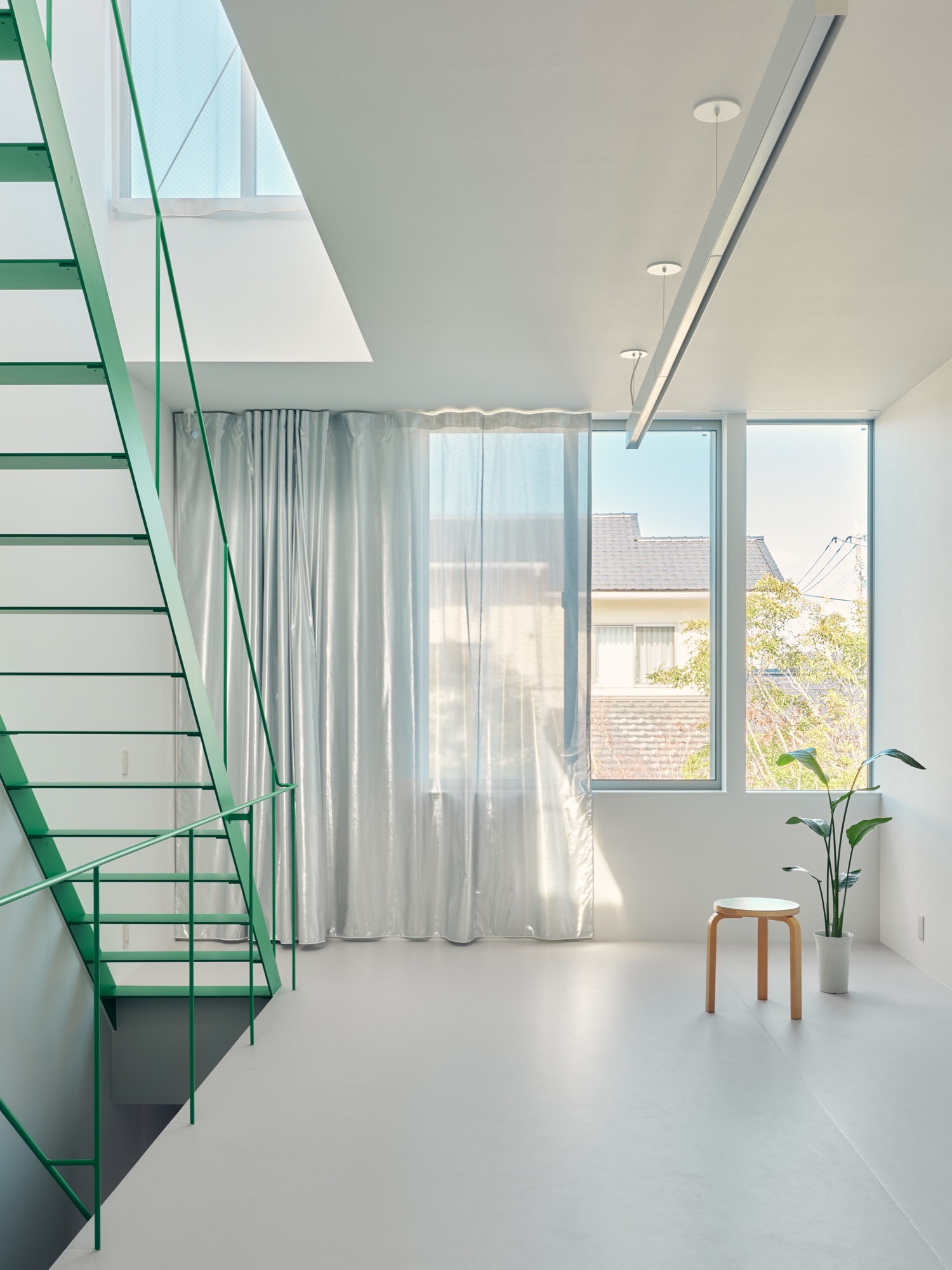
The house embraces the realities of construction. Traditional timber framing sets the structural logic, standard window sizes shape the openings, and fire safety regulations guide the envelope. Within these limits, the project finds room for character through small, precise gestures. Terraces extend daily life outdoors. Skylights pull brightness deep into the interior. Textures shift subtly from one space to another. Hidden doors introduce a sense of discovery, turning the familiar into something gently surprising.


Instead of forming a single continuous volume, the home is organised as three independent towers, each defined by function and mood. One tower is dedicated to privacy and performance, housing a soundproof studio alongside a bathroom to support long hours of making. Another is designed for calm, containing a study and bedroom where quietness becomes a spatial quality. The third acts as an observatory for everyday life, with a living room and meeting space positioned to look out over a lush garden.


Together, these three volumes create a domestic landscape rather than a monolithic house. Between them, light, air, and views circulate. The composition balances openness with separation, connecting the residents to nature while maintaining distinct zones of retreat.


What emerges is a house that does not rely on spectacle to feel contemporary. Its clarity comes from a careful rethinking of ordinary elements: timber, windows, terraces, and rooms tuned to different states of living. By splitting the home into three towers, the project proposes a gentle alternative to the sealed box, offering an architecture that is approachable, breathable, and quietly expressive within the everyday fabric of Japan’s residential streets.

Project Credit
Name: O-Studio
Loaction: Japan, Kumamoto
Design: aki architects / @aki_architects
Completed: 2023
Photo: Kentaro Ito
Related Posts
Previous Post
Next Post
- The timeless elegance of domestic appliances: From the Iconic Braun KF 20 aromaster to the German design ethos

- Emilio Ferro on the light, sound and memory of a place
- At Maniwa, an architect’s family home opens to the neighbourhood
- What bronze remembers of the hand

- Caught in light: Moradavaga’s suspended shoal

- The making of Alex Chinneck’s impossible Dior windows