Now Reading: A 1990s concrete shell rewoven as a village museum
- 01
A 1990s concrete shell rewoven as a village museum


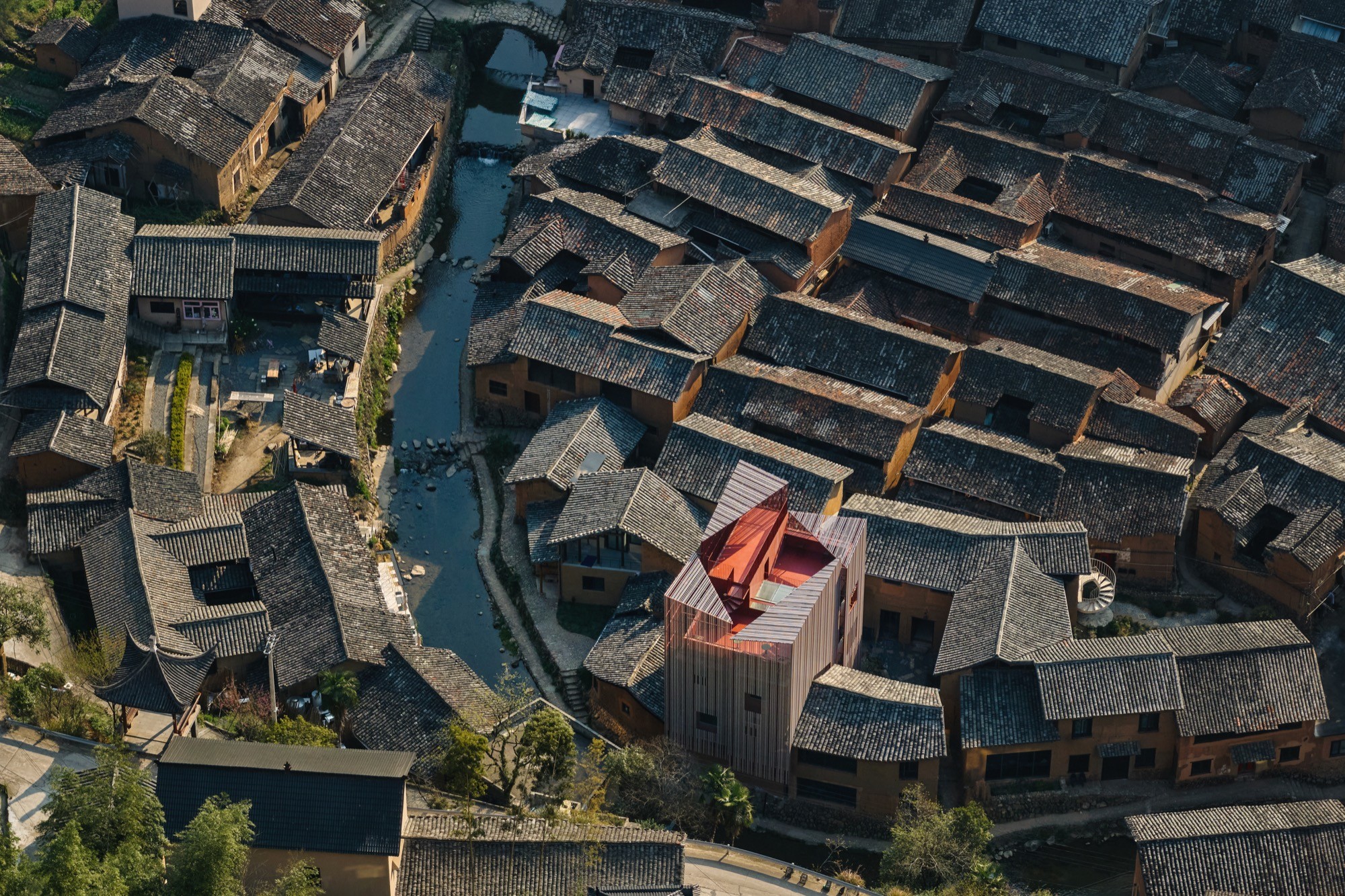
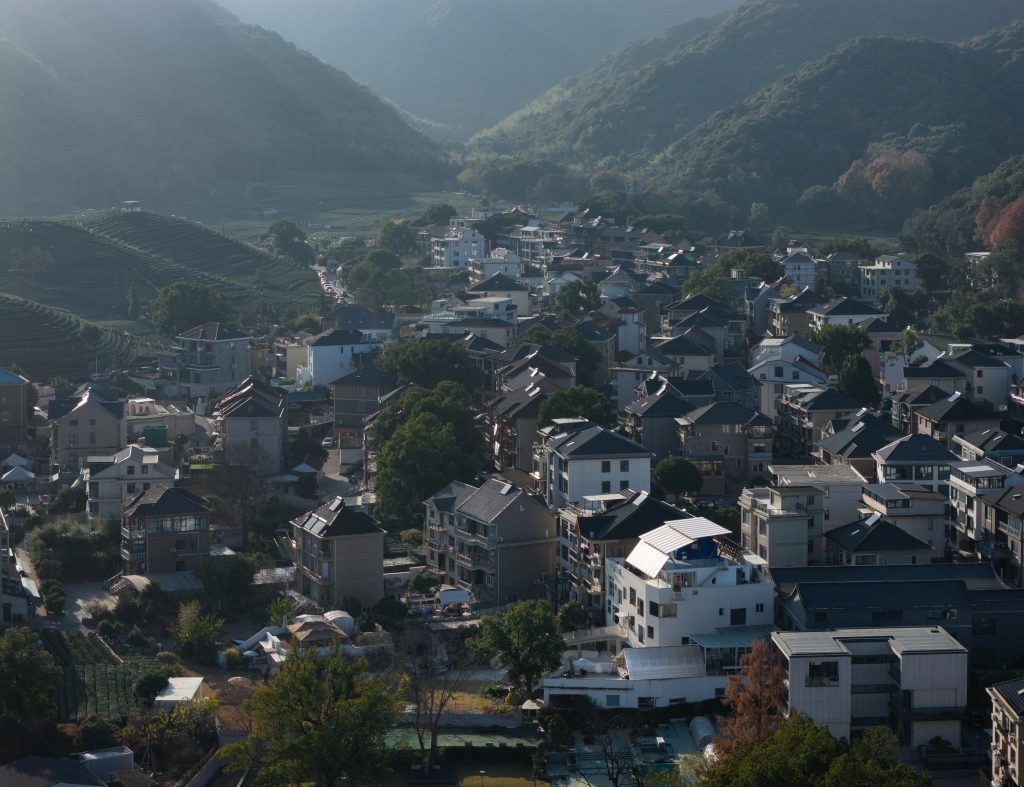
In the centre of Songzhuang Village, a rural settlement shaped by rammed earth houses and low, weathered silhouettes, an abandoned brick and concrete building from the 1990s has been given a second life. For years it sat unused, a blunt object out of sync with the village’s tactile construction culture. The renovation does not attempt to soften that mismatch. Instead, it turns the contrast into the project’s strongest narrative, reframing the existing structure as a contemporary landmark that can hold its ground within a historic landscape.

The architects approached the building as something to be re edited rather than erased. The original mass has been deconstructed into four vertical volumes, stitched together by internal courtyards and wrapped by a sequence of staggered rooftop terraces. Read together, the composition works like a quartet: separate forms set in rhythm, producing voids, overlaps, and pauses that temper the building’s scale and introduce a new kind of spatial cadence into the village.

The shift from a single block into a family of volumes changes how the building meets its surroundings. Courtyards cut into the mass bring air and light into the plan, while the stepped terraces further break down the silhouette, allowing the roofscape to perform as both outdoor room and viewing platform. The architecture becomes dynamic without relying on spectacle. Its movement comes from subtraction, proportion, and the careful placement of open space.
This strategy also sets up a more human relationship to the site. Rather than dominating the village street as one heavy object, the building reads as a cluster of parts, closer in spirit to the incremental logic of rural construction. The result is an intervention that feels contemporary in form, yet grounded in a familiar idea: that architecture can be made from a sequence of smaller presences, connected by shared courtyards and thresholds.


If the massing establishes the building’s new identity, the facade gives it its voice. To evoke the fine artistry of traditional weaving, the exterior is wrapped in a lattice of aluminium square tubes, painted in red and white and applied like a continuous textile skin. The pattern does not repeat with mechanical regularity. Its spacing shifts, density thickens and loosens, and the surface becomes more than an ornament. It reads as a constructed atmosphere, a contemporary interpretation of woven craft translated into structure, shadow, and depth.


As daylight changes, the lattice produces a subtle optical vibration. The building appears to shimmer, its colour and opacity modulating as the sun moves across the village. This colour shifting skin performs a crucial balancing act: it allows the project to remain bold, while giving it an unexpected lightness, making the building feel porous rather than closed, and present without being aggressive.
Inside, the design is restrained, shaped by circulation clarity and a desire to connect the building to its landscape rather than decorate it. A vertical atrium, conceived as a light well, cuts through all three floors and becomes the spatial anchor of the museum. It pulls natural light deep into the plan, opens visual connections between levels, and makes orientation intuitive. Movement becomes legible through layered views, with people visible across floors as silhouettes and figures in a shared volume of light.


Exterior openings have been recalibrated to strengthen the dialogue with the village. Reconfigured windows and larger apertures frame the rural surroundings, turning the landscape into an ever changing backdrop and placing the museum within, rather than above, local life.


The rooftop terrace completes the building’s relationship with place. From above, the village unfolds in a panoramic horizon of fields, rooftops, and earthen textures, allowing visitors to read the context at the scale that shaped it. Custom LOOM furniture, inspired by weaving apparatus, extends the concept into the interior and terrace spaces, reinforcing the project’s central idea: that craft can be translated into contemporary form without becoming nostalgic.


In Songzhuang Village, the project proposes a nuanced model for rural renewal. It accepts the reality of what already exists, amplifies its difference, and then uses architecture to mediate that difference through light, rhythm, and a woven skin that turns a once forgotten structure into a new cultural marker.


Project Credit
Name: The Quartet – Songzhuang Z Museum
Location: China, Zhejiang
Design: TEAM_BLDG
Completed: 2025
Photo: Jonathan Leijonhufvud
More Photos