
Now Reading: How a canal-side homestay turns salvaged materials into architecture.
- 01
How a canal-side homestay turns salvaged materials into architecture.

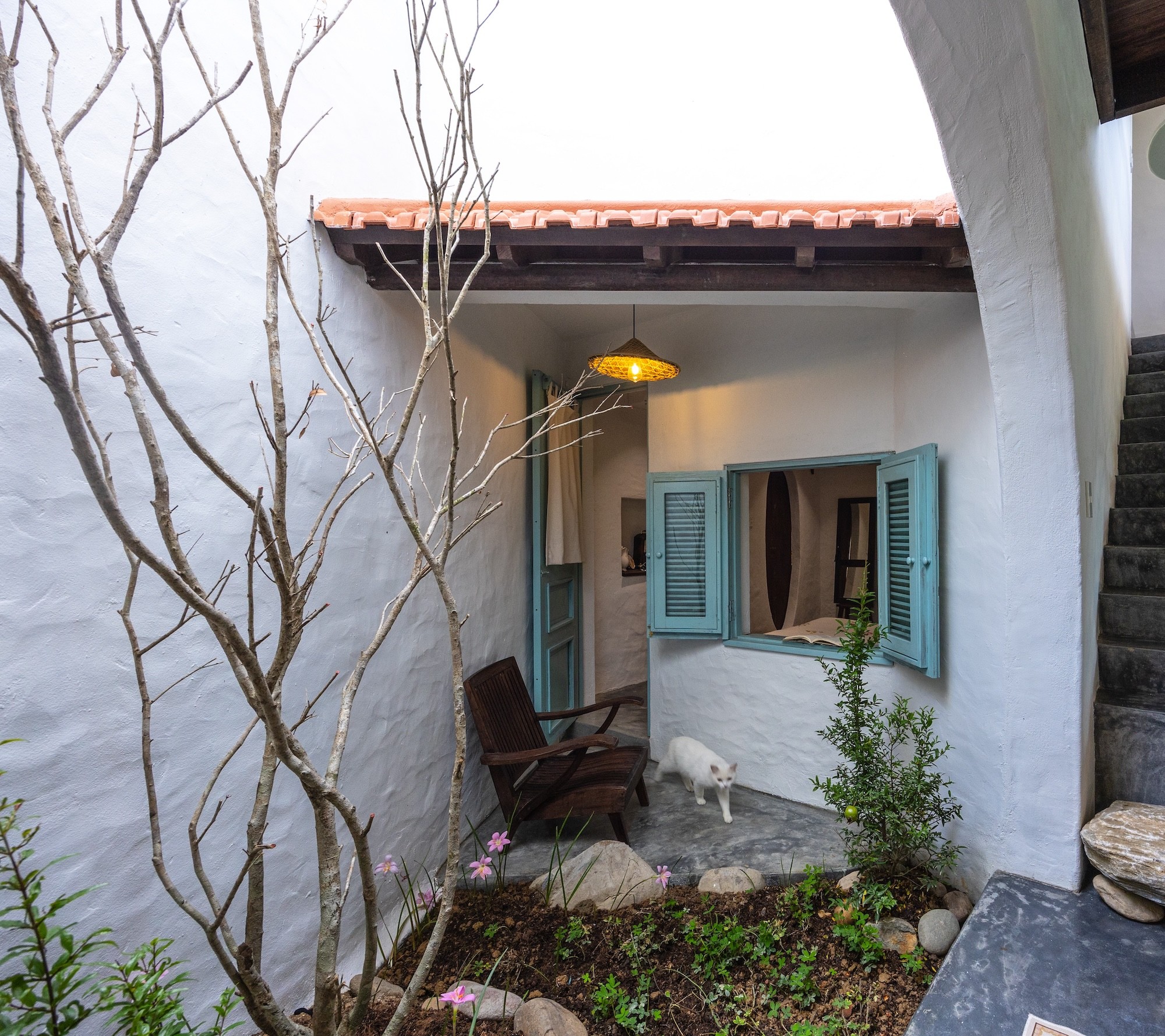

On the outskirts of Huế, central city of Vietnam, this architecture positions itself away from the city’s postcard destinations and toward something more enduring: the cadence of local life. Set beside a narrow canal that branches from the Perfume River, the homestay reads the countryside not as scenery to consume, but as a lived environment shaped by modest routines, seasonal shifts, and vernacular building habits.

FROM DISORDER TO CLARITY, GUIDED BY PLACE
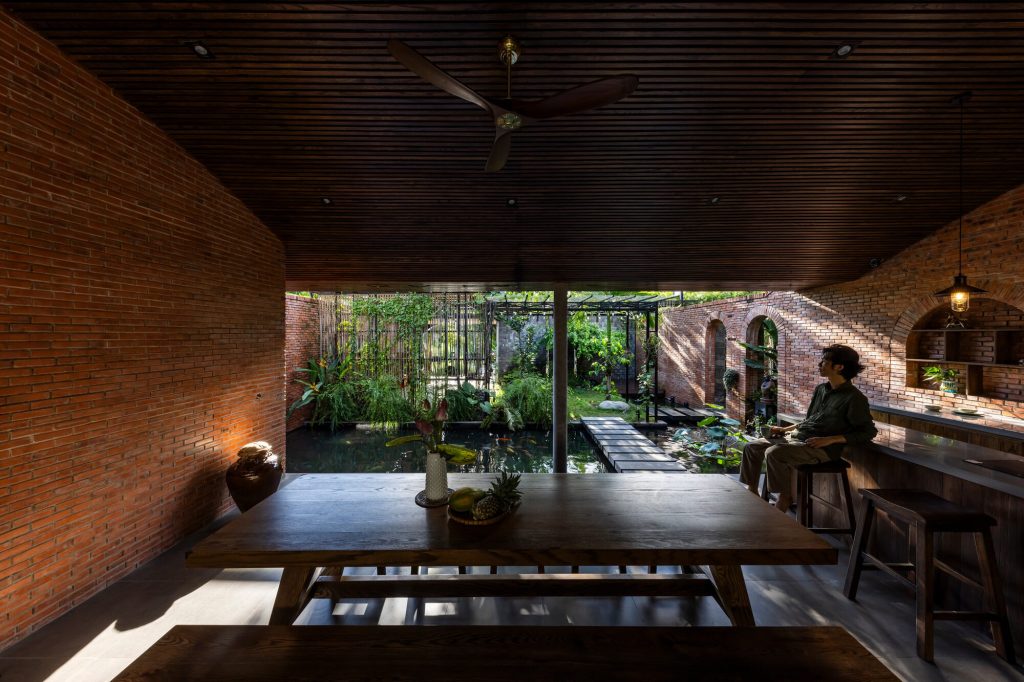
Lemon Cottage begins with a familiar rural condition: aging structures, accumulated objects, and an “almost there” landscape where things feel used, layered, and slightly improvised. The design does not erase this reality. It edits it. Elements from older houses, reclaimed belongings, and the site’s existing atmosphere were retained, then reassembled into a sequence of experiential rooms, each with its own mood and proportion. Gardens and small balconies slip under red clay roof tiles, bringing a sense of intimacy that feels less like hospitality staging and more like a lived-in home that has simply been reawakened.


REUSE AS LANGUAGE, LOCAL MATERIALS AS STRUCTURE
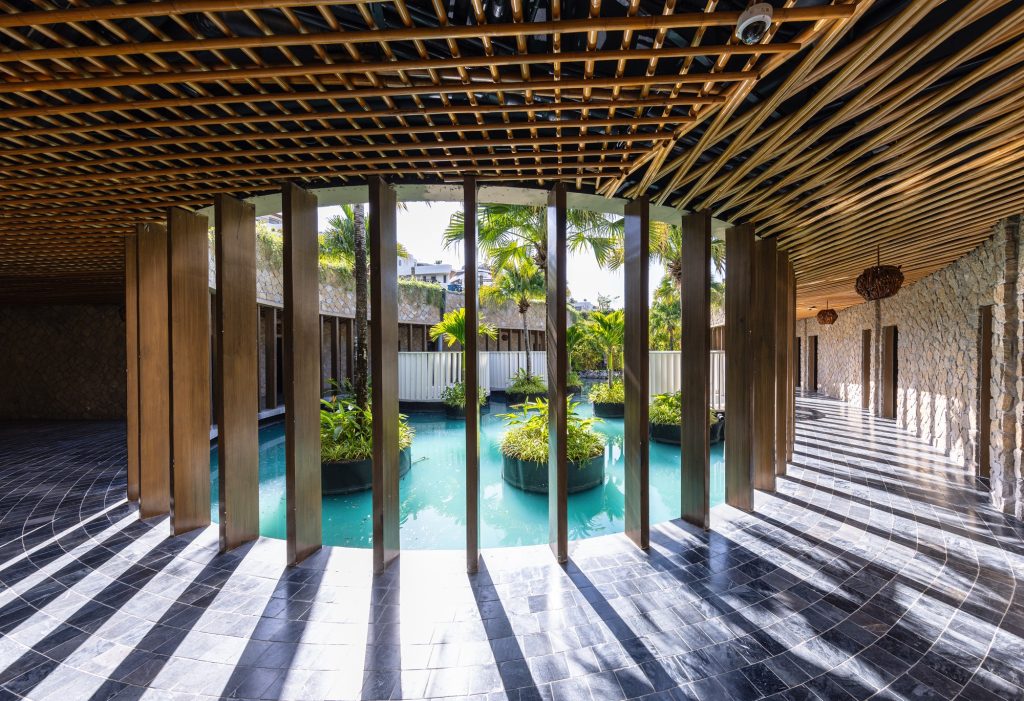
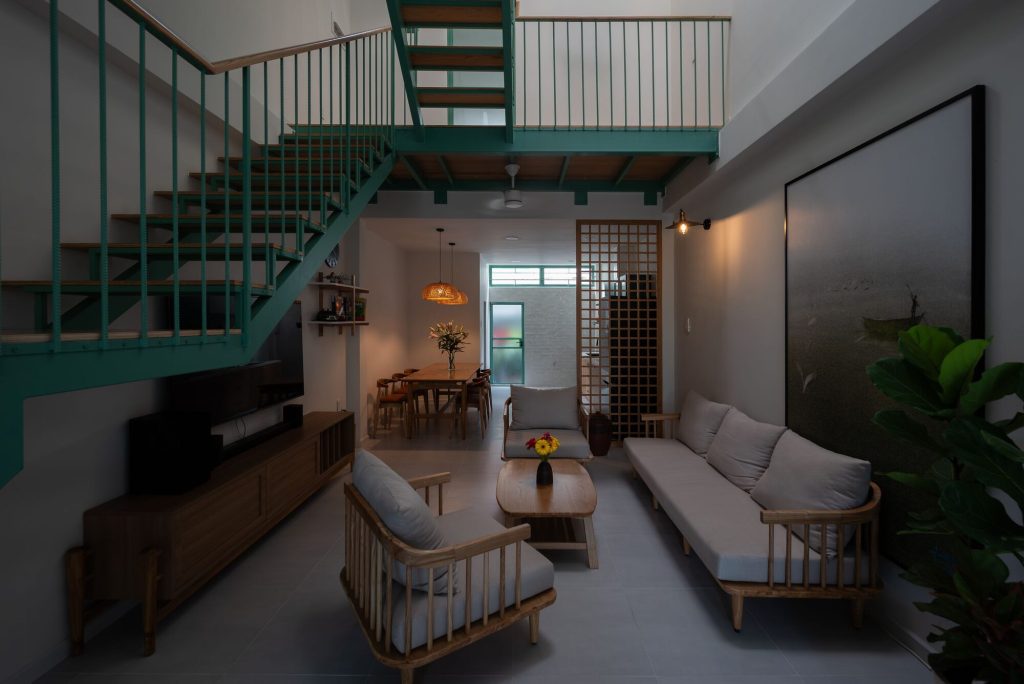
Material choices in Lemon Cottage operate as both construction strategy and narrative device. The palette favours what is local, available, and already carrying time within it: cement-based trowelled floors, reused doors, antiques and second-hand furnishings, reclaimed railway sleepers, and everyday objects sourced from thrift shops. This approach reduces environmental impact, but more importantly, it anchors the architecture in Huế’s material culture, where resourcefulness is not an aesthetic trend but a practical tradition.


A defining gesture comes through the “gan gà” stone fence, built by local craftsmen using Huế’s characteristic stone. More than a boundary, it establishes continuity between building and landscape, making the site feel embedded rather than placed. In this project, sustainability is not expressed through technological display, but through careful selection, reuse, and craft as an extension of local knowledge.

The architecture reflects the countryside’s natural, rustic understatement, yet its ambition is quietly larger. Lemon Cottage proposes preservation as an active act, one that happens through making: through what is kept, what is repaired, and what is reorganised into spatial clarity. The result is a compact retreat with a strong identity, where cultural experience is sensed in thresholds, corners, textures, and the softness of everyday details.


As a contemporary homestay in Huế, Lemon Cottage offers a pragmatic model of sustainable architecture rooted in vernacular intelligence. It is a small project with a precise stance: honouring local beauty not by romanticising it, but by building with it, and building from it.

Project Credit
Name: Lemon Cottage Homestay
Location: Hue city, Vietnam
Design: cac.architects
Completed: 2025
Photo: Trieu Chien
More Photos