Now Reading: Stuart Ian Frost and Gunhild Lien raise a cylinder of spruce in an Alpine forest
- 01
Stuart Ian Frost and Gunhild Lien raise a cylinder of spruce in an Alpine forest

Stuart Ian Frost and Gunhild Lien raise a cylinder of spruce in an Alpine forest
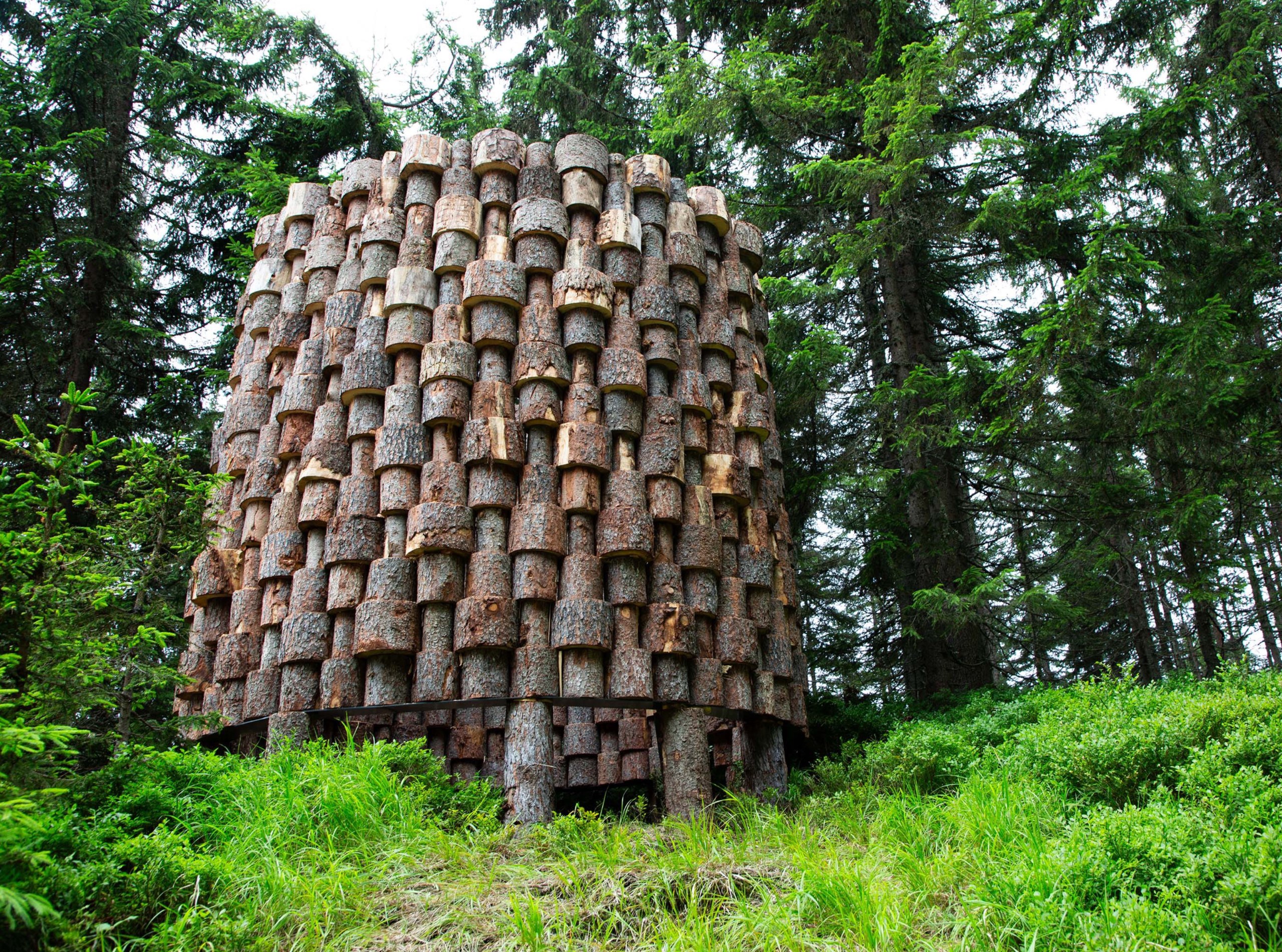
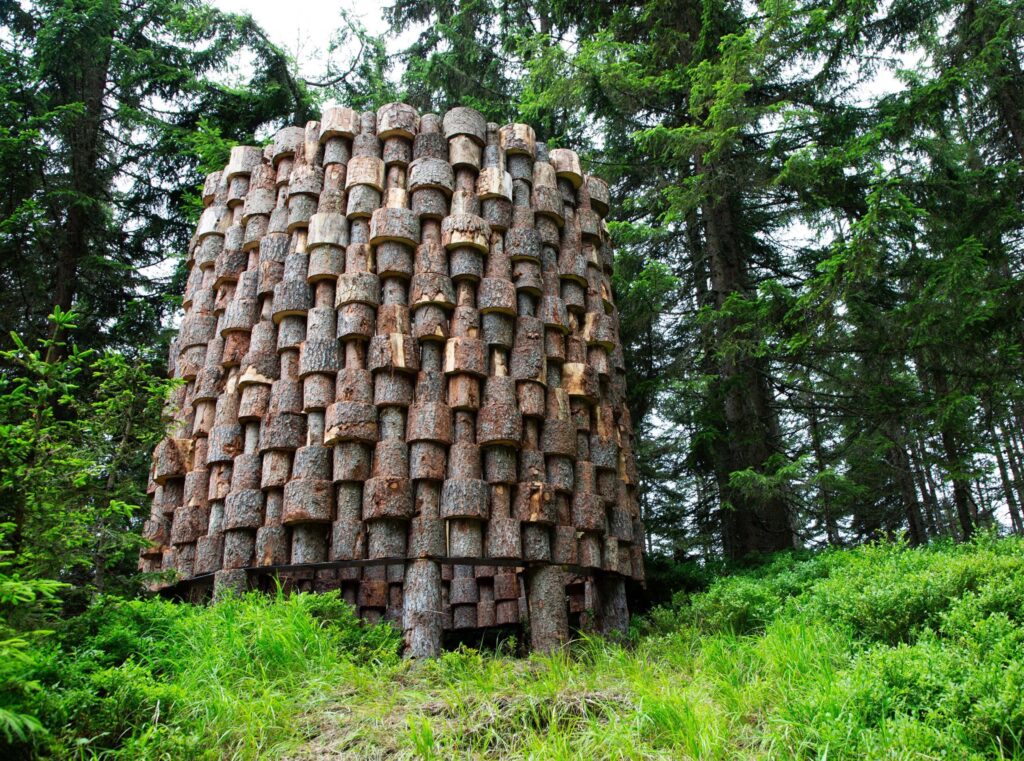
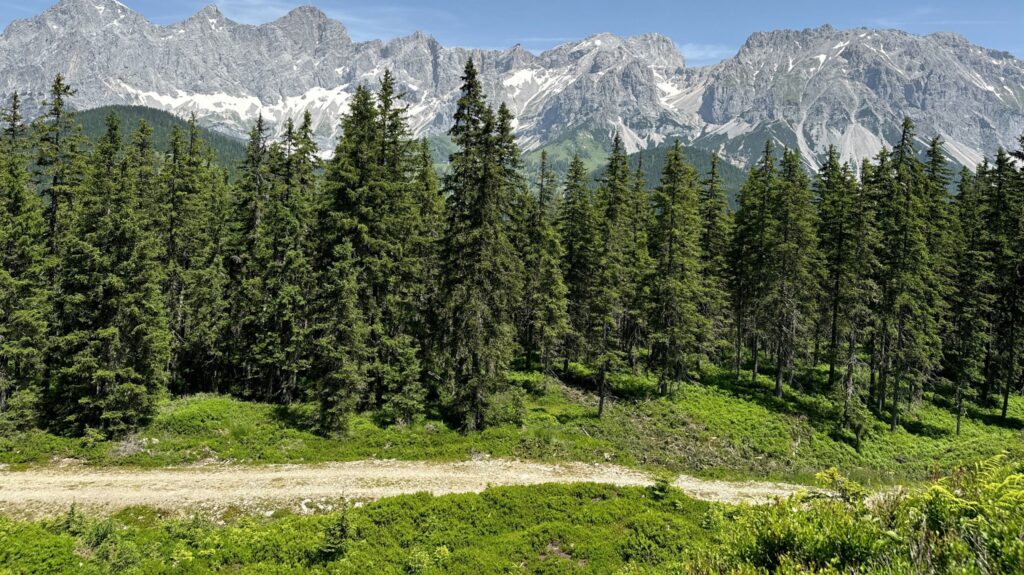
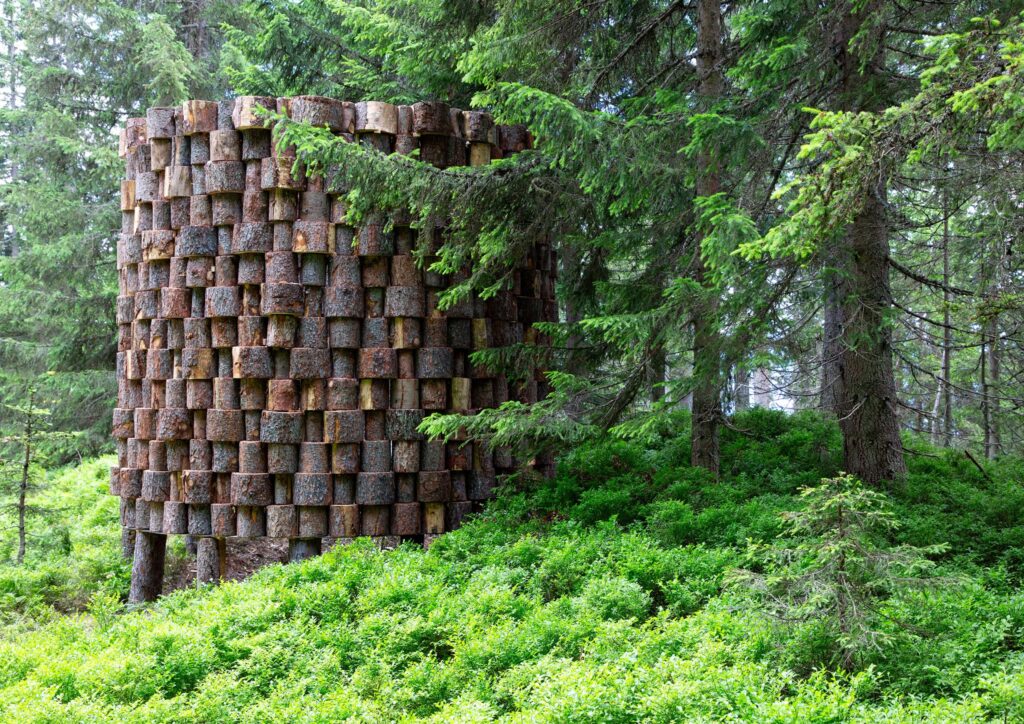
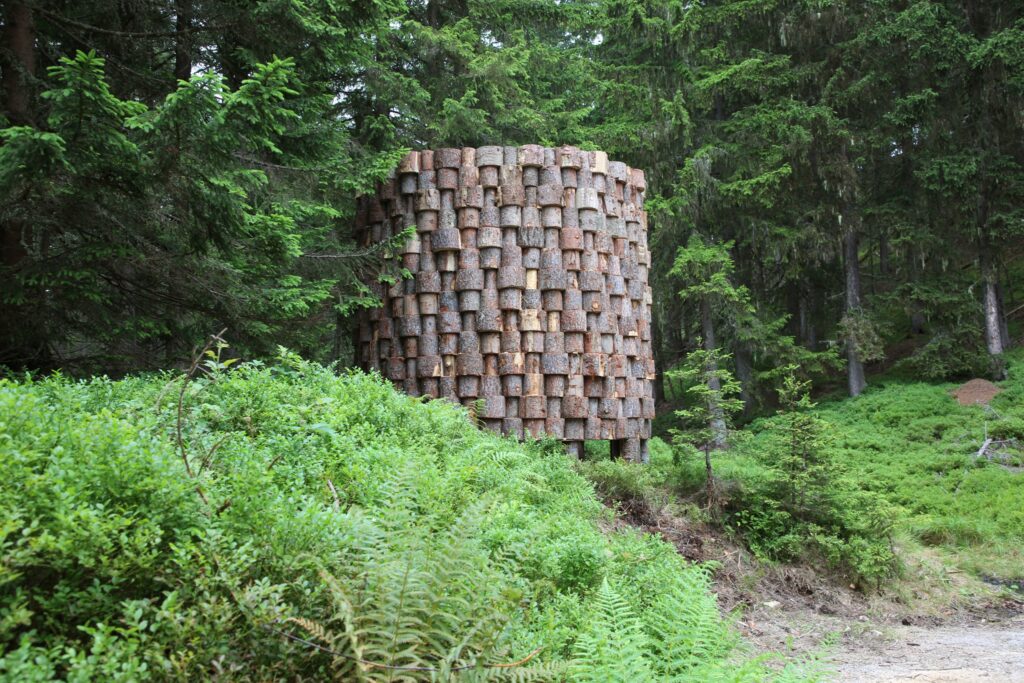
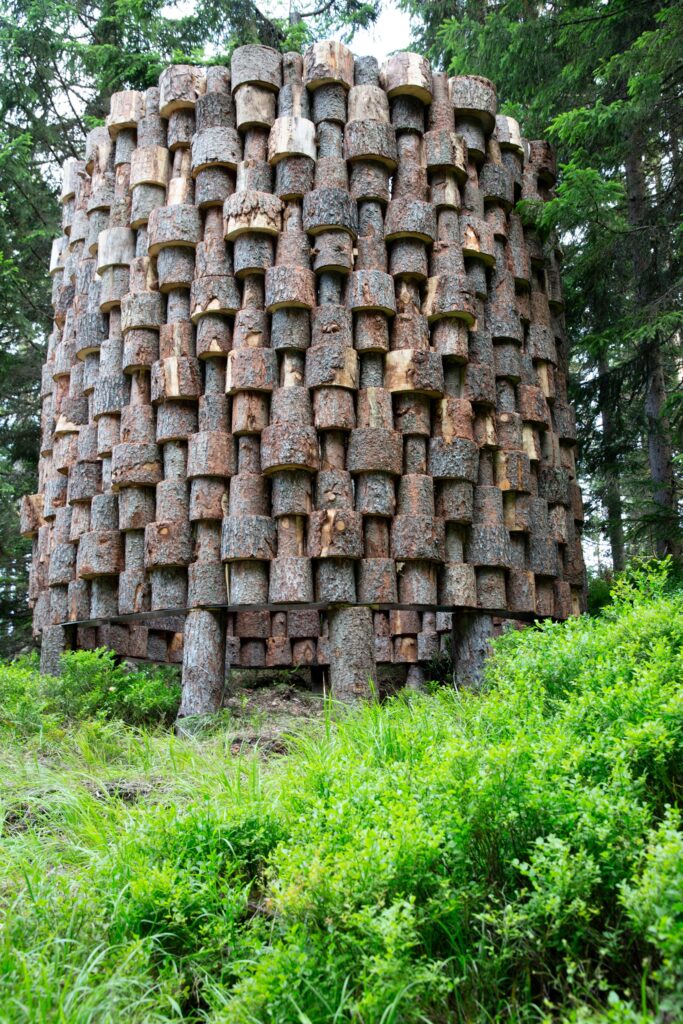
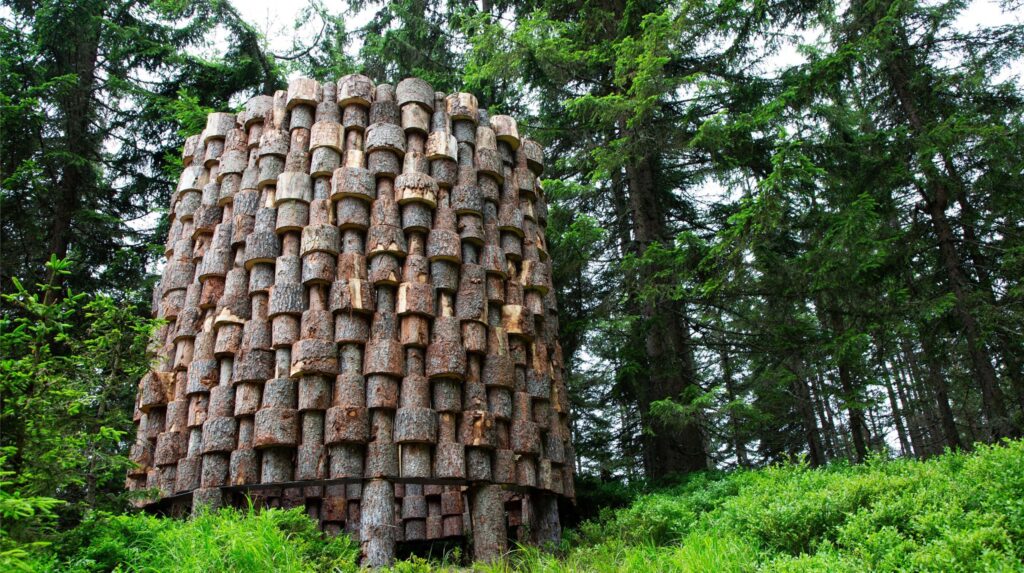
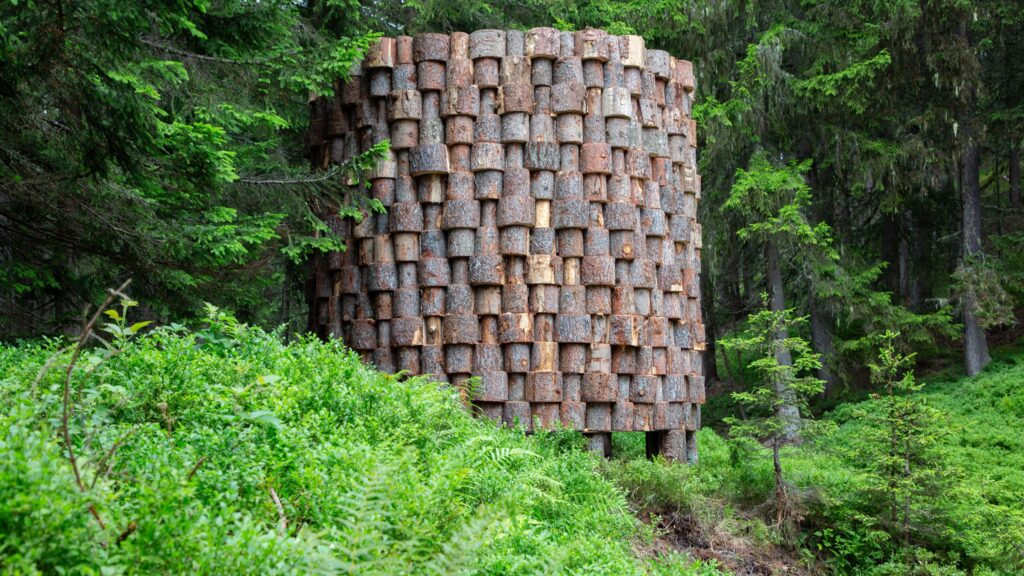
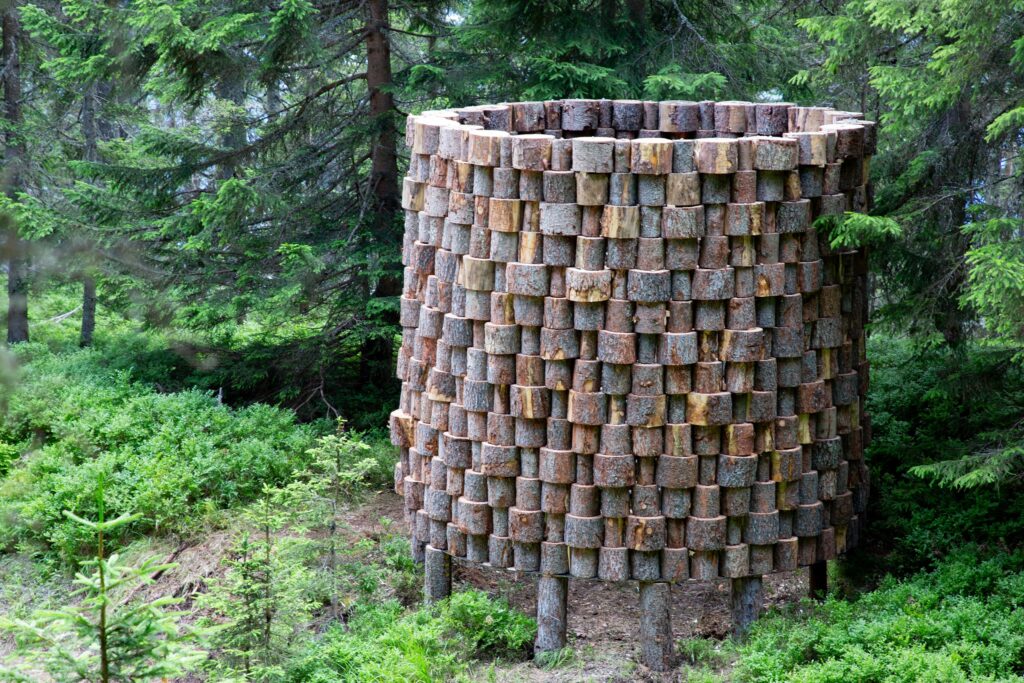
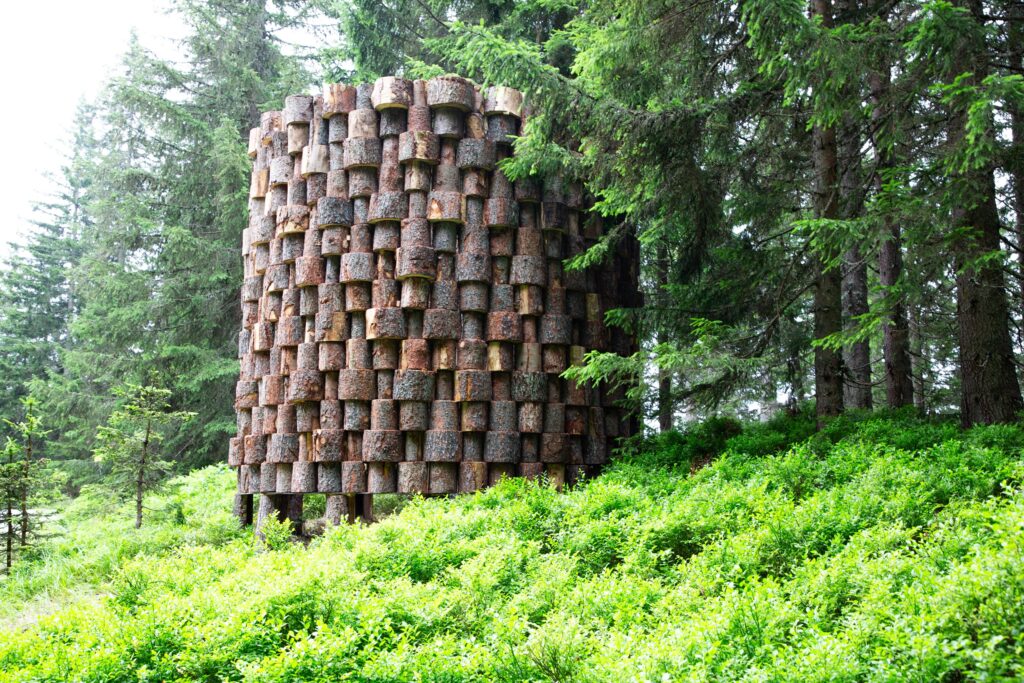
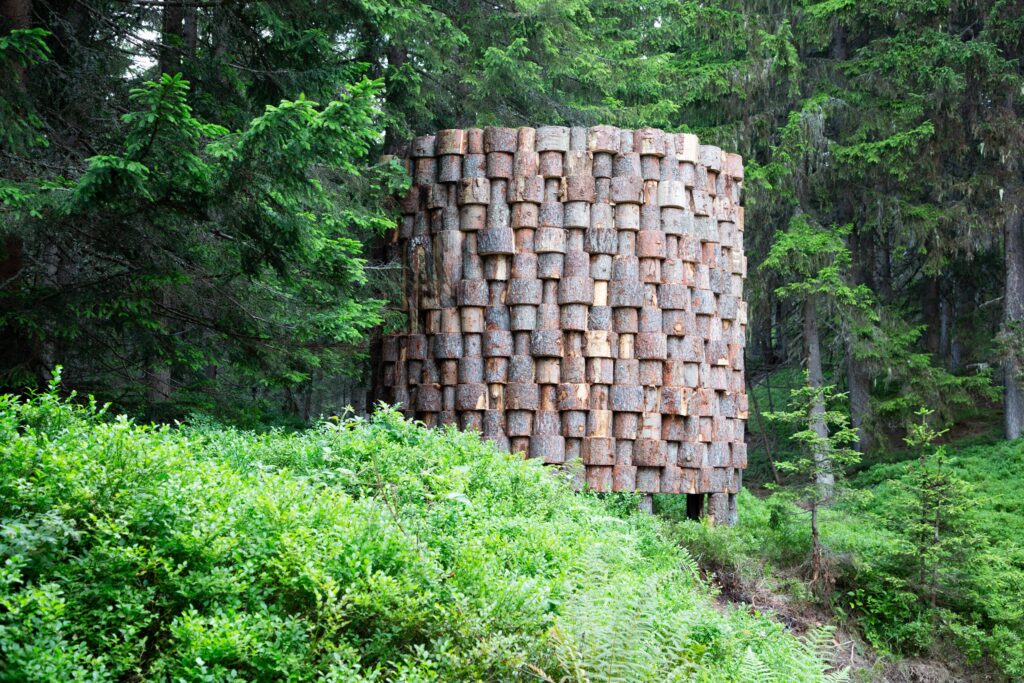
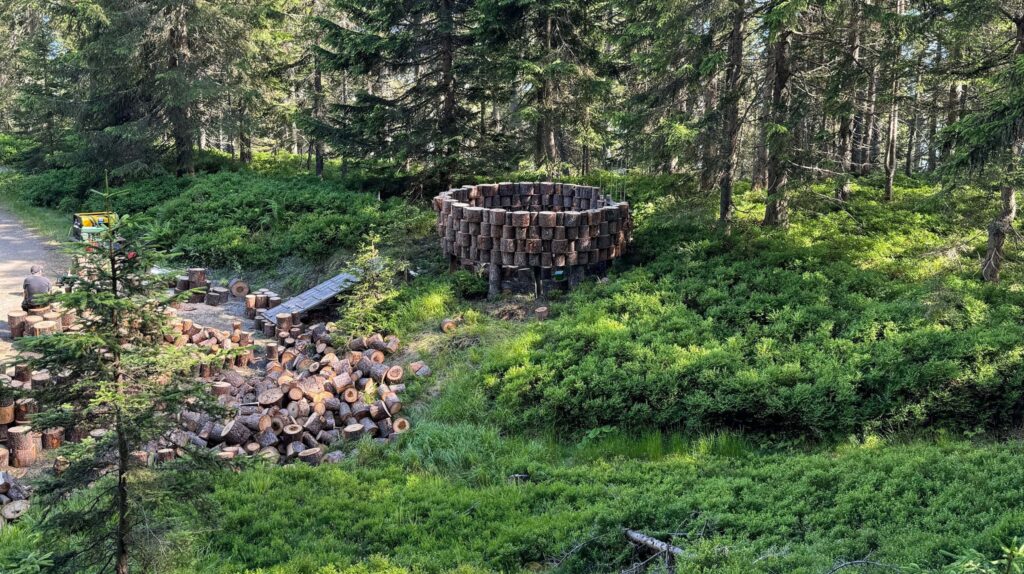
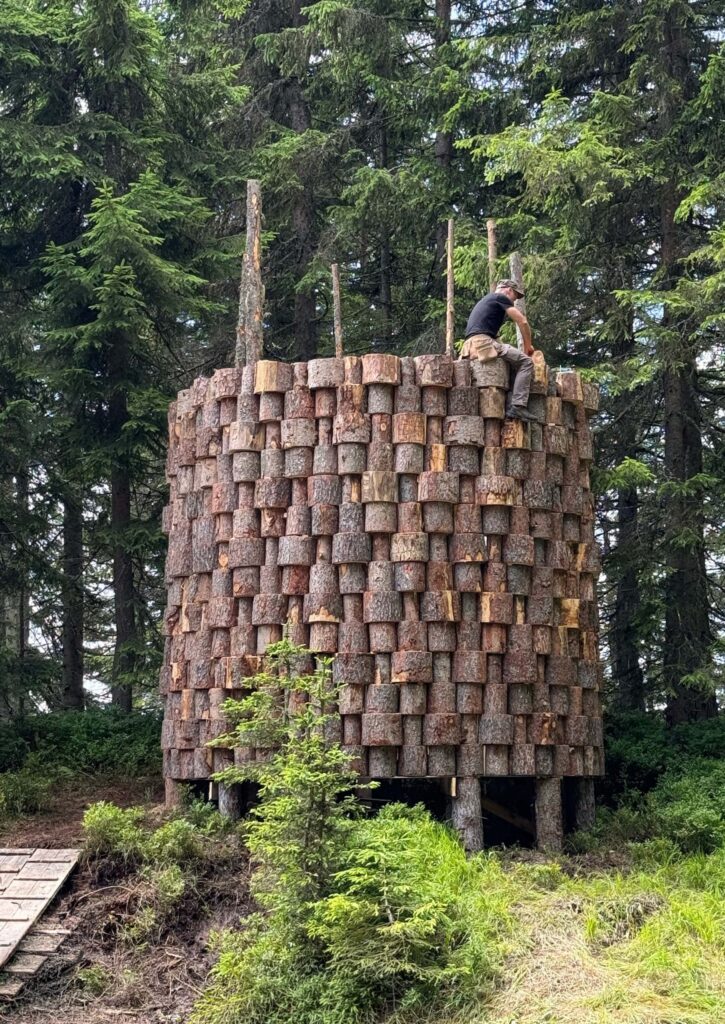
In a spruce forest on the slopes of Rittisberg, in the Austrian Alps, a tall cylinder of cut logs stands beside a forest trail. Enshrined is a site-specific Land Art installation by Stuart Ian Frost and Gunhild Lien. They made it in July 2024 for Land Art Rittisberg in Ramsau am Dachstein. It looks at the relationship between human intervention, natural materials and the landscape around them.
The work is 448 centimetres high and 407 centimetres across. It sets out to be both familiar and unfamiliar, so that visitors look again at how they see nature.
Spruce in a repeated pattern
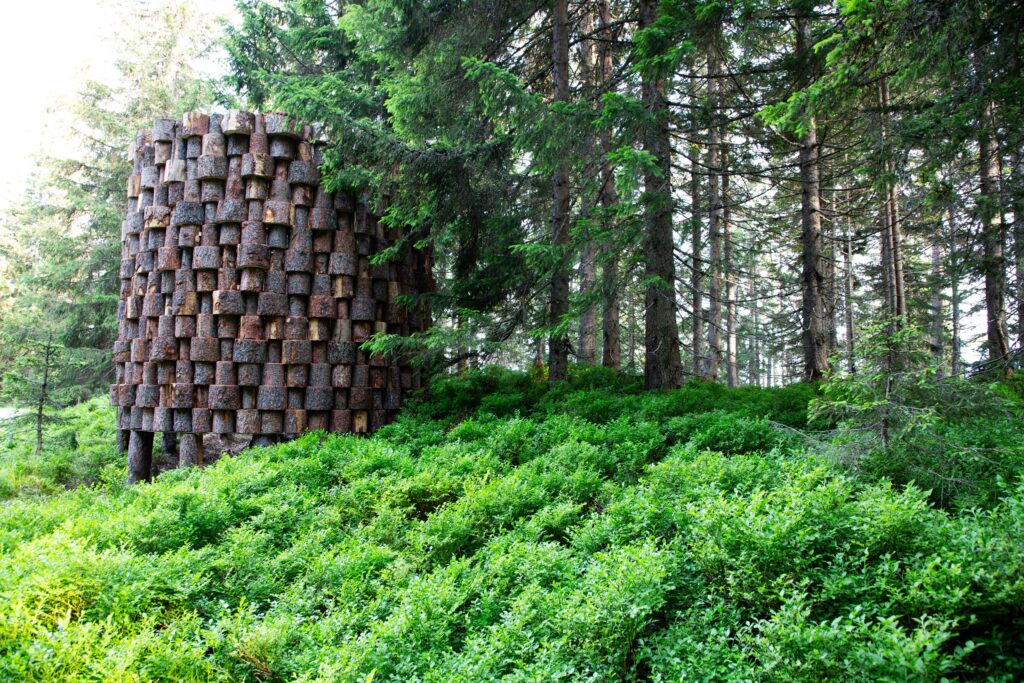
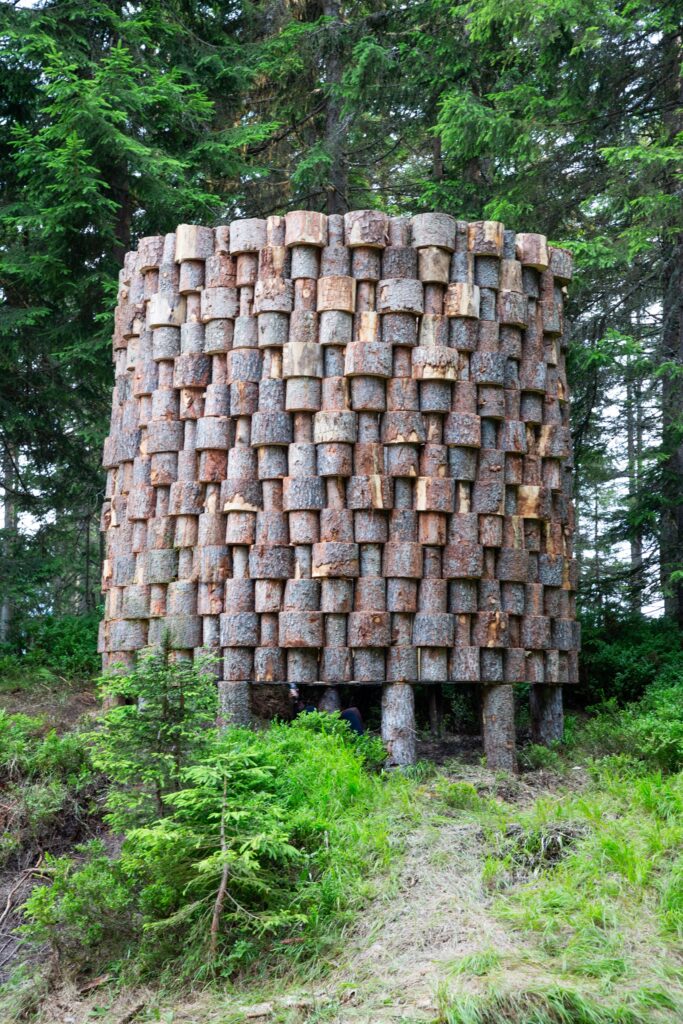
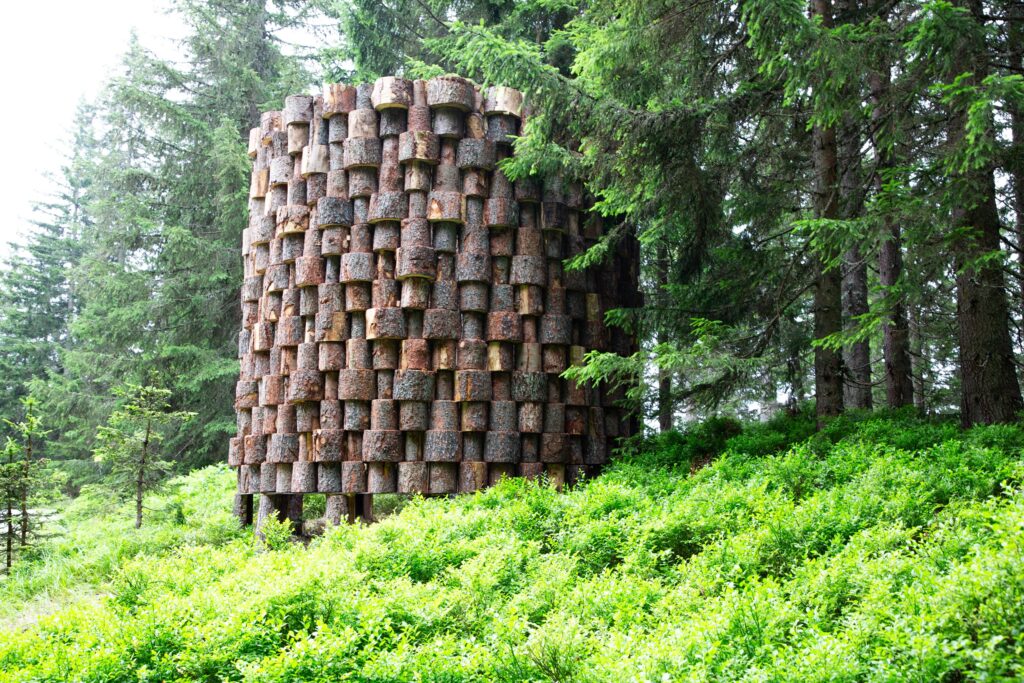
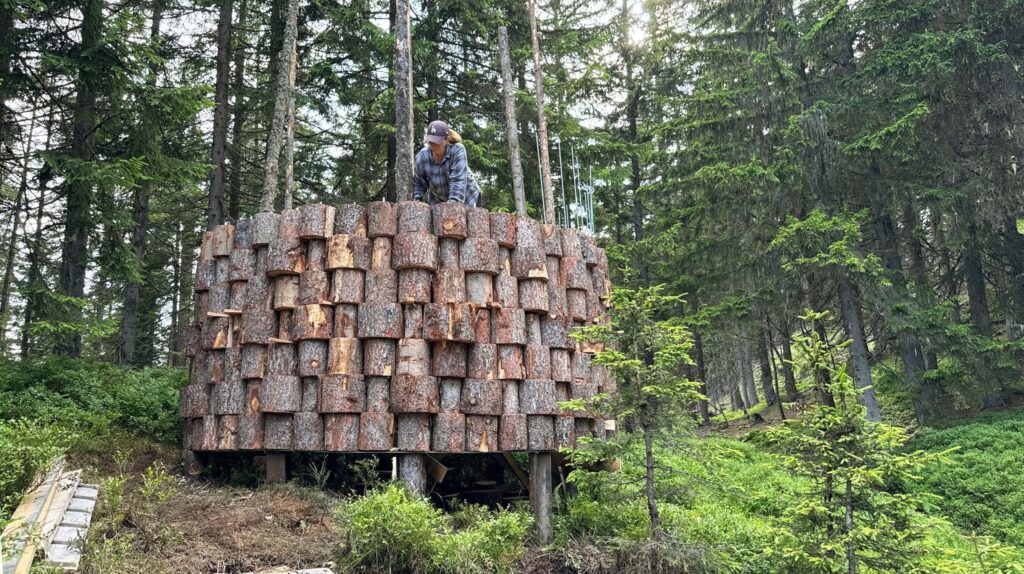
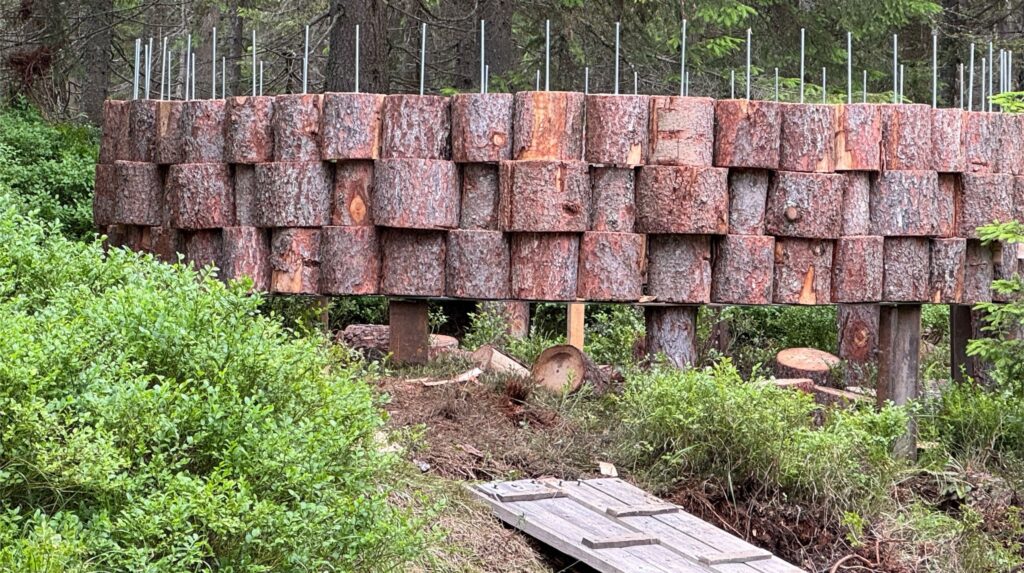
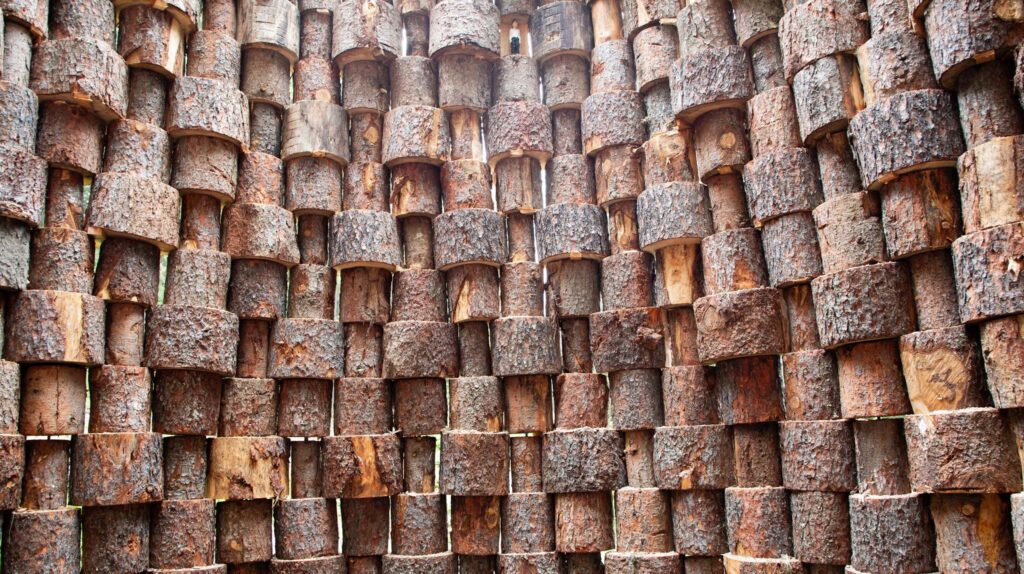
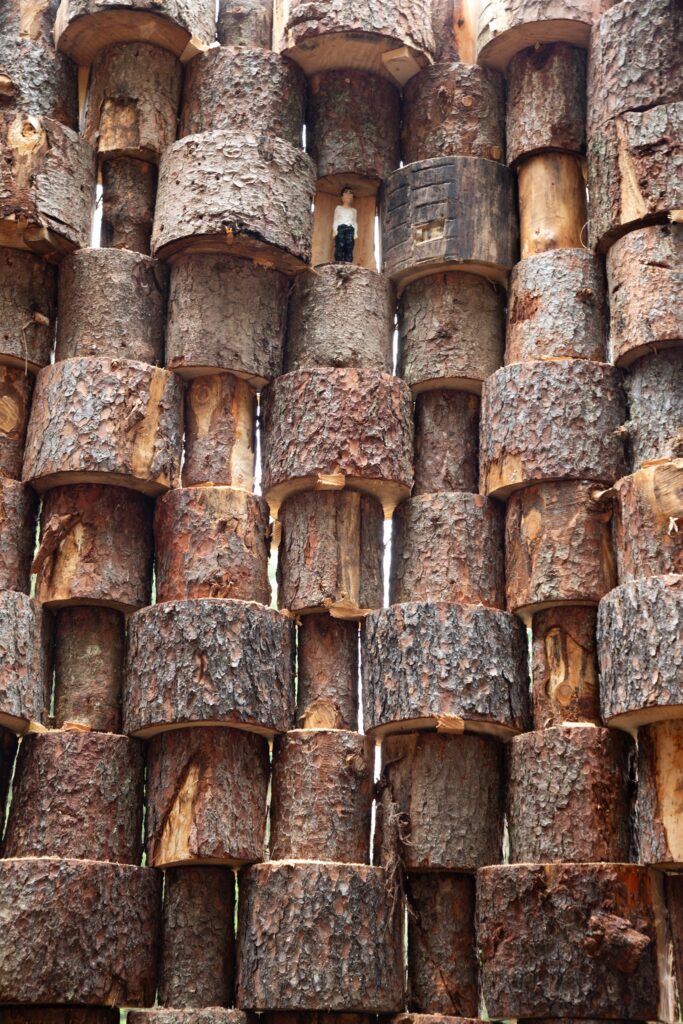
The artists stacked many sections of untreated spruce in a repeating geometric pattern. Together they form a monumental cylinder. Each section keeps its bark, with small differences in colour, texture and character. Together, the projecting and recessed pieces create a rhythm that seems to move across the surface.
Its geometry sets it apart from the forest. However, the locally sourced timber ties it directly to the place. This tension between natural irregularity and constructed order sits at the centre of the work.
What Enshrined honours
The title refers to preserving, protecting or venerating something held sacred. People usually link it to religious objects and places of worship. Here, the idea becomes reverence for nature itself. Across the Austrian Alps, crosses on mountain summits are familiar symbols of religious and cultural identity. In contrast, Enshrined proposes another form of contemplation. It values the natural environment for its own sake rather than placing people at the centre.
The work also faces a contradiction. People want to honour and preserve nature, yet any intervention changes it. The artists take an ordinary forest material and reorganise it into an unfamiliar shape. In doing so, they ask how we see nature, represent it and give it cultural meaning.
Some early earthworks in the United States reshaped the land with heavy machinery. Other approaches have tried a lighter touch. Enshrined belongs with those, and it invites reflection on ecology and sustainability without needless disturbance of its site. These concerns echo Arne Næss’s philosophy of deep ecology, which questions human-centred views of nature and stresses the value of non-human life.
From a 1:10 model to the forest
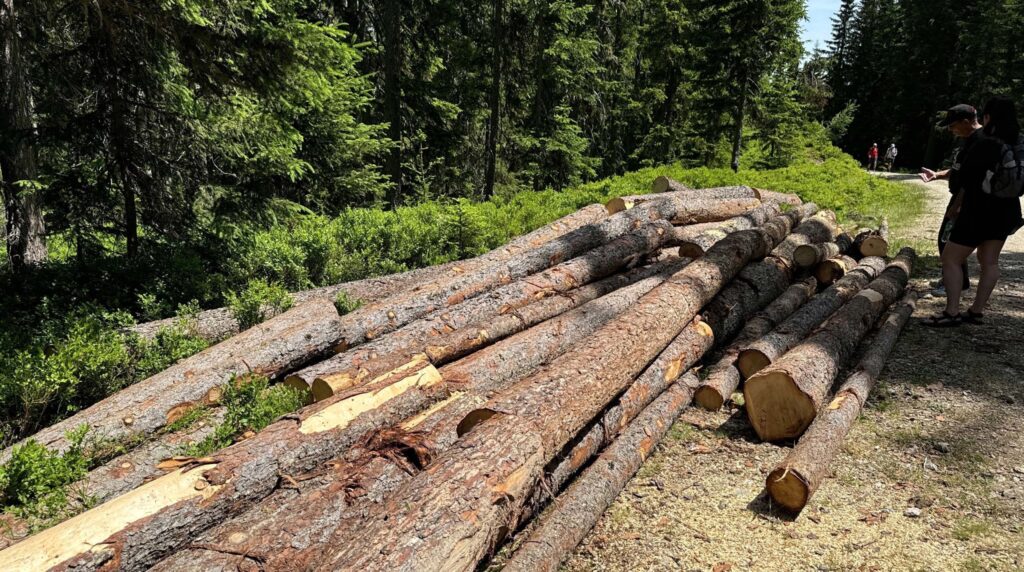
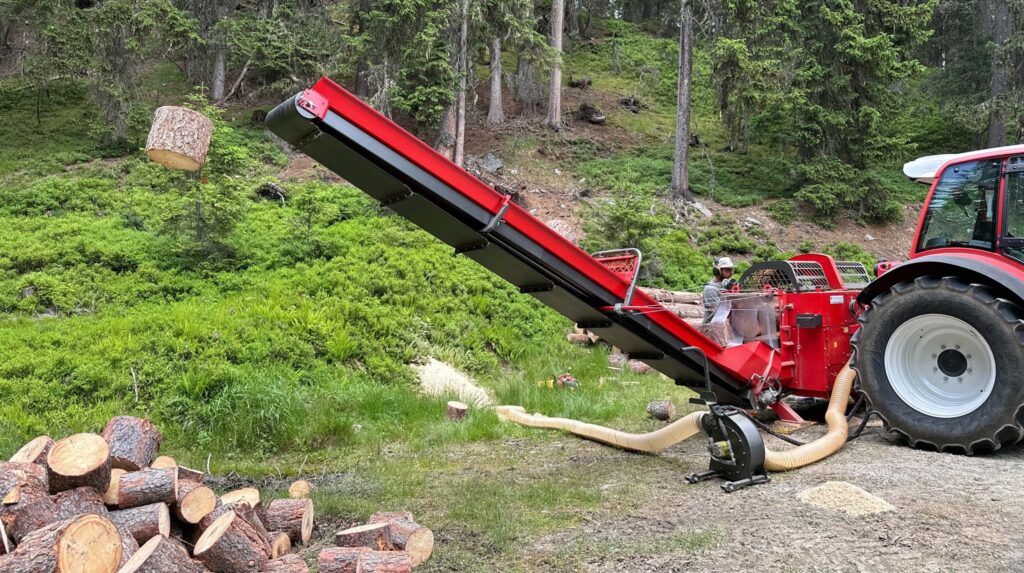
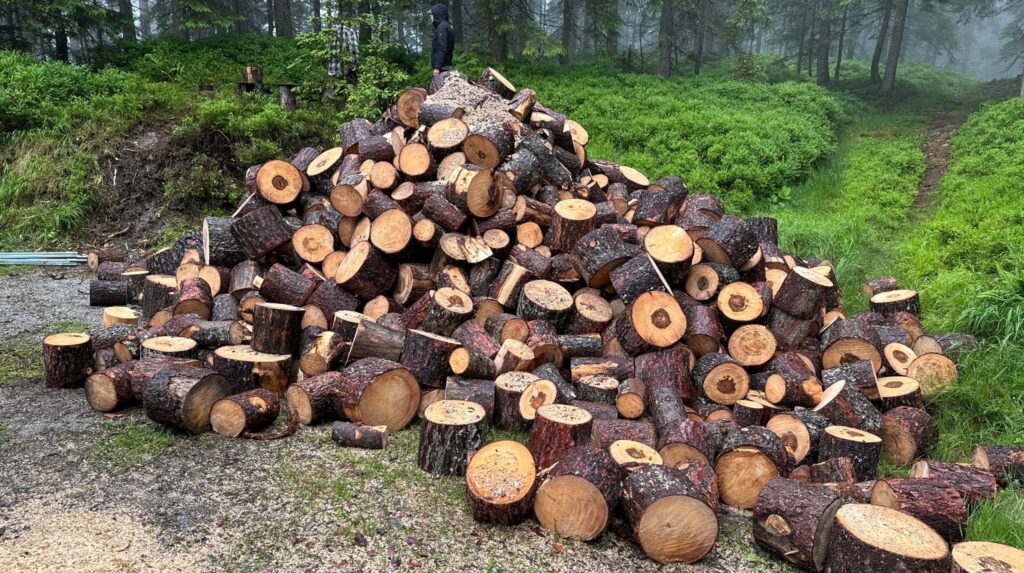
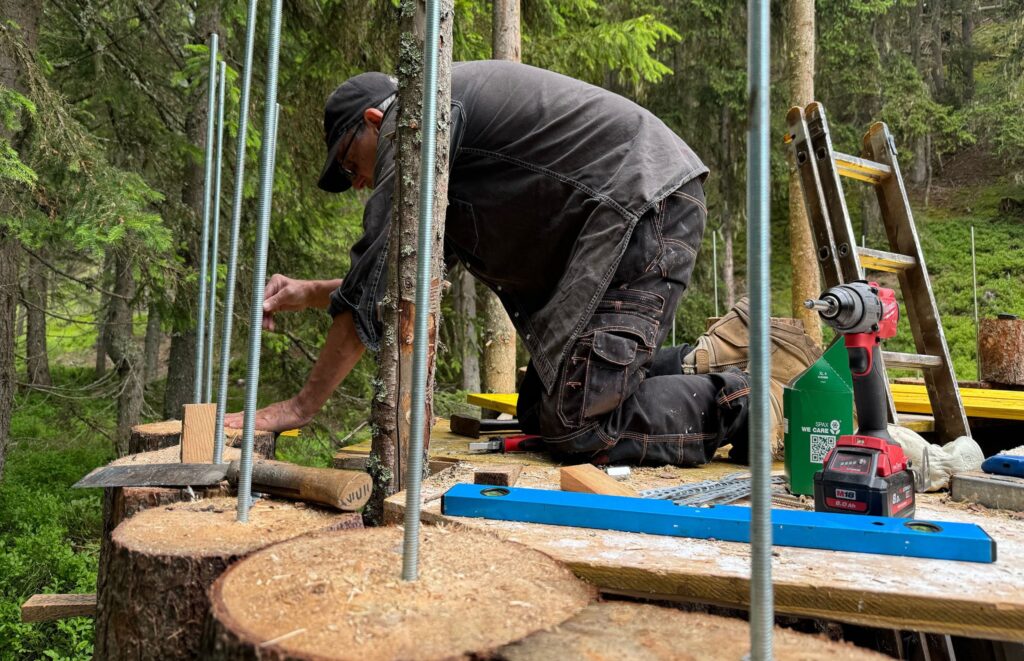
The artists began with sketches and calculations to fix the circumference, the height and the number of timber pieces. Then they built a physical model at 1:10, using natural wood to match the proportions of the full-size work.
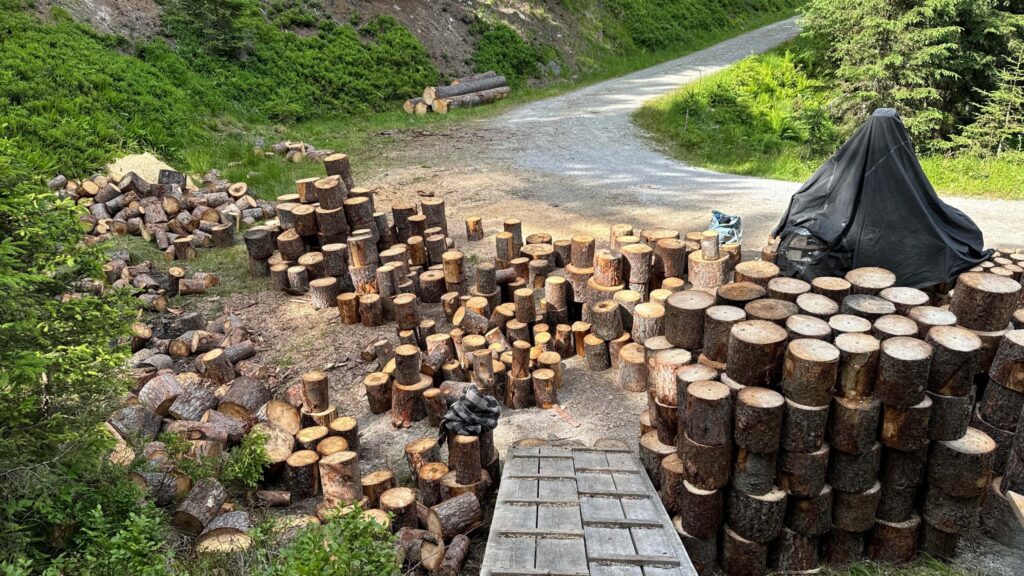
Each spruce section is about 25 centimetres high, in three nominal diameters of 15, 25 and 35 centimetres. A continuous ring of 25-centimetre pieces forms the base course. Above it, 35-centimetre and 15-centimetre pieces alternate, so the larger ones project 5 centimetres beyond the layer below while the smaller ones sit 5 centimetres back.
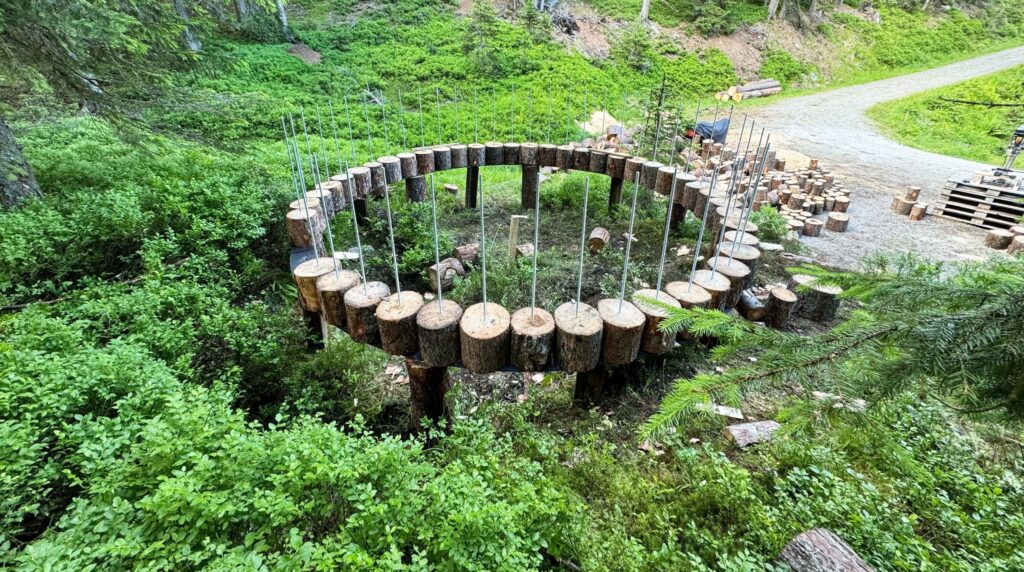
The team drilled every piece through the centre and threaded it onto steel rods. These rods rise from a circular metal base plate anchored in the ground. As the sculpture rose, the team joined the threaded rods in three lengths, so they could place, remove and adjust sections. The artists also designed the frame for heavy winter snow at this altitude. Meanwhile, temporary scaffolding inside gave access to the upper levels.
Despite the careful calculations for Enshrined, the irregular timber needed constant adjustment. In fact, the artists trimmed or shaped many sections with an axe. That negotiation between planned geometry and the material became part of the work, and each log stays visible within the larger form.
Raised above the forest floor
The sculpture sits about 75 centimetres above the ground, mainly because the terrain is uneven. Rather than dig or reshape the slope, the artists adapted the structure to it. This gave the frame a level base and left the site largely undisturbed. Raising the wood also keeps Enshrined away from soil and moisture, which slows decay. As a result, the heavy cylinder seems almost to hover among the trees.
Although the timber pattern suggests movement, the sculpture itself is still. Around it, trees sway, grasses move and the sounds of the forest keep changing.
Inside the cylinder
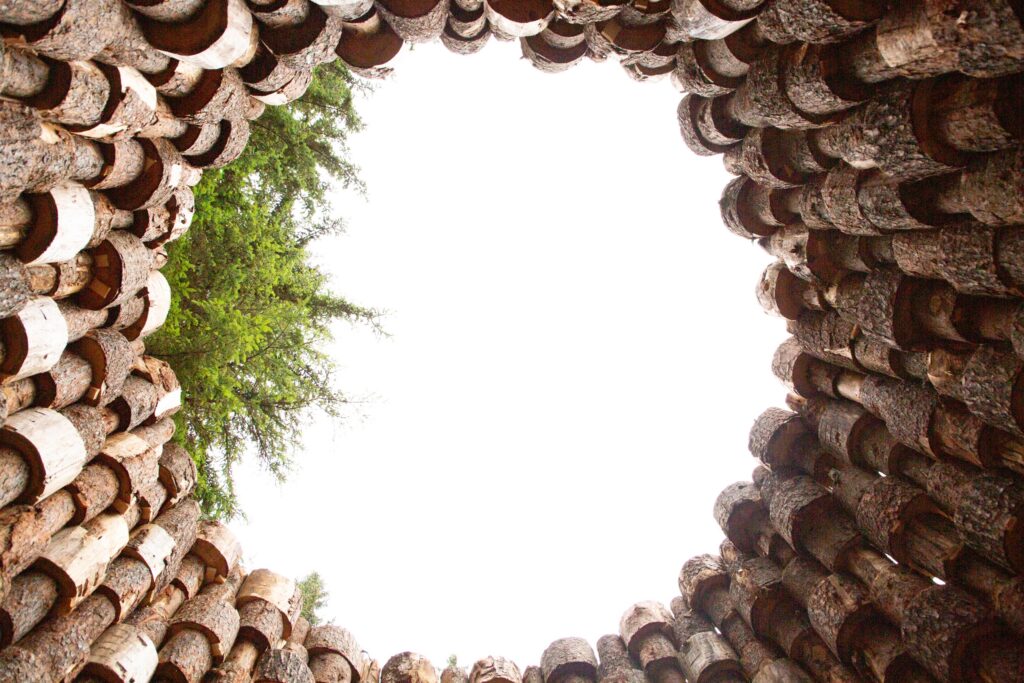
Visitors can step inside, where the experience shifts from looking at an object in the landscape to being surrounded by it. The round opening above frames the sky and treetops, and the enclosure changes how sound carries. The scent of spruce and resin and the feel of the bark add to the connection with the forest. Drawings and models could not fully predict these qualities. Instead, they emerged from the form, the site and the visitor together.
Made to change
The artists never meant Enshrined to be fully permanent. Its untreated timber will weather in the alpine climate and slowly change in appearance. The same forces shape it as the forest around it. Rather than resisting this, the work accepts change as part of its existence.
Equally, the visitor matters. Some people respond to the geometry and construction. Others respond to the enclosed space, the shifting sounds or the view up through the opening. Those individual encounters become part of the life of the work, beyond its physical form.
Project Credits
Project: Enshrined
Artists: Stuart Ian Frost / @stuartianfrost, Gunhild Lien
Year: 2024
Location: Land Art Rittisberg, Ramsau am Dachstein, Austria
Organising association: Verein Ursprung – Kunst- und Kulturverein zur Förderung der Heimatpflege
Project curator: Robin Molenaar
Materials: Locally sourced spruce, steel supporting framework
Dimensions: 448 cm (H) × 407 cm (diameter)
Photography: Stuart Ian Frost, Gunhild Lien
Related Posts
Previous Post
Next Post
- OTLA terraces a forest slope into a village for retreat staff in Karnataka

- ARP studio sets a steel frame inside a 19th-century salt warehouse in Koper

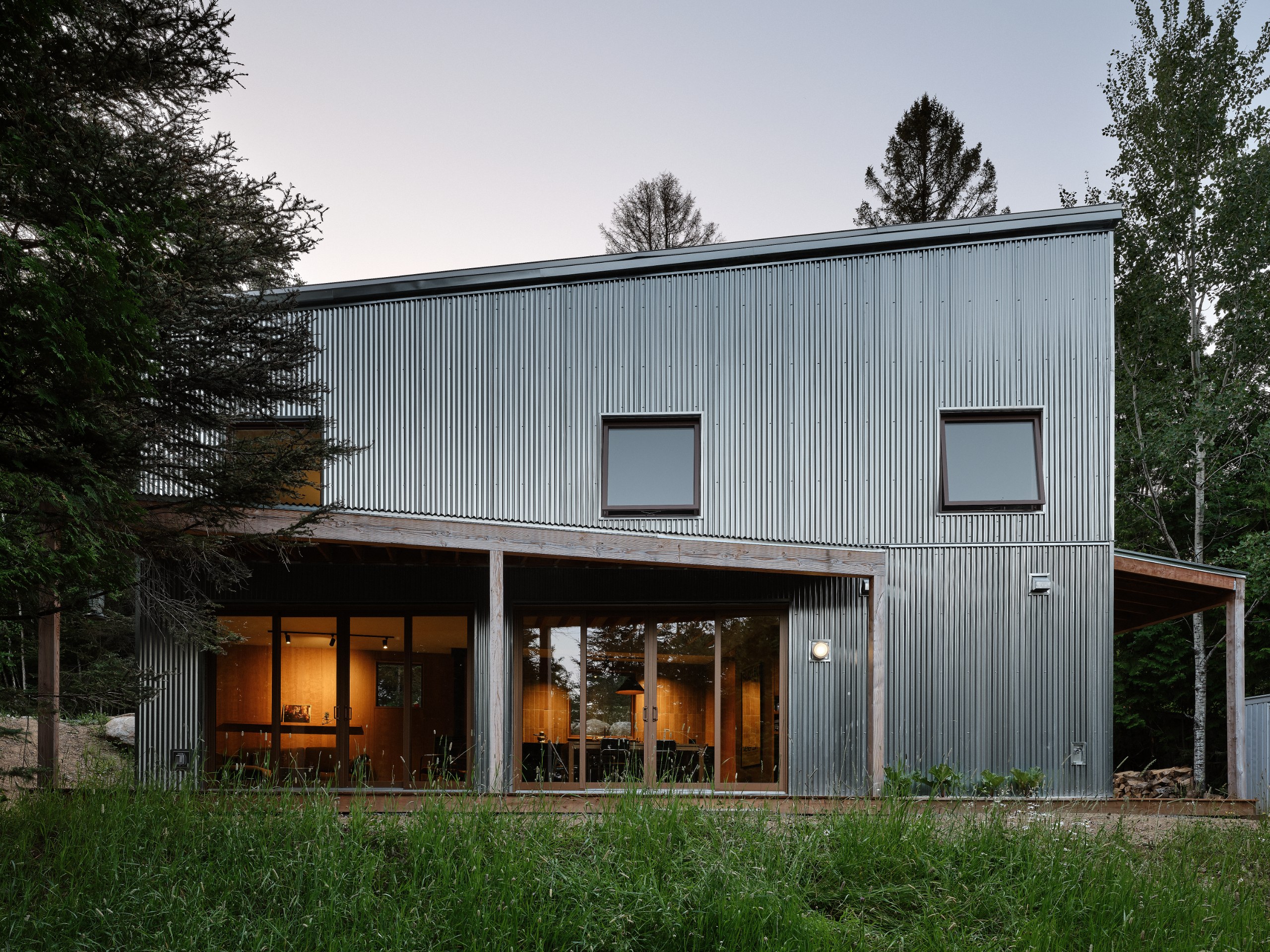
- Pavillon wraps a family chalet in silver metal and old memories

- Stuart Ian Frost and Gunhild Lien raise a cylinder of spruce in an Alpine forest

- ecoLogicStudio threads a living garden through the vineyards of Canelli
- TAKK turns a bed into common ground for the Beaux Arts Ball