Now Reading: ecoLogicStudio threads a living garden through the vineyards of Canelli
- 01
ecoLogicStudio threads a living garden through the vineyards of Canelli

ecoLogicStudio threads a living garden through the vineyards of Canelli
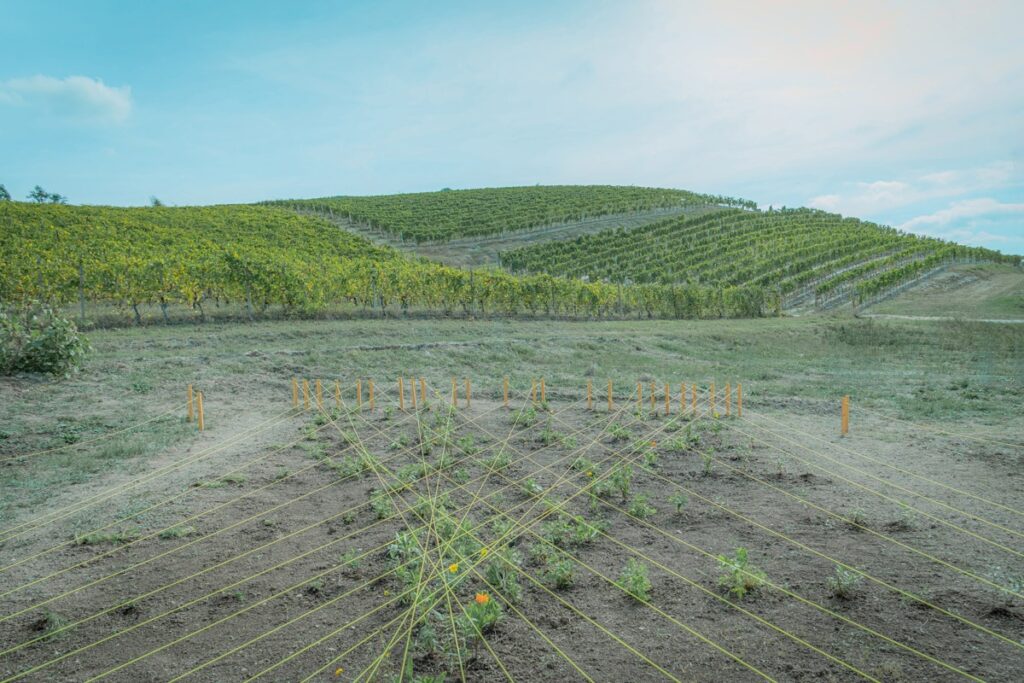
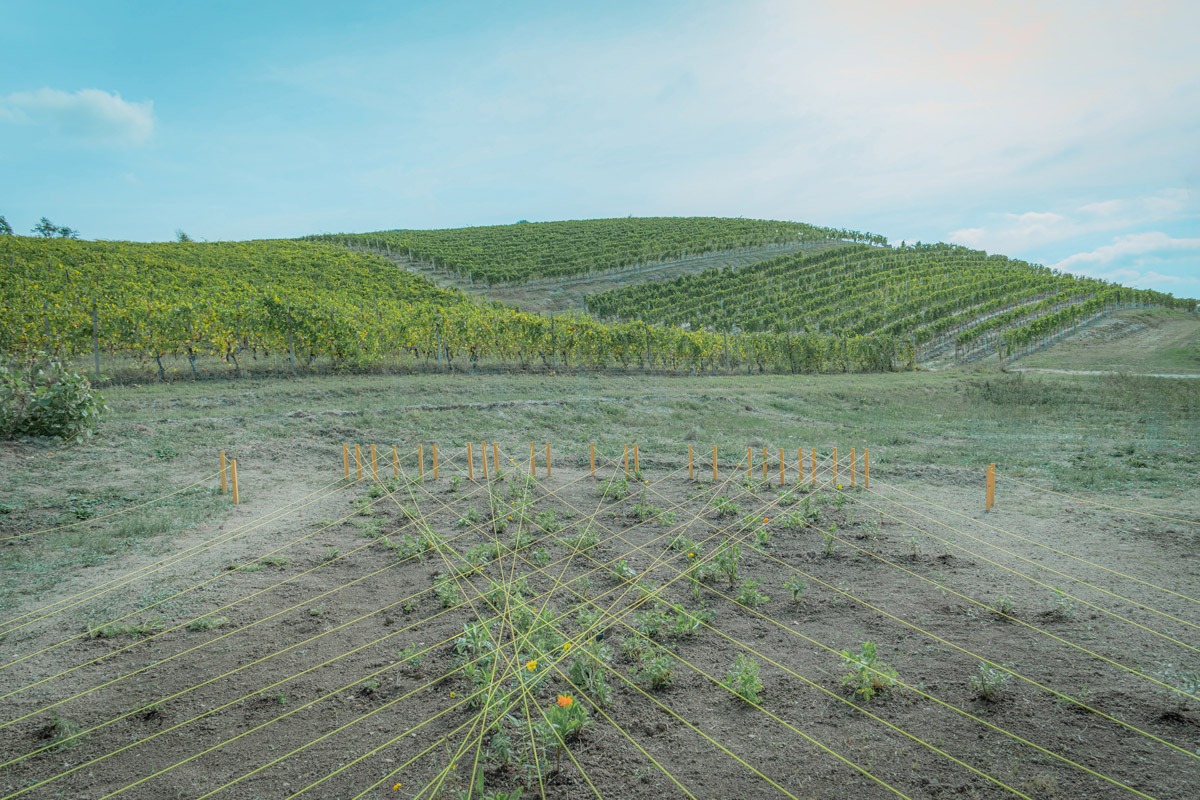
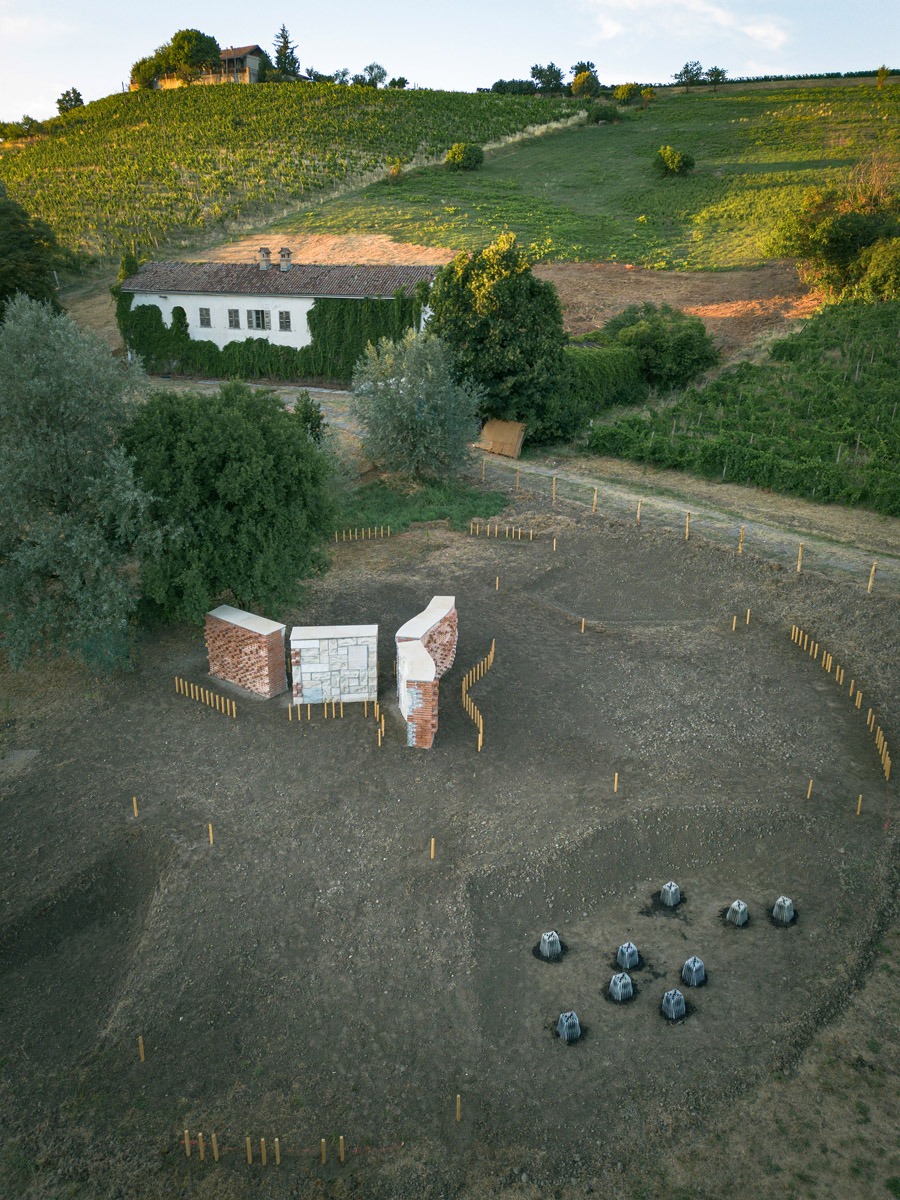
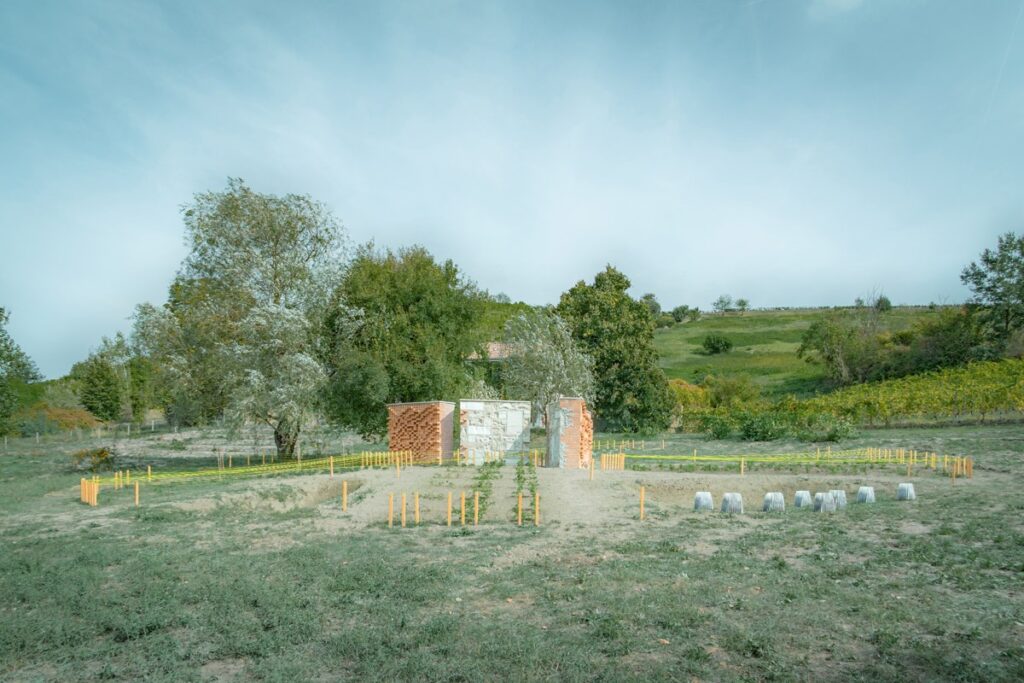
A garden is growing on the hills of Canelli, in the province of Asti, and it is already alive. Commissioned by the Castello di Rivoli Museo d’Arte Contemporanea, the Multispecies Vectorial Garden of Canelli is a landscape intervention by ecoLogicStudio, in collaboration with the Synthetic Landscape Lab at the University of Innsbruck.
The project asks how a designed garden can work as active ecological infrastructure. It sets up new relationships between plants, soil, insects, birds, microorganisms and human visitors.
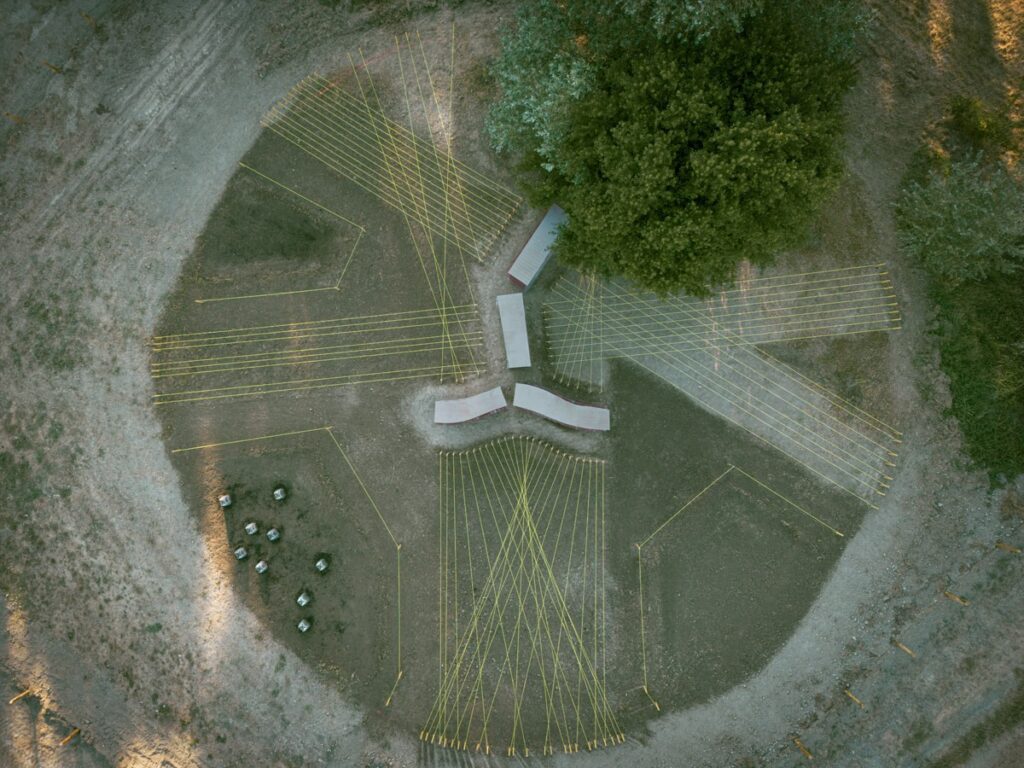
A garden inside a UNESCO vineyard landscape
The site is at Moncalvina, in Canelli, within the UNESCO World Heritage Vineyard Landscape of Piedmont: Langhe-Roero and Monferrato. Rather than setting itself apart from this farmland, the project engages with its agricultural character. ecoLogicStudio proposes a dynamic system in which spatial design and biological processes interact and change together over time.
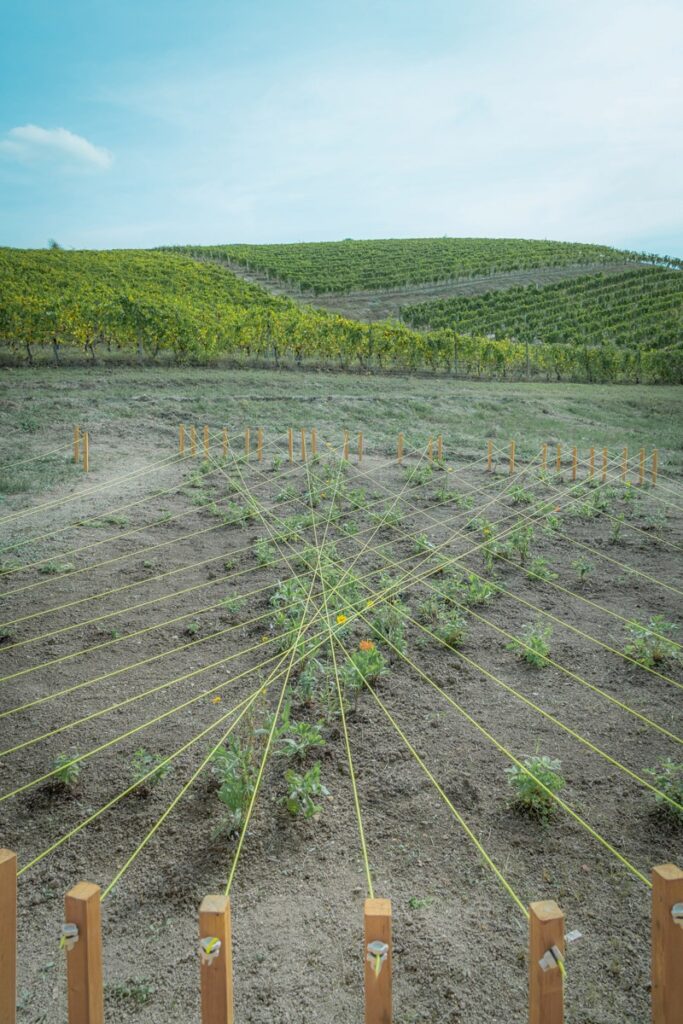
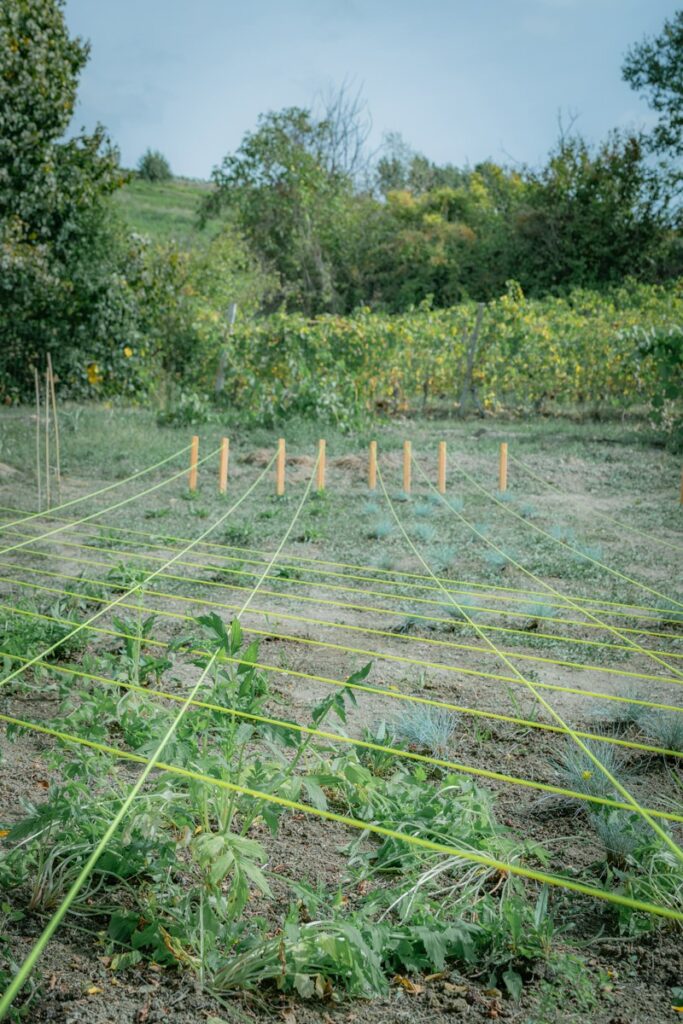
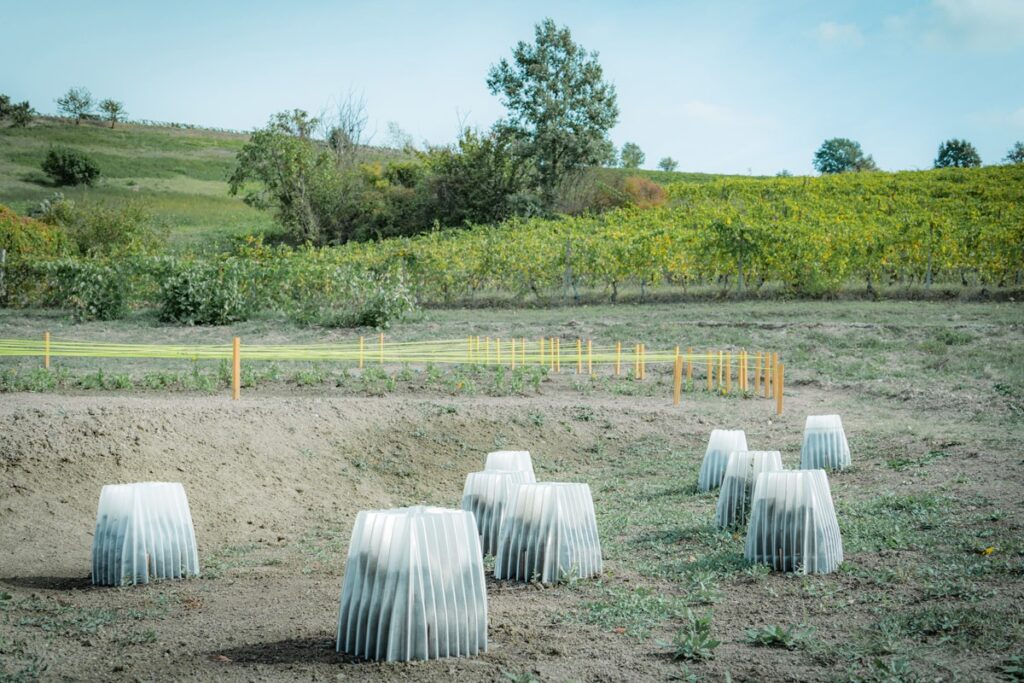
One hundred yellow vectors
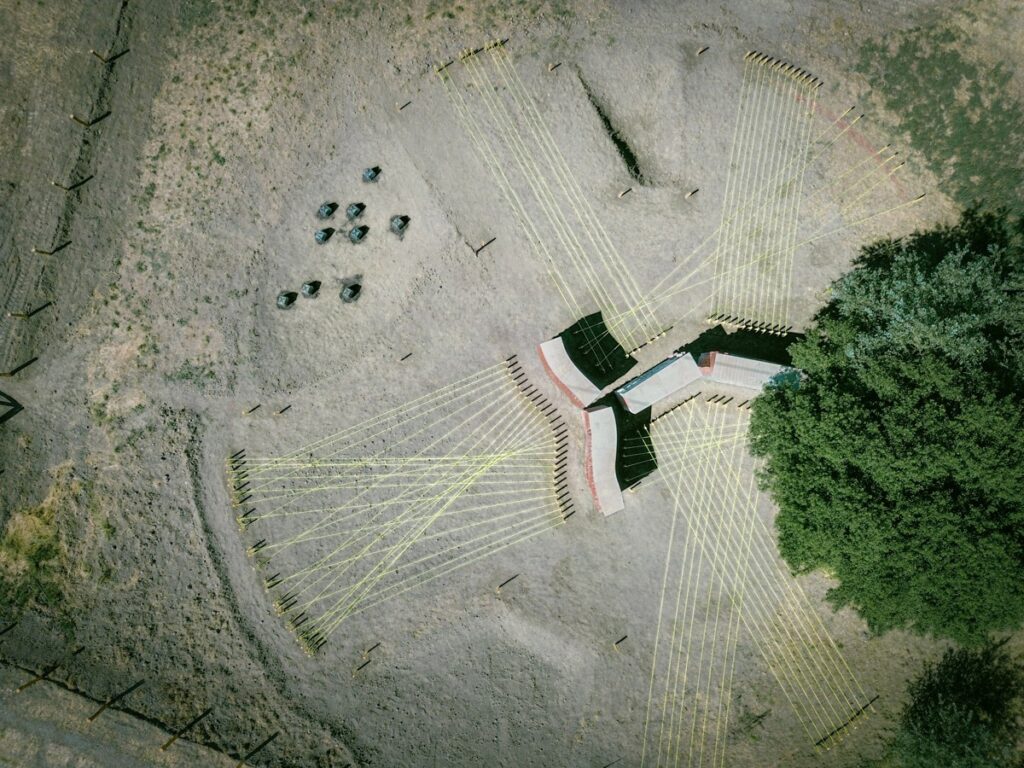
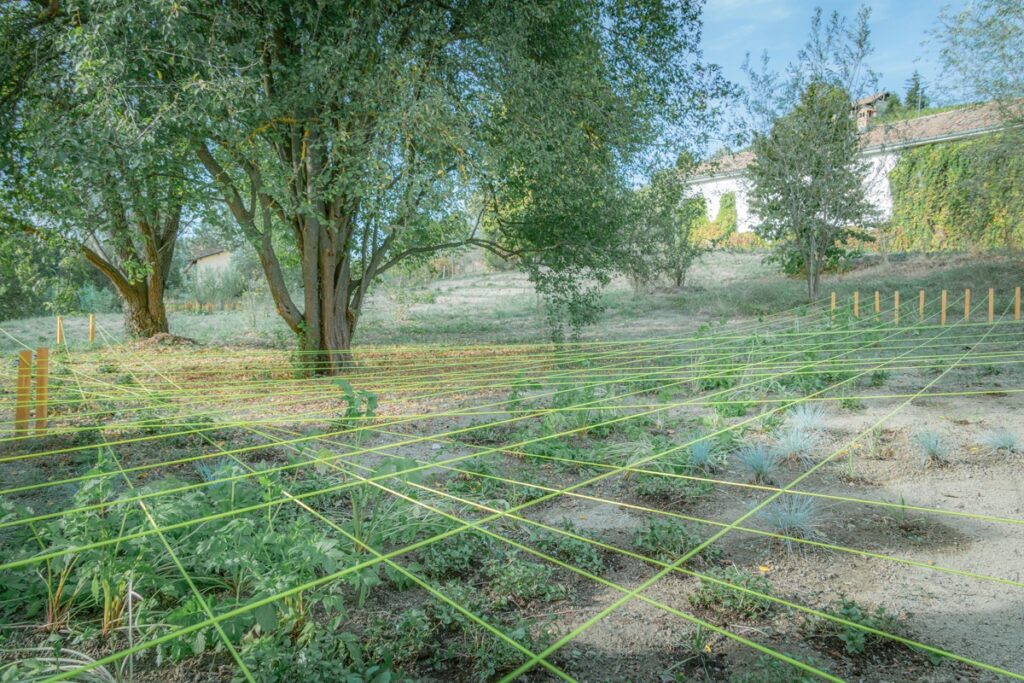
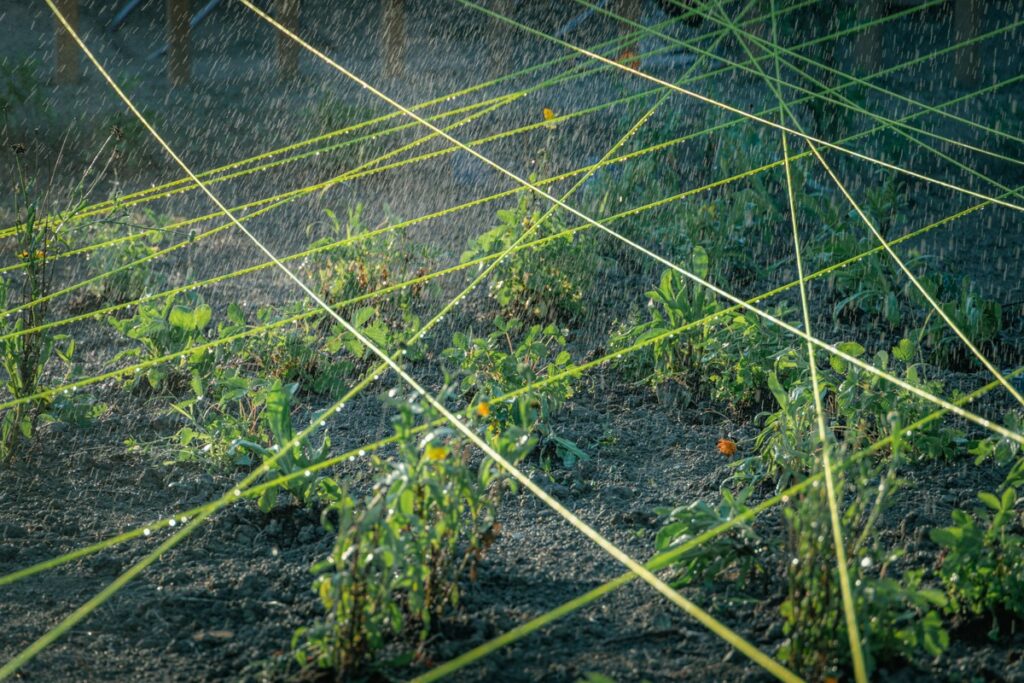
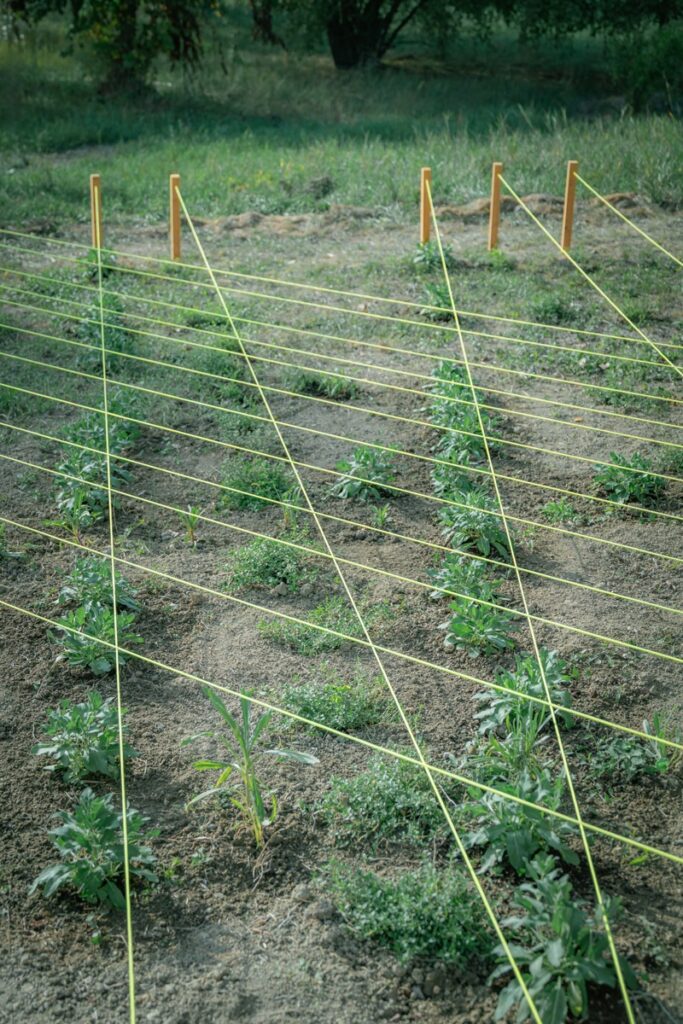
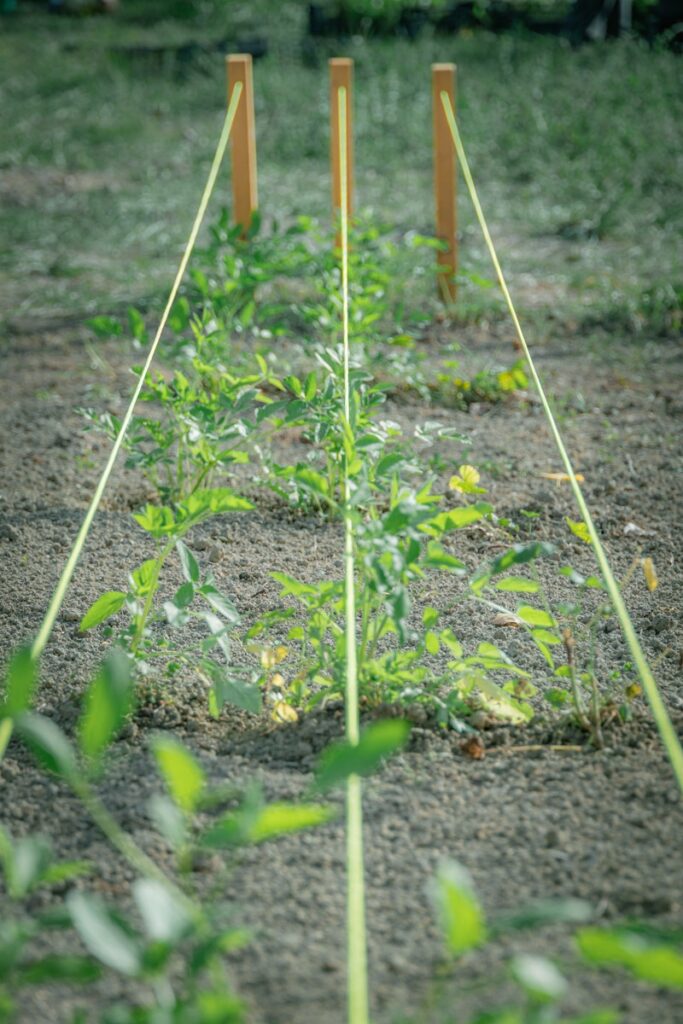
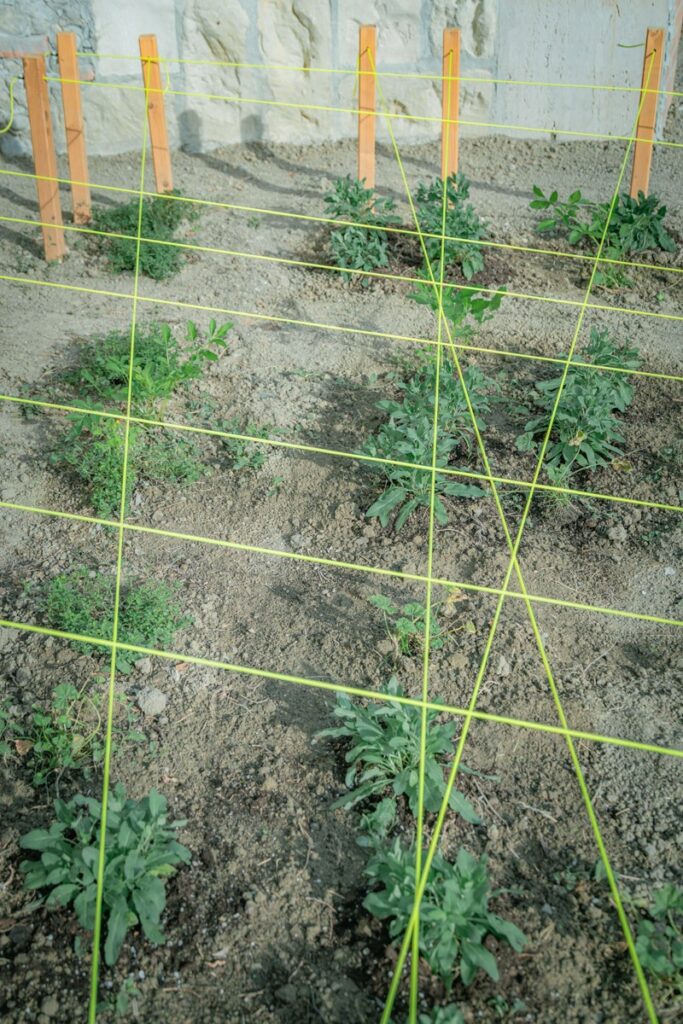
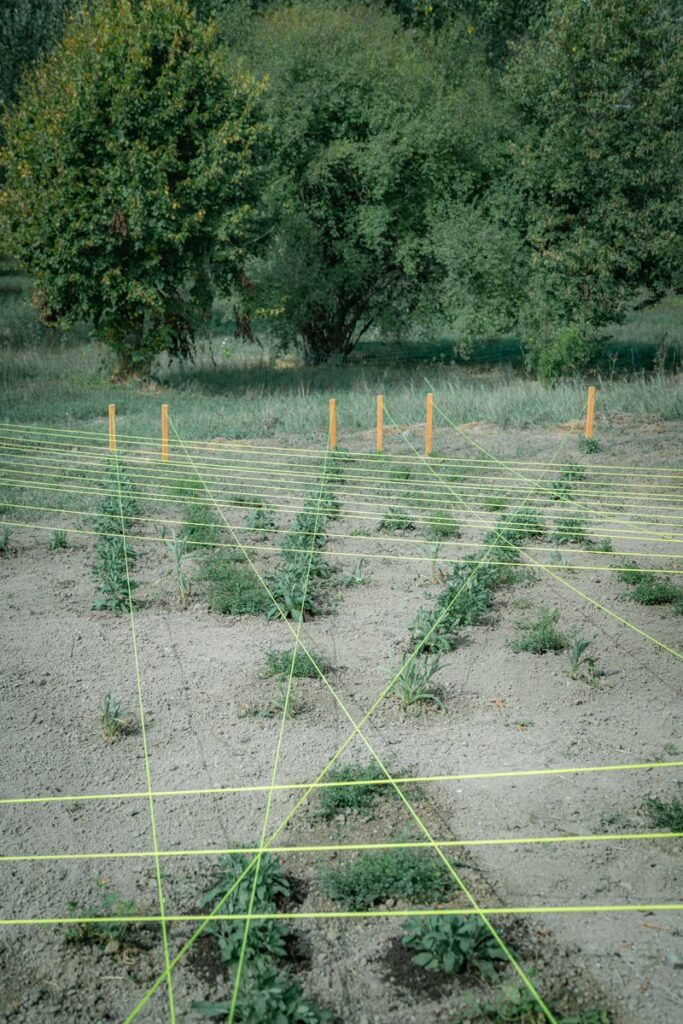
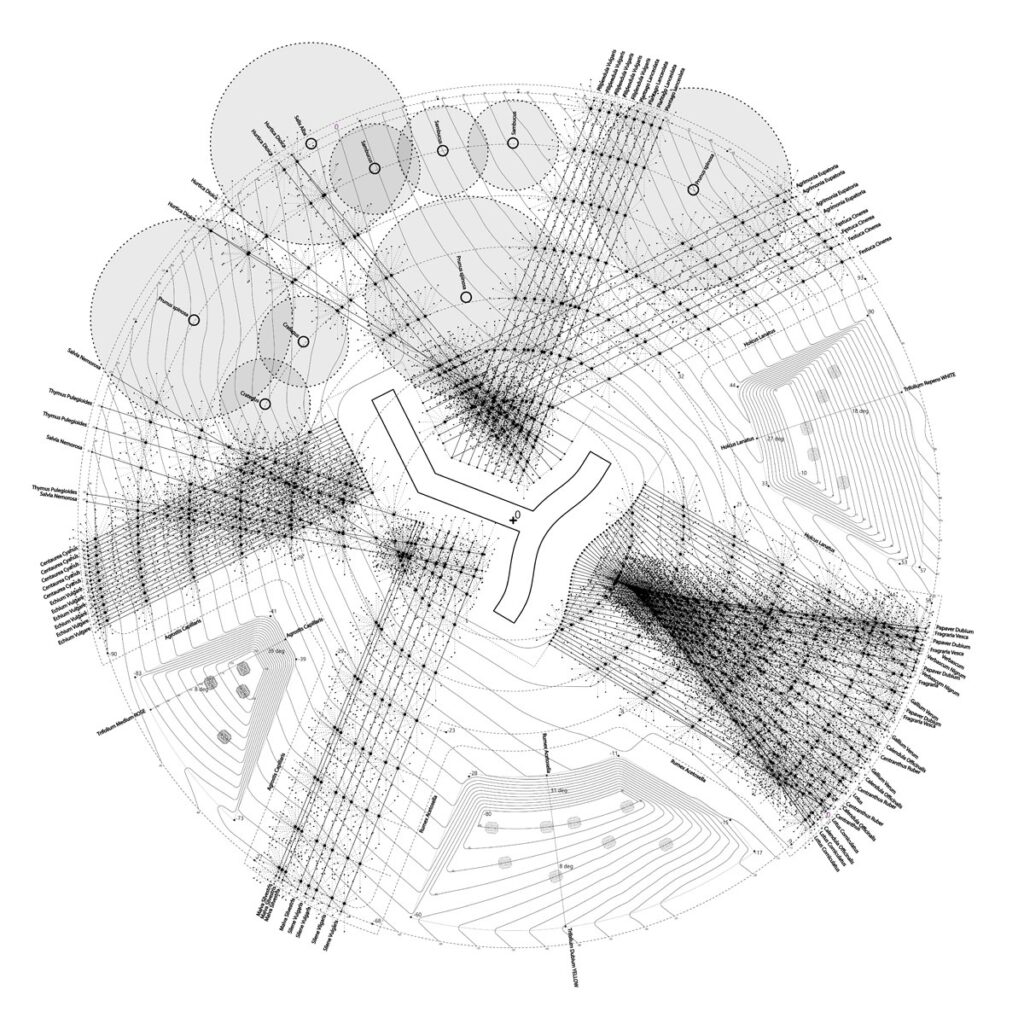
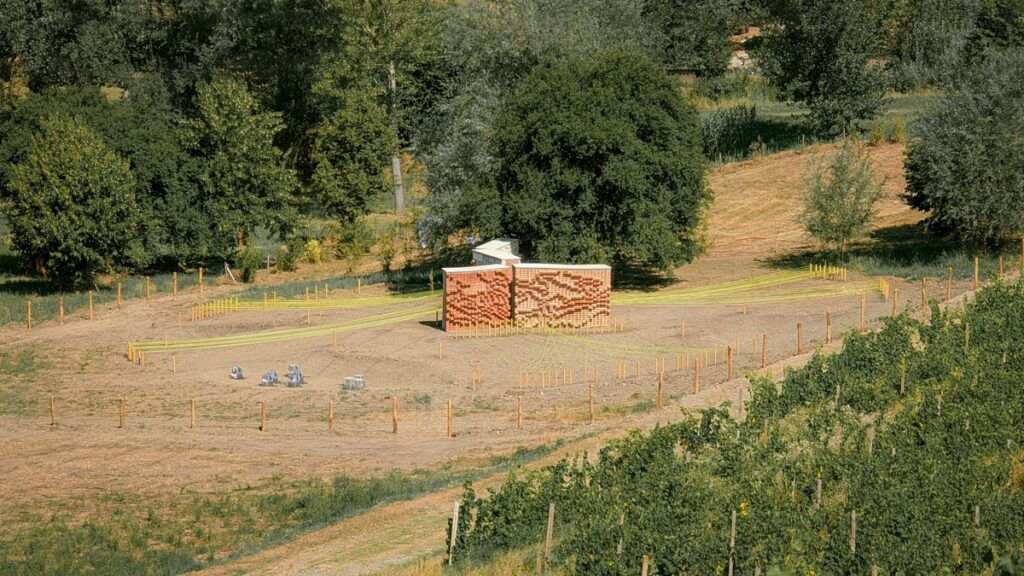
At the centre of the garden, a sculptural artwork by Maria Thereza Alves, Pluriversal Recapturings, forms a distinct presence. In dialogue with it, the studio’s vectorial design system extends across the site through one hundred vectors, made as fine yellow threads. These lines set up spatial relationships between planting positions, existing vegetation and the parallel rows of the surrounding vineyards.
However, in the Multispecies Vectorial Garden the vectors are more than graphic markers. They establish directions, intersections and gradients that guide where plant communities go, while leaving room for spontaneous colonisation and future change. As a result, the geometry sets the regular patterns of farming against the less predictable life of many species.
Three scales and a thousand plants
The Multispecies Vectorial Garden works across three connected scales. At the territorial scale, the garden acts as an ecological node in the wider vineyard landscape, linking cultivated land with existing vegetation, woodland edges and other habitats. At the spatial scale, vectors, planting fields and paths organise different ecological conditions and visitor experiences. Finally, at the multispecies scale, plant communities are chosen for their ecological functions, seasonal behaviour and relationships with other organisms.
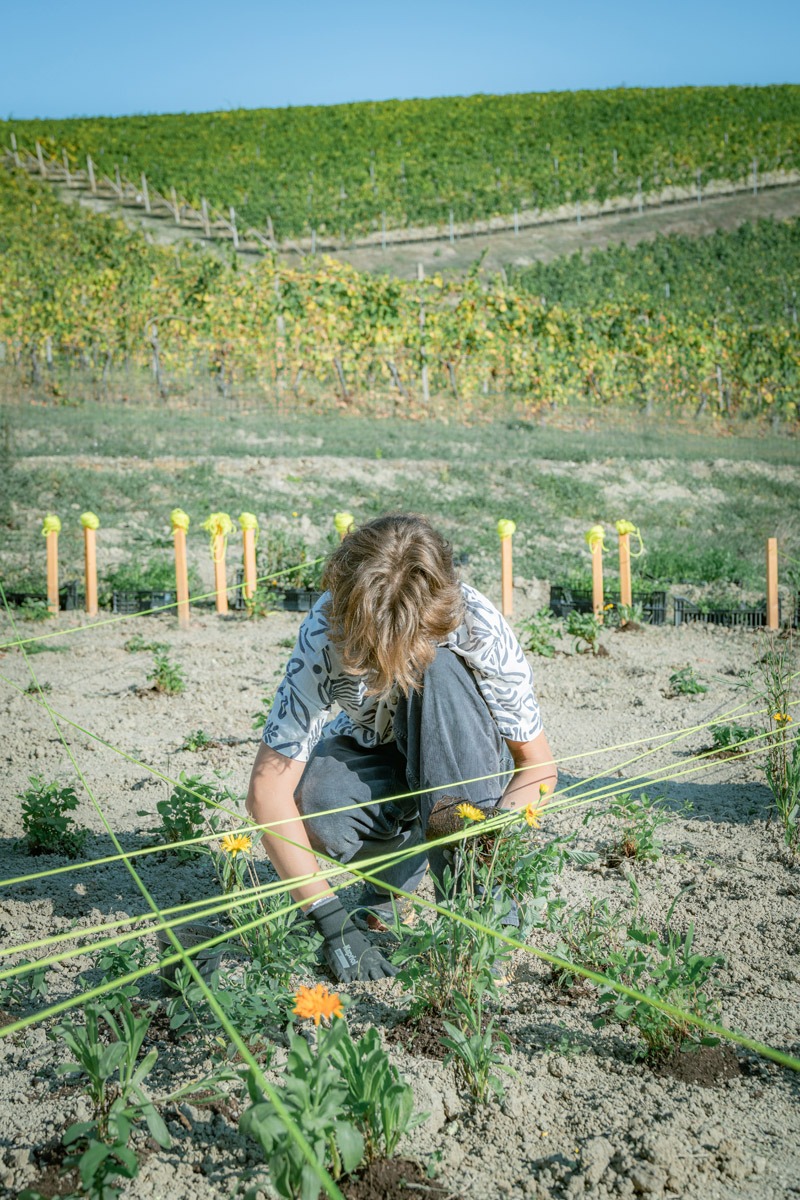
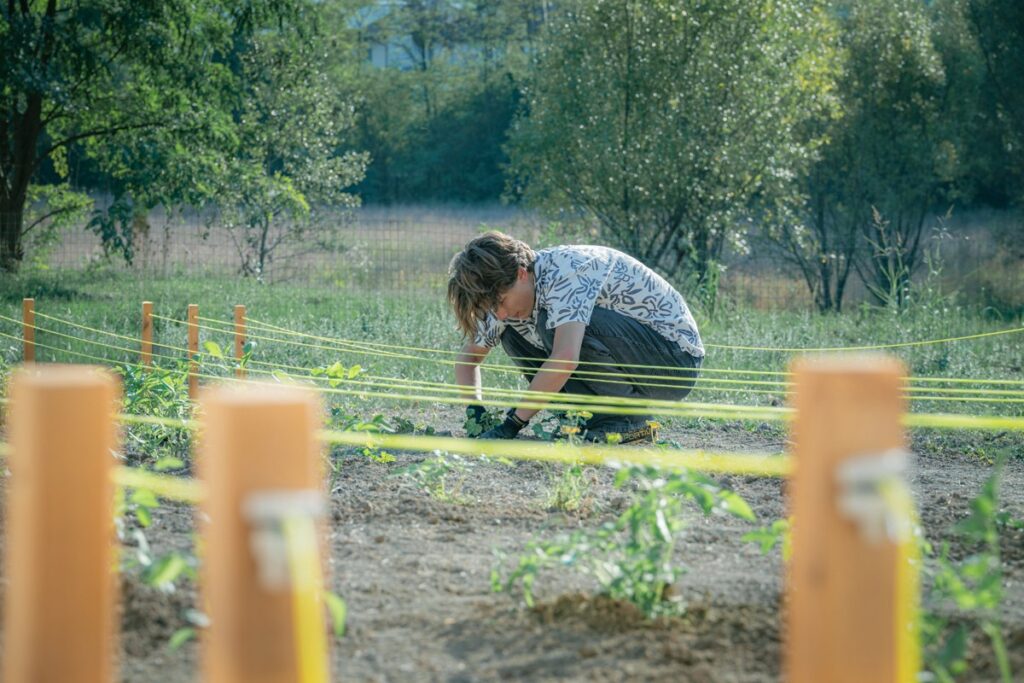
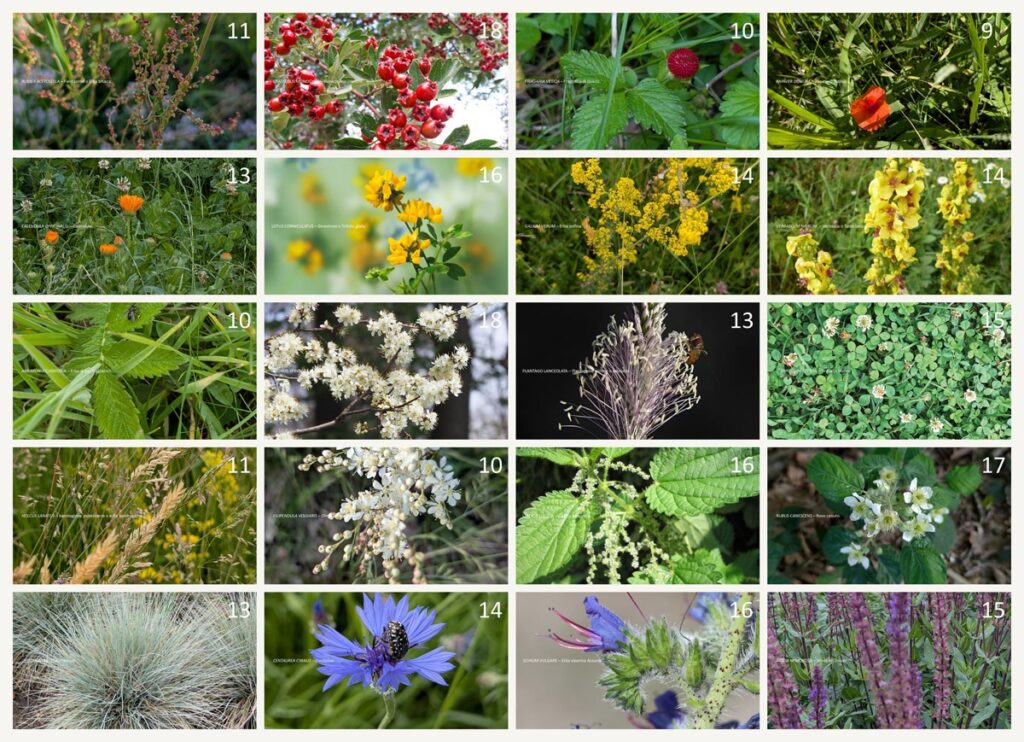
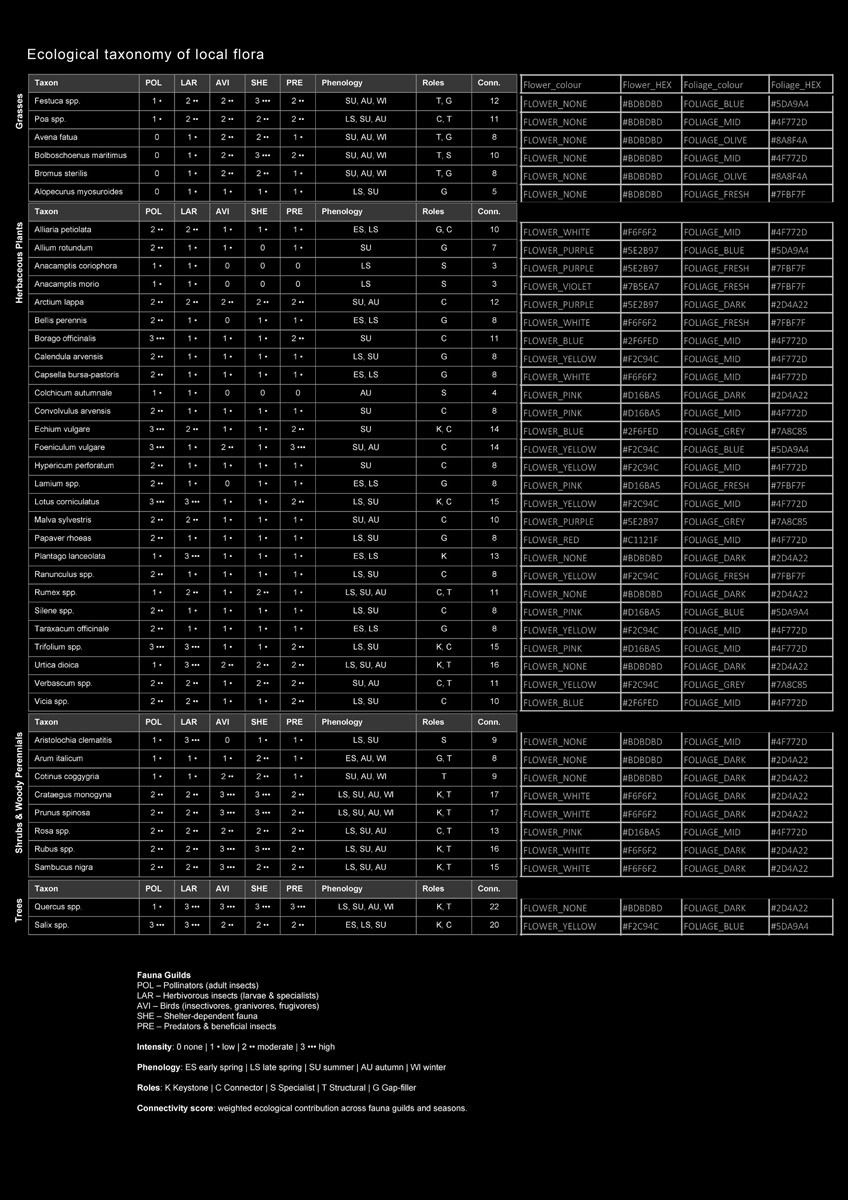
Almost one thousand plants from around thirty species provide a changing range of habitats and seasonal resources. ecoLogicStudio’s ecological taxonomy guides their selection and placement according to phenology, ecological function and habitat value. Meanwhile, existing plum and willow trees stay in place, giving shade and a sheltered understorey.
Quiet wedges for visitors
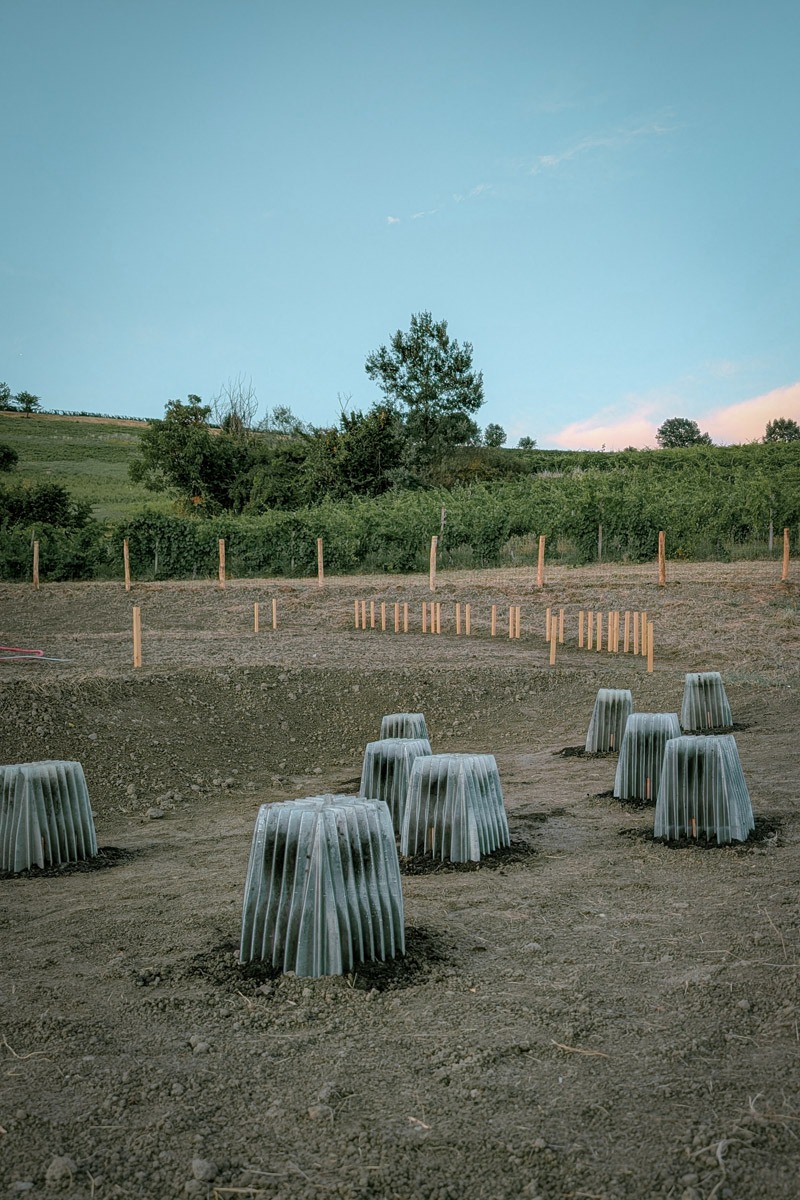
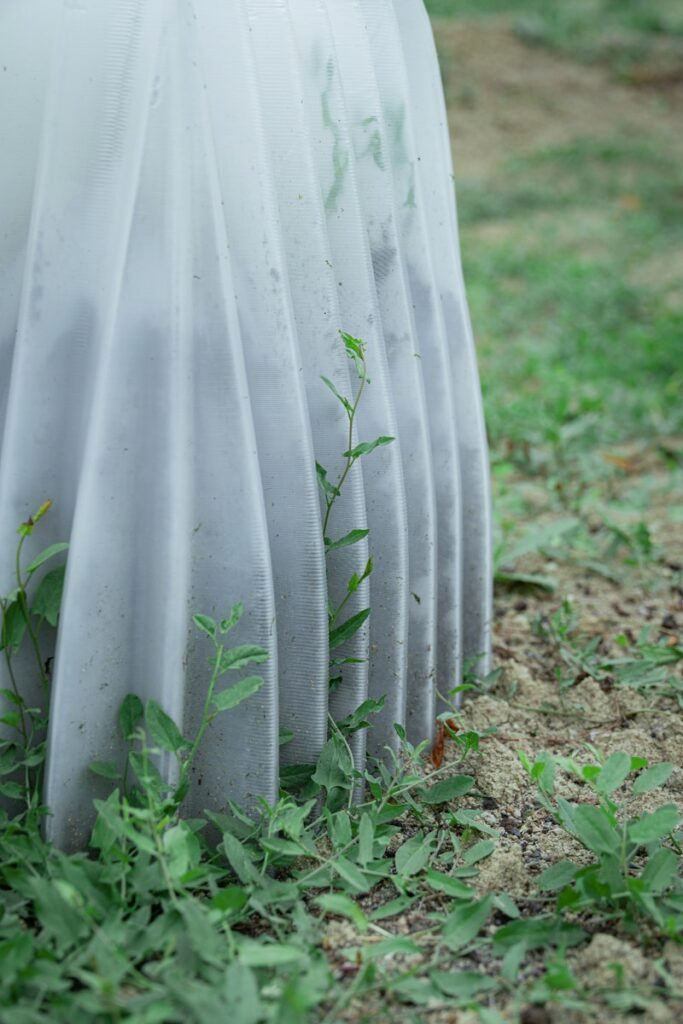
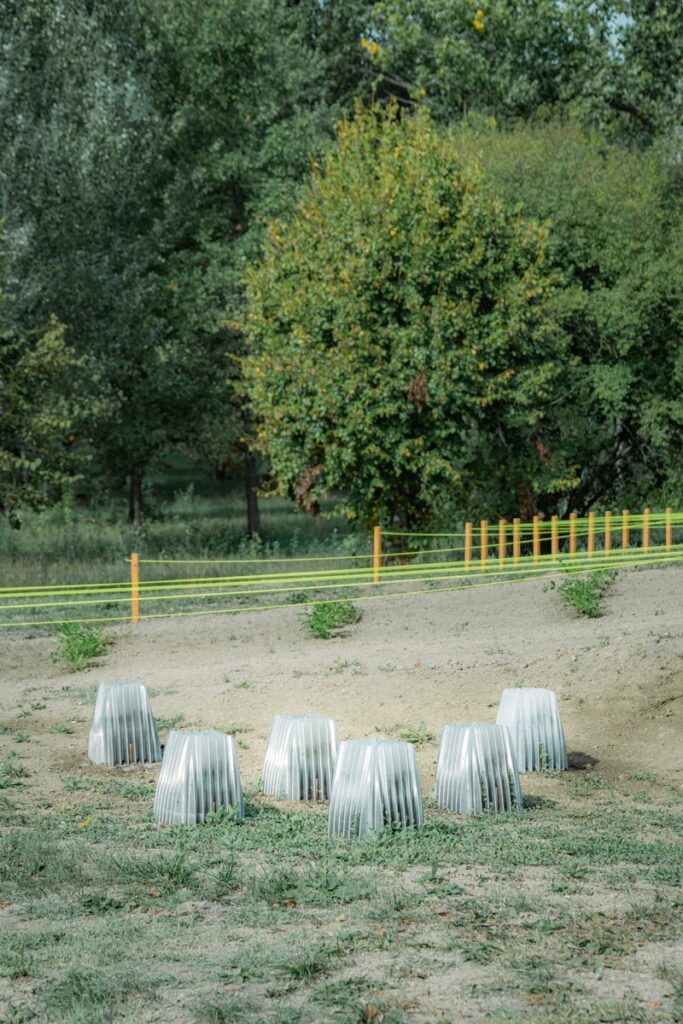
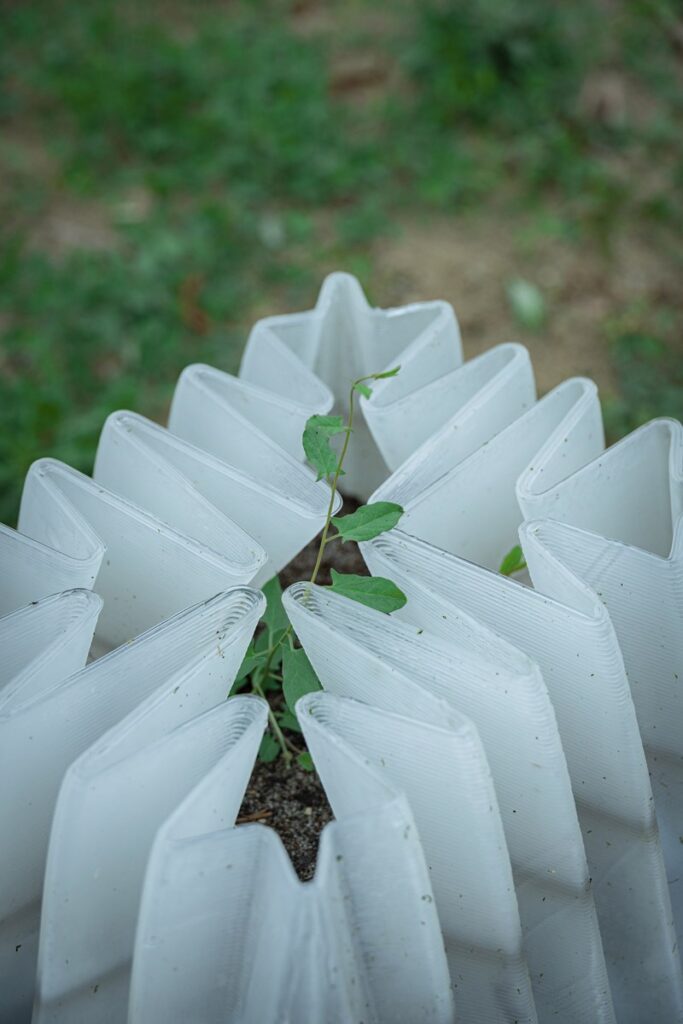
The Multispecies Vectorial Garden of Canelli is also made for people to observe and take part. Three areas, called quiet wedges, offer different ways of experiencing the landscape. Nine seats, 3D-printed in recycled PETG and biodegradable PET, are places to sit and also planters for soft cushions of clover. In addition, an inclined surface gathers people for shared observation, while a narrow, deep wedge brings visitors close to the garden at root level.
Six principles guide each visitor’s route: Pause, Observe, Leave Space, Return, Accept Change and Share. Visitors can also record plant observations on Pl@ntNet and iNaturalist, adding to a shared account of the garden’s life.
A living process
The Multispecies Vectorial Garden is conceived as a process rather than a finished object. Plant communities establish, flower, spread and sometimes disappear, and insects, birds and other organisms keep reorganising the site, season after season. In this way, design sets the initial conditions and growth, movement and encounters between forms of life do the rest.
“The garden is not a representation of a multispecies ecosystem. It is an attempt to make one grow,” says Marco Poletto. The studio has explored similar ideas in projects such as the AirBubble restorative space in Nyon.
Project Credits
Project: Multispecies Vectorial Garden of Canelli
Location: Moncalvina, Canelli, Province of Asti, Piedmont, Italy
Year: 2026
Commissioner: Castello di Rivoli Museo d’Arte Contemporanea / @castellodirivoli
Design studio: ecoLogicStudio / @ecologicstudio (London, Turin, Innsbruck)
Academic partners: Synthetic Landscape Lab, University of Innsbruck; Urban Morphogenesis Lab, The Bartlett, UCL
Artwork at the centre of the garden: Pluriversal Recapturings, Maria Thereza Alves
Design team: Prof. Claudia Pasquero, Dr. Marco Poletto, with Alessandra Poletto, Michael Unterberger
On-site monitoring, prototyping and photography: Marco Poletto with Francesco Genga, Alessandra Poletto, Giacomo Poletto Pasquero, Mika Schulze, Michael Unterberger, Julian Valdes and Xiao Wang
Plant nursery: Fratelli Gramaglia
Related Posts
Previous Post
Next Post
- OTLA terraces a forest slope into a village for retreat staff in Karnataka

- ARP studio sets a steel frame inside a 19th-century salt warehouse in Koper

- Pavillon wraps a family chalet in silver metal and old memories

- Stuart Ian Frost and Gunhild Lien raise a cylinder of spruce in an Alpine forest

- ecoLogicStudio threads a living garden through the vineyards of Canelli
- TAKK turns a bed into common ground for the Beaux Arts Ball