Now Reading: Rethinking sacred space as a lived architectural experience
- 01
Rethinking sacred space as a lived architectural experience


Set within the forested slopes of Cigombong, Sanctuary Tunnel Garden resists conventional definitions of sacred architecture. Rather than framing spirituality as a formalized ritual or monumental object, the project approaches it as an embodied, everyday condition shaped by movement, light, and landscape.
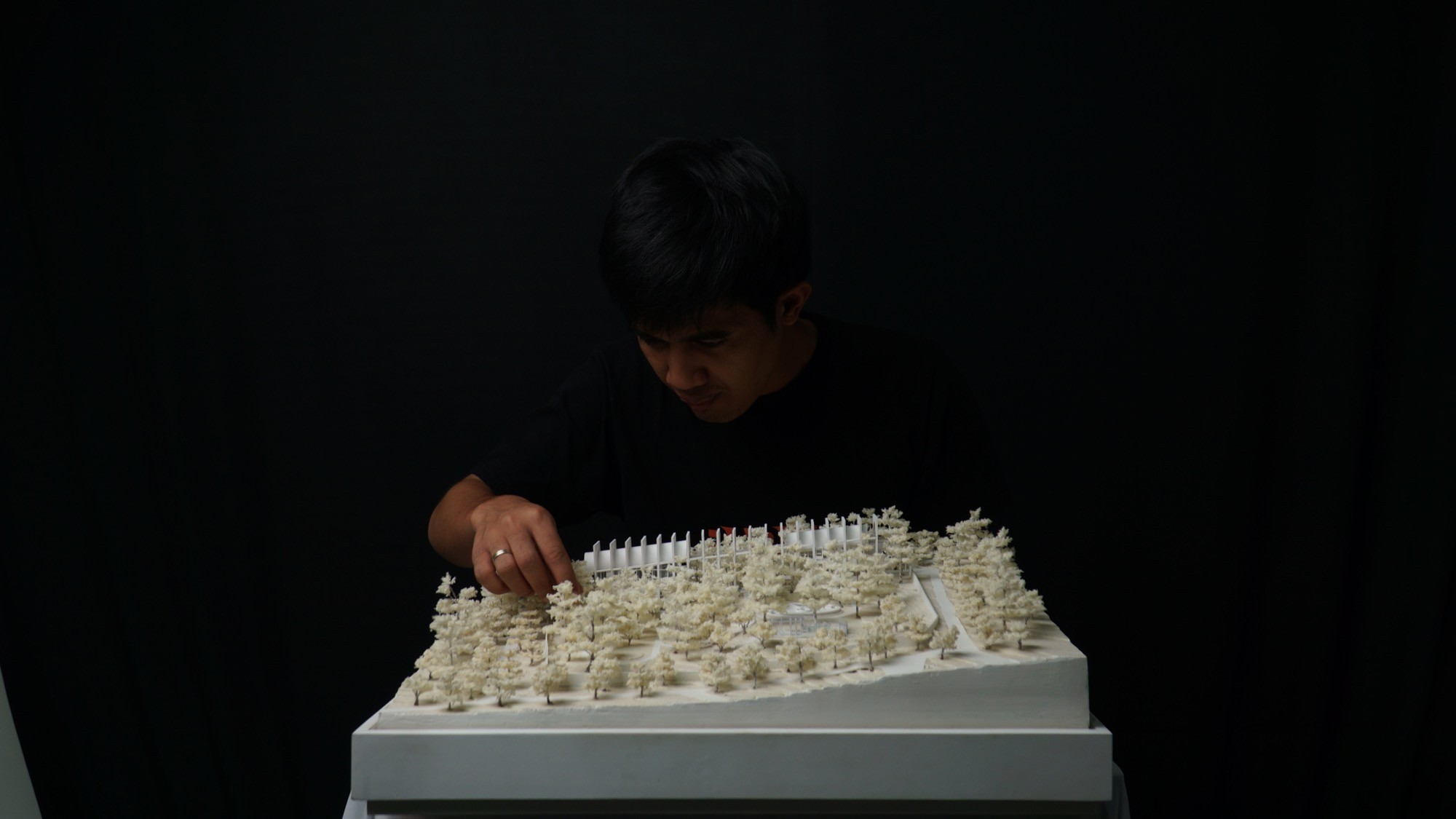
In the following academic and practice based conversation, Partogi Pandiangan, Associate of RAD+AR for Sanctuary Tunnel Garden, reflects on the project’s conceptual foundations, philosophical influences, and architectural strategies. Through this dialogue, architecture is examined as both theory and built practice, where terrain, climate, atmosphere, and light operate not as background elements but as primary architectural agents, offering a reconsideration of sacred space within contemporary tropical contexts.

What sparked the initial concept of framing spirituality as a lived, daily condition rather than a formal event, and how did this lead to using the vast rural landscape itself as the primary architectural material for the Sanctuary Tunnel Garden?
Partogi Pandiangan: The idea of framing spirituality as a lived, daily condition rather than something confined to formal rituals originates from the project’s core inspiration, Light and Truth at the End of the Tunnel. From the beginning, we were interested in distancing the project from sacred architecture understood as a symbolic or ornamental object. Instead, spirituality was approached as something embedded in everyday bodily experience, in how people move through space, perceive time, encounter nature, and become aware of light.
This position deliberately moves away from decorative vocabularies typically associated with religious buildings. Rather than relying on iconography or formal symbolism, the project emphasizes simplicity, openness, and experiential clarity as primary vehicles for contemplation and spiritual engagement. Spirituality, in this sense, is not staged as an exceptional moment but understood as an ongoing condition shaped by presence, movement, and sensory awareness.
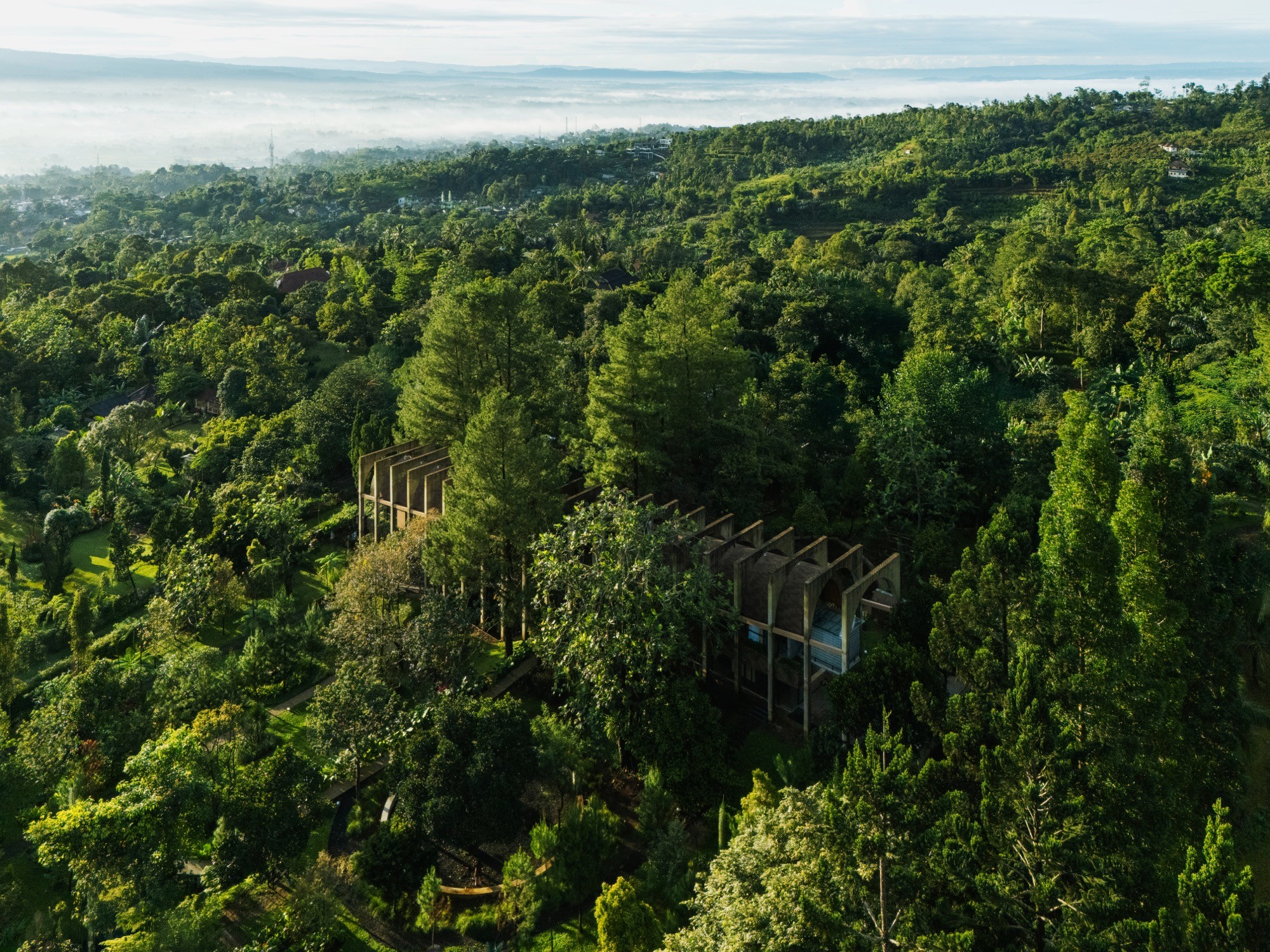
This shift from ceremonial architecture toward an everyday existential presence naturally led to the decision to treat the rural landscape itself as the primary architectural material. Instead of imposing a dominant built object onto the site, the design embeds itself within the terrain, occupying less than ten percent of the total footprint and forming a tunnel like extension of the sloping landscape.
Within this approach, existing trees, mist, slopes, and natural light are not treated as passive backdrops but as active spatial agents. Circulation gradually guides visitors deeper into the forested site, allowing the landscape itself to become the vessel of spiritual experience rather than a secondary setting for a clearly defined building. Minimal architectural interventions, such as the inverted tunnel carved into the terrain and the continuous geometry connecting interior and exterior, allow nature to function as an extension of sacred space. Ultimately, the project reframes spirituality as an ongoing condition grounded in movement, light, silence, and everyday presence in nature.
The project draws on a modernist idea of the sacred through clarity, restraint, and the emotional power of light. Could you share which specific architects, projects, or philosophical influences most shaped this approach?
The project is informed by a modernist understanding of the sacred that prioritizes clarity, restraint, and experiential depth over symbolism or ornamentation. Rather than referencing religious architecture through historical form, the approach draws from architects and philosophical traditions that treat space, light, and silence as primary spiritual agents.
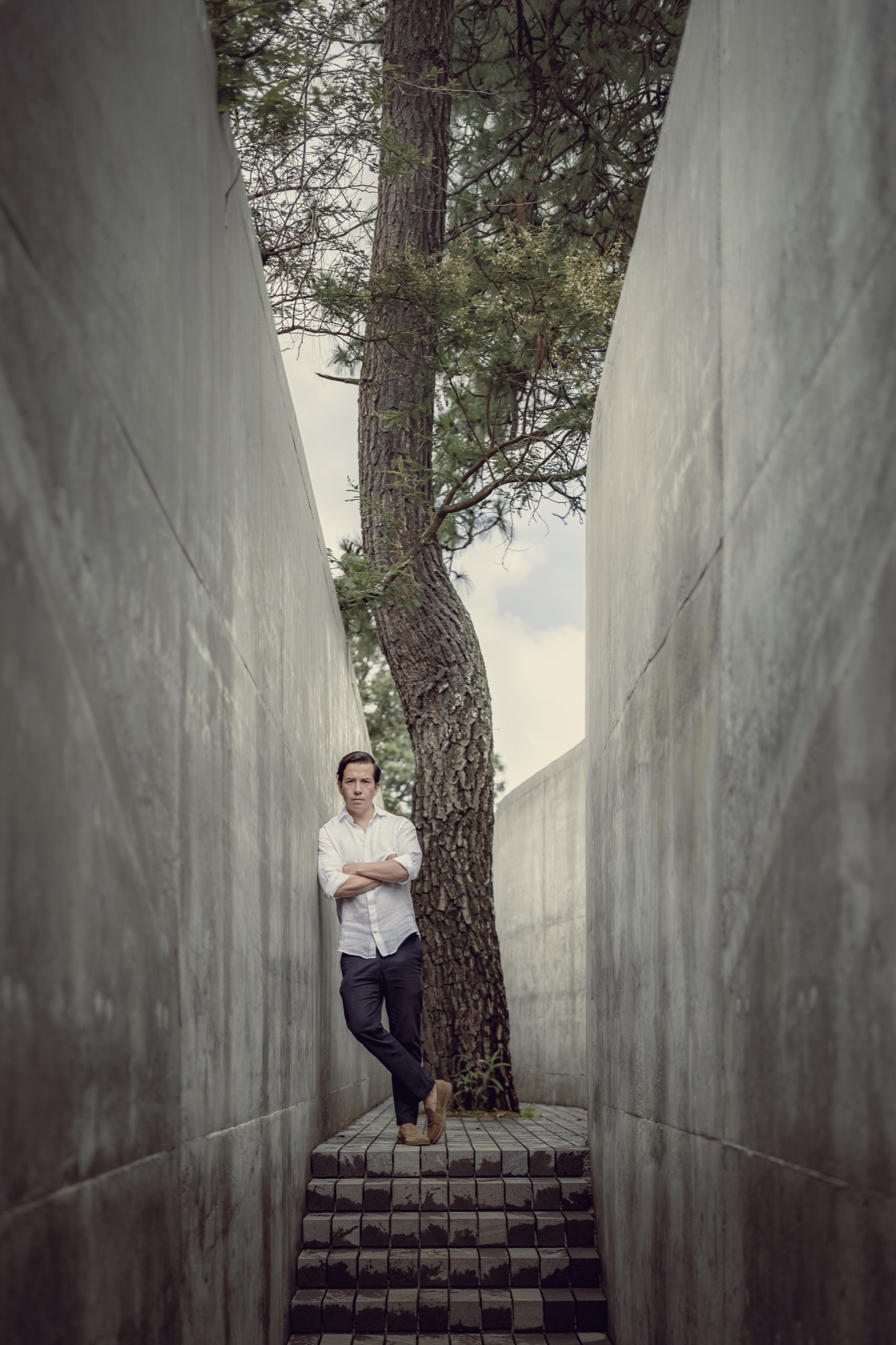
Tadao Ando is a key influence, particularly in his use of controlled light, restrained material palettes, and spatial procession to evoke introspection. His work demonstrates how minimal architectural gestures and carefully calibrated openings can transform light into an emotional and spiritual medium rather than a purely functional element.
Louis Kahn’s thinking also plays an important role, especially his belief that architecture should reveal the nature of space itself. His distinction between served and servant spaces and his assertion that light is the giver of all presences resonate strongly with the project’s emphasis on light as both structure and meaning.
Beyond individual architects, broader modernist and phenomenological thought informs the project, particularly ideas associated with Martin Heidegger concerning dwelling, being, and presence. These perspectives shape the focus on slowing movement, heightening awareness, and grounding spirituality in lived experience. Rather than isolating the sacred as a monumental object, these influences collectively guide the design toward an architecture that is quiet, inward looking, and emotionally charged through light and proportion. In Sanctuary Tunnel Garden, light becomes the primary symbolic language, culminating in the idea of the light at the end of the tunnel, where revelation unfolds gradually, spatially, and personally.
How did the sloping terrain and existing trees in Cigombong inform your decision to carve the program from a singular block with inverted forms, and what challenges arose in wrapping the architecture around the natural elements while preserving them?
The sloping topography and mature trees of the Cigombong site directly informed the decision to adopt a subtractive design strategy. Rather than composing the project from discrete architectural objects, the program was carved from a singular mass embedded within the terrain, allowing the architecture to emerge as a continuation of the landscape.
Inverted geometries developed as a response to both the natural contours of the site and the need to preserve existing vegetation. These forms allowed the architecture to negotiate the slope and tree root systems more carefully, enabling built spaces to wrap around natural elements rather than displacing them. This approach introduced significant challenges in terms of structural coordination, excavation, and construction sequencing, as the architecture had to respond continuously to site specific conditions rather than follow a predetermined formal logic.
The central tunnel acts as an ambiguous spatial threshold that slows movement and heightens contemplation. Can you elaborate on how you designed this sequence of compression, release, shadow, and brightness to transform arrival into a ritual experience?
The tunnel is conceived as an ambiguous spatial threshold rather than a purely functional passage. Its role is to choreograph movement through a sequence of compression, darkness, gradual release, and increasing brightness. This progression is intended to slow the body and heighten sensory awareness.
By compressing space and limiting light at the beginning of the tunnel, visitors are encouraged to become more conscious of their own presence and perception. As the tunnel gradually opens and light intensifies, the experience shifts toward release and clarity. In this way, circulation becomes ritualized, transforming arrival into a contemplative transition rather than a straightforward act of movement.
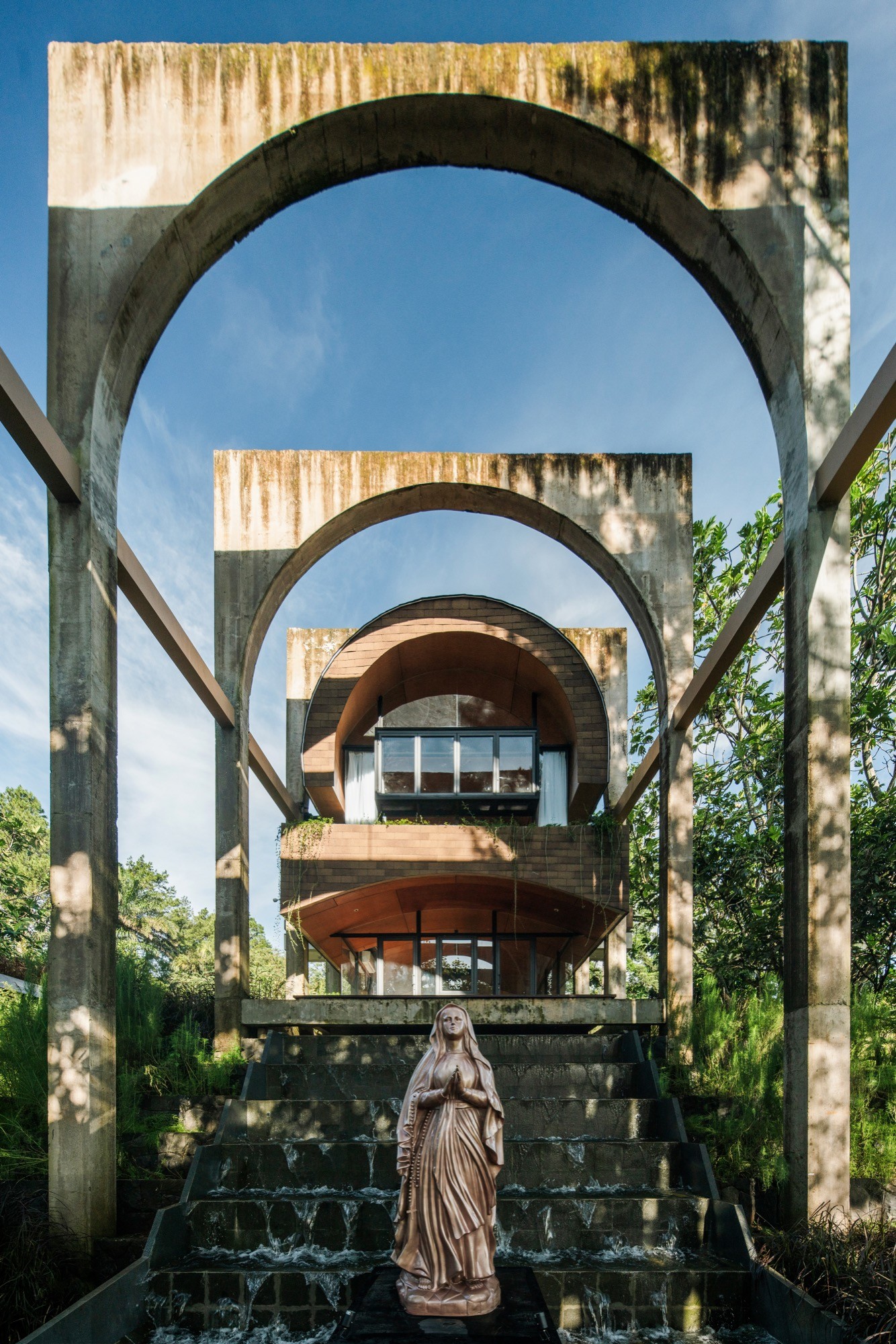
Light plays a profound symbolic and literal role, culminating in the metaphorical light at the end of the tunnel. What guided your strategies for dynamic lighting, reflected illumination, and all glass walls to create moments of revelation and transition?
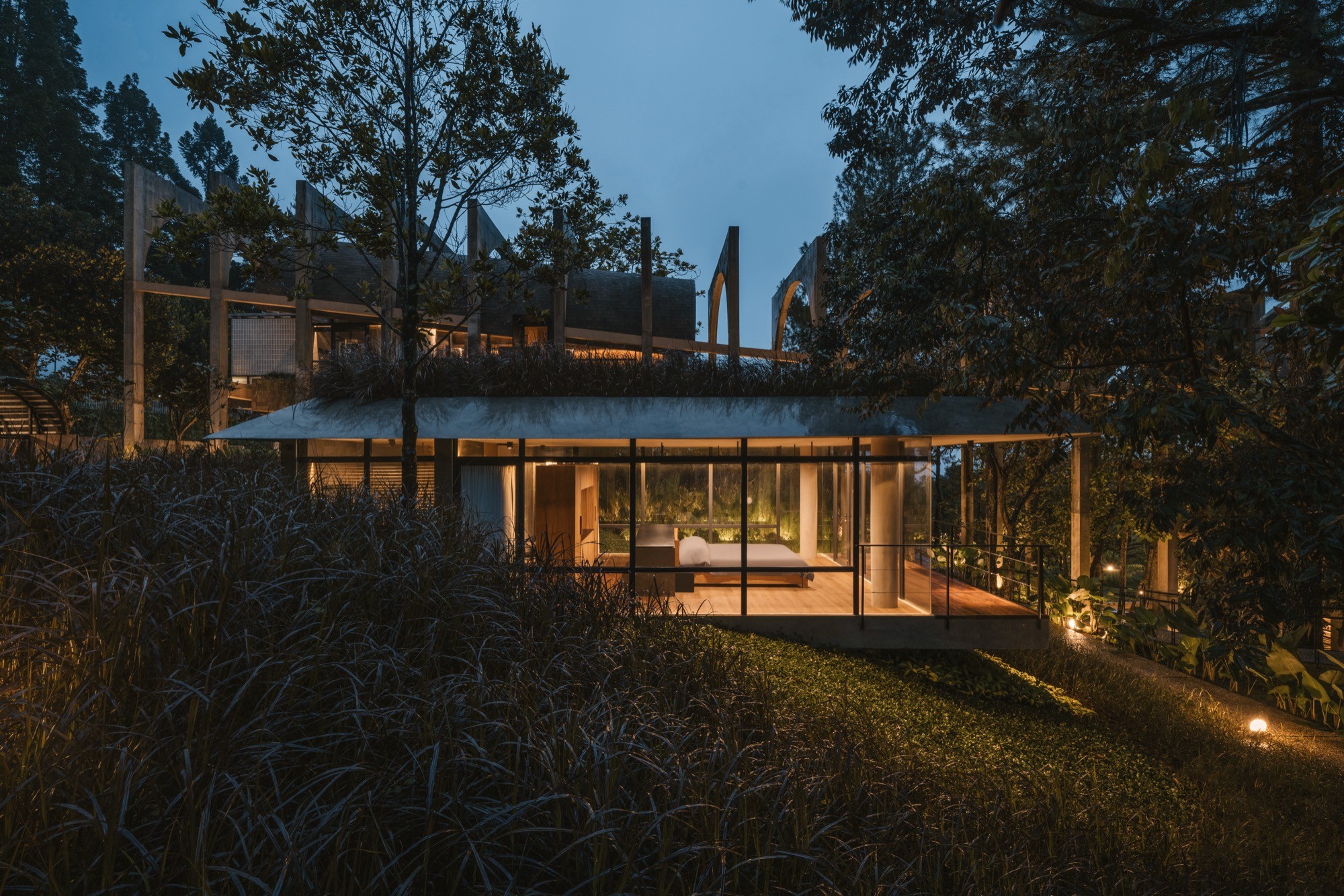
Light was conceived from the outset as both symbolic and performative. Rather than being added after the fact, light is integrated as a primary spatial and narrative device. Strategies such as reflected illumination, controlled apertures, and all glass enclosures were employed to orchestrate shifts between shadow and brightness.
These changes articulate the spatial sequence of the project and reinforce the metaphor of enlightenment embedded within the tunnel experience. Moments of revelation are not instantaneous but unfold through movement, reflection, and changing atmospheric conditions, allowing light to act as a medium of transformation rather than a static visual effect.
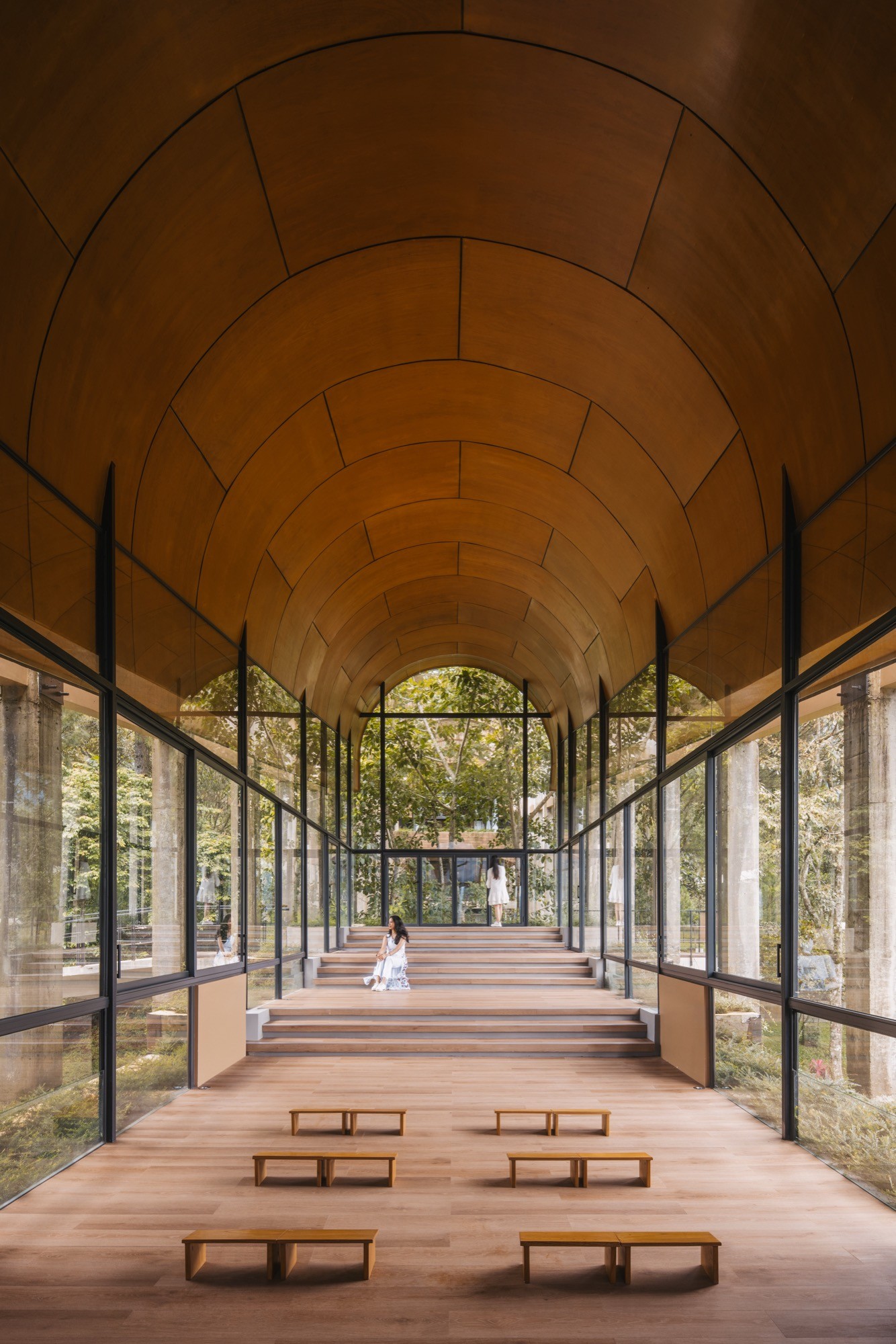
By organizing the site into three interrelated zones, semi public chapel, Mother Mary spiritual garden, and private retreat, how did you balance intimacy, accessibility, and seclusion, allowing sacred and everyday activities to coexist fluidly?
The organization of the site into three interrelated zones establishes a gradual spectrum of privacy and accessibility rather than rigid separation. The semi public chapel, the Mother Mary spiritual garden, and the private retreat are connected through continuous landscape and architectural elements, allowing movement between them to feel intuitive and fluid.
Transitions are softened through changes in scale, light, and spatial openness rather than hard boundaries. This allows sacred, semi public, and private activities to coexist within a cohesive spatial narrative, supporting both communal gathering and personal retreat without privileging one mode of experience over another.
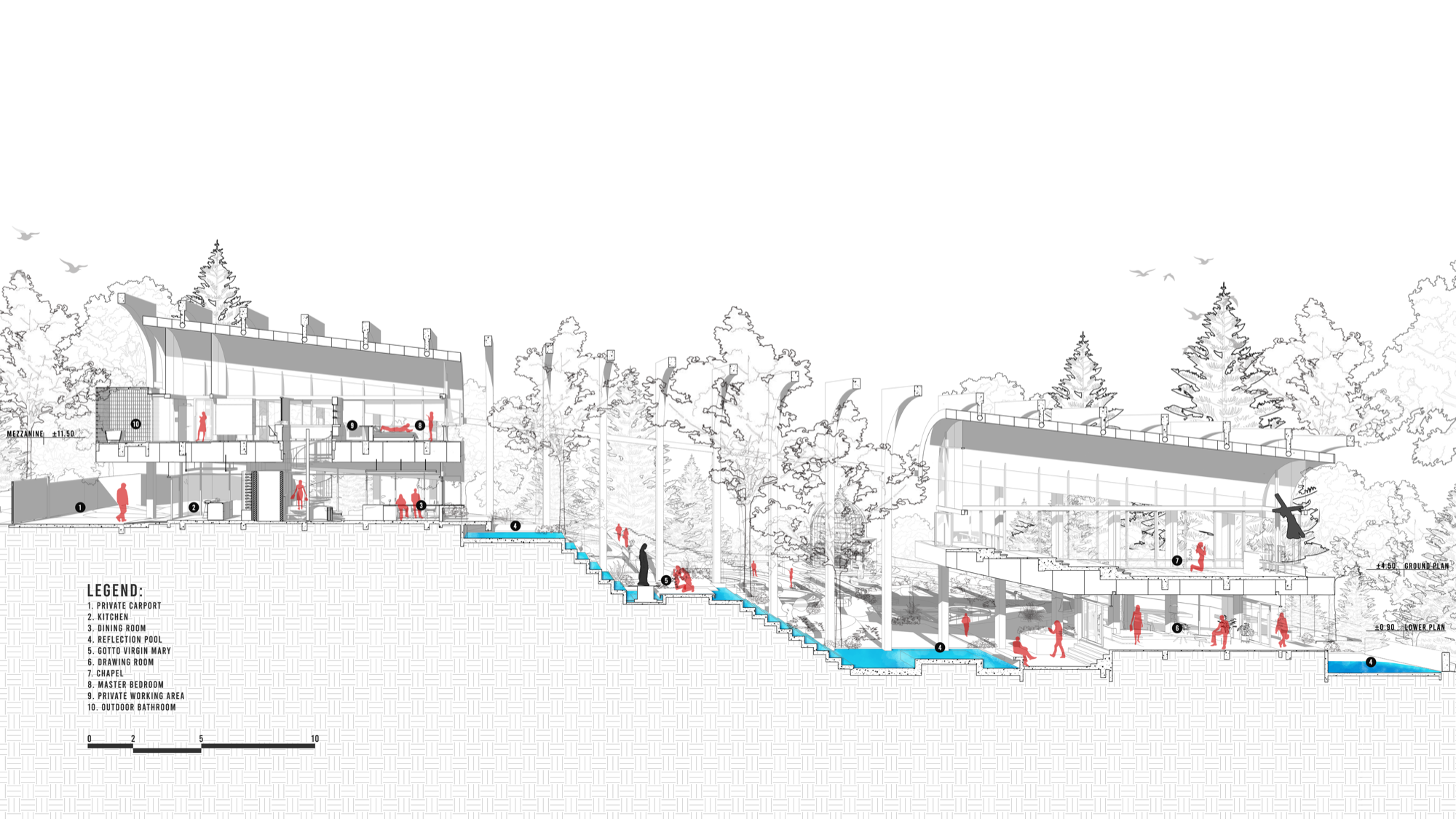
The integration of natural mist, humidity, waterfalls, and terraced compositions treats the environment as an active participant in reverence. How do you see these atmospheric and auditory elements enhancing the spiritual atmosphere beyond traditional built form?
Environmental phenomena such as mist, humidity, waterfalls, and ambient sound are treated as active architectural components rather than incidental conditions. These elements engage the senses beyond vision, introducing sound, moisture, temperature, and movement as integral aspects of spatial experience.
By incorporating these qualities into the design, sacred space extends beyond material enclosure. Spiritual atmosphere emerges through holistic sensory engagement shaped by climate and ecology, reinforcing a contemplative environment that is continuously changing and responsive to natural conditions.
In refusing to create an isolated architectural object and instead letting the landscape dominate, with built area under ten percent of the site, what broader views on sustainability and site specific design does this project reflect for you?
By limiting the built footprint to under ten percent of the site, the project rejects object centric architecture in favor of landscape driven spatiality. Sustainability is understood not primarily as a technological solution but as an ethic of restraint and responsiveness.
This approach reflects a commitment to site specific design that amplifies existing natural systems rather than overpowering them. Architecture becomes a mediator that reveals and intensifies qualities already present in the landscape, aligning environmental responsibility with experiential depth.
The chapel’s floating corpus is defined more by illumination than by heavy ornament. Could you discuss how this minimalist approach reinterprets traditional religious iconography for a contemporary context?
The chapel’s floating corpus is articulated through light rather than material weight or ornamentation. This minimalist approach shifts religious iconography away from representational symbolism toward experiential presence.
Rather than presenting a fixed visual icon, meaning emerges through perception, ambiguity, and the interaction between light and space. This allows contemporary visitors to engage with spiritual symbolism in a more personal and open ended manner, grounded in sensory experience rather than prescribed imagery.
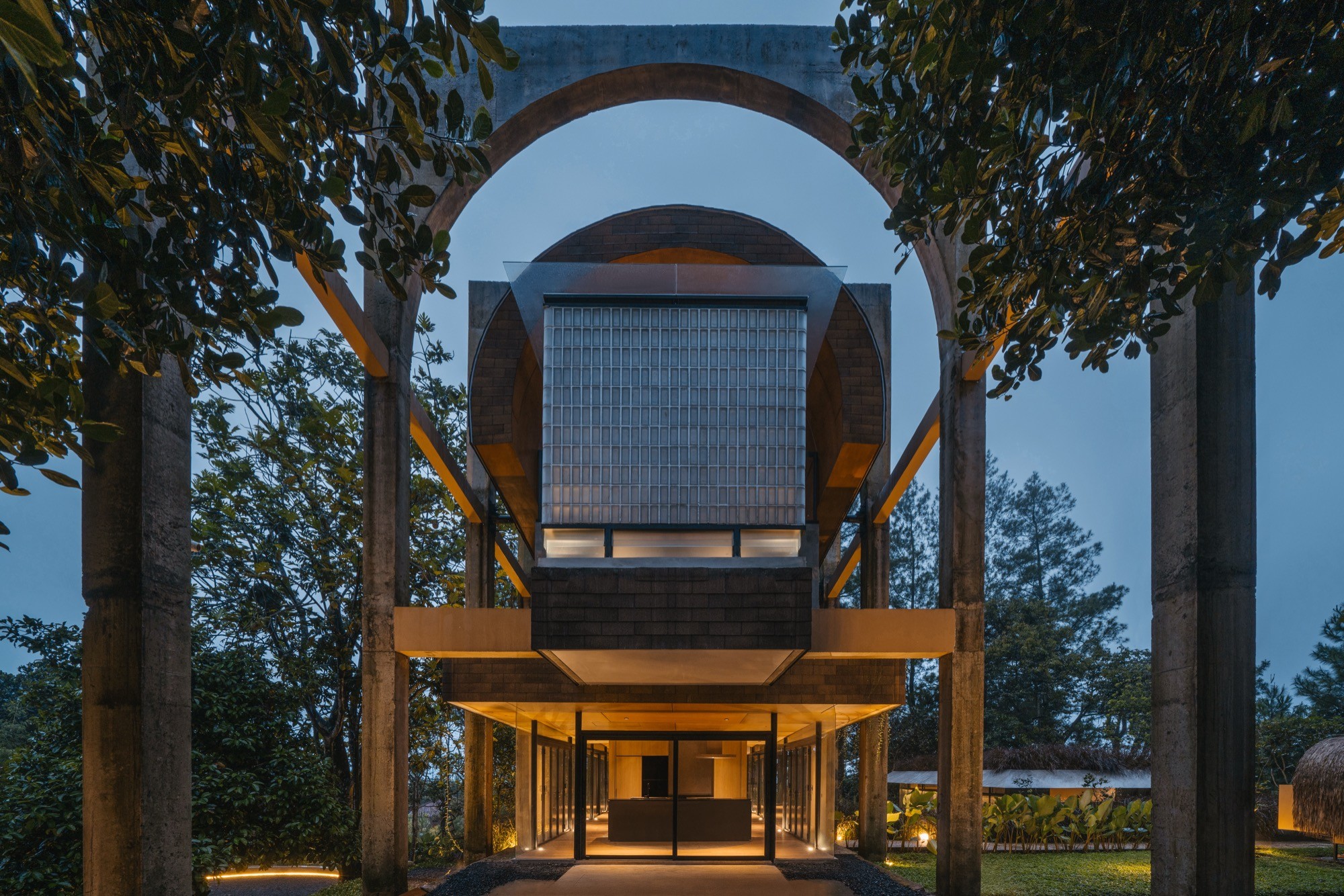
Looking back now that the project is completed, what long term impacts do you hope Sanctuary Tunnel Garden will have on visitors’ understanding of spirituality, their connection to nature, and perhaps the future of sacred architecture in tropical landscapes?
In the long term, the project aspires to reshape visitors’ understanding of spirituality as an embodied and environmental experience rather than a purely formal or doctrinal one. By grounding spiritual engagement in movement, light, and landscape, the project encourages a deeper connection between inner reflection and the natural world.
More broadly, Sanctuary Tunnel Garden proposes a direction for sacred architecture in tropical contexts that is immersive, landscape integrated, and grounded in phenomenological engagement rather than formal expression. It suggests that sacred space can emerge through restraint, sensitivity, and attentiveness to climate and ecology, offering an alternative to monumentality in contemporary religious architecture.
Article Credit
Interview: Kai Nakamura
Photo: Ernest Theofilus / @ernesttheofilus