Now Reading: A modern chapel carved into the landscape near Bogor
- 01
A modern chapel carved into the landscape near Bogor


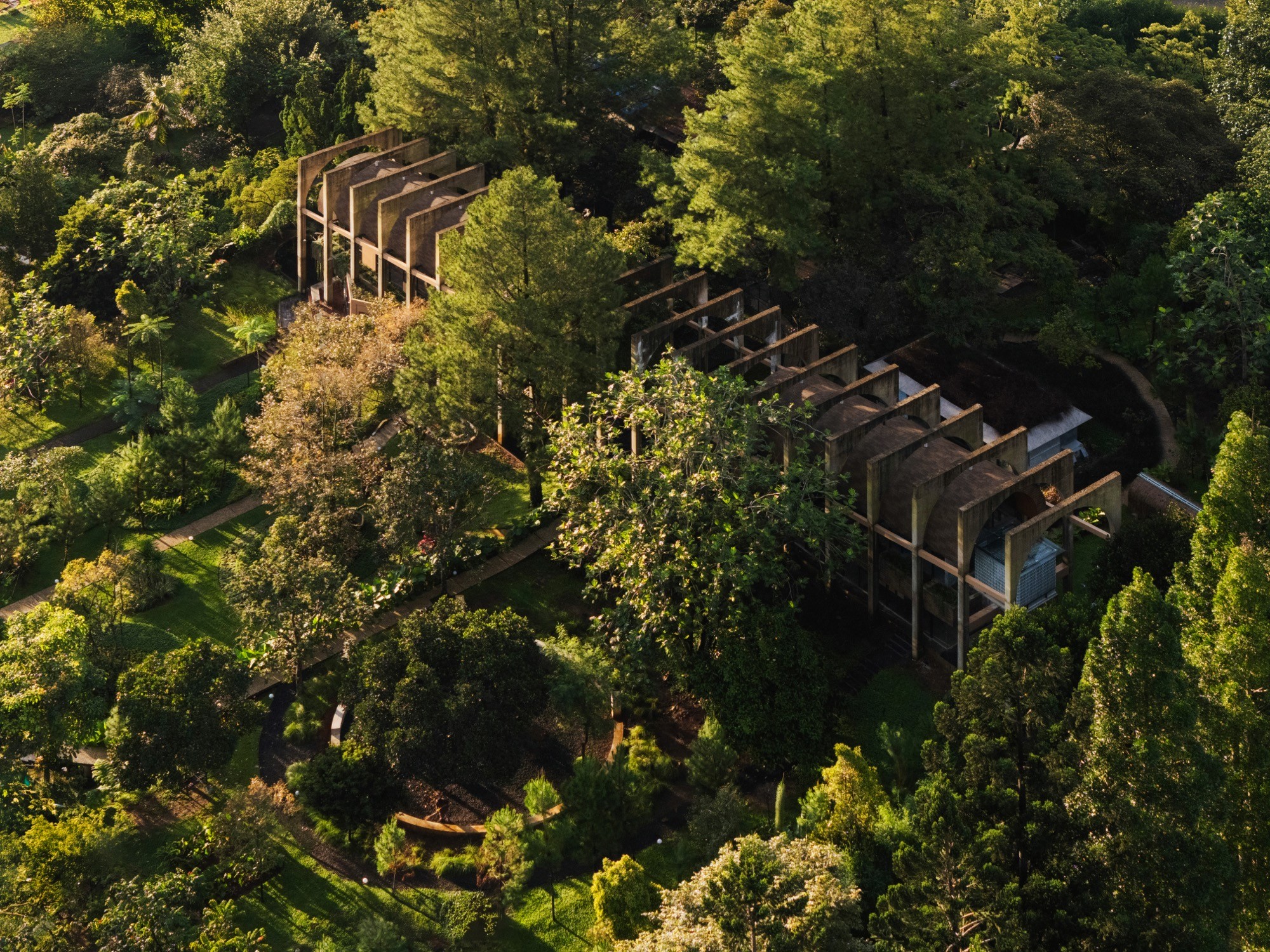

On a quiet estate outside Bogor, Indonesia, a new chapel project proposes a hybrid brief that feels increasingly of its time. Conceived as both a private retreat villa and a place of prayer, Light and Truth at the End of the Tunnel frames spirituality as a lived, daily condition rather than a formal event. It is designed for withdrawal from the city, yet it refuses to become an isolated object. Instead, it turns outward, using the vastness of the rural site as the architecture’s primary material.


The project’s central gesture is an inverted, ambiguous tunnel that functions less as a corridor and more as a device for contemplation. It is a spatial threshold that slows the body down and heightens attention, turning arrival into a ritual. The tunnel is imagined as both tangible and atmospheric, piercing the terrain while drawing the visitor into a sequence of compression and release, shadow and brightness. In doing so, the architecture frames nature not as scenery but as an active participant in reverence.


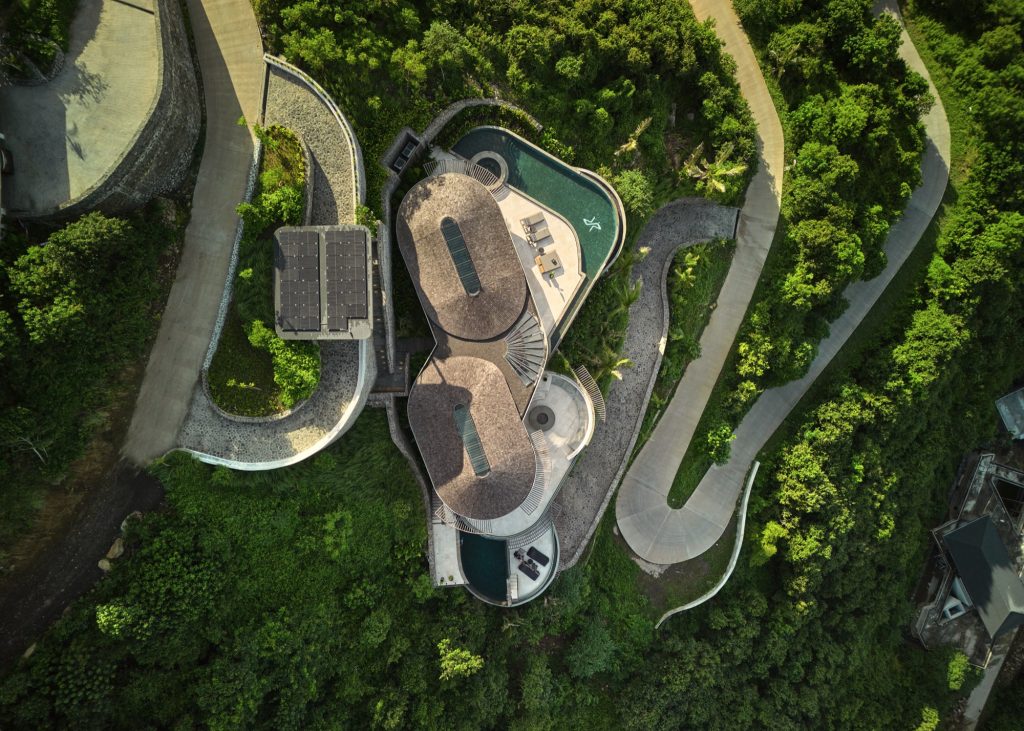
Rather than borrowing from historical iconography, the chapel leans into a modernist idea of the sacred: clarity, restraint, and the emotional power of light. Its language echoes the simplicity of archaic exoskeleton structures on a slope, updated into a terraced composition that steps with the land. New buildings are connected through ramped circulations, allowing the route to feel continuous and bodily, while responding to the irregular density of the existing woods. The result reads as a landscape architecture more than a single monument, where spirituality is carried by movement, proportion, and atmosphere.


The programme is organised into three interrelated zones: a semi public chapel, a semi public Mother Mary spiritual garden, and a private retreat consisting of a main villa and guest villa. These parts are described as being carved from a singular block, with tunnel like spaces intersecting inverted forms and wrapping around existing trees that rise through the architecture. Mist and humidity, natural to the region, are treated as part of the spatial palette, softening edges and amplifying the sense of apparition.

Within the chapel, intimacy shifts by degree rather than by door. Flowing geometries and dynamic lighting define spaces for solitary prayer as well as communal gathering, while maintaining a light footprint on the land. The built area occupies less than ten percent of the site, reinforcing the idea that the landscape remains the project’s dominant presence.
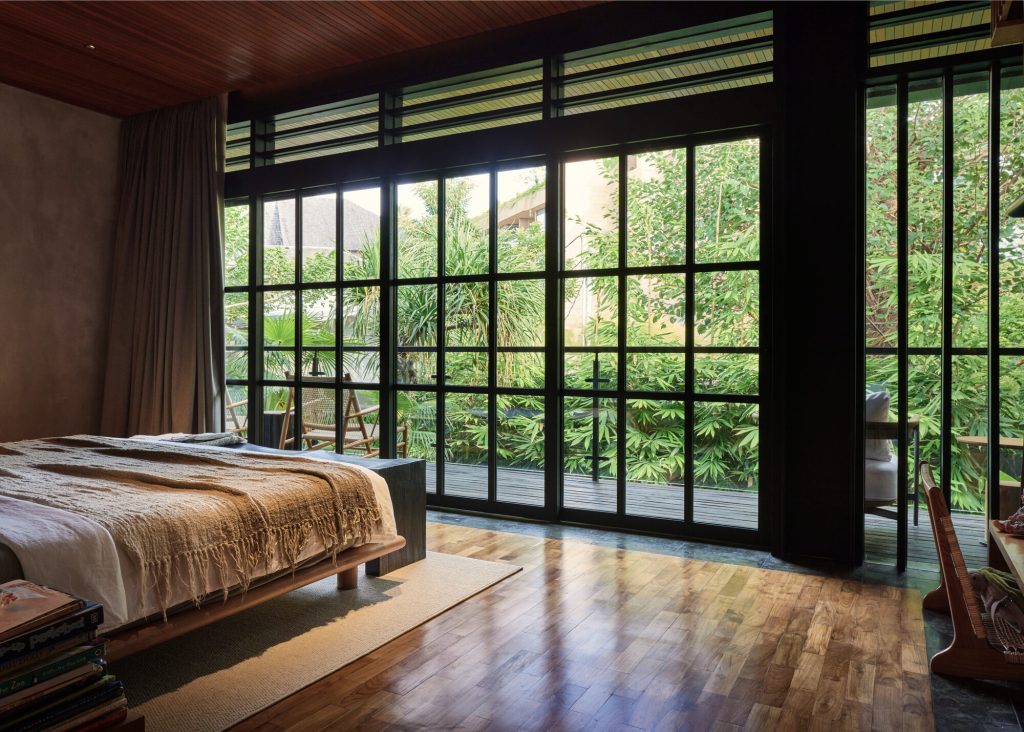
Although shaped as an undulating terrain work, the building adopts all glass walls at key moments, offering an unexpectedly transparent and approachable face. This openness allows the sacred and the everyday to coexist, inviting an indoor outdoor experience that feels closer to a pavilion than a sealed sanctuary. The architecture appears to wait within the site, revealing itself gradually through the topography, the trees, and the path.


At ground level, smaller sacred spaces interlock with water. Natural terraces flow into manmade interventions, including a waterfall that choreographs sound and cooling, while reflected light animates the interiors. The scale is deliberately human, yet the brightness and the open edges recall the social life of outdoor worship and communal gathering, translated into a contemporary spatial script.

The project culminates in a charged, symbolic moment: the chapel as a floating corpus of Jesus, defined not by heavy ornament but by illumination. Light at the end of the tunnel becomes both literal and metaphoric, pulling the visitor forward and framing the final space as an encounter between interior belief and exterior vastness. What emerges is a spiritual architecture that does not insist on grandeur, but on transition. A place where the journey itself becomes devotion, and where landscape, light, and silence carry the weight of faith.


Project Credit
Name: Sanctuary Tunnel Garden
Location: Indonesia, Cigombong
Design: RAD+AR / @radarchitects
Completed: 2025
Photo: Ernest Theofilus / @ernesttheofilus
More Photos