Now Reading: Three curtains give YU Ting’s Shanghai café a world of its own
- 01
Three curtains give YU Ting’s Shanghai café a world of its own

Three curtains give YU Ting’s Shanghai café a world of its own
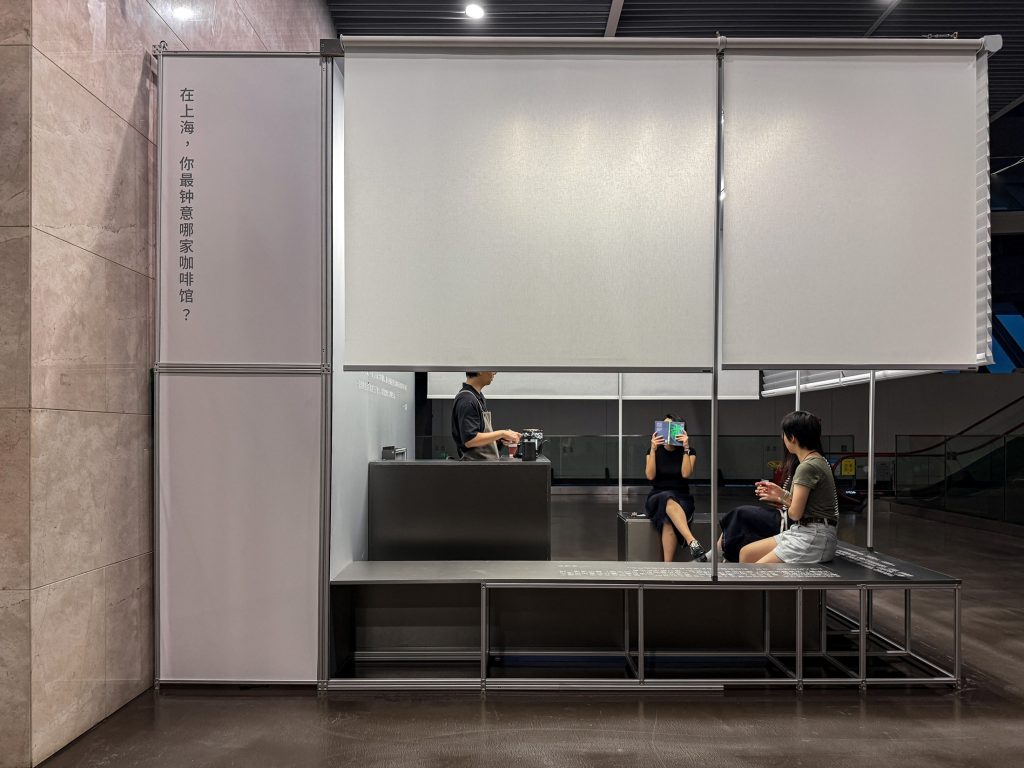
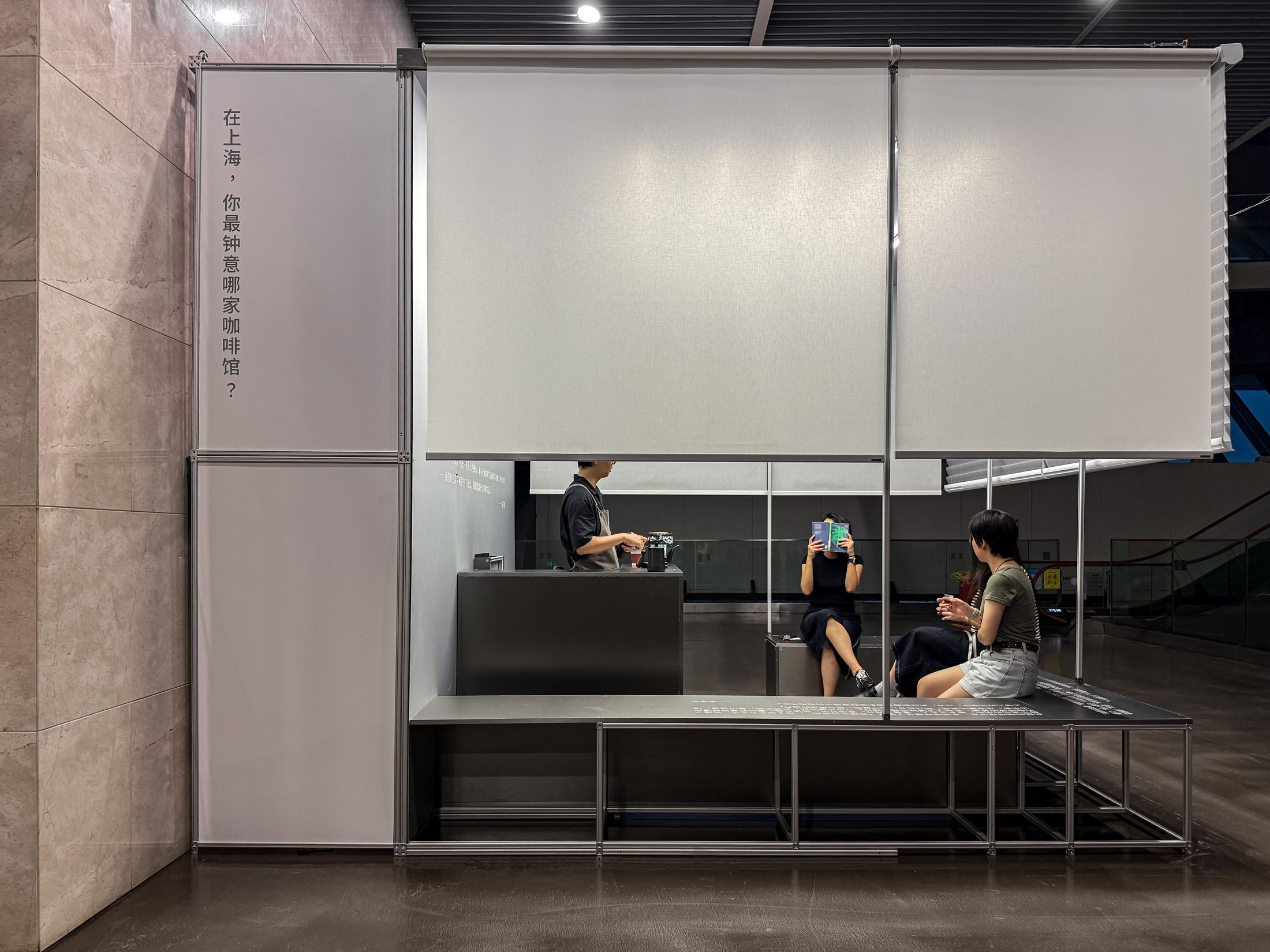
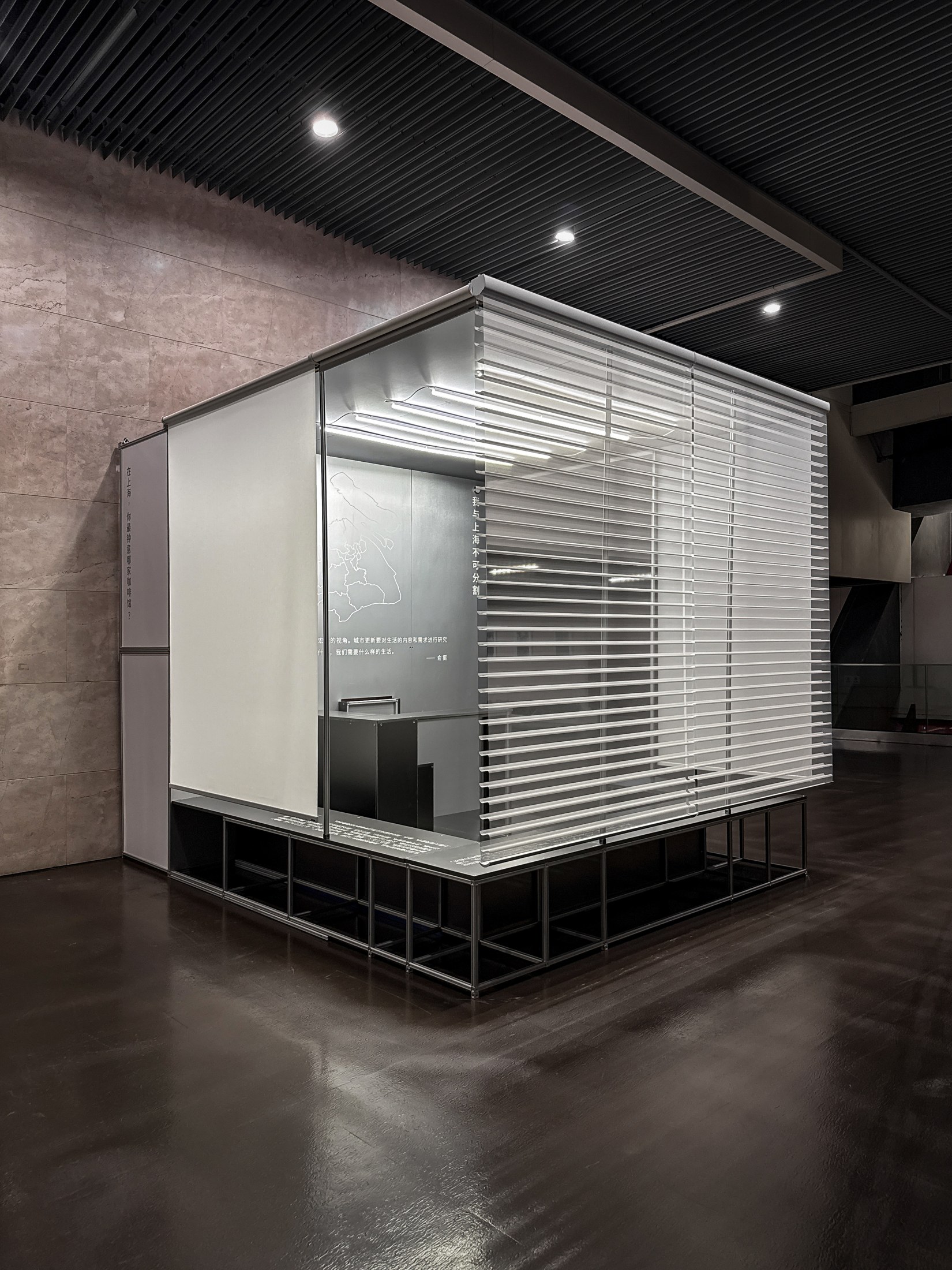
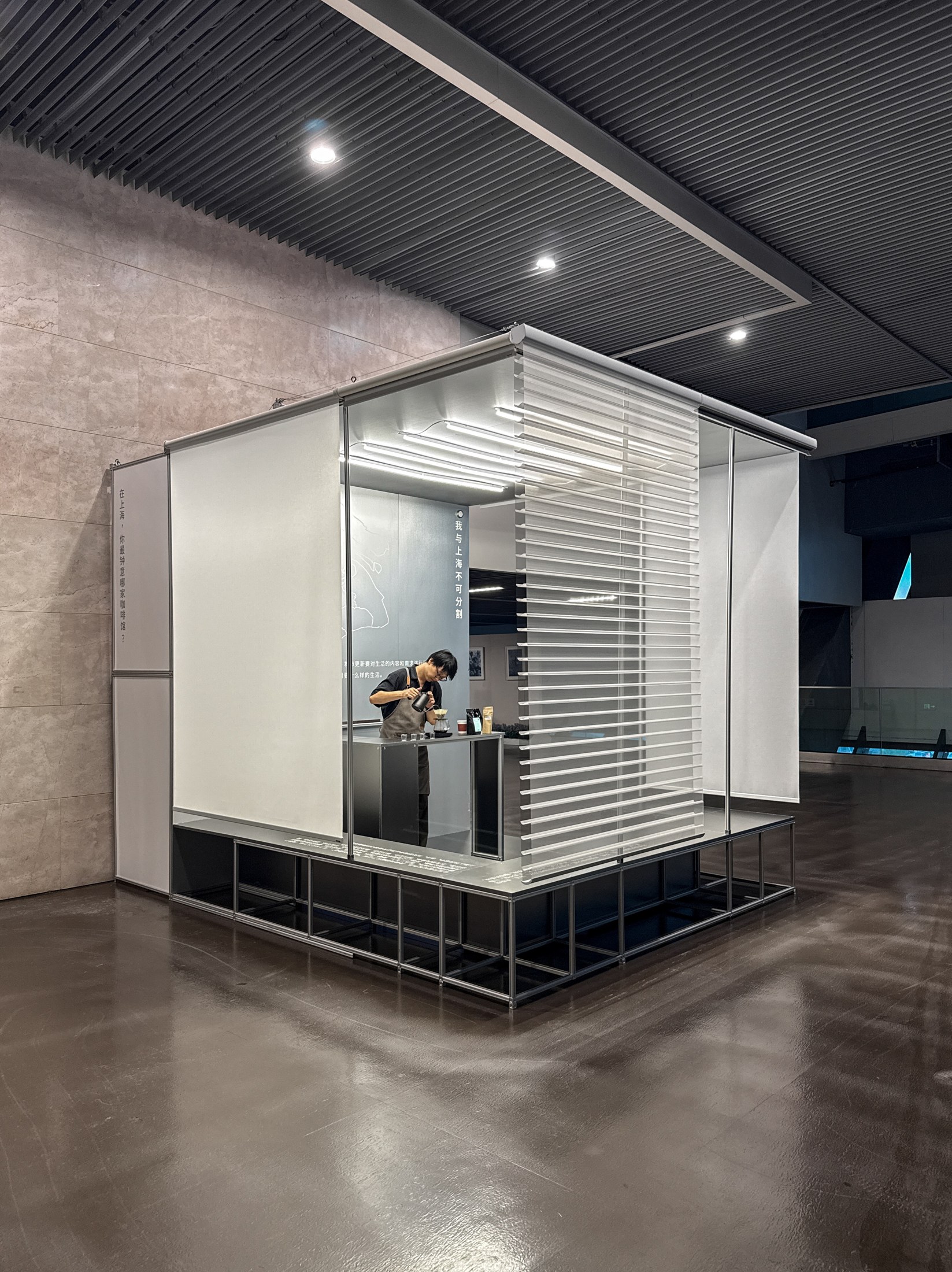
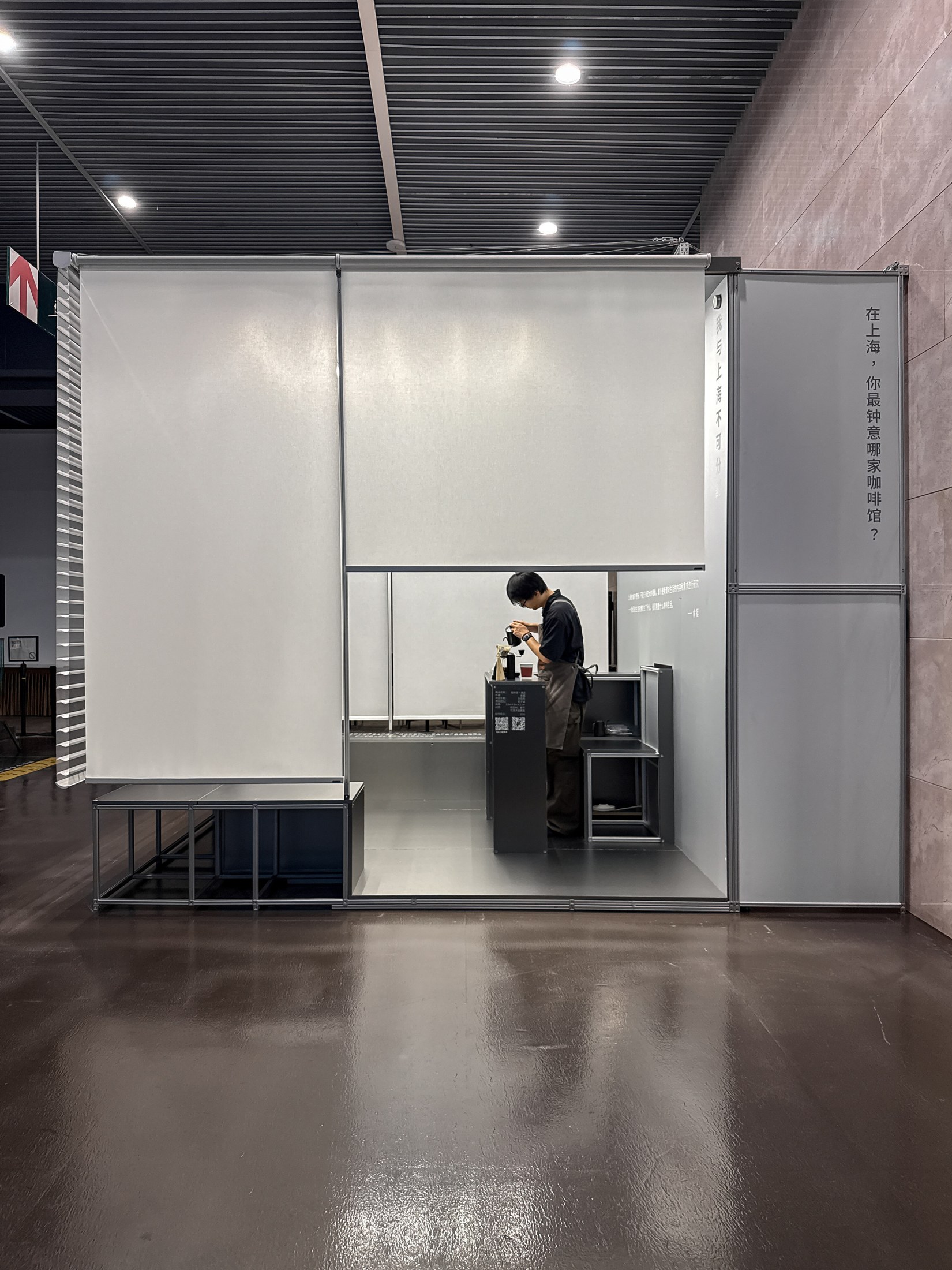
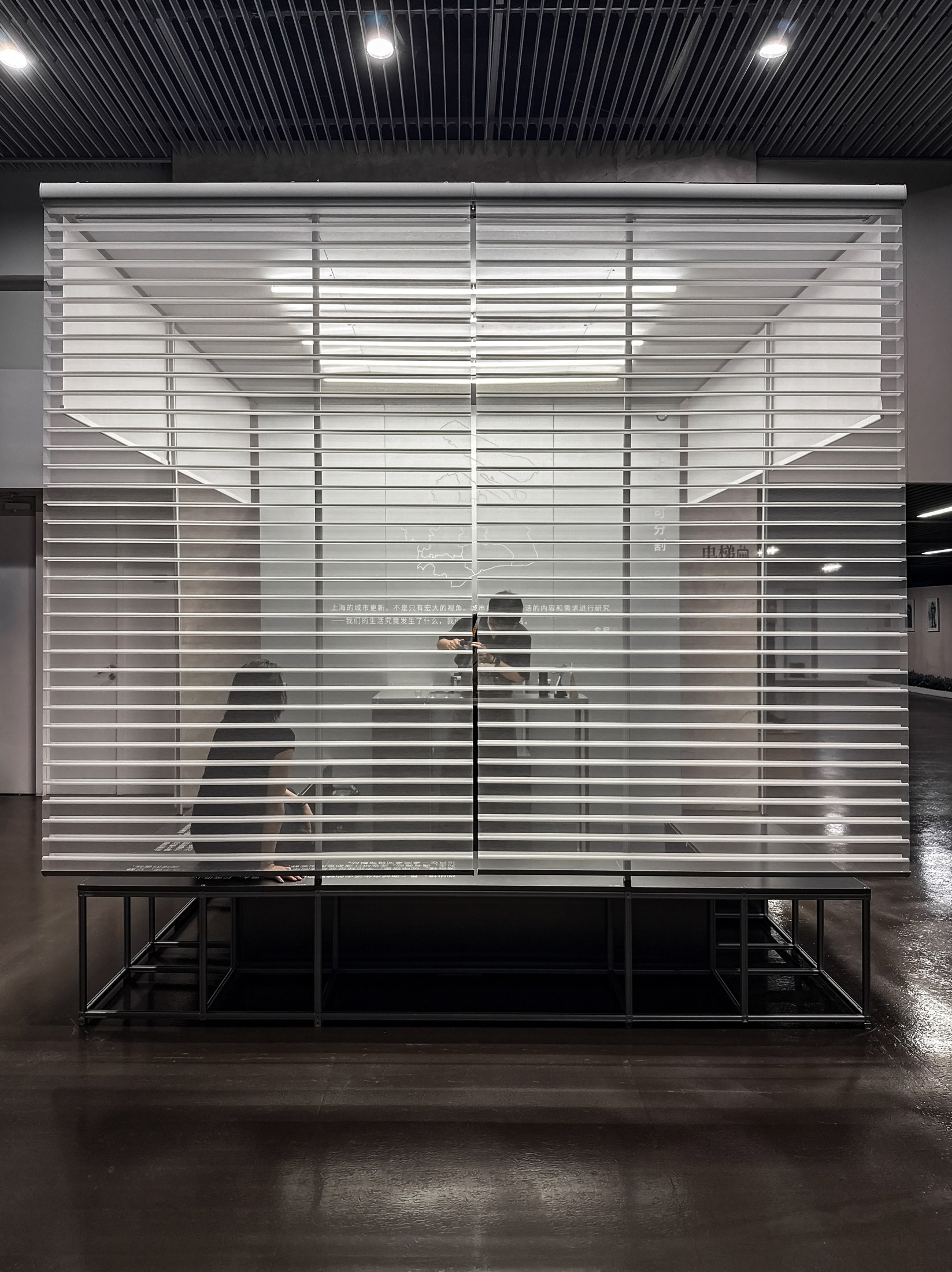
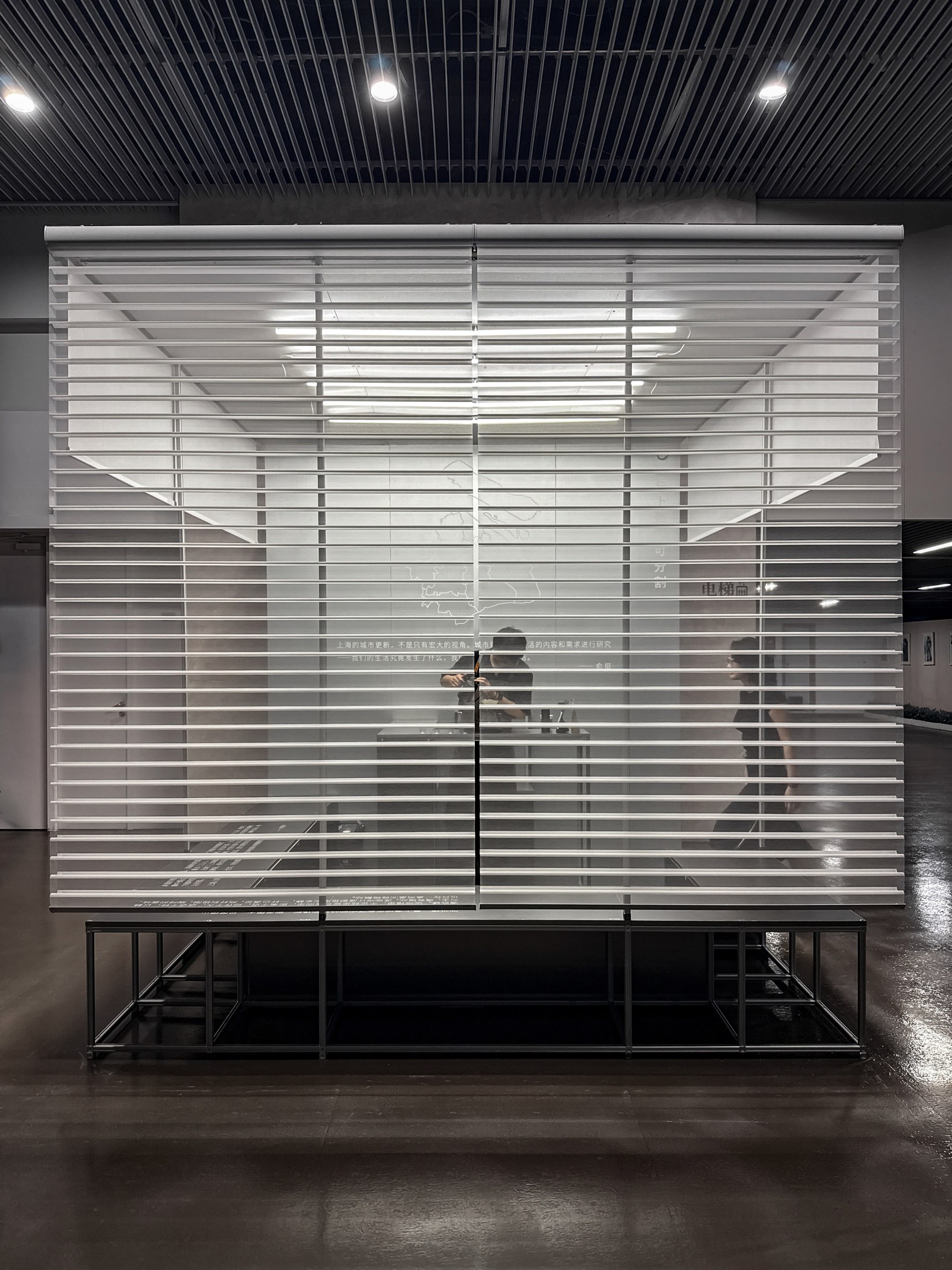
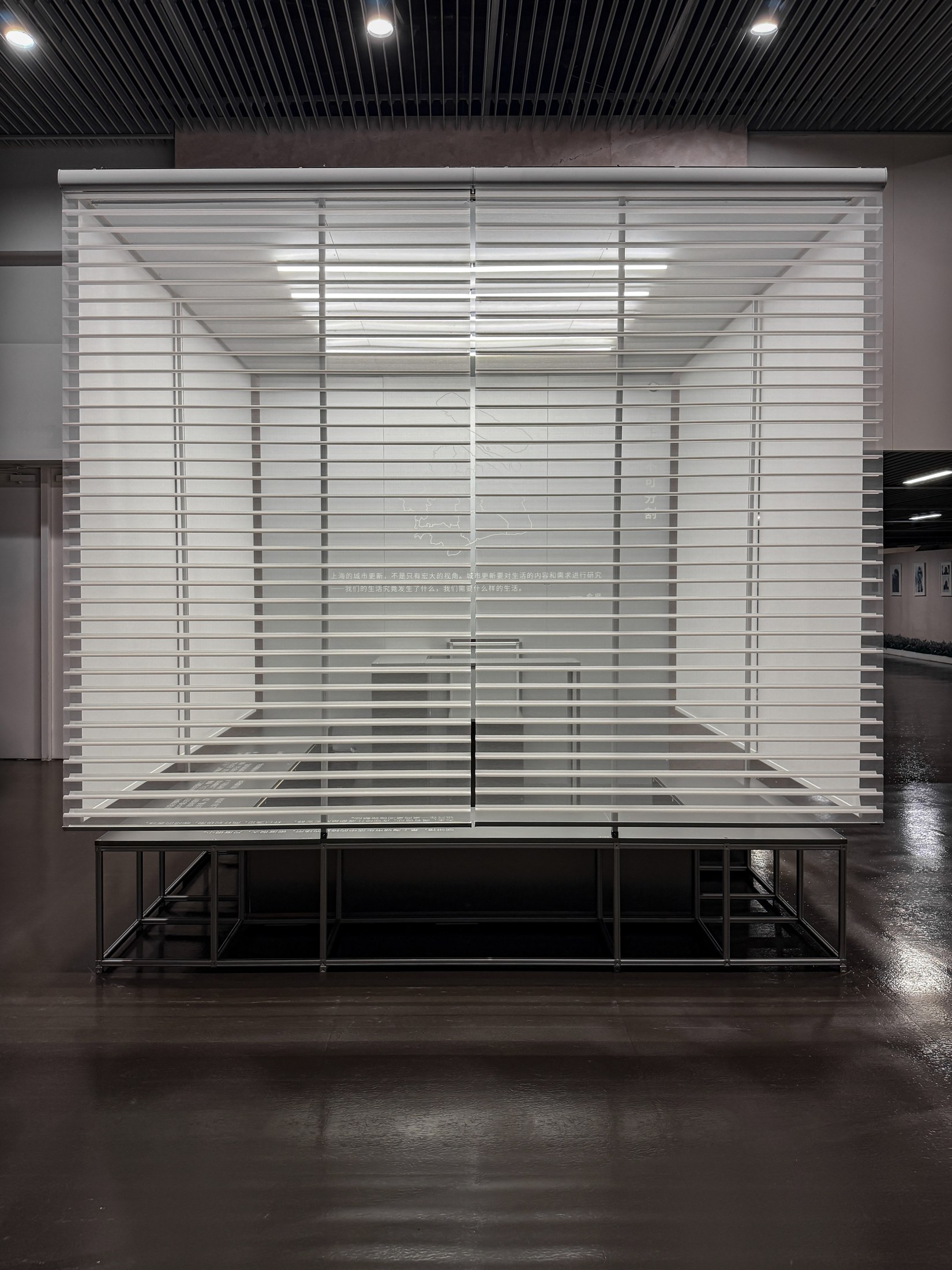
Three curtains determine how much of the museum enters YU Ting’s café. Raised, they expose a compact place to sit and drink coffee within the larger public interior. Lowered, they draw a boundary around it, allowing light and the outlines of people to remain perceptible through the enclosure. The change is modest, but it gives the same small space two different relationships with its surroundings.
Café · Fulfillment forms the fourth spatial chapter of Bound to Shanghai, the architect’s concept exhibition at the Shanghai Art Museum, also known as the China Art Museum. Begun in early 2026, the exhibition explores his relationship with the city through seven built environments. Visitors encounter architecture by entering it, occupying it and sharing it with others.
A small point of contact
For YU Ting, the café holds a particular place in Shanghai’s everyday life. It sits between the public and the private, the street and the interior. Someone can stop alone; a pair of visitors can begin a conversation; strangers can briefly inhabit the same setting without becoming a group. Coffee gives these different forms of company a common reason to be there.
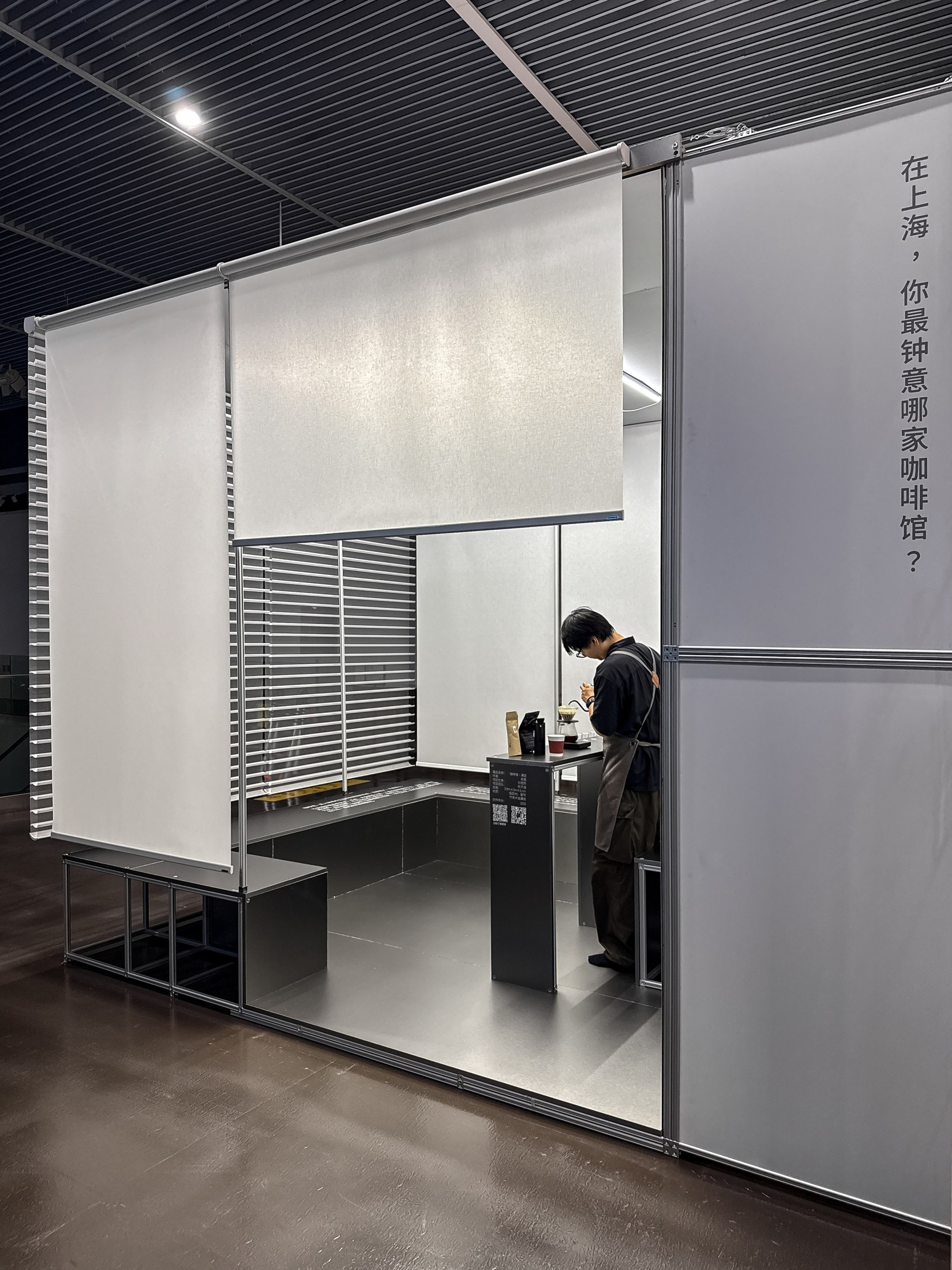
He likens the café to a needle: a small intervention capable of reaching a precise point in the city. The comparison gives this museum installation a wider urban ambition. Its value depends on the encounters it makes possible and the pause it offers within a larger flow of activity.
The frame becomes the architecture
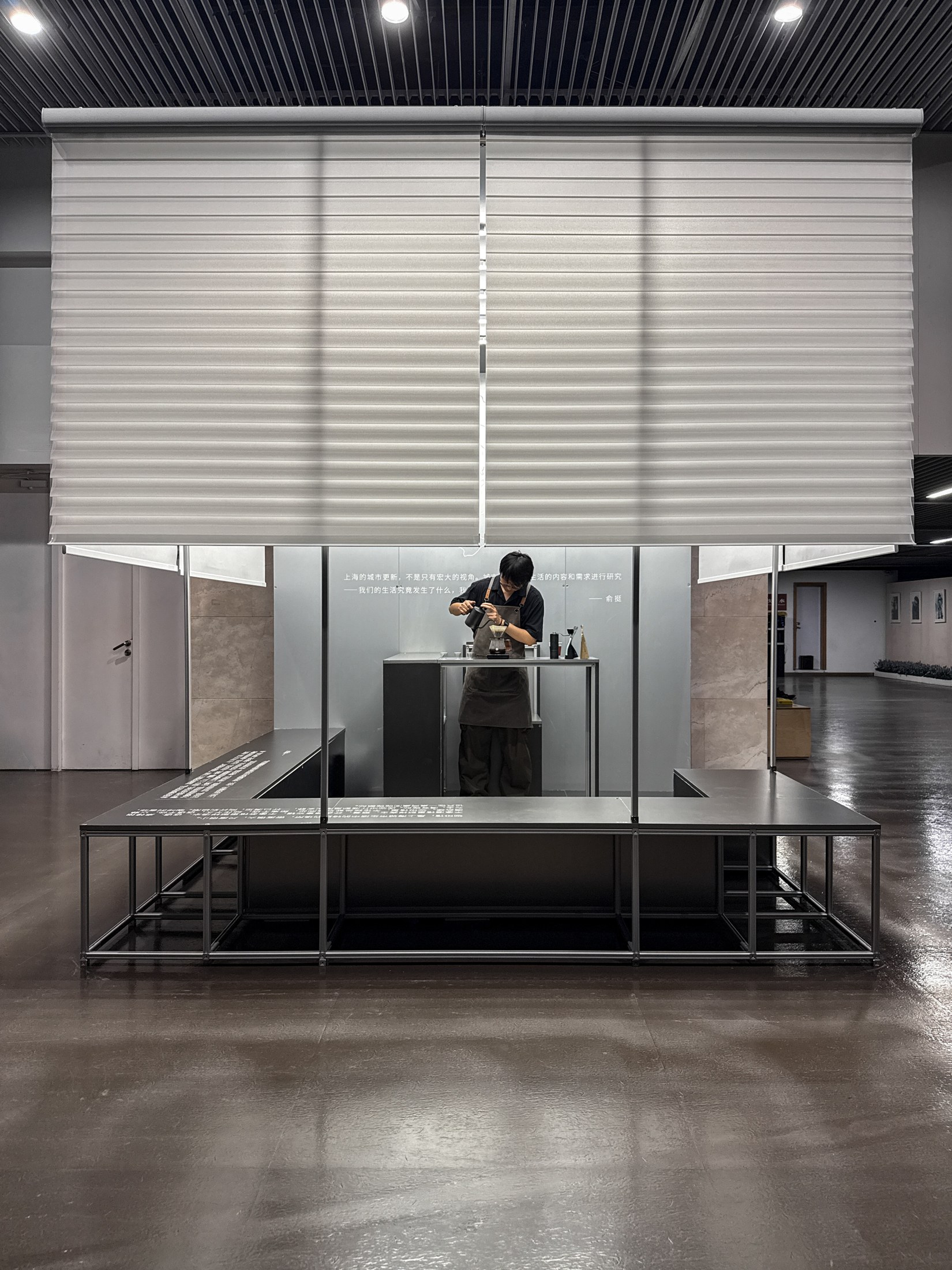
Aluminium profiles provide a lightweight, modular construction system. During assembly, their exposed outline acquired a spatial presence of its own. A system intended to support the café became an important part of what visitors would see, prompting the decision to leave it visible.
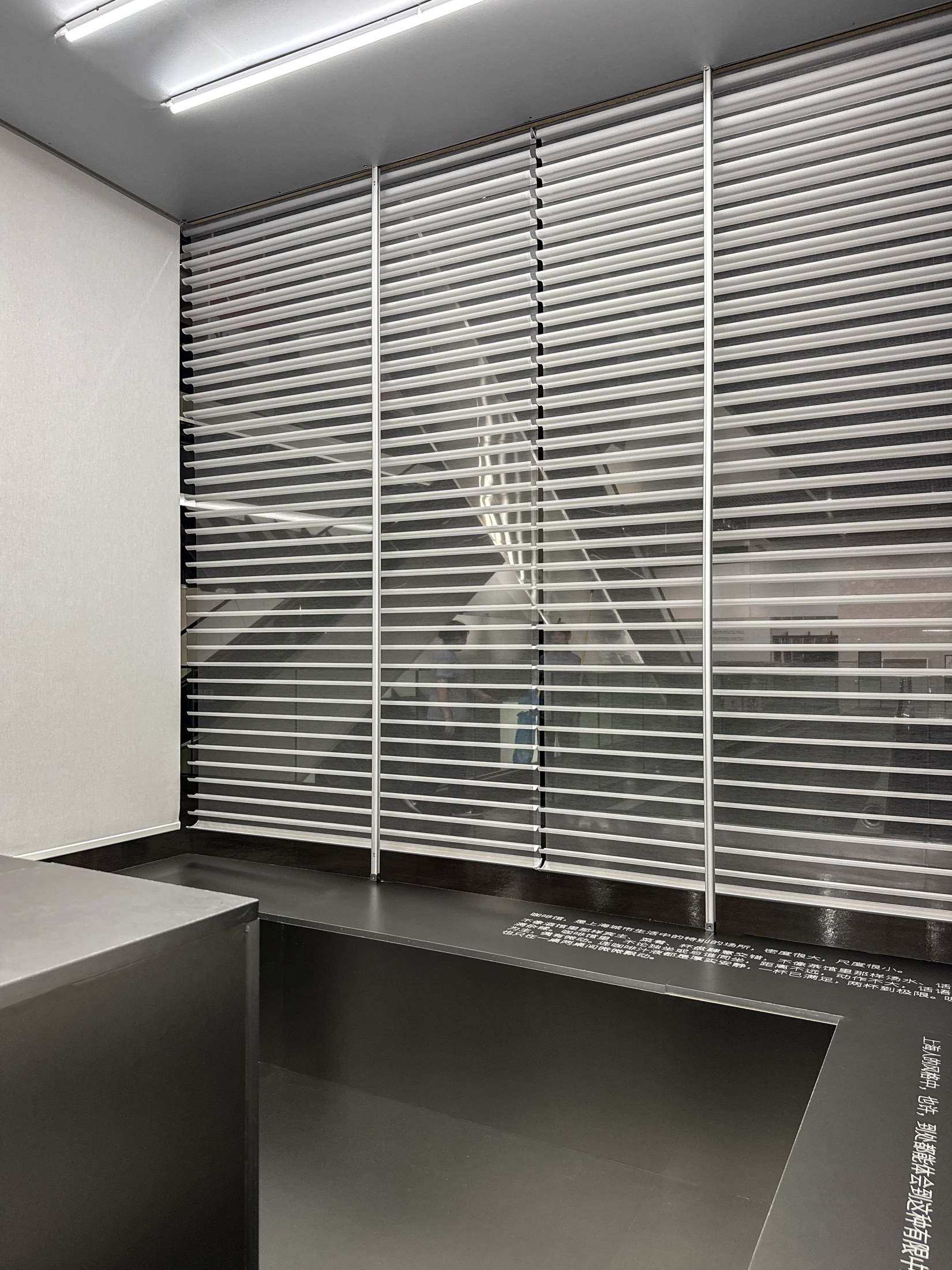
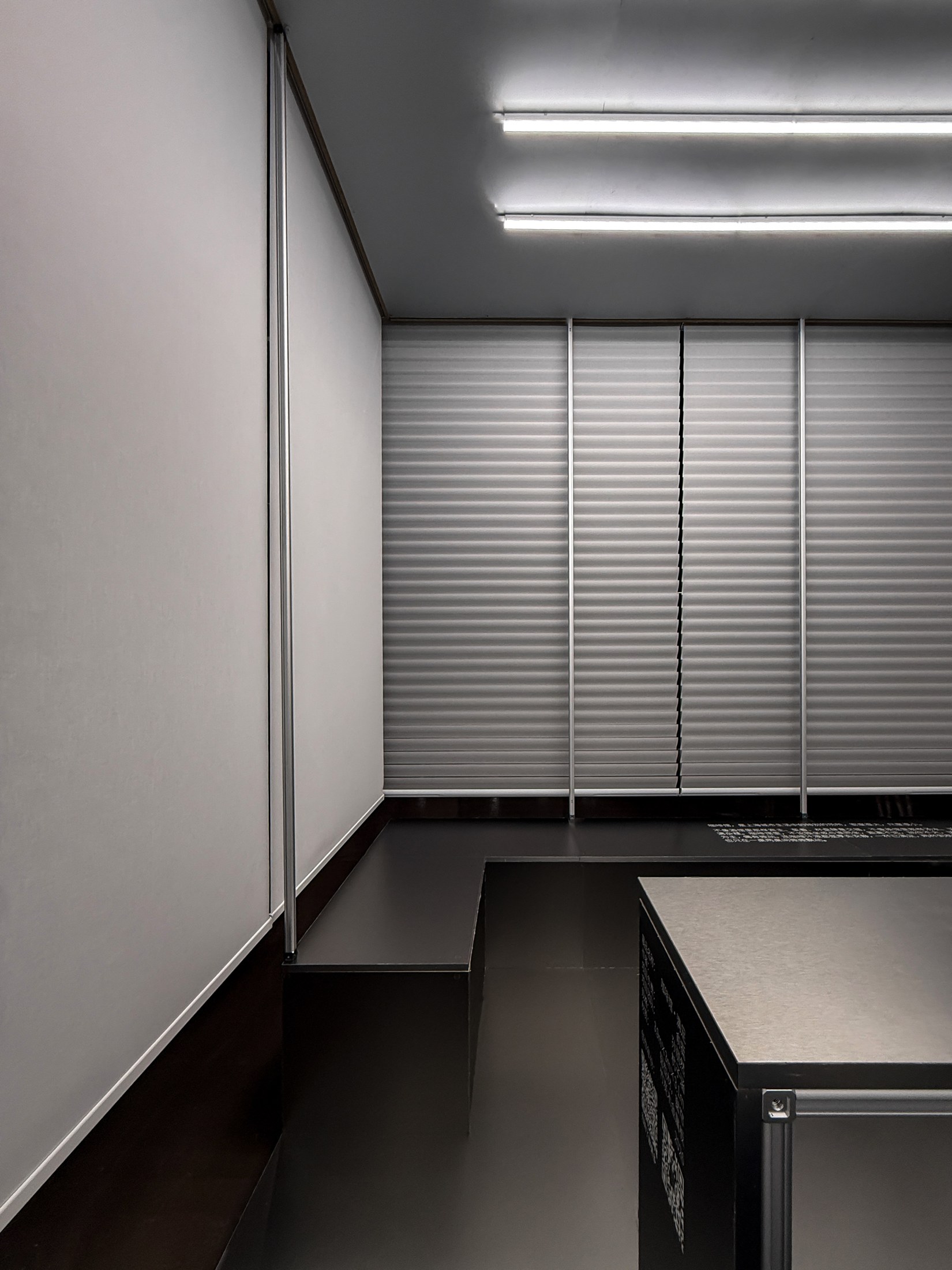
YU Ting describes the frame as an exoskeleton. Its repeated members and connections make the construction legible, outlining the enclosure without giving it the weight of a permanent room. In the photographs, the metallic framework remains distinct from the pale surfaces and adjustable curtains, with seating arranged along the café’s edge.
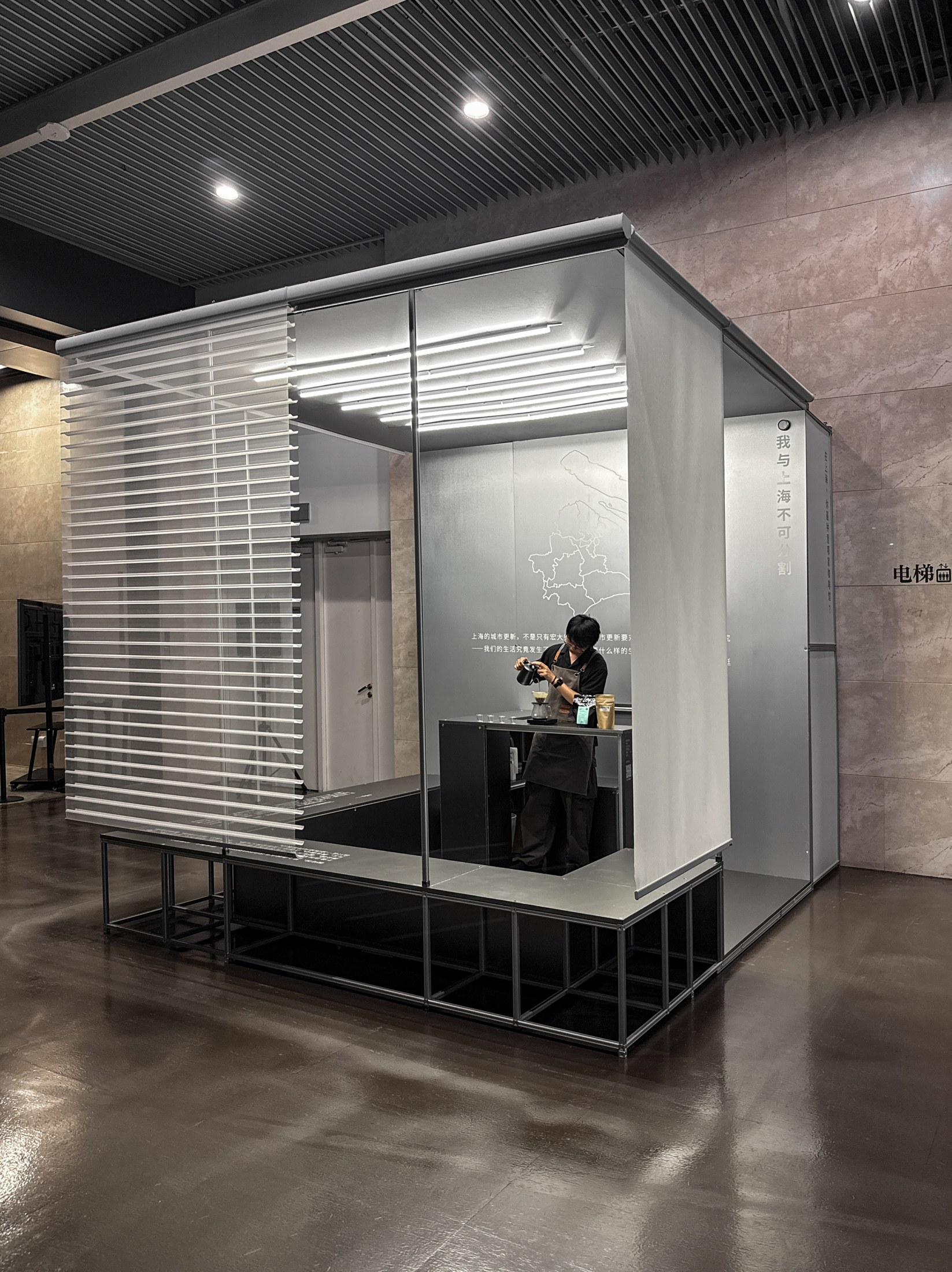
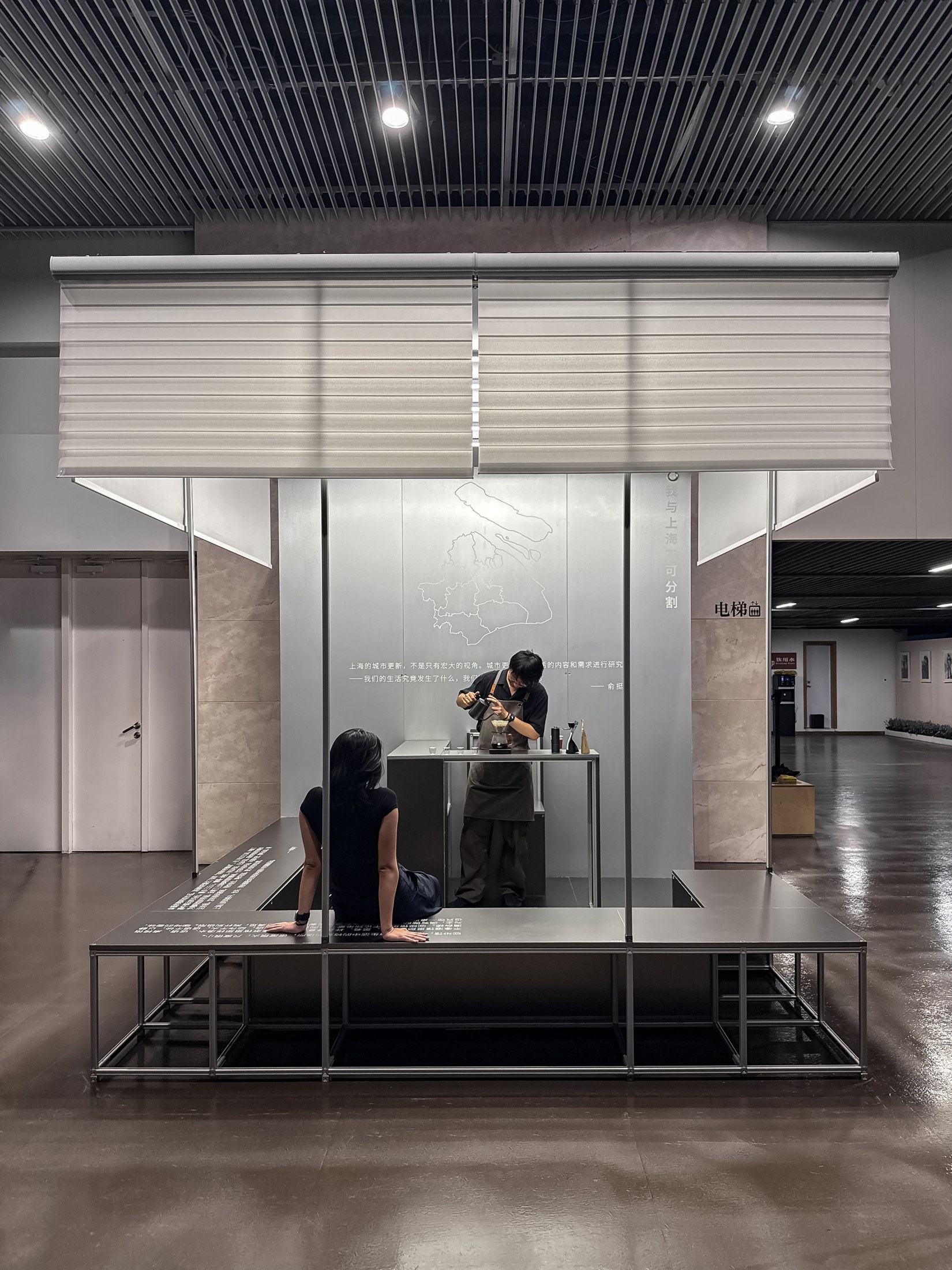
The three curtained sides make enclosure something that can be altered rather than fixed. Openings connect the counter and seating with the surrounding museum. As the curtains descend, those connections become filtered: light passes through, figures register beyond the boundary, and the café retains a sense of nearby activity while offering a more intimate place to stop.
A place to pause
The installation brings YU Ting’s argument for light-touch urban renewal into the scale of an everyday ritual. A seat and a cup of coffee provide a reason to linger; the frame and curtains give that moment a place. Its smallness allows the café to sit within the museum as a distinct interior that can continually open itself to the public space around it.
In the architect’s account, such interventions can support the softer social life of the city without requiring large-scale transformation. Café · Fulfillment gives that idea a direct spatial expression: a room whose boundaries can change with the desire for company or quiet.
Project Credits
Project: Café · Fulfillment
Exhibition: Bound to Shanghai
Architect: YU Ting / Wutopia Lab / @wutopia.lab
Project lead: SUN Liran
Project team: HANG Zihan
Venue: Shanghai Art Museum (China Art Museum), Shanghai, China
Year: 2026
Photography: LI Haoyang
Related Posts
Previous Post
Next Post
- TAC! 2026 brings two temporary pavilions to Sestao and Barcelona

- Fala gives a narrow Porto house room to play with geometry

- The life beneath the surface of Veronika Csonka’s family garden
- A wave of LEGO flowers spills into Shanghai, one small creation at a time

- 6:AM turns the glass stool into a study of colour and repetition

- Three curtains give YU Ting’s Shanghai café a world of its own