Now Reading: A wave of LEGO flowers spills into Shanghai, one small creation at a time
- 01
A wave of LEGO flowers spills into Shanghai, one small creation at a time

A wave of LEGO flowers spills into Shanghai, one small creation at a time
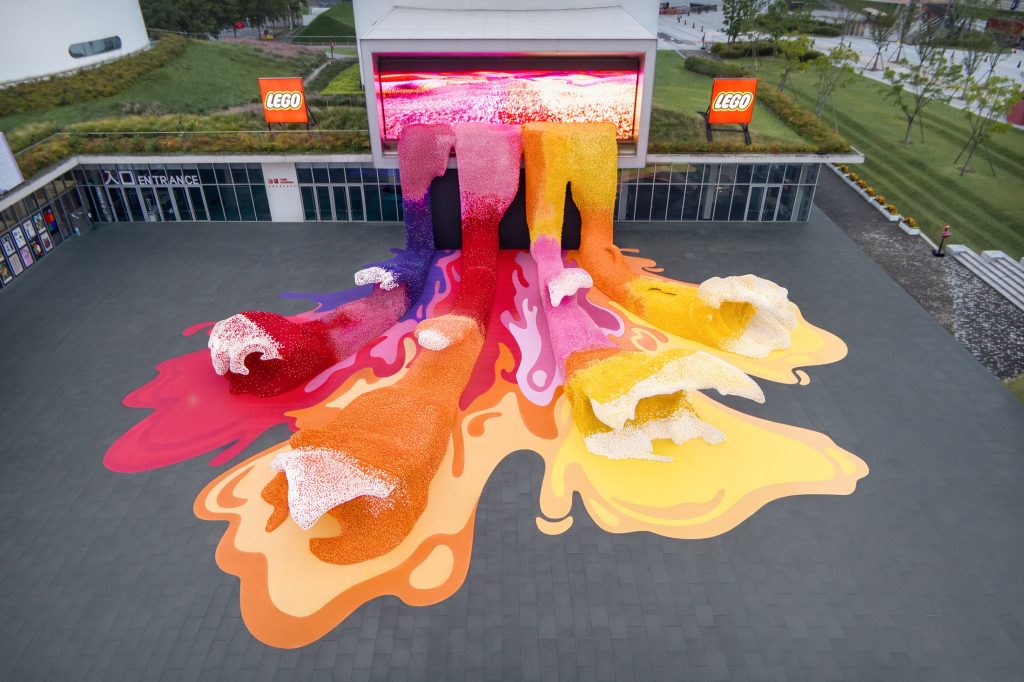
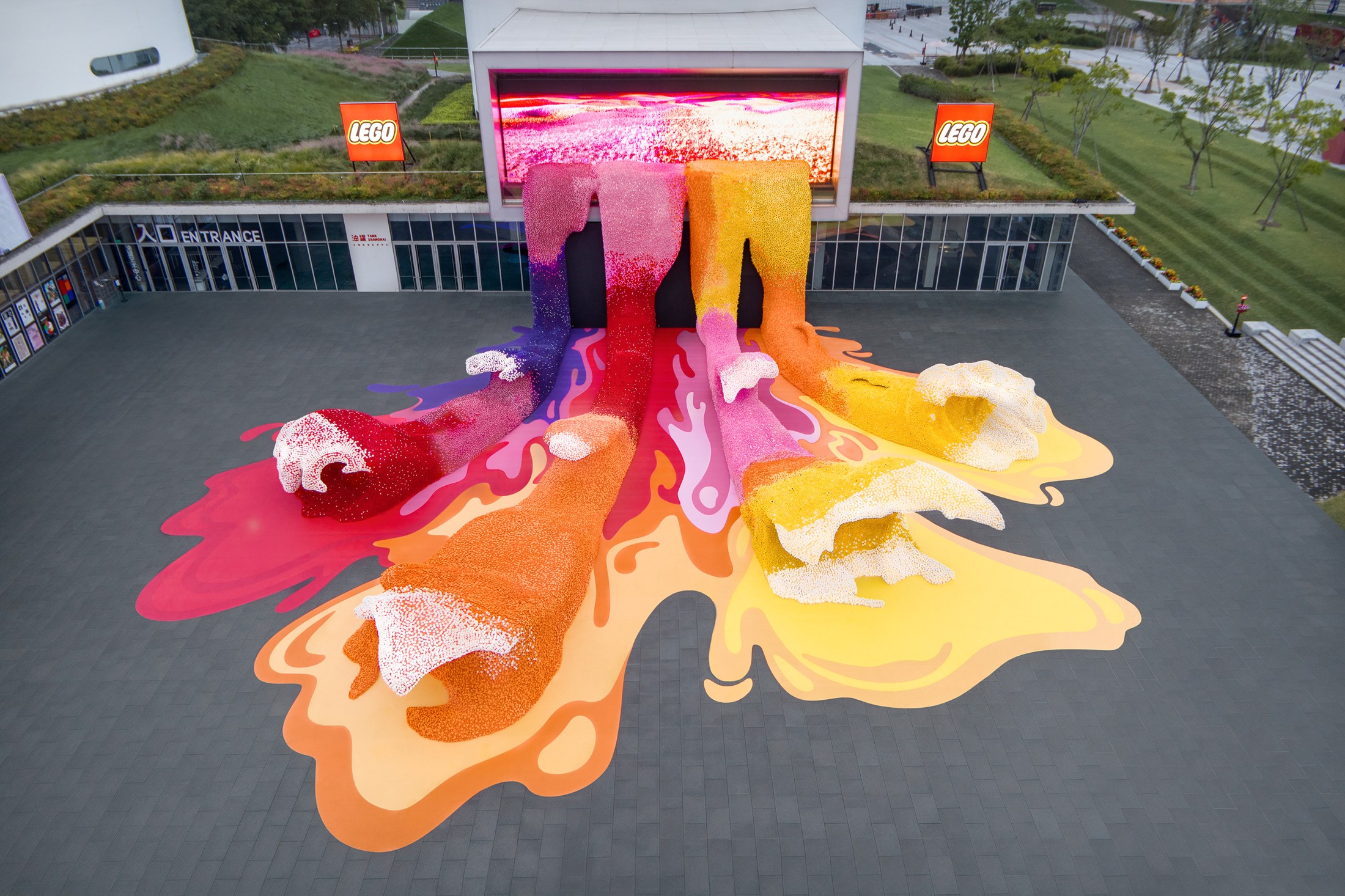
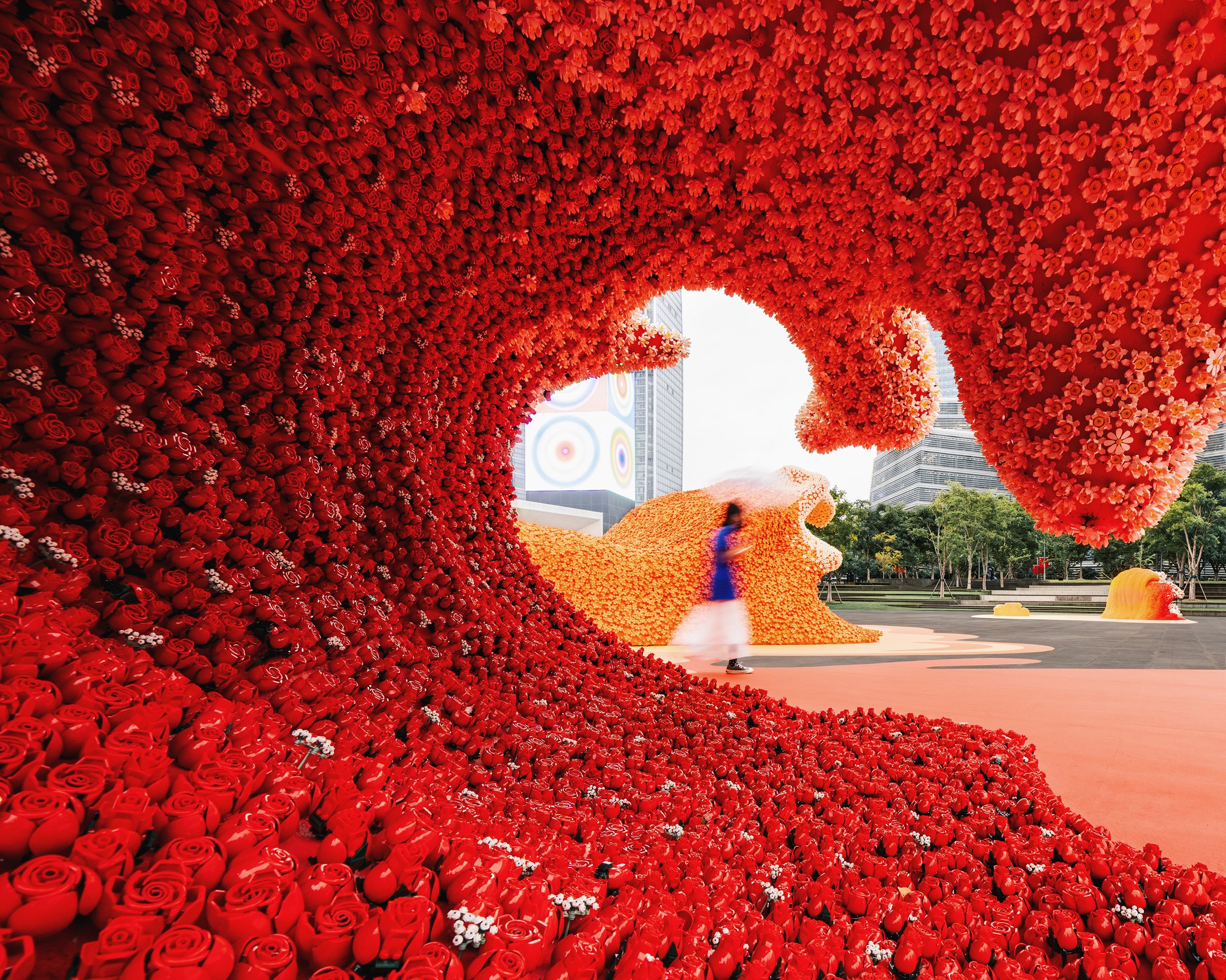
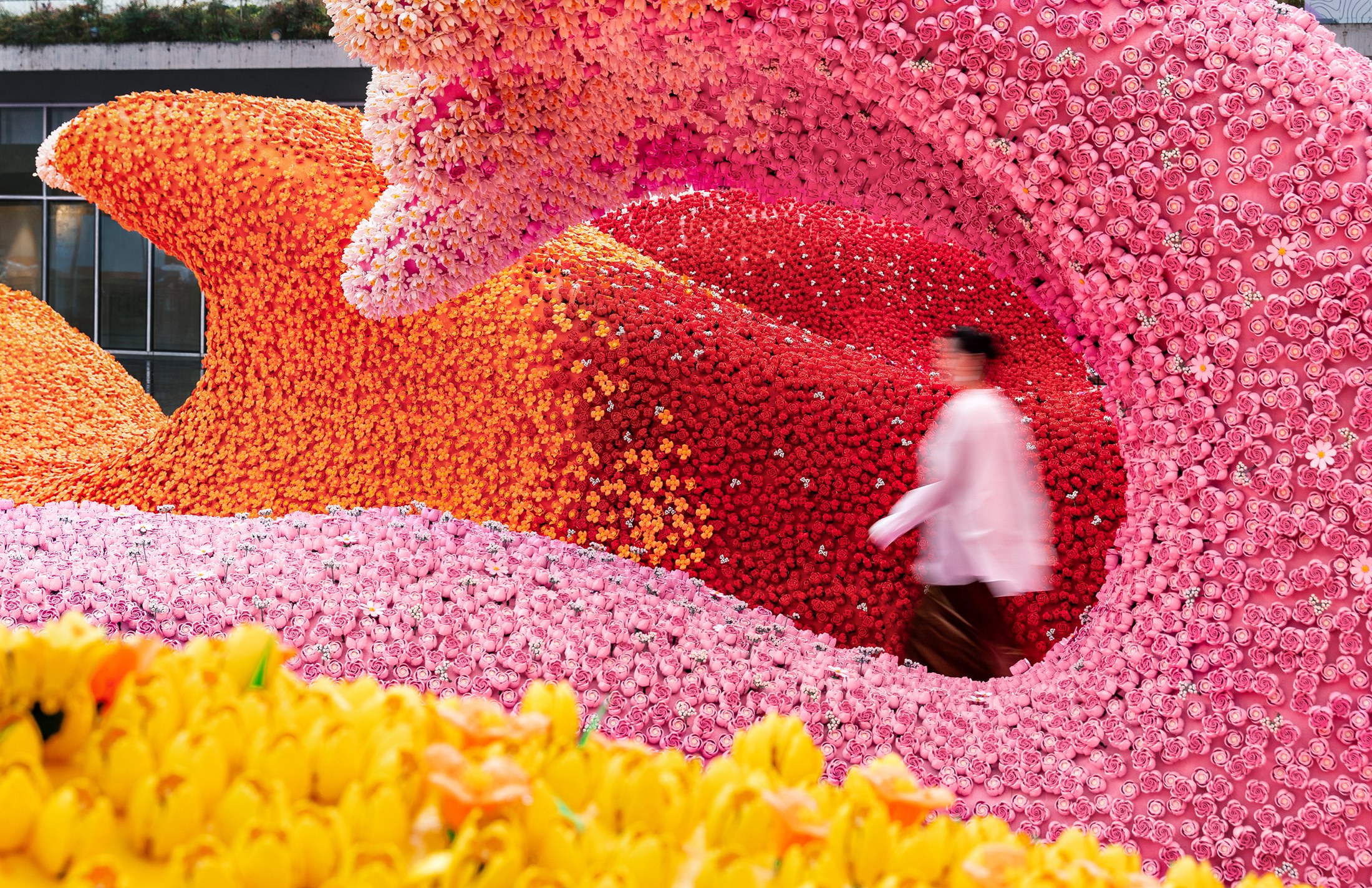
A wave of pink, orange and yellow appears to pour from TANK Shanghai, curling across the forecourt before spreading into shallow pools of colour. Seen from a distance, the LEGO Botanical Wave reads as a single flowing surface. Up close, that surface breaks into individual flowers, each assembled from the familiar small components of a building system usually encountered at the scale of a table.
The installation forms the outdoor centrepiece of the LEGO Bloom Exhibition, held at the Shanghai art centre from 1 to 29 October 2026. Approximately 30 metres long and covering 800 square metres, it brings the act of assembling flowers into the public space of the West Bund. LEGO’s official announcement describes more than 380,000 Botanicals pieces in the build, a measure of its accumulated detail rather than a count of complete flowers.
A landscape assembled by hand
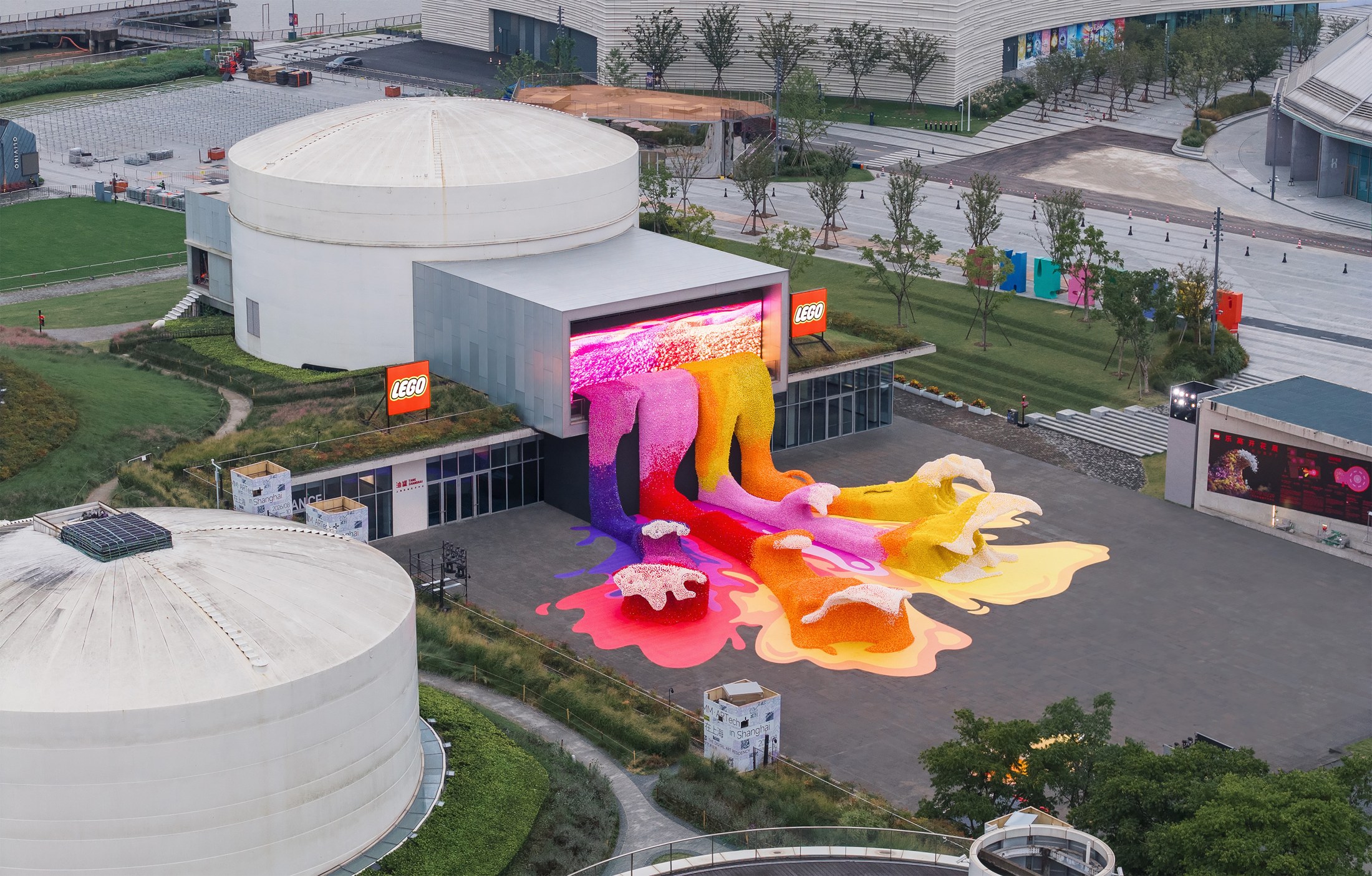
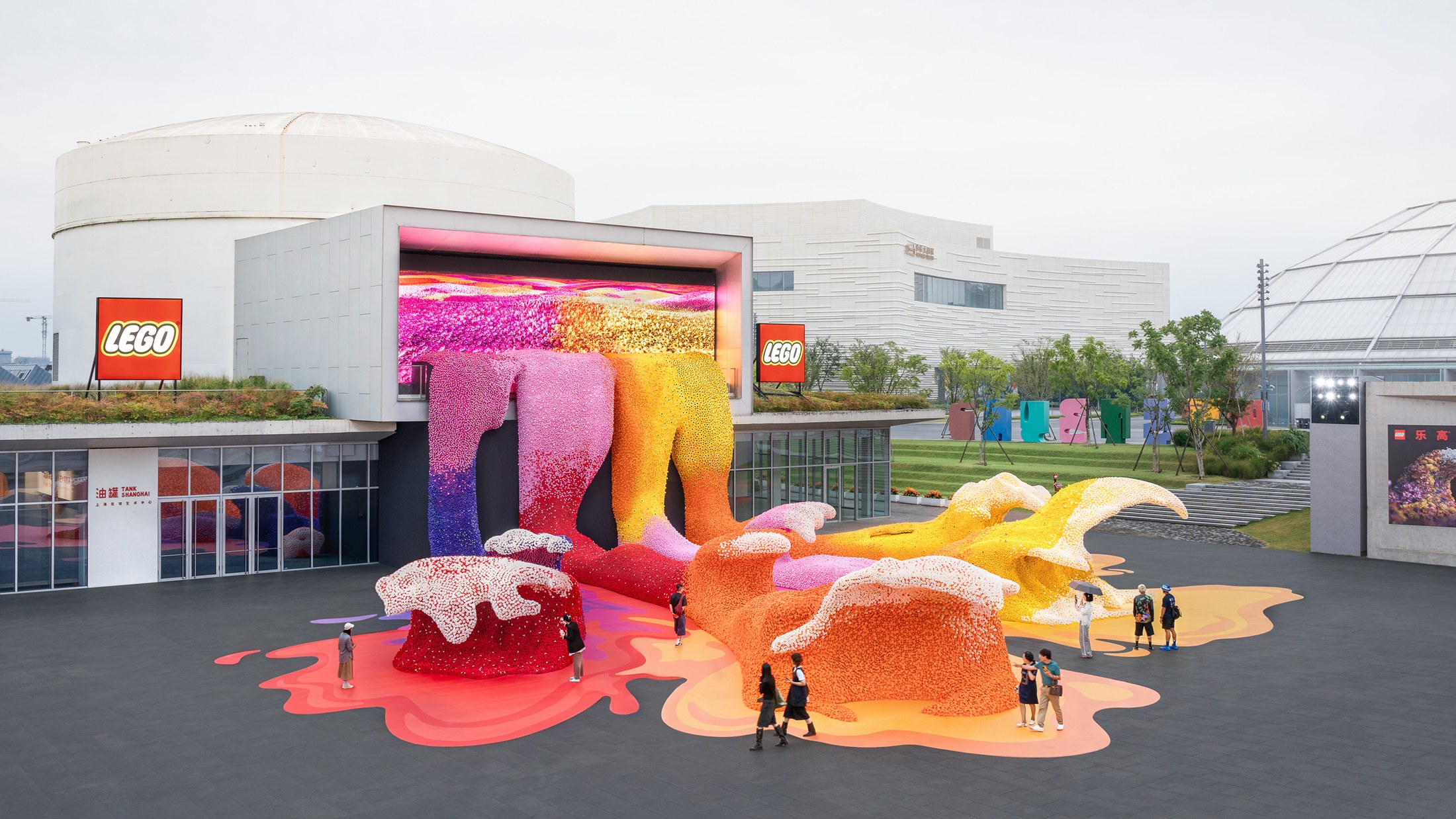
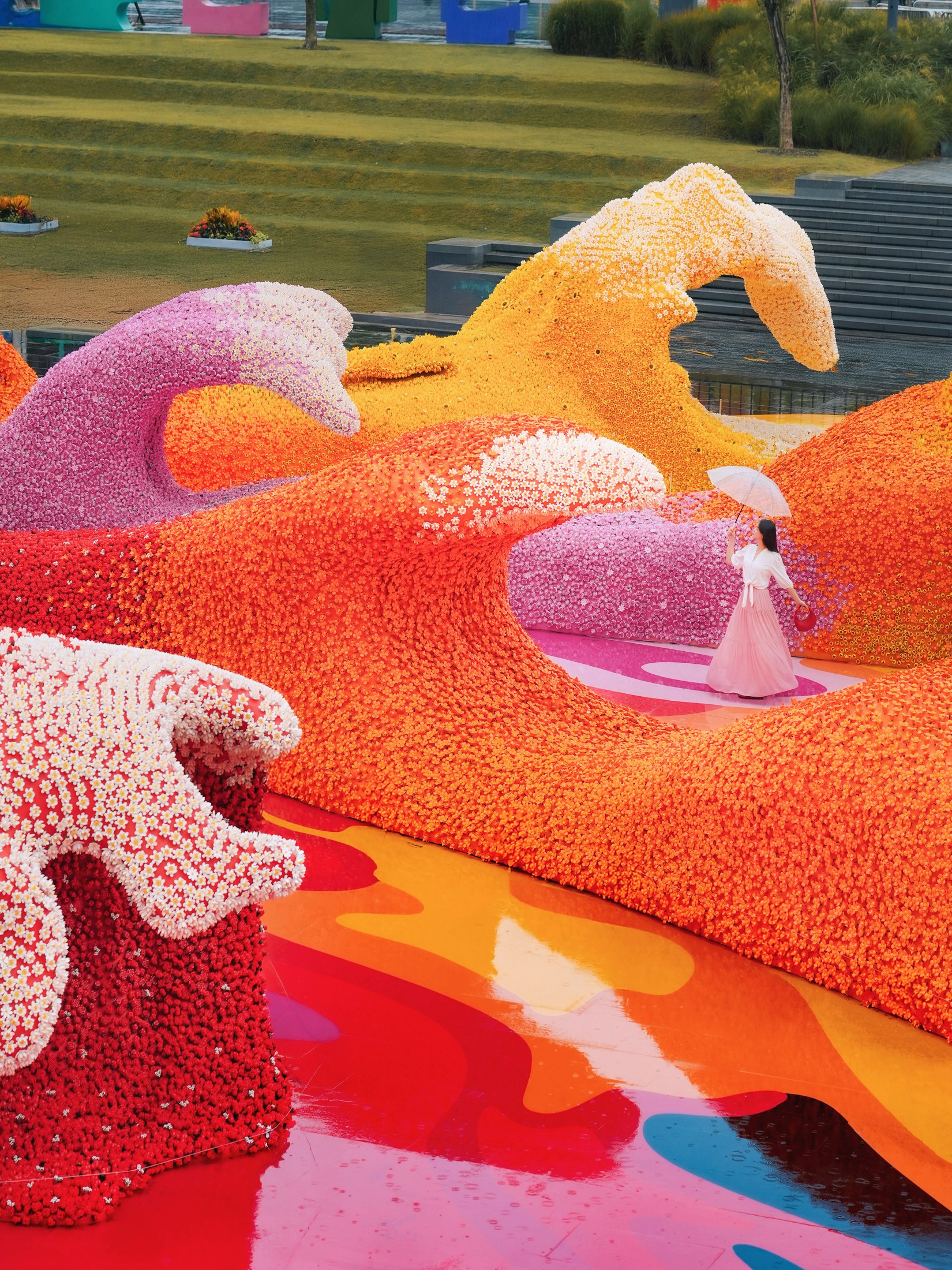
The photographs reveal a composition that alternates between broad ribbons and tightly curled crests. White edges separate bands of warmer colour, while openings in the larger forms frame views through the installation. Against the pale walls of the art centre, the flowers become an extension of its threshold: the building seems to release something into the city.
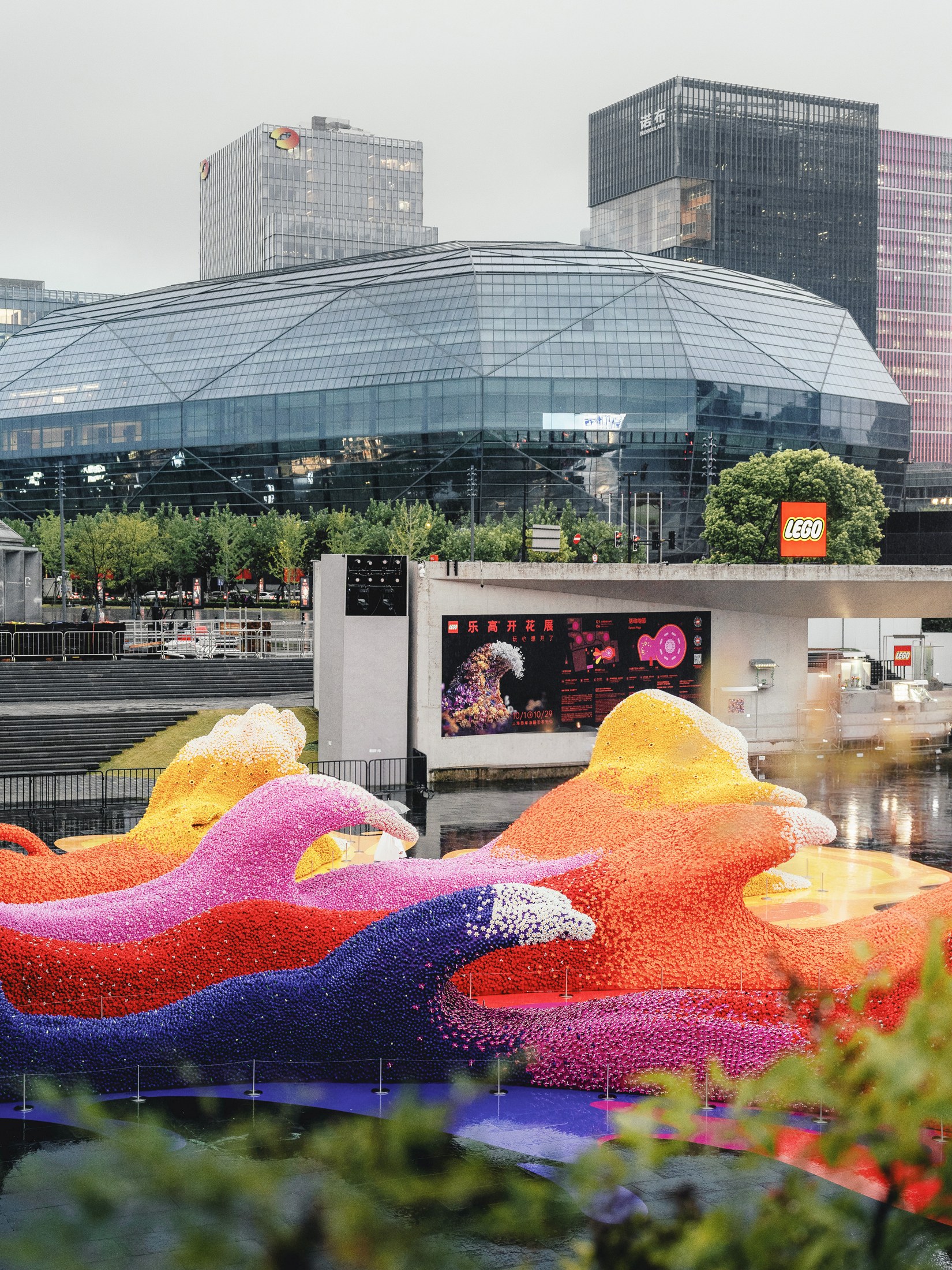
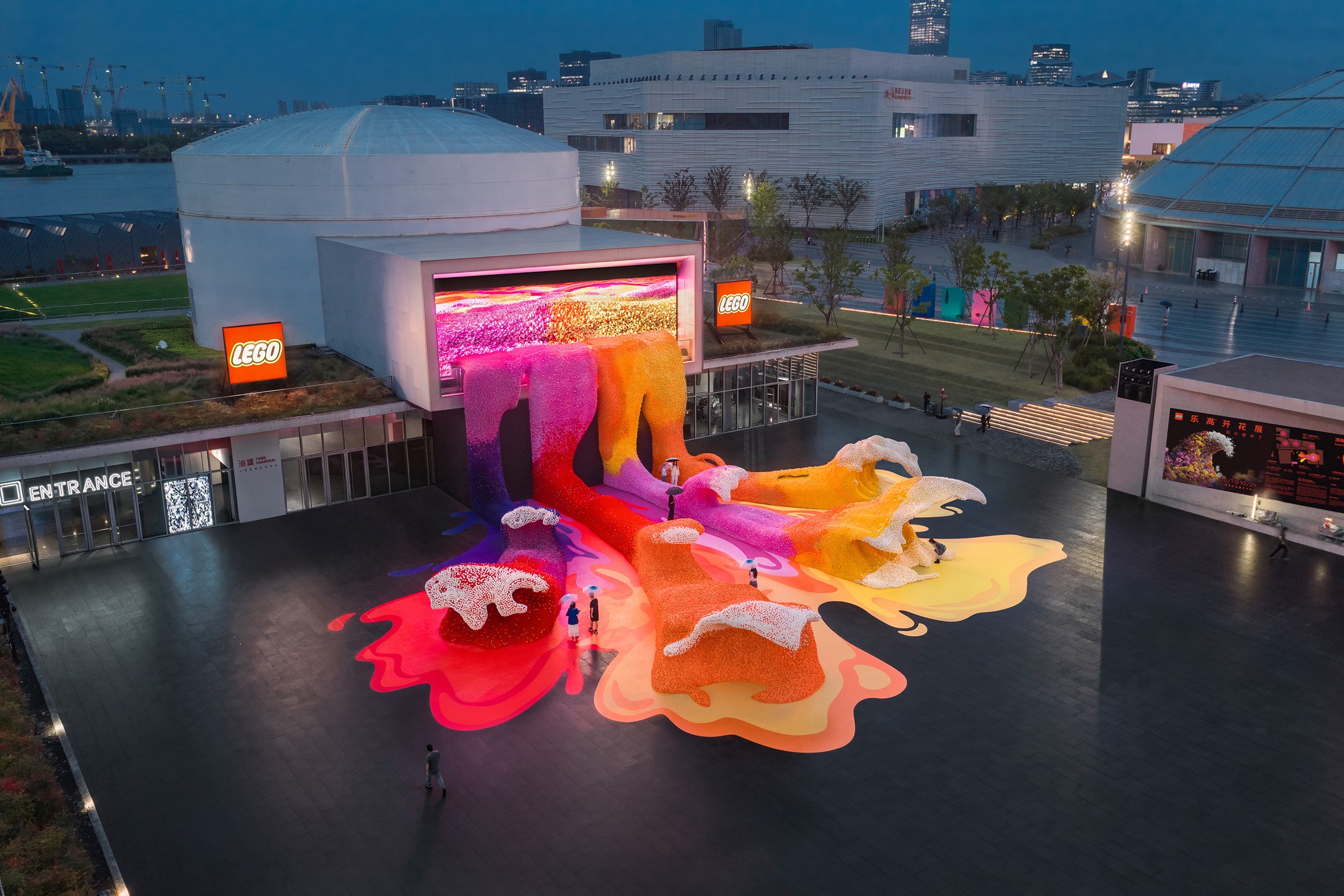
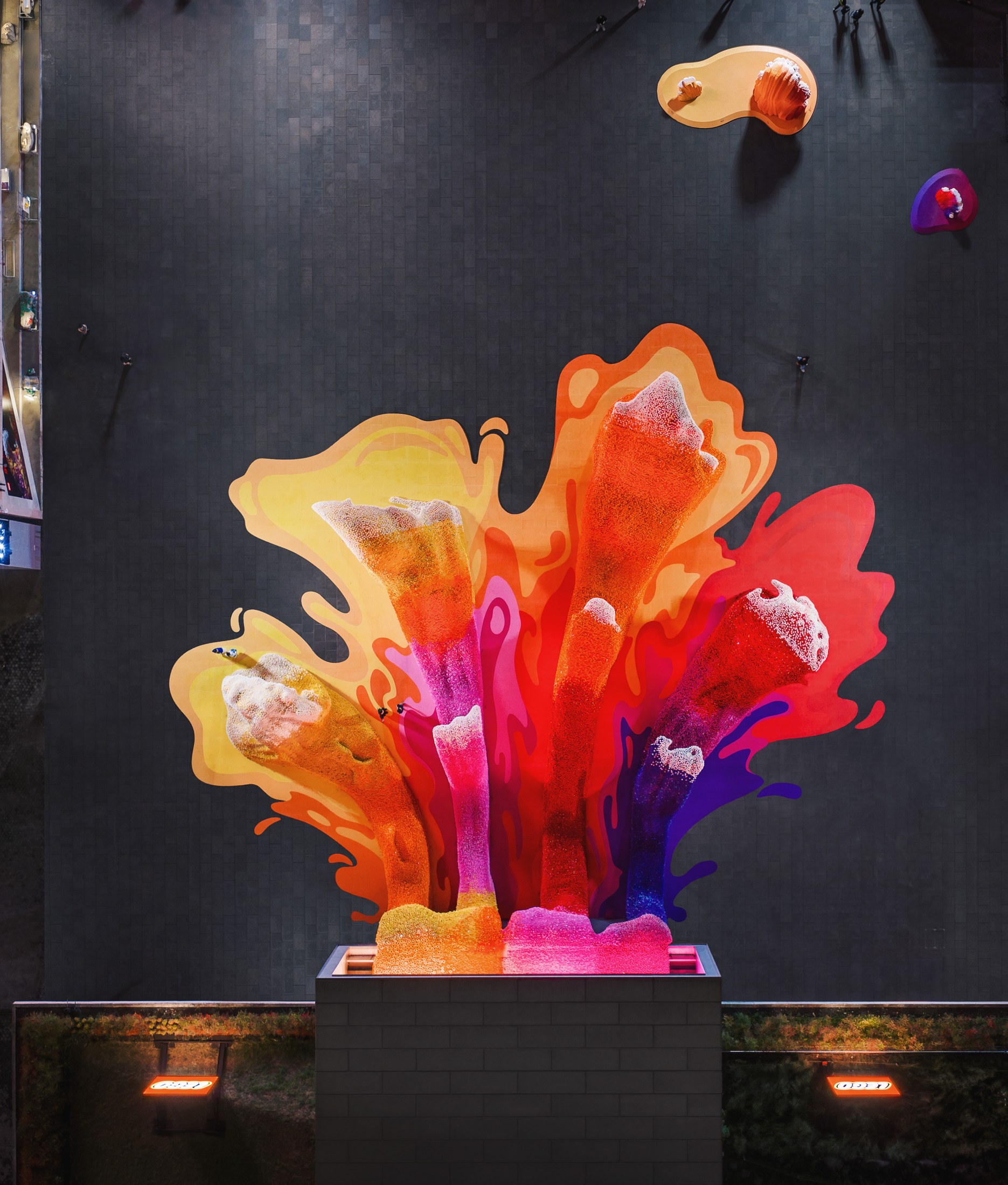
Much of the effect depends on the change in viewing distance. From above, the arrangement resembles a drawing spread across the ground. At eye level, its raised surfaces have depth and texture. Individual petals become legible, and the apparent fluidity of the whole gives way to the repeated act of fitting one piece to another. The wave holds both scales together, allowing a hand-sized activity to acquire a public presence.

A flower of your own
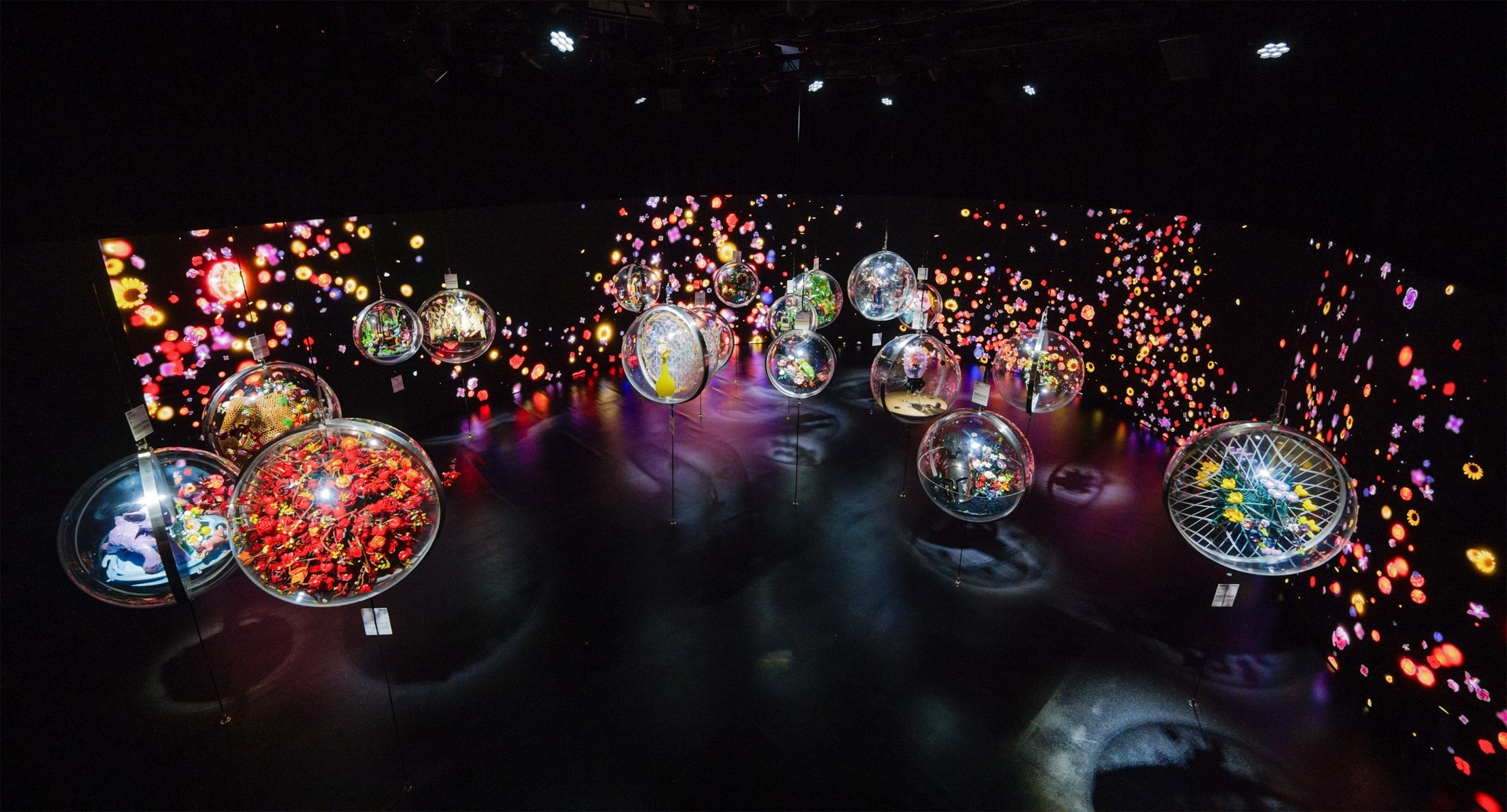
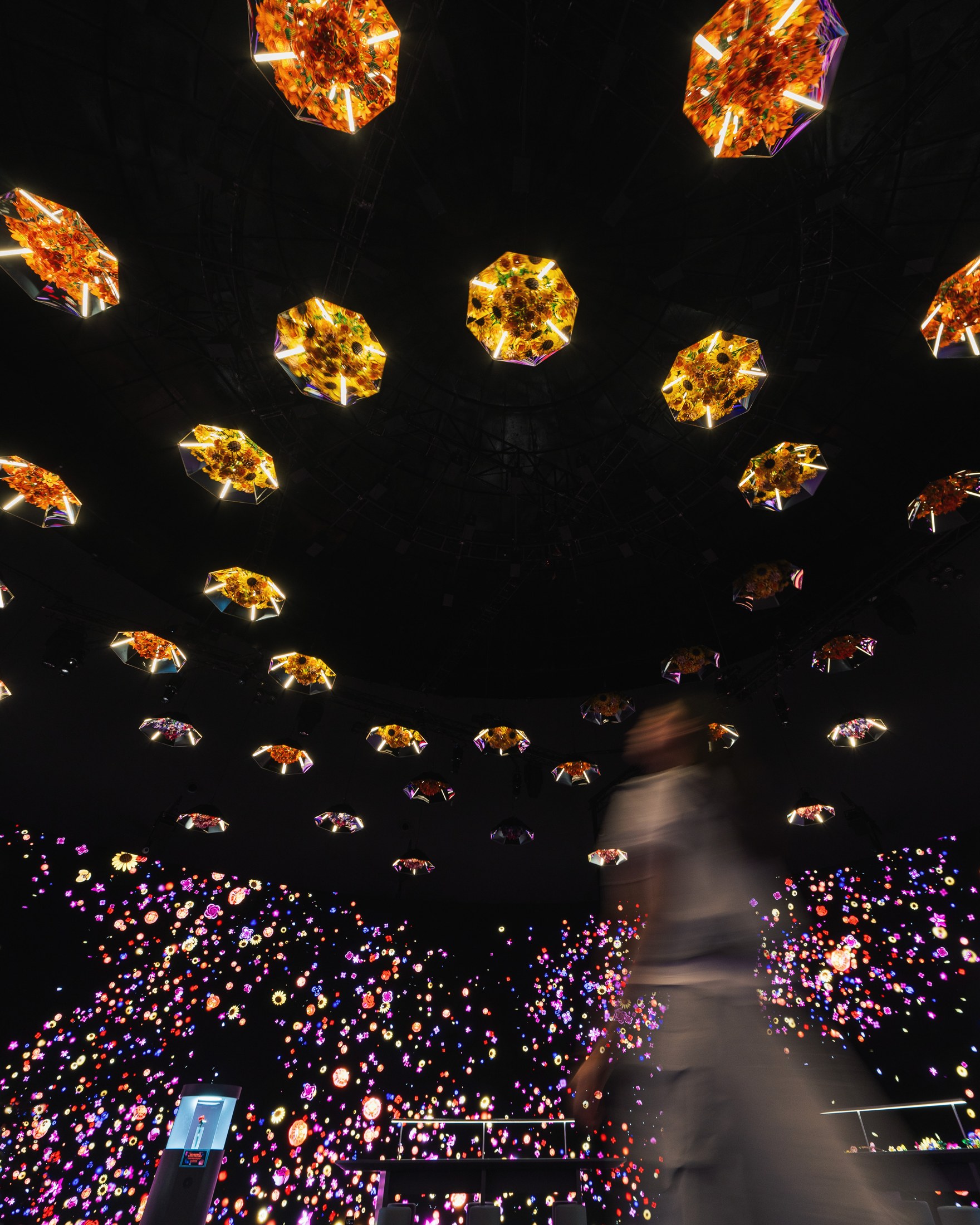
Inside, Where Blooms Begin changes the visitor’s role. Participants assemble a botanical flower, scan the finished creation and watch it enter a shared digital landscape. As further contributions arrive, separate flowers gather into an evolving flow. The projected environment echoes the movement suggested by the outdoor installation, while its contents continue to change through participation.
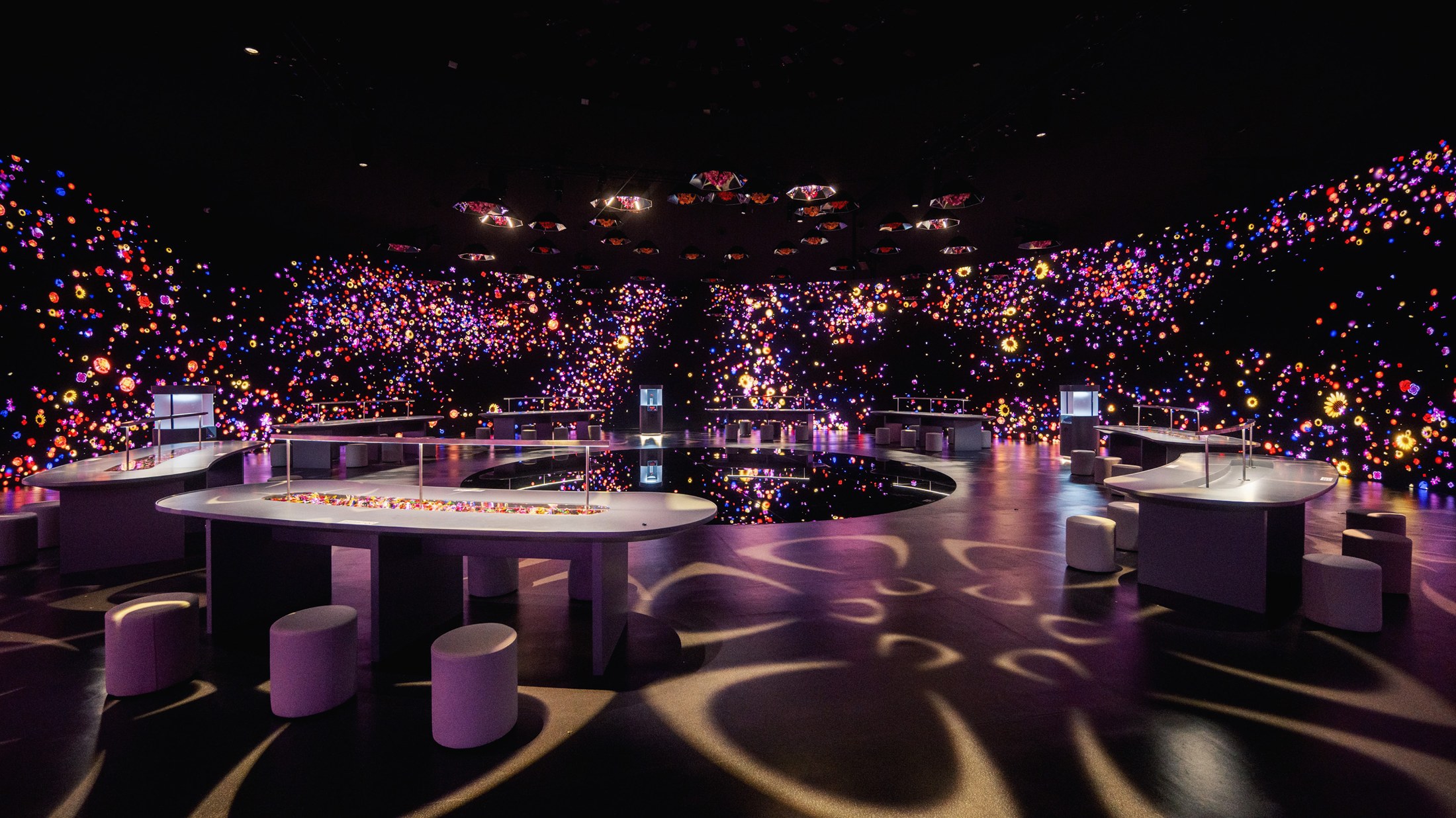
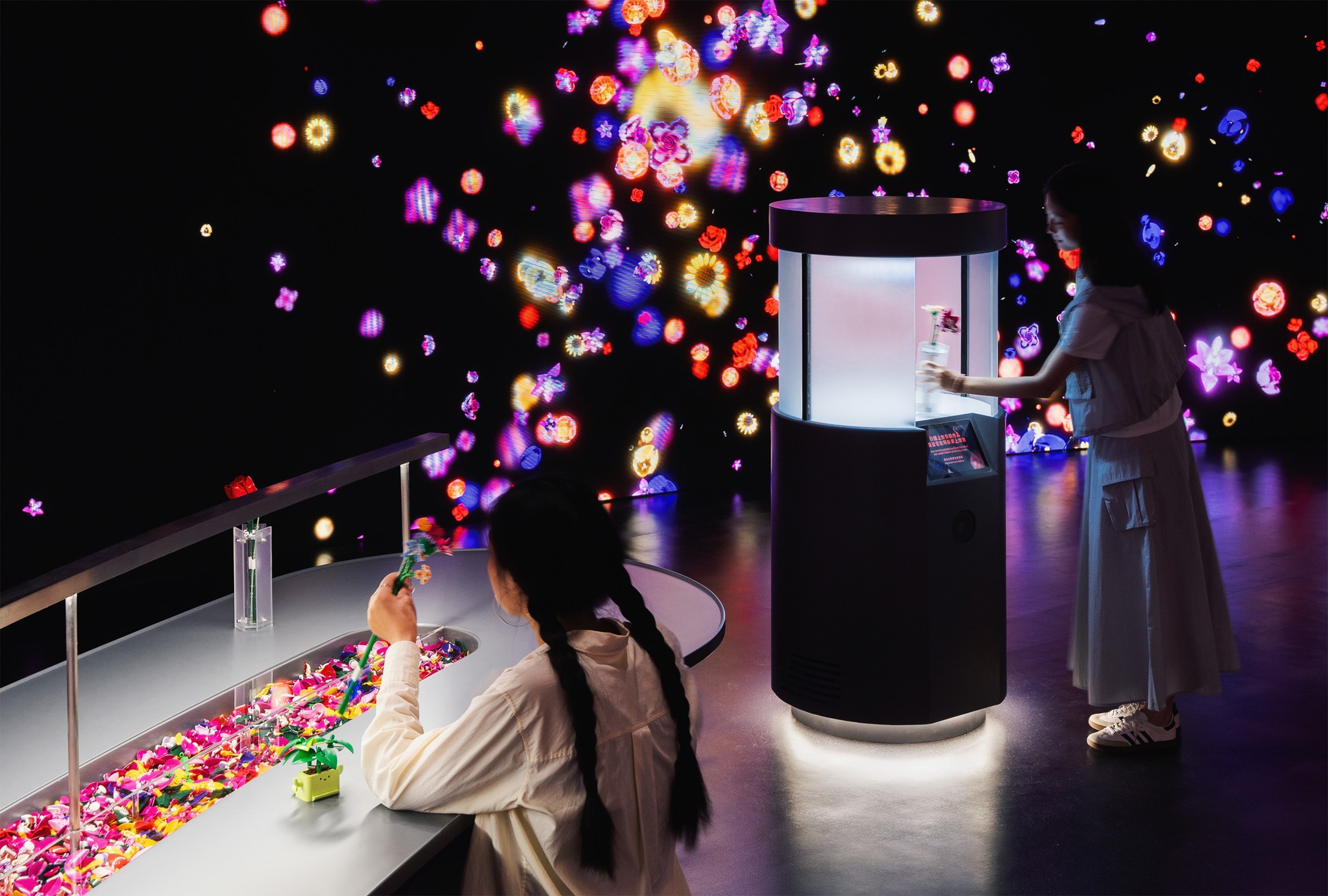
These are two distinct processes. The physical Botanical Wave was built by hand for the exhibition; visitors’ newly assembled flowers join the digital display. Their contribution does not add another flower to the outdoor structure. Instead, the scan carries an intimate act of making into a space shared with other people’s creations.
The surrounding darkness makes this transition especially visible. Illuminated flowers drift across the screens around the building tables, expanding the scale of objects that visitors have just held in their hands. The exhibition’s central gesture lies in that connection between a small, personal construction and a landscape too large for any one visitor to produce.
Bringing the garden back indoors
Alongside the participatory experience, 18 artworks by artists and adult LEGO fans explore other ways of interpreting botanical forms. Bloom Gallery presents a separate group of 18 arrangements in settings associated with everyday interiors. After the expansive wave and the immersive digital environment, these displays return the flowers to a more domestic scale.
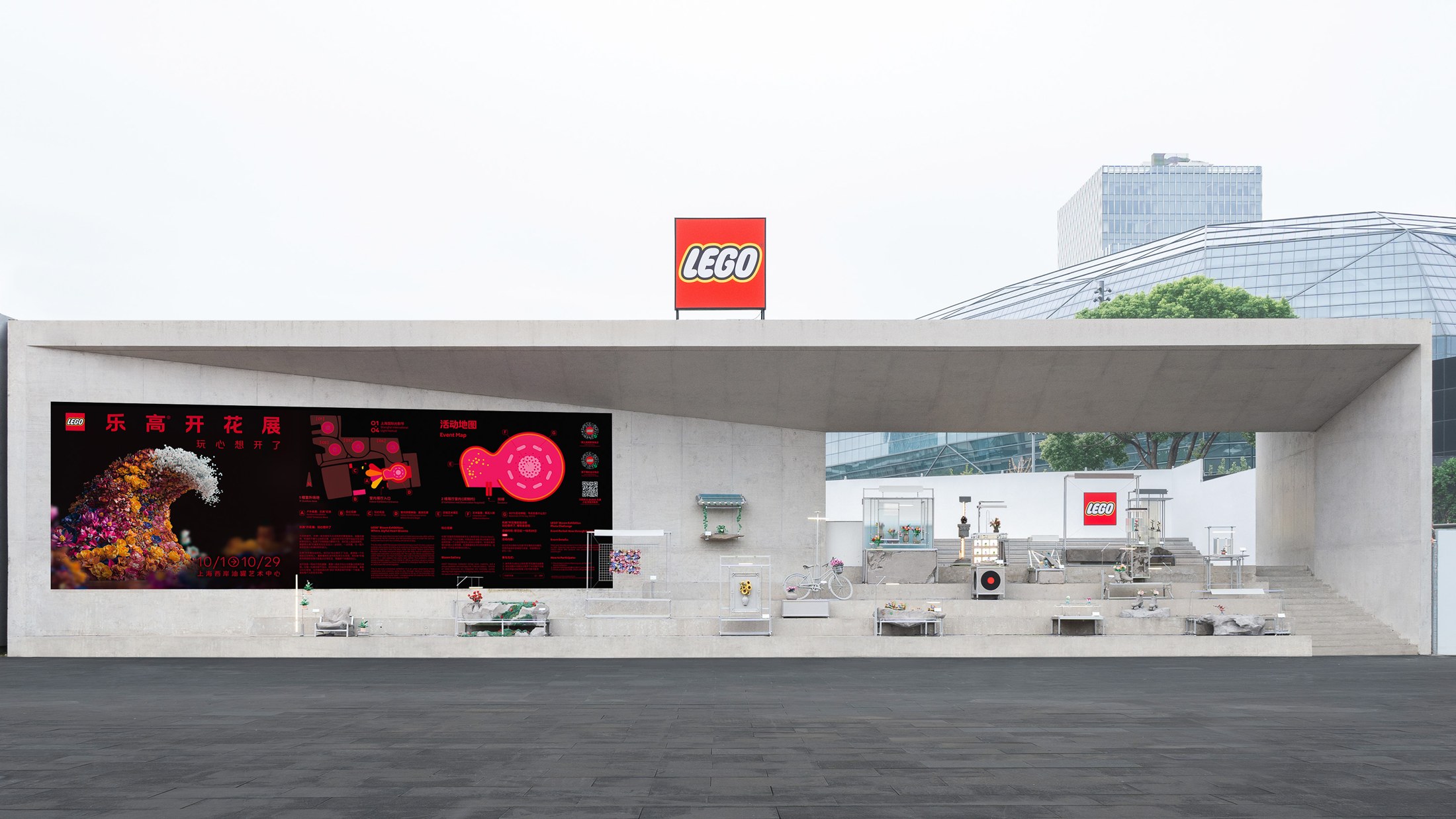
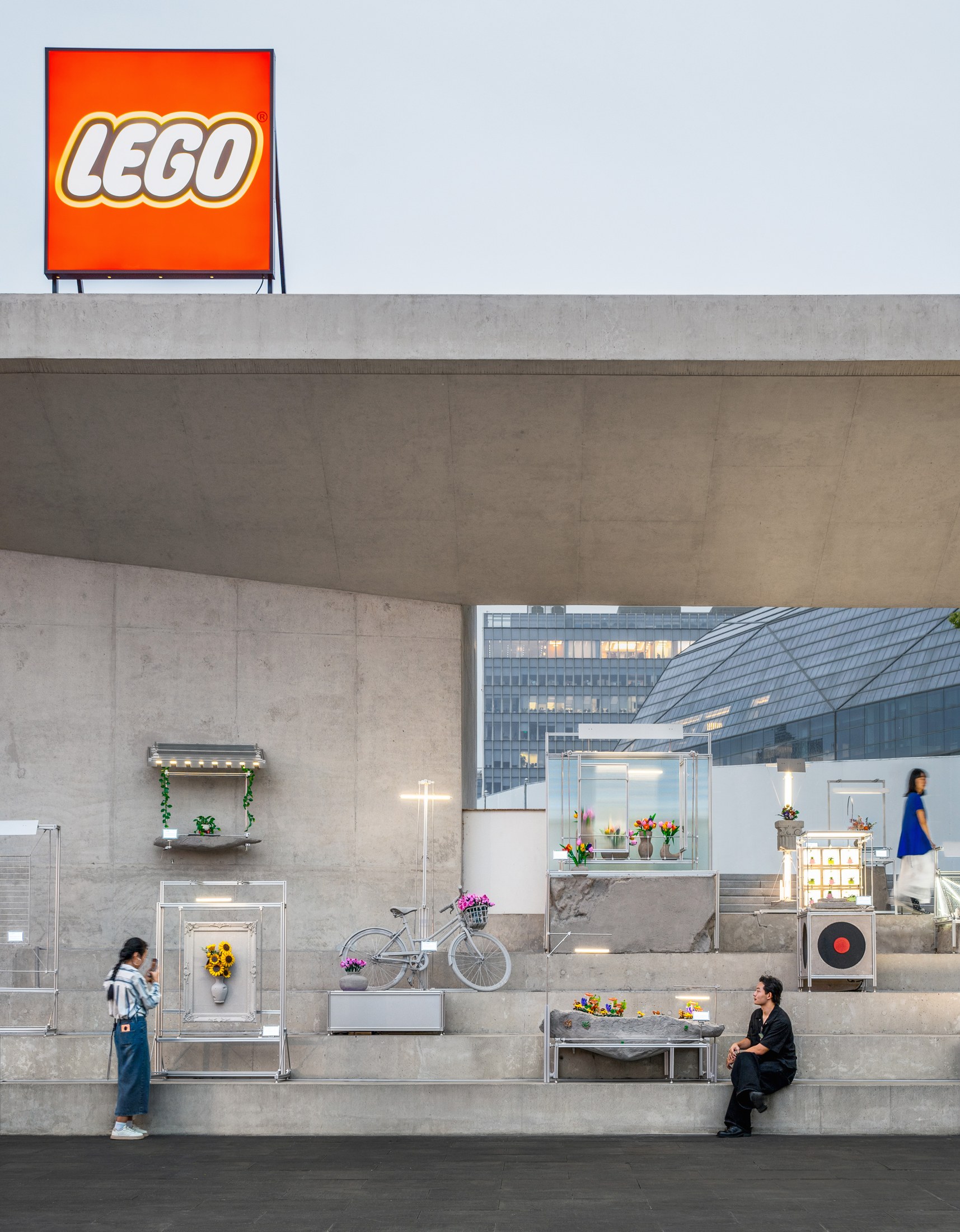
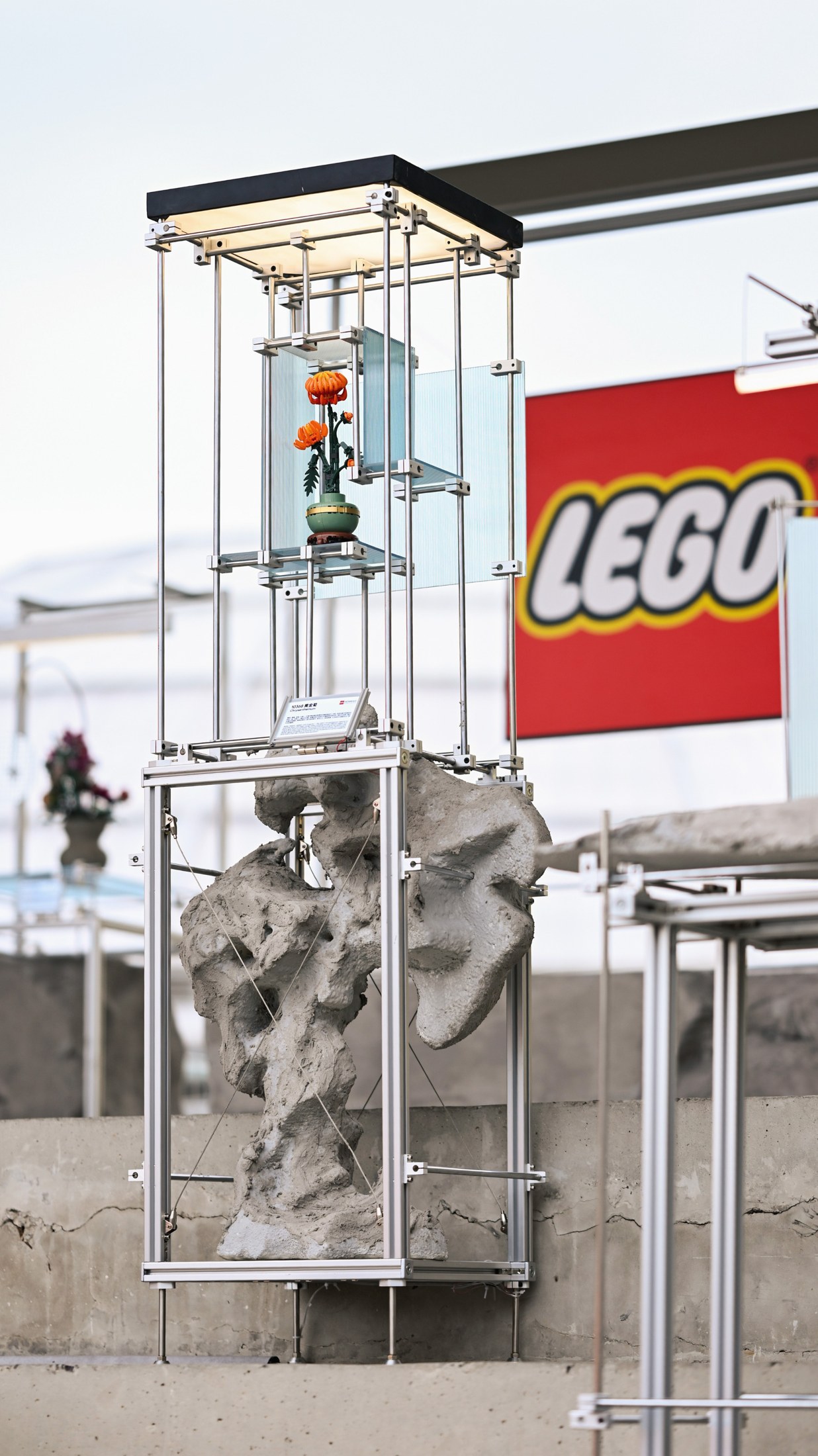
Across the exhibition, the flower becomes a unit that can move between an object, an image and a larger spatial composition. The outdoor work draws people towards the building through its scale and colour; the indoor experience offers a way to take part through a modest act of assembly. What connects them is the possibility that a single small creation can be understood as part of something shared.
Project Credits
Project: LEGO Bloom Exhibition
Presented by: LEGO / @lego
Venue: TANK Shanghai / @tankshanghai
Location: Shanghai, China
Exhibition dates: 1–29 October 2026
Botanical Wave: approximately 30 metres long; 800 m²
Images: supplied press materials
Additional information: LEGO Group; Shanghai Municipal Government.
Related Posts
Previous Post
Next Post
- TAC! 2026 brings two temporary pavilions to Sestao and Barcelona

- Fala gives a narrow Porto house room to play with geometry

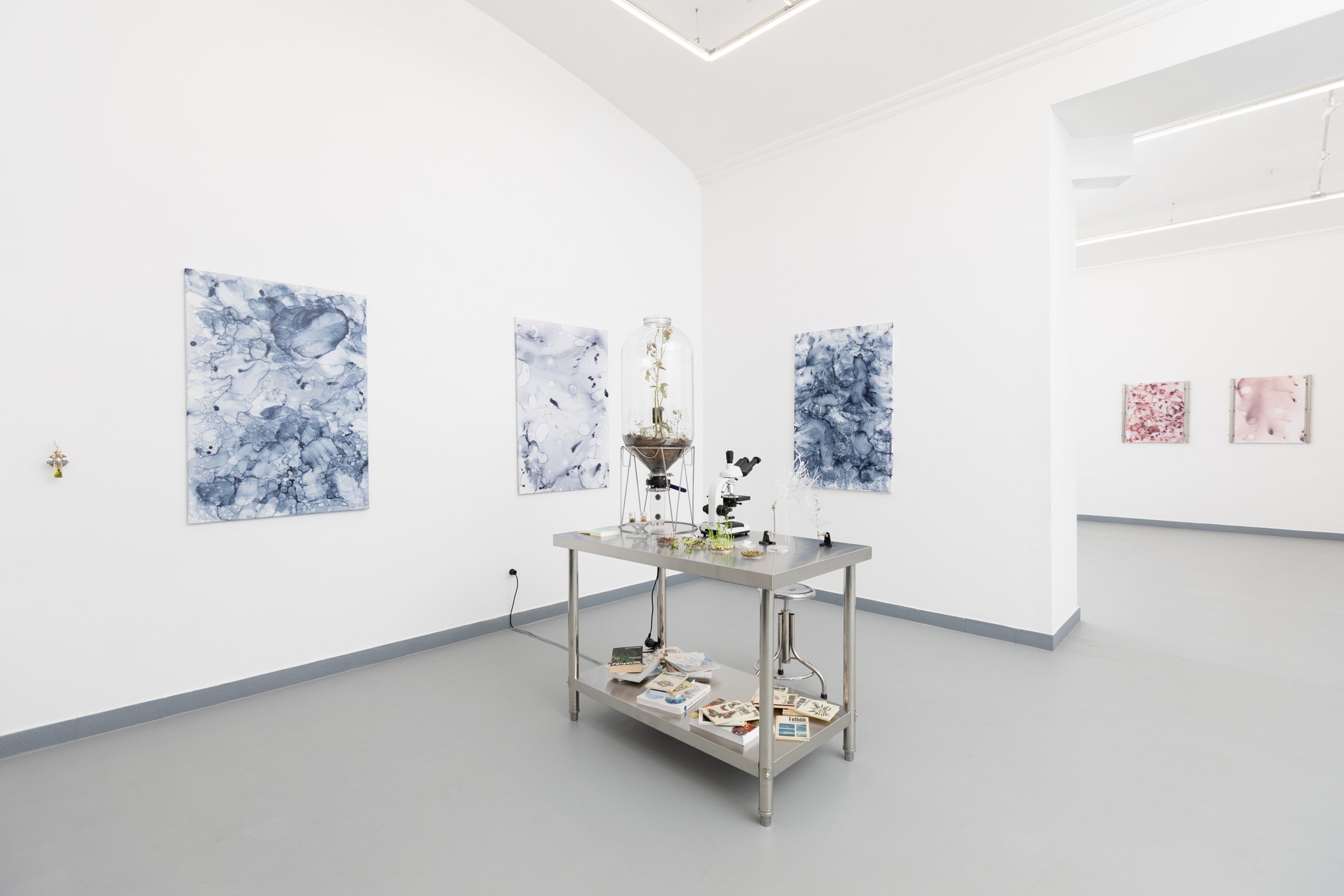
- The life beneath the surface of Veronika Csonka’s family garden
- A wave of LEGO flowers spills into Shanghai, one small creation at a time

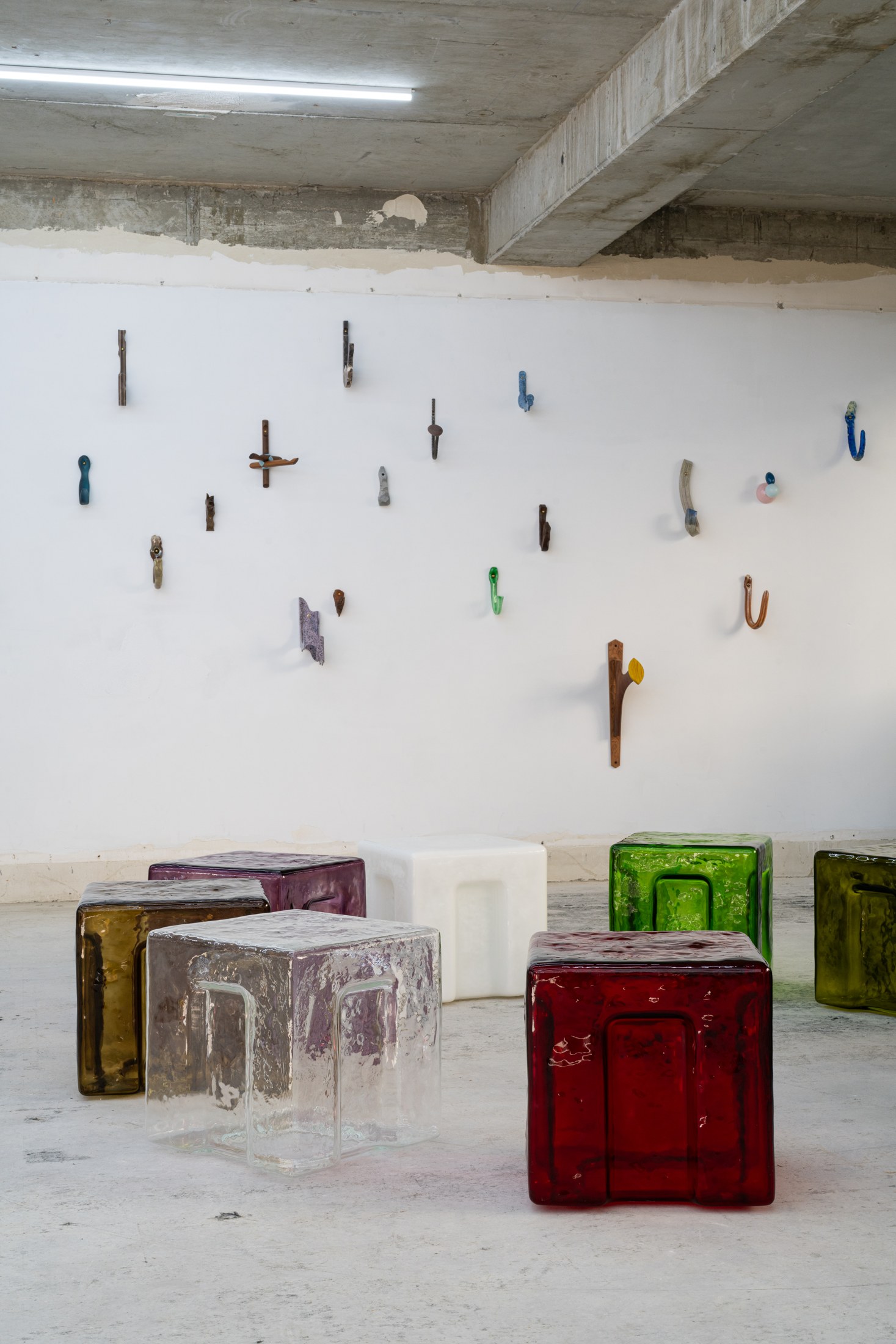
- 6:AM turns the glass stool into a study of colour and repetition

- Three curtains give YU Ting’s Shanghai café a world of its own