Now Reading: Towards a State of Weightlessness
- 01
Towards a State of Weightlessness

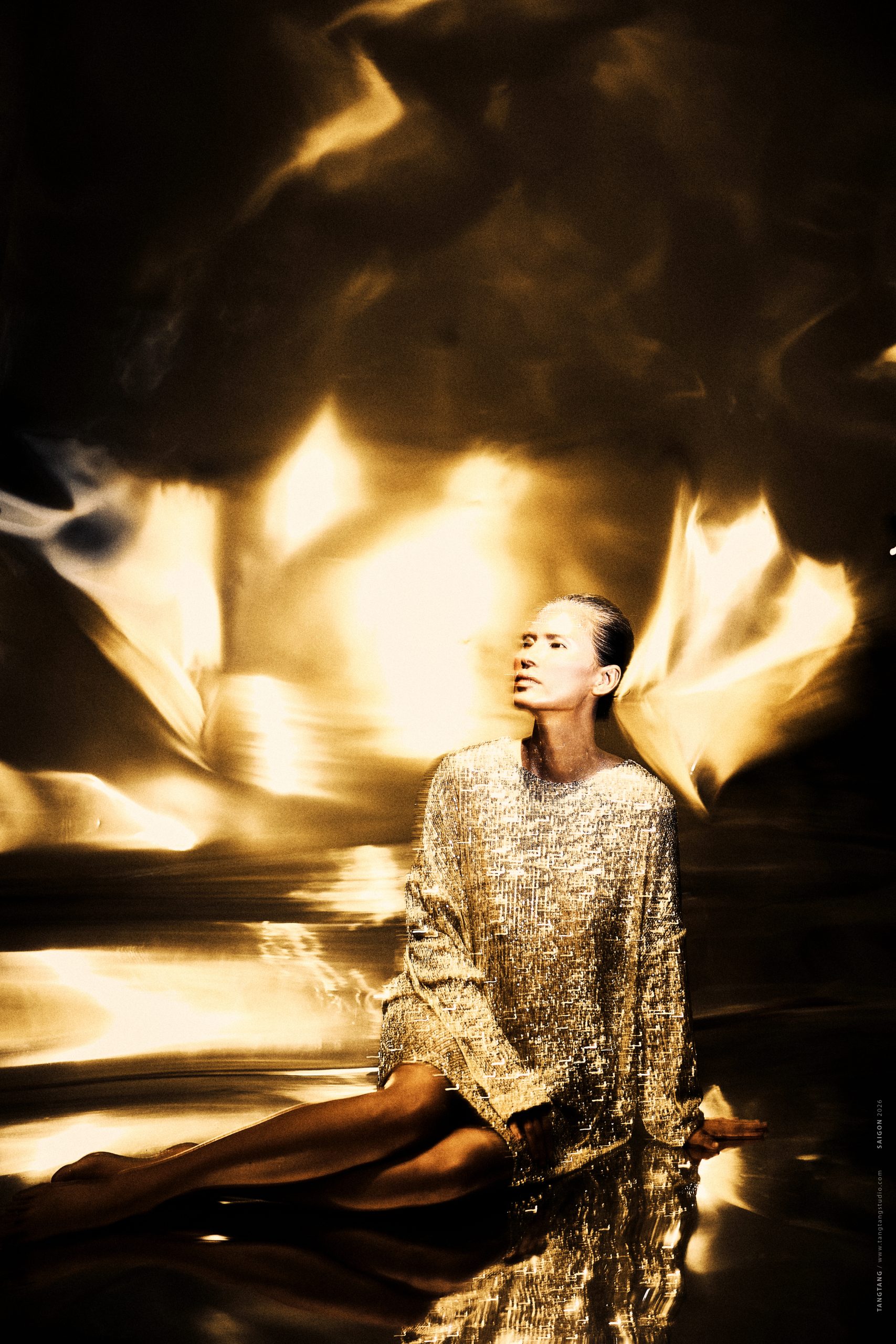

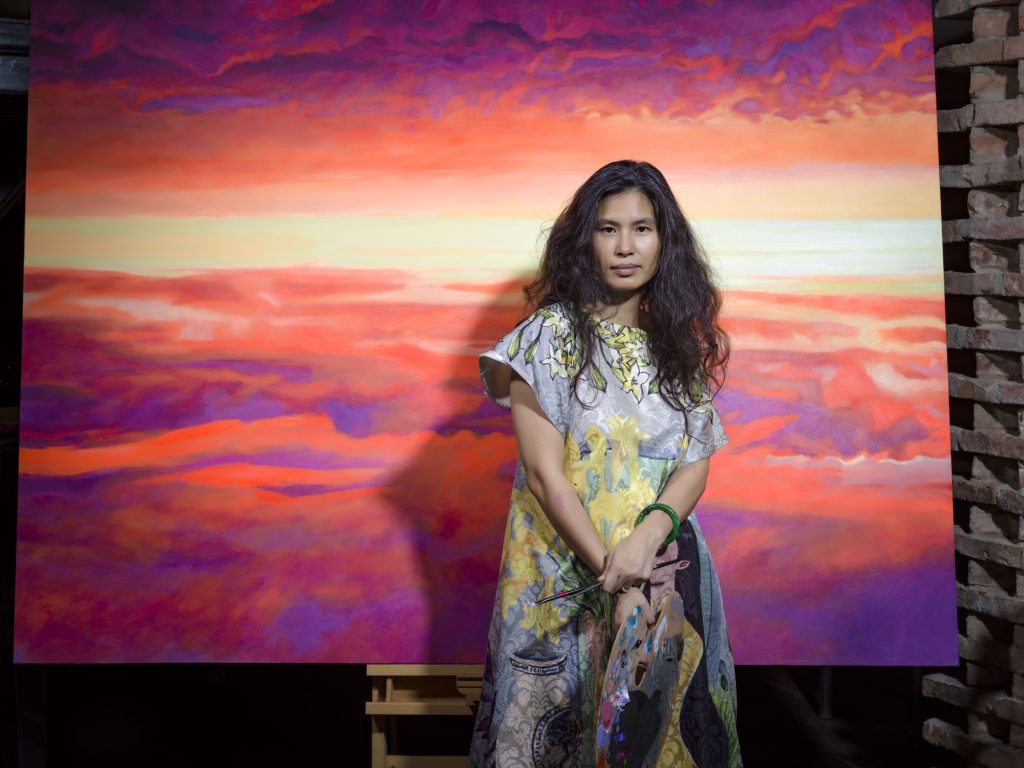
For Fields of Resonance at Almine Rech Shanghai, Vietnamese artist Tia-Thuy Nguyen moves beyond the visible forms of clouds, trees and flowers to explore energy as something that can pass between materials, bodies and space. In this conversation, she discusses hand-woven stainless steel, the desire for weightlessness, the inner strength of femininity and why light completes her works only when the viewer begins to move.

The title Fields of Resonance suggests an expanded relationship between the self, nature and the surrounding world. Could you share how this title emerged, and what feels most specific to this new body of work?
Tia-Thuy Nguyen: In the exhibition Fields of Resonance, I experiment with relinquishing tangible subjects to instead render the currents of energy flowing within me. This body of work marks the beginning of shedding physical heaviness and the preconceived ‘forms’ of all things, seeking a state of absolute freedom and weightlessness. I actively allow this energetic resonance to manifest through the mutation of materials, exemplified by how a fragile pencil sketch entirely metamorphoses into a shimmering stainless-steel cloud. The title Fields of Resonance stems precisely from this phenomenon: it is the resonance between invisible mental concepts and physical surfaces, alongside the continuous spatial dialogue among the artworks themselves.
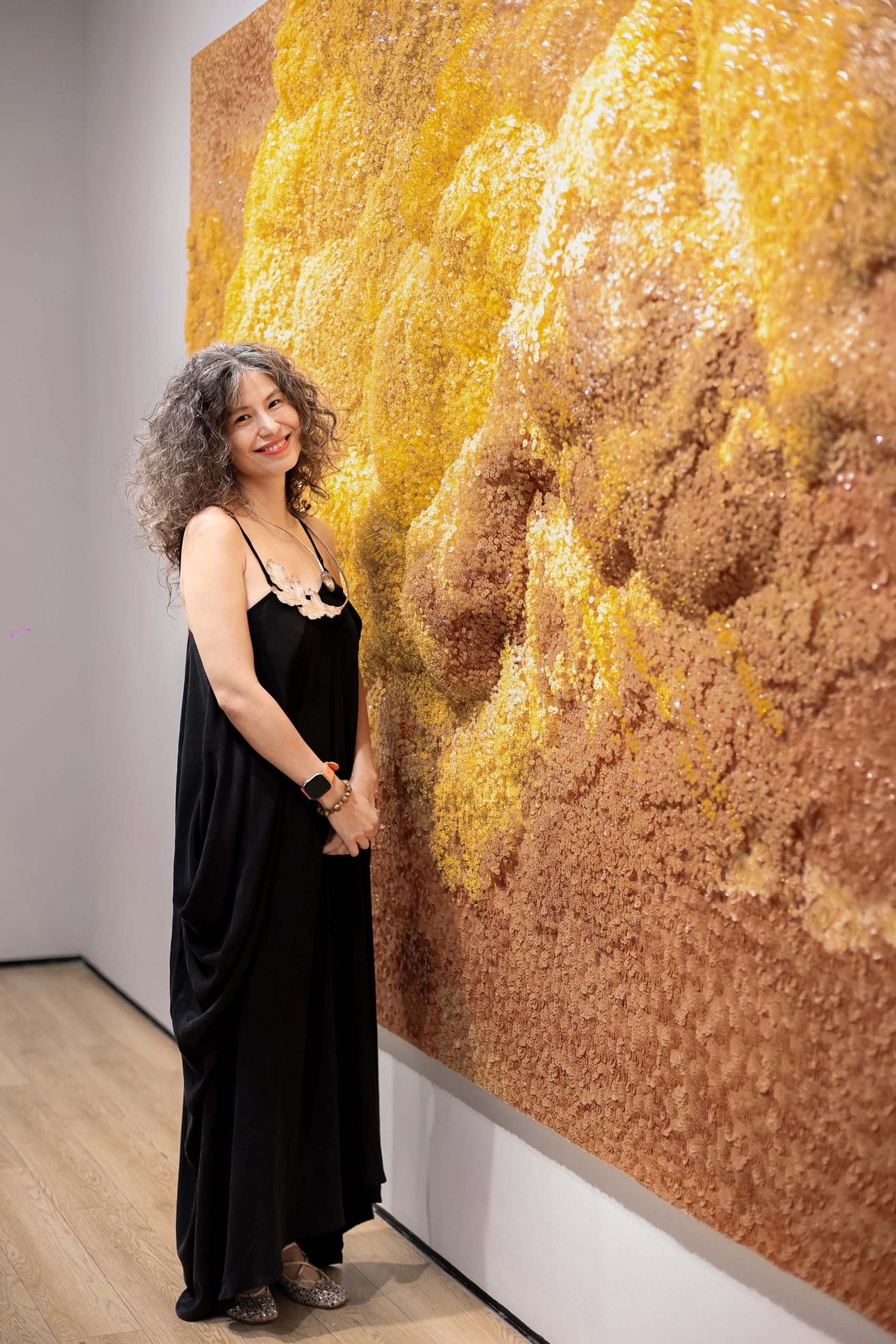
How do you see the dialogue between the different groups of works in the exhibition, particularly the cloud works, The Pause Between Storms, Enduring Vitality, the stone sculptures and Many Contradictory Flowers? Is there an ideal path or rhythm through which visitors should encounter them?
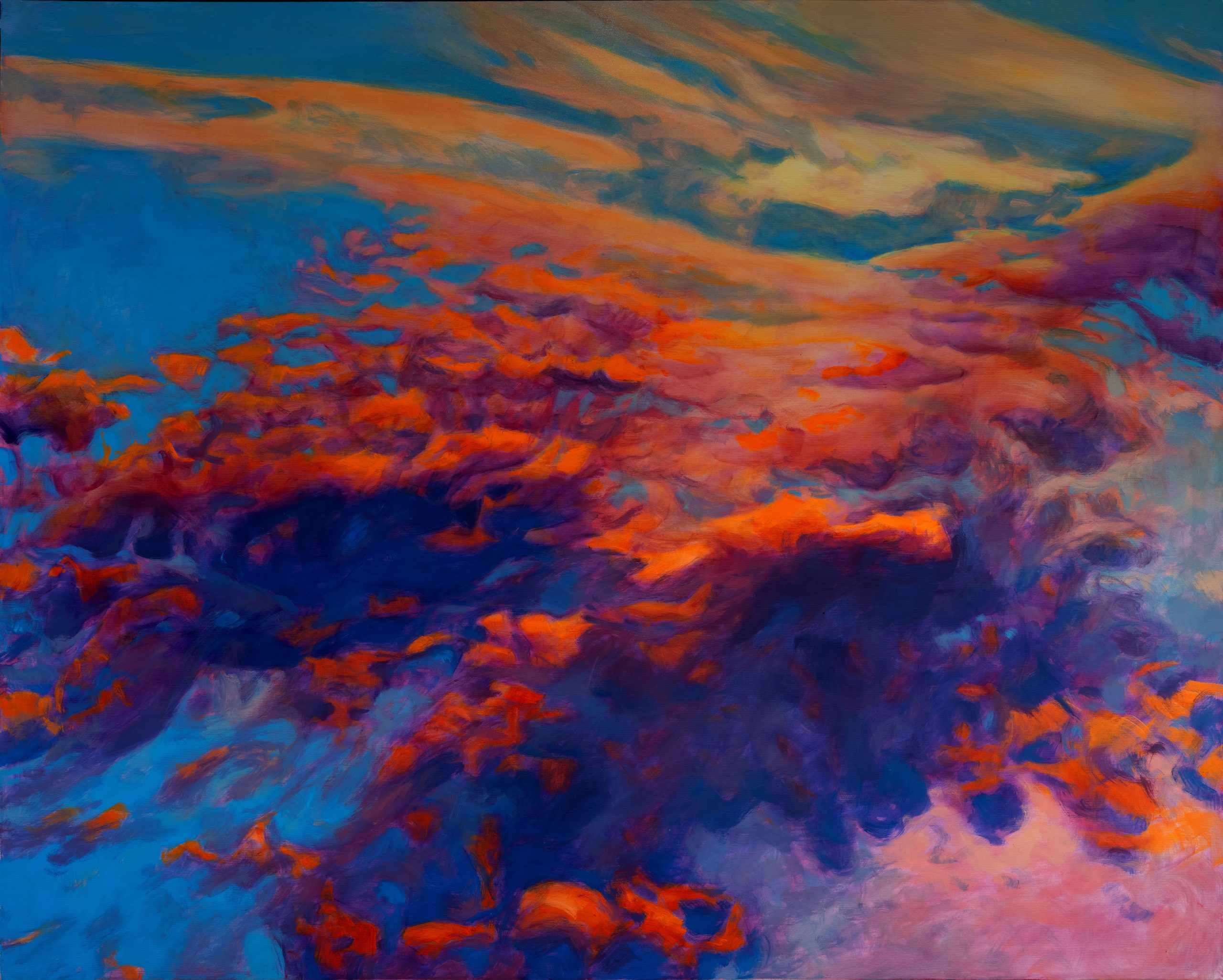
Tia-Thuy Nguyen: Upon entering the exhibition, visitors are immediately met with a large-scale cloud artwork before moving closer to examine the microscopic details and smaller pieces that construct this overarching energy field. Visually, we are often confined by physicality. We tend to obsess over what material an object is made of, its specific shape, or its exact color. I want to shatter that habit, inviting the audience to dive much deeper into layers of emotional resonance. Whether it is a woven steel cloud, a stone sculpture, or a beaded flower, each artwork carries its own distinct frequency and breath. Yet, they all seamlessly harmonize to generate a singular, unified energy field.
Because of this, the viewing path in Fields of Resonance is intentionally non-linear. The route “dances” through the space, continuously provoking internal introspection. It ultimately does not matter which direction you choose to navigate. My deepest hope is that, by the end of their journey, viewers will realize that peace is not solely defined by stillness or silence; it can be an absolutely radiant and celebratory state, much like discovering beauty even amidst a storm.
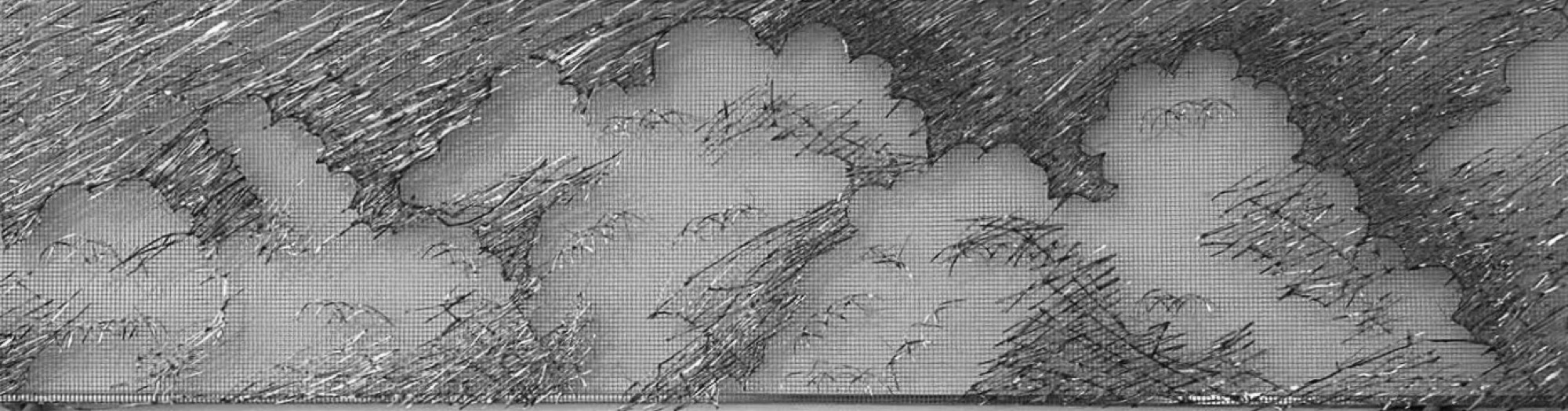
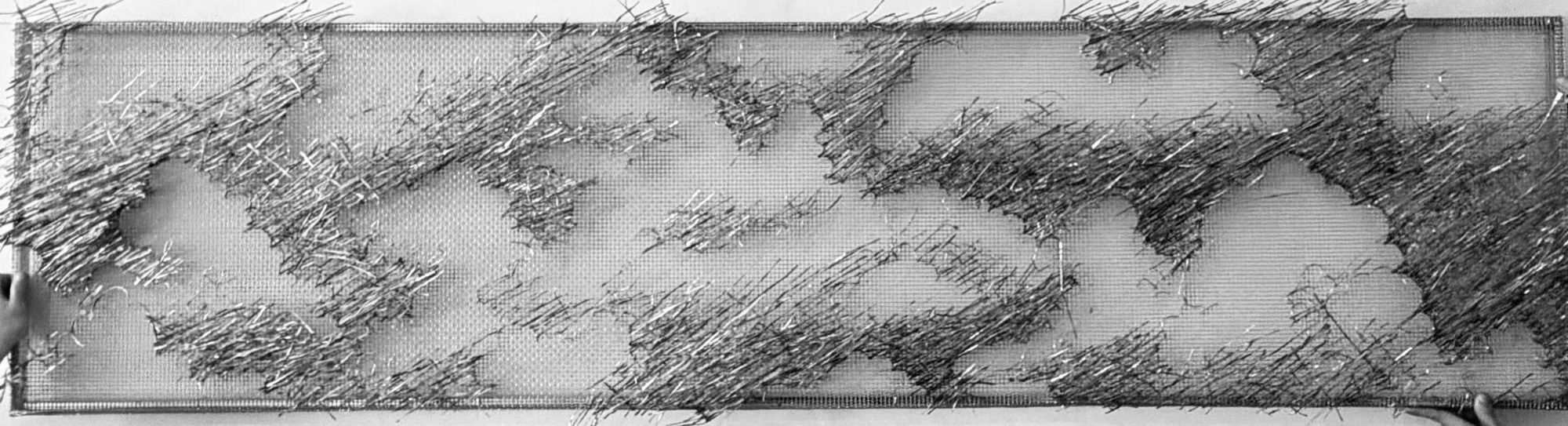
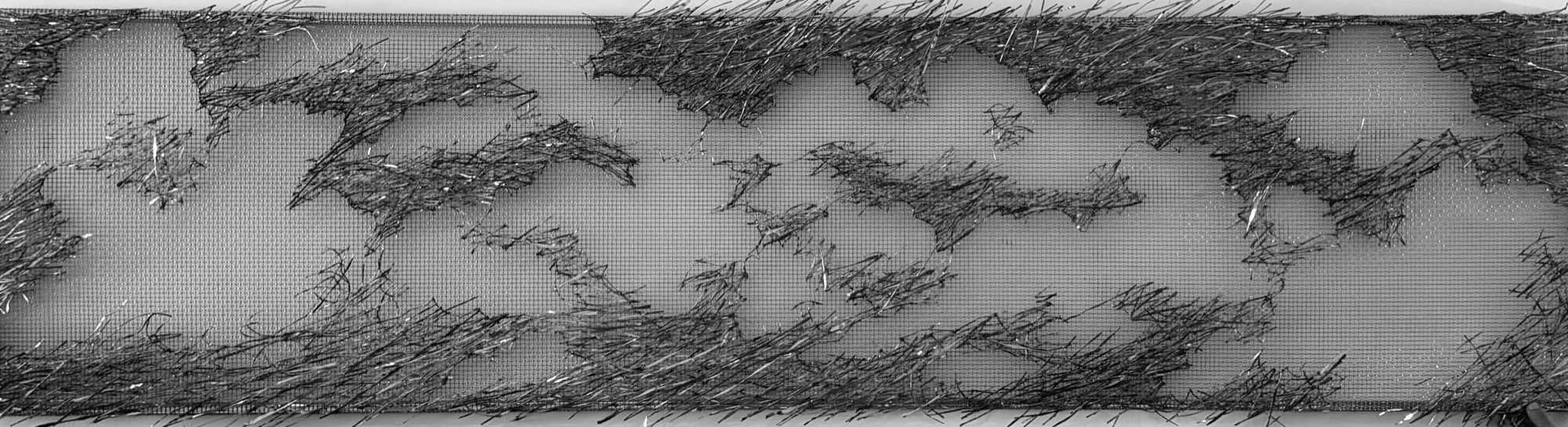
The Pause Between Storms introduces stainless-steel weaving for the first time. Could you tell us more about the decision to use this technique, the process of making these works, and what the material’s apparent contrast, strength and industrial character on one hand, delicacy and weaving on the other, means to you?
Tia-Thuy Nguyen: Combining stainless steel with the manual craft of “weaving” is my deliberate way of forcing industrial strength into a direct dialogue with femininity. Steel is inherently cold, rigid, and distinctly masculine. Few would expect such an abrasive material to be “forged” and tamed by the fluid, delicate act of weaving. This meticulous, physical dedication ultimately forces the metal’s rigidity to yield to the sheer endurance of the hands. Through this process, I wish to assert the inner strength of a female artist: the capacity to embrace and transform the most challenging, rough materials into a creation that is entirely floating and weightless.


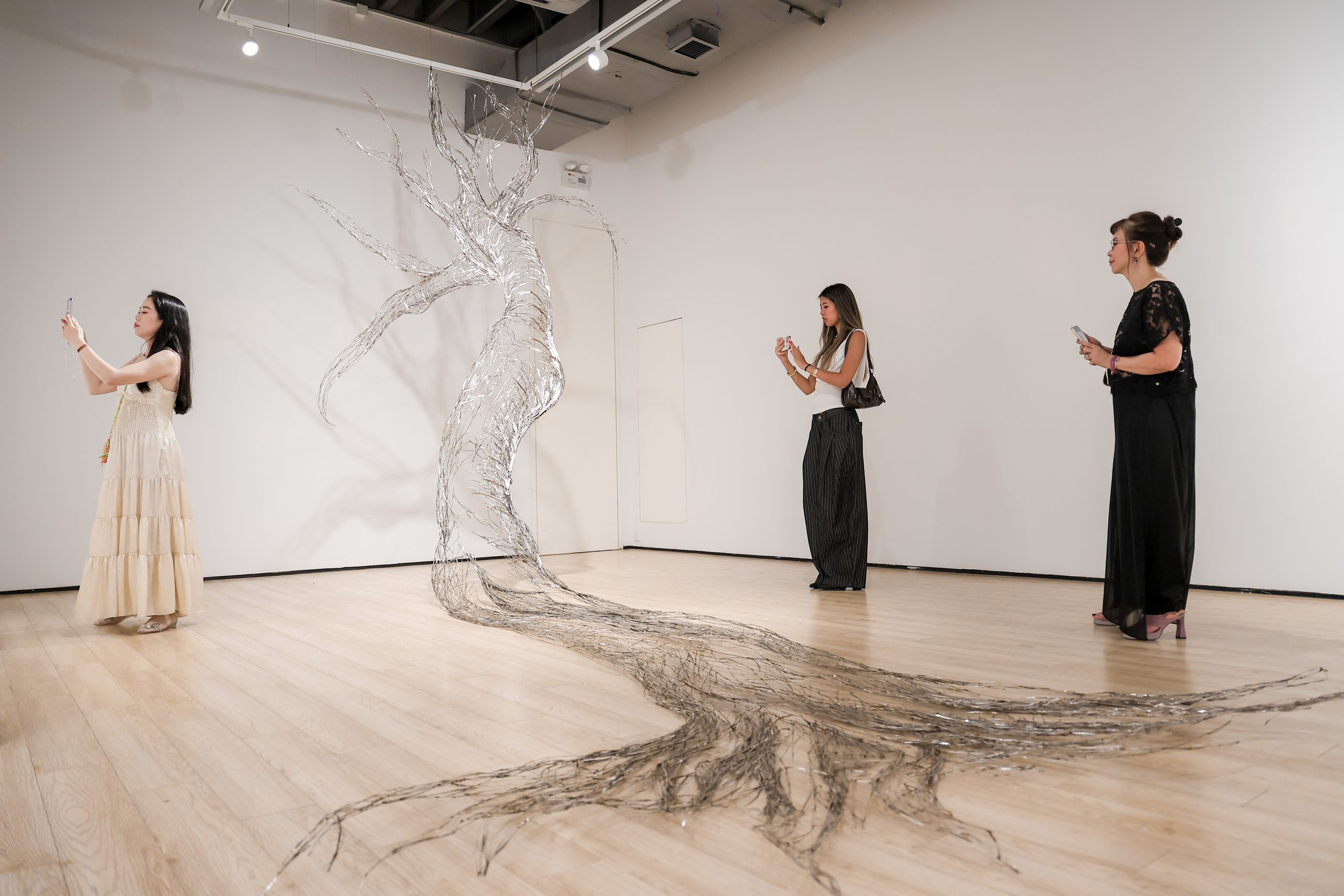
In Enduring Vitality, stainless steel seems to move from the surface into the gallery space, extending the image of a tree beyond the conventions of drawing or painting. Is there a particular image, memory, or emotional starting point behind this work? How does it relate, if at all, to your recent public works Resurrection and Unity in Hanoi?
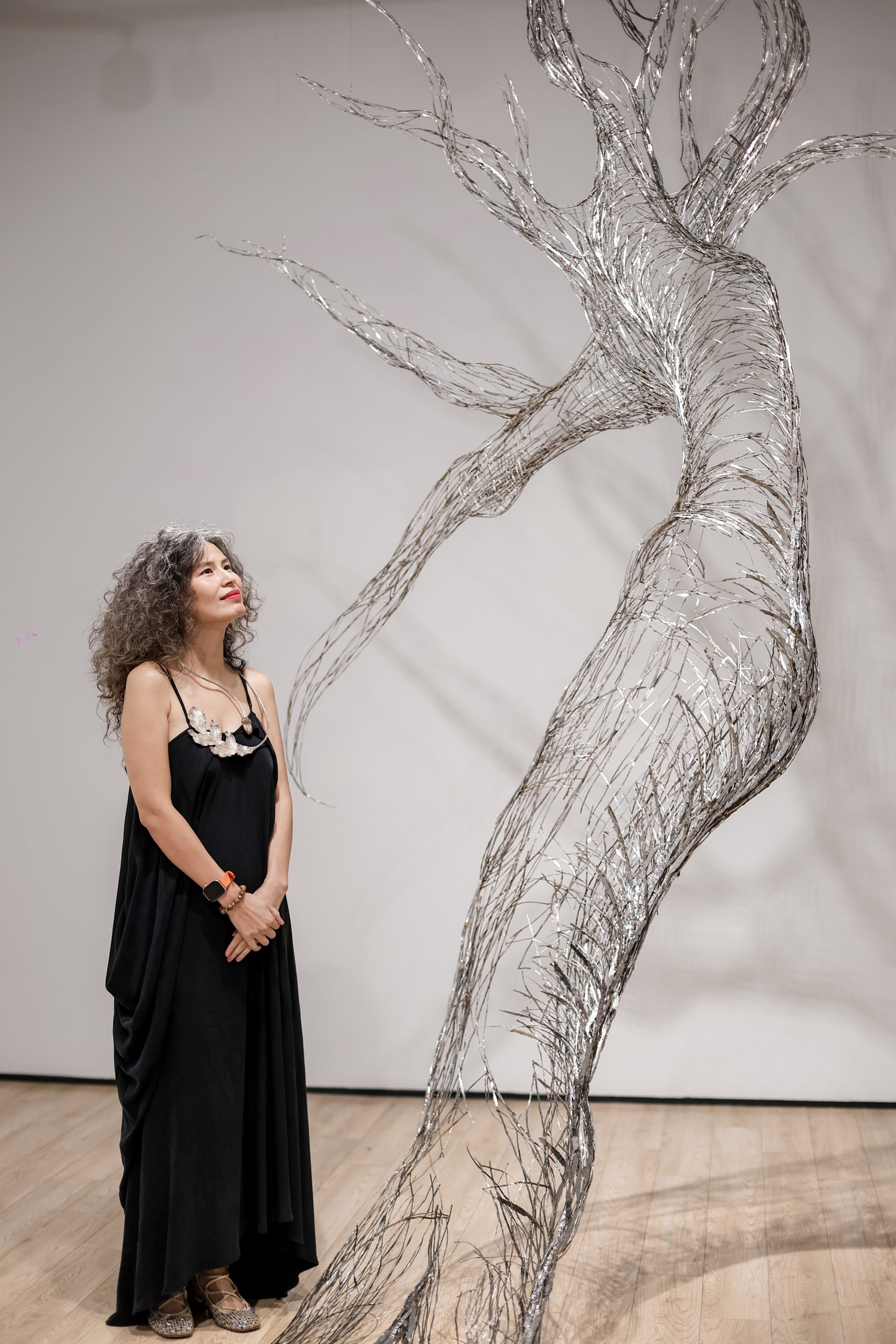
Tia-Thuy Nguyen: When we think of an ancient tree, we tend to default to an archetype of “bearing weight”: rooting deeply, spreading a vast canopy, and bracing itself as a structural bridge between earth and sky. With Enduring Vitality, however, I wanted to express a definitive break from that confining mold. Suspended in mid-air within the gallery, the artwork evokes a profound sense of freedom, wandering, and a complete absence of physical weight. Relocating the tree into a purely aesthetic space, where it is finally allowed to lay down its burdens, serves as a deep metaphor for women: beneath the exterior of resilience and sacrifice lies a constant yearning to shed external pressures and return to the gentle, weightless softness of femininity.
Much like my recent public works Resurrection and Unity, this piece retains the core theme of revival, yet it is powerfully unlocked through the presence of light. In my practice, light is never merely a tool for illumination; it functions as a vital material capable of activating the artwork’s living state. As rays of light filter through the steel structure, they cast sparkling shadows and generate a sensation of absolute weightlessness. Though the tree maintains a sturdy outward form, deep within resides a joyous entity, rejoicing because it has finally found a realm of absolute freedom to call its own.
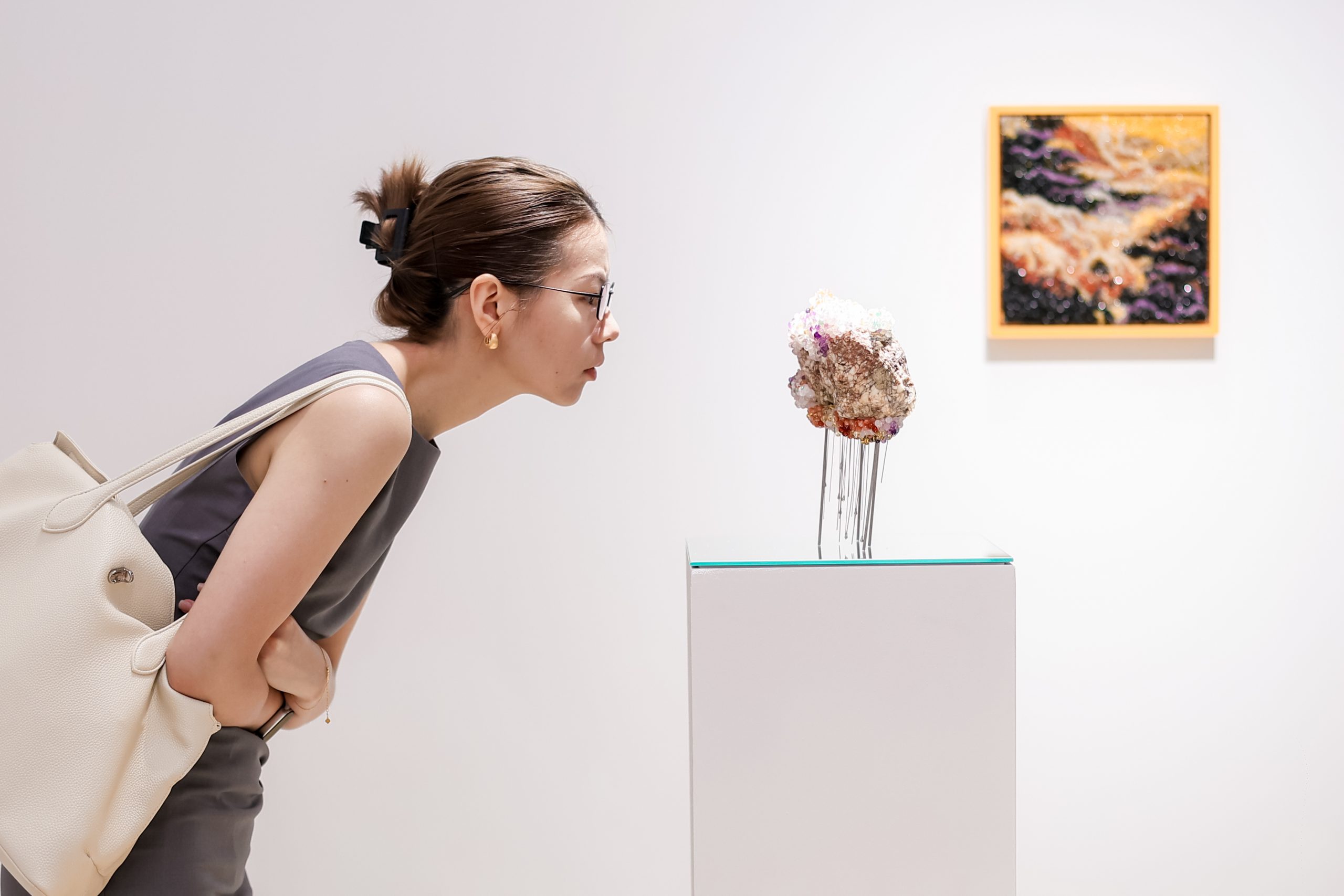
The new stone sculptures mark a development from the works shown in Monaco. Could you tell us more about the addition of the supporting structures beneath the stones, as well as the raindrop-like elements suspended from them? Do these forms relate to clouds and rain, and what new inspiration or line of thought led to this evolution?
Tia-Thuy Nguyen: These mosaic sculptures materialize the continuous cycle of water and energy. While my previous work in Monaco borrowed the translucency of quartz to create a peaceful sanctuary of light, here I wanted to push the boundaries further. Clouds and rain are inherently ephemeral and weightless, yet I deliberately chose to express them through solid quartz and steel. The friction between the roughness of the stone and the weightlessness of the air creates a highly intentional visual paradox.
The supporting “raindrop” structures and the mirror beneath act as an endless energy loop. Viewers will watch these steel raindrops fall and touch the mirrored surface, only for their illusions to “evaporate” upward into shimmering clouds. The core concept lies precisely within that reflective surface: as we gaze into it, we unexpectedly catch a glimpse of our own selves suspended within, perhaps finally untethered from the heavy burden of existence to feel completely weightless.

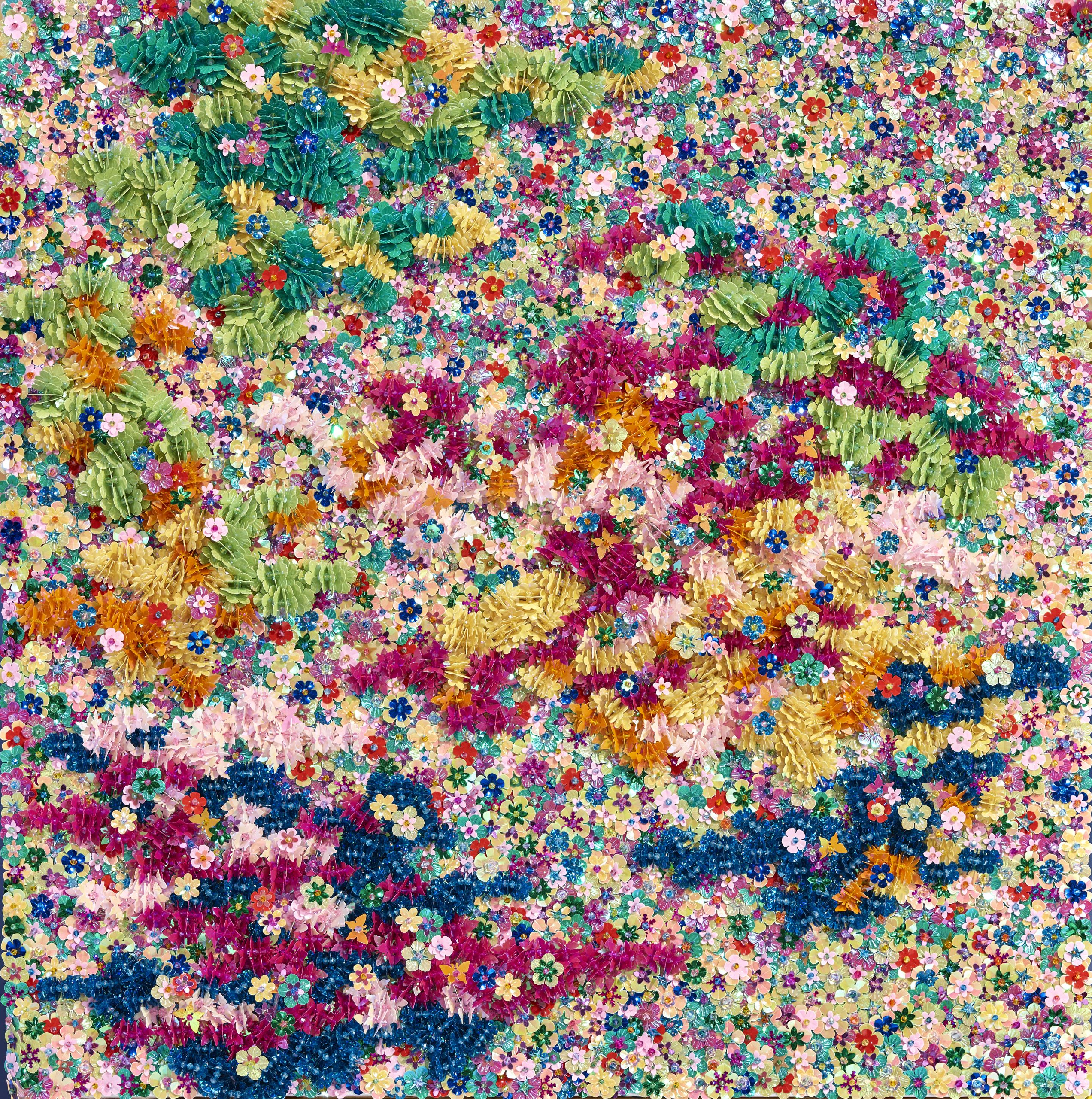
Many Contradictory Flowers introduces your new Flower series to the gallery for the first time. Could you share the origins of this series, and the ideas or experiences that prompted you to turn to flowers at this moment in your practice? How does this new body of work relate to, or depart from, your ongoing exploration of nature, transformation and inner energy?
Tia-Thuy Nguyen: Many Contradictory Flowers acts as a natural continuation of Flower of Life, an artwork of a flowerless oak tree that I deliberately willed to “bloom”. To me, the act of blossoming is not merely a biological phenomenon; it is the convergence of an immense energy field drawn from earth and nature. The sparkling flowers in this work carry a profound metaphor: they can only refract light into a symphony of sunlight when they have inherently accumulated enough vitality. This mirrors human existence itself: we can only truly “bloom” when we have nurtured a solid, unwavering inner strength. The viewing process operates on a similar wavelength. Much like entering a peaceful sanctuary detached from the bustling city outside, the audience requires a profound moment of mental stillness to truly connect and empathize with the work. Ultimately, a flower only reaches its absolute, perfect bloom when the artist, the artwork, and the viewer all resonate with a sufficiently immense inner energy.
Across the exhibition, what would you most like collectors to understand about the role of handwork and time in the works? Are there particular details, materials, techniques, or stages of production that are especially important to notice in person?
Tia-Thuy Nguyen: To me, craftsmanship is not merely an exercise in patience; it is the process of “condensing” my own time and energy, alongside the essence of the materials, into the artwork. Yet, when standing before a piece, I do not want collectors to fixate on the sheer number of labor hours. Instead, I want them to experience the profound interaction and the completion brought forth by light. In my practice, light operates as a “living entity” capable of “awakening” both the paintings and sculptures.
The most valuable detail to observe in person is this visual mutation. The artwork’s “living” state is activated the moment you move through the space. As you shift your perspective, light filters through the quartz beads and steel fragments, generating an endlessly shifting, sparkling effect. Do not just stand still. Let the light guide you. The exact moment you actively interact with those rays of light, you cease to be a passive observer; you officially become an integral, structural part of the artwork itself.
Finally, are there any individual works in the exhibition that you feel mark a new direction or an especially important development within your practice, and why?
Tia-Thuy Nguyen: The most definitive turning point in my practice would undoubtedly be the hand-woven steel paintings. Transforming a rigid, inflexible metal into a fragile form poses a complex puzzle regarding the friction between material and inherently gendered techniques. Steel is fundamentally industrial, abrasive, and distinctly “masculine”. Introducing the act of weaving into this medium is my way of placing femininity and patience in direct parallel with physical strength.
Furthermore, the translucent, woven structure creates a perfect environment for light to filter through the metallic layers, effectively “awakening” the artwork as viewers move around it. Yet, moving beyond mere technical or material conquest, this represents a crucial threshold where I bypass the tangible, physical forms of objects to delve much deeper into pure concept. I believe this evolution in my practice will continue to expand and unfold with each subsequent exhibition. Ultimately, what I hope endures is a shared, resonant experience, where the artist, the artwork, and the audience can collectively immerse themselves in a flowing current of vitality and profound peace.
Interview Credits
Artist: Tia-Thuy Nguyen
Text: Min Fang
Exhibition: Fields of Resonance
Venue: Almine Rech Shanghai, Shanghai, China
Dates: August 28 – October 31, 2026
Cover Photo: TangTang
Article Photos: Almine Rech