Now Reading: Alsar Atelier repurposes industrial shelving as a hydroponics school in Bogotá
- 01
Alsar Atelier repurposes industrial shelving as a hydroponics school in Bogotá

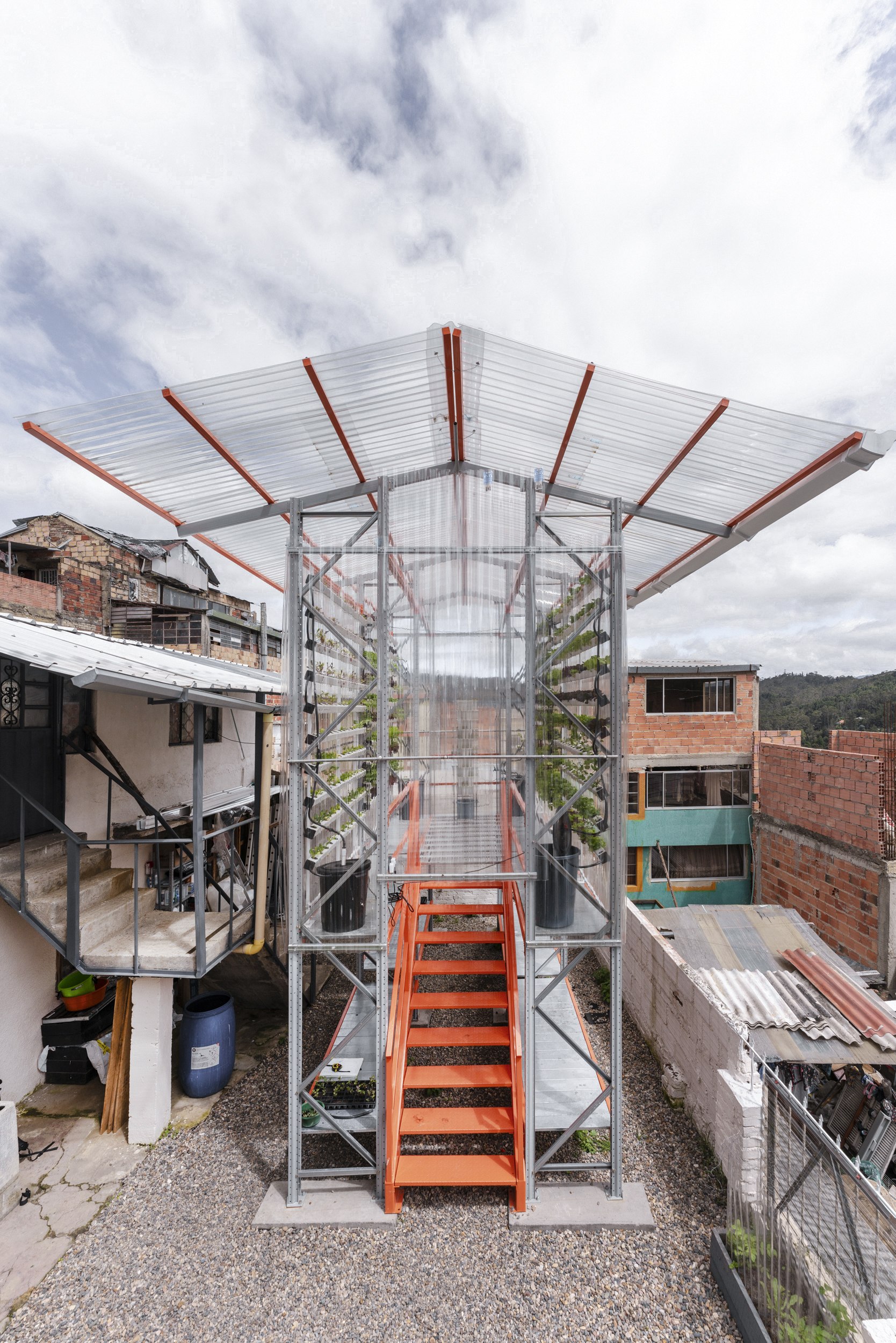

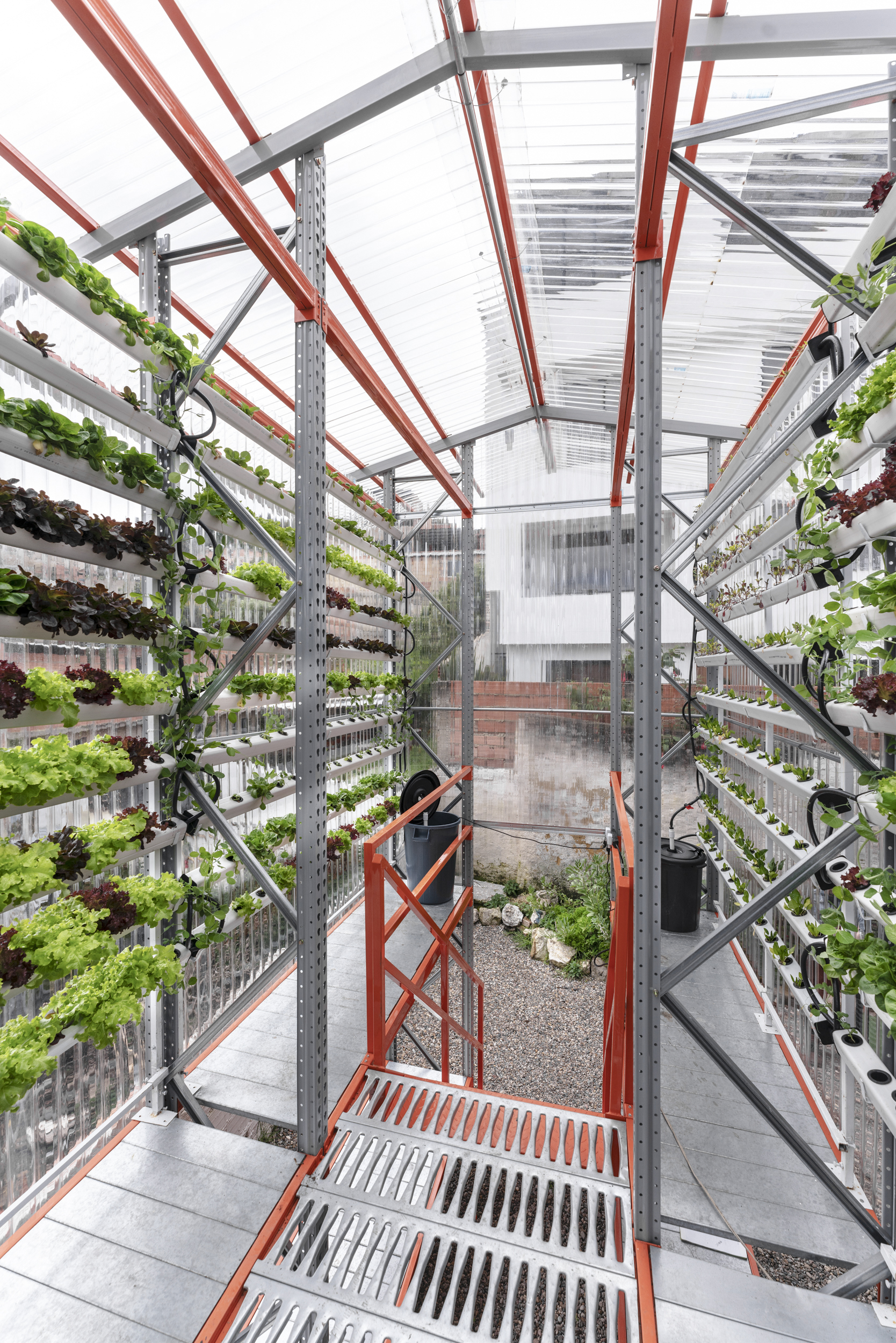
In the informal neighbourhood of San Luis in Bogotá, a 24-square-metre hydroponics module uses an industrial shelving system to support food cultivation, community education and collective self-management. Designed by Alsar Atelier, Oscar Zamora, Cesar Salomón and Yazmin Crespo, the lightweight structure was completed in 2024 as part of a longer collaboration with local organisations and residents.
The project supports initiatives led by Cesar Salomón, Fondacio Altos del Cabo and Maya Tejedores de la Tierra, whose cooperation in San Luis has developed over seven years. Within this dense self-built context, hydroponic agriculture is proposed as an alternative form of food production that requires significantly less ground area than conventional cultivation.
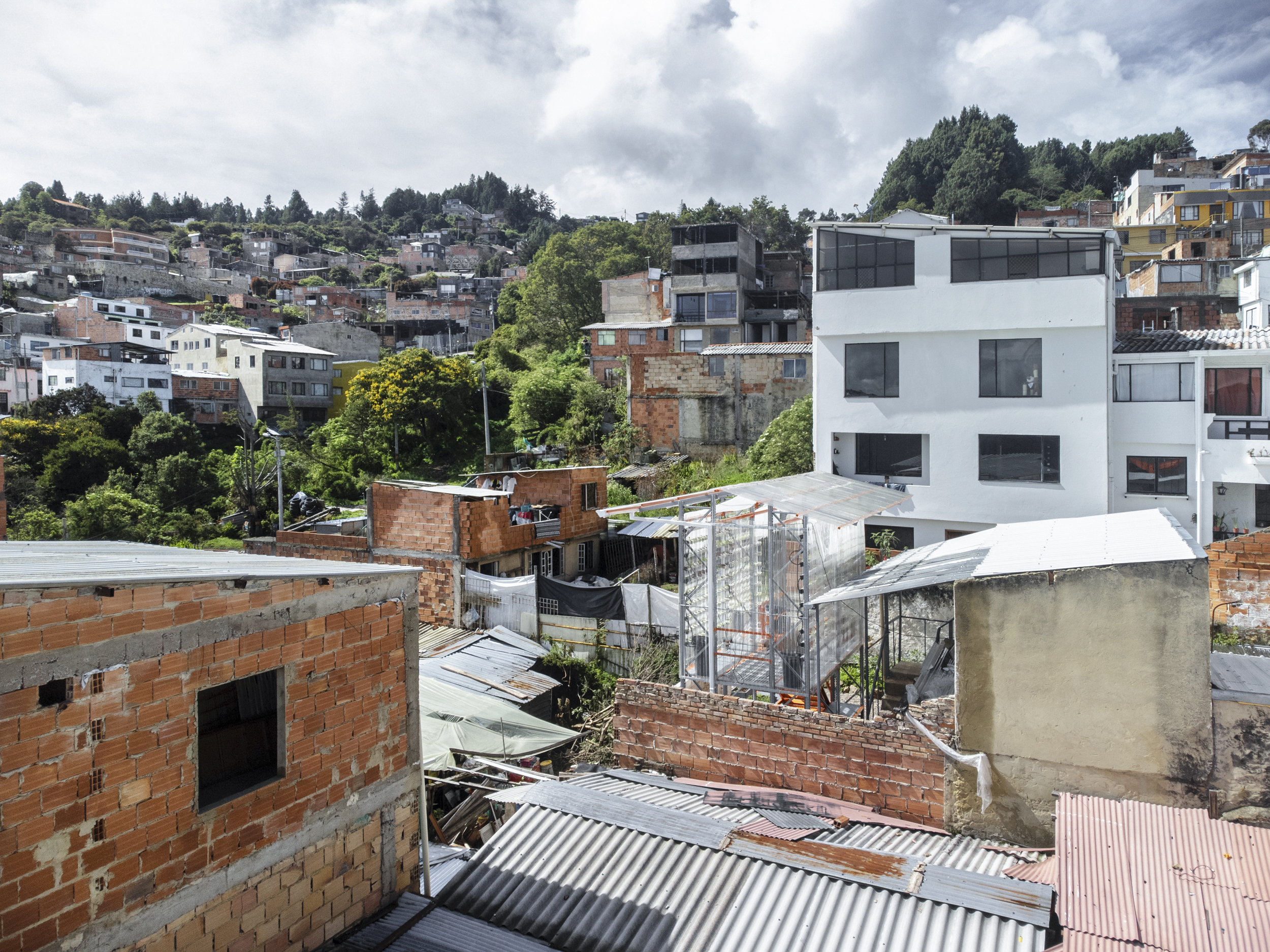
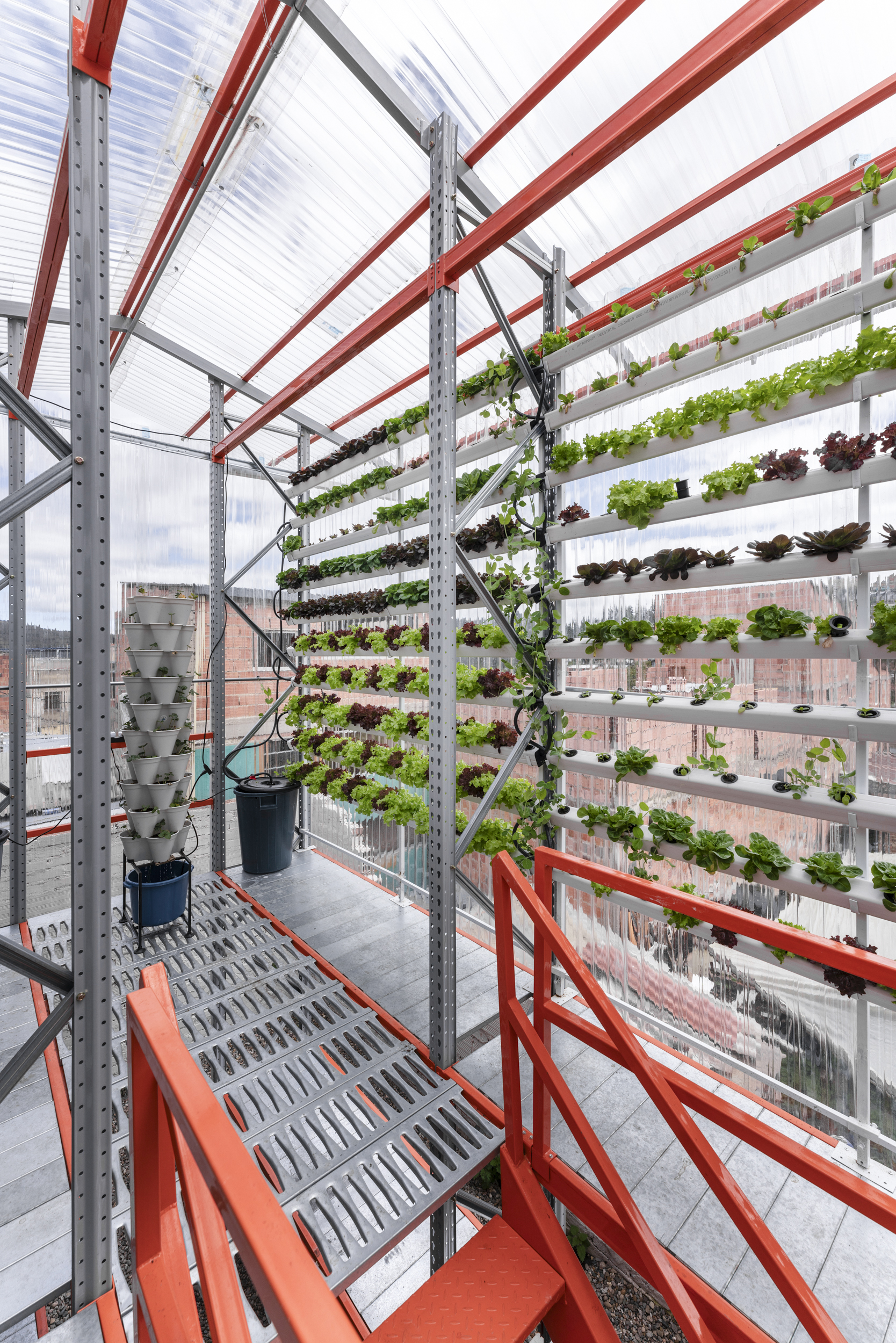
According to the project team, hydroponics can accommodate between two and ten times the plant density of conventional cultivation while reducing water consumption by up to 60 per cent. Crops can be organised vertically and cultivated across changing climates and seasons, making the system particularly relevant where available land is limited.
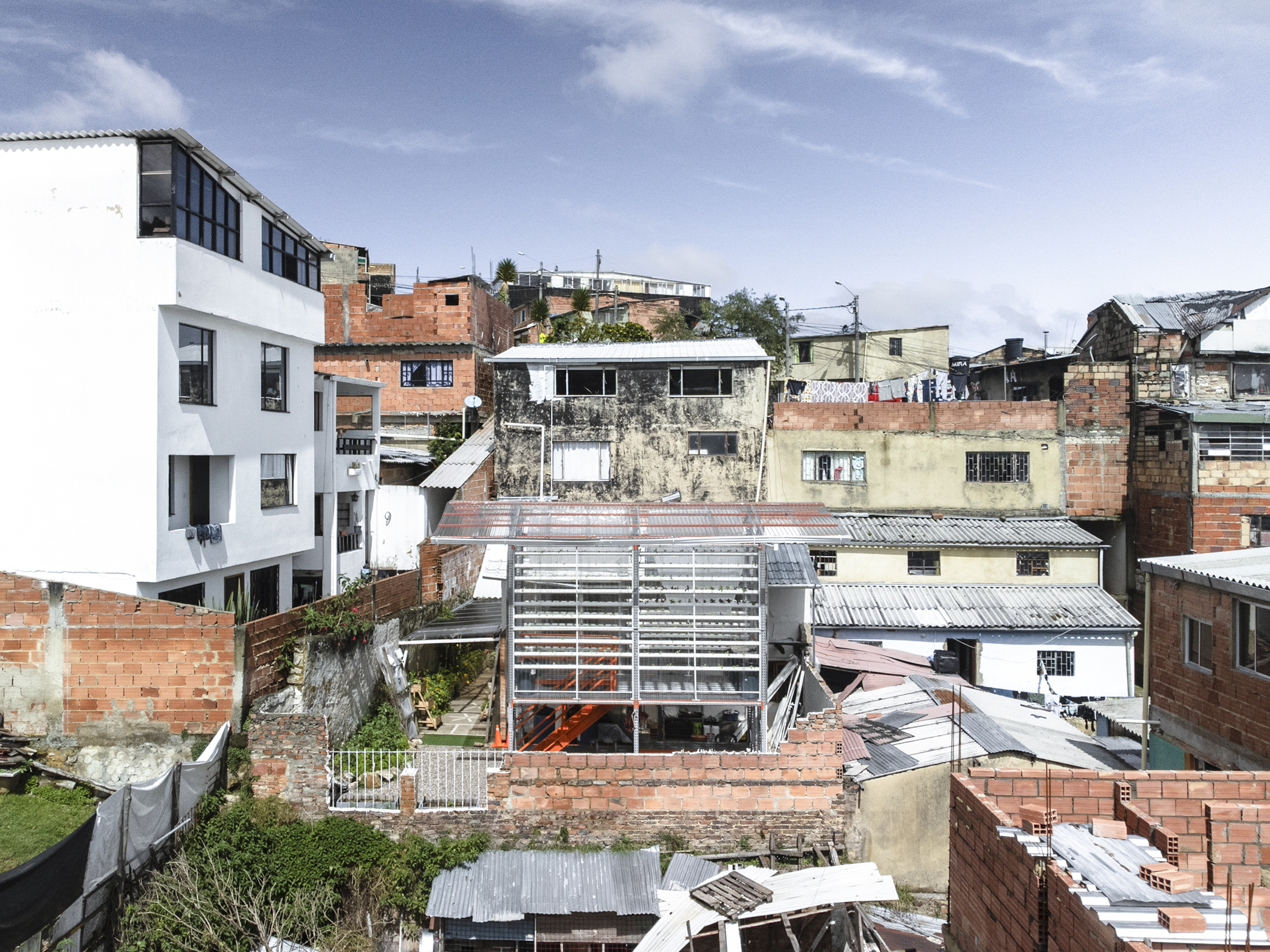
The architectural strategy begins with an ordinary industrial shelving system. Rather than treating it solely as storage equipment, the designers repurposed it as a construction system that is fast to assemble, reusable and adaptable. The resulting module is intentionally lightweight and semi-permanent, responding to a territorial condition in which occupation and legal circumstances can make the physical fabric of informal neighbourhoods change over time.
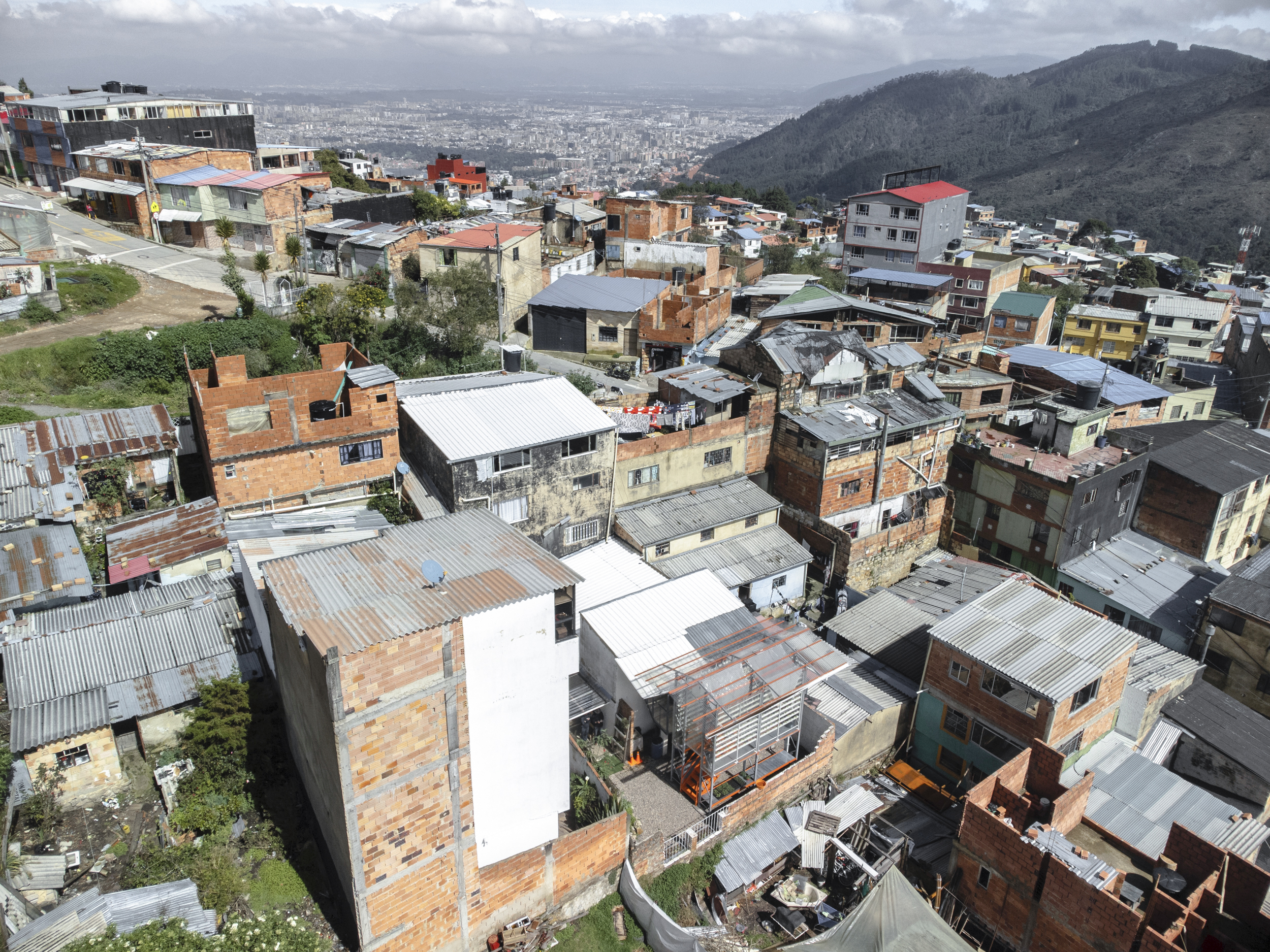
The system is designed to be dismantled if necessary. Its components can return to their original use rather than becoming construction waste, or the entire module can be moved to another vacant site. Because the shelving establishes a modular framework, the architecture can also expand or contract according to the conditions of a new location.
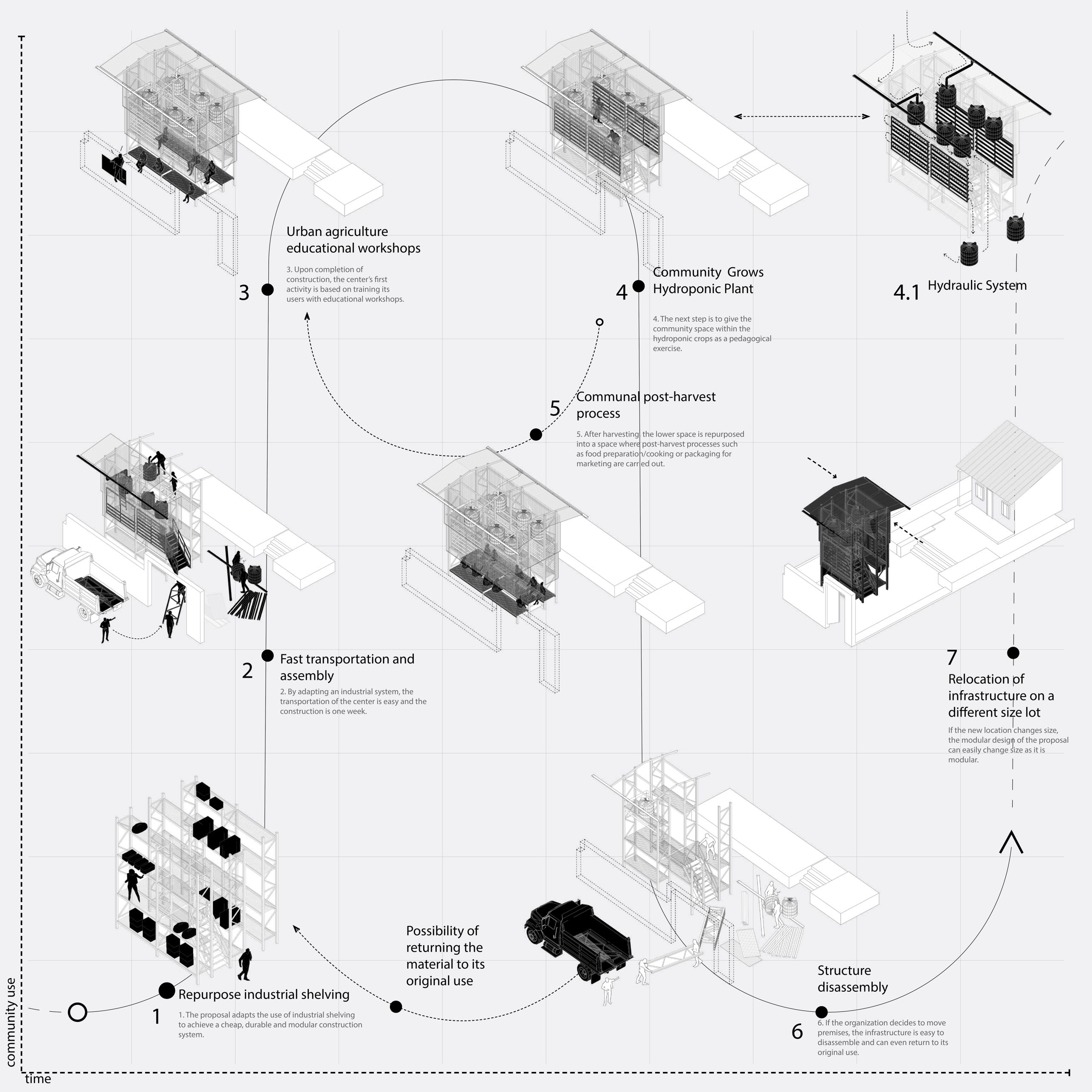
This approach reduced the construction period to approximately one week. Ease of transportation, assembly and disassembly is therefore not simply a technical convenience but a central part of the project’s response to the temporary and evolving character of the surrounding urban fabric.
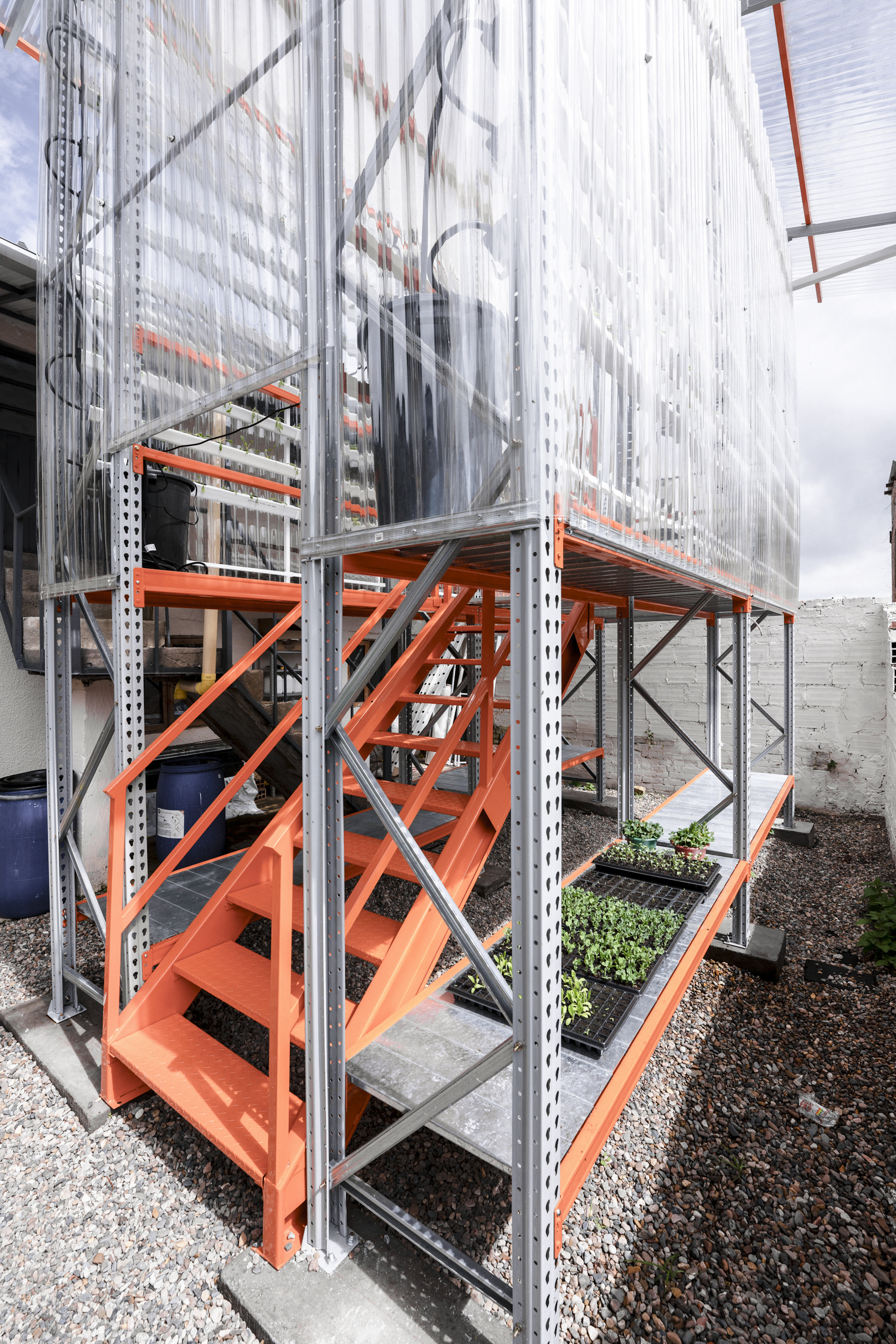
Beyond producing food, the module functions as what the project team describes as an analog school. Working with the Altos del Cabo Center, it provides a setting for workshops in hydroponic cultivation as well as personal on-site growing, sustainable water use and collective post-harvest activities.
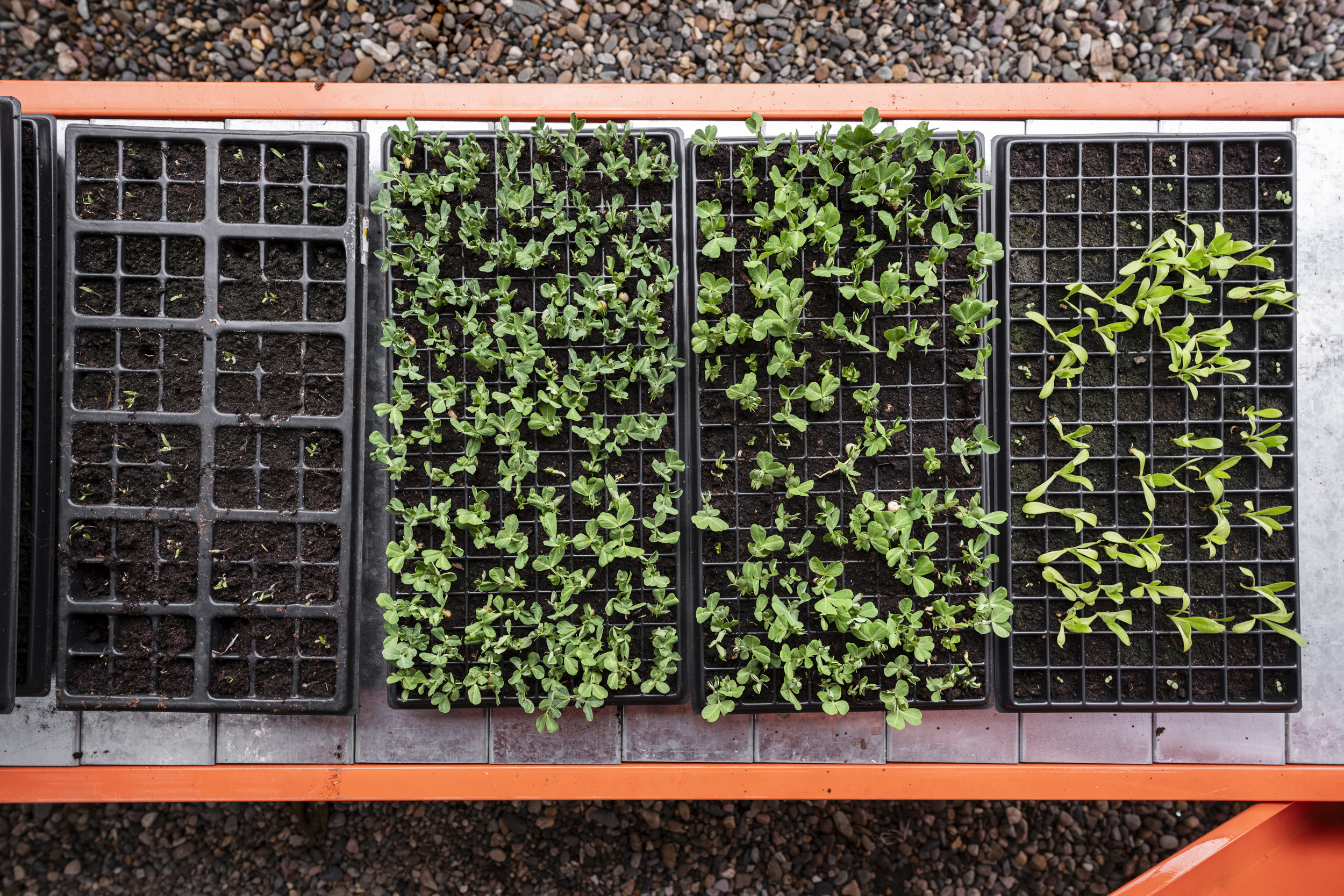
The project also accommodates the eighth Seed Bank of Chapinero from the José Celestino Mutis Botanical Garden, where 43 native and heirloom species are preserved. This combination of cultivation, teaching and seed conservation extends the structure’s role beyond that of a greenhouse, positioning it as shared infrastructure for local knowledge and food practices.
Funded by NEACOL, the Hydroponics Module frames tactical architecture as a reversible form of community infrastructure. Its industrial components remain legible and reusable, while the programme links a compact architectural intervention to wider questions of food production, water, education and collective agency in Bogotá’s self-built neighbourhoods.
Project Credits
Project: Hydroponics Module / Módulo de Hidroponía
Designers: Alsar Atelier (Instagram), Oscar Zamora (Instagram), Cesar Salomón, Yazmin Crespo
Location: Bogotá, Colombia
Program: Community Garden
Built Area: 24 m²
Completion: 2024
Funding: NEACOL
Community collaborators: Cesar Salomón, Fondacio Altos del Cabo (Instagram), Maya Tejedores de la Tierra (Instagram)
Text: Yazmin Crespo
Photography: Mateo Pérez