Now Reading: House in Gurre by Office Kim Lenschow uses stepped volumes
- 01
House in Gurre by Office Kim Lenschow uses stepped volumes

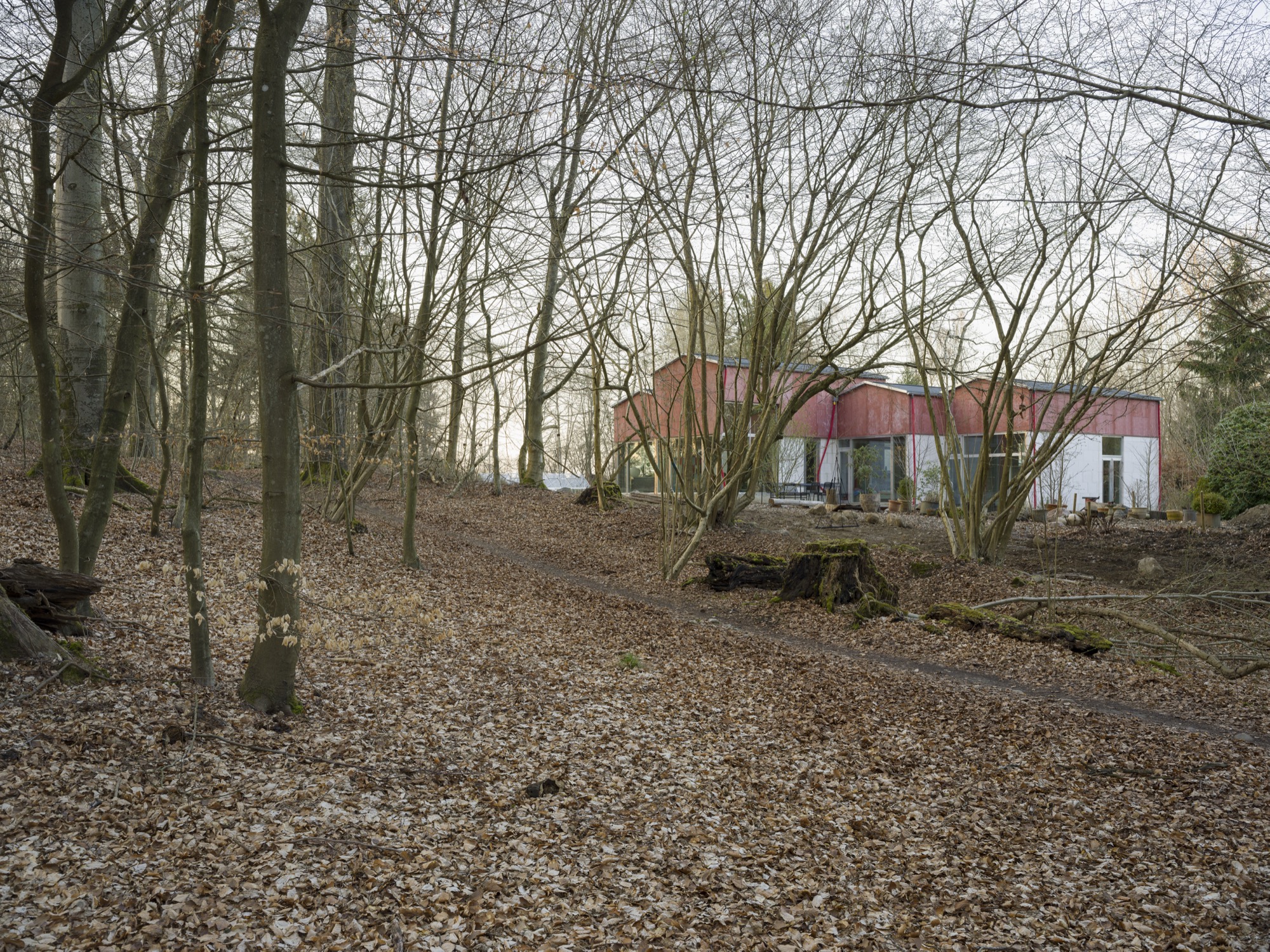

Set within the dense woodland of Gurre, near Elsinore, House in Gurre by Office Kim Lenschow emerges less as an object placed in nature than as a spatial system negotiated through it. Surrounded by tall oak and beech trees that filter light across the seasons, the project responds to a site defined by shade, shifting views, and a constant sense of enclosure. Rather than resisting these conditions, the house adopts them as its primary design driver, constructing a sequence of spaces that unfold in dialogue with the forest.


The architecture is composed through a series of stepped volumes that withdraw and advance across the site, producing a constellation of niches both inside and outside. These recesses function as open courtyards while simultaneously carving out more intimate interior zones. Each space is oriented differently toward the surrounding woodland, allowing the experience of the forest to remain varied, fragmented, and continuously reinterpreted.

The house is organised through a sequence of equal spatial volumes, establishing a legible rhythm that underpins the overall layout. This order is subtly disrupted through shifts in floor levels, which subdivide the open plan without resorting to conventional partitions. Variations in ceiling height emerge from these sectional adjustments, enabling multiple modes of occupation within a continuous spatial field.


At the centre, a courtyard draws light deep into the plan. Its logic recalls forest clearings where sunlight filters through the canopy, creating moments of brightness within an otherwise shaded environment. The main living area is oriented toward the forest floor, reinforcing a horizontal connection to the immediate landscape rather than distant views.

The stepping logic of the exterior volumes is carried through into the interior, where walls and sections do not align as continuous planes but shift in layers. This produces a gradual unfolding of space, where each room is partially revealed rather than fully exposed. At the same time, the construction itself becomes legible. Layers of the wall are articulated rather than concealed, directing attention toward the tectonic assembly of the building.


This approach generates a sense of depth that is both spatial and material. Movement through the house becomes a process of navigating thresholds and layers, with each transition offering a different reading of structure, enclosure, and light.
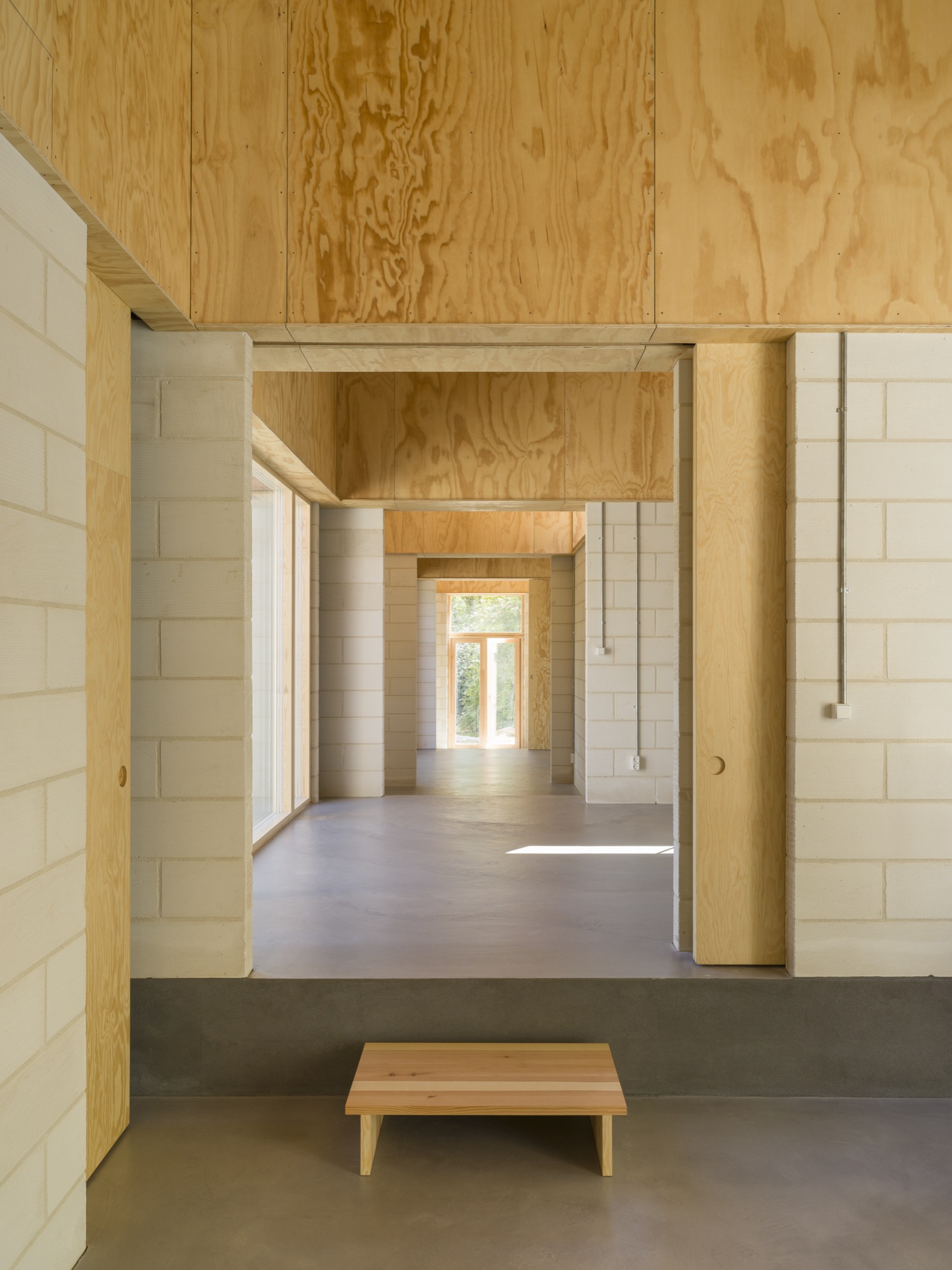
The house is constructed from porous concrete blocks supporting a timber frame above. The raw, industrial character of these materials stands in deliberate contrast to the softness of the surrounding forest. Yet this contrast is not oppositional. Instead, it establishes a stable and robust framework through which the changing conditions of light, weather, and vegetation can be perceived.


A clear tectonic language governs the project. Each element, from structural components to enclosure layers, is expressed with precision, allowing the construction to remain visible and comprehensible. This transparency does not seek to aestheticise detail, but to make the building readable as a system of assembled parts.


Project Credit
Project name: House in Gurre
Location: Gurre, Elsinore, Denmark
Completion: 2024
Area: 220 m²
Architect: Office Kim Lenschow / @kimlenschow
Photo: Hampus Berndtson / @hampusper
More Photos