
Now Reading: Tehching Hsieh and Linda Montano: The Year of the Rope
- 01
Tehching Hsieh and Linda Montano: The Year of the Rope


THE RULE
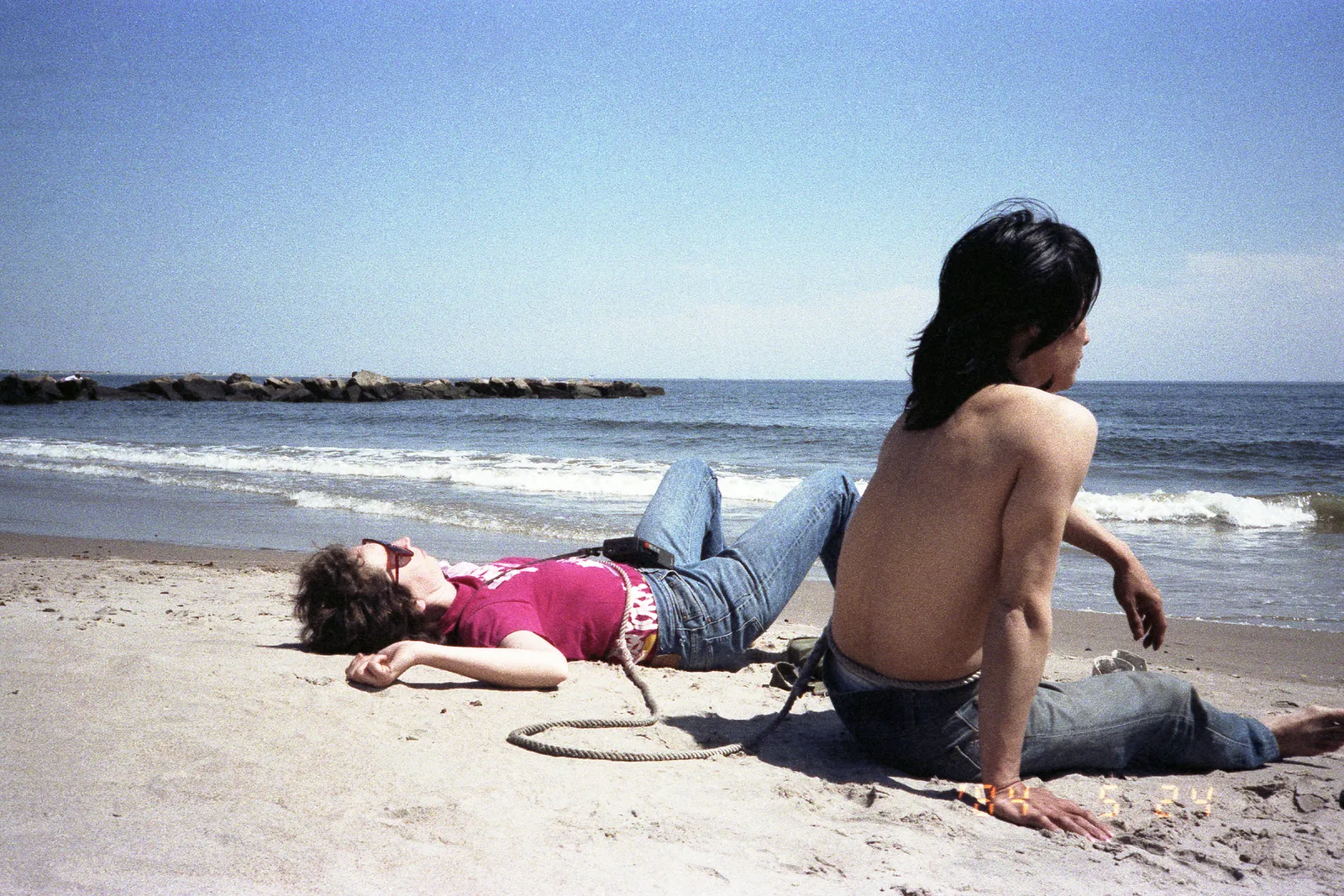
In July 1983, inside a modest New York loft, two artists began a performance with a deceptively simple premise. An eight foot rope tied around their waists would bind them together for a year. They were not permitted to touch.
The work, titled Art/Life: One Year Performance 1983–1984 and widely known as Rope Piece, was structured by a single condition. Yet that condition reshaped daily life in quiet but radical ways. Sleeping, travelling, bathing, eating, and working became matters of negotiation rather than routine. Every movement had spatial and emotional consequences.
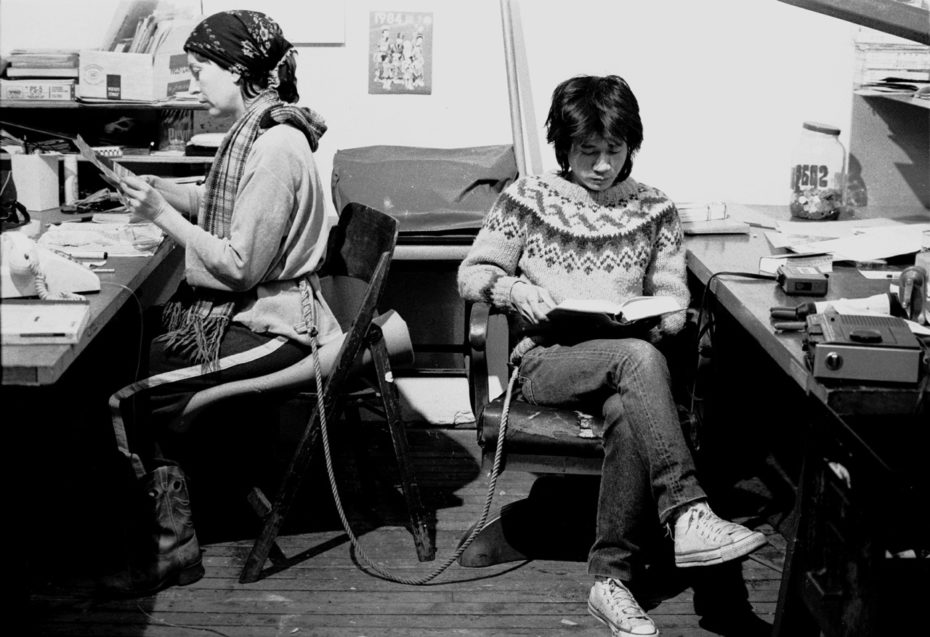
Unlike many endurance performances of the 1970s, the work did not depend on spectacle. Its intensity accumulated gradually through repetition. The rope functioned less as a symbol than as a rule. It was a physical constraint that reorganised time, space, and subjectivity.
By fixing the relation between two bodies over an extended duration, the work revealed something rarely visible in art: the labour required simply to coexist.
TIME AS MEDIUM
To understand the work fully, one must look at the practice of Tehching Hsieh.
Hsieh’s art is often described as endurance performance. Yet endurance is only the surface of a deeper inquiry. What distinguishes his work is the treatment of time itself as a medium.
Beginning in 1978, Hsieh produced a sequence of year long performances that reorganised everyday life through strict rules.
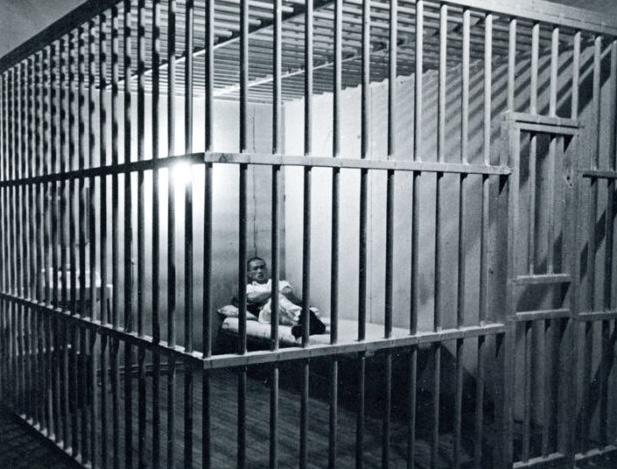
In Cage Piece (1978–1979), he confined himself to a wooden cell for an entire year without speaking, reading, writing, or engaging with media.
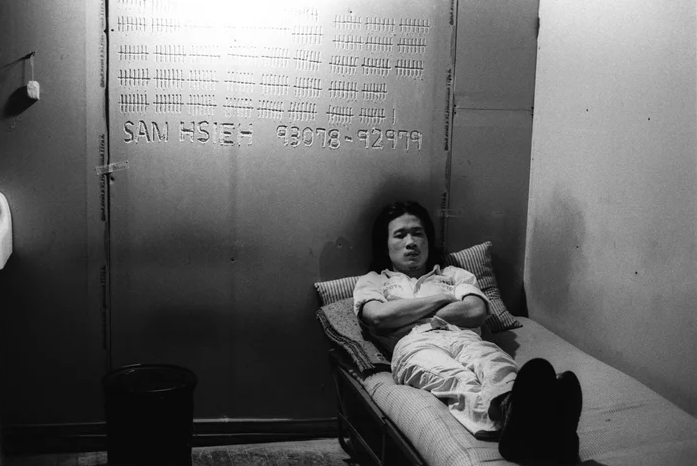
In Time Clock Piece (1980–1981), he punched a worker’s clock every hour day and night, producing 8,760 time stamps over twelve months.
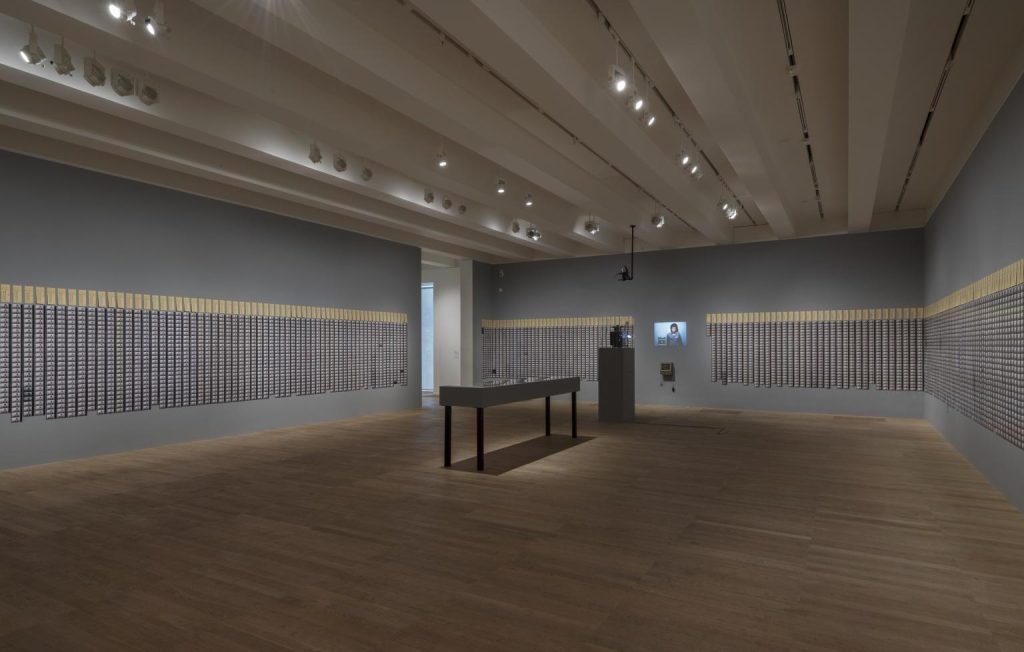
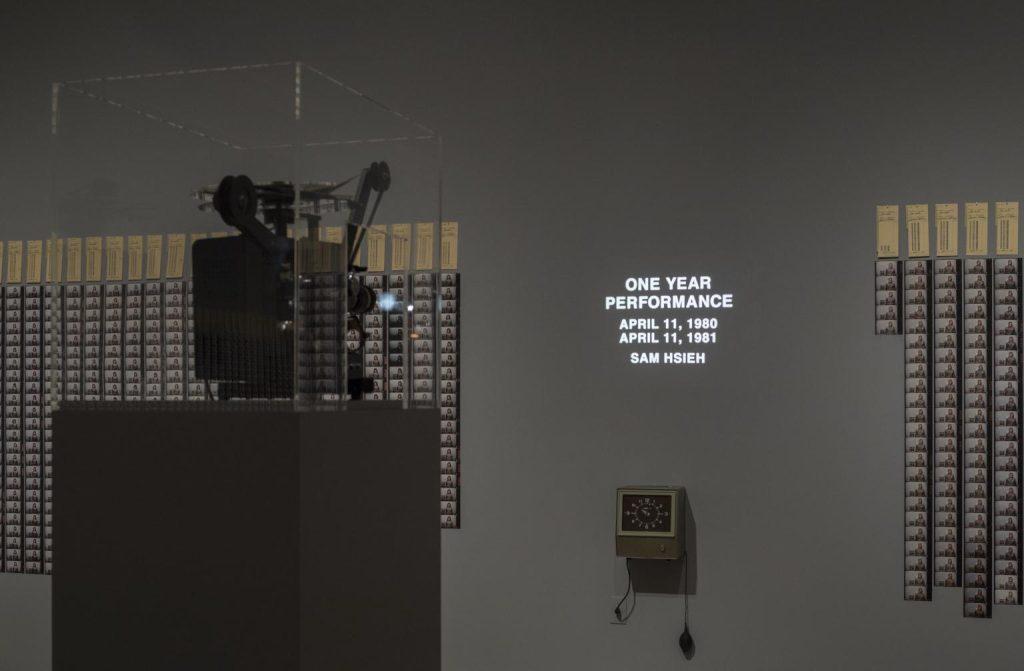
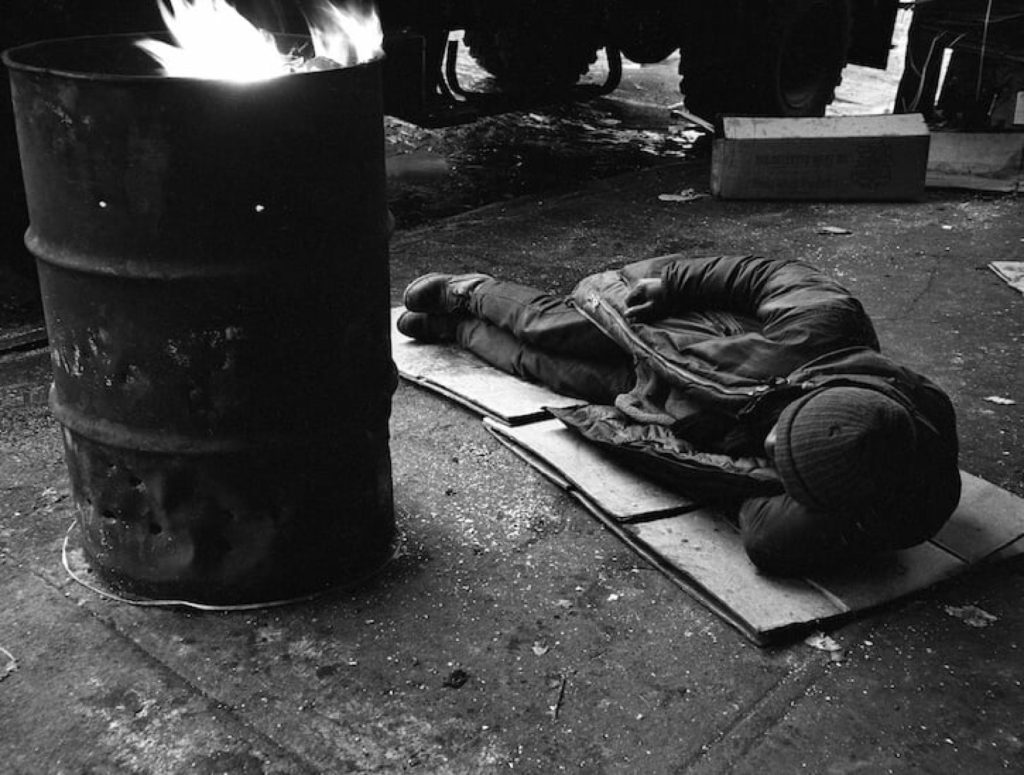
In Outdoor Piece (1981–1982), he lived entirely outside. He refused entry to buildings, vehicles, or shelters.
These works reveal the central logic of Hsieh’s practice. The artwork is not a theatrical event. It is a temporal structure within which life unfolds.
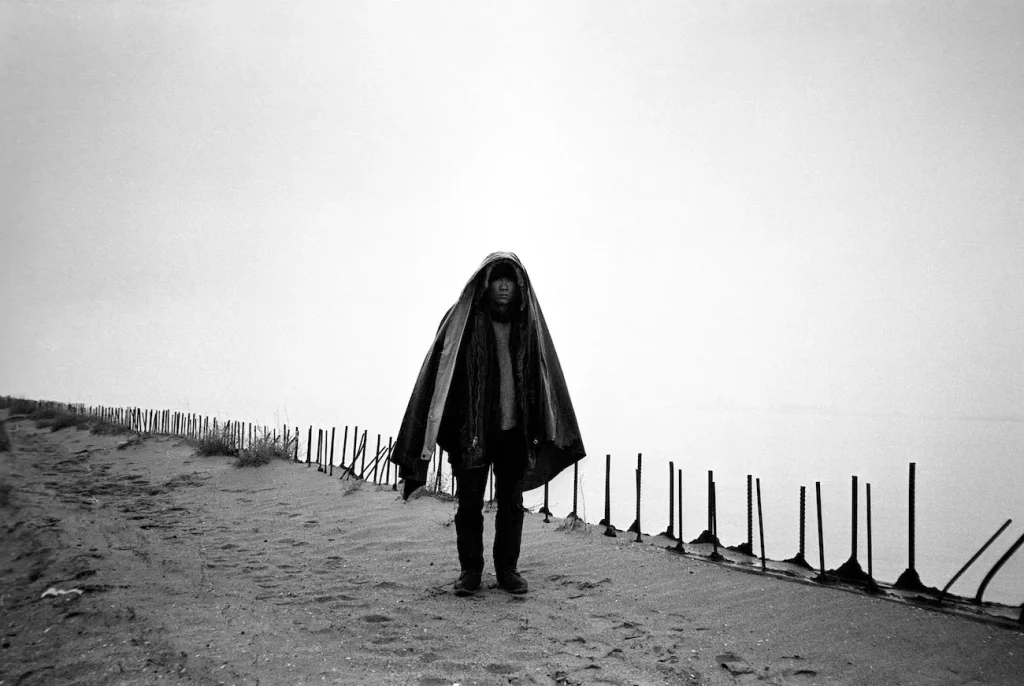
The rule constructs the work. The artist inhabits it.
In this sense Hsieh’s practice resonates with philosophical explorations of time by thinkers such as Martin Heidegger and Henri Bergson. Time is not treated as an abstract measure but as the condition through which existence becomes perceptible.
What Hsieh stages is not heroism but duration itself.
RITUAL AND TRANSFORMATION
If Hsieh’s work reduces experience to temporal structure, the practice of Linda Montano approaches duration through ritual.
Raised in a devout Catholic environment and shaped by both Western religious traditions and Eastern spiritual practices, Montano has long treated performance as a disciplined form of living. Her works merge autobiography, spiritual inquiry, and symbolic action.
Where Hsieh constructs rules that neutralise meaning, Montano charges duration with symbolic significance. Her performances often involve colour systems, costumes, chanting, fasting, and other forms of bodily discipline. These elements transform everyday behaviour into ritualised acts.
In Seven Years of Living Art (1984–1991), she organised life itself around the symbolic framework of the chakra system. Each year corresponded to a specific colour, diet, and behavioural discipline.
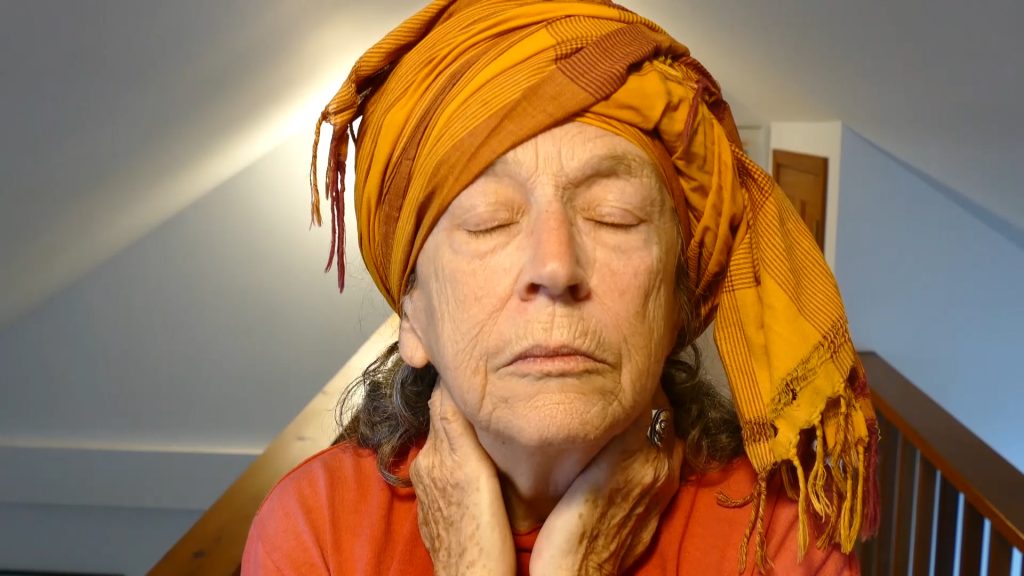
If Hsieh investigates time as existential condition, Montano explores time as spiritual process. Duration becomes a space for psychological and emotional transformation.
THE ROPE AS STRUCTURE
Rope Piece arises from the meeting of these two artistic systems.
For Hsieh, the rope establishes a rule of duration. Two bodies must remain within a fixed distance for one year. For Montano, the same rule becomes a relational ritual. Forced proximity produces a situation in which emotional and psychological dynamics unfold continuously.
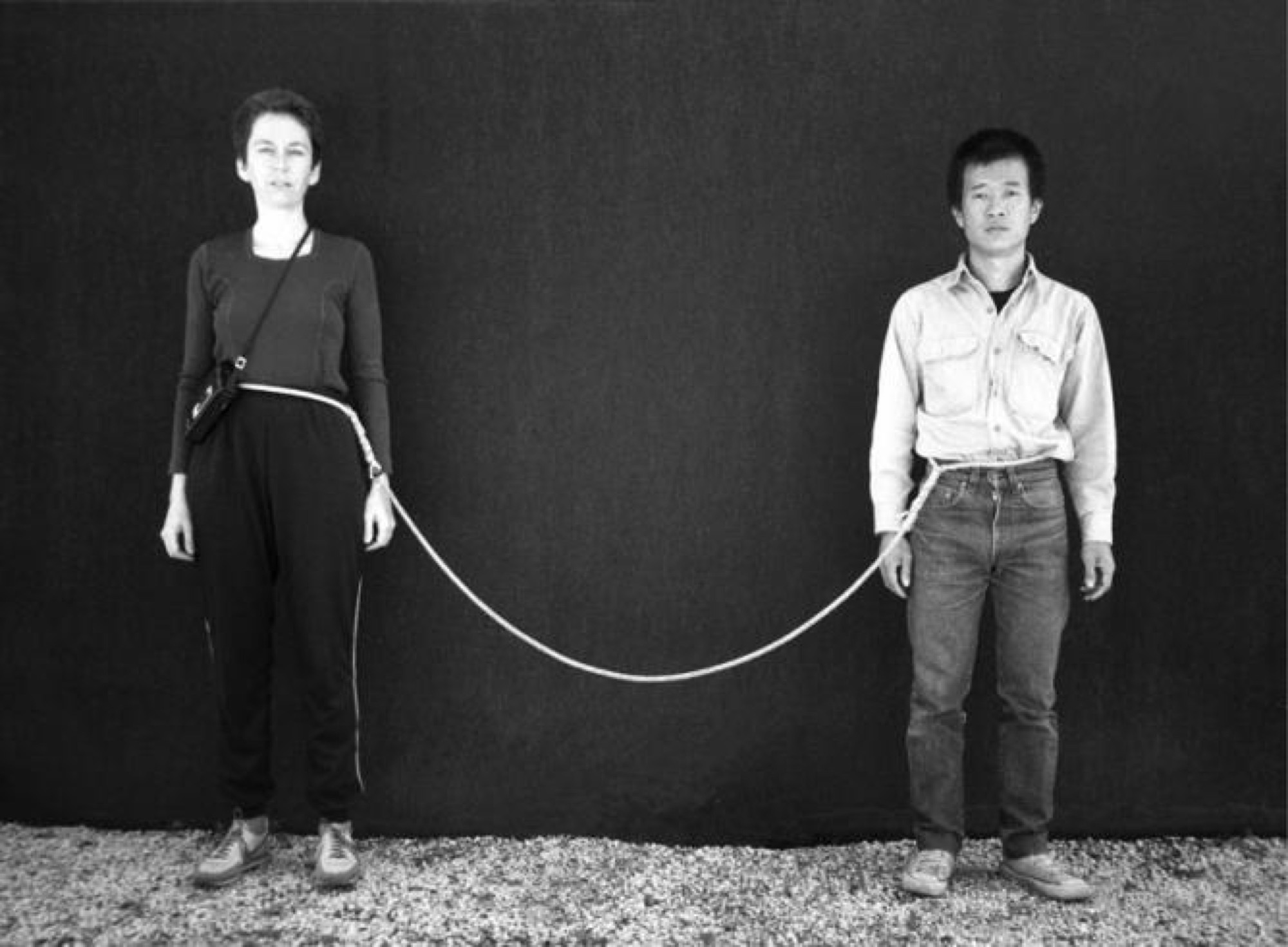
The prohibition against touch is essential. Without it, the rope might suggest intimacy or support. By forbidding contact, the work sustains tension between connection and separation. The rope therefore creates a paradox. Relation becomes permanent, yet physical resolution remains impossible.
This paradox turns the work into a study of relational existence. Earlier performance works by artists such as Chris Burden or Marina Abramović often examined the endurance of a single body. Rope Piece examines the endurance of a relationship.
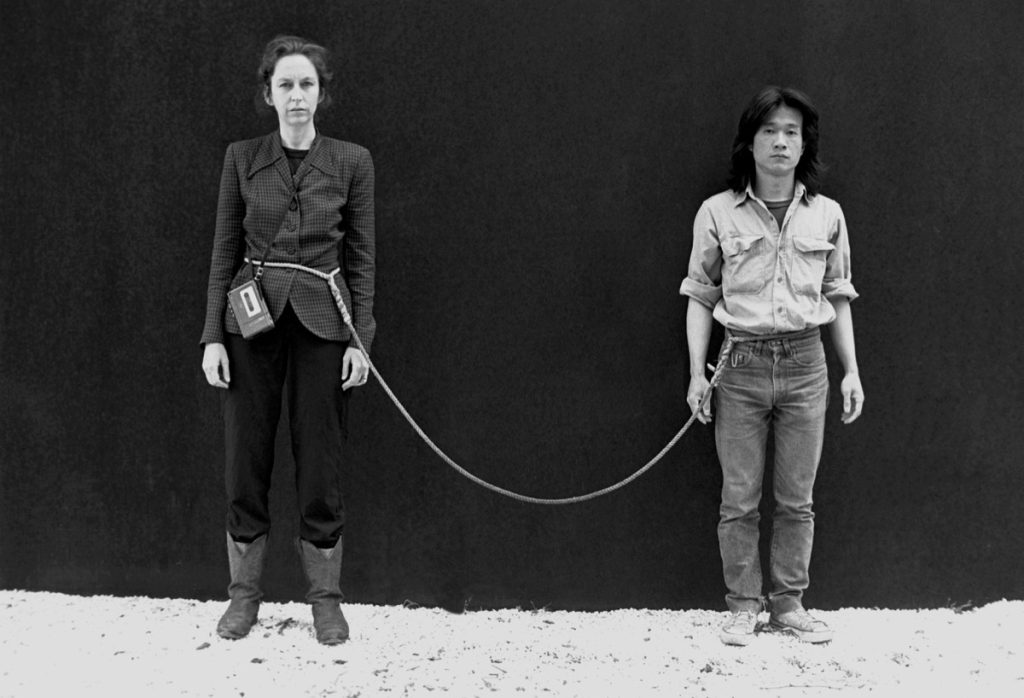
The central question changes. Instead of asking how much a body can endure, the work asks how two autonomous individuals can inhabit the same condition of constraint.
RELATIONAL DURATION
Seen within the history of performance art, Rope Piece marks a significant shift.
Early body art often emphasised risk and confrontation. Hsieh and Montano replaced intensity with continuity. The work unfolded through the slow accumulation of ordinary moments.
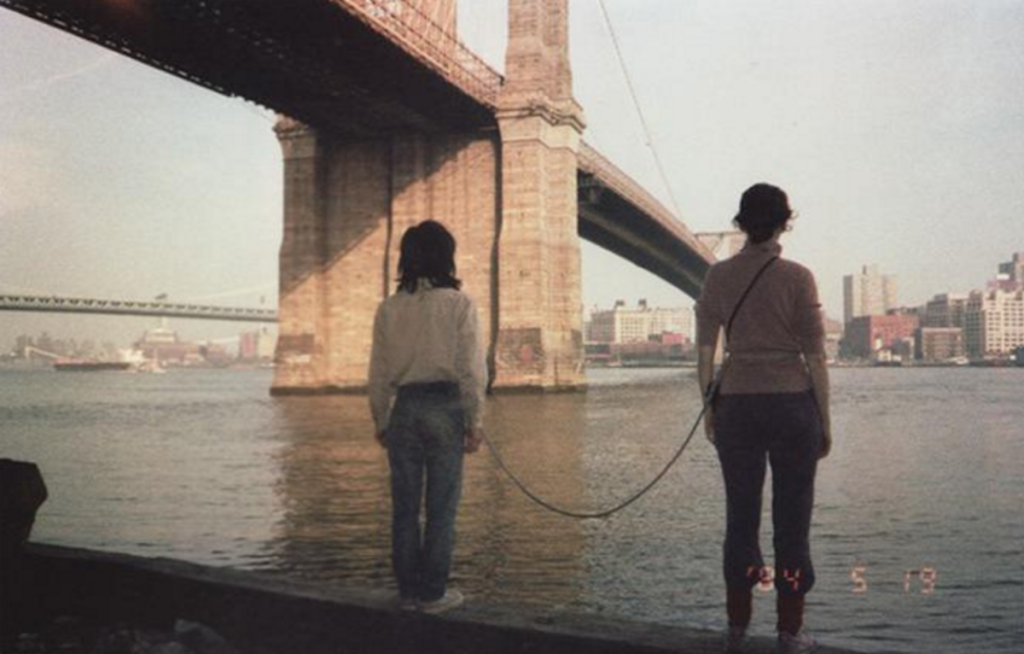
In doing so it anticipated later artistic investigations into relational structures and collaborative practice.
Yet the work differs from many later relational projects in one important respect. The relation here is not voluntary. It is imposed by rule.
The rope removes the possibility of withdrawal. Disagreement cannot end in departure. Irritation cannot dissolve into distance. The artists must remain within the same spatial condition.
Relation becomes labour.
TIME SHARED
More than four decades after its completion, Rope Piece still resonates with clarity. In an era shaped by digital connectivity and physical distance, the work reveals something fundamental about human coexistence.
Proximity does not produce harmony. Connection does not guarantee intimacy. Relation unfolds through negotiation, patience, friction, and endurance.
What Hsieh and Montano constructed during that year was not simply a performance. It was a temporal architecture in which two individuals were required to inhabit the same duration.
The rope measured distance. Time measured everything else.
What remains through photographs, written statements, and archival records is the trace of a rare artistic experiment. The true medium of the work was neither body nor object but the demanding act of sharing time.
Photo Cover
Hsieh and Montano in a moment of shared duration, showcasing the labor of coexistence under constraint. Credit: Courtesy of The New Yorker