Now Reading: Peter Zumthor: The quiet architectonics of presence
- 01
Peter Zumthor: The quiet architectonics of presence


HALDENSTEIN: ARCHITECTURE AS A POSITION
In Haldenstein, a village in Graubünden framed by Alpine mass and agricultural stillness, Peter Zumthor’s Wohnhaus und Atelier stands with deliberate restraint. Completed in 2005, the building functions as both residence and studio. It is not conceived as an architectural event but as a working structure. A place of thought, discipline, and continuity.
From a distance, the house reads as a compact concrete volume. Its surfaces are unadorned. Apertures are placed with precision, neither picturesque nor dramatic. The surrounding mountains remain present but are never instrumentalized. Instead, light becomes the primary material. It enters sparingly, shifts across textured surfaces, and withdraws without spectacle. The architecture does not seek attention. It holds space.

Inside, domestic and professional realms are interwoven without symbolic separation. Circulation is direct. Concrete, timber, and shadow form a continuous field. The transitions are subtle yet exact. The house embodies a principle central to Zumthor’s work: architecture as presence rather than image.
In an age saturated with visual excess, the Wohnhaus und Atelier affirms compression over expansion, tactility over display, and duration over immediacy. It establishes the ethical ground from which Zumthor’s broader oeuvre unfolds.
CRAFT AS FOUNDATION
Born in Basel in 1943, Peter Zumthor trained first as a cabinetmaker under his father. Craft preceded theory. Precision was manual before it was conceptual. The logic of joinery, the resistance of material, and the discipline of making formed the basis of his architectural intelligence.
He later studied at the Kunstgewerbeschule in Basel and at Pratt Institute in New York, where industrial design expanded his technical vocabulary. The decisive formative period, however, occurred between 1967 and 1979, when he worked for the Department for the Preservation of Monuments in Graubünden. Surveying historic farmhouses and Alpine settlements, he encountered architecture as accumulated knowledge rather than stylistic invention.
This sustained engagement with vernacular construction shaped his sensitivity to context and material memory. Architecture became inseparable from place. Rather than aligning with formal modernist rhetoric, Zumthor developed a practice grounded in locality and atmosphere.
Since founding his studio in Haldenstein in 1979, he has maintained a deliberately small office. Projects evolve slowly. Decisions are tested physically and spatially. This pace is not nostalgic. It is structural. Architecture is treated as a craft that demands time.

CONSTRUCTION OF EMOTION
The term most closely associated with Zumthor is atmosphere. In his lectures and writings, he describes architecture as an emotional discipline. Buildings are encountered through temperature, acoustics, proportion, and light before they are understood intellectually.
Atmosphere is not decorative mood. It is constructed. Silence is shaped through enclosure. Light is filtered through measured apertures. Surfaces retain their material identity. A room’s effect emerges from calibration rather than ornament.
Memory operates as an undercurrent. Early spatial impressions, domestic rituals, thresholds, and tactile encounters inform intuitive decisions. Materials activate recognition. Stone suggests permanence. Wood suggests warmth. Concrete carries gravity and restraint.
Against architecture reduced to branding or spectacle, Zumthor proposes integrity. Precision generates openness. When construction is exact, interpretation becomes possible. Multiplicity arises not from complexity of form but from depth of experience.
The Wohnhaus und Atelier in Haldenstein makes this principle visible. It neither dramatizes nor neutralizes space. It allows atmosphere to unfold gradually.
MATERIAL AND LIGHT AS STRUCTURE
Zumthor’s major works reveal a consistent material logic.
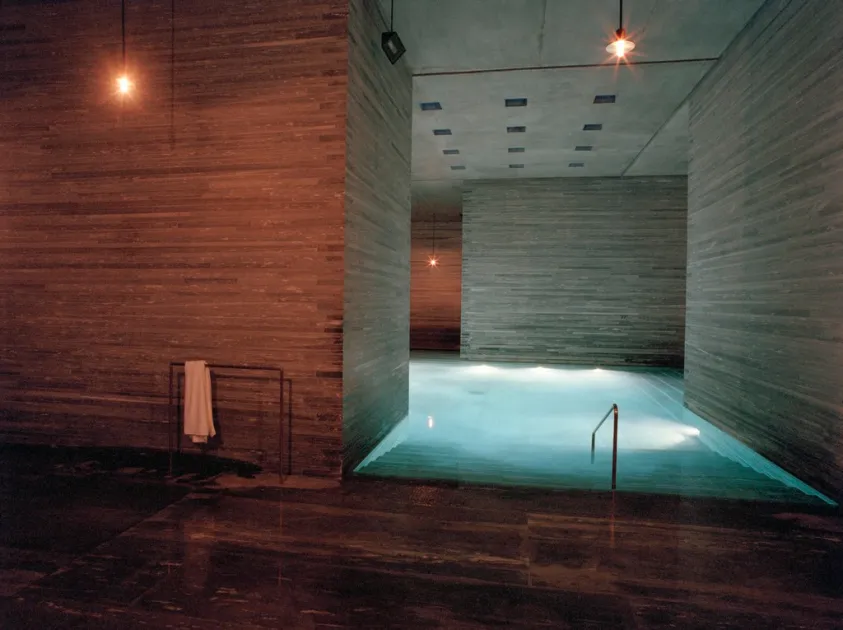
Therme Vals, completed in 1996, is built from locally quarried quartzite. The building is conceived as a sequence of stone chambers embedded in the landscape. Light enters through narrow cuts in the ceiling. Water amplifies acoustics and movement. Space is experienced as weight and temperature. The building feels geological rather than architectural.


Kunsthaus Bregenz, completed in 1997, presents a luminous glass volume. Translucent facade panels and a layered ceiling system distribute daylight evenly across gallery floors. The building appears minimal, yet its technical resolution is exact. Light is both envelope and structure.


Kolumba Museum in Cologne, completed in 2007, integrates the ruins of a Gothic church within a new perforated brick shell. Custom bricks mediate between past and present, allowing air and light to circulate through the facade. The architecture neither reconstructs nor erases history. It sustains it.


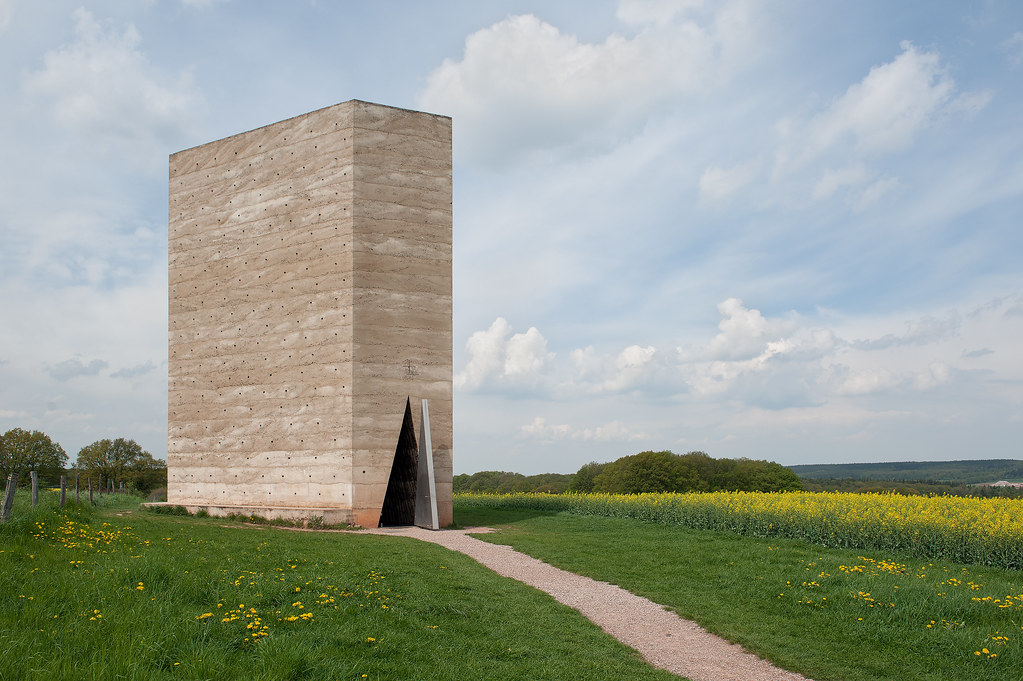
Bruder Klaus Field Chapel, completed in 2007, was formed by pouring concrete around a conical arrangement of tree trunks that were later burned away. The charred interior cavity retains the imprint of the original timber. A single oculus admits daylight from above. The result is austere, tactile, and intensely focused.


Across these projects, space is concentrated rather than expansive. Light is withheld before revelation. Materials remain materially present. Architecture becomes an intensified field of perception.
FROM INTIMACY TO INSTITUTION
In recent years, Zumthor has undertaken larger institutional commissions while maintaining his methodological consistency.
The redesign of the Los Angeles County Museum of Art proposes a continuous elevated structure spanning Wilshire Boulevard. The project has generated debate concerning gallery distribution and urban impact. Yet its spatial ambition remains aligned with Zumthor’s long standing interest in continuity and bodily movement.


The extension to the Fondation Beyeler in Riehen introduces low pavilions set within landscape. Architecture recedes in favor of garden and art. The intervention is measured and restrained.


The Serpentine Pavilion in London in 2011 offered a temporary yet concentrated environment. Visitors moved through a dark outer corridor into a luminous central garden. The installation distilled atmosphere into a seasonal structure of enclosure and release.

Whether rural chapel or metropolitan museum, Zumthor’s architecture remains rooted in calibration. Scale does not alter principle.
THE ETHICS OF PRECISION
Peter Zumthor’s contribution to contemporary architecture extends beyond built form. It resides in an ethical position. He defends slowness in a culture of acceleration. He prioritizes material truth over visual novelty. His buildings ask to be inhabited rather than consumed.
The Wohnhaus und Atelier in Haldenstein remains emblematic. It is a house, a studio, and a statement of method. From this compact concrete volume emerges a body of work that has shaped architectural discourse without surrendering to noise.
Architecture, in Zumthor’s practice, is neither spectacle nor abstraction. It is presence constructed with precision.
In a restless age, such precision may be the most radical gesture available to the discipline.
Photo Cover
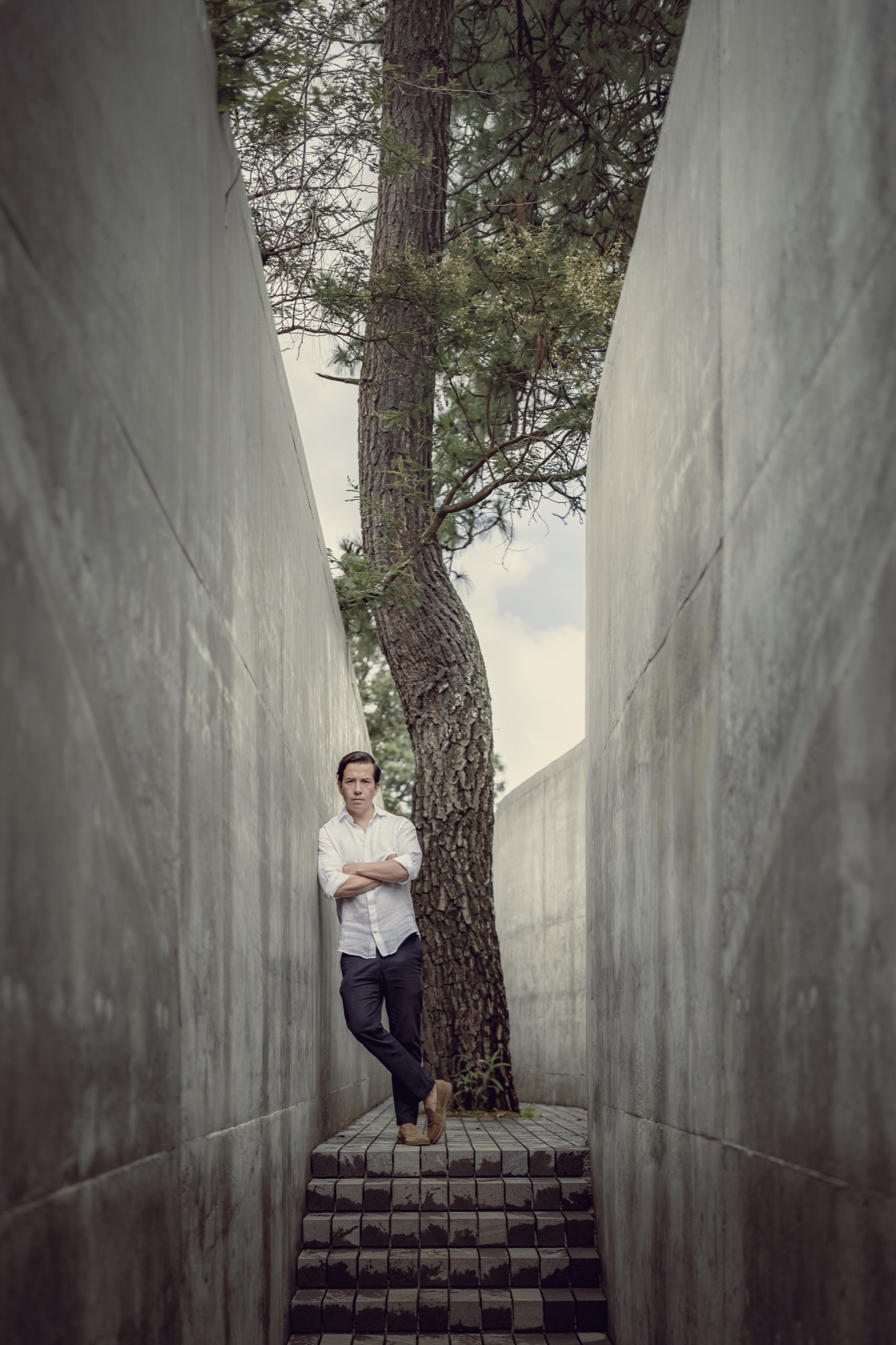
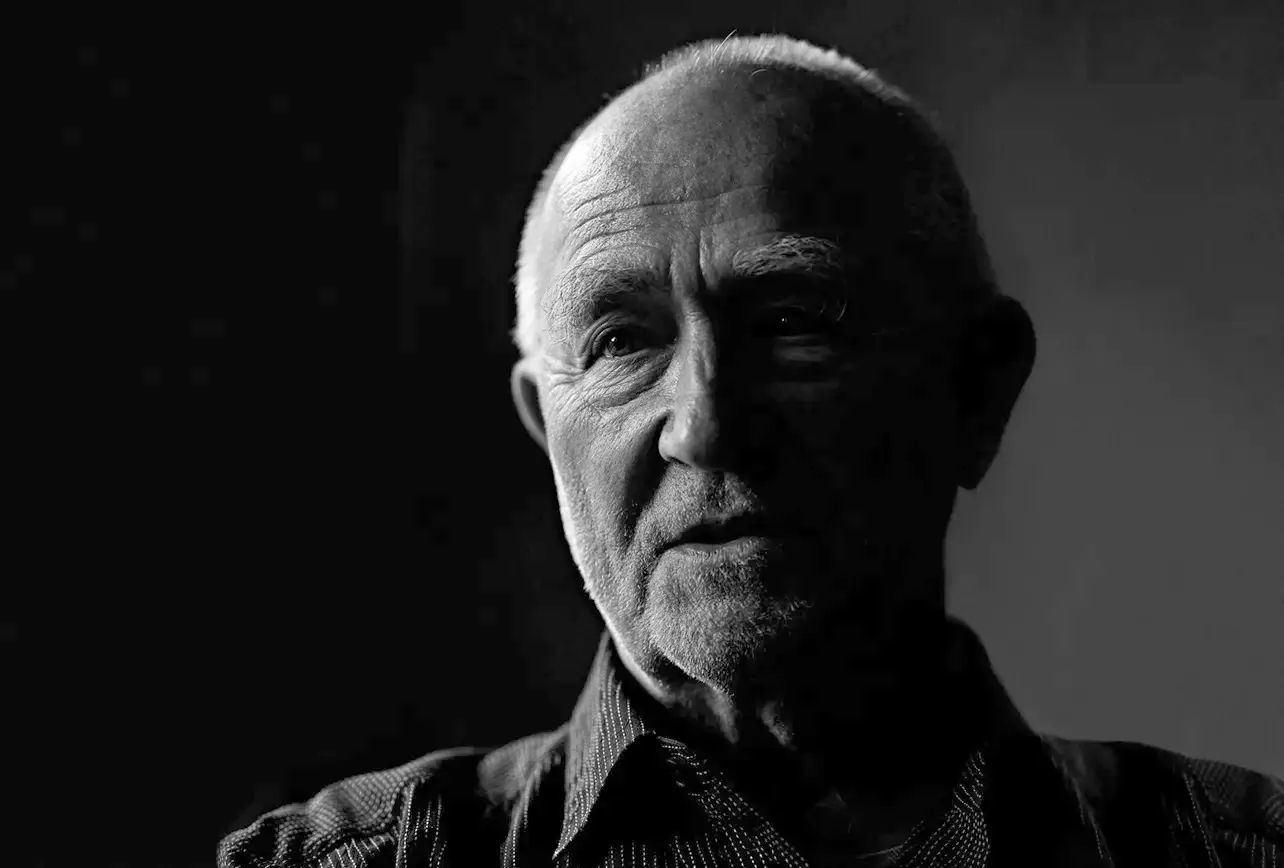
Portrait of architect Peter Zumthor in a thoughtful pose. Credit: Time & Style