
Now Reading: Koyori: Letting buildings keep their traces
- 01
Koyori: Letting buildings keep their traces


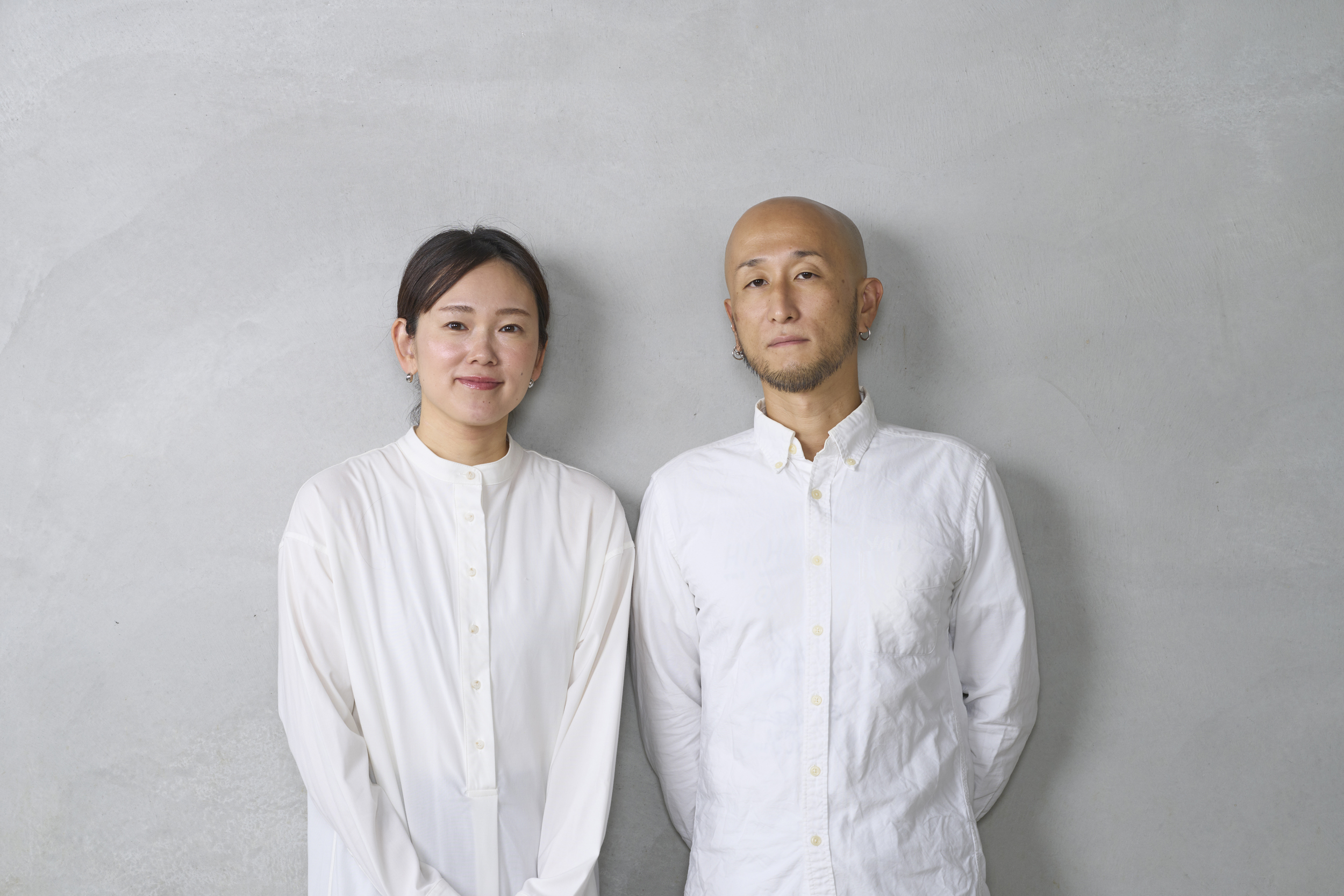
In Japan’s cities, “renovation” too easily becomes a cosmetic exercise: a layer of style applied over an older structure, smoothing away the marks that once made it specific. For Koyori, led by architect duo Masahiko Nakamura and Nahoko Nakamura, the direction is almost the opposite. Their commercial projects often begin with what already exists, not as an obstacle, but as material to be read: the building’s condition, the location’s logic, the historical layers of the neighborhood, and the simple question of how a space can continue to belong to the city for a long time.
Across works such as Hoo (a machiya renovation in central Kyoto), Daikanyama Gallery (a former wooden house turned into an exhibition space), and CANELE du JAPON (a small takeaway shop in Osaka, adapted from a lottery booth), their approach is defined by restraint: deciding where not to intervene, allowing light to remain nuanced rather than uniform, and choosing materials that deepen through use instead of chasing novelty. What emerges is not nostalgia but a calm kind of contemporaneity spaces that quietly accept time and invite users to do the same.

When designing shops in Japan that adapt traditional buildings, for example the machiya renovation in Hoo, how do you preserve what already exists while introducing contemporary updates, so the result feels authentic rather than artificially “old” or overly styled?
Masahiko Nakamura: We do not see design as a simple process of adding or subtracting elements. Instead, we carefully read the existing condition of a building, its location, and the historical context of the place, while considering current functional needs and the assumption that the space should continue to exist as part of the city for a long time.
In the case of Hoo, the context of central Kyoto was essential. We chose to base the design on traditional craftsmanship practiced by local artisans not to idealize tradition but because techniques developed within a place naturally produce spaces that belong to that place.
Nahoko Nakamura: At the same time, we recognize that social demands, structures, and environments constantly change. Our interest lies in deciding what should be updated, and how those updates can connect to the next era. In the design process, we often feel that decisions about what not to add, and where not to intervene, have a greater impact on spatial quality than what is introduced.
What strategies do you use to shape a distinct atmosphere in Japanese commercial spaces, such as the natural calm of CANELE du JAPON or the quiet elegance of Daikanyama Gallery? How does atmosphere help people reconnect with renovated buildings within modern urban life?
Masahiko Nakamura: We begin by reading the existing condition of a building, its location, and the historical context of the place, while considering current functional needs and the assumption that the space should continue to exist as part of the city for a long time.
In Daikanyama Gallery, the building’s former life as a residence was not erased, but quietly positioned as the background for exhibitions. Renovation, to us, is a process of engaging with what already exists reading it, accepting it, and carrying it forward to the next phase rather than fully controlling it.
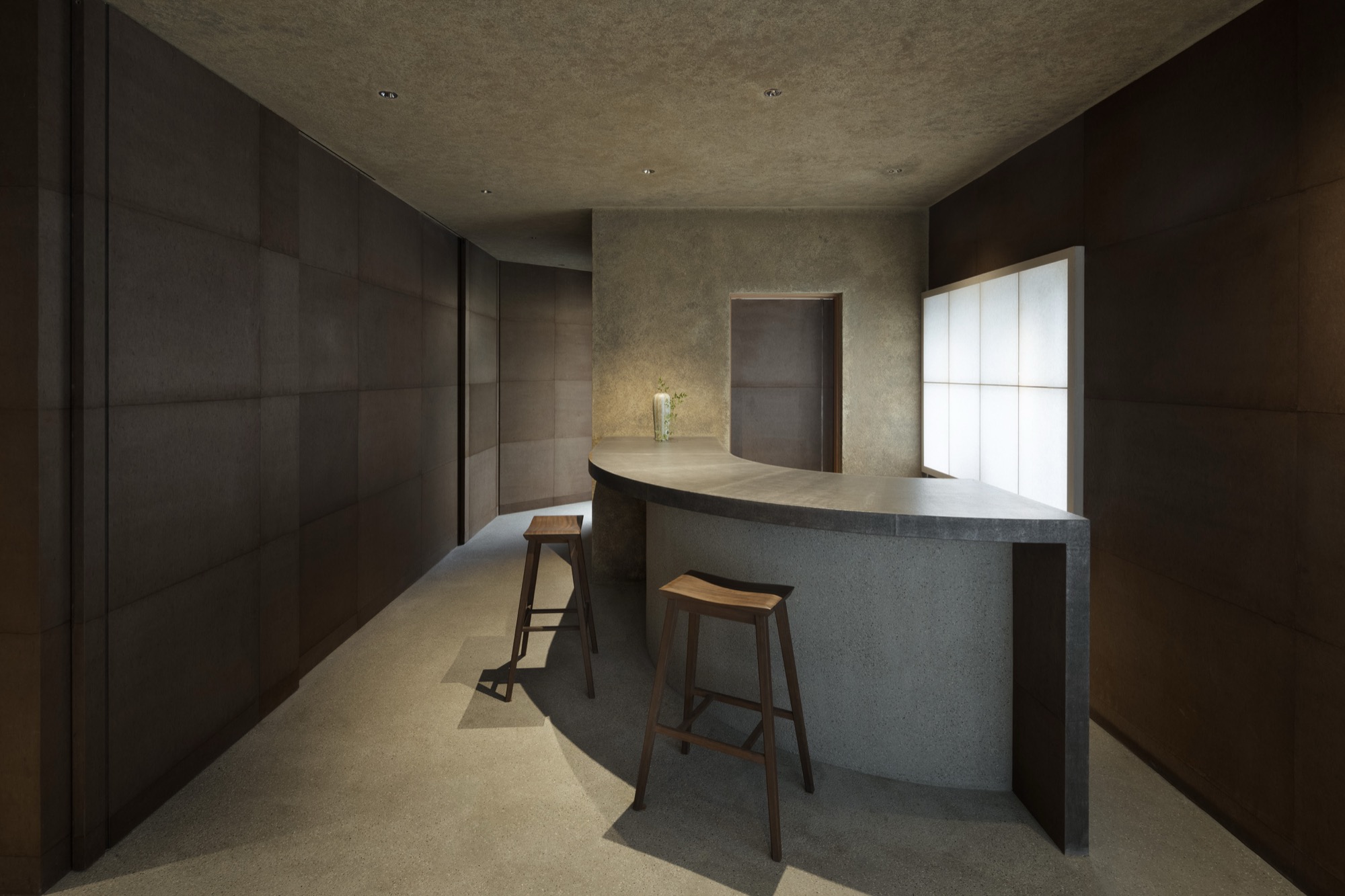
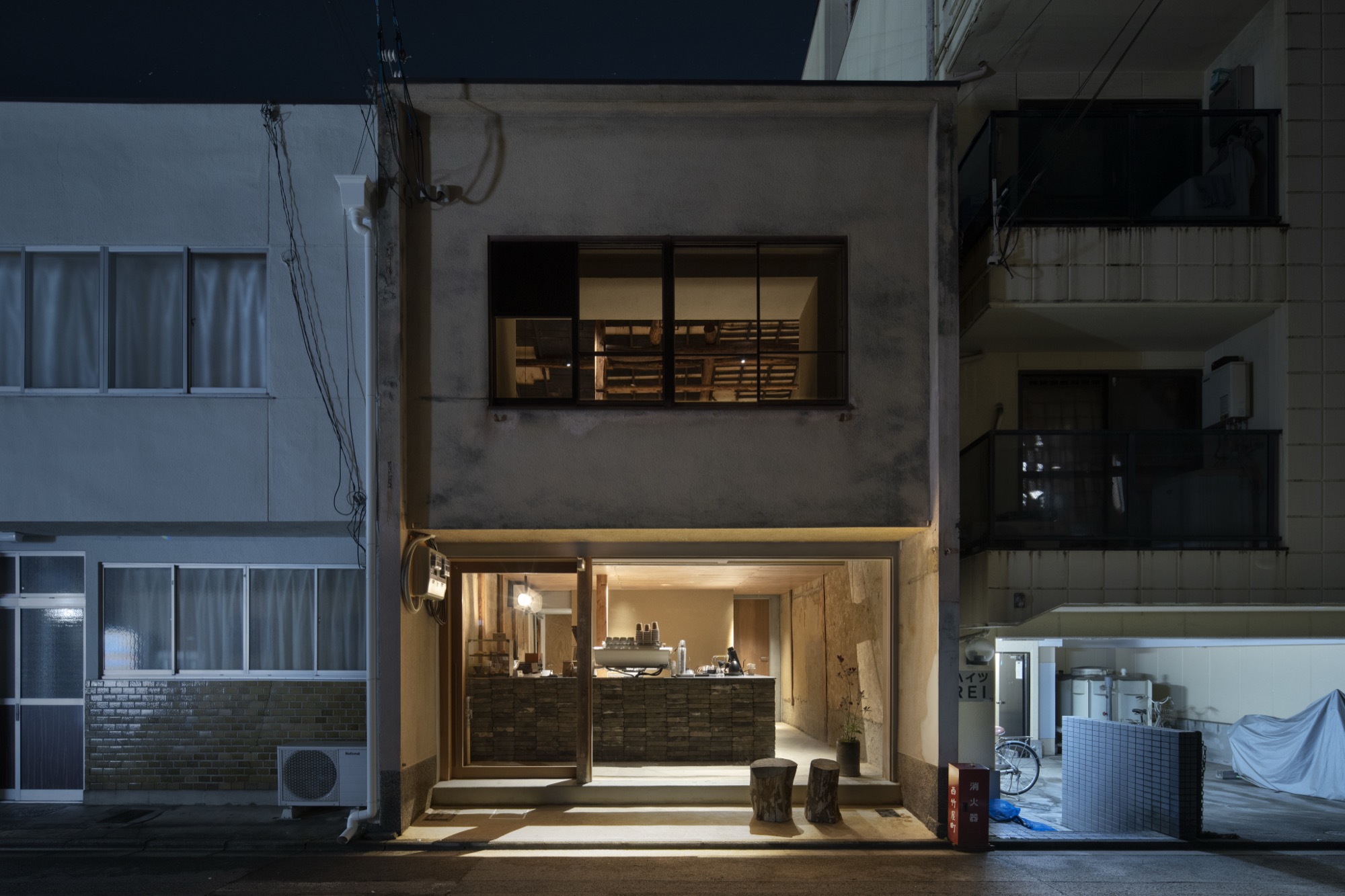
Masahiko Nakamura: In CANELE du JAPON, we chose earth plaster for the exterior and solid chestnut wood for the interior. Earth plaster, applied by hand, offers both physical and perceptual warmth. It softly receives light and gently slows the pace of the surrounding city.
Nahoko Nakamura: Chestnut wood, with its visible grain and density, allows people to sense time intuitively. In a small space where physical distance is minimal, its tactile quality creates a feeling of comfort and stability. Both materials are meant to gain depth through aging rather than deteriorate.
Why did you keep the original columns, beams, and staircase when transforming the old wooden house into Daikanyama Gallery? How did you protect the building’s former life as a home while creating a clean setting for exhibitions?
Masahiko Nakamura: Daikanyama Gallery was originally a wooden house. While some structural elements such as columns, beams, and stairs had to remain, our intention went beyond preservation as a technical requirement. We wanted to respect the time accumulated within the building.
Renovation, to us, is a process of engaging with what already exists reading it, accepting it, and carrying it forward to the next phase rather than fully controlling it. The building’s former life as a residence was not erased, but quietly positioned as the background for exhibitions.
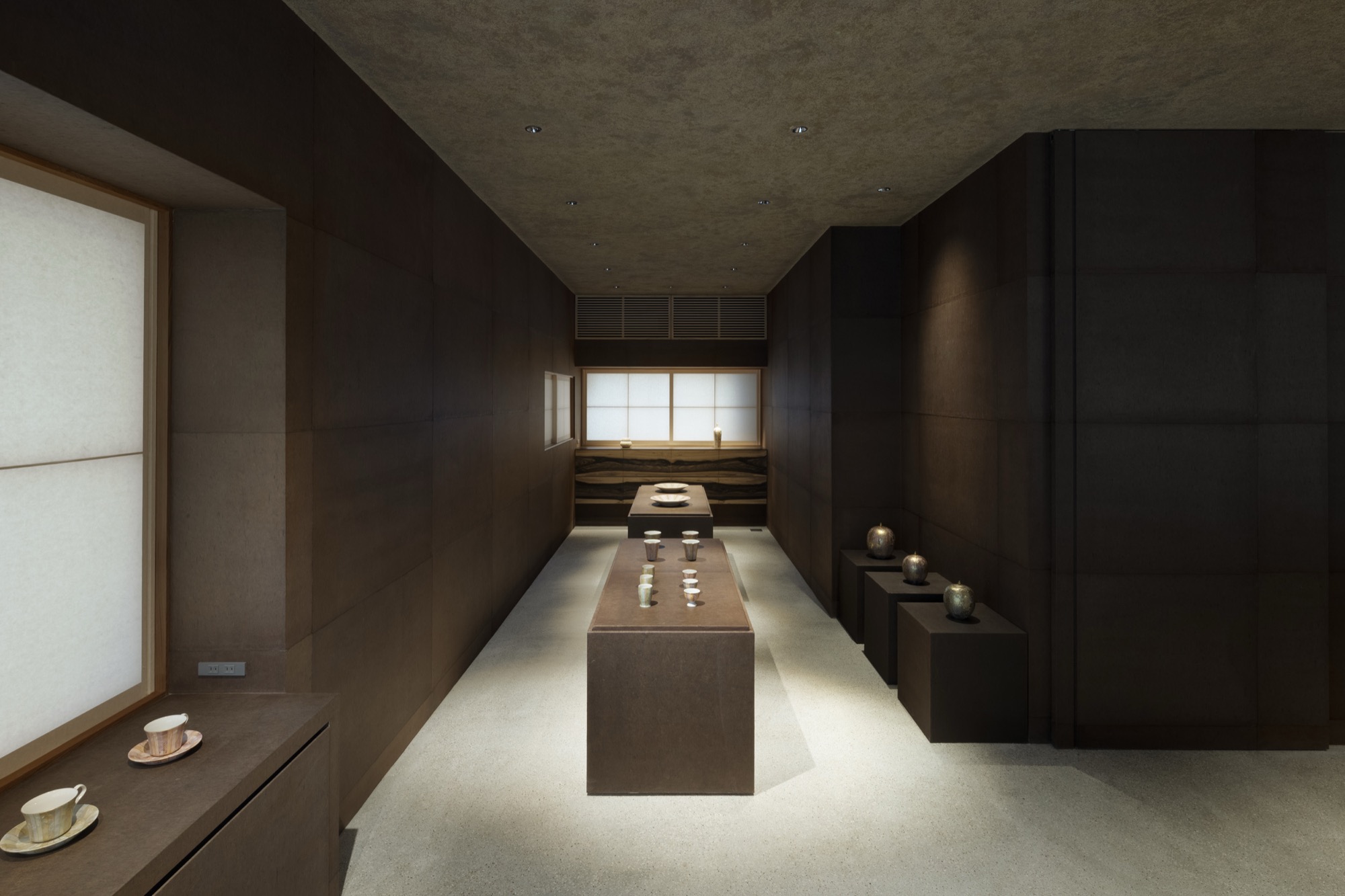
In Daikanyama Gallery, light is softened and carefully controlled. Beyond illumination, what role does this “soft light” play in shaping the atmosphere and the visitor’s attention?
Masahiko Nakamura: Light was treated in the same way. Natural light passing through shoji screens is the primary source, while artificial lighting only supports it. We adjusted color temperature, applied filters, and positioned fixtures carefully so that light would not become too uniform or erase shadows. All lighting is dimmable, allowing subtle responses to seasonal and temporal changes.
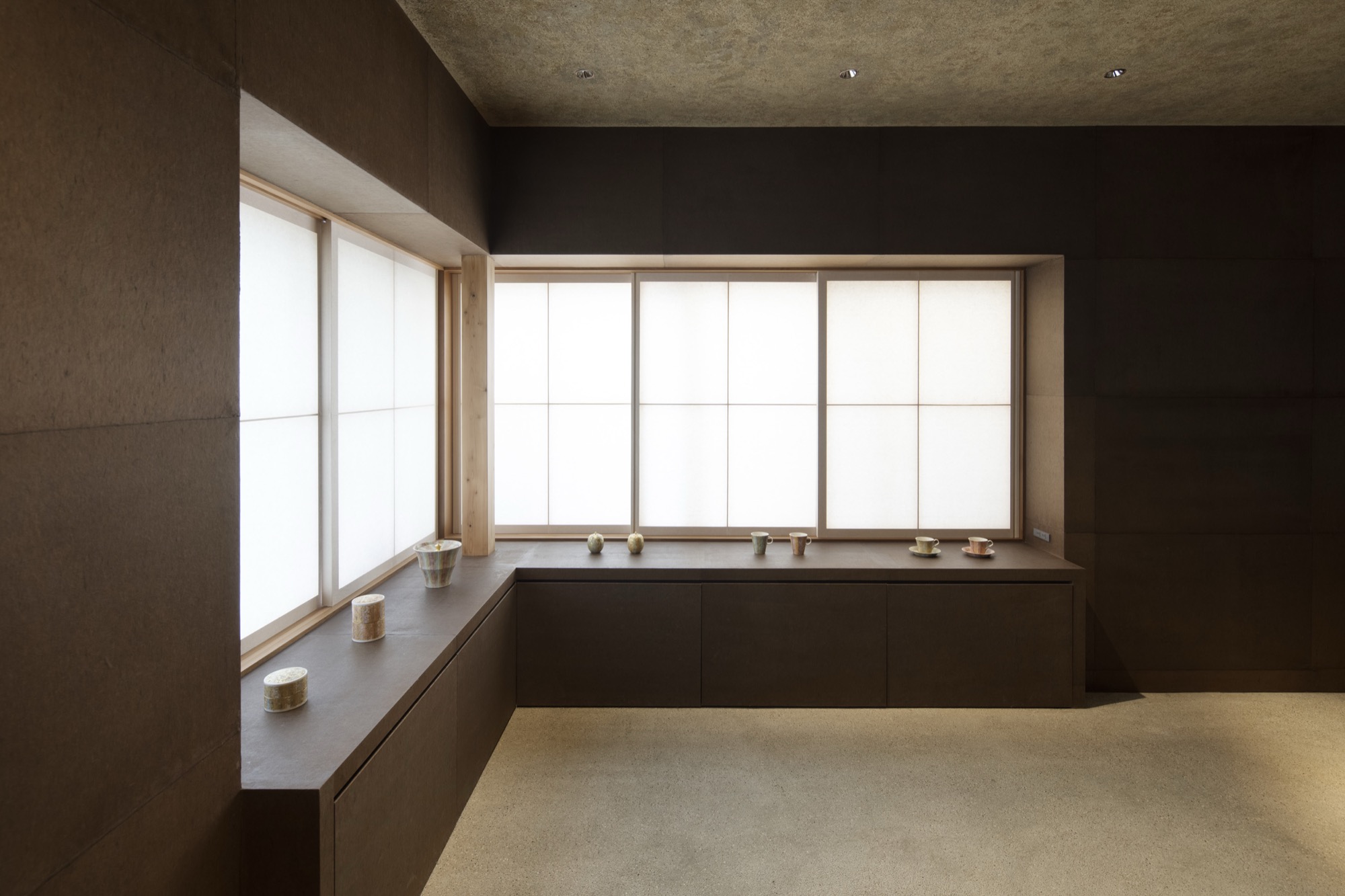
Daikanyama Gallery relies on restrained choices (such as exposed aggregate concrete flooring and easily repairable washi walls) without dramatic gestures. What does this say about your ideas of time, durability, and long-term relevance in a fast-changing neighborhood?
Nahoko Nakamura: Materials such as exposed aggregate concrete flooring and easily repairable washi walls were selected for their restraint.
Masahiko Nakamura: Rather than creating a dramatic statement, the architecture acts as a quiet backdrop for artworks and visitors, maintaining durability within Daikanyama’s fast-changing urban context.
In CANELE du JAPON, the exterior is finished in hand-applied earth plaster, while the interior uses solid chestnut wood. How does this contrast create warmth and calm, and how did it help turn a former lottery booth’s small scale into a lasting identity?
Nahoko Nakamura: CANELE du JAPON is located in Tanimachiyonchome, a business district in Osaka where commercial turnover is rapid and trends change quickly. In this context, we chose earth plaster for the exterior and solid chestnut wood for the interior. Earth plaster, applied by hand, offers both physical and perceptual warmth. It softly receives light and gently slows the pace of the surrounding city.
Chestnut wood, with its visible grain and density, allows people to sense time intuitively. In a small space where physical distance is minimal, its tactile quality creates a feeling of comfort and stability. Both materials are meant to gain depth through aging rather than deteriorate. The building was originally a lottery booth, and its small size was not treated as a limitation, but as a defining characteristic.
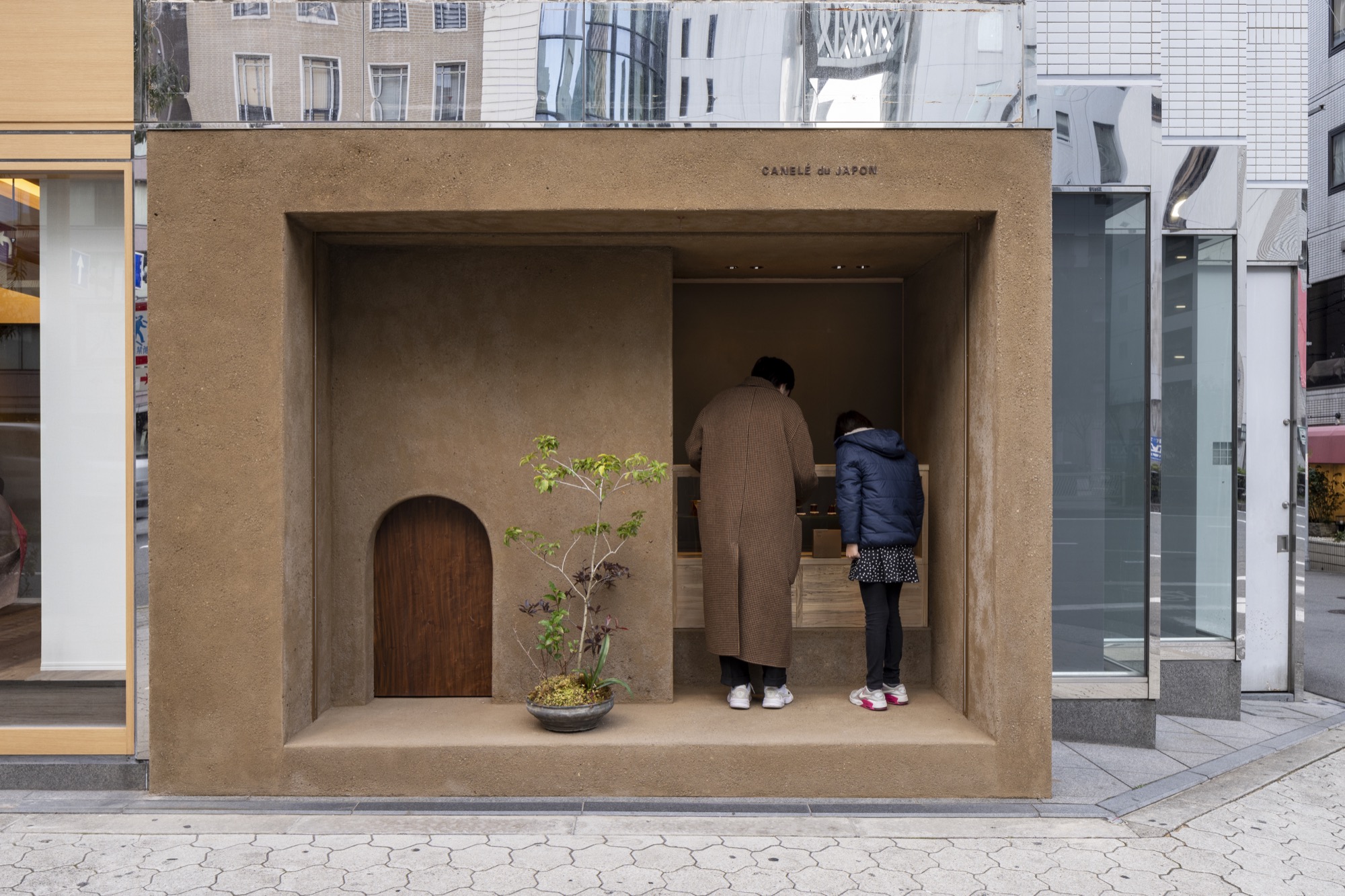
In a fast-turnover district where short-lived trends are common, why was it important for CANELE du JAPON to take a direction that could gain depth through aging, rather than a trend-driven minimalist look?
Masahiko Nakamura: A trend-driven minimalist design would likely have been quickly consumed and lost its appeal in this location. Cities are formed by layers of different eras. By acknowledging this, we aimed to create a presence that could endure over time rather than follow short-lived trends. Both materials are meant to gain depth through aging rather than deteriorate.
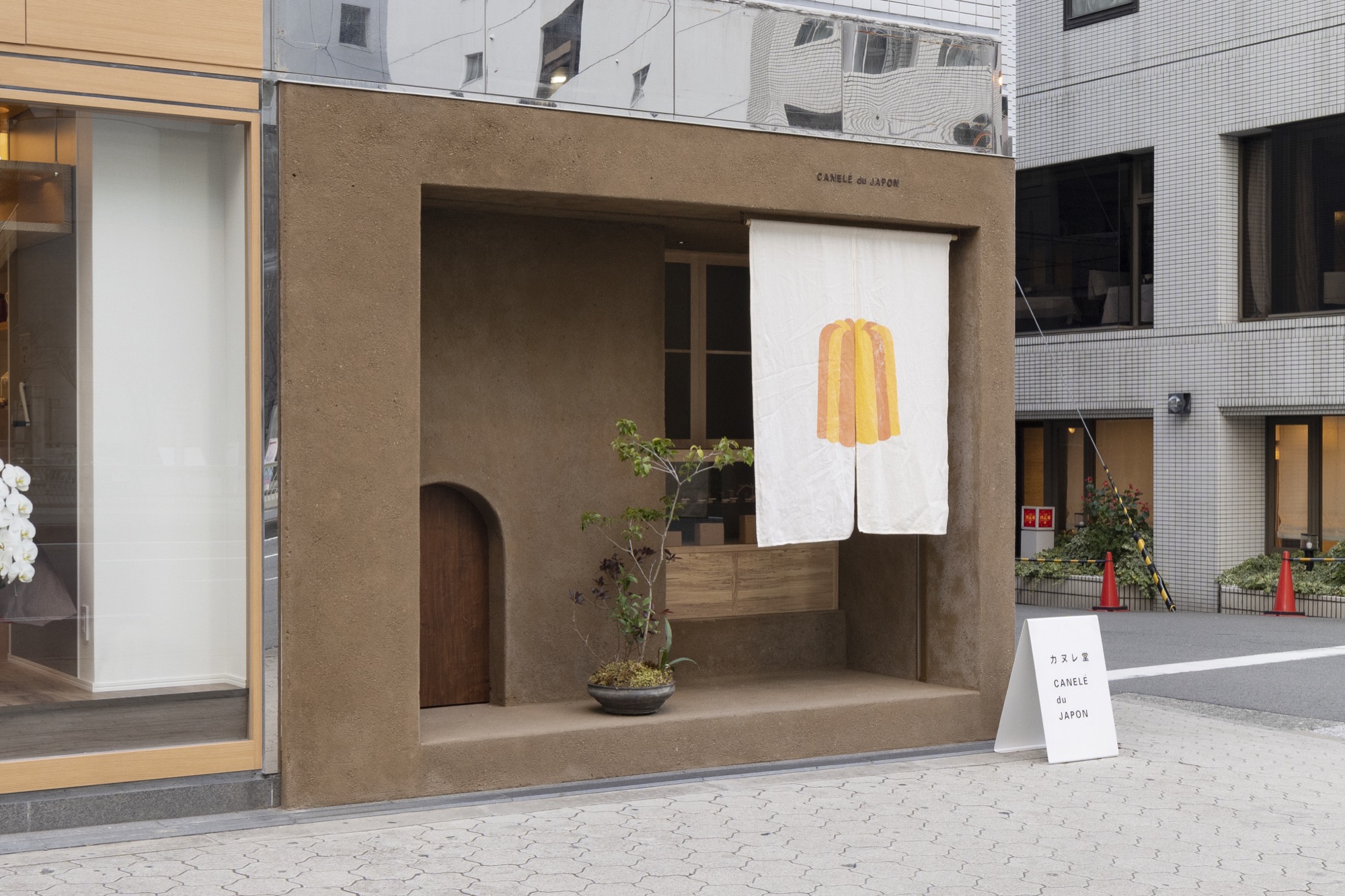
The atmosphere in CANELE du JAPON feels warm and intimate, balanced between simplicity and richness. What is the core purpose of this balance in such a small takeaway space?
Masahiko Nakamura: Through a balance of simplicity and richness, even a small takeaway shop can establish cultural clarity and a meaningful experience.
In Hoo, how does the idea of a “quiet upgrade” appear, especially in treating marks and distortions as accumulated value? How did you avoid imposing a strong new style onto the machiya while keeping its original structure legible?
Nahoko Nakamura: The idea of “quiet upgrade” in Hoo refers to accepting existing marks, distortions, and traces as accumulated value rather than imperfections to be erased.
Kyoto’s strong identity as a tourist city often causes machiya to be treated as consumable symbols, where their original meaning is lost. Recognizing this condition, we avoided uniformity and focused instead on deciding what should remain untouched. Structural elements and minor scars were accepted as individual characteristics. New interventions were designed not to speak the same language as the original structure, but to exist quietly as background elements.
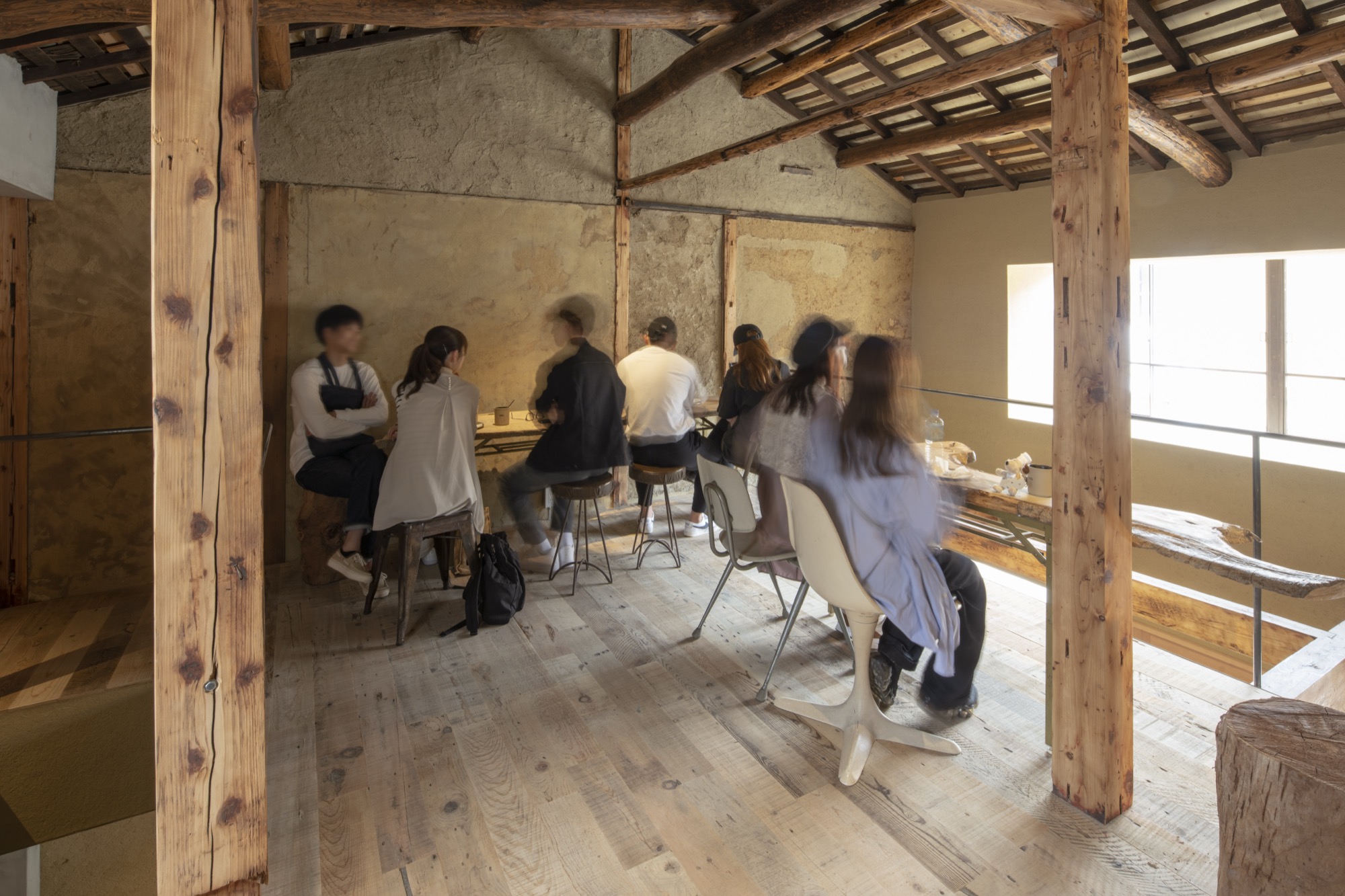
In Hoo, you used reused and natural materials. How do these choices support tactility and allow the space to change gradually through use?
Nahoko Nakamura: Reused and natural materials provide tactile comfort and change gradually through use.
How is the calm atmosphere in Hoo created through the coexistence of old and new elements? What do you believe slow changes over time can bring, both for users and for the memory of the machiya?
Masahiko Nakamura: The calm atmosphere created by the mixture of old and new is intended to grow over time, quietly influencing both users and the memory of the machiya itself.
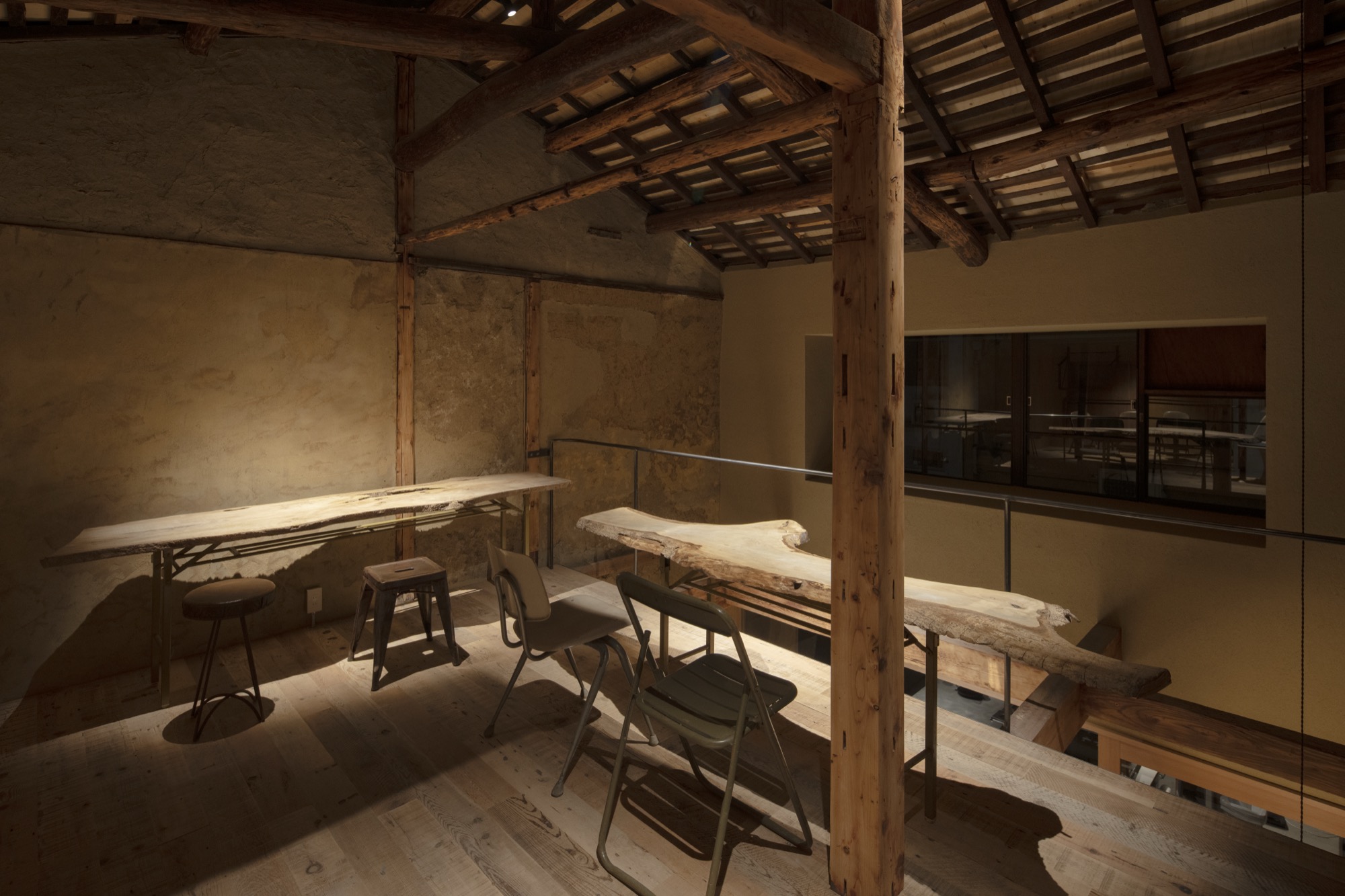
Across your projects, is there any material you feel especially drawn to or often return to, and why?
Masahiko Nakamura: We are drawn to materials that can accompany change over time materials that carry the warmth of handwork and allow the passage of time to be felt through their surface.
Over many years, how do you hope people will use the spaces you design? Do you want them to evolve and grow with time, or remain unchanged?
Nahoko Nakamura: We hope that the spaces we design continue to grow over time. Even in our own homes, completion rarely brings complete satisfaction. Reflection and discovery emerge through use, nurturing curiosity and the desire to improve.
Masahiko Nakamura: As people, cities, and cultures constantly change, architecture must allow room to accept that change especially in an era where transformation occurs at remarkable speed.
Beyond Japan, have you designed projects in other countries? If yes, where and what were they? If not, which countries interest you?
Masahiko Nakamura: We have worked on several projects within Asia, and currently around 60–70% of our clients in Japan come from overseas. We collaborate with people from diverse backgrounds across Europe, the US, and Asia. Rather than focusing on nationality, we prioritize our attitude toward each place its culture, values, and conditions. As contexts change, so do the elements that should be controlled and those that should be accepted. This balance remains consistent in every country: knowing when architecture should step forward, and when it should recede.


Photo Cover: Masahiko Nakamura & Nahoko Nakamura
Text: Rafael Cunha
Photo: Junichi Usui