Now Reading: Terry Aidoo creates Kabila furniture collection informed by African courtyard culture
- 01
Terry Aidoo creates Kabila furniture collection informed by African courtyard culture

Terry Aidoo creates Kabila furniture collection informed by African courtyard culture
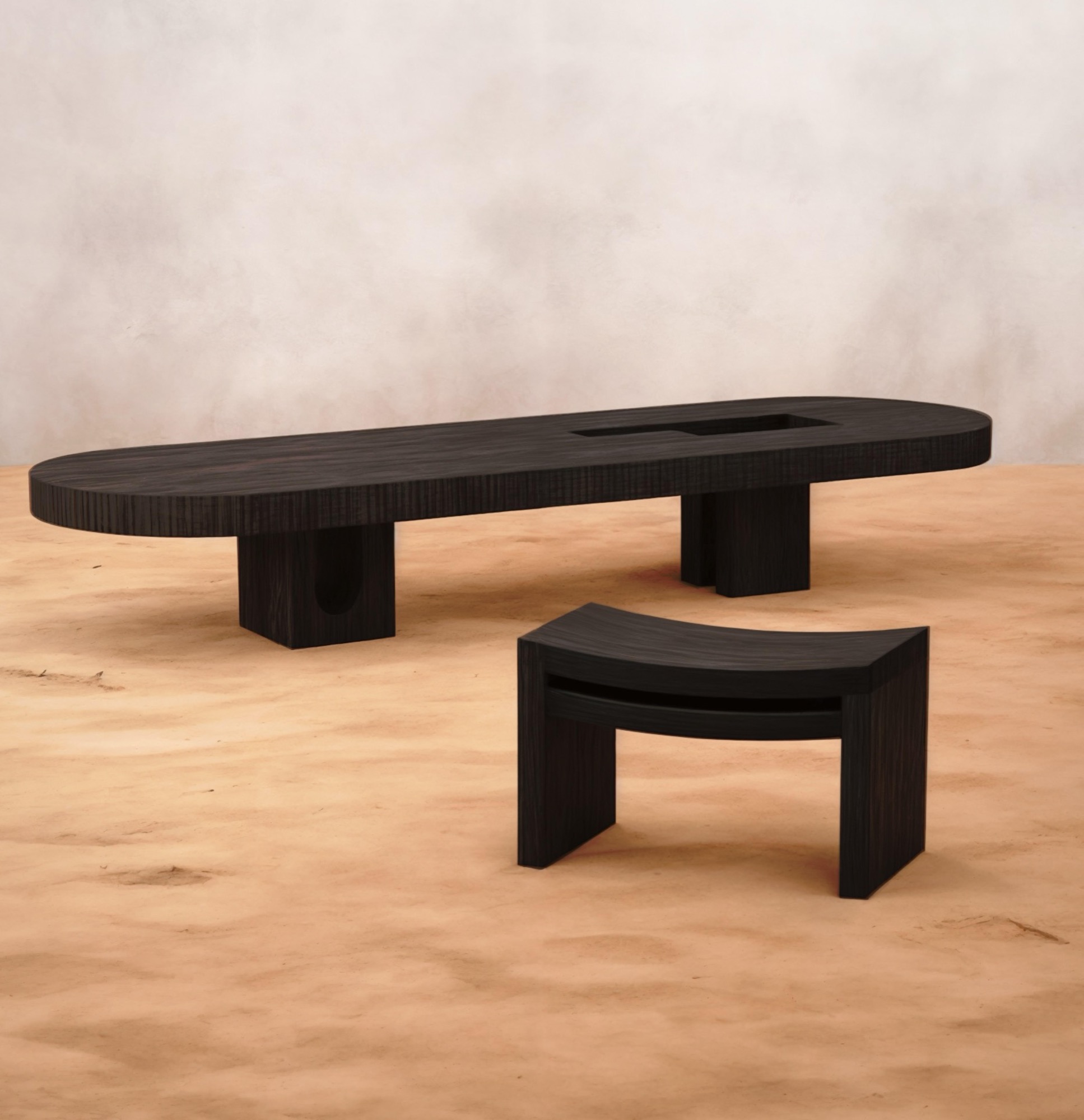
Milan based designer Terry Aidoo presents Kabila Collection, a family of wooden furniture pieces that draws on the social and cultural significance of the traditional African courtyard. Comprising a coffee table and a stool, the collection explores how objects can shape moments of gathering, belonging and shared experience.


The name Kabila, meaning clan or tribe in both Swahili and Arabic, reflects an idea of identity formed through kinship, memory, ritual and collective life. Rather than approaching furniture as isolated functional pieces, Aidoo imagines the collection as a spatial arrangement. The table becomes a centre of gravity, while the stools gather around it, creating a domestic landscape for conversation, ceremony and exchange.
Across many African cultures, the courtyard operates as the heart of communal life. It is a place where generations meet, meals are shared, stories are told and traditions are passed on. Positioned between private life and public encounter, it is both an architectural space and a social structure.


Kabila translates this idea into contemporary furniture. The coffee table is conceived as a communal centre, while the stools recall the surrounding positions of people within a courtyard. Together, the pieces form an invitation to sit, gather and participate.
At the centre of the coffee table is a recessed circular detail that references the Eritrean coffee ceremony, a ritual closely associated with hospitality, conversation and togetherness. The gesture gives the table a ceremonial presence, turning its surface into a place for encounter and reflection.


The design also incorporates a carved interpretation of Oware, one of the oldest and most widely played board games in West Africa. Traditionally played across generations, Oware carries associations with learning, strategy, storytelling and social exchange. Within Kabila, it becomes part of the furniture itself, linking use, memory and play.
The accompanying stool draws inspiration from traditional seating forms of the Benin Kingdom in present day Nigeria. Historically, Edo stools carried both practical and symbolic meaning, often connected to status, identity and cultural continuity. Aidoo does not reproduce these references literally. Instead, he reinterprets them through a contemporary language of proportion, craft and sculptural presence.


Kabila is handcrafted from solid sapele wood, chosen for its durability, rich grain and natural warmth. The material gives the pieces a tactile depth, while the combination of traditional woodworking and contemporary fabrication allows the collection to balance precision with the irregular beauty of hand craft.
Through this approach, Aidoo positions furniture as a carrier of cultural memory. Kabila is not simply a table and stool, but a reflection on how objects can hold stories, structure relationships and bring people together.

Terry Aidoo is a multidisciplinary designer working across furniture, interiors, installations and research. His practice explores the relationship between culture, community and belonging, translating narratives of heritage, ritual and collective memory into contemporary design. Drawing from African cultural traditions and material histories, Aidoo creates work that bridges craftsmanship, storytelling and social impact. His projects ask how objects and spaces can nurture connection, preserve identity and shape more meaningful futures.
Project Credit
Project name: Kabila Collection
Location: Milan, Italy
Lead designer: Terry Aidoo / @terryaidoo
Photo: Matteo Ercole / @matteoercole.d
- The timeless elegance of domestic appliances: From the Iconic Braun KF 20 aromaster to the German design ethos

- Emilio Ferro on the light, sound and memory of a place
- At Maniwa, an architect’s family home opens to the neighbourhood
- What bronze remembers of the hand

- Caught in light: Moradavaga’s suspended shoal

- The making of Alex Chinneck’s impossible Dior windows