Now Reading: High altitude guest cabins on the Trans Ili Alatau above Almaty
- 01
High altitude guest cabins on the Trans Ili Alatau above Almaty

High altitude guest cabins on the Trans Ili Alatau above Almaty
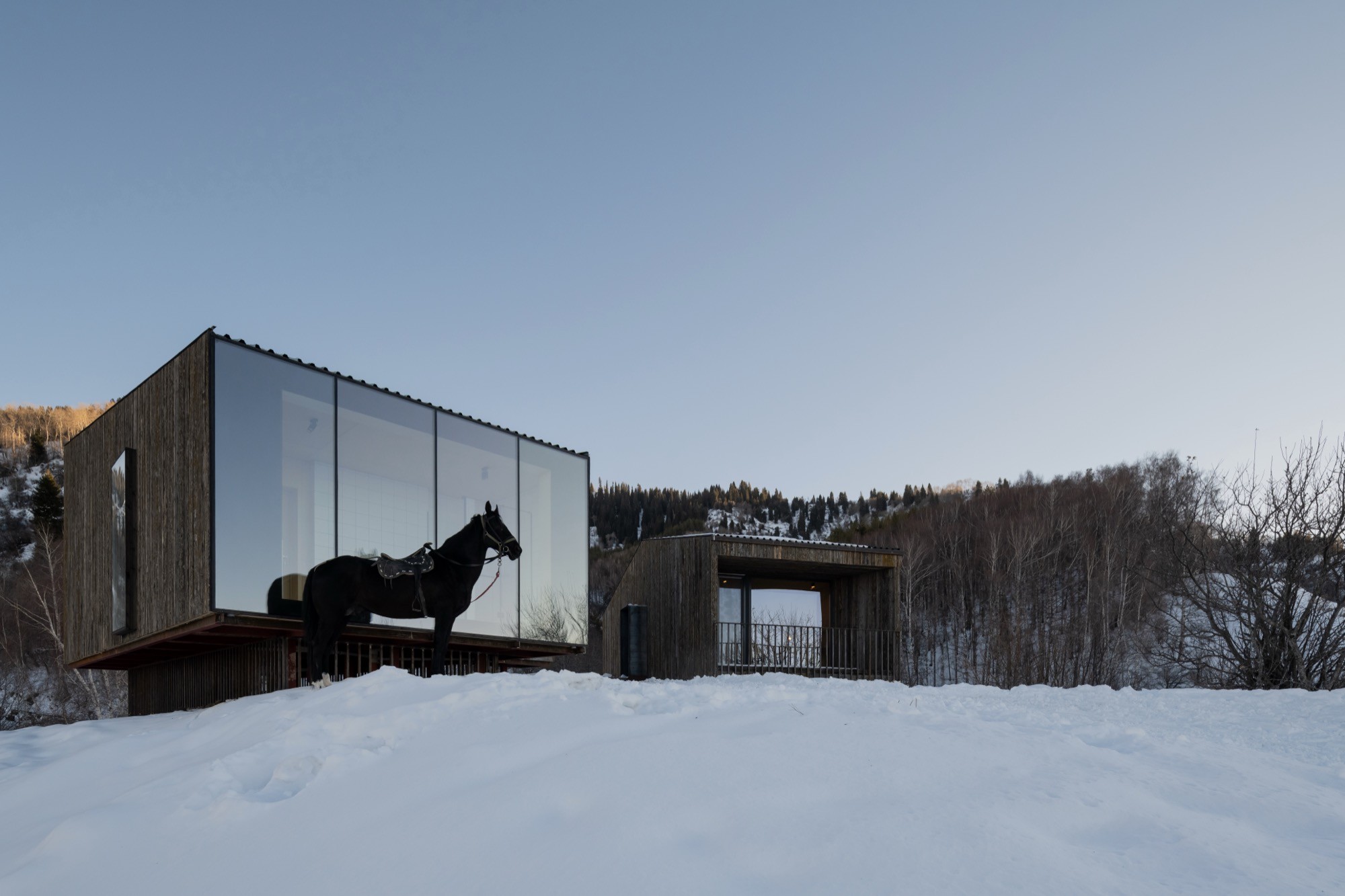
Set at 1,650 metres on the northern slopes of the Trans Ili Alatau range, a pair of guest cabins sits just outside Ile Alatau National Park, around 25 kilometres south of Almaty. Conceived for a family that wanted to host friends and share the vast highland panoramas of the Kazakh Tien Shan, the project frames mountain tourism as a slower, more attentive ritual. Comfort is present, but never at the expense of the landscape. The ambition is a retreat that feels warm and lived in, while remaining light on the ground and discreet in the view.


NOMADIC REFERENCES AND RECLAIMED LARCH FROM THE ALTAI
The architecture looks to Central Asia’s nomadic traditions for its underlying attitude, building as an act of coexistence rather than occupation. Externally, the cabins are wrapped in reclaimed larchwood salvaged from abandoned houses in the Altai Mountains, a material the team associates with the mythic geography of Shambhala. Gathered over two summers by architect and client, the boards arrive marked by moss, mould and weathering, their patina preserved as a record of time and place. Reused here, they become both cladding and narrative, extending the life of heritage timber while clearing what the project frames as sacred terrain.

Construction follows the same logic of reversibility. Timber framed SIP panels sit on metal piles, keeping the intervention minimal, sustainable and, crucially, removable. The cabins are designed to be dismantled and recycled, treating permanence as a choice rather than a default.

PANORAMIC ROOMS AND A STOVE CENTRED INTERIOR
Inside, the atmosphere blends restrained contemporary living with tactile references to the steppe. The plan is split across two volumes. One cabin is arranged as sleeping quarters, with two bedrooms opening onto floor to ceiling glazing oriented to the east, pulling sunrise and mountain contours into the rooms. The other cabin holds the communal functions, a compact kitchenette, a living room with a library, and a bathroom turned deliberately toward the west for long views and late light.


A wood burning stove anchors the shared interior, establishing a centre of gravity for gathering after time outdoors. Handmade tiles and felt carpets produced by local artisans introduce craft and texture without turning the space into pastiche. Minimalist and flexible by design, the cabins invite personal inhabitation, offering an experience that is both elemental and comfortable, rooted in local material culture while tuned to the clarity of the Tien Shan landscape.


Project Credit
Name: AUM cabins
Location: Kazakhstan, Almaty
Design: Arthur Kariev Architects / @arthurkariev
Completed: 2025
Photo: Ilya Ivanov
More Photos


Related Posts
Previous Post
Next Post
- The timeless elegance of domestic appliances: From the Iconic Braun KF 20 aromaster to the German design ethos

- Emilio Ferro on the light, sound and memory of a place
- At Maniwa, an architect’s family home opens to the neighbourhood
- What bronze remembers of the hand

- Caught in light: Moradavaga’s suspended shoal

- The making of Alex Chinneck’s impossible Dior windows