Now Reading: Everyday life becomes an exhibition in Haogang village
- 01
Everyday life becomes an exhibition in Haogang village

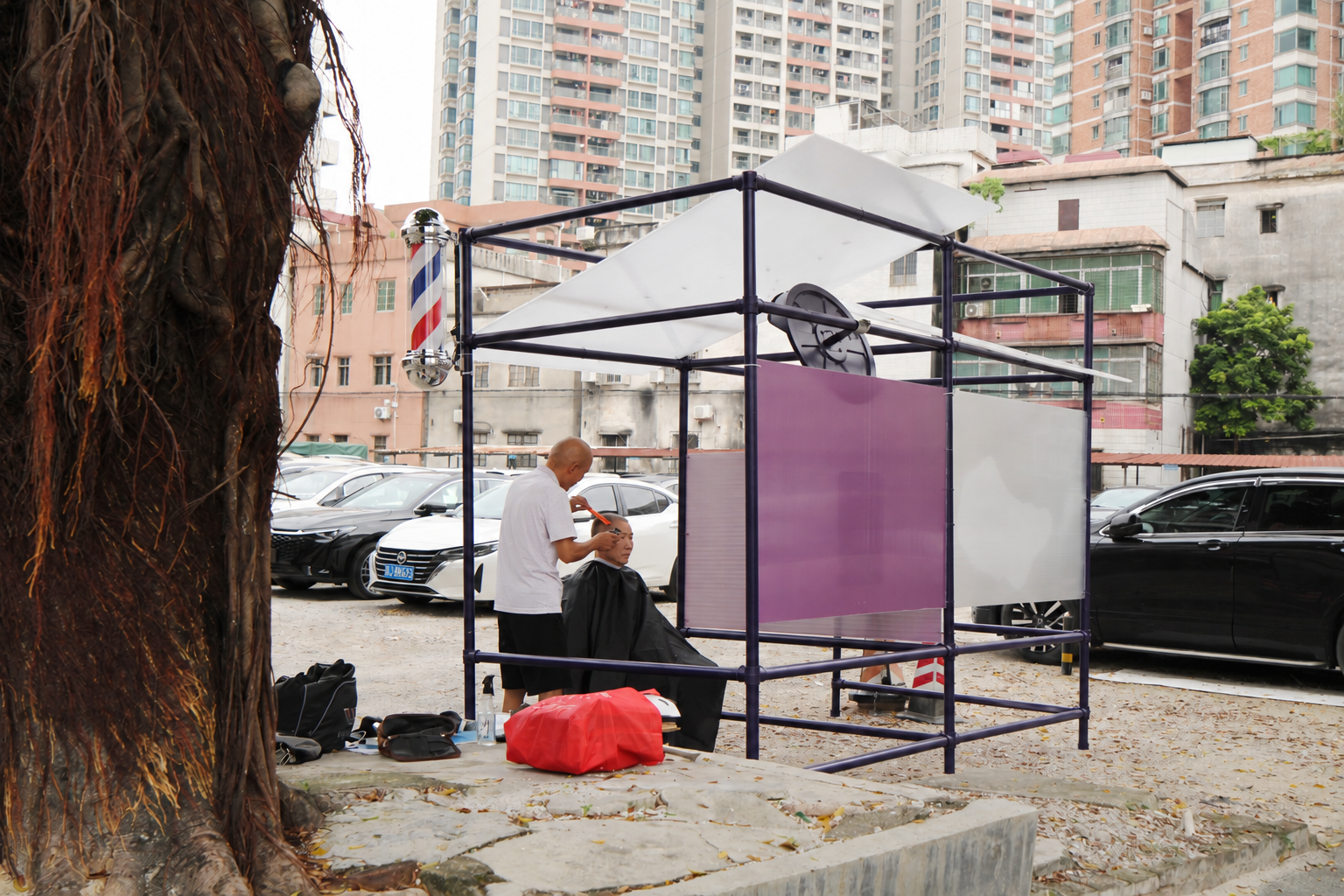

A barber’s shelter, a market noticeboard and a courtyard exhibition form part of Haogang Ji, an IARA initiative that brings residents’ memories and ideas for urban renewal into the everyday spaces of a village in Dongguan.
In Haogang, an exhibition can be encountered on the way to a haircut, while shopping for vegetables or beneath a familiar banyan tree. Haogang Ji · In Progress: A Publicness Experiment in an Urban Village spreads across six locations, using temporary structures to bring a month of fieldwork back to the people whose lives it records.
The project forms part of IARA’s Urban-Rural Revitalization Program. Its starting point is an “urban diagnosis”: walking the village, visiting households and working with residents to understand housing, businesses and shared space before proposing physical change. The exhibition presents the findings of this process while creating further opportunities for conversation.
Haogang lies in Dongguan, Guangdong Province, within the dense urban landscape of the Pearl River Delta. According to the project team, approximately 26,400 people live within its 0.44-square-kilometre area. Only seven per cent are local residents, with migrant workers making up most of the population. Long-established households, tenants, newcomers and shopkeepers share a closely packed network of buildings and alleys.
A main exhibition at the Su Clan Ancestral Hall connects with five satellite sites along the village’s east–west axis. Removable scaffolding and transparent or translucent polycarbonate panels provide a common construction system. Each installation takes its colour and arrangement from its immediate surroundings, leaving room for existing activities.
Through the ancestral hall
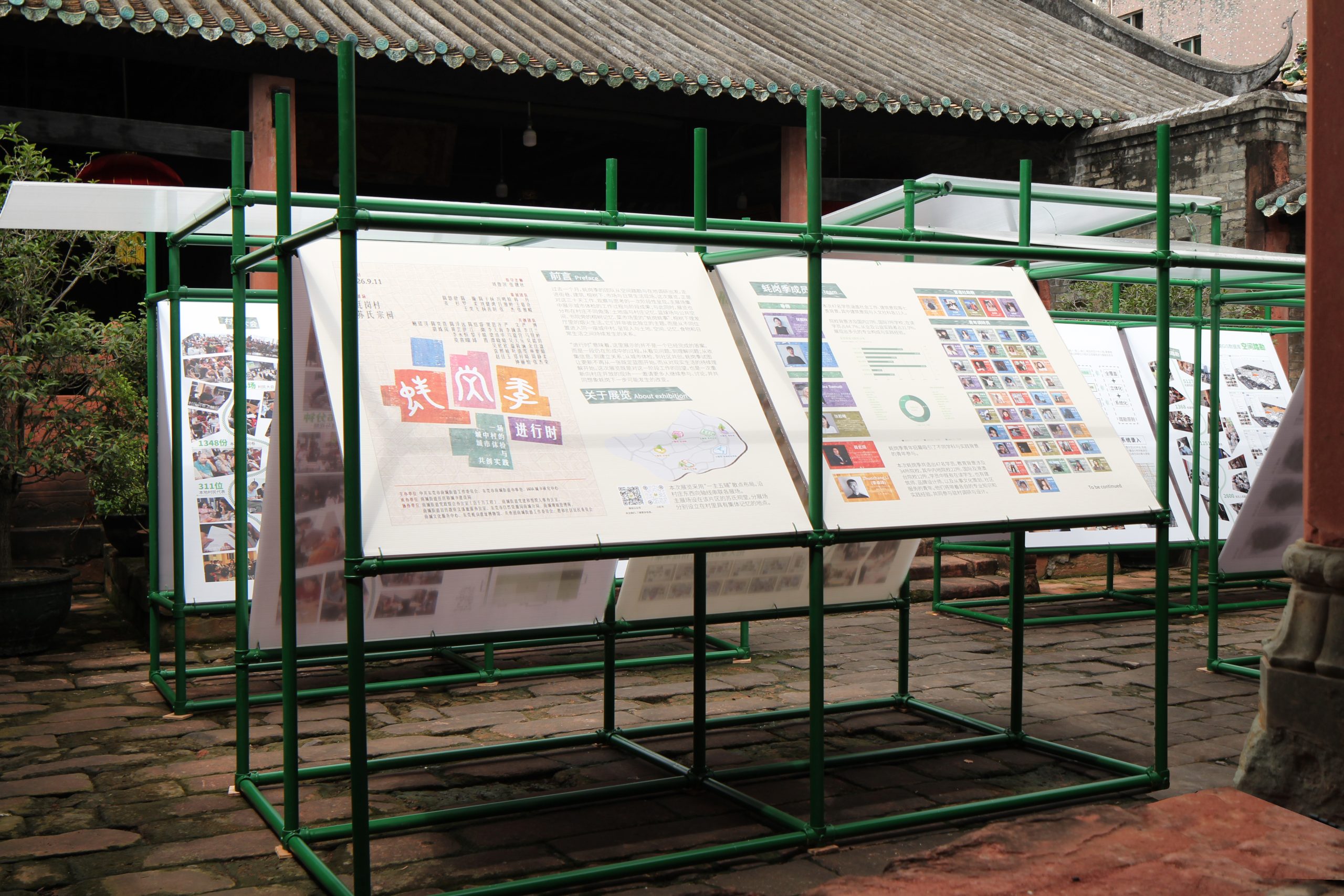
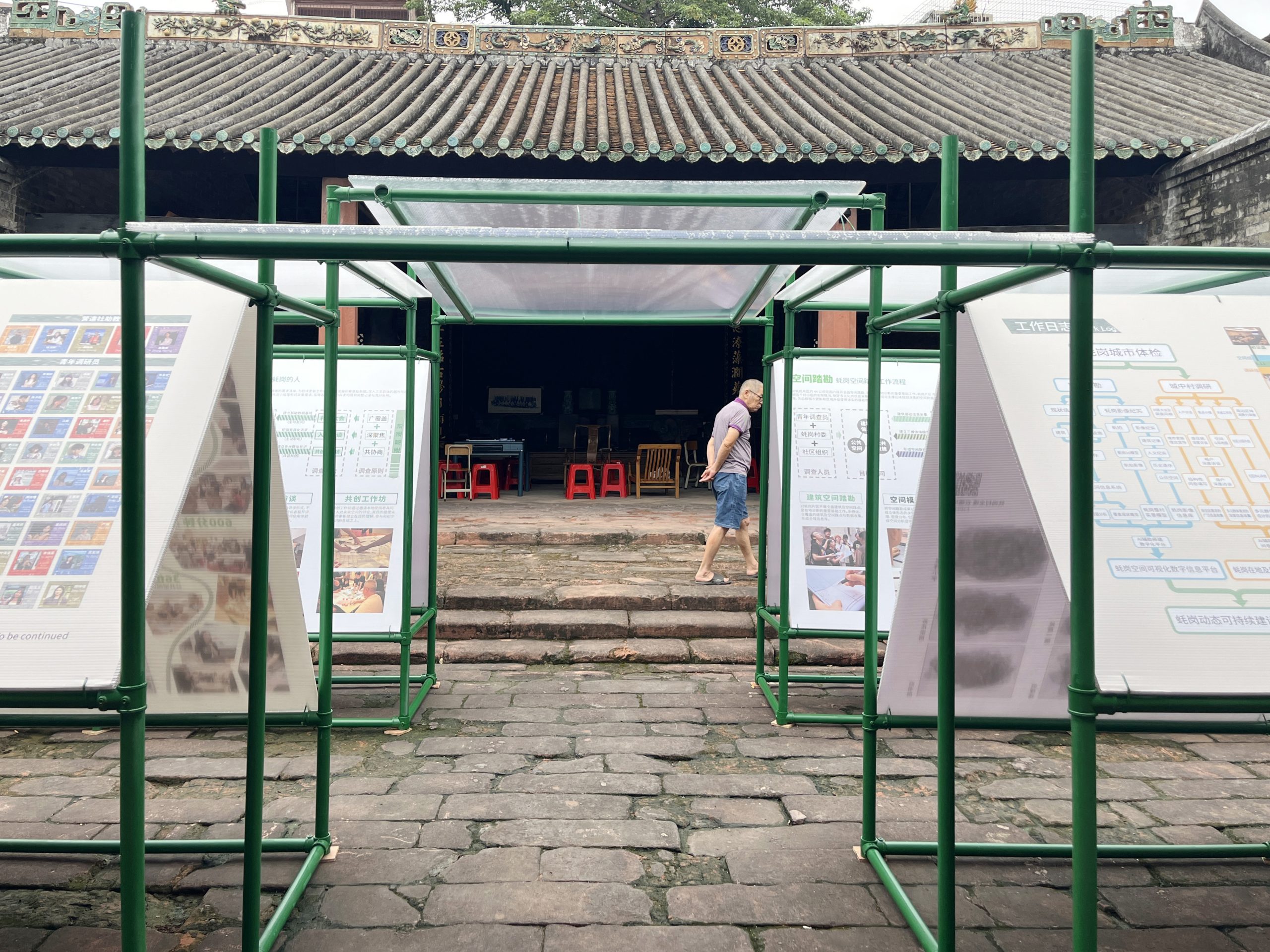
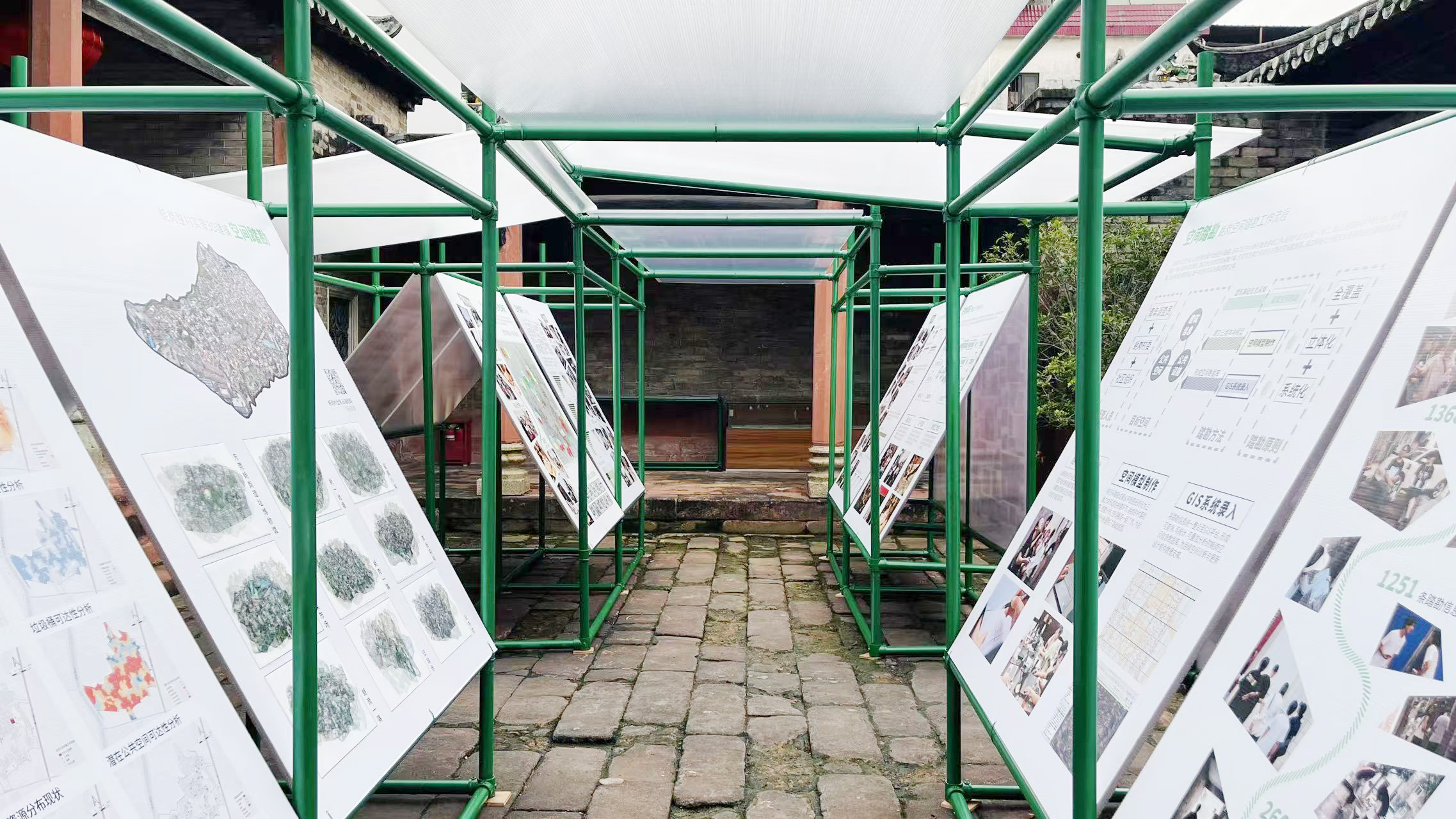
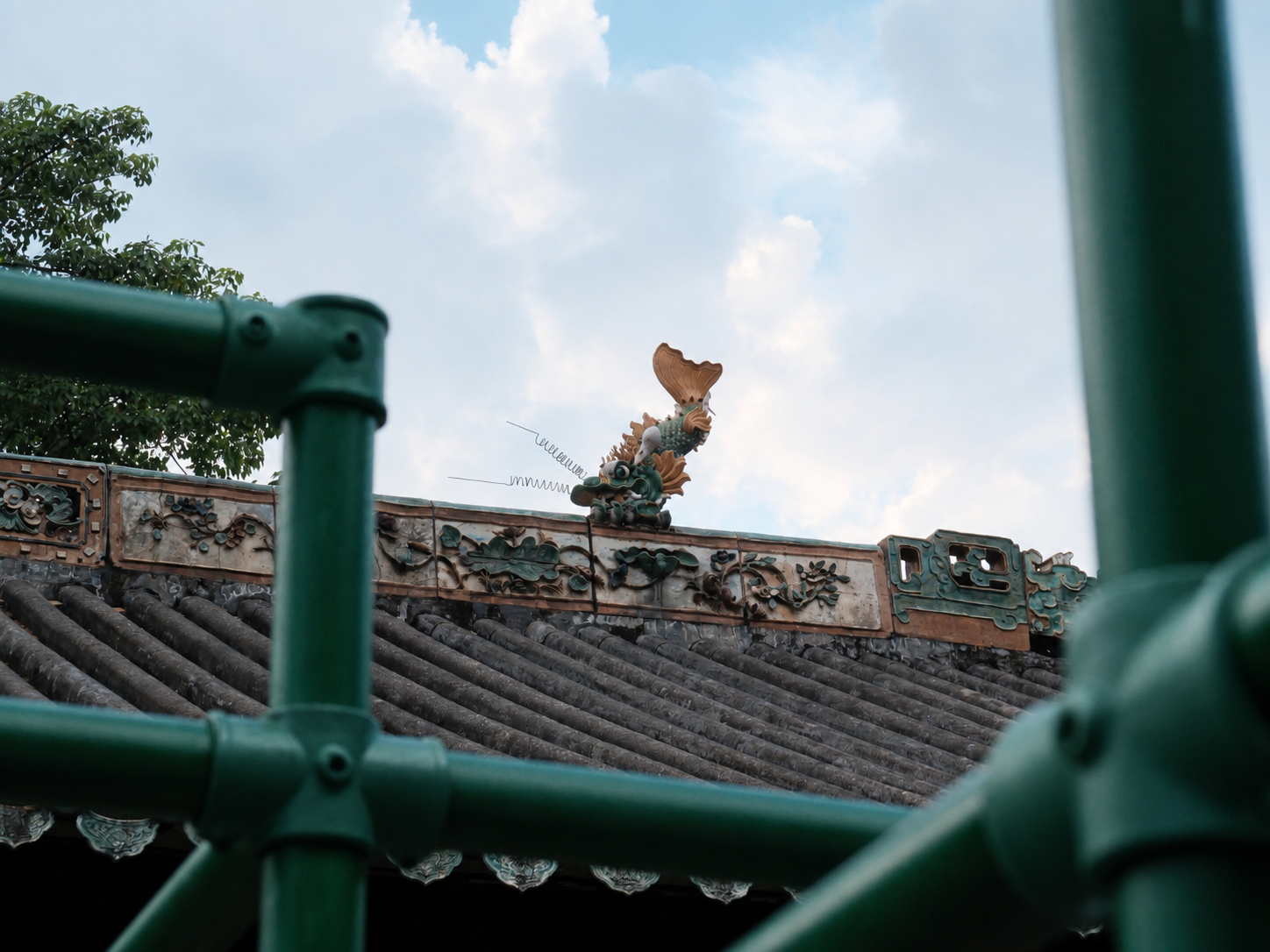
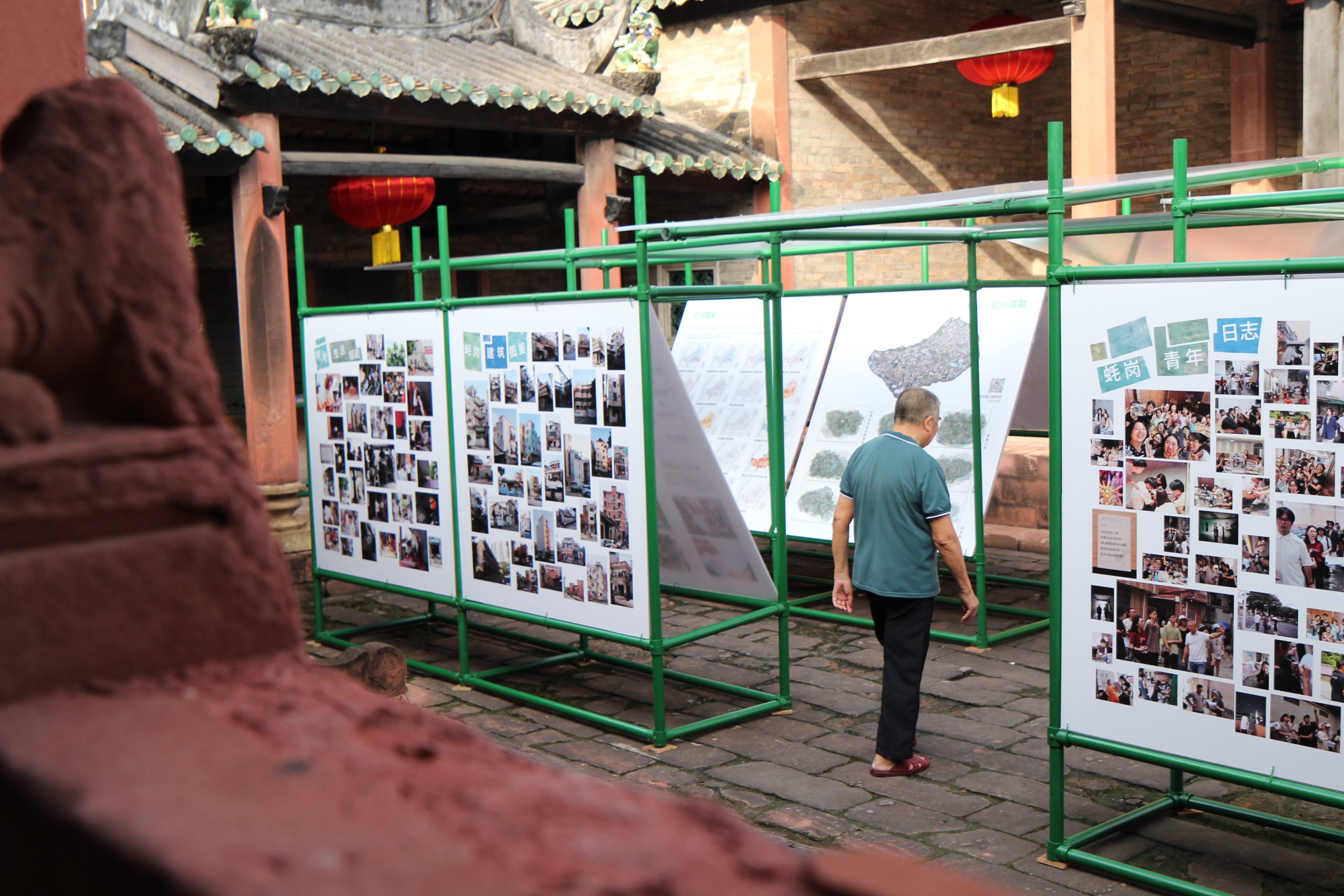
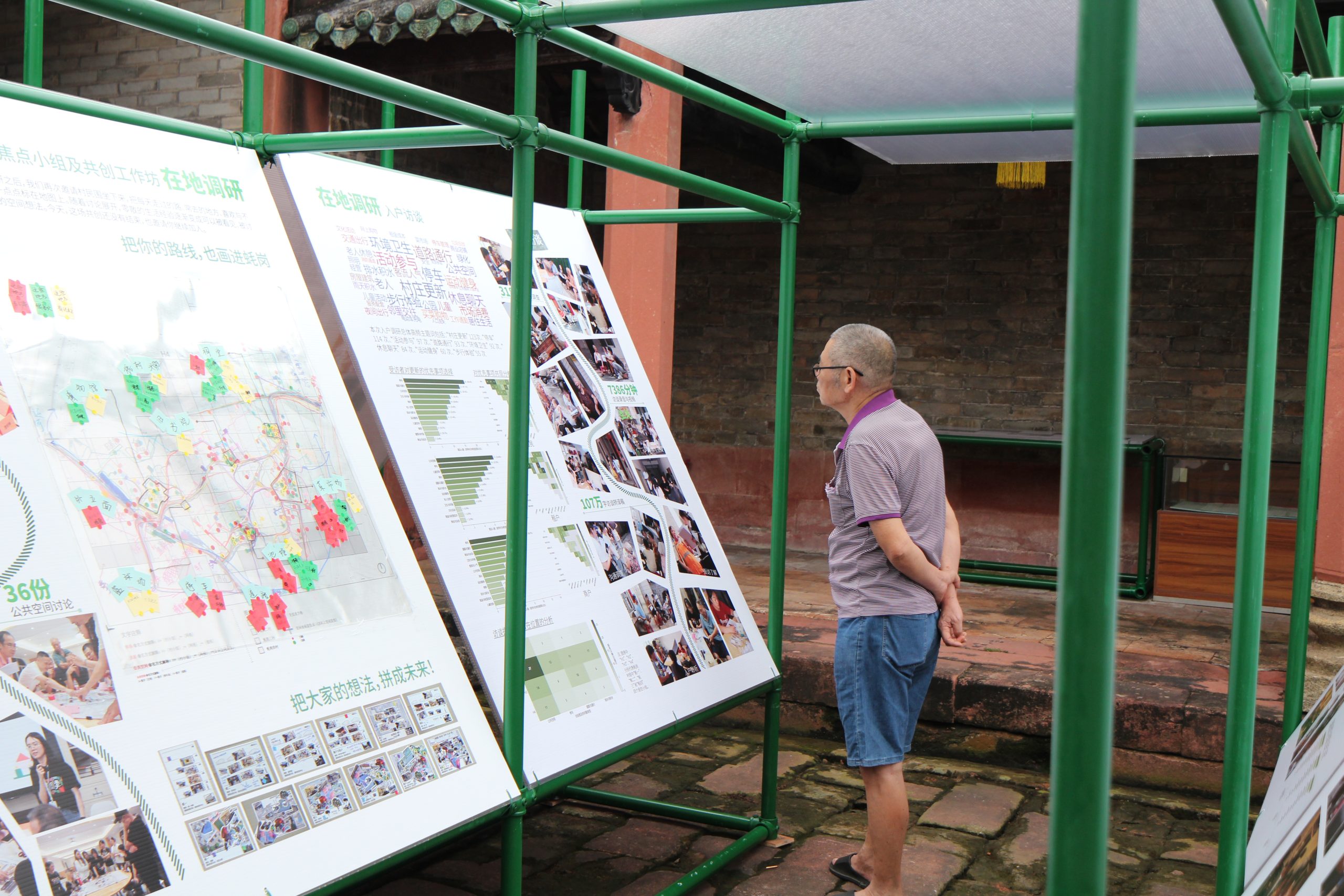
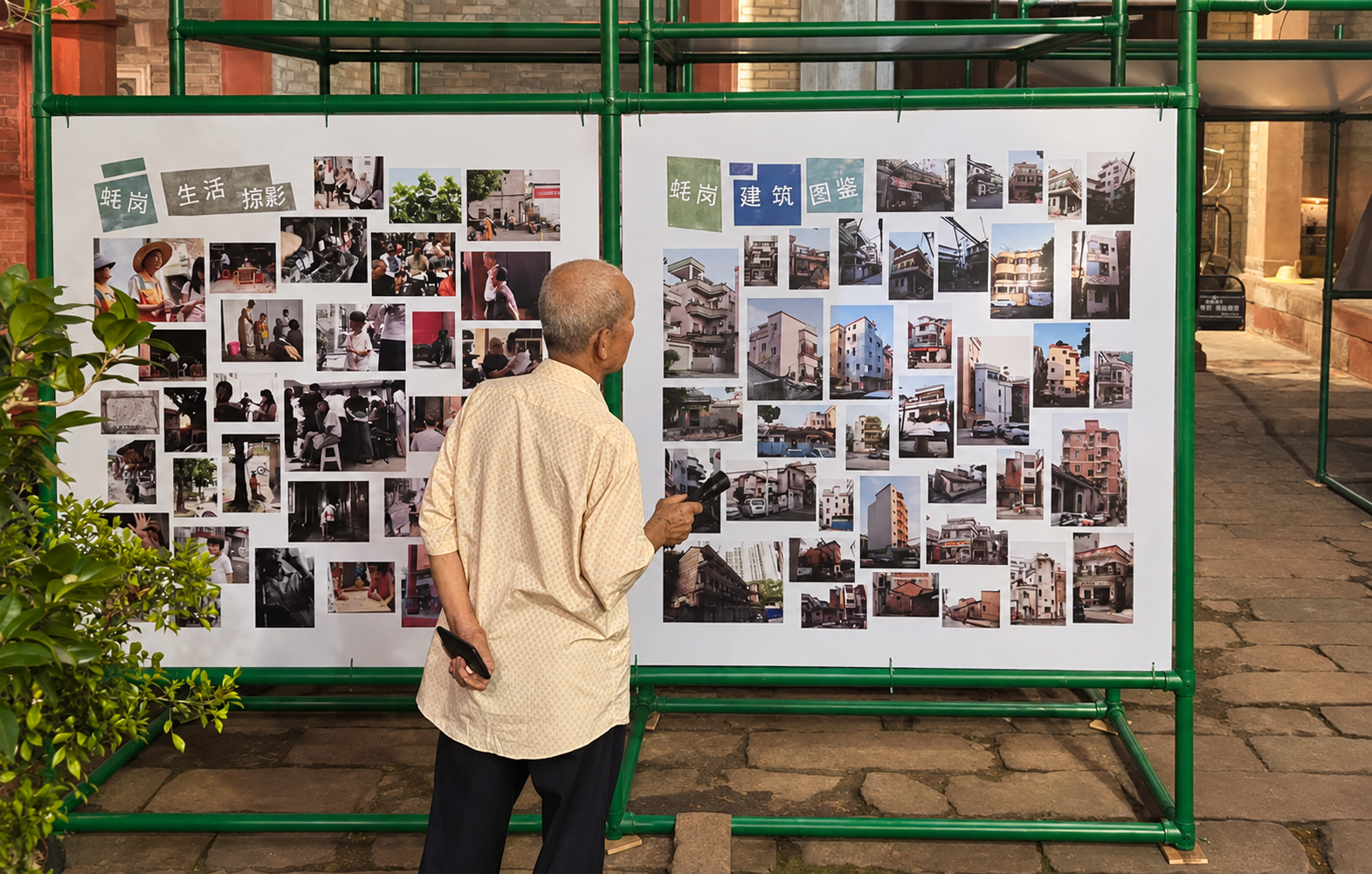
The Su Clan Ancestral Hall, whose history extends back more than 500 years, holds the principal account of the research. Maps, photographs, data and display panels trace the team’s spatial surveys, household visits and workshops with residents.
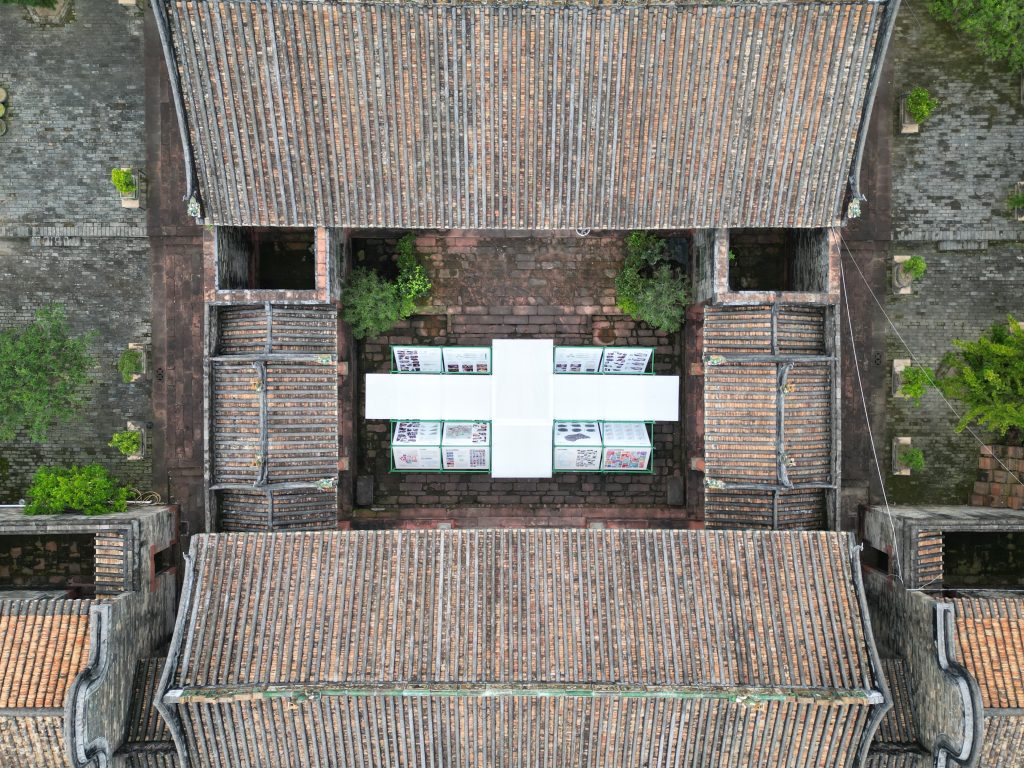
The exhibition occupies the entrance courtyard, which villagers regularly cross to reach the main hall for gatherings and mahjong. A cross-shaped arrangement follows these established routes, allowing the display to sit within the hall’s daily circulation. Green scaffolding picks up the tones of roof tiles and window lattices against the courtyard’s red sandstone.
A haircut and a conversation
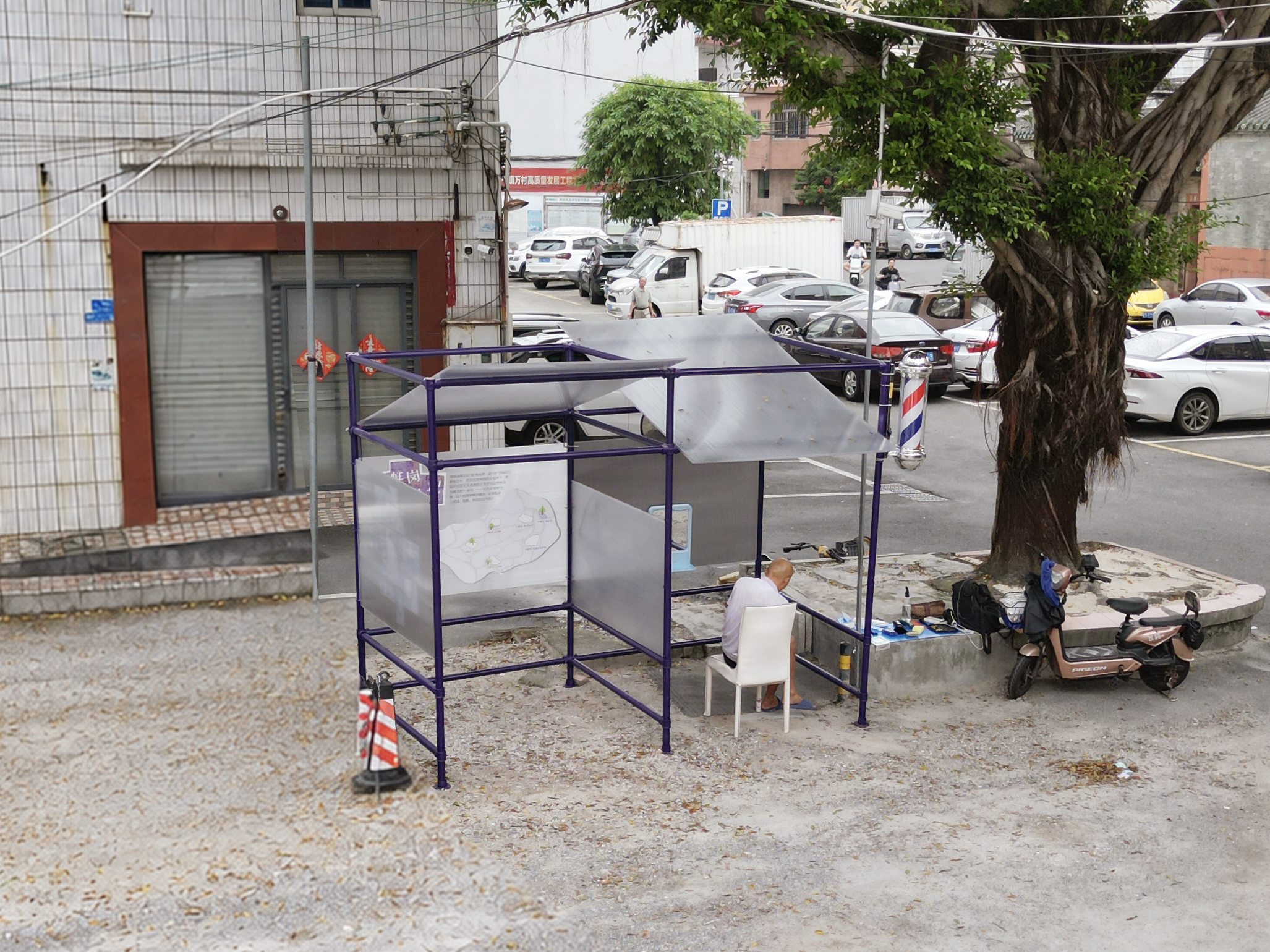
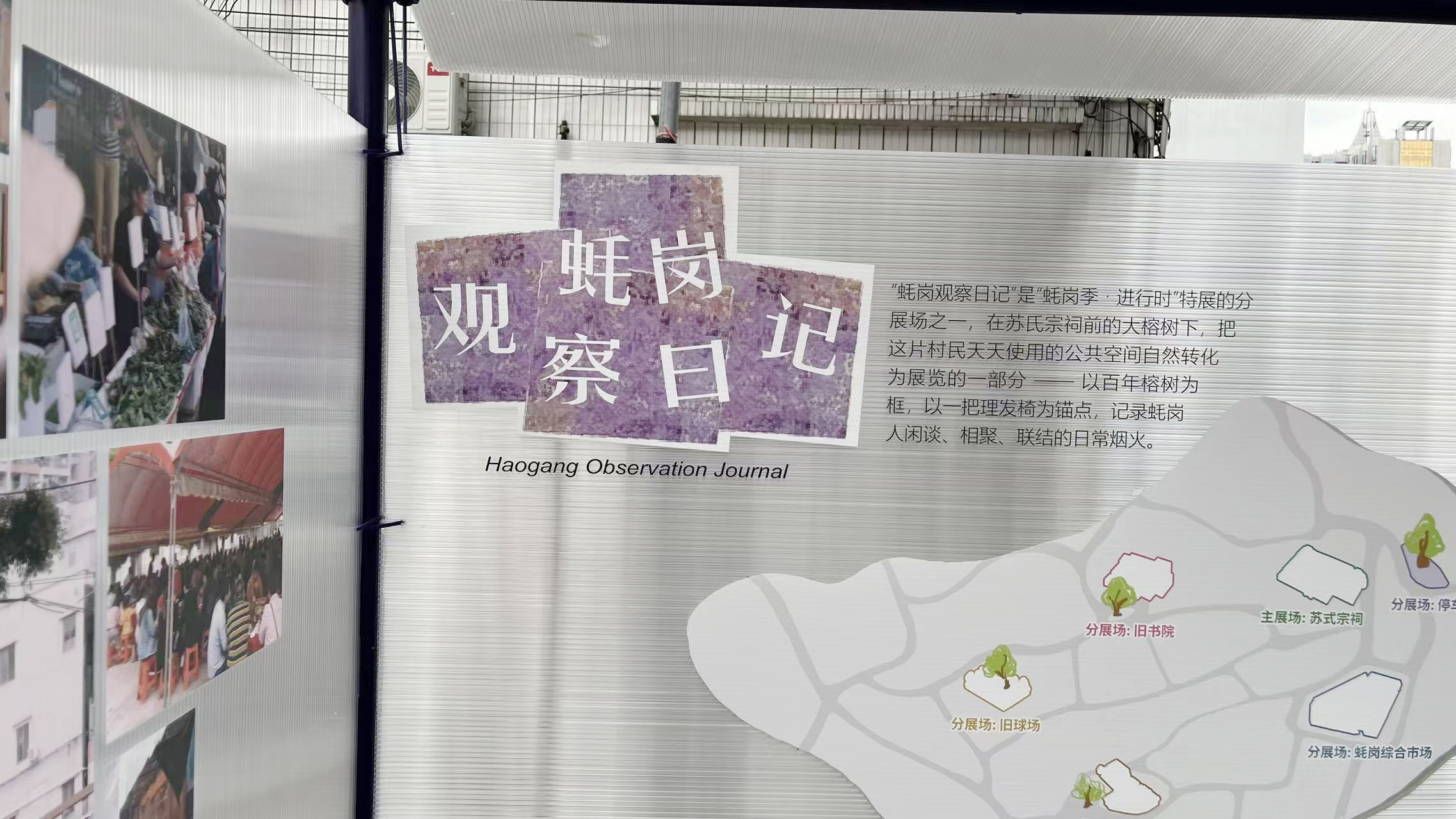
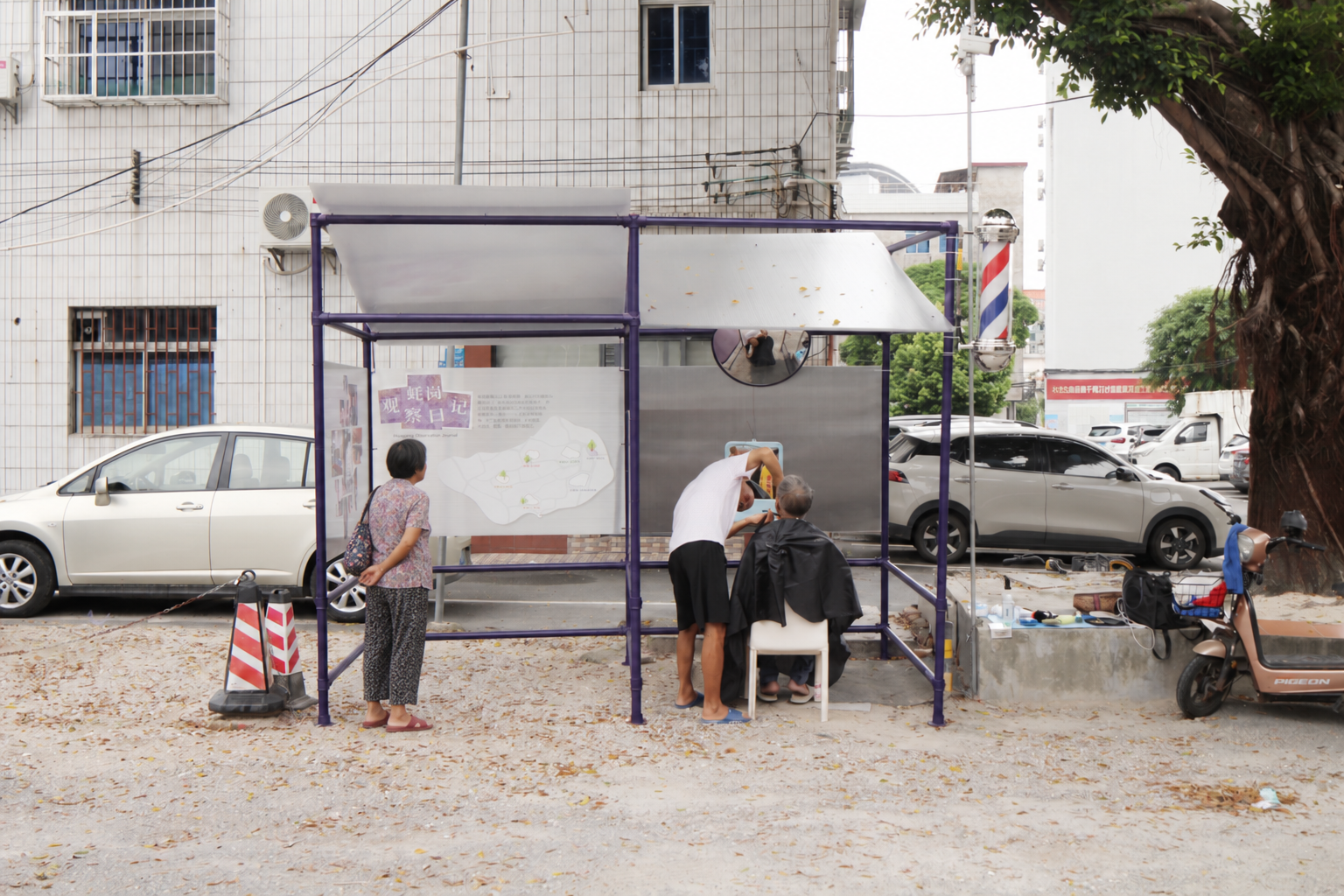
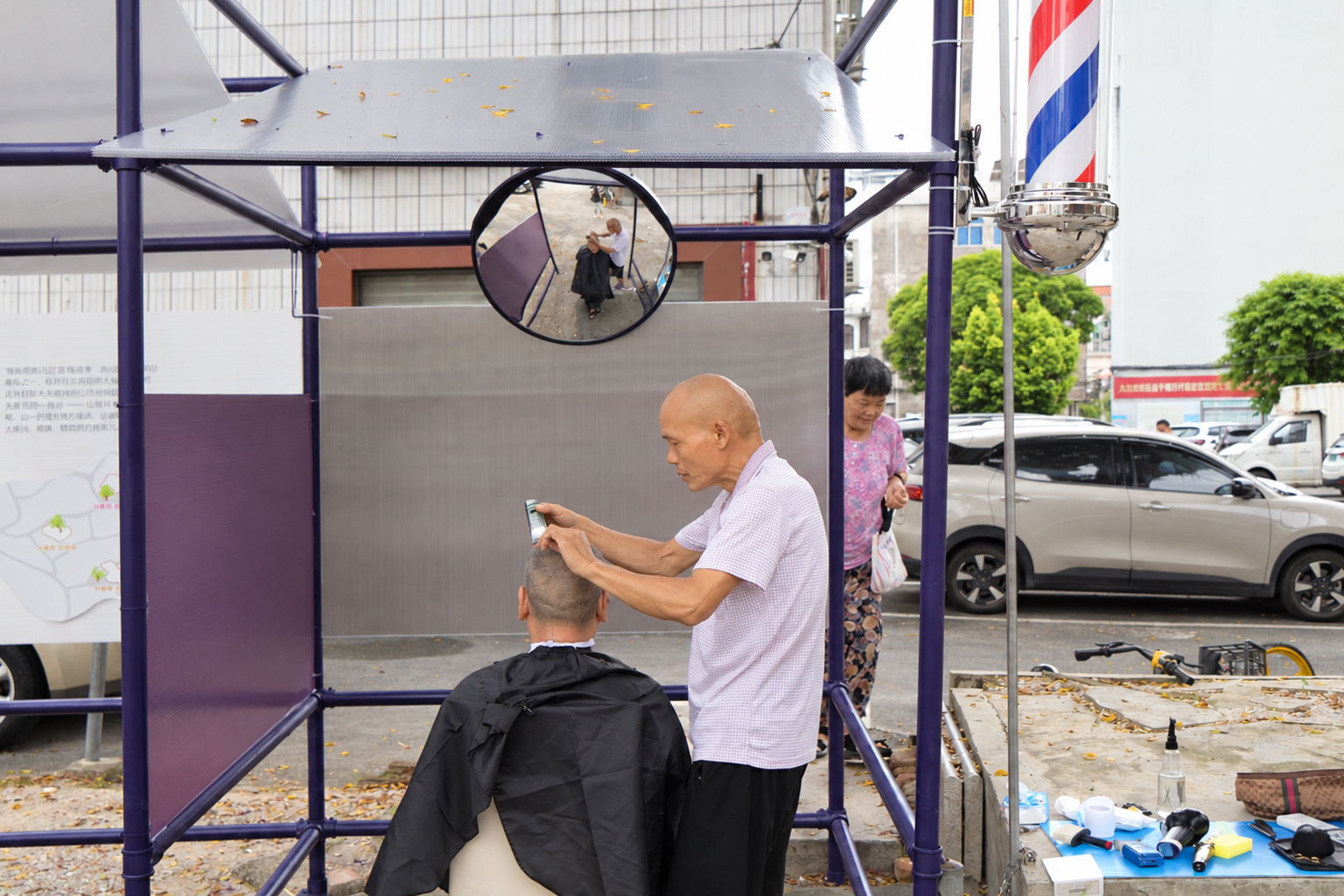
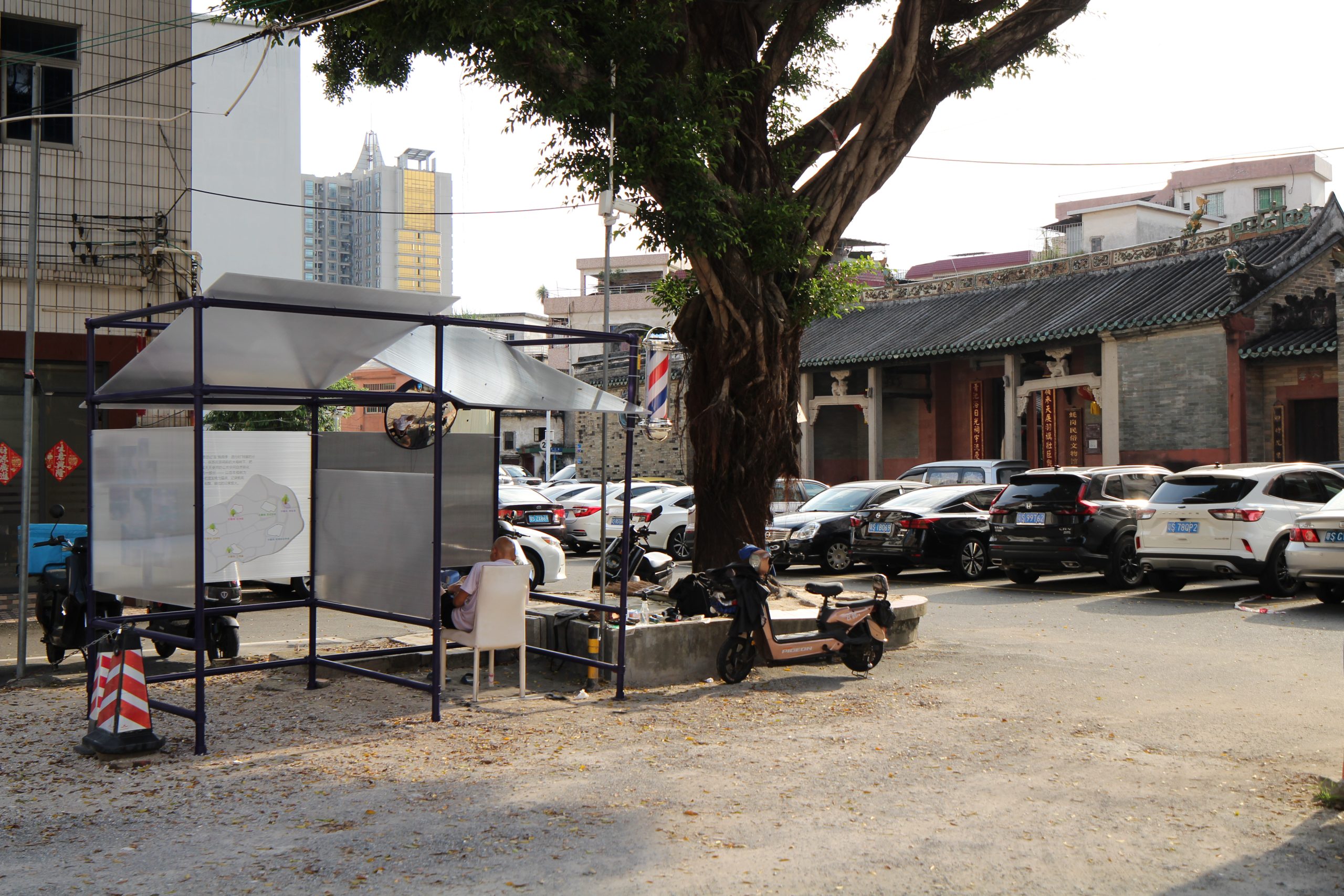
Beneath a banyan tree beside a parking lot in the Hao’er Residents’ Group, the team repeatedly encountered a barber working outdoors. Haogang Observation Journal responds to this existing use with a small pavilion that shelters the barber and his customers from sun and rain.
A rotating three-colour light identifies the station, while a traffic mirror becomes a haircutting mirror. The opposite side carries the exhibition. The structure brings a practical service and a record of local life together at a place already used for conversation and informal gathering.
Memories beneath the banyan
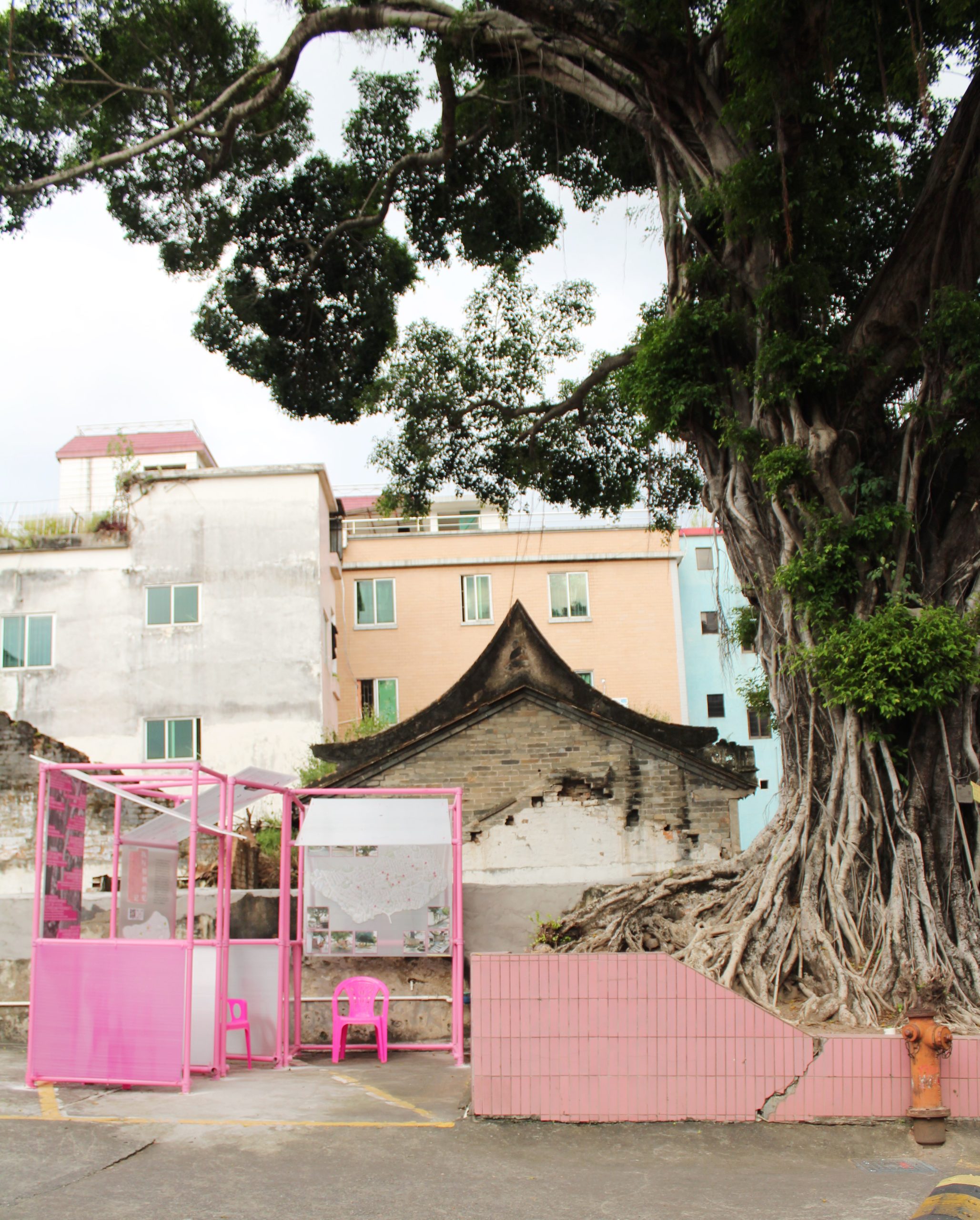
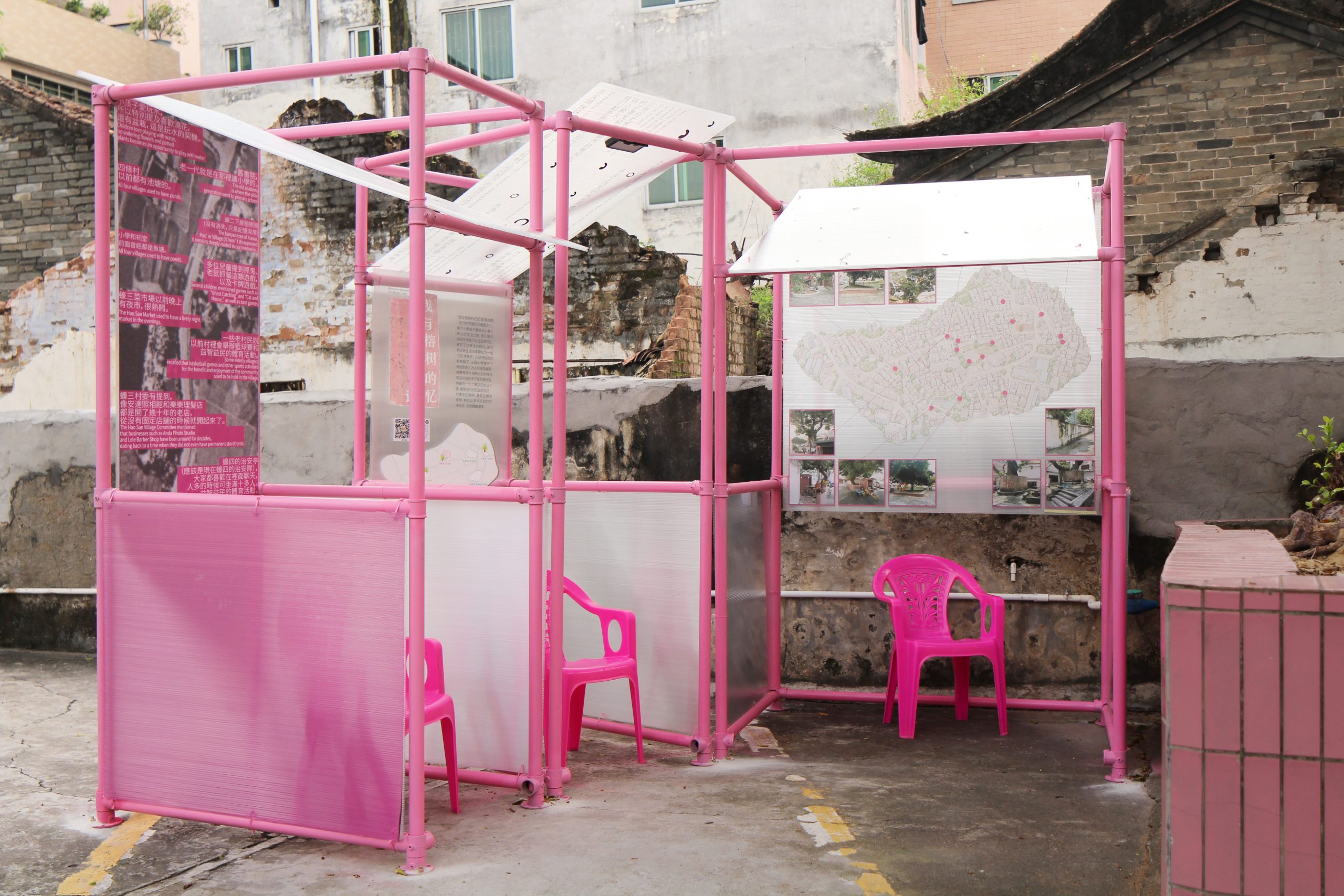
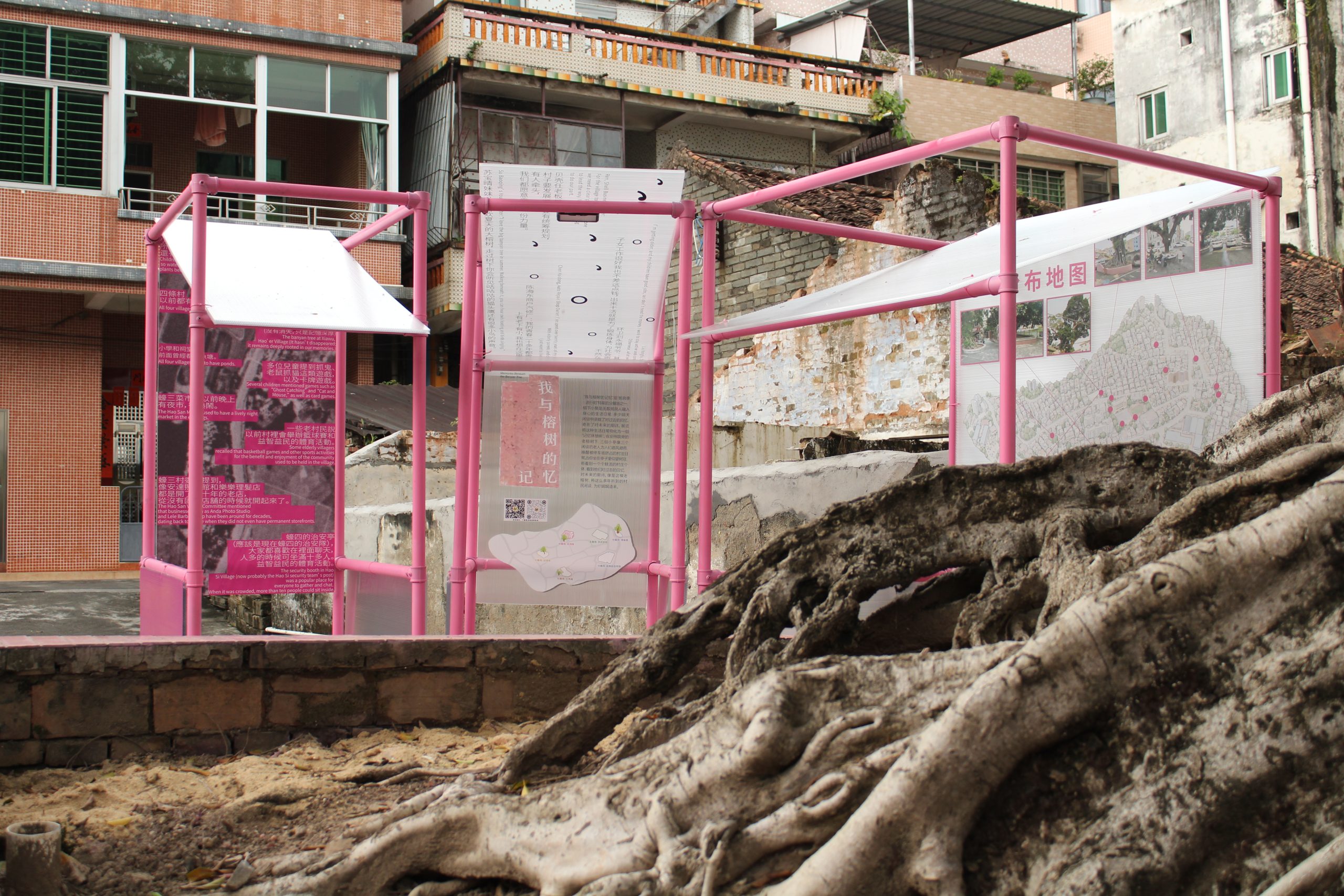
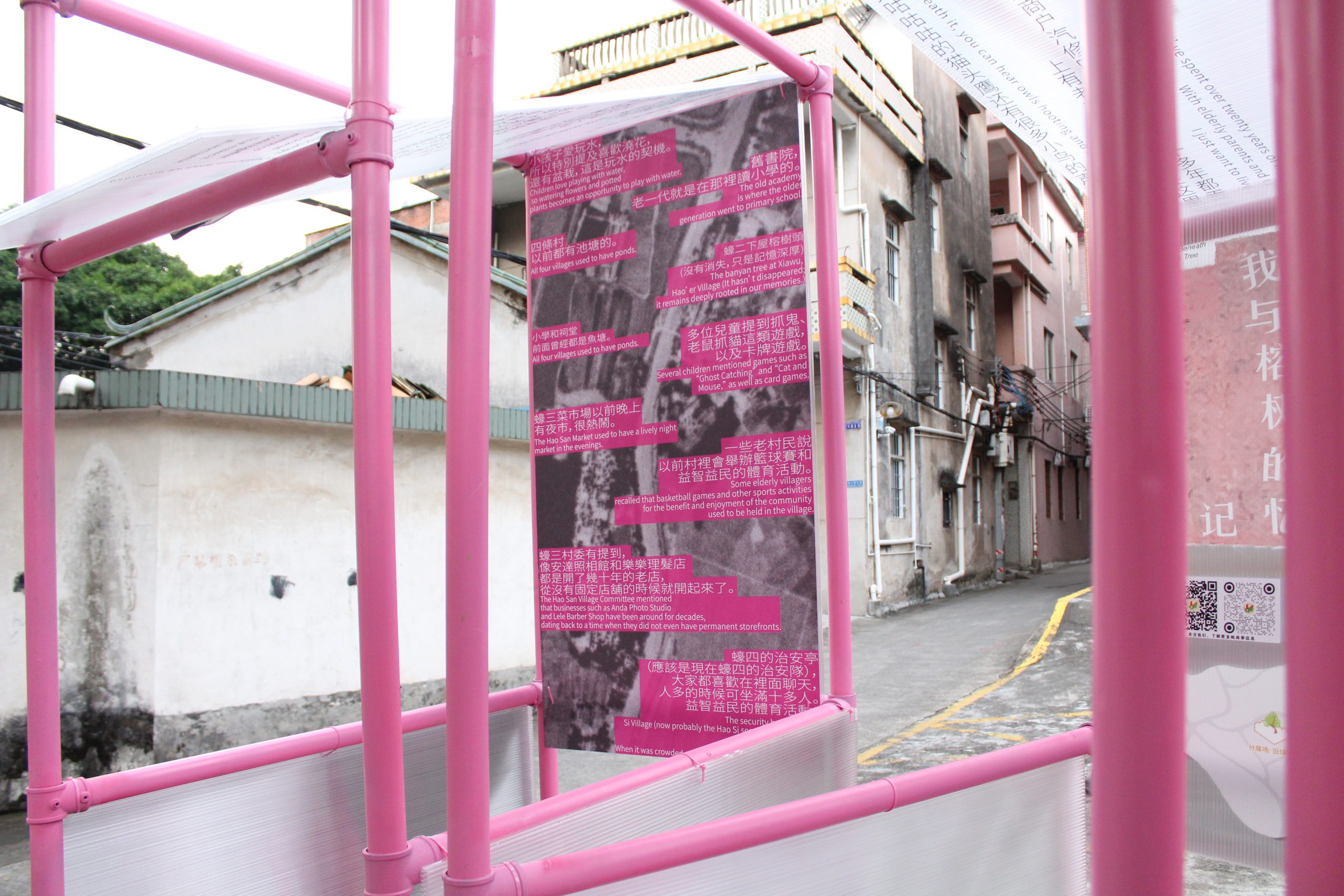
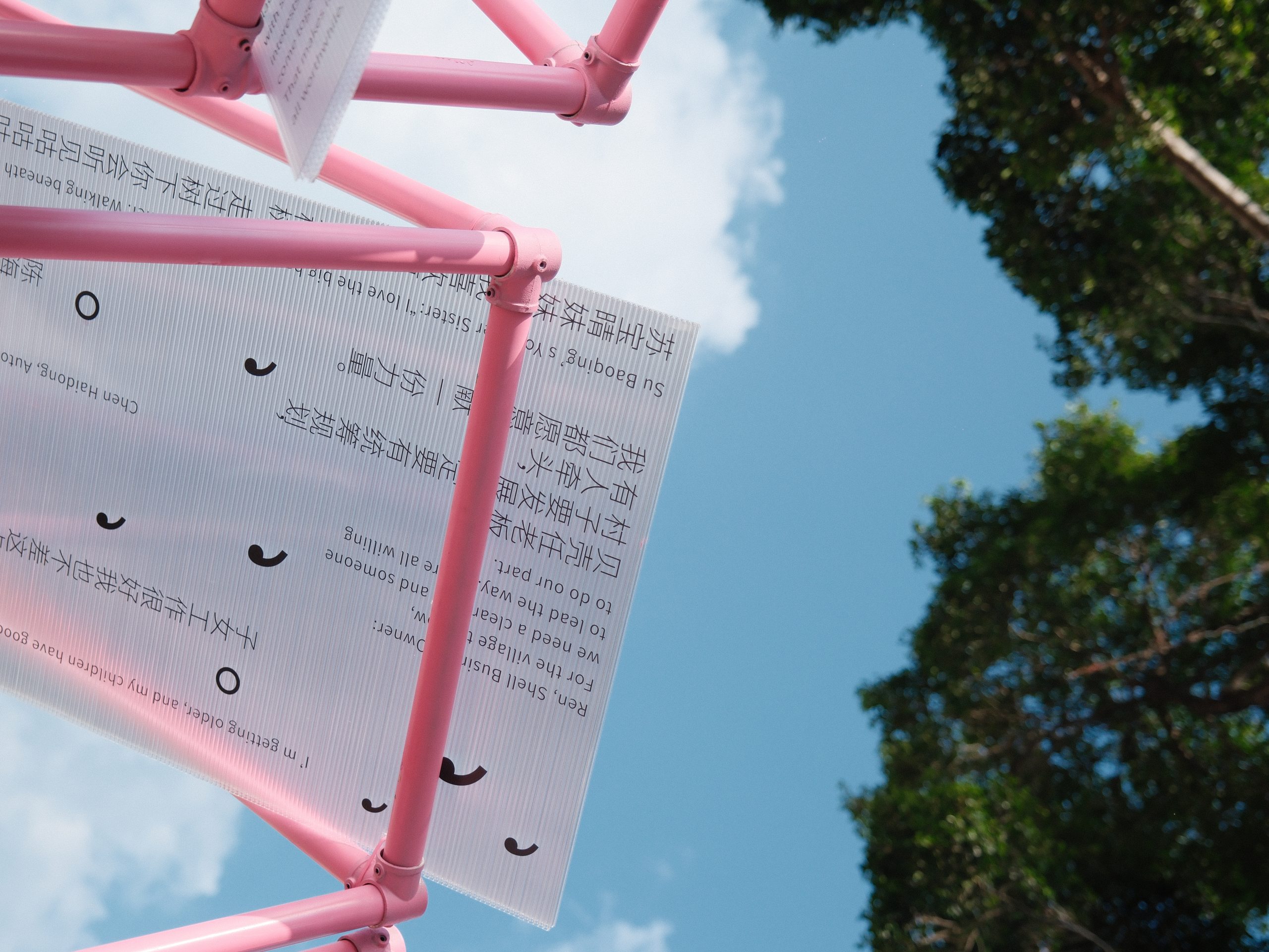
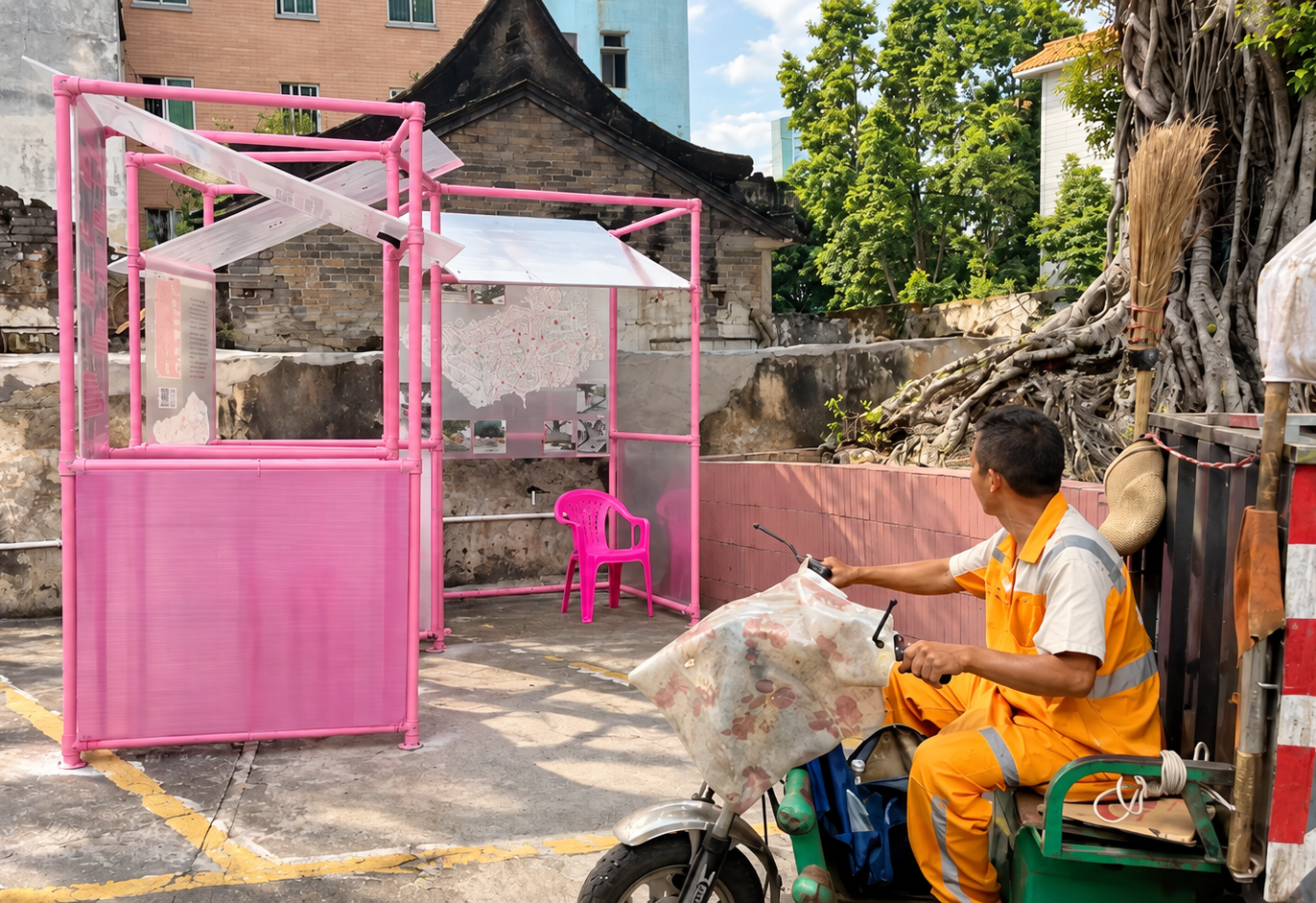
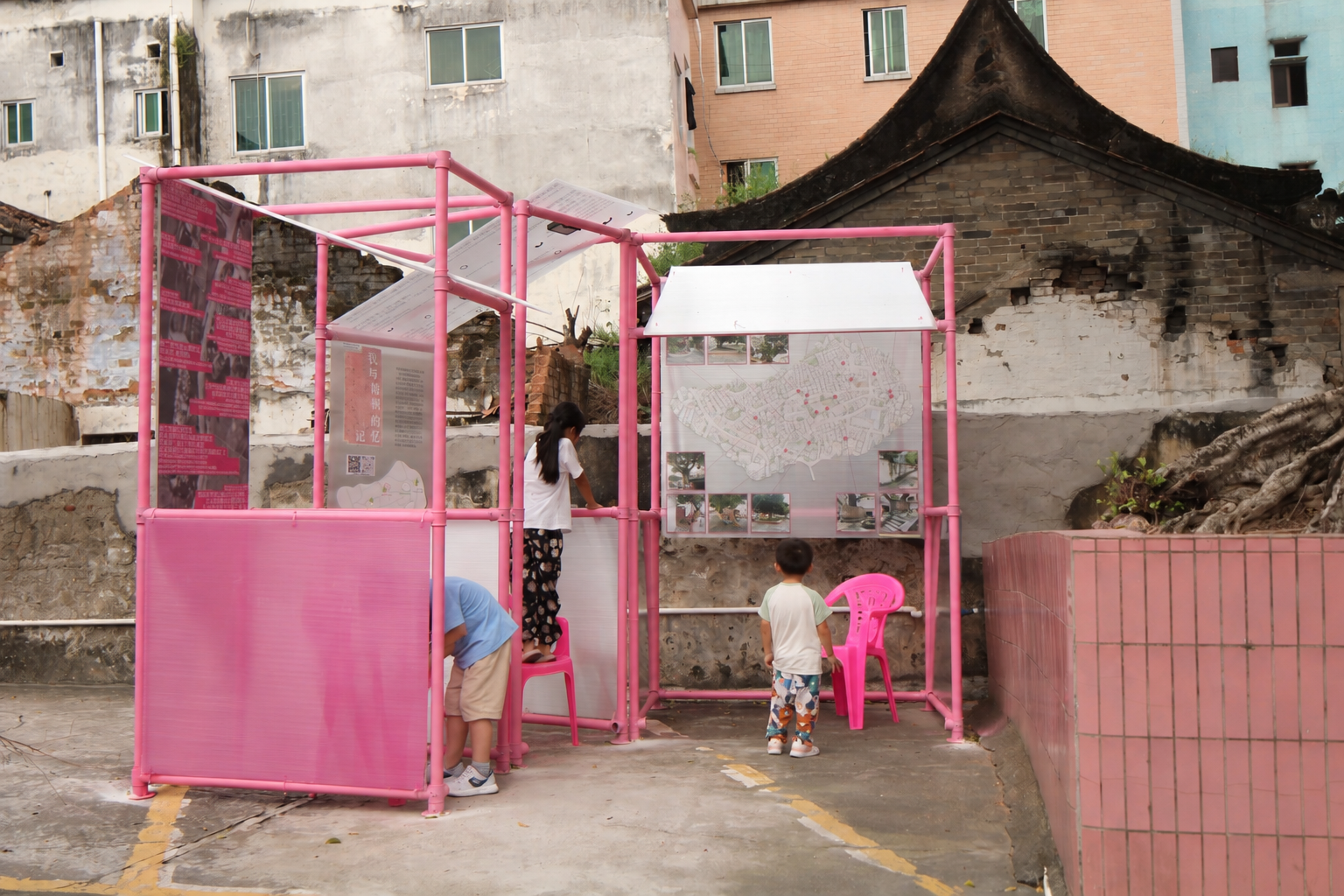
Beside the abandoned Old Academy, formerly a primary school for generations of villagers, three pink pavilions gather around a century-old banyan tree. Memories Beneath the Banyan Tree draws on oral histories and personal messages collected during household visits.
These accounts are printed on translucent polycarbonate roof panels overhead. Tree shadows move across the words, linking the display to the setting in which many of the memories took shape. The pink framework echoes the tiles around the tree, giving the temporary structures a connection to the existing ground.
The playground that became a car park
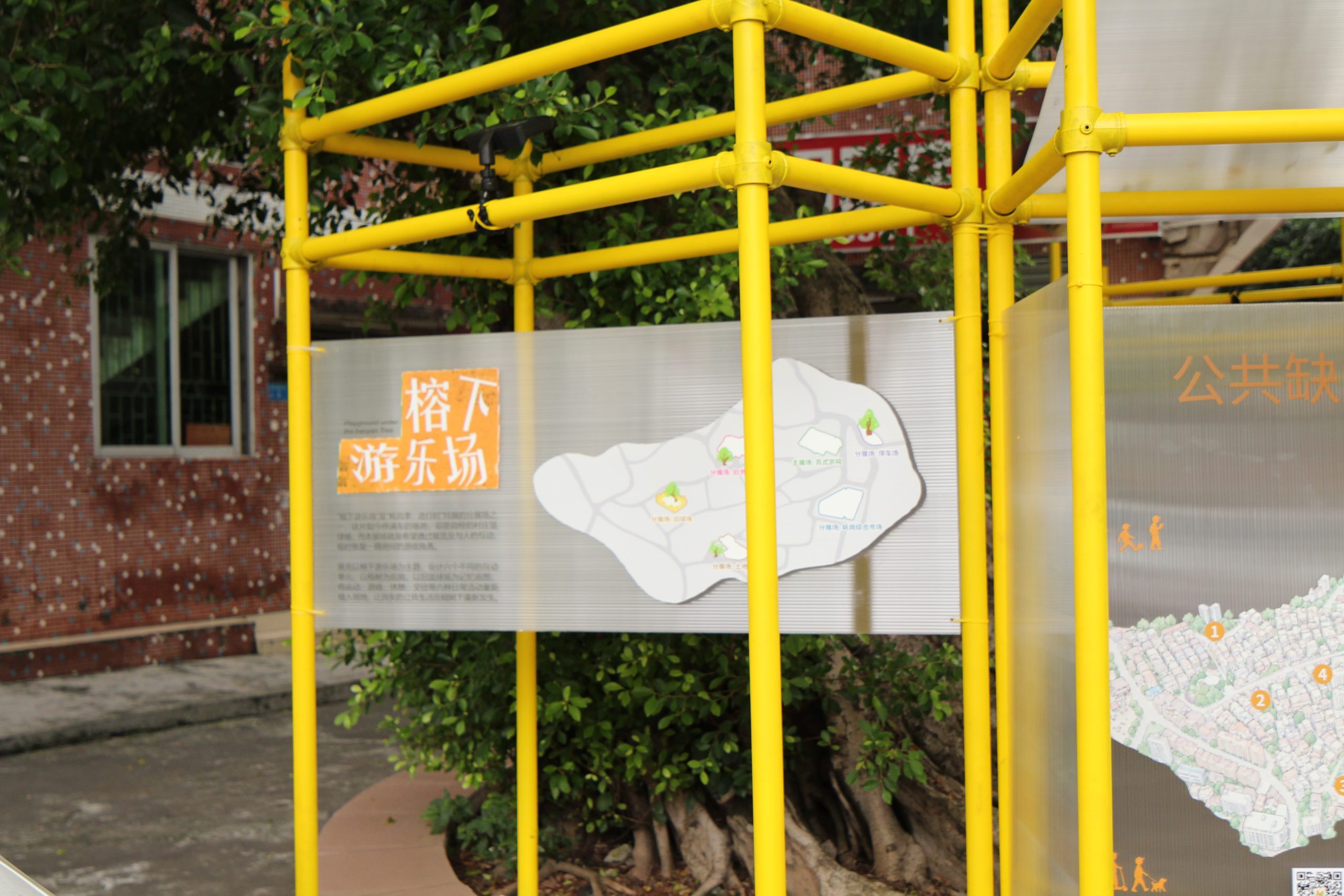
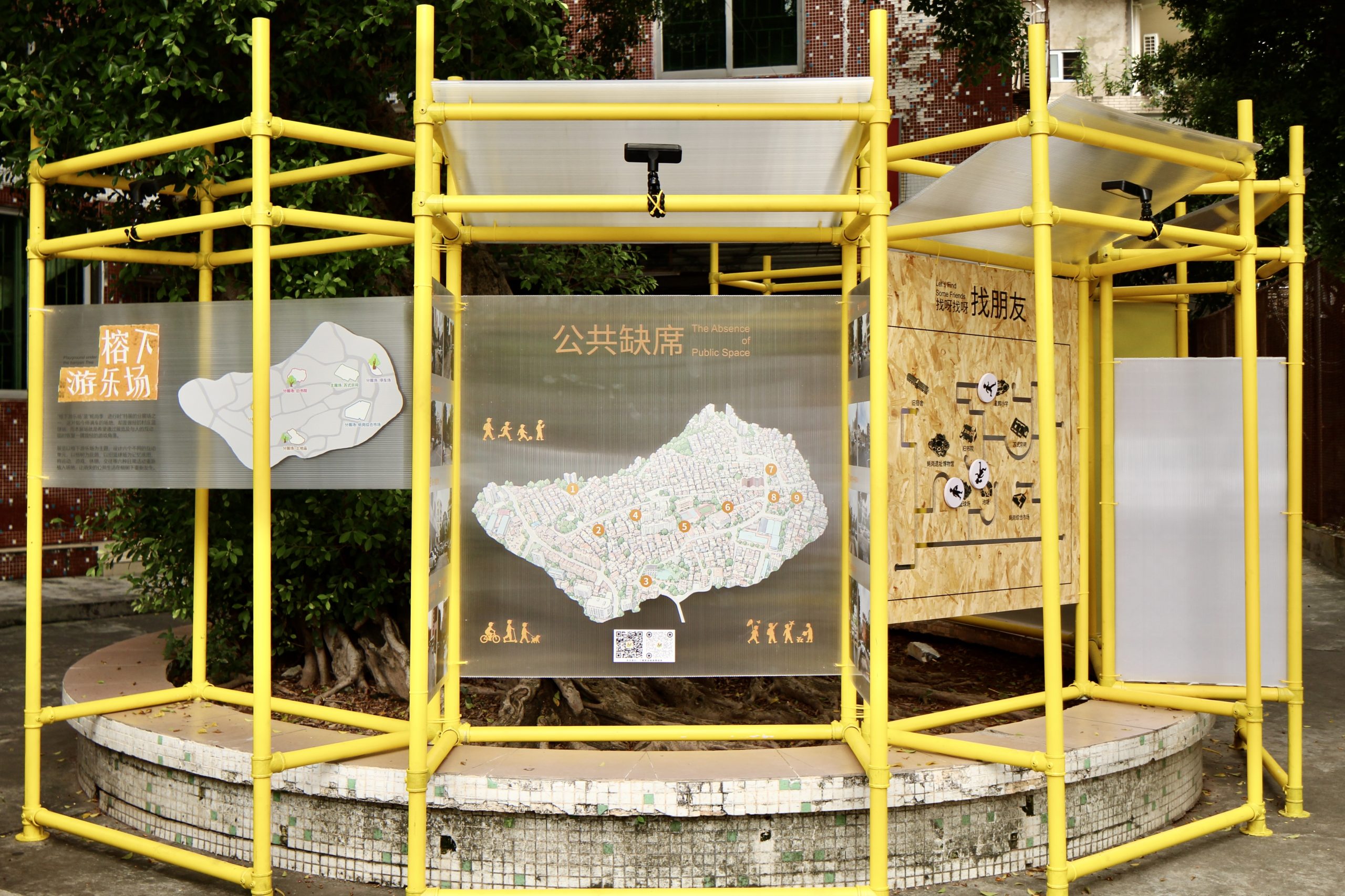
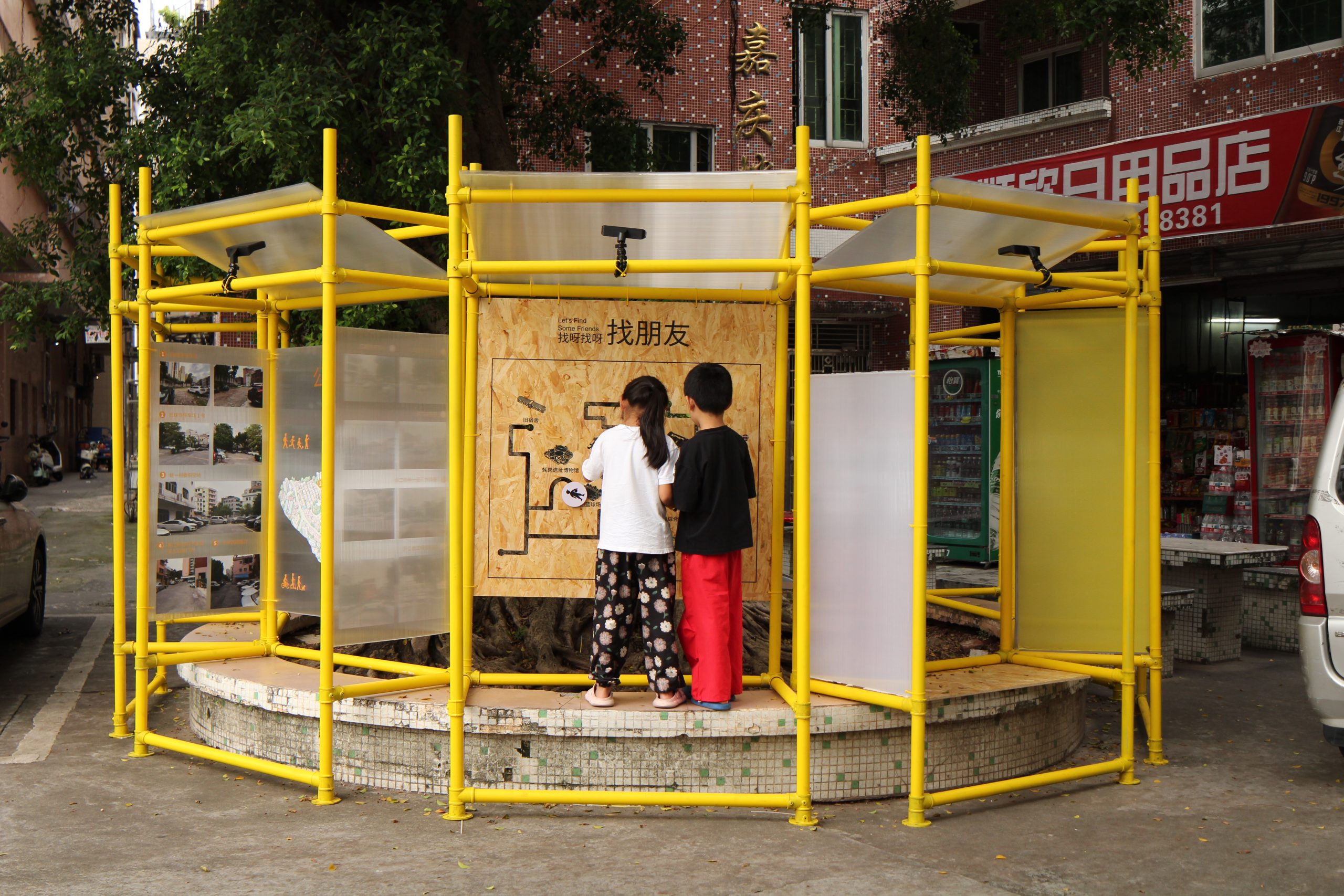
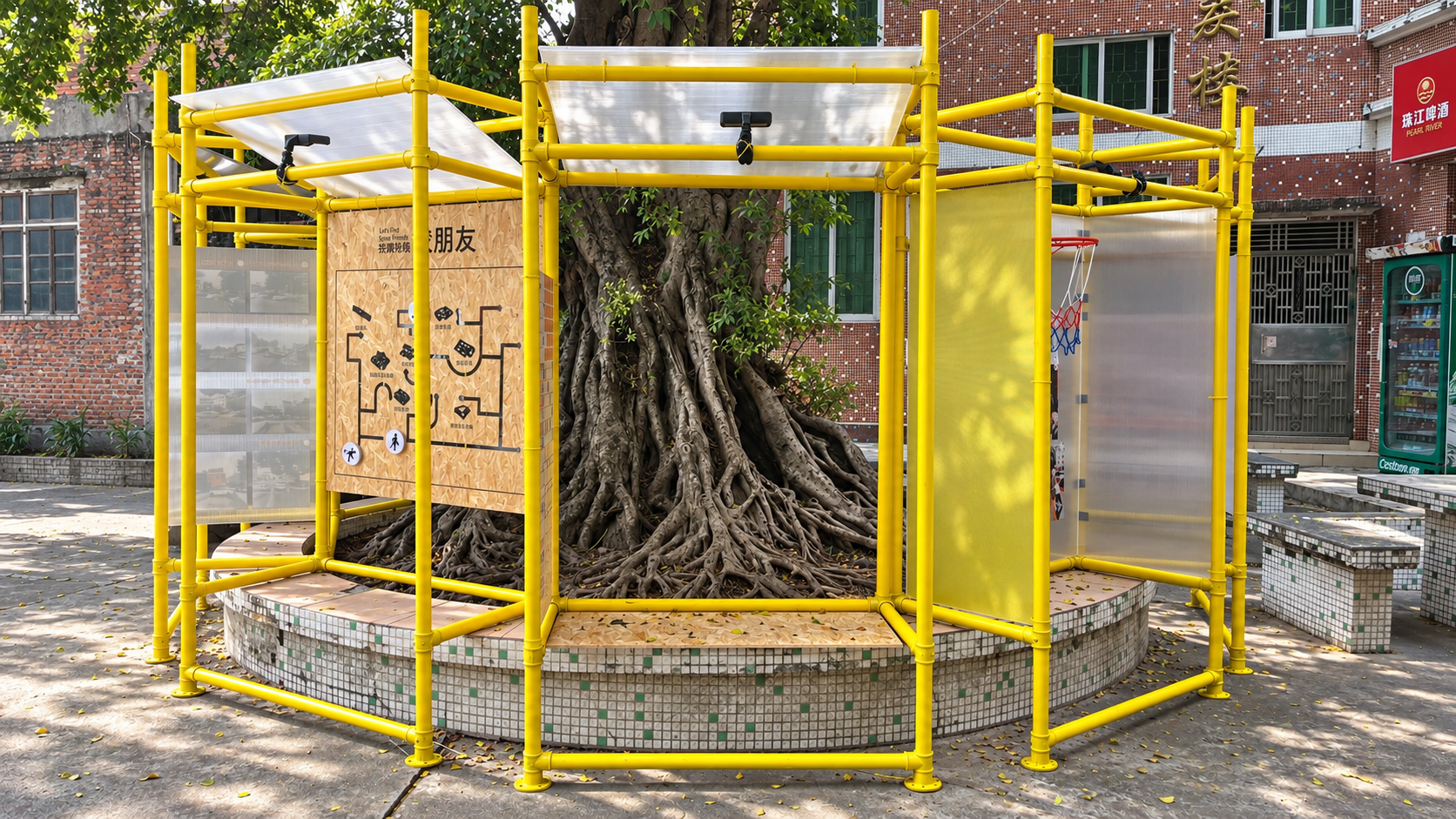
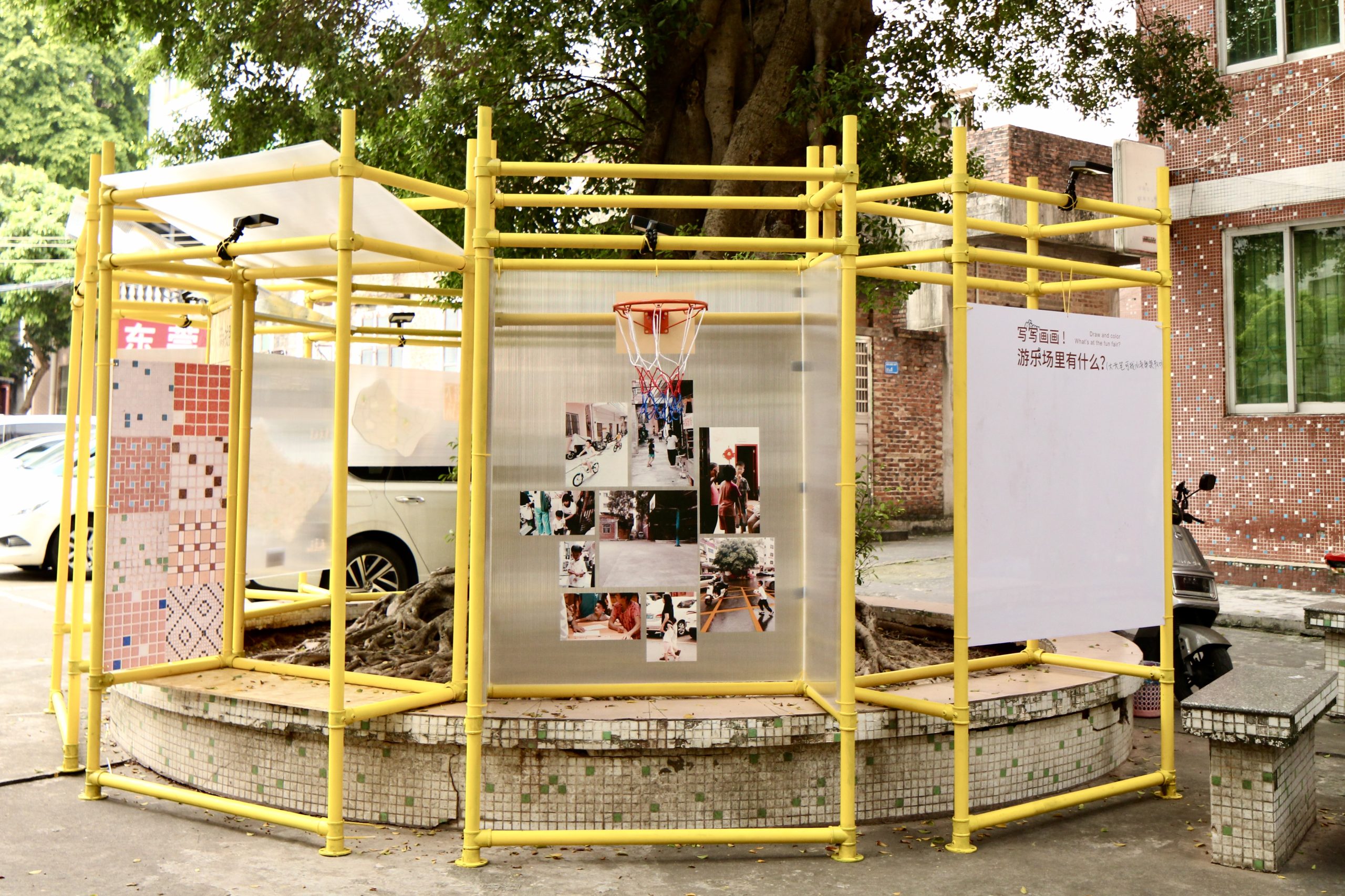
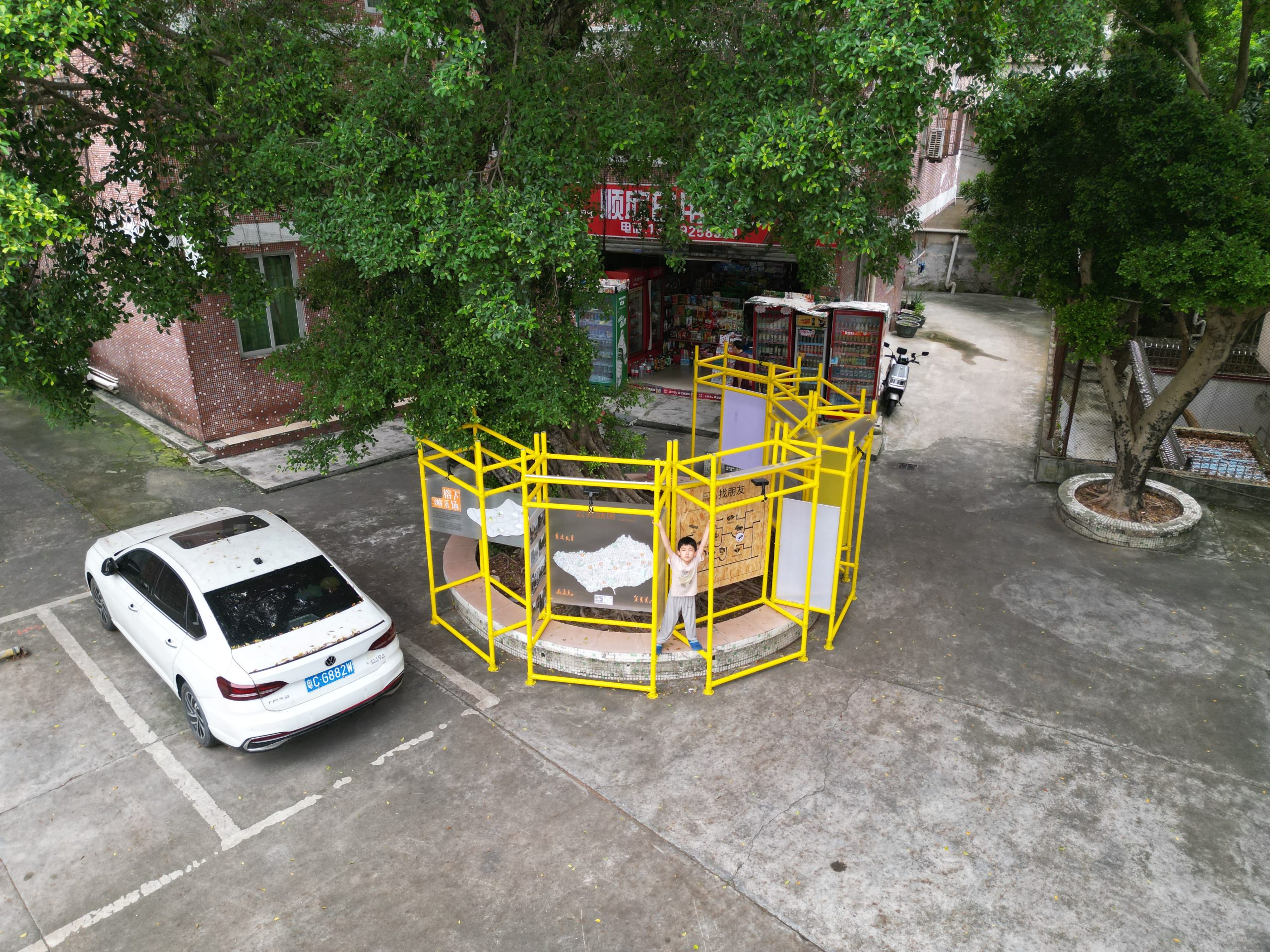
The Old Sports Ground emerged repeatedly in residents’ recollections of childhood, although parking has since taken over the site. Playground under the Banyan Tree addresses this loss through six bright-yellow units arranged around the tree.
Alongside an introduction, the units include Public Absence, Find a Friend, Banyan Tree Frame, Air Basketball and Graffiti Wall. A map identifies former public spaces now occupied by cars. A walkable maze turns village landmarks into a game, while an open frame invites residents to look again at familiar surroundings.
Air Basketball briefly restores a hoop as a reminder of the vanished court, without reinstating a functioning basketball ground. Nearby, whiteboard film provides a surface for drawing and writing. Together, the units make the shortage of shared space visible and invite children and adults to imagine other uses for it.
Wishes beside the Earth God Temple
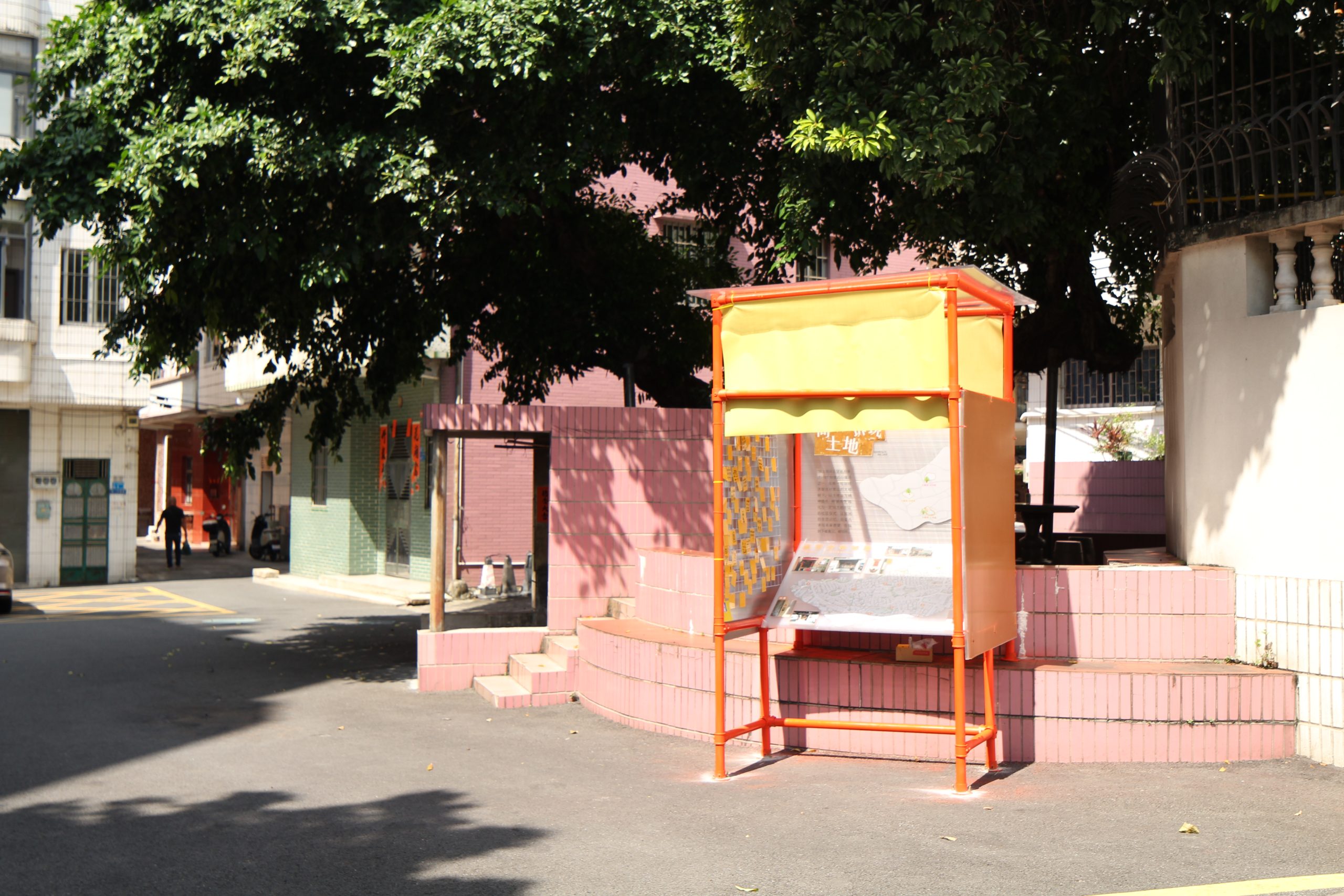
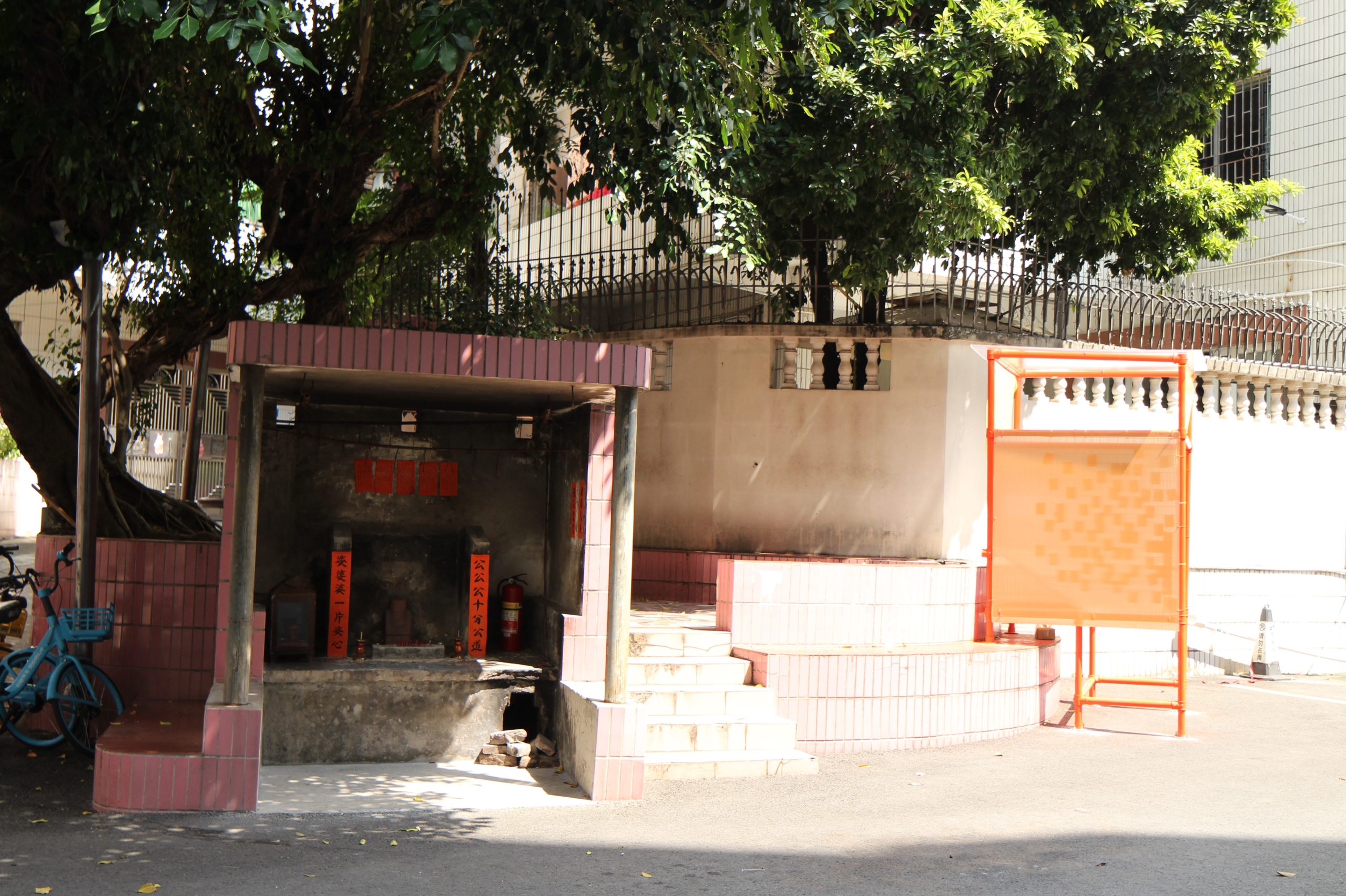
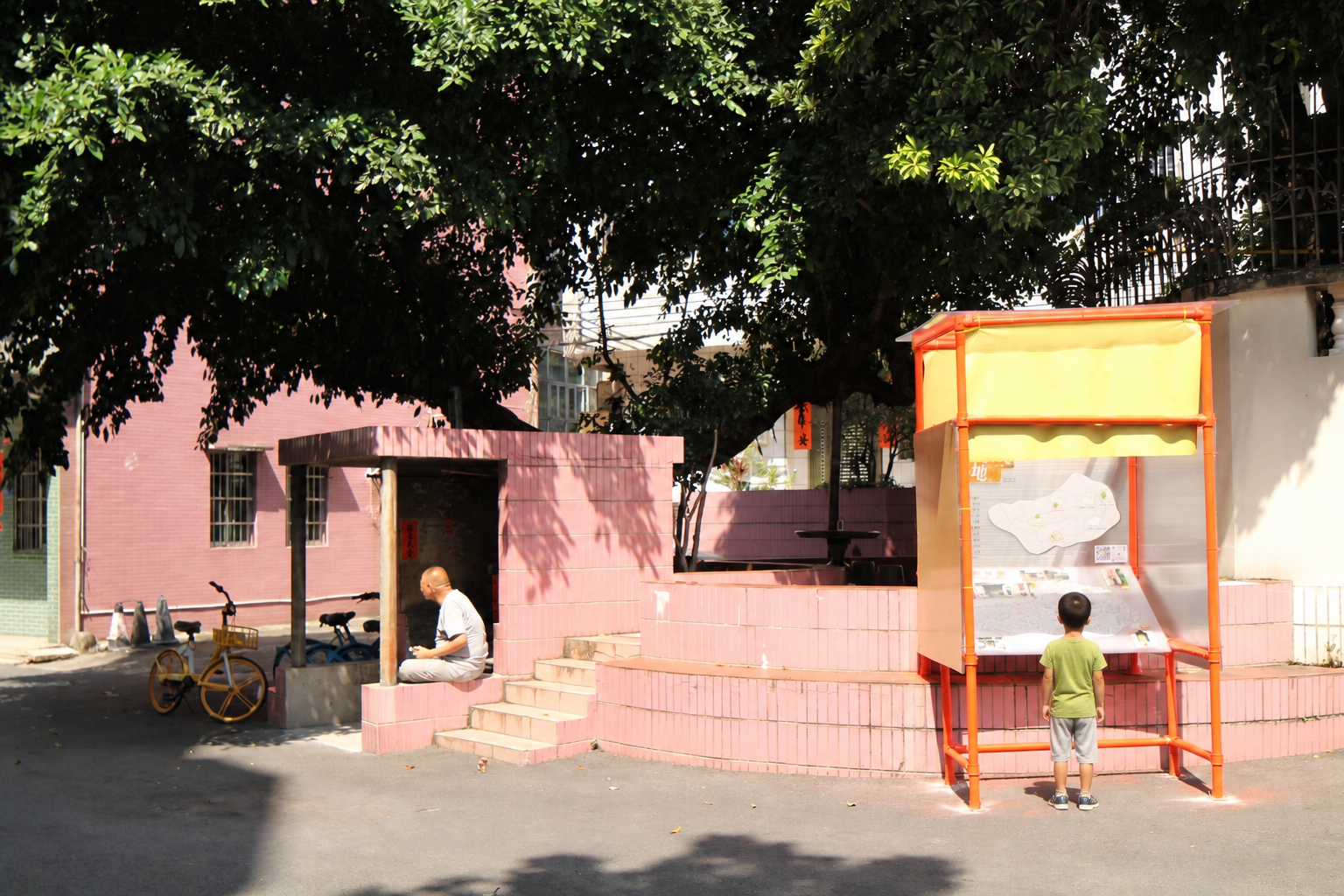
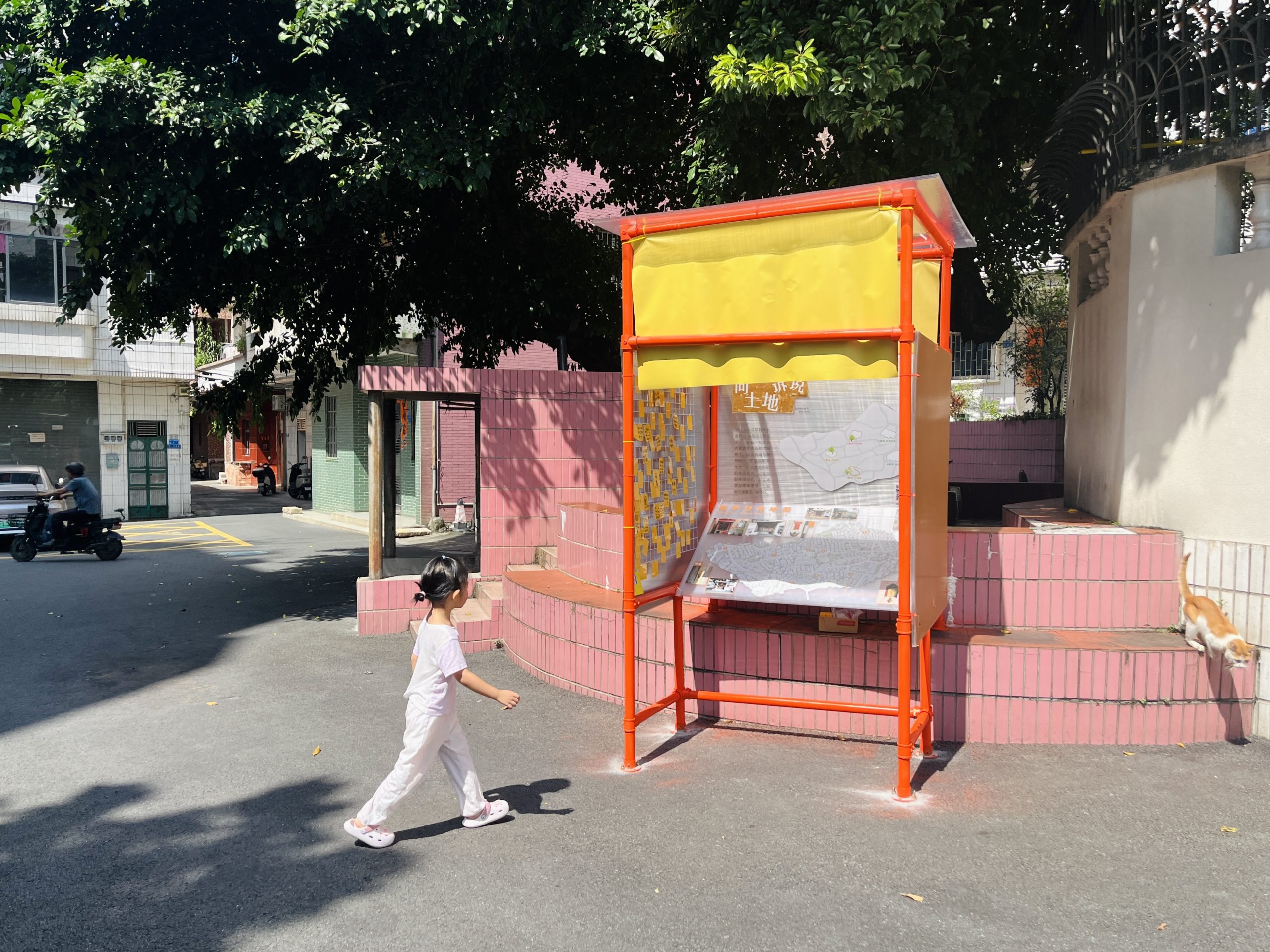
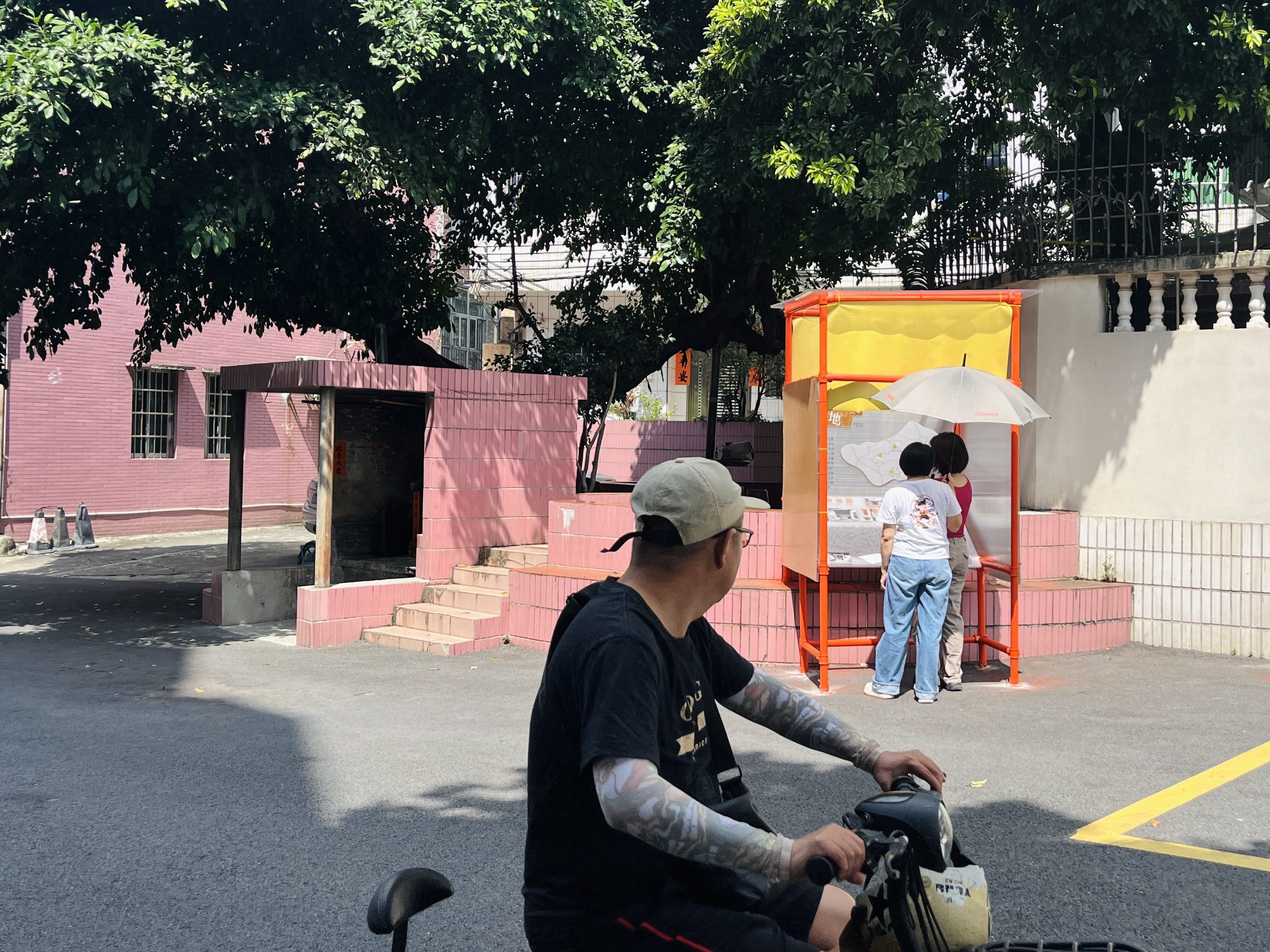
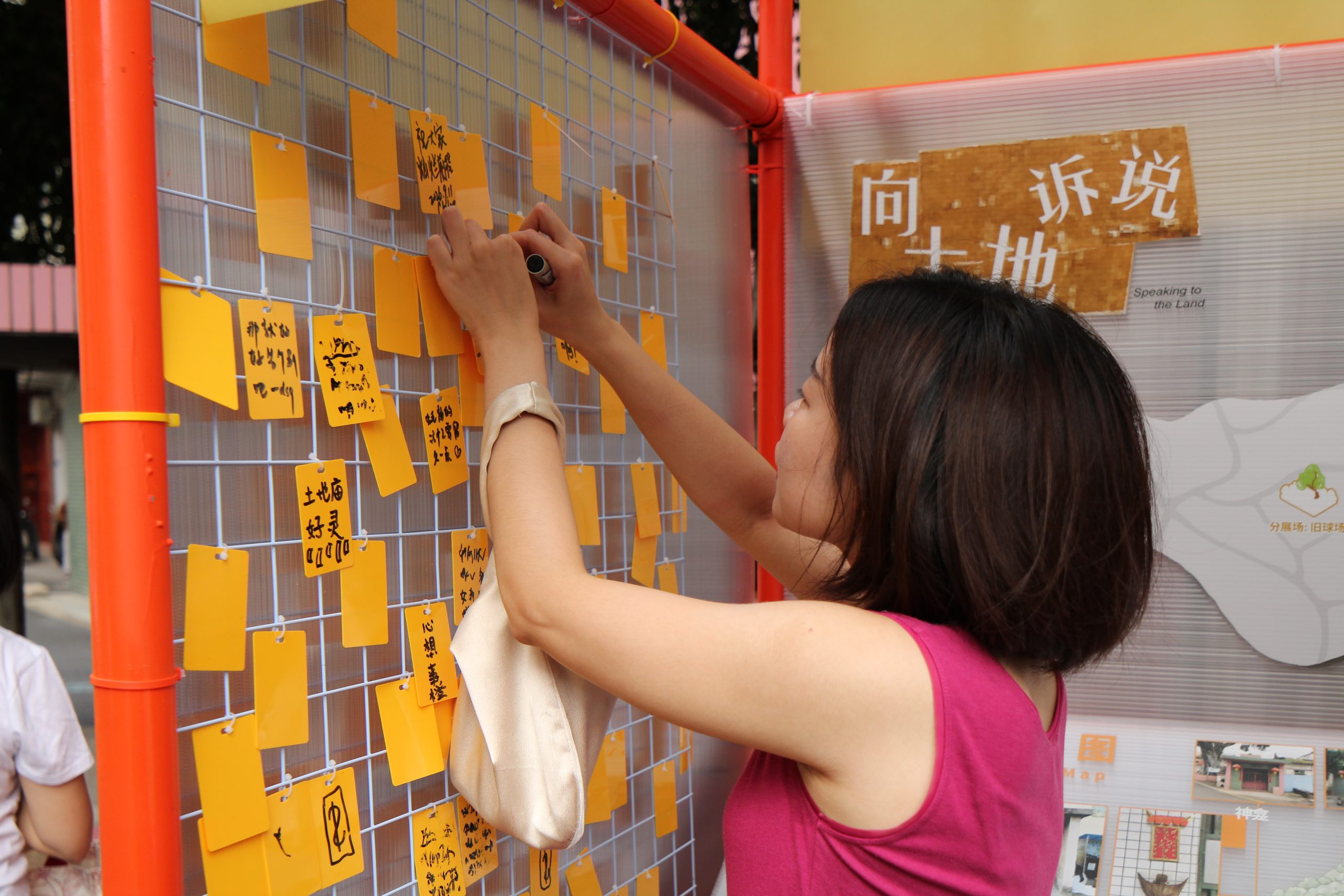
Speaking to the Land stands beneath a banyan tree beside the Earth God Temple and the Hao Yi Community Economic Cooperative. Orange scaffolding supports displays that connect local beliefs with residents’ memories, current needs and hopes for the village.
A map identifies eight representative shrines and temples, accompanied by photographs of the sites. The Wish Wall draws on the spatial form of the Earth God Temple, offering a place for people to leave messages. Here, the research process becomes a public record of what residents value and what they would like to change.
An exhibition among the market stalls
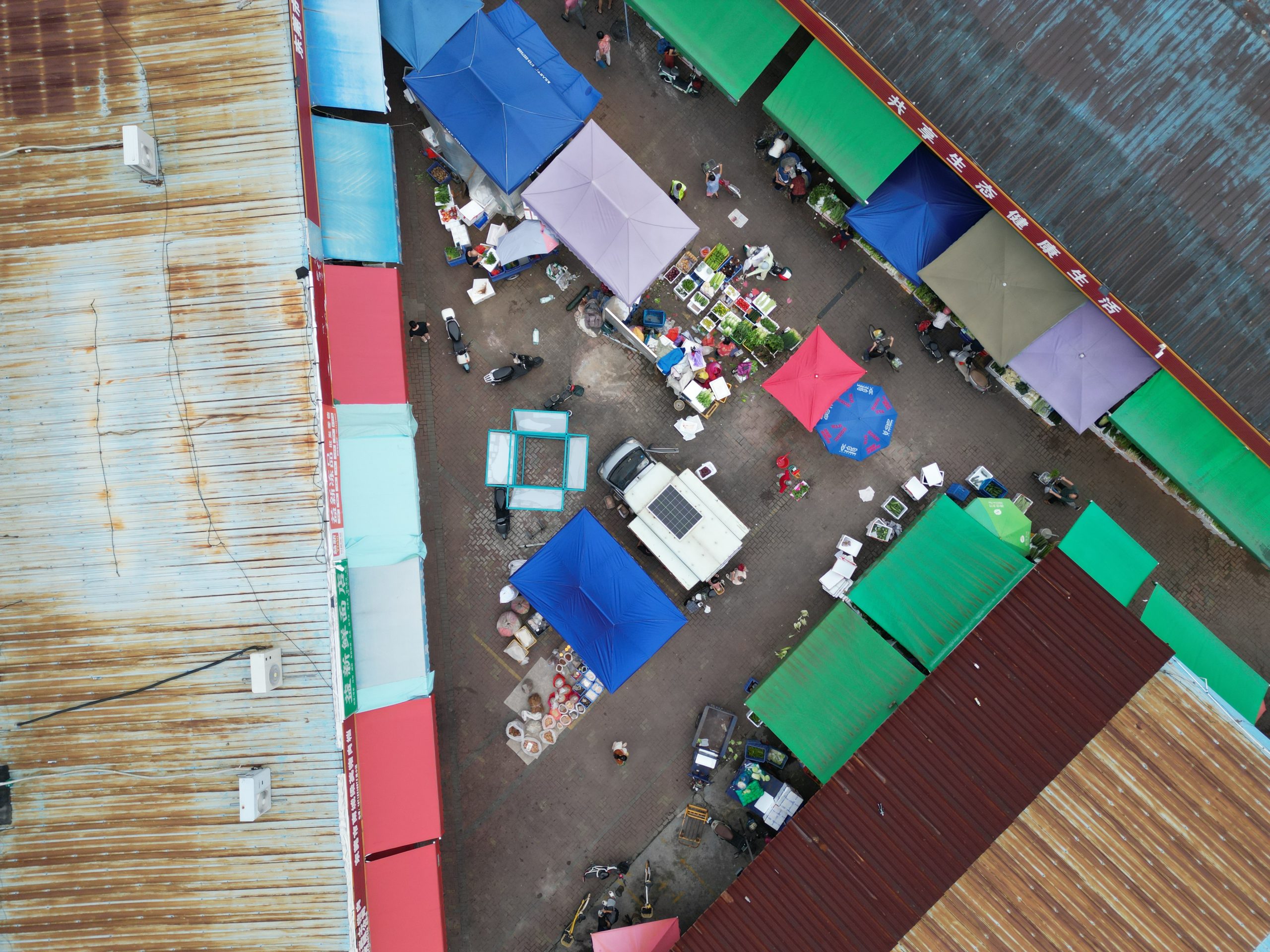
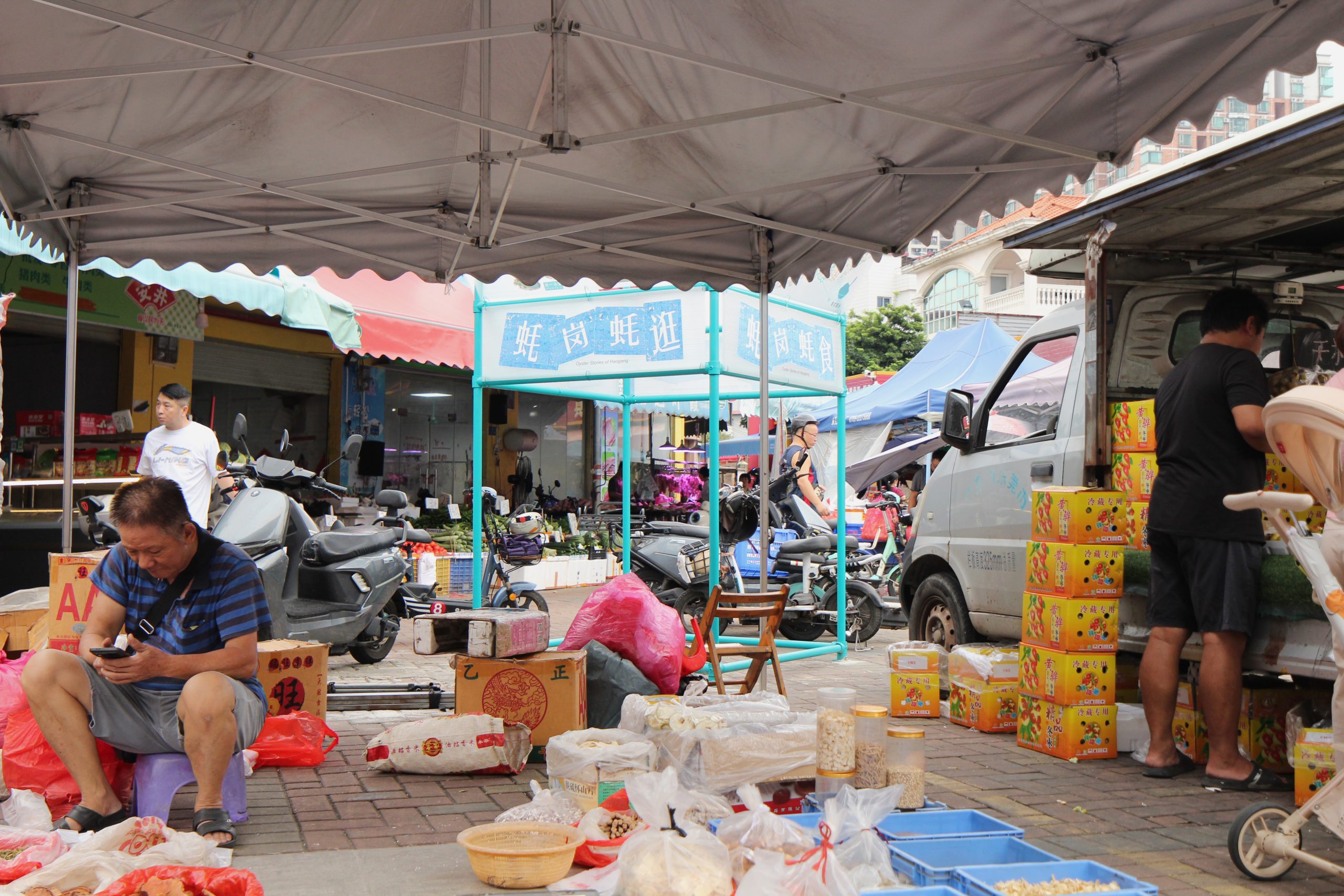
Haogang Comprehensive Market serves two different roles. During the day, residents come to buy groceries and everyday supplies. At night, it becomes one of the village’s few open gathering places, accommodating dancing and children’s play.
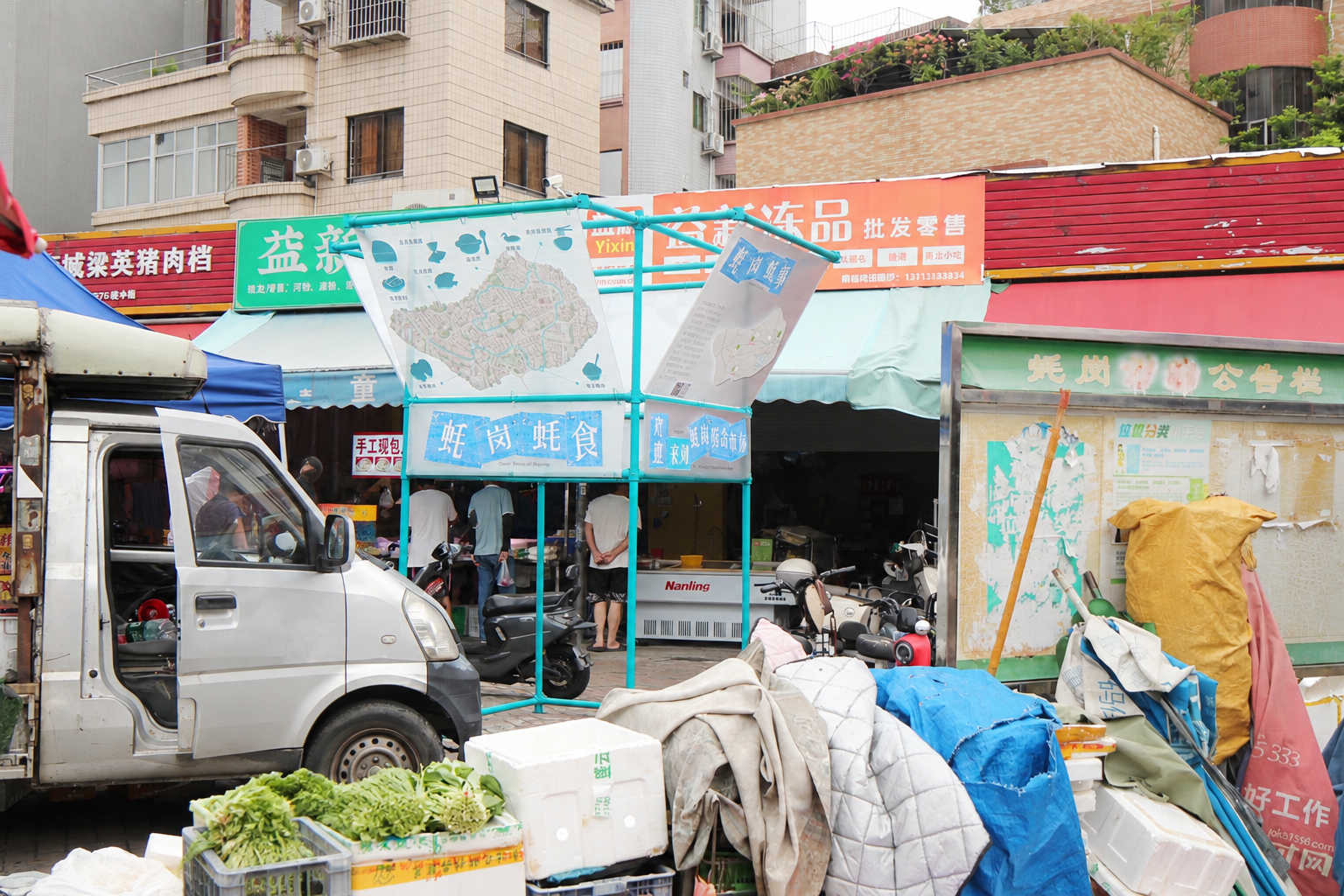
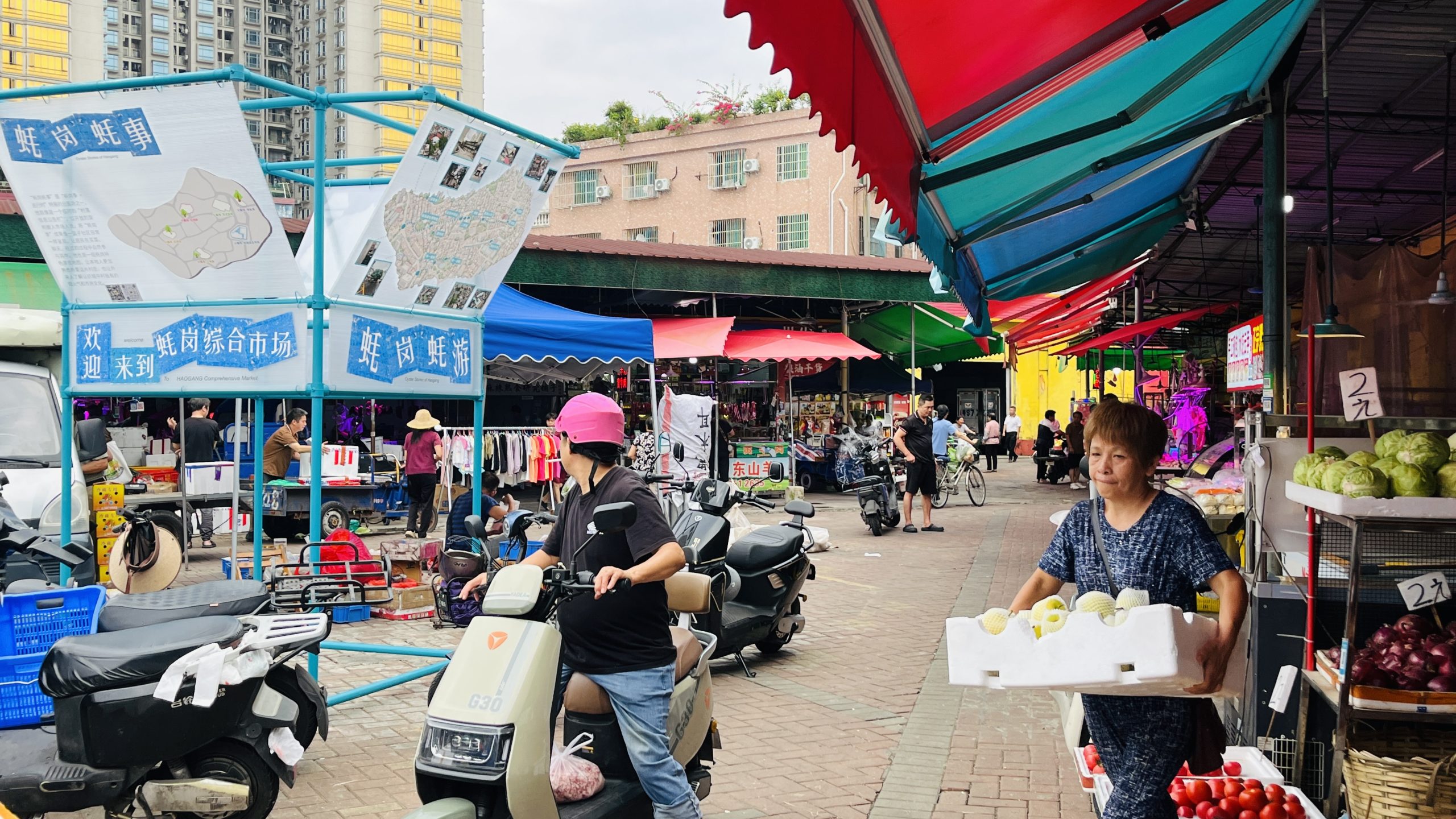
Oyster Stories of Haogang occupies its centre as a three-metre-high, open-framed bulletin board. Downward-tilting panels make the information readable to people passing below, while the blue structure echoes the market canopy.
Three illustrated maps, Haogang Play, Haogang Walk and Haogang Food, bring together public spaces, everyday routes, food culture and local memories. The display sits within the movement of shoppers and neighbours, making participation possible without a separate visit to an exhibition venue.
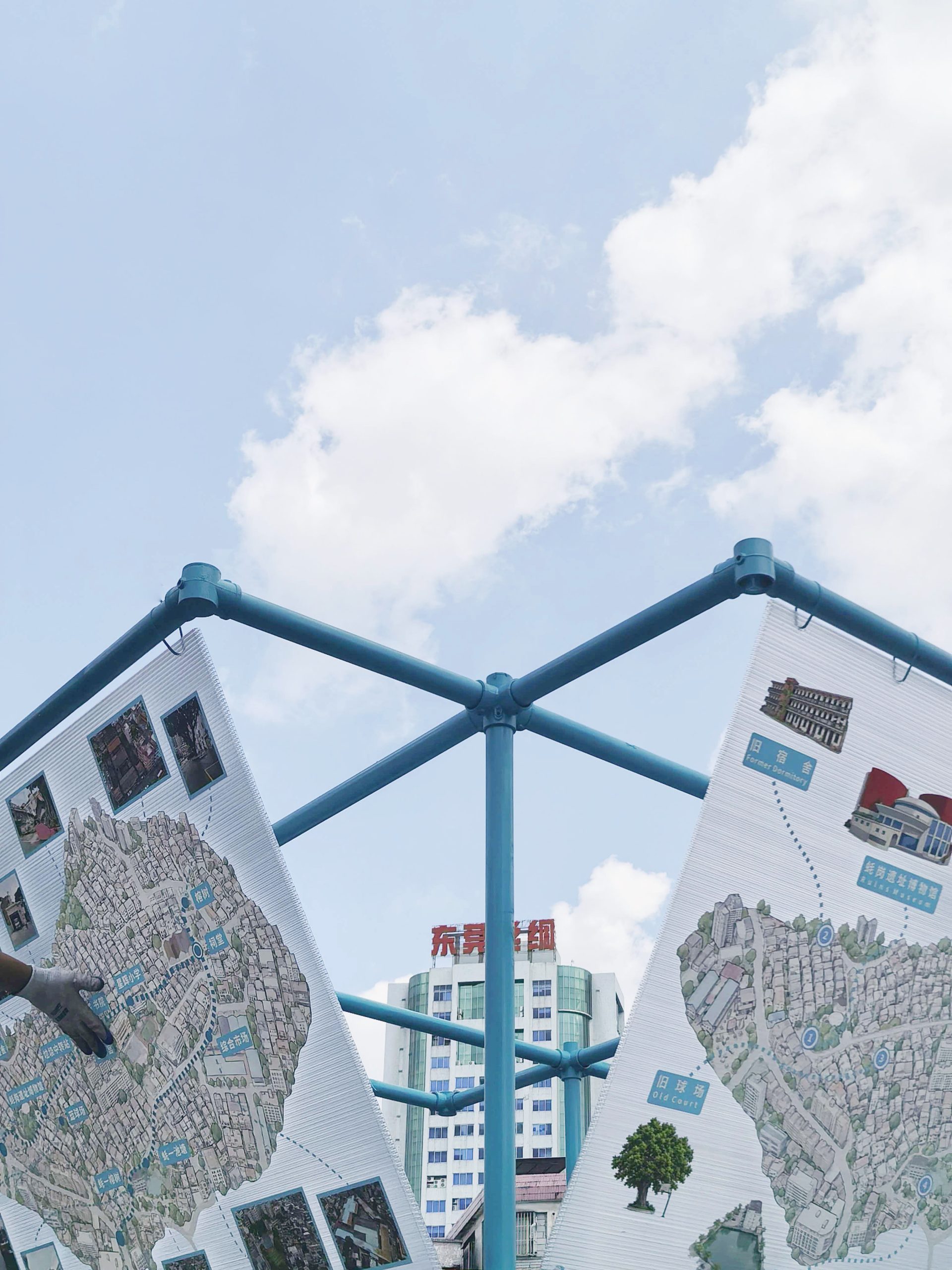
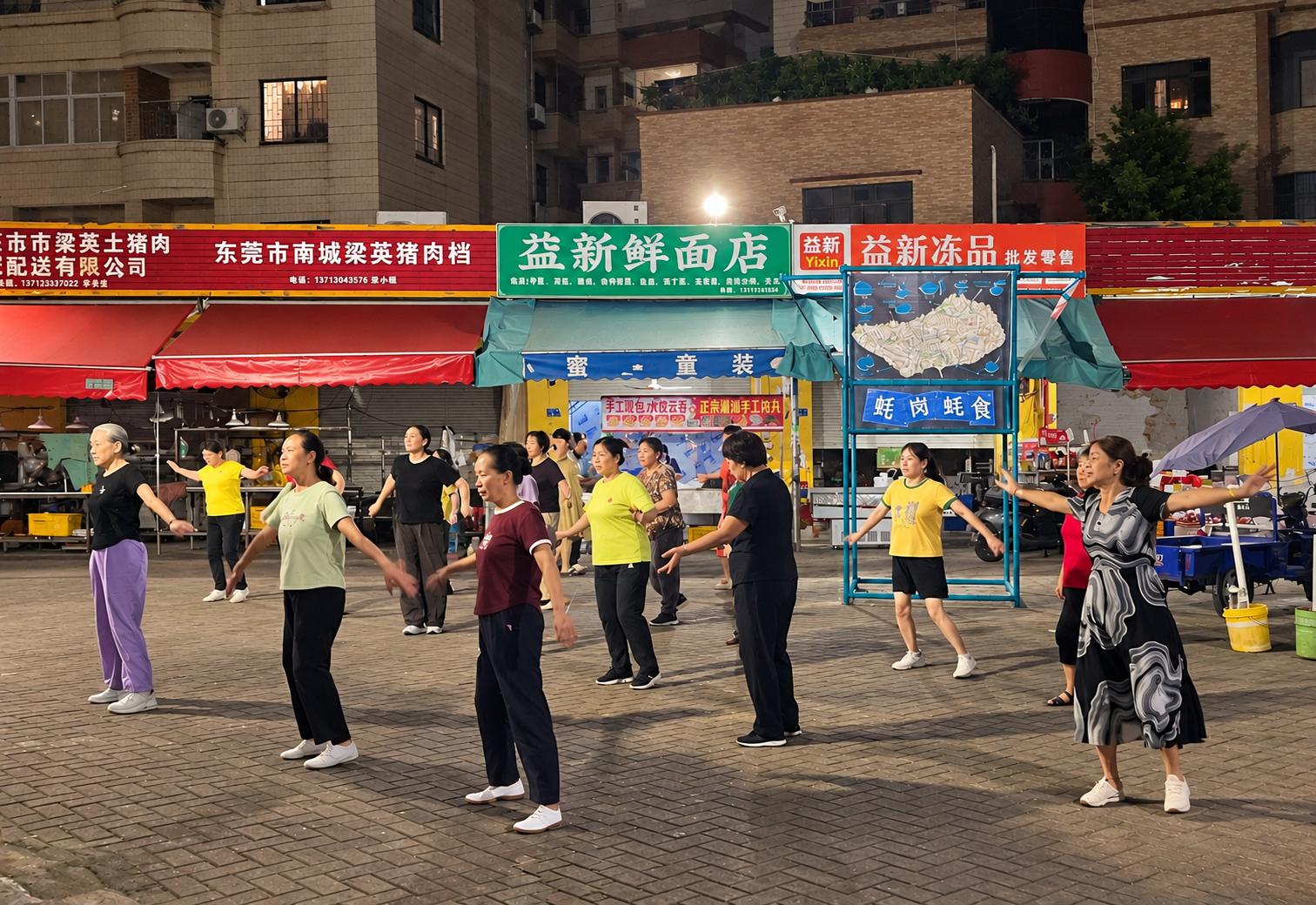
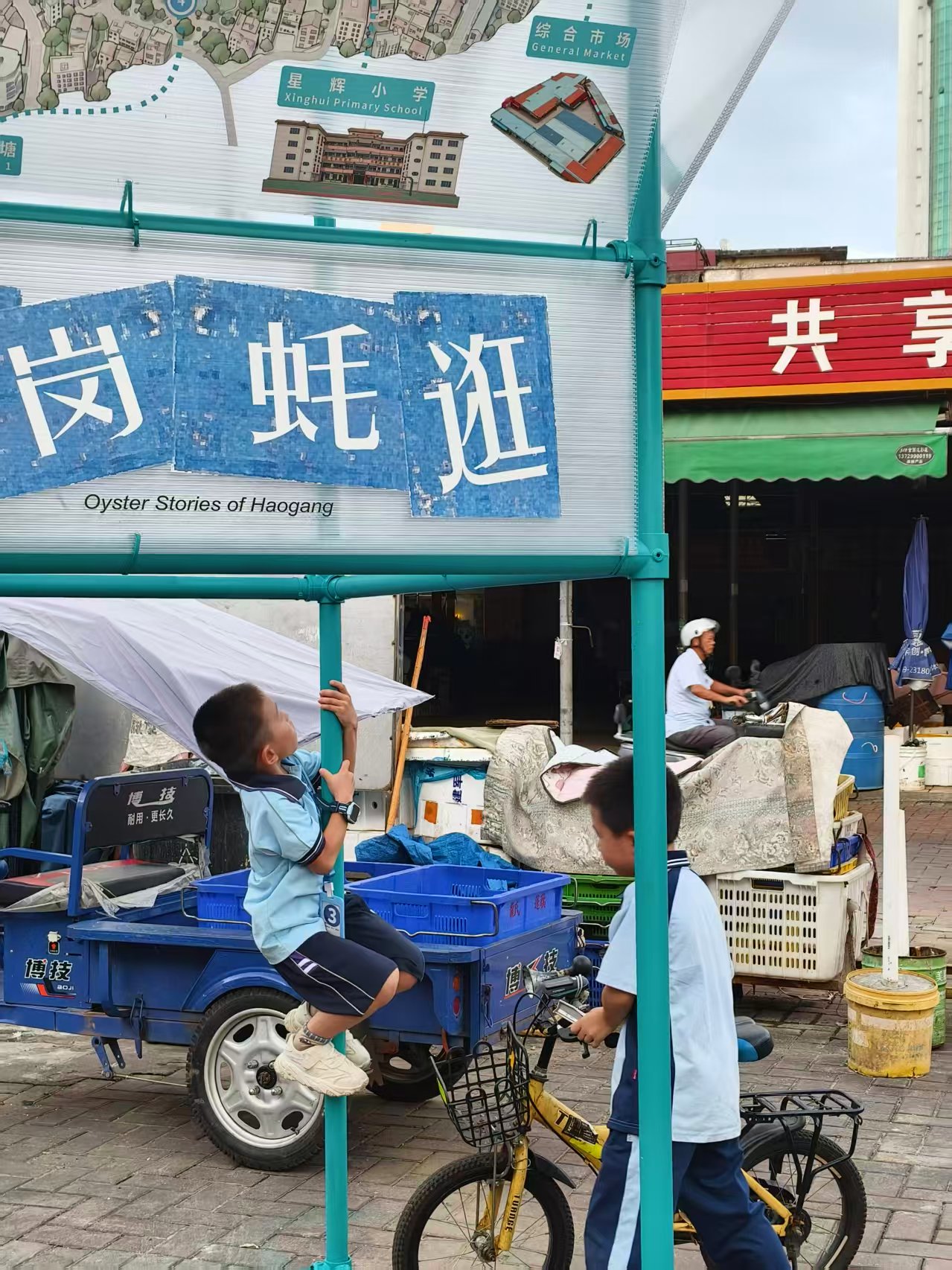
The six sites give physical form to questions that remain open. Their modest structures support activities already taking place while making residents’ experiences available for others to read, discuss and add to.
For IARA, “In Progress” describes the continuing work of listening and building relationships. The exhibition is an interim stage in that process: a way to test how urban renewal might begin with the people and routines that already sustain a place.
Project Credits
Exhibition: Haogang Ji – In Progress: A Publicness Experiment in an Urban Village
Practice: IARA / @iara_arc
Programme: IARA Urban-Rural Revitalization
Location: Haogang Village, Dongguan, Guangdong, China
Venues: Su Clan Ancestral Hall; Barber Pavilion beneath the Banyan Tree; Old Academy; Old Sports Ground; Earth God Temple; Haogang Comprehensive Market
Materials: Removable scaffolding and polycarbonate panels
Curatorial advisors: Liu Lubin, Zhang Jingqiu
Curatorial team: Chen Huishu, Chen Xuan, Chen Ziyang, Feng Mingyuan, Han Dan, Jiang Shan, Luo Rou, Liu Jianhong, Lv Yating, Wang Muqi, Wang Yifei, Yang Shanshi, Zhang Jie, Zhang Yarong
Photography: Bohong Zhang, Shanshi Yang, Jingqiu Zhang, Tianle Wu