
Now Reading: From industrial memory: Recasting a former factory’s print as contemporary cinema in Hanoi
- 01
From industrial memory: Recasting a former factory’s print as contemporary cinema in Hanoi

From industrial memory: Recasting a former factory’s print as contemporary cinema in Hanoi

In Hanoi, Vietnam, a former industrial printing plant once sat at the center of the city’s 20th-century media infrastructure. For decades, its presses produced newspapers, books, and documents that shaped public knowledge and everyday conversation. Long after the machines fell silent, the site still carried a cultural charge: a civic memory embedded in labour, ink, and circulation.

Today, the plot has been absorbed into a new commercial development. Rather than treating the change as a clean break, the design team approached the cinema inside the complex as a vessel for continuity. The ambition was not to preserve a building as an object, but to preserve a feeling of transmission, a sense that information once moved through this address and still can, in another form.

The project avoids literal reconstruction. Instead, it extracts the essential symbols of printing and reworks them as spatial language, turning industrial heritage into a contemporary interior narrative. The cinema becomes a medium in its own right, where architecture carries content as much as it frames experience.


Two references from letterpress typography anchor the concept. The first is the paper roll, understood as a metaphor for time and the ongoing flow of knowledge. It reappears as continuous bands of bent steel that sweep through the interior, drawing long arcs overhead and across key circulation points. These lines do more than decorate; they choreograph movement, produce rhythm, and subtly echo the steady perseverance of a printing press in operation.
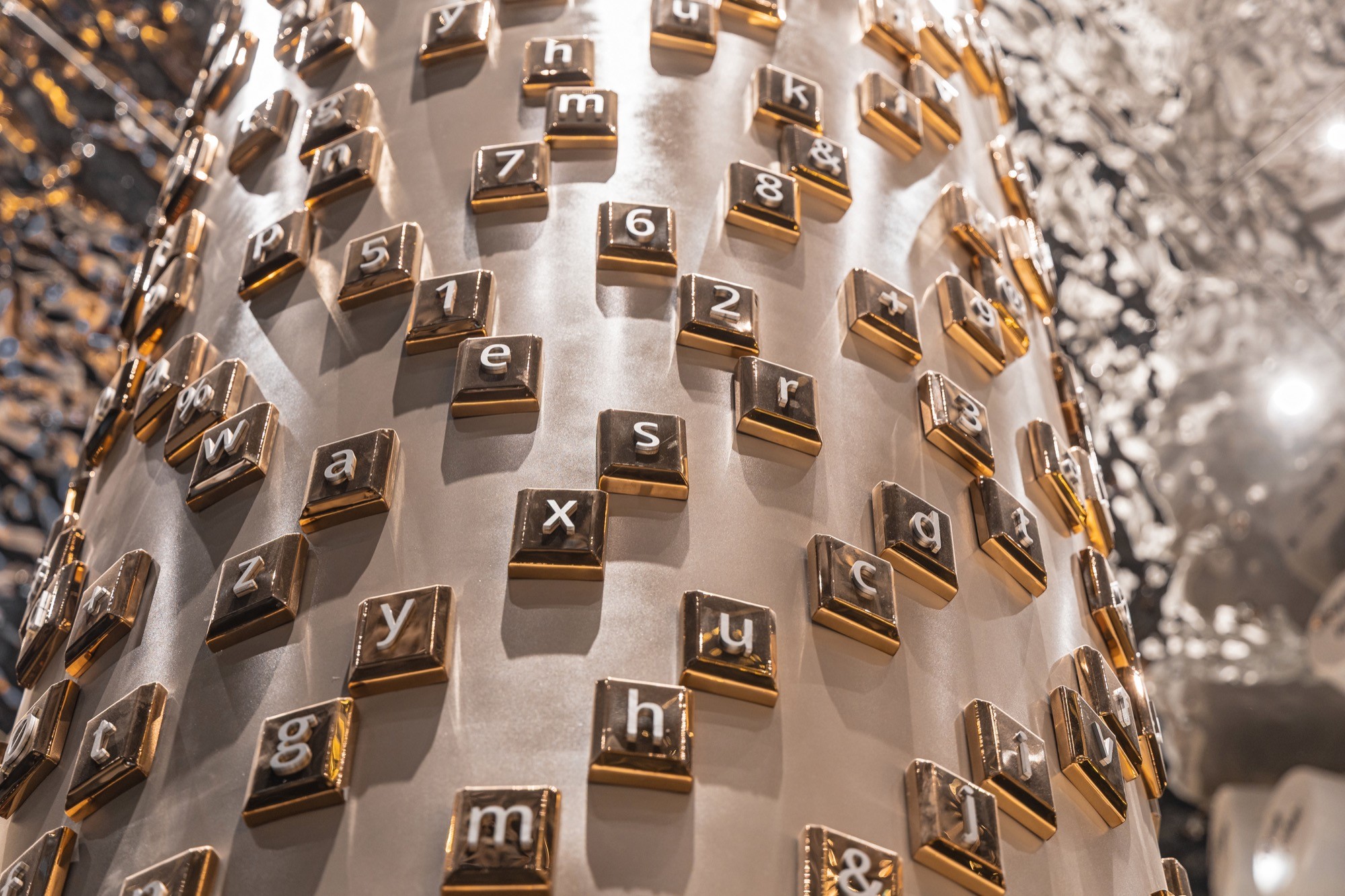
The second reference is movable type, the elemental unit of typographic production. Here, letterforms migrate from the page to the body of the building. In the lobby, primary columns are carved with characters, as if language itself has become structure. Seating adopts the silhouette of enlarged letters, merging function with identity and giving the waiting area a recognisable graphic presence.
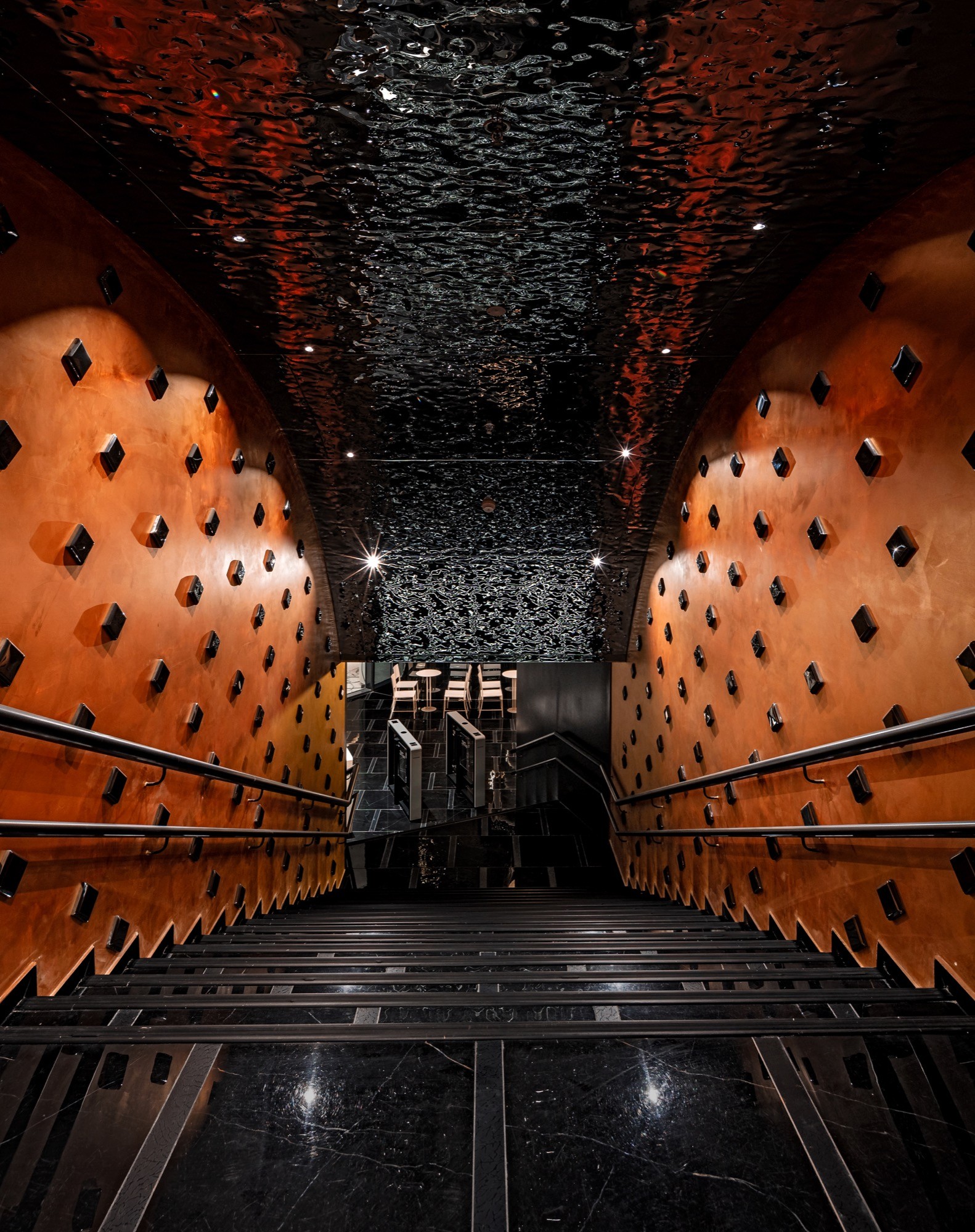


Inside the screening rooms, the walls take on a quieter register. A measured grid of square modules recalls the discipline of classic typographic composition, where the page is built from units, alignment, and spacing. The effect is deliberately subdued, creating a tactile backdrop that supports the immersive darkness of film while keeping the project’s conceptual origin legible.


By translating printing motifs into form, texture, and circulation, the cinema proposes a contemporary model of adaptive reuse. It suggests that industrial heritage in Hanoi does not need to survive only through façades or museum-like preservation. Memory can persist through design intelligence, through atmospheres that register what a place once did, and through spaces that continue to gather people around shared stories.

In this interior, the act of printing becomes an architectural idea. Knowledge once travelled as paper and ink; now it moves as light, sound, and collective attention. The cinema does not replicate the past. It rewrites it, ensuring the site’s history remains present, not as nostalgia, but as an active cultural layer within the city’s evolving urban fabric.


Project Credit
Design Firm: Avalo Interior Design / @avalo.nhadep
Location: Vietnam, Hanoi
Completed: 2025