
Now Reading: Ortega Diago renovates an apartment in San Sebastián with Campaspero stone interiors
- 01
Ortega Diago renovates an apartment in San Sebastián with Campaspero stone interiors

Ortega Diago renovates an apartment in San Sebastián with Campaspero stone interiors

On the seventh floor of a late nineteenth century residential building in San Sebastián, Spanish architecture studio Ortega Diago has completed Casa Kendo, a quiet renovation where natural light becomes the central architectural element. Rather than reconstructing historical references or emphasizing decorative gestures, the project turns inward, shaping a calm domestic environment through spatial clarity, continuous material surfaces, and the subtle modulation of daylight.

The elevated position of the apartment offers generous sunlight throughout the day, and the design transforms this condition into the driving force of the project. Light is not merely admitted into the space; it is structured, filtered, and reflected so that it becomes the primary agent shaping the atmosphere of the home.
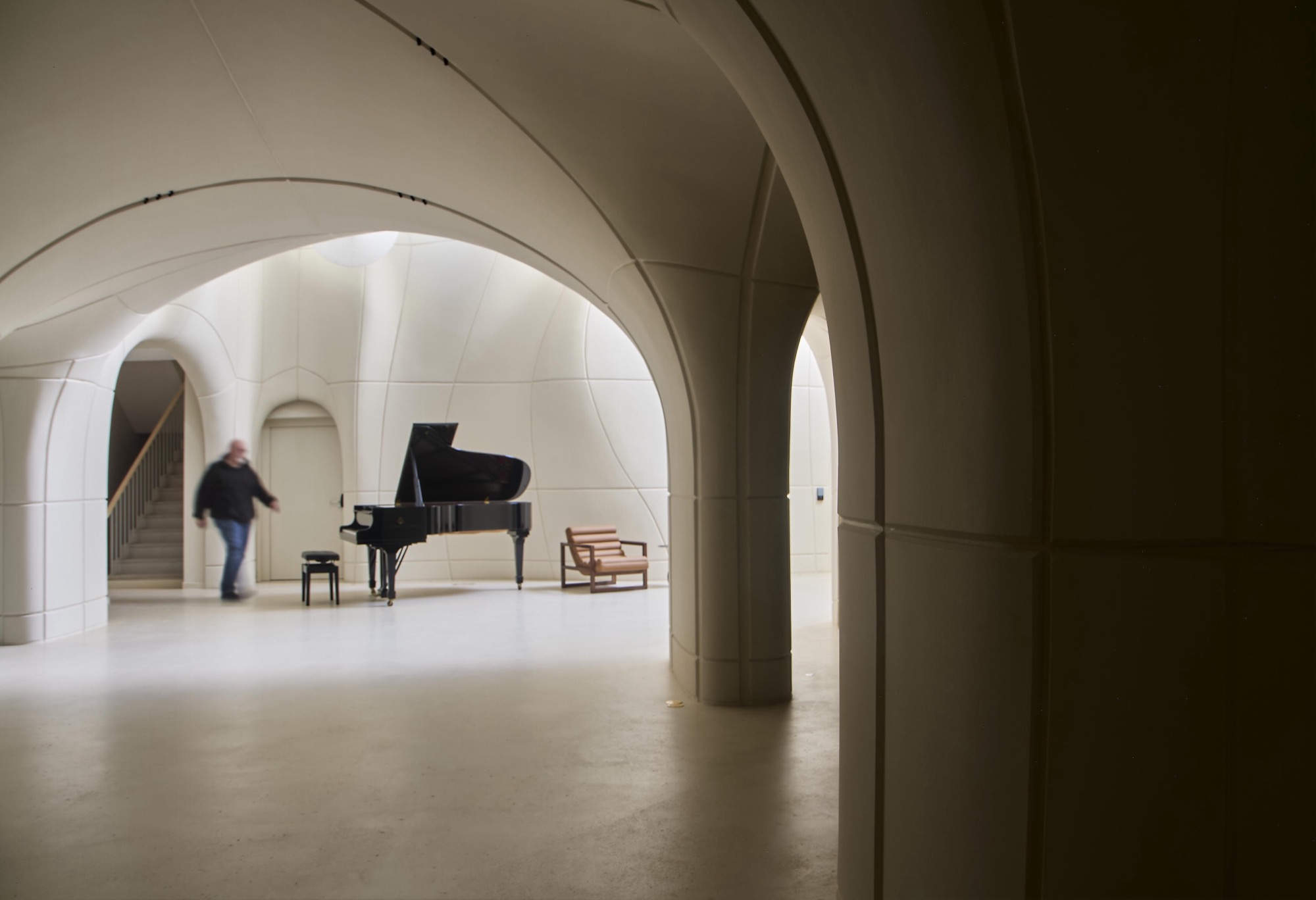
The organization of Casa Kendo is defined by a spatial sequence that prioritizes clarity and continuity. At the center of this strategy is a reconsidered hallway, traditionally treated as a narrow transitional space within domestic layouts. Here it is expanded and thickened, becoming an active architectural element that organizes the life of the apartment.


The corridor approaches the adjacent rooms and participates in them, acting less as a passage and more as a structural backbone. Bold volumes along this axis define the domestic rhythm of the interior while allowing different spatial scales to unfold gradually. The sequence is punctuated by carefully placed glass block screens that diffuse incoming daylight. These translucent surfaces soften the solidity of the walls while introducing a tactile layer that enhances visual continuity across the plan.


Materiality plays a crucial role in maintaining the quiet intensity of the interior. Ortega Diago selected sandblasted Campaspero stone as the project’s unifying material, allowing it to extend across floors and vertical surfaces as a continuous architectural canvas.
This choice produces an intentionally atonal environment that allows light to become the dominant presence in the space. The textured stone absorbs the strong daylight entering from the seventh floor while gently reflecting it back into the interior. During the late afternoon, when sunlight moves across the surface, the material acquires a warmer and more intimate depth, reinforcing the contemplative atmosphere of the home.
Rather than relying on contrast or visual spectacle, the architecture achieves its effect through subtle tonal variations and the careful orchestration of light across a restrained palette of materials.

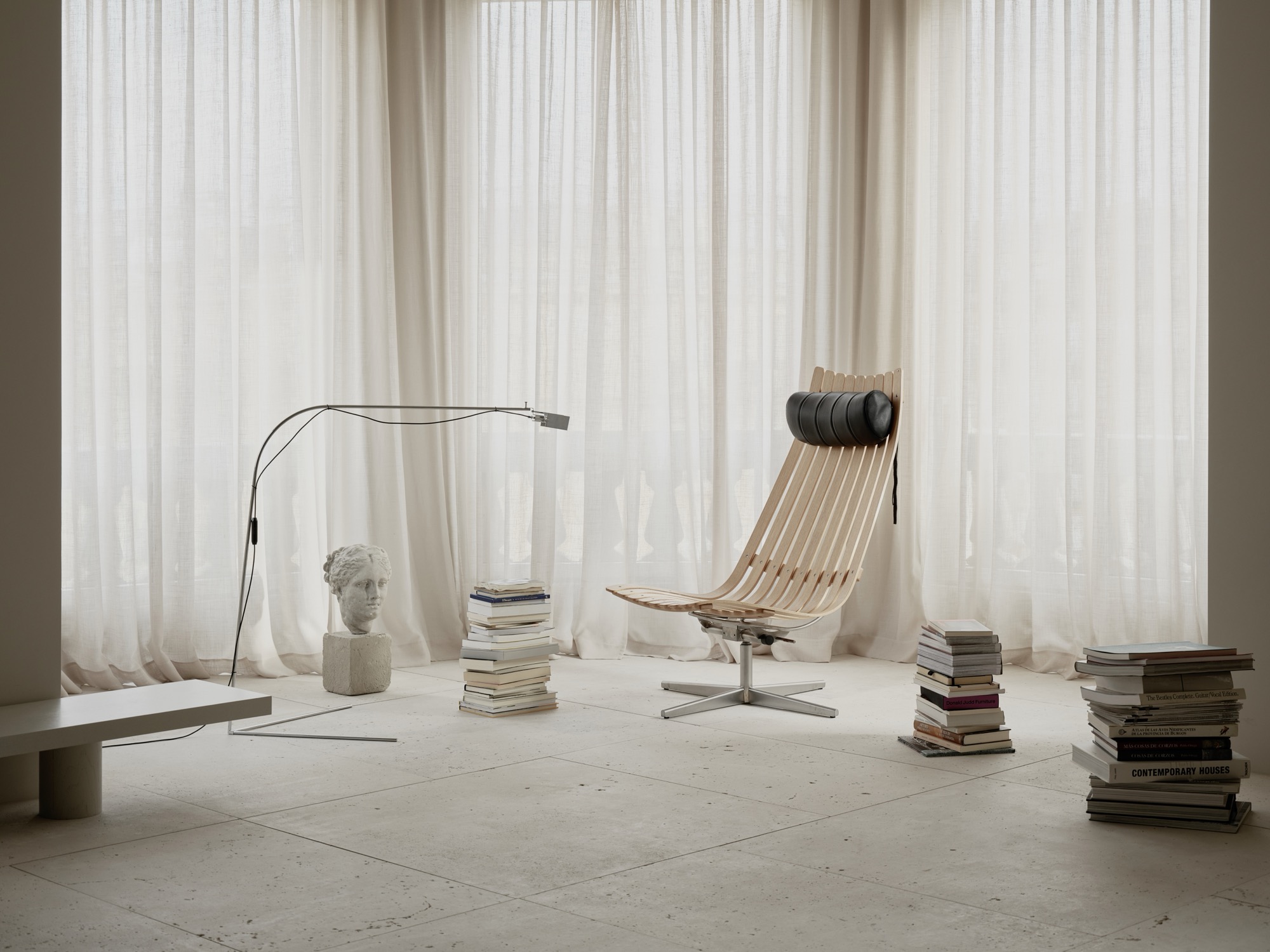
Within this restrained architectural setting, the interior design introduces a curated selection of furniture that complements the sobriety of the stone surfaces. Iconic pieces by Fritz Hansen, including the Ant chairs and the dining table designed by Bruno Mathsson, Arne Jacobsen, and Piet Hein, appear alongside the Scandia Easy Chair by Hans Brattrud for Fjordfiesta.


Lighting also contributes to the project’s quiet character. The Flamingo lamp designed by Álvaro Siza for Bd Barcelona and the Akari lamp by Vitra add sculptural light sources that echo the architectural emphasis on softness and atmosphere. Custom elements designed by the studio itself, such as the Tarugo Chair, integrate seamlessly into the composition and reinforce the project’s sense of coherence.


Technical lighting and fixtures by Vola complete the interior, supporting the calm, everyday functionality of the space while maintaining the overall material and visual consistency.

Casa Kendo ultimately proposes an architecture that does not seek attention through form or spectacle. Instead, the renovation constructs a quiet stage for daily life, where light, material continuity, and spatial rhythm create a subtle but deeply perceptible atmosphere.
Through the careful transformation of a historic apartment, Ortega Diago demonstrates how contemporary architecture can engage with existing structures without resorting to nostalgia. In Casa Kendo, the most powerful architectural gesture is not the addition of form but the orchestration of light.


Project Credit
Project name: Casa Kendo, Residential Renovation
Location: San Sebastián, Spain
Area: 170 sqm
Architecture: Ortega Diago / @ortegadiago
Photography: David Zarzoso / @david_zarzoso
Ortega Diago is an architecture studio based in San Sebastián and founded by Gonzalo Sánchez Ortega and Armando Diago. The practice works across residential architecture, renovation, and spatial design, often exploring the relationship between light, material continuity, and domestic experience. In 2023 the studio received the Peña Ganchegui Prize, a recognition that highlights emerging voices within Basque architecture. Alongside professional practice, the founders are actively engaged in academic research and teaching.