
Now Reading: Music Hall in the Sky: A Concert Room Carved from Tokyo’s Density
- 01
Music Hall in the Sky: A Concert Room Carved from Tokyo’s Density


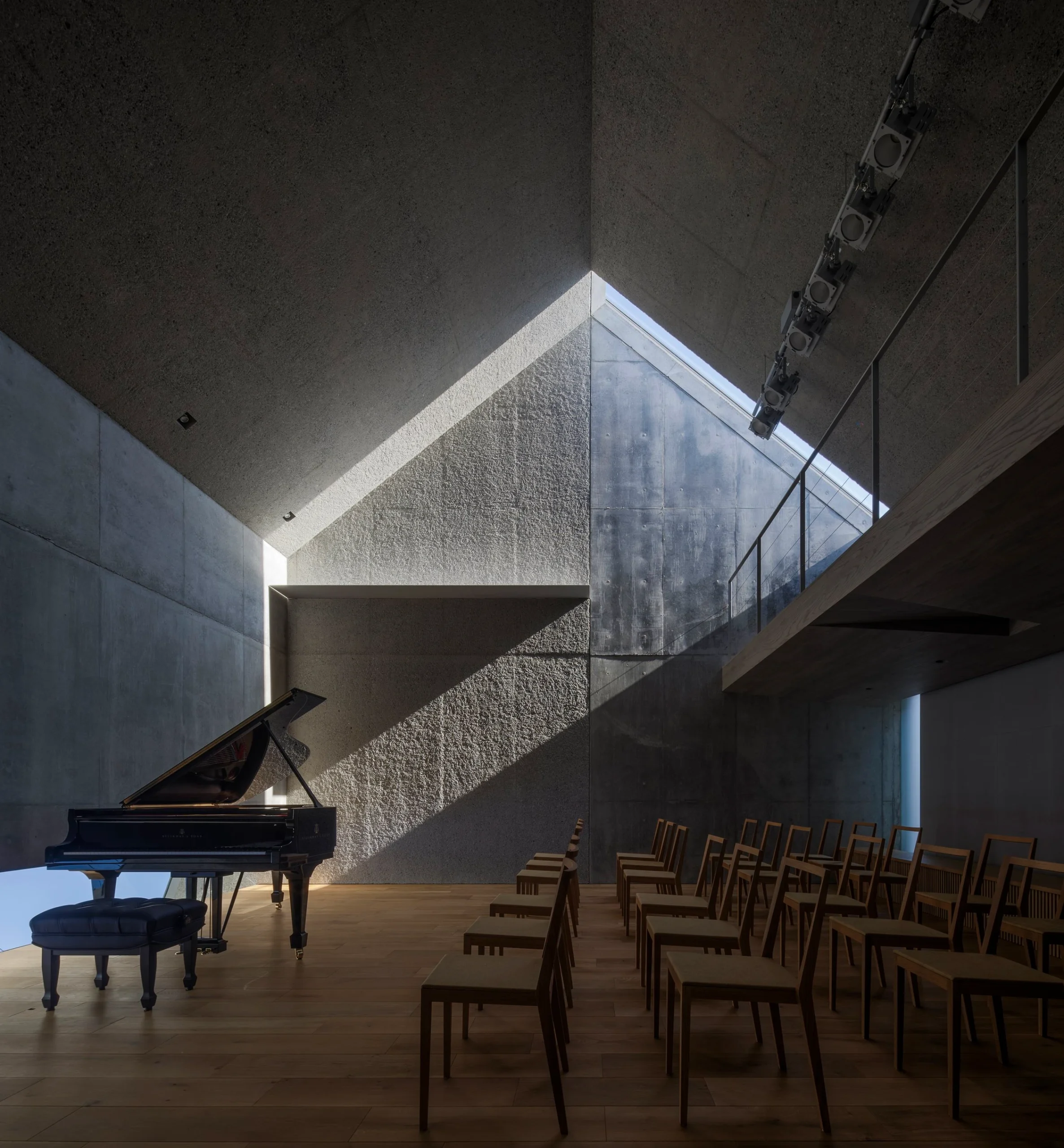
In the tightly wound grid of Tokyo’s residential fabric, Music Hall in the Sky by Takuro Yamamoto Architects arrives not with mass, but with absence. Completed in 2019, the 50 seat venue holds its ground through restraint. It does not compete with the city’s noise or the compactness of its surroundings. Instead, it withdraws, producing a rare sense of detachment in a neighbourhood where architecture usually presses shoulder to shoulder.
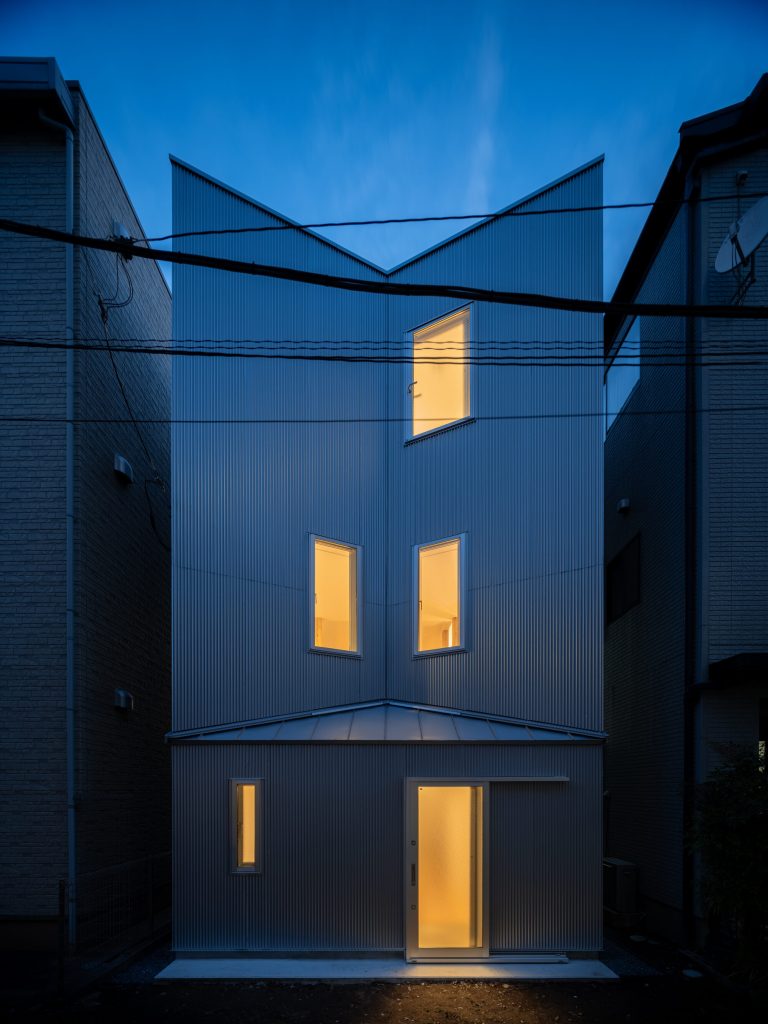
From the street, the building reads as a mute object. Its façade is monolithic, sharply edged, and ruled by a strict grid, closer to an abstract artwork than a signposting of programme. There is no invitation through transparency, no display of interior life. The refusal is deliberate. Rather than confront density, the project transcends it, turning opacity into a form of urban etiquette.


The concept is radical in its modesty. This is a concert hall that denies the city’s visual field while making space for the sky. In a typology that typically avoids windows to protect acoustics and focus, Yamamoto introduces light without surrendering to distraction. Skylights are placed with precision, and slim ribbon windows at foot level offer only fragments, never views. What enters is not scenery, but atmosphere.
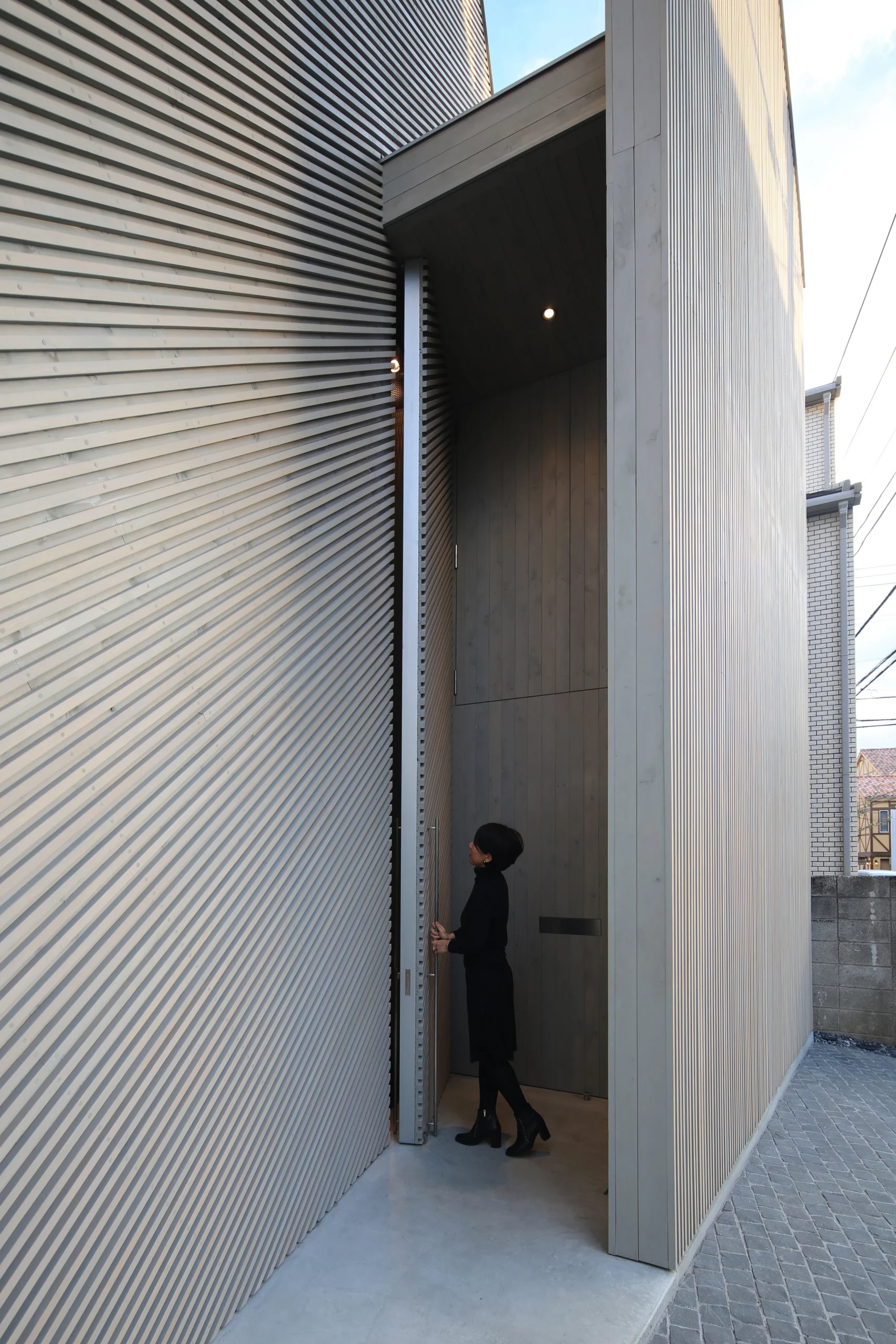
The effect is a subtle reorientation. The audience is not pulled toward ornament, landscape, or urban spectacle. Instead, the gaze lifts into an unframed expanse above, destabilising the usual expectations of an interior performance space. The architecture edits out Tokyo and replaces it with weather, time, and distance.

Inside, concrete is left bare, but nothing is casual. Surfaces are textured and absorbent, calibrated for acoustics and light. The hall’s austerity edges toward the ecclesiastical, not through symbolism but through rhythm. Light cuts across the angular ceiling, landing on the piano stage with a clarity that feels almost devotional. What could have been static becomes temporal. Shadows drift, brightness shifts, and the room measures the day as much as it hosts sound.


This is where the project’s emotional intelligence sharpens. The building does not rely on visual richness. It uses the movement of daylight to animate an otherwise ascetic palette, turning the interior into a kind of sensory instrument. The hall becomes less a container for music than a device for attention.
The interplay of light and mass, so central to Japanese spatial culture, is handled with surgical discipline. From the elevated position of the upper balcony to the intimacy of the lower dining kitchen zone, the spaces remain spare yet resonant. Concrete, often associated with heaviness, becomes meditative. Even a small framed artwork reads less as decoration than as a pause, a mark of scale, a quiet punctuation on an otherwise continuous surface.


More than acoustics or sightlines, the project is about orientation. By shielding the audience from the visual clutter of the city and offering abstract skyscapes instead, the hall fosters a kind of cognitive silence. It does not simply stage performance. It teaches listening, including the attention given to the intervals, the reverberations, and the space between notes.

In Music Hall in the Sky, the audience is still in Tokyo, yet perceptually elsewhere. Suspended above the neighbourhood’s density, they sit weightless, alert, and surrounded by sky.


Project Credit
Project name: Music Hall in the Sky
Design: Takuro Yamamoto Architects / @takuro_yamamoto_architects
Year: 2019
Location Tokyo, Japan
Images Ken’ichi Suzuki