Now Reading: Madrid apartment renovation Nolla House centres light and circulation on two patios
-
01
Madrid apartment renovation Nolla House centres light and circulation on two patios

Madrid apartment renovation Nolla House centres light and circulation on two patios

Set within a 1950s dwelling in Madrid’s Colonia de la Unión Eléctrica, this renovation begins with a paradoxical intention: to change everything without replacing anything. The project approaches transformation as a process of continuity, where intervention becomes a means of revealing rather than removing. Time is not erased but layered, allowing past and present to coexist within a single spatial narrative.


The intervention is guided by a fragmented Nolla mosaic floor discovered on the main level. From this condition emerges a precise methodology structured around three actions. Existing fragments are preserved as traces of memory. Lost elements are carefully recovered to reconnect with the original configuration. Gaps are filled with neutral surfaces, allowing absence to remain legible rather than concealed.


This logic extends across the entire house, from structural elements to minor details. Wooden ceilings, double-height spaces, original windows, and French doors are retained and restored, while wrought iron grilles and railings are reintroduced as part of a continuous architectural language. The project becomes a form of stitching, where each intervention connects what remains with what is newly introduced.


Colour operates as a fourth layer within this system. Rather than decoration, it acts as an organising device, echoing the hierarchy of the original mosaic. A neutral base unifies the interiors, while specific elements emerge through chromatic contrast and material distinction. Through this approach, colour defines spatial relationships and guides perception, reinforcing the dialogue between continuity and change.


In the main bedroom, the original roof beams are preserved within a double-height volume, amplifying the vertical dimension of the space. A false window introduces light and frames an artwork by painter Elvira Solana, adding a contemporary layer without disrupting the existing structure. The restoration of the Nolla flooring required an experimental process, developed through on-site testing to ensure fidelity to its original character.


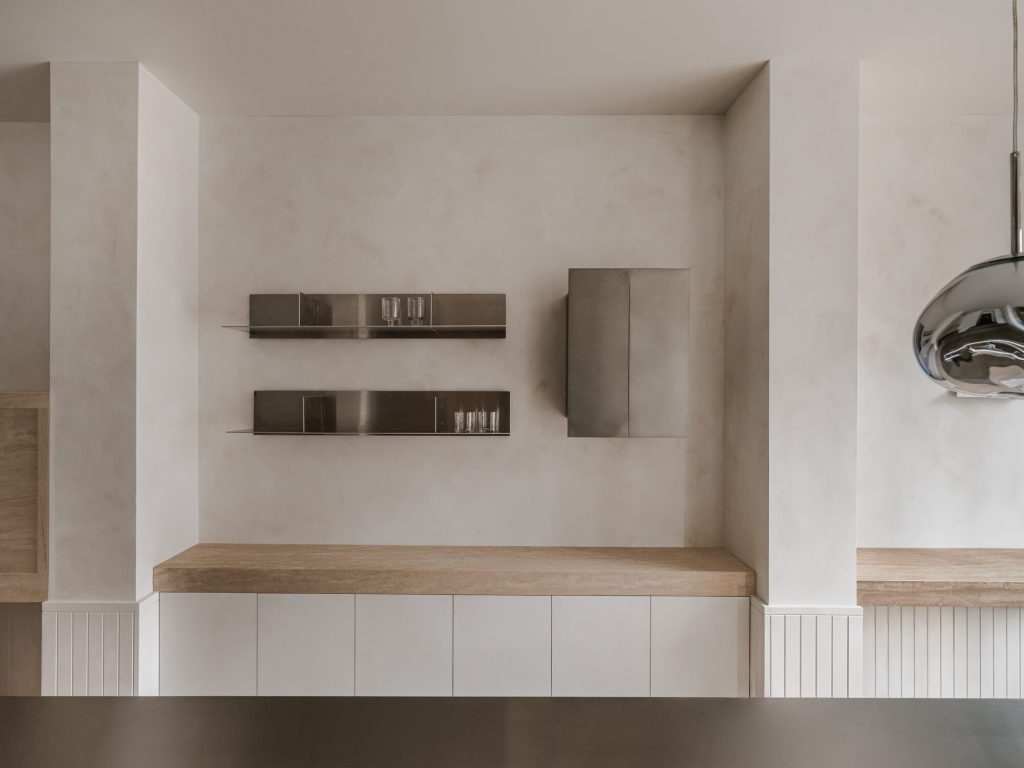
The kitchen introduces a more tactile contrast. Custom cabinetry in a deep caldron red tone merges with the ceramic flooring, while stainless steel surfaces mark moments of precision and contemporaneity. The result is a space where traditional materiality and modern functionality coexist without hierarchy.


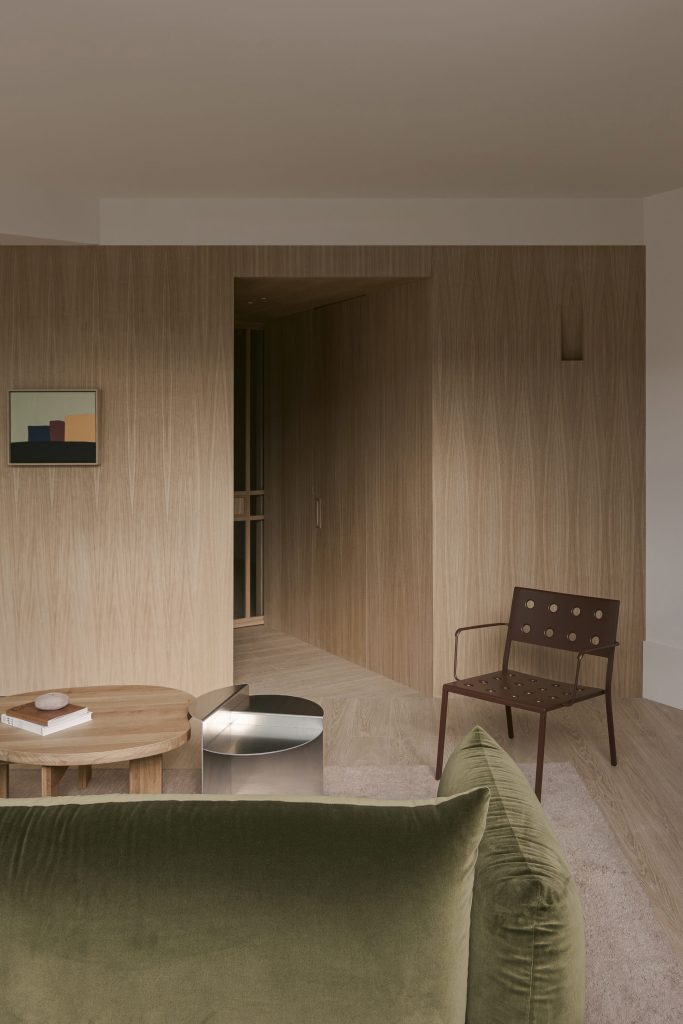
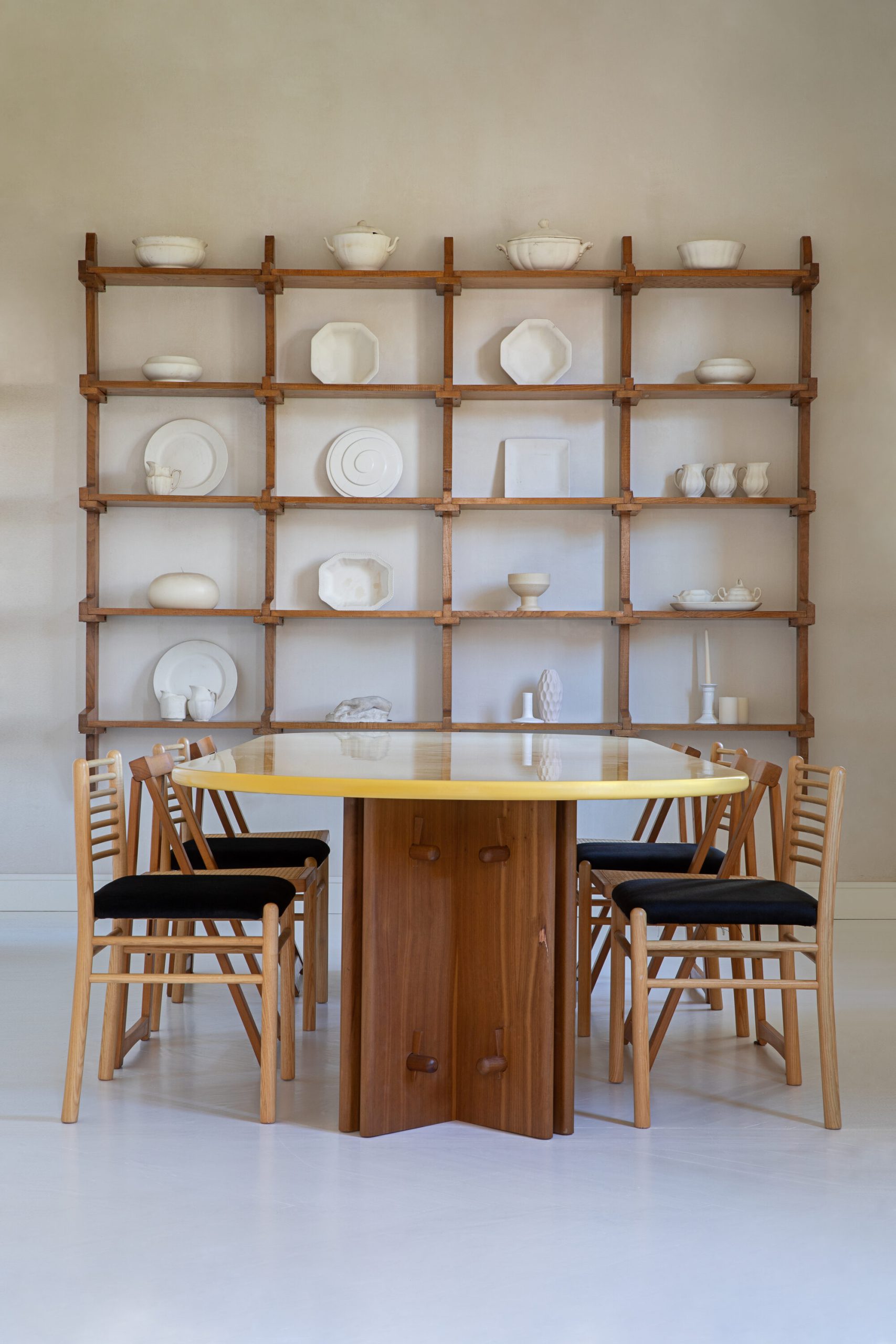
In the living and dining areas, the original wooden flooring is restored, reestablishing material continuity across the interior. Furniture designed by Marta Ordovás anchors the space, while a collection of objects, ranging from tableware to found pieces, introduces a layered domestic narrative shaped by use and memory.


The hallway emphasises continuity through detail. A restored railing is highlighted with a high gloss lacquer finish, transforming a functional element into a visual marker. Here, colour reinforces spatial perception, aligning with the broader chromatic logic derived from the mosaic.


Throughout the house, architecture operates as a system of relationships rather than isolated gestures. Materials, colours, and forms interact to construct a cohesive environment where time remains visible. The project does not seek to recreate the past, but to extend it, allowing new layers to emerge without erasing what came before.
Project Credit
Project name: Mosaic House
Design firm: NULA.STUDIO | @nula.studio
Location: Madrid, Spain
Photo: Asier Rua / @asierrua, Elena Salas
With: Marta Ordovás, Pilar Llado