Now Reading: Adaptive reuse is a process of clarification rather than transformation
- 01
Adaptive reuse is a process of clarification rather than transformation


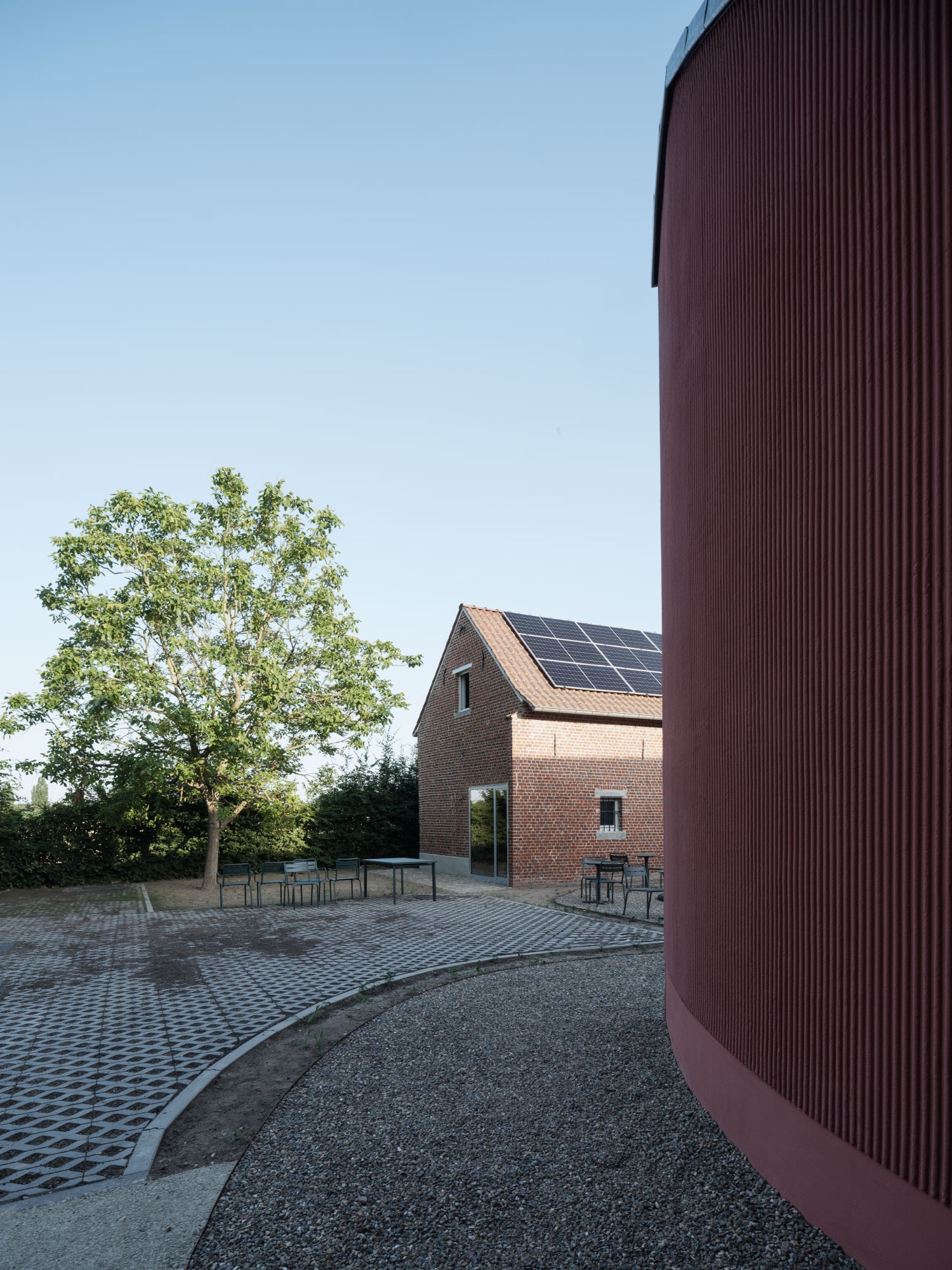
Within the protected landscape of Gaasbeek Castle park, the transformation of a historic farmhouse and barn into a restaurant unfolds as a careful act of alignment rather than intervention. Led by i.s.m.architecten in collaboration with Origin Architecture & Engineering, the project approaches heritage not as a constraint, but as a framework through which contemporary use can be articulated with clarity and restraint.
In this conversation, architect Hannah Corbett reflects on the design process behind the project, discussing how subtle spatial adjustments, material continuity, and technical precision allowed the existing structures to accommodate a new program. The dialogue reveals an approach to adaptive reuse that privileges continuity over contrast, and understanding over transformation.


What led you to transform this farmhouse and barn into a restaurant? And how did the rural setting of Gaasbeek shape your thinking?
The project is situated within the protected landscape of Gaasbeek Castle park. From the outset, the aim was to strengthen the relationship between the historic farmstead and its surrounding landscape. The design was developed as a collaboration between our office and Origin Architecture & Engineering, combining architectural and technical expertise to carefully integrate a contemporary programme within the existing ensemble.
Rather than introducing a new architectural language, the project builds upon the spatial logic of the existing structures and reconnects the buildings with the broader infrastructure of the castle park.
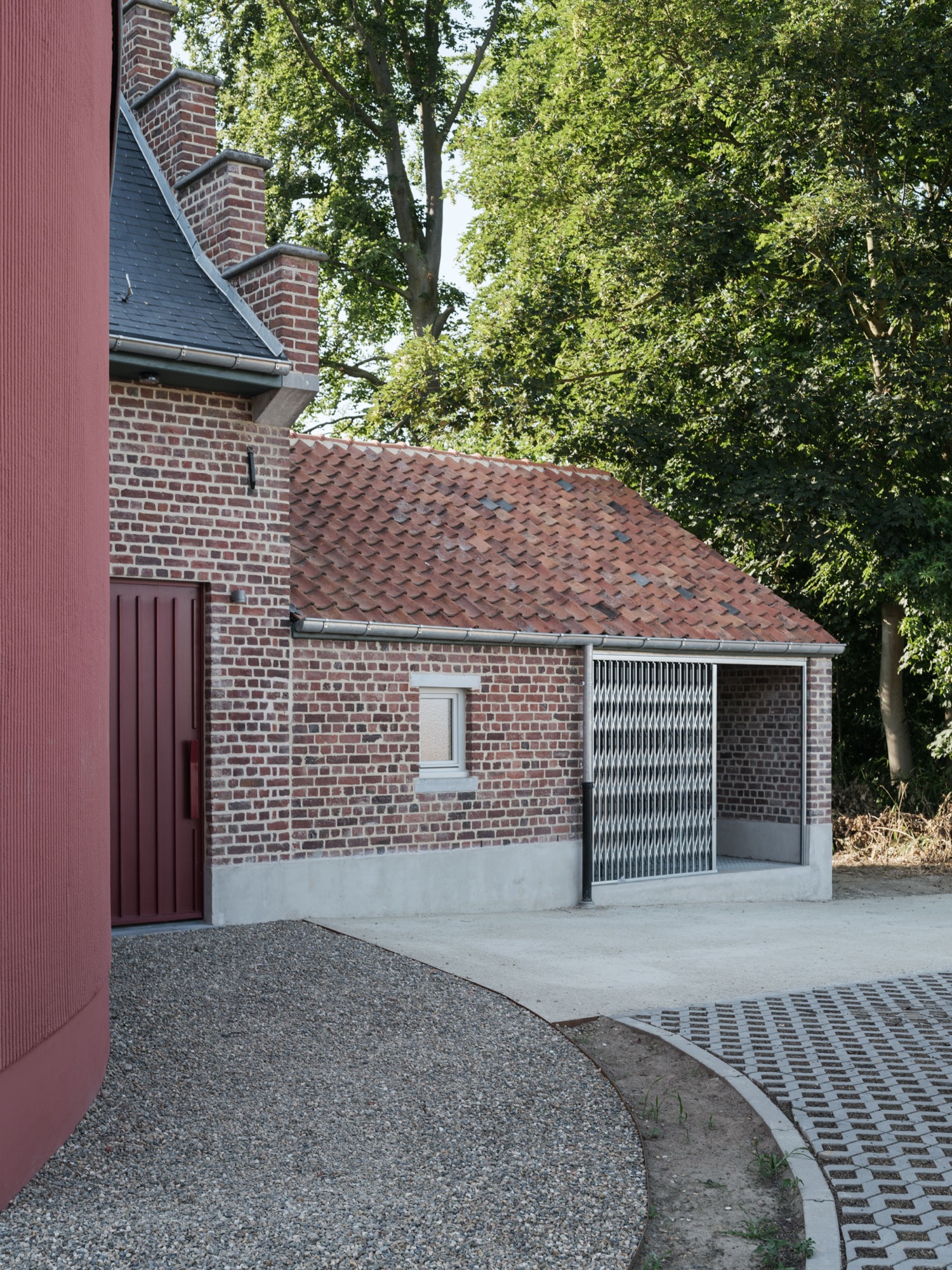
Your work here feels very restrained. How would you describe this approach of making subtle interventions while keeping the original character intact?
The design approach was based on reinforcing the qualities already present in the historic ensemble. The existing structures provide a strong and legible framework, allowing contemporary interventions to remain precise and limited.
Within the collaboration with Origin Architecture & Engineering, architectural and technical decisions were developed in parallel, ensuring that spatial interventions, building performance, and heritage considerations supported each other.
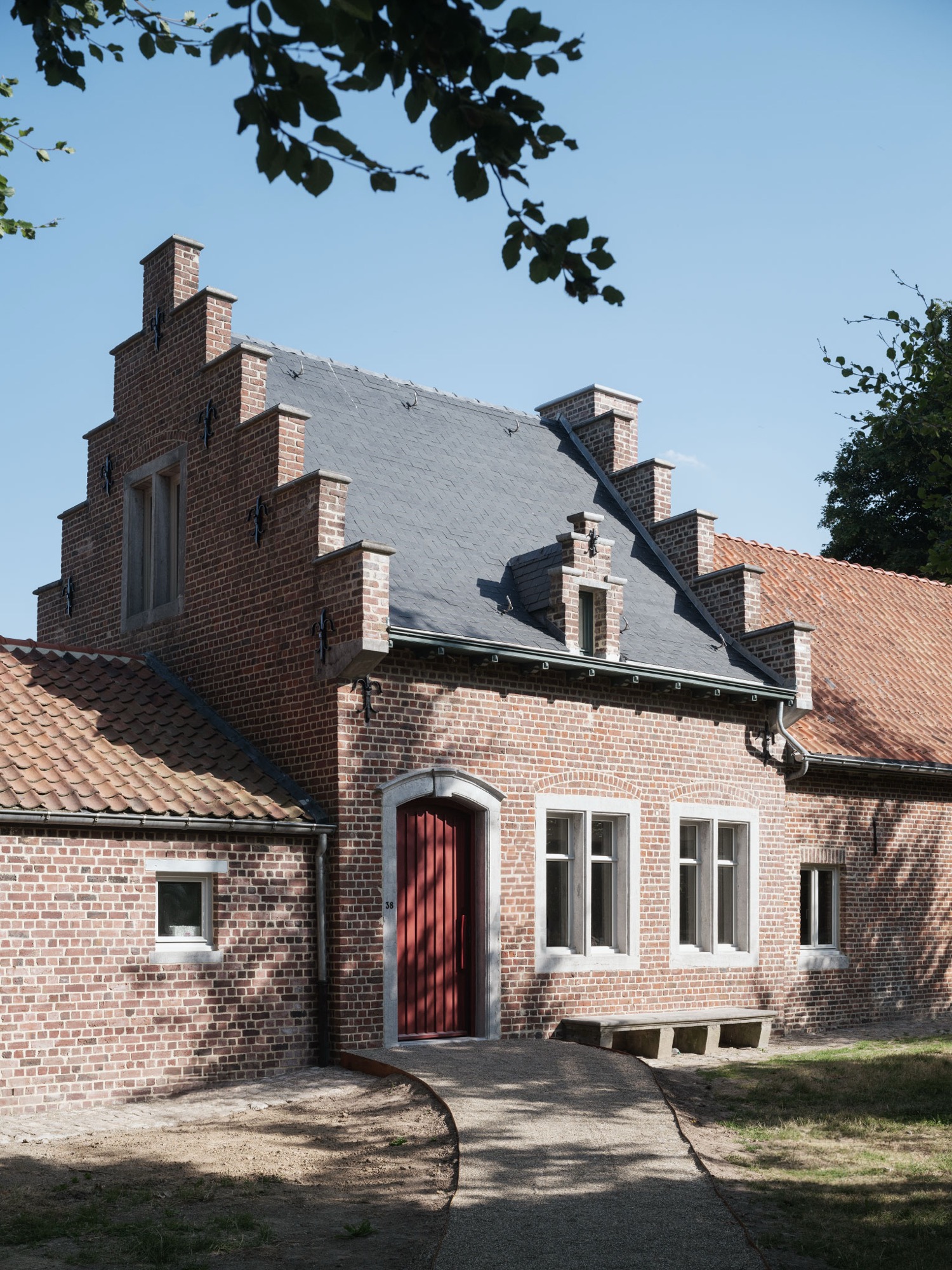
There’s a strong sense of time in the materials. How did you approach preserving that patina while introducing contemporary elements?
Respect for the existing material fabric was a central concern. The buildings carry traces of time in their masonry, timber structures, and finishes, which strongly contribute to the atmosphere of the spaces. New interventions are introduced as contemporary layers that complement rather than imitate the historical structure. Through the collaboration between both offices, architectural design and technical detailing were carefully aligned to maintain clarity in the dialogue between old and new.
The new openings seem to reframe the building. What guided their placement, and how do they change the spatial experience?
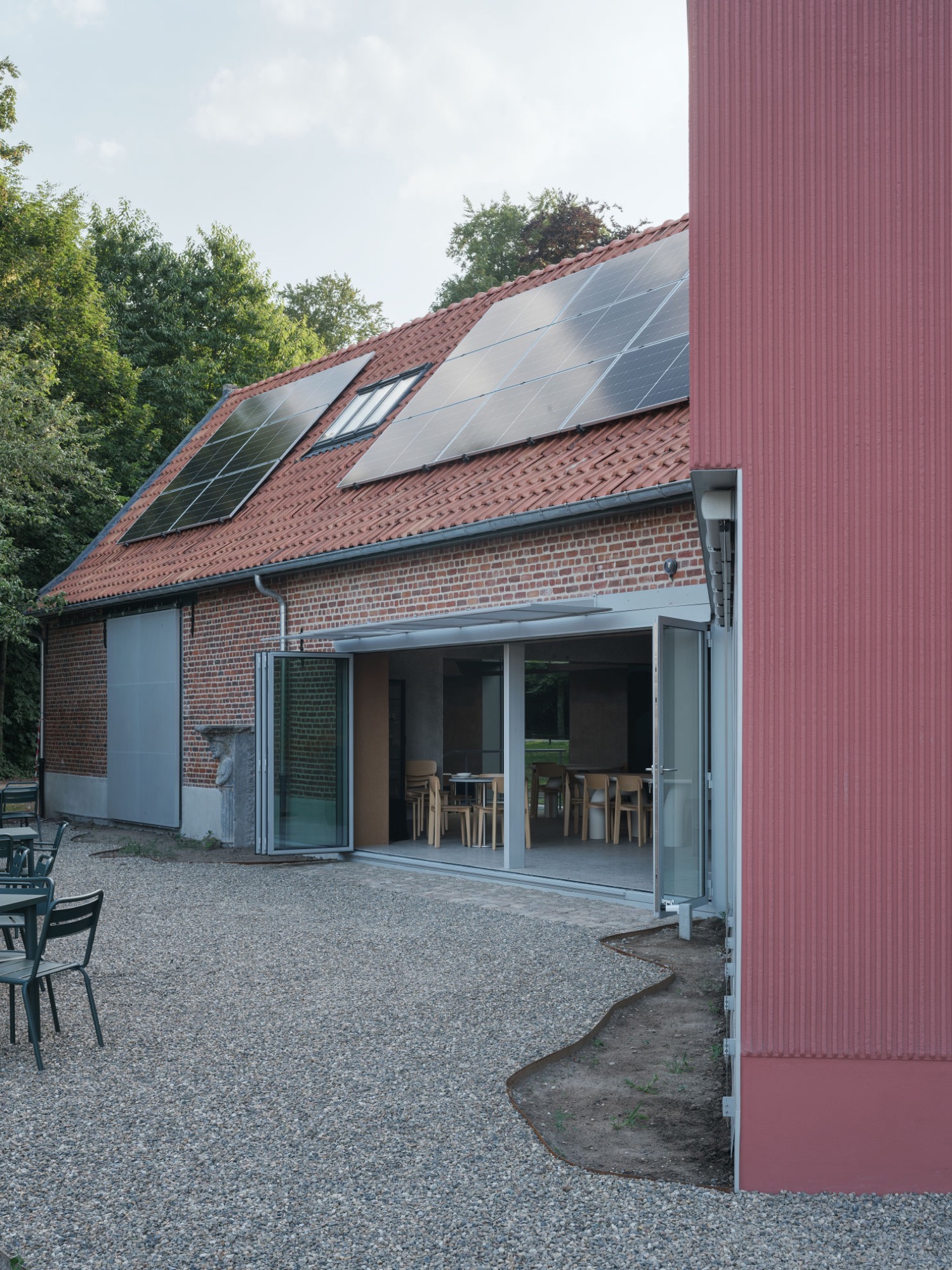
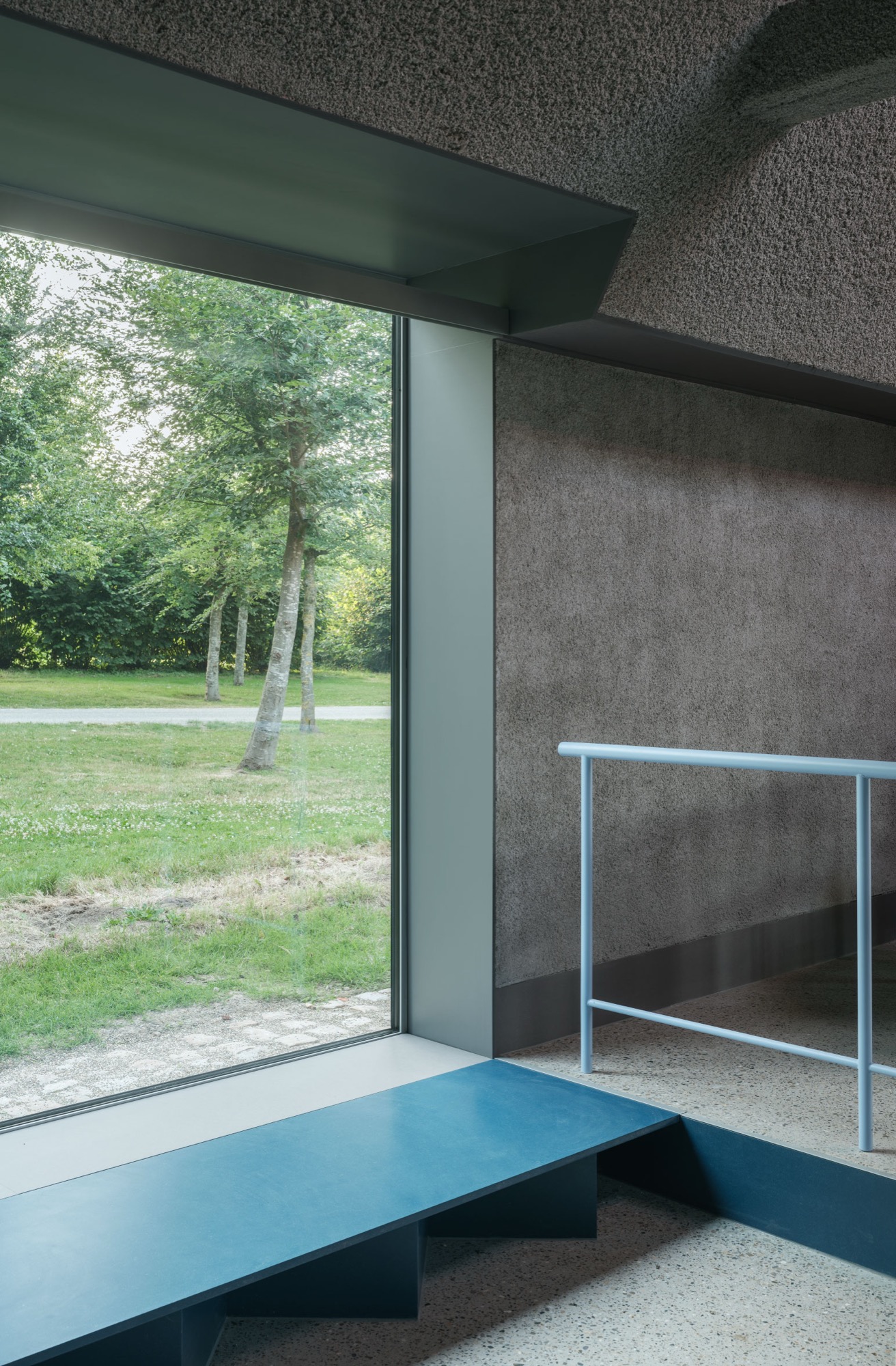
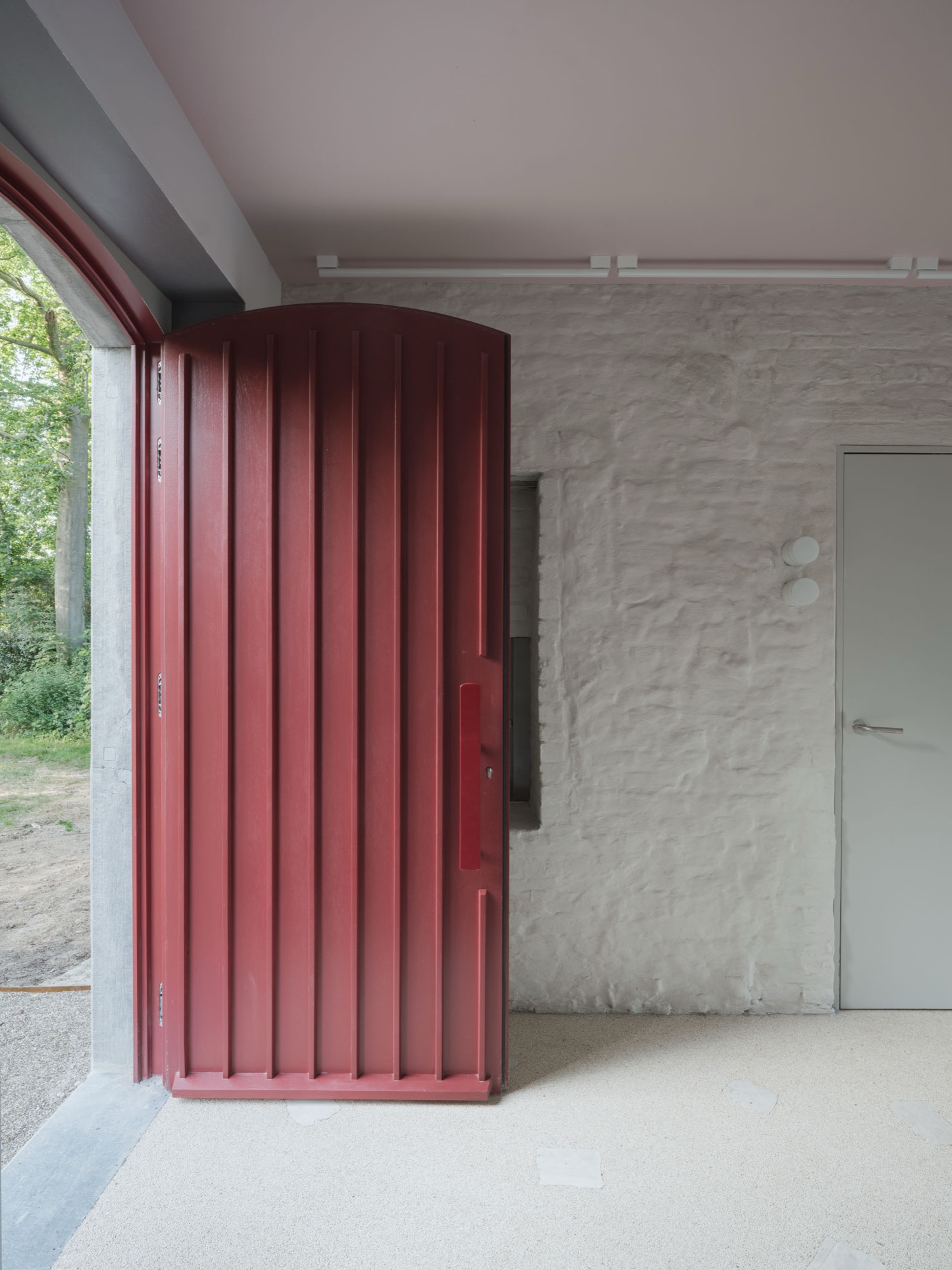
New openings were introduced to improve spatial continuity and daylight conditions within the existing structures. In both the farmhouse and the barn, these apertures extend visual connections through the building and towards the surrounding landscape.
They also reveal the activity of the restaurant to the outside and strengthen the relationship between interior spaces, the courtyard, and the park landscape.
When you started opening up the interiors, how did you decide what to remove and what to keep? And how did that shape the layout?
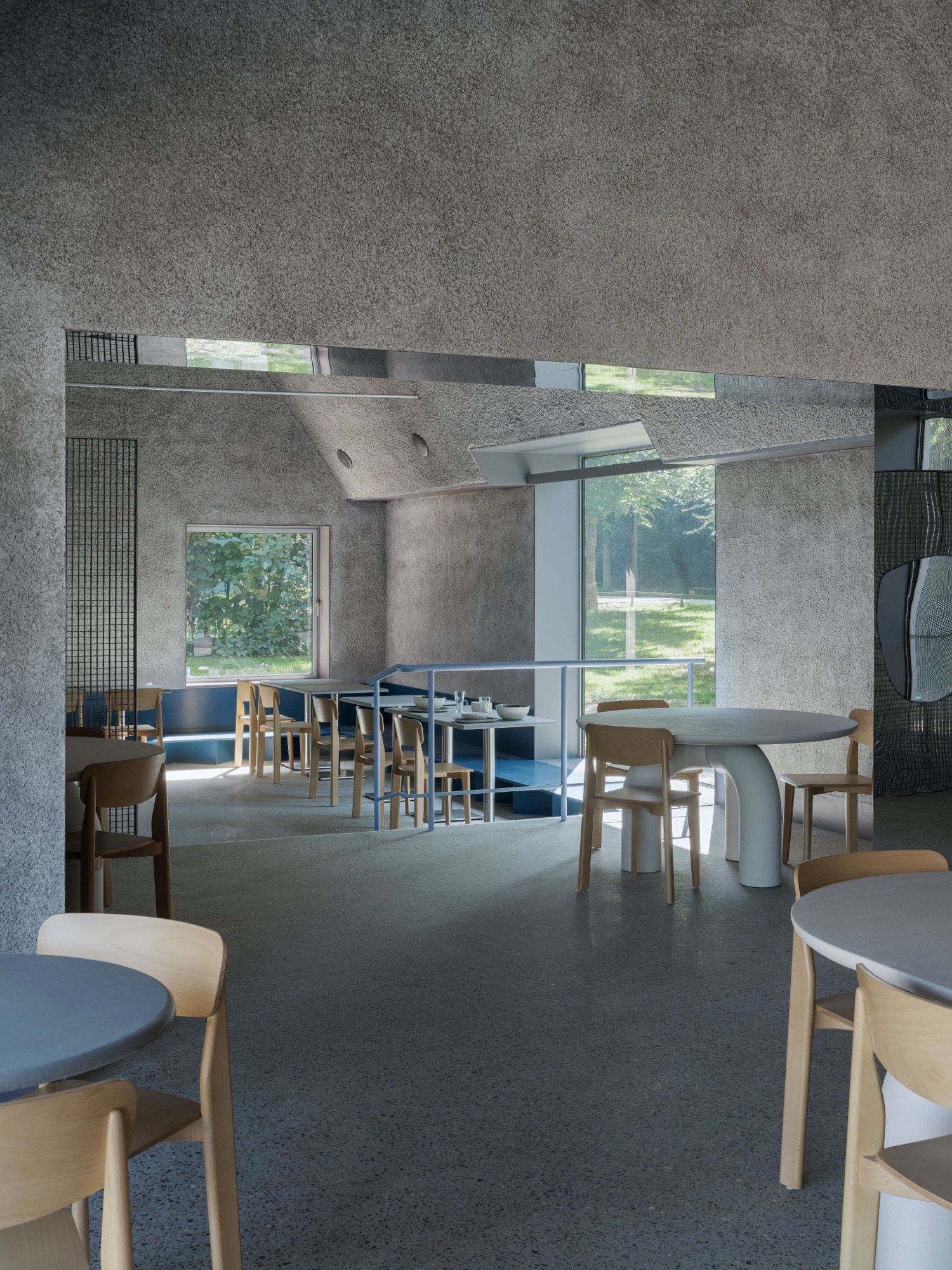
The internal organisation was guided by the structural logic of the existing buildings. Rather than creating one continuous open hall, the project maintains a sequence of spaces that gradually unfold.
The selective removal of inner walls allowed new connections and sightlines to emerge while preserving the rhythm and scale of the original structure.
Working with a protected exterior must have been complex. What were the main challenges when introducing insulation and high-performance glazing?
Working within a protected heritage context required carefully coordinated technical solutions. We introduced an internal insulation layer, which brings challenges in terms of moisture control and condensation.
High-performance glazing improves thermal comfort but also increases the risk of overheating. To address this, we integrated additional shading elements, including sliding perforated panels, a canopy, and solar shading on the kitchen side.
The atmosphere inside feels very calm. How did you approach acoustics and comfort without making them visually intrusive?
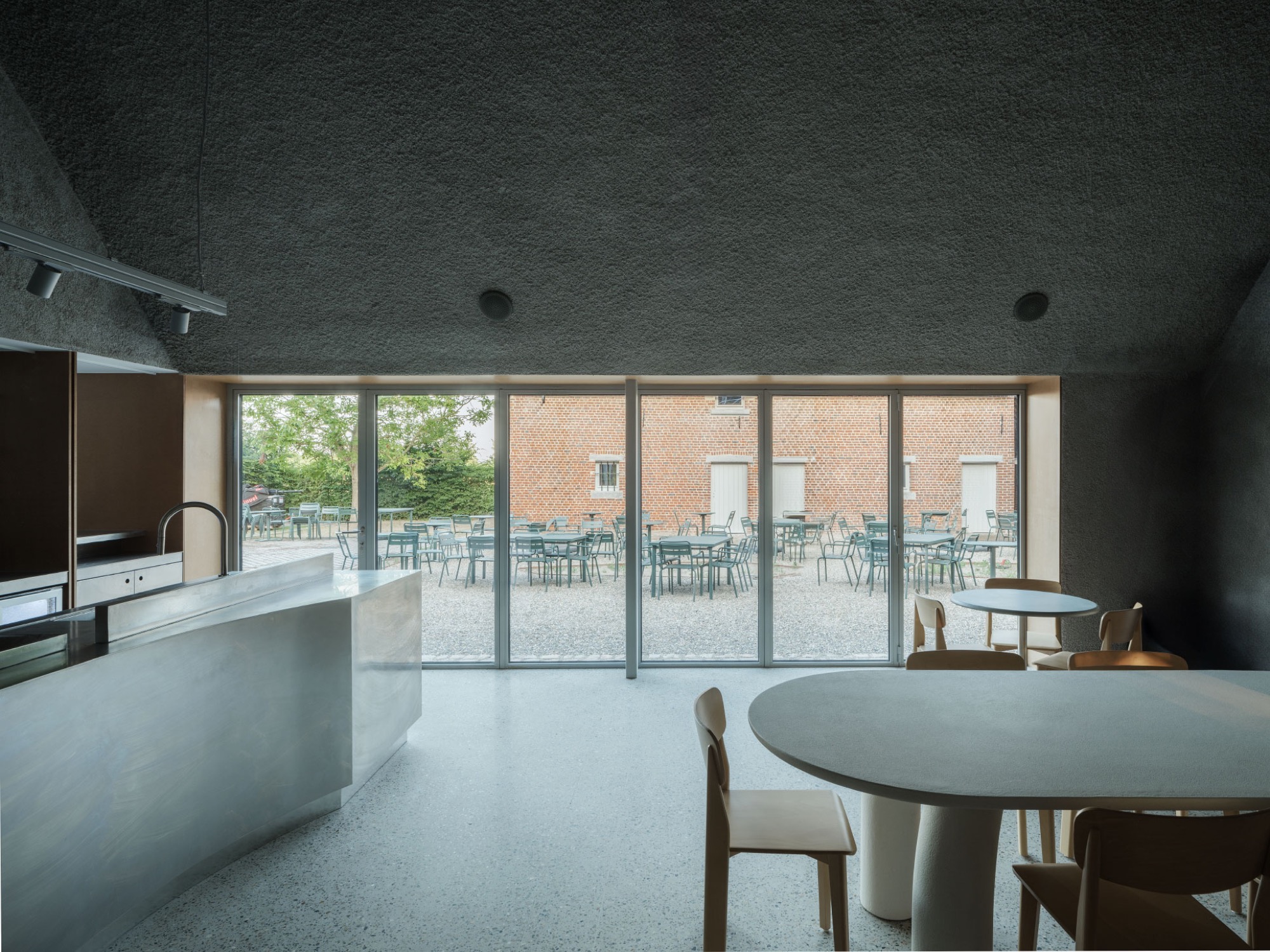
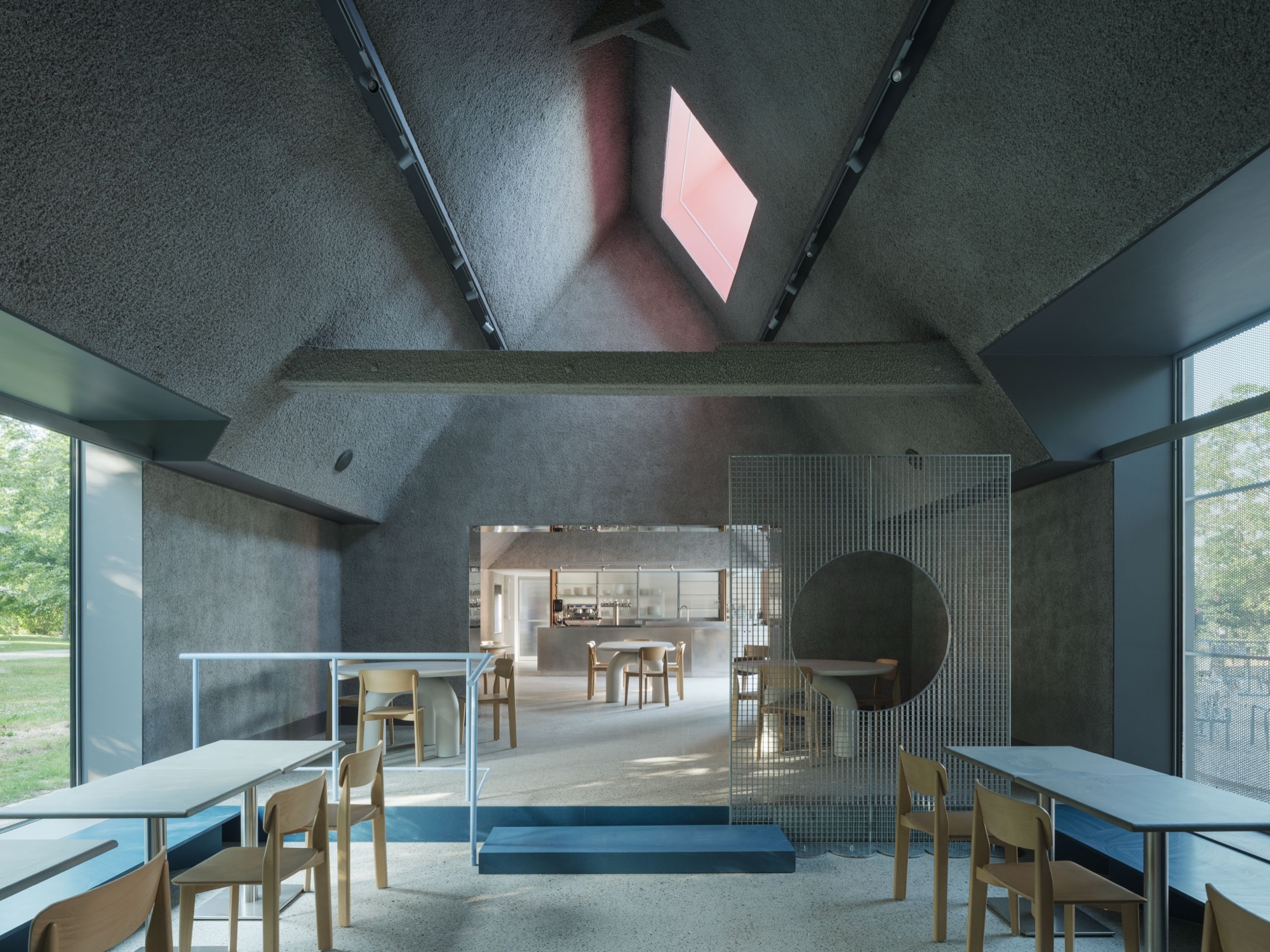
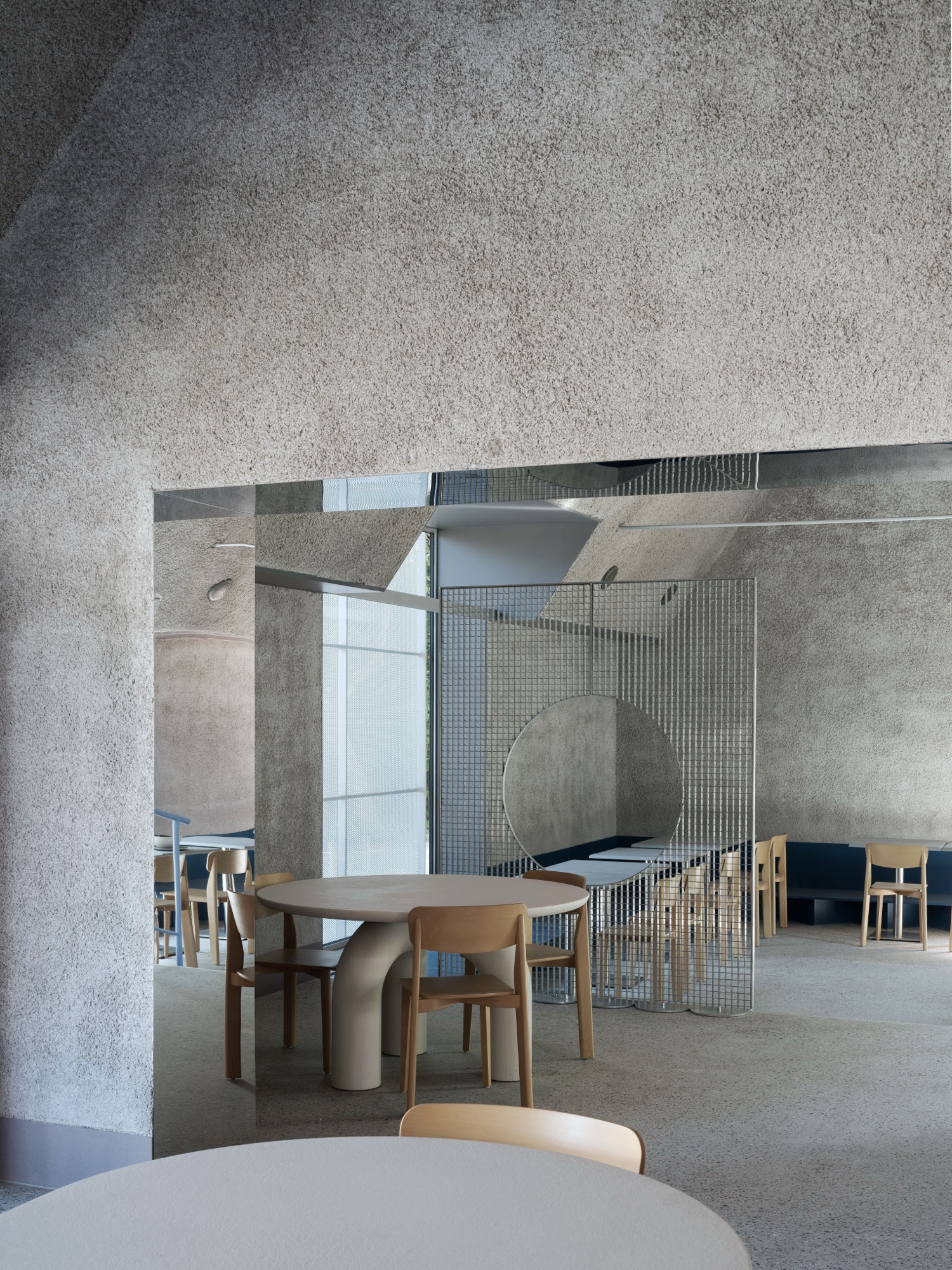
Acoustic performance was addressed as an integral part of the interior architecture rather than through the addition of separate technical elements. The entire dining space is finished in a single continuous material: an acoustic spray finish.
This material was selected not only for its performance but also for its spatial qualities. Its consistent application throughout the space creates a calm and coherent interior while ensuring a high level of acoustic comfort. By integrating acoustics directly into the architectural finish, the need for additional acoustic panels or applied solutions in later phases is avoided.
You also integrated geothermal heating. What kind of challenges did that bring, especially in a heritage context?
The integration of geothermal heating required careful coordination between landscape conditions, technical infrastructure, and the historical buildings. Such systems, as in this case, involve a higher initial investment, as their benefits primarily unfold over the long term. In this project, the Flemish government, acting from an exemplary role, explicitly promotes the implementation of these sustainable systems.
For us, sustainability in heritage projects lies in combining technological improvements with the long-term preservation of existing structures.
The project feels like a careful balance between past and present. What does it say, for you, about how historic buildings can be reused today?
The project demonstrates how historic buildings can accommodate contemporary uses while maintaining their identity. By working with the spatial logic of the existing structures and limiting interventions to what is necessary, the original character of the ensemble remains legible.
Adaptive reuse is therefore approached as a process of clarification rather than transformation.
Were there any unexpected discoveries in the process that ended up shaping the design?
During the analysis and construction process, several hidden spatial relationships within the buildings became visible. These discoveries informed adjustments to openings, circulation, and connections between spaces.
As the restaurant begins to operate, the architecture will continue to evolve through use, with the daily activities of cooking, dining, and gathering gradually shaping the atmosphere of the spaces.
Article Credit
Text: Manuel Ortega
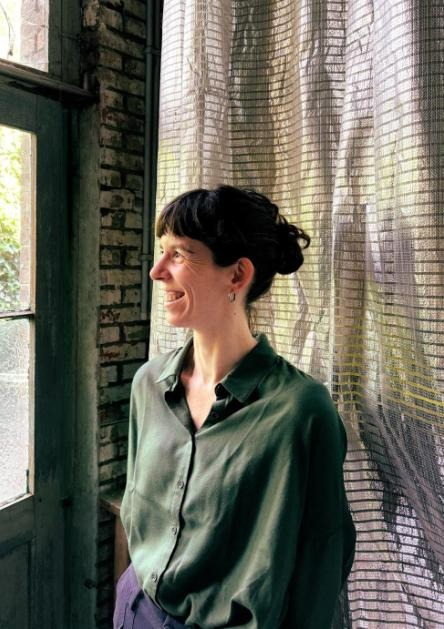
Cover Photo: architect Hannah Corbett
Time: April 2026
Project photos by Luis Dìaz Dìaz / @luisdiazdiaz