Now Reading: Kong Xiangwei Studio creates Baiyun Duoduo Cultural Center in Yunnan
- 01
Kong Xiangwei Studio creates Baiyun Duoduo Cultural Center in Yunnan

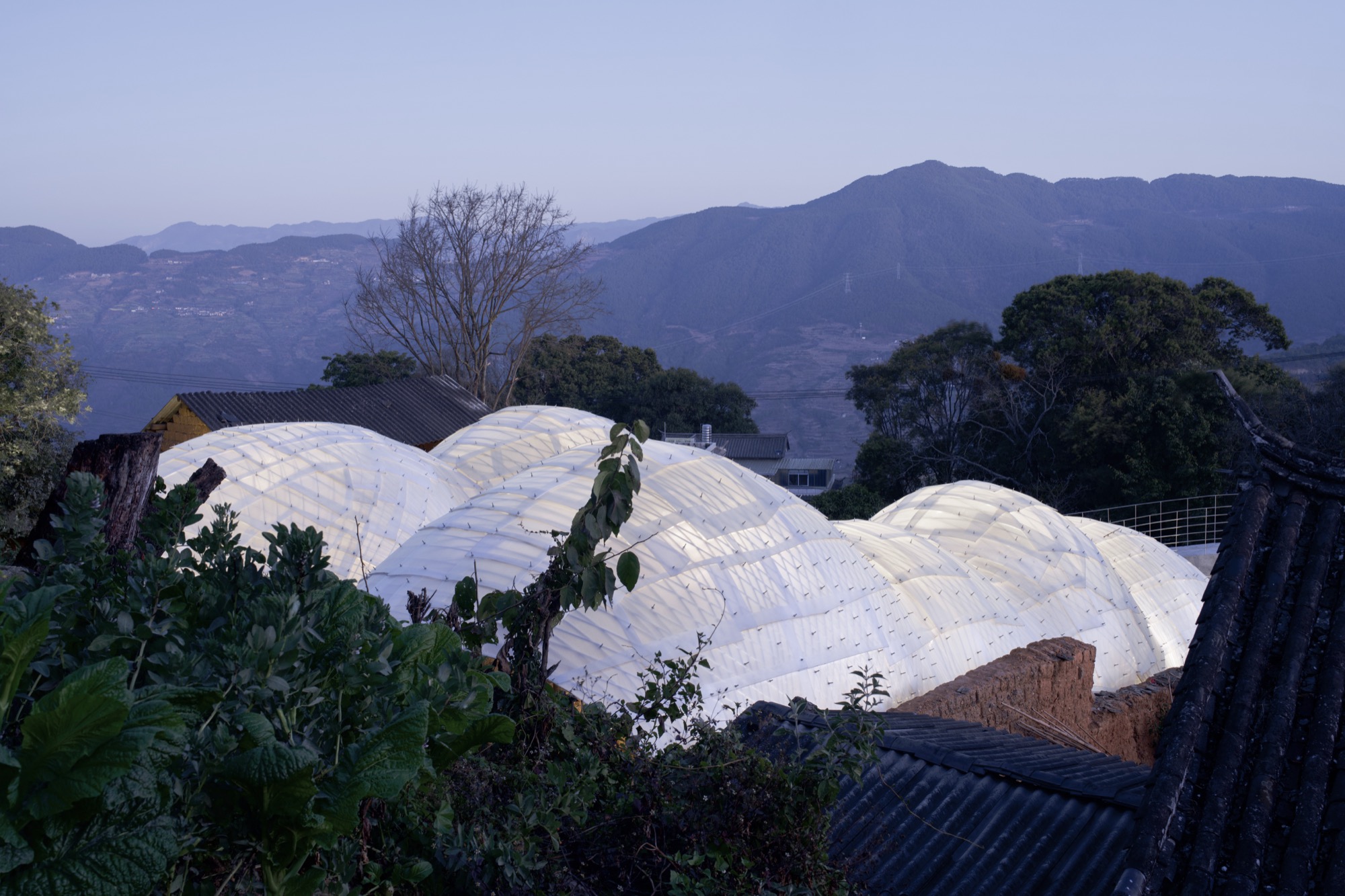

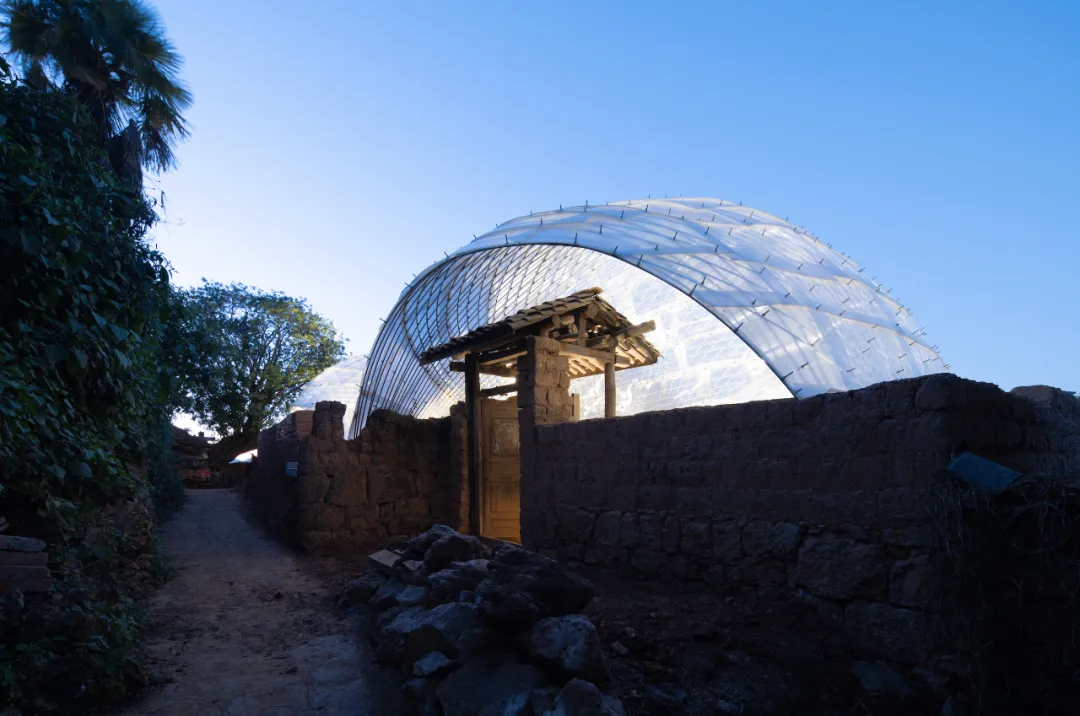
Hidden within the mountainous terrain of western Yunnan, the Baiyun Duoduo Village Cultural Center emerges as an architectural experiment that reconsiders the future of rural construction. Situated in Yanzitou Village, a settlement shaped by the coexistence of six ethnic groups over generations, the project transforms abandoned courtyards into a cultural and spatial infrastructure that bridges memory, material, and collective life.

Rather than imposing an external vision, the intervention unfolds as a process of co-creation. Architects and villagers worked side by side, navigating constraints of time, cost, and available craftsmanship. Within a construction period of just forty five days, the project evolved not through fixed drawings but through a responsive, on site methodology that allowed architecture to emerge from the conditions of the place itself.

ARCHITECTURE WITHOUT DRAWINGS
The design rejects conventional linear processes of planning and execution. Instead, it adopts a mode of “dynamic generation,” where construction becomes an act of continuous interpretation. Steel bars are bent intuitively, concrete shells are cast in thin layers, and polycarbonate panels are assembled through iterative adjustments. The result is a built form that records the gestures of its making.

Concrete volumes anchor the project within the ground, while lightweight translucent domes hover above, creating a tension between mass and lightness. This duality defines the architectural language, where robustness and fragility coexist. The imperfections of construction are not corrected but retained, allowing welding traces and surface irregularities to become part of the building’s narrative.
In this sense, the project operates less as an object and more as a process, where time, labor, and material converge into a spatial outcome.


SPATIAL NARRATIVE AND MOVEMENT
The architecture unfolds as a sequence of spatial episodes. Entry begins through a narrow mural corridor, where hand painted images by villagers introduce a compressed threshold. Light filters unevenly across the walls, slowing movement and heightening perception.
This passage opens into a circular courtyard that acts as the spatial and social core. Here, an old gatehouse is preserved and reinterpreted as a symbolic anchor, while new structures surround it in a quiet dialogue between past and present. Light enters from above, tracing the curved surfaces of the concrete walls and transforming the space throughout the day.

Beyond this center, a cluster of irregular domes forms a fragmented landscape. Their translucent skins diffuse sunlight into soft gradients, while steel frameworks cast shifting shadows across the ground. Circulation becomes non linear, allowing visitors to navigate the site as a continuous exploration rather than a fixed route.

MATERIAL AS CULTURAL TRANSLATION
The project redefines the role of ordinary materials. Polycarbonate panels, typically associated with agricultural structures, are cut and reassembled to produce complex optical effects. Steel bars, bent manually, generate spatial grids that are both structural and expressive.
Concrete is applied in thin shells, reducing material consumption while enabling fluid geometries. These strategies transform low cost materials into carriers of spatial and cultural meaning. Light becomes the primary medium through which these materials are activated, shifting from diffuse opacity in the morning to reflective intensity at midday.
Rather than masking their origins, materials retain their raw character, establishing a direct connection between construction and local knowledge.


RURAL SURREALISM
The project introduces a form of surrealism grounded in everyday experience. It does not rely on abstraction or digital complexity but emerges from the interaction between human gestures and environmental conditions. Architecture here becomes a mediator between reality and imagination.
The domes resemble clouds suspended above the village, while openings frame fragments of the surrounding mountains. Shadows, reflections, and light patterns generate an atmosphere that oscillates between the tangible and the dreamlike. This approach recalls literary traditions of magical realism, where ordinary settings are infused with subtle transformations.
Yet the surreal quality of the project remains rooted in the physical act of making. It is produced not through illusion but through material experimentation.

ARCHITECTURE AS COLLECTIVE MEMORY
At the core of the project lies a critical stance toward contemporary construction culture. In contrast to urban architecture driven by capital and standardized systems, Baiyun Duoduo proposes an alternative based on scarcity and adaptation.
Low cost materials, manual labor, and construction imperfections are not treated as limitations but as opportunities. This approach aligns with a broader tradition of vernacular building in China, where resource constraints have historically generated inventive solutions.


The project reframes these conditions as an aesthetic and cultural position. It suggests that architectural value does not depend on technological sophistication, but on the capacity to engage with context, community, and material intelligence.

More than a cultural facility, the Baiyun Duoduo Village Cultural Center functions as a shared space for gathering, production, and storytelling. It accommodates tea related activities, performances, and everyday interactions, embedding itself within the rhythms of village life.

The building does not stand apart from its surroundings but becomes an extension of them. Ancient trees, existing structures, and new interventions coexist within a layered spatial composition. Time is not erased but accumulated, allowing different historical moments to overlap.
In this sense, the project operates as an archive of collective memory, where architecture records both the past and its ongoing transformation.


Project Credit
Project name: Baiyun Duoduo Village Cultural Center
Location: Yanzitou Village, Bixi Township, Nanjian County, Dali, Yunnan, China
Architect: Kong Xiangwei Studio
Building Area: 300 sqm
Completion: January 2025
Photo: Literal Architecture Photography
More Photos